Friday, December 18, 2015

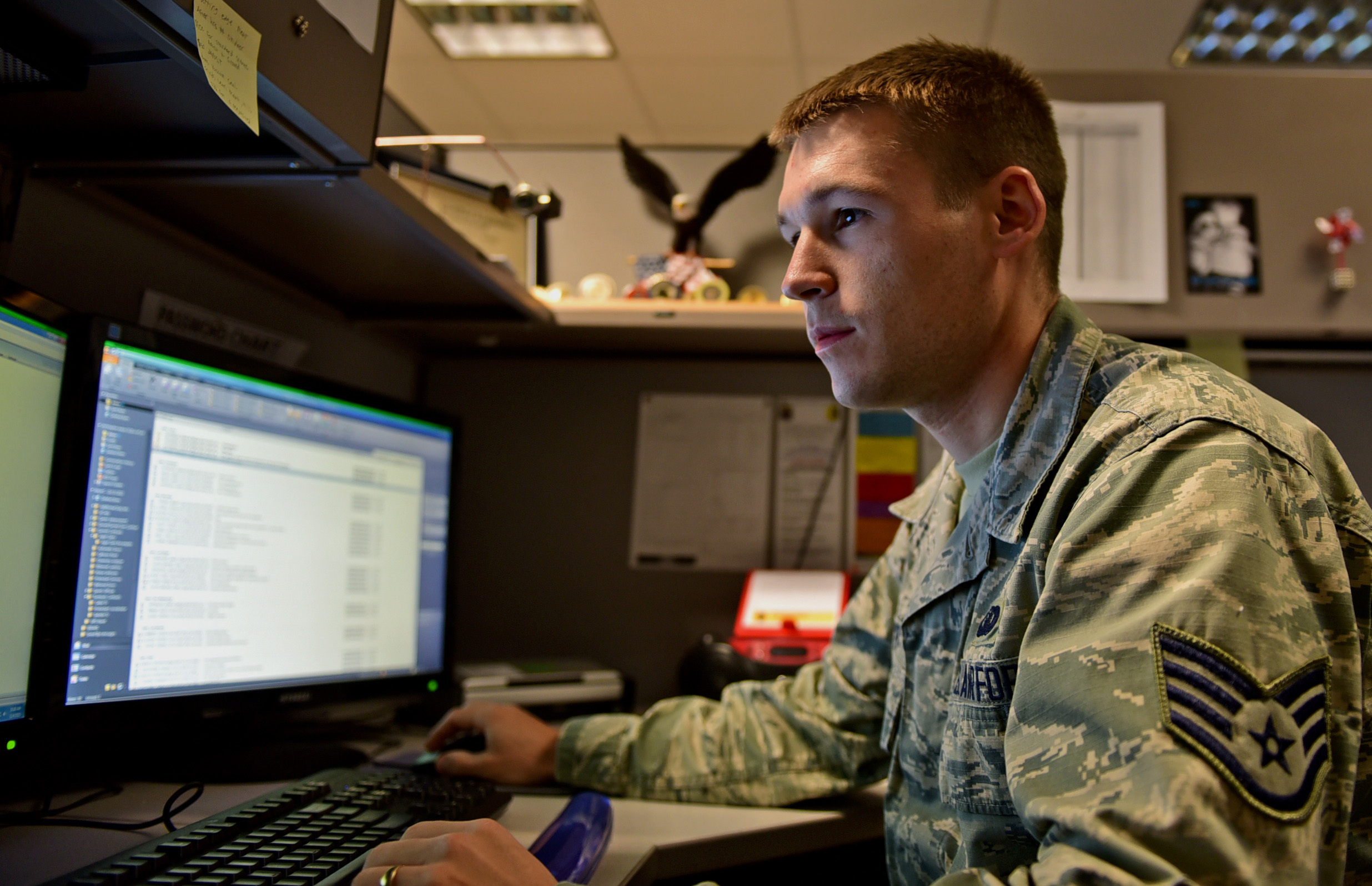
39th CS keeps OIR mission connected

by Staff Sgt. Jack Sanders
39th Air Base Wing Public Affairs


12/17/2015 - INCIRLIK AIR BASE, Turkey -- The demand for communications capabilities is on the rise with the addition of aircraft and service members in support of Operation Inherent Resolve missions, here.

The 39th Communications Squadron is hard at work meeting those demands, keeping the lines of communication open and demonstrating dedication to the 39th Air Base Wing and OIR. Whether those lines of communication are non-secure or secure internet networks, telecommunications or mobile radios; it's the communications squadron Airmen who ensures everyone on Team Incirlik stays connected despite the increase in operations.

"Currently the operations tempo is extremely high here," said Chief Master Sgt. Dax Marvel, 39th CS superintendent. "At most other installations, there isn't the ops tempo like we have here. For most bases, it is mostly steady state... just maintaining what is already established. Here, we are maintaining our established wing buildings as well as building and installing communication support in buildings that have not been used for more than five years."

The infrastructure installed into the older facilities is an essential working conduit, which critical communication information travels, and powers the wings missions. If the AF is a living body then CS acts as its central nervous center transferring signals from point to point.

"Every sector of the CS works to ensure communication needs are met to support everyone on base and their missions," said Airman 1st Class Trevor Hermosillo, 39th CS cable and antenna technician. "Large or small, every mission requires communications aspects to succeed. You look at everybody going about their business and you see the buildings you helped put 'comm' into. Although they don't know, it gives us a sense of pride we are contributing to the mission."

Team McChord performs during Rainier War

by Senior Airman Divine Cox
62nd Airlift Wing Public Affairs


12/17/2015 - JOINT BASE LEWIS-MCCHORD, Wash. -- In today's military, aircrews have to be trained and ready to handle any type of combat scenario, and recently, members of McChord Field and other bases participated in an exercise titled "Rainier War" to help them hone their skills.

Aircrews from Joint Bases Lewis-McChord, Wash, Pearl Harbor-Hickam, Hawaii, Elmendorf-Richardson, Alaska, and Joint Base Charleston, S.C. departed from McChord Field, Wash Dec. 10, to participate in a Joint Forcible Entry exercise over Moses Lake, Wash.

Rainier War is a semi-annual Large Formation Exercise, hosted by the 62nd Airlift Wing, designed to train aircrew under realistic scenarios that support full spectrum operations against modern threats and replicate today's contingency operations.

"We launched 11 C-17 Globemaster III's to train and hone our combat and humanitarian mobility delivery skills," said Col. Leonard Kosinski, 62nd Airlift Wing commander.

Once the aircraft launched and were in the air, aircrews began preparing their aircraft for its large formation airdrops.

Before the formation performed the heavy container delivery system airdrops, the aircrews performed low level flying prior to arriving at the drop zone in Moses Lake.

"I enjoy watching the success of our hard work," said Staff Sgt. Joseph Timpson, 10th Airlift Squadron loadmaster. "Practice makes perfect, and when you train all the time, specifically on airdrop missions, you expect everything to be perfect."

The Rainier War exercise included the large formation airdrops and a larger formation of C 17's before heading back to Joint Base Lewis-McChord.

"This was a very challenging exercise and lots of important learning took place," said Kosinski. "It was incredibly realistic and challenging training needed to ensure we are ready whenever and wherever our nation calls."

Wright-Patterson facility saves DOD time, millions

by Wesley Farnsworth
88th Air Base Wing Public Affairs


12/14/2015 - WRIGHT-PATTERSON AIR FORCE BASE, Ohio  -- With budgets shrinking and the Department of Defense forced to do more with less, every penny counts when it comes to purchasing new equipment. Personnel at the Air Force Life Cycle Management Center's Rapid Development Integration Facility understand that demand and are here to help.

The RDIF began operations in 2010 when the Air Force needed a way to develop projects and do things faster and cheaper while keeping all the data under government control.

Since then, the RDIF has received and completed more than 240 projects on equipment like the HH-60M Black Hawk Helicopter, F-22 Raptor, B-2 Spirit Bomber, B-1 Lancer Bomber, all variations of the C130J, various Federal Aviation Administration aircraft, and the Guardian Angel Air Recovery vehicle, to name a few.

RDIF personnel have successfully returned more than $150 million to customers, who could then use that money on additional projects. In addition, the RDIF has been able to help its customers save more than 70 percent on their projected budgets.

RDIF personnel accomplish this by helping find creative answers to problems by designing prototypes, working with the customer to fine-tune them, testing them, and estimating the cost, said Alan Brookshire, RDIF director. They are even able to help with the manufacturing of some products, he said.

"When we started in 2010, our first project was a new nitrogen purge kit, which is responsible for keeping the corrosion off components inside infrared sensor balls on aircraft," Brookshire said. "It was costing the Air Force more than $6,000 to make [the kits], and we would have to wait between 30 days to six months to receive them."

Brookshire said his office was able to research this component, then build and deliver it to the customer in 30 days for only $398 each.

"We knew once we saw those savings, we were on to something and this was worth exploring more," Brookshire said.

For the RDIF team, it's about more than just saving money for its customers.

"While saving our customers money is great, we also want to educate them so they are better equipped to make educated decisions when buying things for the government in the future," said Maj. Nathan Abel, RDIF deputy director. "We encourage our customers to visit our shop and play a part in the entire process so that they have a better understanding of what the products are, and what goes into making them. This allows them to be better informed for future contracts."

Brookshire echoed Abel's sentiments and pointed out a recent project in which RDIF personnel worked with maintenance teams of the C-5 Galaxy aircraft.

"The team approached us because their current lift stand did not work effectively," Brookshire said. "So we began making modifications based on their initial feedback. Since then, we've had them out four times, and each time they tell us what works and doesn't work so that we can get it just right."

At the end of the day, the customer is the one with the need, and we just want to help them find a solution to that need, Brookshire said.

While saving money and educating their customers is important, both Abel and Brookshire said that they love the fact that they are also able to support the warfighter through RDIF's work.

"It's an awesome feeling to be able to come to work and have a hand in making things that our customers will use to support the warfighter down range," Abel said. "As long as we are able to continue to support the warfighter by educating our customers; providing solid products; saving them time and money, which allows them to do more with less; then we are on the right track."

Schriever Wargame concludes

by AFSPC Public Affairs

12/17/2015 - Schriever AFB, Colorado -- The Schriever Wargame 2015 concluded here today.  Set in the year 2025, Schriever Wargame 2015 explored critical space issues in depth.

The objectives of the Wargame centered on: 1) identifying ways to increase the resilience of space that include our Intelligence Community, civil, commercial, and Allied partners; 2) exploring how to provide optimized effects to the warfighter in support of coalition operations; and 3) examining how to apply future capabilities to protect the space enterprise in a multi-domain conflict.

The SW 15 scenario depicted a peer space and cyberspace competitor seeking to achieve strategic goals by exploiting those domains.  It included a global scenario with the focus of effort towards the European Command (EUCOM) Area of Responsibility.  The scenario also included full spectrum threats across diverse operating environments that challenged civilian and military leaders, planners and space system operators, as well as the capabilities they employ. 

Approximately 200 military and civilian experts from more than 27 agencies around the country as well as from Australia, Canada, New Zealand and the United Kingdom participated in the Wargame.

Agencies that participated included:  Air Force Space Command, Army Space and Missile Defense Command, Naval Fleet Cyber Command, the National Reconnaissance Office,  Executive Agent for Space Staff, Air Combat Command, Office of the Secretary of Defense, U.S. European Command, U.S. Strategic Command, Defense Information Systems Agency, the Intelligence Community, National Aeronautics and Space Administration,  Office of Homeland Security, Department of Transportation, Department of State and Department of Commerce.

AF introduces enlisted Global Hawk pilots


By Secretary of the Air Force Public Affairs, / Published December 17, 2015

WASHINGTON (AFNS) -- Air Force officials announced a new initiative Dec. 17 to enhance the Intelligence, Surveillance and Reconnaissance mission by integrating enlisted remotely piloted aircraft pilots into the force.

Air Force officials stated a dynamic threat environment calls for innovative approaches to high-demand missions. After careful consideration and with an eye toward potential future force needs, service officials plan to deliberately integrate the enlisted force into flying operations, starting with the RQ-4 Global Hawk.

“Our enlisted force is the best in the world and I am completely confident they will be able to do the job and do it well,” said Secretary of the Air Force Deborah Lee James. “The RPA enterprise is doing incredibly important work and this is the right decision to ensure the Air Force is positioned to support the future threat environment. Emerging requirements and combatant commander demands will only increase; therefore, we will position the service to provide warfighters and our nation the capability they deserve today and in the future.”

The secretary and chief directed Air Combat Command to develop an implementation plan over the next six months to address items like entry requirements, training plans, career path development, delineation of duties, compensation details and an appropriate force mix. Implementation is focused on the Global Hawk community, not the MQ-1 Predator and MQ-9 Reaper force.

“This action will make the most of the capabilities of our superb enlisted force in order to increase agility in addressing the ISR needs of the warfighter,” James said. “Just as we integrated officer and enlisted crew positions in the space mission set, we will deliberately integrate enlisted pilots into the Global Hawk ISR community.”

In the space mission arena, the Air Force took a deliberate approach to incorporate enlisted personnel into satellite operations. During the space mission transition, the Air Force ensured enlisted Airmen were prepared to successfully assume these new responsibilities. Phasing the conversion also allowed squadrons to build expertise and transition officers into other areas that faced shortages, officials said. As a result, the Air Force grew leadership opportunities and normalized operations, posturing for a more congested and contested environment in space.

“We are taking action now to address future ISR needs,” said Chief of Staff of the Air Force Gen. Mark A. Welsh III. “Not too long ago, we took the best of both officer and enlisted development tracks to lead the space mission. A similar model can be applied to our Global Hawk operations.”

This initiative to incorporate enlisted pilots is the first step to developing future operating concepts within the multi-domain ISR enterprise. The Global Hawk is the most stable RPA community and presents an ability to integrate new capabilities in an effort to better posture the force for the dynamic future operating environment.

“The Global Hawk mission is a strategically vital mission,” Welsh said. “The transition to enlisted pilots will be managed with minimum impact on current Global Hawk pilots. As always, we will continue to assess and balance our force to meet warfighter needs while ensuring appropriate force development.”

The service plans to be deliberate in its approach, ensuring learning occurs along the way.

 “What we learn from flying Global Hawks with enlisted pilots under the supervision of rated officers will inform whether we apply a similar approach to other weapon systems,” Welsh said. “It is too soon to speculate on any expansion of enlisted aircrew beyond the Global Hawk program.”

 Air Force officials are confident this decision will enable flexibility heading into the future.

First F-16 MRA class graduates at Holloman

by Staff Sgt. E'Lysia A. Wray
49th Wing Public Affairs


12/17/2015 - HOLLOMAN AIR FORCE BASE, N.M.-- -- The 372nd Training Squadron, Detachment 10 held a Sole Hands-On Training Mission Ready Airmen course graduation Dec. 16 at Holloman.

This is the first graduation of its kind to be conducted at Holloman. The course originally started at Luke Air Force Base, Arizona, in 1994, until it was transferred here about a month ago.

"The F-16 aircraft have moved from Luke AFB to Holloman," said Master Sgt. Travus Gonzalez, the 372nd TRS, Det. 10 production superintendent. "Our course requires the aircraft [crewchief] to complete our course training objectives."

The MRA course teaches F-16 crew chiefs hands-on training needed to perform their basic daily duties on the aircraft.

The material covered includes aircraft launch and recovery, preflight and postflight inspections, engine oil servicing; Liquid Oxygen, or LOX, servicing; LOX converter removal and installation; aircraft tire servicing; and aircraft refueling

"Our F-16 MRA program works closely with the 311th Aircraft Maintenance Unit and 314th AMU to use their aircraft sorties," said Gonzalez. "It really is a team effort with the 54th Fighter Group to graduate our students."

The MRA training has graduated 11,840 Air Force crew chiefs. This includes Active Duty, National Guard and Reserve members. The MRA program is set to graduate approximately 450 students at Holloman in fiscal year 2016.

Upon graduating, students are awarded their 3-Level. They are then stationed at any of the 68 locations available in the career field to continue their on-the-job training.

Morón Airmen welcome, engage with senior Air Force leaders

by Senior Airman Nicole Sikorski
86th Airlift Wing Public Affairs


12/15/2015 - MORÓN AIR BASE, Spain  -- Air Force Chief of Staff Gen. Mark A. Welsh III and Chief Master Sgt. of the Air Force James A. Cody hosted an all-call at Morón Air Base, Dec. 7.

Welsh and Cody visited the air base to engage with Airmen of the 496th Air Base Squadron and thank them for their efforts providing combat expeditionary support at Morón, and to discuss the new changes across the Air Force.

"Thank you for everything you do," said Welsh. "From the time you've spent away from your families to the things you are doing for the nation here, the things you are doing for each other and the care you are taking for all of the people you support who come through here and Rota -- thank you.

"You have no idea how proud we are of you," added Welsh.

In addition to thanking those who support the joint mission at Morón, both leaders explained the importance of knowing your wingmen and how that affects mission readiness.
"Look around your unit," said Welsh. "Be the person that brings people together. You be the person that asks everybody's opinion. You be the one who wants to know what they think, how they feel, and what they contribute. Make sure their voices are heard."

Cody expanded on that thought by communicating the value of connecting with Airmen in the work place.

"It is a family business," he said. "I ask that you spend time getting to know each other's stories...You have to be able to look into someone's eyes and know whether or not they're having a bad day."

Cody also expressed that connecting with people could also lessen the frequency of sexual assault, suicides and other negative behaviors.

The leaders then discussed the changes to the enlisted evaluation system and the requirement for open and honest feedback.

Before the new changes, many Airmen were not receiving performance feedbacks, said Welsh. "This is a performance-based organization."

Welsh also explained the top performers were often being overlooked with the old performance reporting.  Conversely, the new system will allow leaders to quickly identify those top performers and give them an advantage towards promotion.

According to Capt. Justin Schneider, 496th Air Base Squadron contracting flight commander, the visit was much appreciated by Airmen at Morón.

"The biggest takeaway from the visit for me was hearing we have the power to make change," said Schneider, "Both Chief Cody and General Welsh reiterated how our suggestions for change are heard and often implemented.  We as Airmen and future leaders in the Air Force don't have to keep doing things the way they have always been done.  We should do what makes sense and allows us to return the focus on the things which matter the most, including taking care of our families, each other and ourselves."

With innovative Airmen stepping up to make necessary changes in the Air Force, a stronger future will be built, he added.

December marks National Impaired Driving Prevention Month

by Airman Valerie Monroy
JBER Public Affairs


12/18/2015 - JOINT BASE ELMENDORF-RICHARDSON, Alaksa -- With everyone traveling home for the holidays, the month of December is one of the busiest on the nation's roadways. With the holidays approaching, the number for social events that include drinking increases along with DUIs and fatal drunk-driving crashes.

President Barack Obama issued a proclamation Dec. 1 declaring the month, as National Impaired Driving Prevention Month. The president urged people to use this month to recommit to preventing these incidents by acting responsibly and by promoting responsible behavior by those around us.

People are encouraged to have a plan if they are going to be drinking, but sometimes not everything goes as planned. That's when the Joint Base Against Drunk Driving program comes into play.

JBADD is a volunteer organization and an extension of the Better Opportunities for Single Service Members program.

The primary purpose of JBADD is to provide the service members of Joint Base Elmendorf-Richardson and their spouses with a safe, anonymous, free ride home instead of driving their own vehicles while intoxicated.

"I think JBADD is a great opportunity for service members to assist with not only protecting the local community but fellow members' careers," said Senior Airman Andrew Harrison, 673d Communications Squadron cyber transport systems liaison and JBADD volunteer. "It's an absolute win-win, for both the installation and
the community."

The first incarnation of the JBADD program started prior to joint basing.

"It was Soldiers Against Drunk Driving for the Army and Airmen Against Drunk Driving for Air Force," said Staff Sgt. Silvia Prows, 673d Medical Support Squadron health services management specialist and president of JBADD. "Once we went joint venture, we got backing from the BOSS program and were able to advertise JBADD as a whole for all services."

JBADD relies entirely on support from volunteers.

Prows said JBADD is important because not all service members will dedicate their time to picking up other service members and their dependent spouses, but those that do are helping to eliminate potential tragedies.

"I've seen firsthand what a DUI can do to a unit, the individuals involved and the local community," said Harrison. "It's not something that should happen and JBADD lets me try as much as possible to prevent that."

For some service members, a memorable night out could turn into a career-changing mistake, so the program remains free and fully confidential.

"We do not disclose who we pick up to anyone," said Prows. "We do not contact anyone in that individual's chain. We just get their name and where they're located and pick them up."

The service is available to all active-duty service members, National Guardsmen and Reservists on active duty orders and all dependent spouses, Prows said.

"JBADD is a great tool provided by JBER leaders to make sure our members are safe, and an awesome opportunity to lend a helping hand when someone might need it," said Harrison.

JBADD operates Friday and Saturday nights from 11 p.m. to 4 a.m., unless otherwise stated.

JBADD should always be a last resort, but when issues arise or plans fall through, you can always call 384-RIDE.

Thursday, December 17, 2015

AFLCMC product support managers win DOD-level awards

by Gina Marie Giardina
88th Air Base Wing Public Affairs


12/16/2015 - WRIGHT-PATTERSON AIR FORCE BASE, Ohio -- Two product support managers in the Air Force Life Cycle Management Center each won a 2015 Secretary of Defense Product Support Manager Award announced by Under Secretary of Defense for Acquisition, Technology and Logistics Frank Kendall Dec. 9, 2015.

Dale Hertenstein, the product support manager in the Global Hawk division, won in the Major Defense Acquisition Programs category; and, Perry Hill, the PSM in the Space, Aerial and Nuclear Networks division, won in the Major Weapon System/Other Weapon Systems category.

Hertenstein and Hill were chosen from a field of 44 nominees across the center, and an even larger number across Air Force Materiel Command and the Department of Defense, said Col. Shawn Harrison, the AFLCMC logistics director.

In the announcement of the winners, Kendall stressed the significance of this award and the ways in which it highlights the PSMs' efforts for warfighters across the services.

"The prestigious award recognizes PSMs as important partners in providing the very best product support for our soldiers, sailors, airmen, and Marines," he wrote. "It furthers the Defense Acquisition Workforce vision of 'creating a high-quality, high-performing, agile DAW to achieve technological superiority and protect America's national security'."

Hertenstein and Hill, along with other winners in the DOD, will be recognized at the spring 2016 Office of the Secretary of Defense Product Support Manager/Performance-Based Logistics Workshop as well as at their respective commands.

"This is a testament to the tremendous caliber of life cycle logisticians we have within AFLCMC," said Harrison.

Harrison also commended the supervisors of these PSMs for supporting their efforts and building strong nomination packages.

While AFLCMC is headquartered at Wright-Patterson Air Force Base, the center has far-reaching support at Air Force bases and other locations worldwide. The Global Hawk division is located at Wright-Patterson AFB in Dayton, Ohio; and the Space, Aerial and Nuclear Networks division is located at Hanscom AFB in Bedford, Mass.

D-M strengthens ties with Tucson community

by Senior Airman Camilla Elizeu
355 Fighter Wing Public Affairs


12/16/2015 - DAVIS-MONTHAN AIR FORCE BASE, Ariz.  -- The 355th Fighter Wing and 55th Electronic Combat Group leadership signed four memorandums of agreements with Tucson officials on Dec. 14.

The agreements are intended to increase education, foreign language and communication collaborations between the base and the local community.

The Educational Partnership agreements will establish on-base internship opportunities for students of the University of Arizona and Pima Community College.

"This optimizes resources, it is not only the money integration, it is the intellectual capital," Col James Meger, the 355 Fighter Wing commander said. "When I look at University of Arizona, when I look at Pima Community College, bringing that intellectual capital in and continuing to grow and expand my Airmen and students' pool together, it is perfect."

The 55th Electronic Combat Group and the University of Arizona signed a Foreign Language Skills Partnership that will improve and maintain an existing foreign language skills project and mentor foreign language students with the University of Arizona.

"Pima County and Tucson has, for many years, developed a very sophisticated system of communication," said Mayor Jonathan Rothchild, City of Tucson. "Today we made an agreement to bring Davis-Monthan into that system."

The Emergency Response Communication Interoperability Partnership will increase communication between first responders from D-M and local community in the event of a significant emergency requiring joint response.

"This is really important," Meger said "It is the integration of the partnership between the community and the military."

Puerto Rico, Georgia Airmen make Caribbean Connection

by Tech Sgt. Marizol Ruiz
156th Airlift Wing Public Affairs


12/10/2015 - AGUADILLA, Puerto Rico  -- Airmen from the Georgia Air National Guard and the Puerto Rico Air National Guard teamed up to control aircraft from deployed radar during exercise Caribbean Connection here, Nov. 9 - 20.

The 141st Air Control Squadron, Puerto Rico ANG hosted 99 Airmen from the 117th Air Control Squadron and 12 Airmen from the 283rd Combat Communications Squadron, both with the Georgia ANG, to pull live feeds and provide operational control from three remote sites.

The mobile equipment to be set up in a tactical environment in Puerto Rico was flown in on three separate C-130 Hercules aircraft and one C-17 Globemaster III cargo plane.

The deployed radar was tied into three different sites to create an aggressive communications triad exercise, and an operational exercise to control aircraft off the coast of Georgia. The exercise was based at the 141st Air Control Squadron's Punta Borinquen Radar Site in Ramey, Aguadilla, with remote locations in Camp Santiago Joint Maneuver Training Center in Salinas, and Savannah, Georgia.

"Caribbean Connection is what my unit named it," said Chief Master Sgt. Eric Anderson, Branch Chief for the GANG. "We came down from Savannah Georgia and set up deployed radar, where we could reach back to Savannah with live feeds so operators could control live missions from here."

"Our mission has been a huge success since we left home," he said. "All the way from doing the mobility process of loading equipment onto the aircrafts, to bringing it here to P.R. and convoying all our equipment across the mountains to set up camp at the main radar site in Aguadilla."

According to the 117th ACS Commander Lt. Col. Ron Speir, the exercise goals were met.

"We have been able to complete our top objectives because we were able to remote the radars, radios and data links from Savannah to PR," said Speir. "We were controlling aircraft like we would if we were deployed to other areas of the globe."

At the same time with the 117th ACS, the exercise marked the first time in 18 years for the 141st to control live aircraft during an exercise here.

"The team work has been outstanding between the 141st ACS and the 117th ACS," said Speir. "I have been in the ANG for 28 years, and this has probably been the best annual training exercise for our unit."

In conjunction with the 117th ACS, the 141st ACS will have the capability to use their satellite to tie in to the Savannah system and periodically have the opportunity to control live aircraft off the coast of Georgia in future missions.

A sandwich and soda with the general

by Capt. Kathleen
Ice


12/17/2015 - SCOTT AIR FORCE BASE, Ill.  -- The Air Mobility Command vice commander hosted a "brown bag" lunch Dec. 3 with 22 Airmen to hear their ideas for improvement and update them on the latest command news.

Maj. Gen. Rowayne Schatz said that when he was a young officer, he remembers wondering why certain tasks or policies were created, but he had no way to get real answers.

As a group commander, he changed that and created routine, informal meetings in which Airmen could ask him "why" and express their thoughts. He found that making time for this -- sharing a meal, being honest, looking Airmen in the eyes as they spoke - reaped invaluable feedback. 

"We're all about making the organization better," Schatz said during the brown bag lunch.  "We want to be able to accomplish our mission, but also be able to improve the command for the future.

"We also want you all to be excited to come to work; to be excited about your leadership and the people you work with and to have a good experience."

Schatz opened the lunch meeting by updating the group, ranging from E-3 to O-5, on the latest news.

He said the AMC commander recently reviewed AMC's strategy and "wouldn't be making any major course corrections," because, due to the hard work of the staff the last few years, the command is on track to meet the requirements set forth by the National Security Strategy.

Addressing more practical matters, he reassured the Airmen that changes were planned for the headquarters building, to include a new heating and cooling system and larger entryways in coming years if all gets approved.

There were complaints in a recent climate survey regarding the time it takes AMC staff members to provide information to the Knowledge Management Office.  Schatz explained the "why" behind KMO's taskers.

"KMO is taking a realistic look at all the meetings in the command and how we share information, because right now we're fairly stove-piped.  ... In the end, it should be less work," Schatz said.

After briefing the Airmen on updates, Schatz said, "Let's eat" and opened the floor for discussion.

The risk of commander-Airmen meetings typically is that the Airmen don't become comfortable enough to let their guard down and say what they really think.

But by the end of this exchange, there was regular laughter, and several Airmen were comfortable telling the general what they thought about Air Force and AMC policies.

The group shared ideas such as how to improve the Mobility Air Force aircraft maintenance en-route strategy, and how to improve information sharing across the staff about the various cyber security efforts taking place in each division.

Schatz smiled with each idea brought to the table.

"This is good discussion.  I've got several things to take back to the commander," he said.

Face of Defense: Former Marine Serves as Air Force Contract Administrator


By Air Force Airman 1st Class James Miller 28th Bomb Wing

ELLSWORTH AIR FORCE BASE, S.D., December 17, 2015 — From base landscaping to office computers, nearly everything found at Ellsworth flows through the 28th Contracting Squadron.

Among the airmen leading the charge is Air Force Staff Sgt. Chris Meyer, a contract administrator with the 28th Contracting Squadron. Meyer provides contracting support and business advice to Ellsworth and combatant commanders, as he deals with base contracts daily.

As a contract administrator, Meyer handles many facets of the contracting process, from the preliminary overview to closing them out once completed.

“We do most of the legwork, which can be a lot,” he said. “However, we are proprietors of the taxpayers’ dollars, so we try to get the best deals in the most expedient manner.”

However, Meyer is not always in the office at his computer; he also participates in contractor evaluations to ensure they are getting the job done correctly and on time.

“We may mostly be seen behind our desks, but the evaluations are important to make sure the job is getting done on pace, so we aren’t wasting taxpayer money,” he said.

Former Infantryman

Although Meyer may spend a lot of time behind the desk now, that wasn’t always the case -- he served five years in the Marines before switching to the Air Force.

“I enlisted for four years as an anti-tank assault team infantryman and took an extra year for a special duty with an antiterrorism security team,” he said. “It was a lot different than my current contracting job, ... [but] while some people may think it is boring, it is exactly what I wanted.”

When Meyer visited the Air Force recruiter, he signed up for a job in the contracting career field, which would allow him to face new challenges.

“I am still helping people and making sure the military’s needs are met,” he explained. “Now my job is a lot less life-threatening, and I can spend more time with my family. That was the biggest reason for the switch. I didn’t want my kids to not know who I was, or worst-case scenario, not know me at all if I didn’t make it back.”

Whether he is at the office supporting the mission, or at home supporting his family, Meyer said, he could not be happier with how he is serving.