Thursday, January 14, 2021

Wiesbaden Trace Team Evolves As Pandemic Continues

 Jan. 14, 2021 | BY Lisa Bishop

A stable, organizational approach and committed team members allow the U.S. Army Garrison Wiesbaden, Germany, trace team to continue responding to the changing demands of the COVID-19 pandemic.

Less than a year ago, the trace team didn't exist. There was no Army job description, office space or bank of telephones to serve its workforce.

Garrison military units detailed soldiers from a variety of backgrounds to establish the team back in March 2020 in order to combat the first wave of the pandemic. At the time, five teams were spread across the Wiesbaden installation manning phones and collecting information.
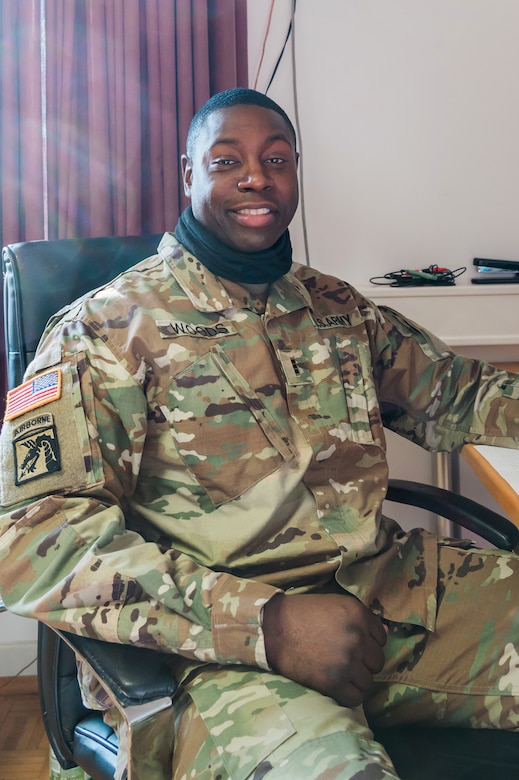
A seated soldier smiles for the camera.

According to Army Chief Warrant Officer 3 Maurice Woods, the current trace team officer in charge, there were no formulated tactics and procedures in the initial days.

"When we first started, it was a growing process," he said. 

Questions, according to Woods, like how to collect information, store data and methods for pushing information out to decision makers and the public have been resolved. 

Newer trace team members like Air Force Airman 1st Class Ustav Poudyal, analyst, are now assigned for 60-day details after they've completed training.

A seated airman smiles for the camera.

"This time has been really beneficial for me in terms of my career development," he said. "I really haven't had a chance to have exposure to a lot of joint environments." Assigned in November, he decided to extend his time with the team.

Army Sgt. 1st Class Christopher Nies, airspace noncommissioned officer from Headquarters and Headquarters Battalion, is completing his second appointment with the team.

"The second time they called and asked if I could come back, I did it without hesitation," he said. "I really find pleasure in doing this job; I feel like I'm a part of a bigger picture."

With his current rotation, Nies sees the organizational changes, including its hierarchical structure. Divided into Alpha, Bravo and Charlie sections, Nies has recently become the officer in charge for the Charlie section.

"I have some junior enlisted soldiers underneath me," he said. He is focusing on developing his leadership skills around how his crew operates.
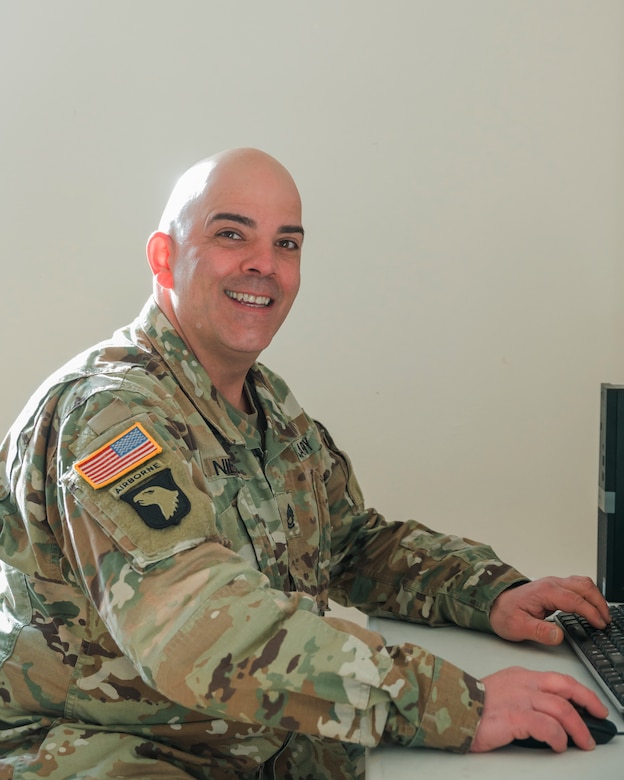
A seated soldier smiles for the camera.

The section strategy is one of the tactics that reflected the learning gained from experience, Woods said.  By having three sections in their own apartment/office space, they can flexibly schedule for weekends and reduce the risk of exposure to COVID-19.

Change remains the biggest challenge they face, according to Woods. He said the constant shift in host nation and Army-wide policies means his team must be ready to make adjustments to their tactics and procedures. He pointed to the recent reduction of quarantine from 14 to 10 days as an example.

Nies said, "Be patient with us; be patient with the whole situation. Keeping up with the changes is really probably the most challenging part."

As for the team members, when they finish their rotation on the trace team, they return to their normal military assignment with the caveat that they can be called back when needed. Clearly, for some, they feel the calling to stay.

Woods said, "I volunteered to stay on; I like what the mission does; I felt like I was making a difference for the garrison overall."

(Lisa Bishop is assigned to the U.S. Army Garrison Wiesbaden.)

Partnerships Key to Space Force Delivering Warfighting Capabilities

 Jan. 14, 2021 | BY David Vergun , DOD News

The Space Force is responsible for delivering space capability to the joint and coalition forces, including such items as navigation, timing, electromagnetic operations, orbital warfare, GPS, missile warning, satellite communications and launch space domain awareness.

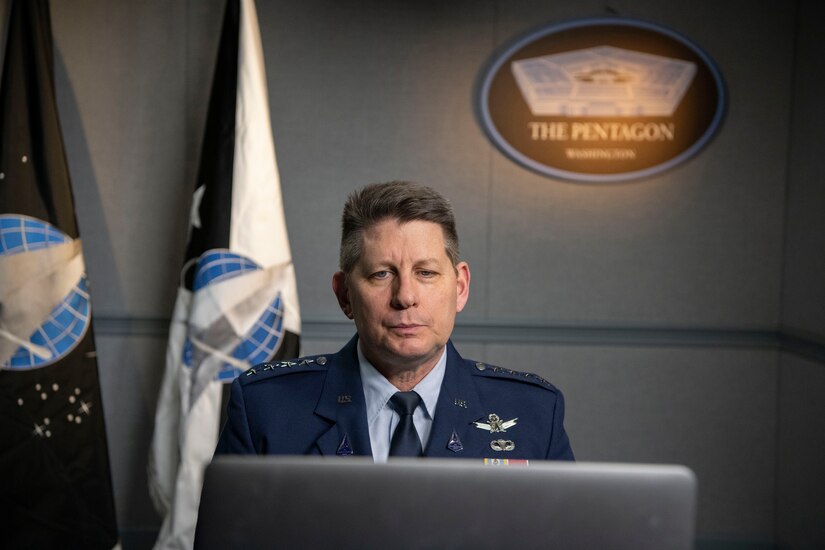
A man in a military uniform, sitting at a computer, is speaking during a virtual meeting.

Many of those capabilities have been forward deployed to the Middle East and other areas for some time, said Space Force Gen. David D. Thompson, the vice chief of space operations, who provided virtual remarks yesterday to the Association of Old Crows, regarding space operations.

To continue to provide these and future capabilities, it is important that the Space Force has an effective and digitally fluent workforce that's adequately trained and educated to operate systems and networks in the cyberspace domain in a cyber-secure manner, he said.

Thompson stressed the service's reliance on partnerships.

Five Marines work on a satellite dish.

The Space Force relies on the commercial sector for innovative ideas, prototypes and experimentation, he said. They can design, develop, build and field them rapidly.

The idea of prototyping quickly involves some risk of failure. But even failure can lead to solutions that spiral development, he added.

Partnerships with the joint force, combatant commands and Defense Department agencies is also important, he said.

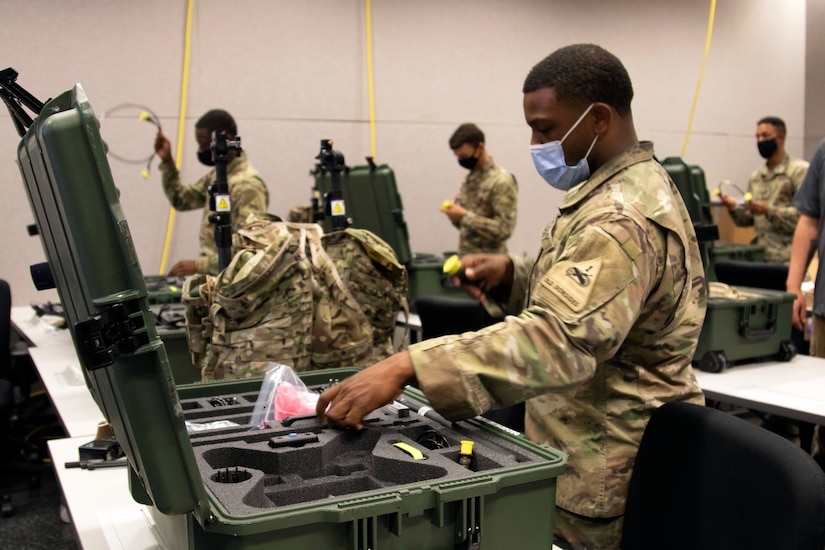
Soldiers inventory communications gear.

"We have enduring relationships with the National Reconnaissance Office and the rest of the intelligence community," he said. "We not only need to maintain those but deepen those as well, especially because we're now partners with them in the need to defend and protect these capabilities from threats."

The United States can no longer afford to go it alone when it comes to space capabilities, Thompson said.

"We see nations who want to grow and evolve their space capabilities, who want to use them for economic purposes, who want to use them for civil and public safety purposes, who also want to use them for national security purposes. We see a lot of common ground with them and a lot of common interests," he said.

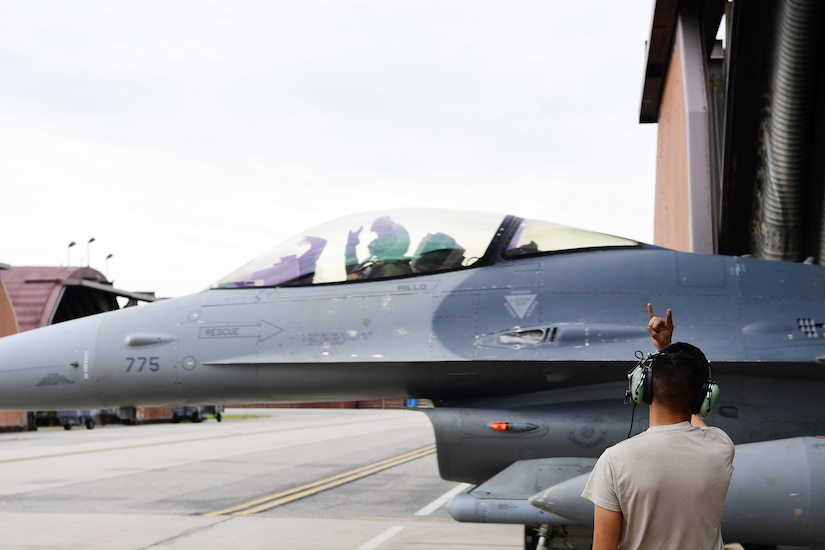
A jet departs a hangar in preparation for  take-off.

Traditional Space Force partners have been Canada, Australia, the United Kingdom and New Zealand, he said. Over the last few years, partnerships with France, Germany, Japan and South Korea have been expanding, along with a number of NATO nations such as Norway.

Partnerships with Brazil, Argentina, Chile and other nations, particularly in the Indo-Pacific region are also on the horizon.

Wednesday, January 13, 2021

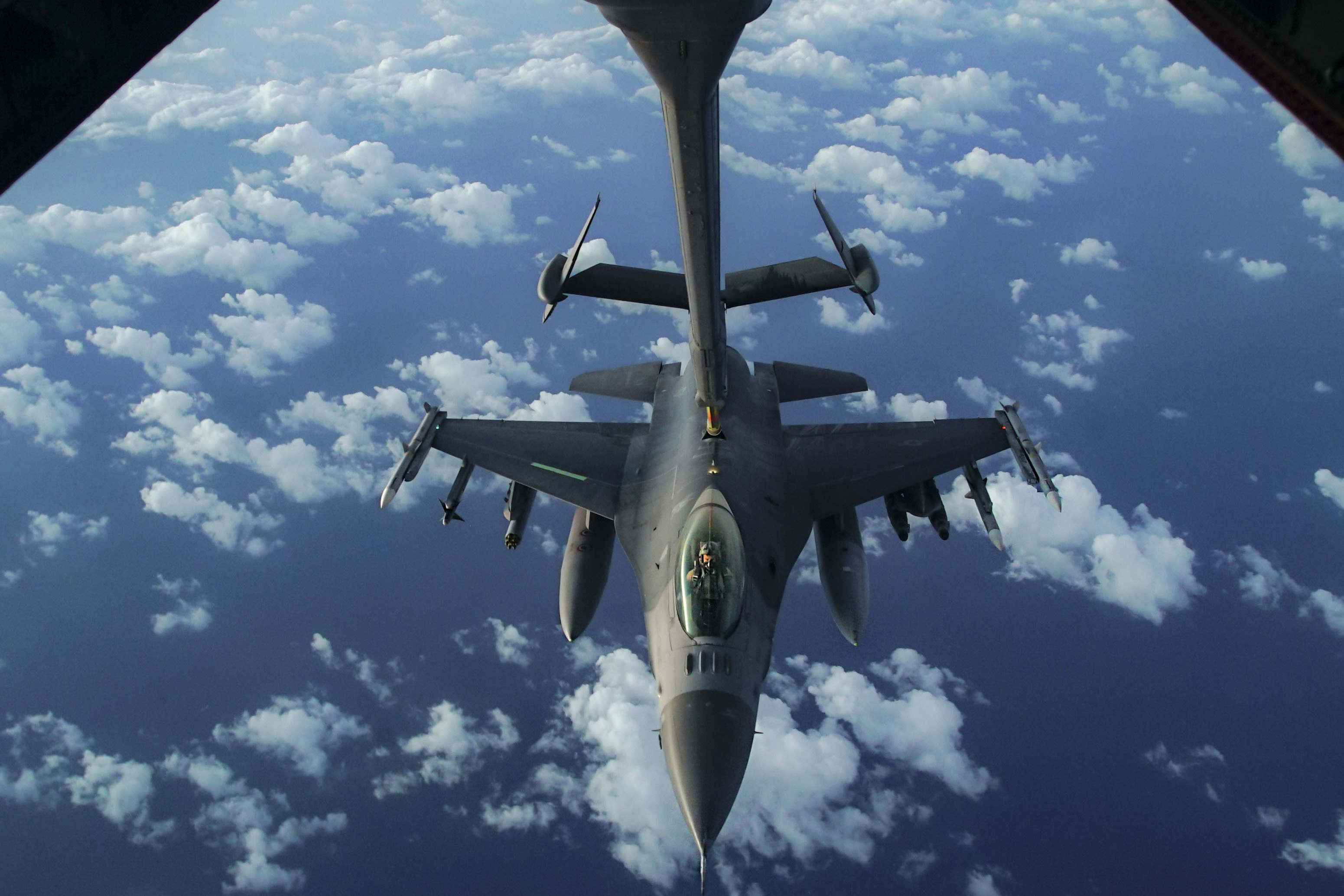
Refueling Mission


An Air Force F-16 Fighting Falcon receives fuel from an Air Force KC-10 Extender during an early morning midair refueling mission supporting Operation Octave Quartz above Africa, Jan. 9, 2021.

Department of Defense Announces Establishment of the Trusted Capital Digital Marketplace

 Jan. 13, 2021


The Department of Defense is proud to announce the establishment of the Trusted Capital Digital Marketplace (TCDM). The program establishes trusted sources of funding for small and medium-sized providers of innovative defense-critical capabilities, offering long-term strategic benefit and combatting predatory investment practices.

On Jan. 13, 2021, Under Secretary of Defense for Acquisition and Sustainment Ellen M. Lord announced the launch of the Trusted Capital program’s digital marketplace. The TCDM is the gateway to an investment ecosystem designed to promote innovation and ensure access to trusted sources of capital for emerging technologies and critical capabilities required for national security.

Small and medium-sized businesses are vital to the defense industrial base (DIB) and the U.S. economy. Funding is paramount to the success of these firms and newly established businesses are susceptible to predatory investment. According to the current National Counterintelligence Strategy, our Nation’s “adversaries use front companies, joint ventures, mergers and acquisitions, foreign direct investment, and talent recruitment programs to gain access to and exploit U.S. technology and intellectual property.” The TCDM was developed to combat these predatory tactics and promote DIB capabilities.

“Trusted Capital works by providing opportunities for trusted financial institutions and qualifying companies to explore mutually beneficial partnerships in support of national security goals,” said Lord. “Aligned with the National Defense Strategy, the Trusted Capital program provides a more lethal force by creating new partnerships in order to reform the way the government will provide opportunity for innovation.”

Led by the Chief Information Security Officer for Acquisition and Sustainment (CISO(A&S)) Katie Arrington and Trusted Capital Director Colin Supko, the program connects vetted investors with qualifying domestic companies critical to the DIB. “I congratulate Ms. Arrington and the entire team involved in making this project a reality,” said Lord. “Through tools like the Trusted Capital Digital Marketplace, the Department of Defense and industry work together to make the Defense Industrial Base more secure.”

Trusted Capital’s military service stakeholders engage in the Marketplace by employing rapid acquisitions contracting vehicles to identify innovative capability providers deemed critical to their supply chains. Such “down-selected” providers of defense-critical and dual-use solutions are candidates for the Trusted Capital Marketplace. Interested capability providers with existing U.S. Government contracts should contact their contracting officer to request an invitation to apply; capability providers with no existing contracts can request a military service down-selection via the Trusted Capital public landing page (https://dodtrustedcapital.force.com).

About Trusted Capital
Trusted Capital (TC) is an Undersecretary of Defense for Acquisitions and Sustainment (USD (A&S)) program to strengthen the defense industrial base and limit threats to national security posed by adversarial capital. Trusted Capital provides qualifying small to medium-sized technology capability providers with a range of capital solutions via “trusted” capital providers. To qualify, capability providers and capital providers undergo a national security due diligence process to limit foreign access to critical technology through foreign investments. The TC strategy lays out three lines of effort: Trusted Capital Digital Marketplace, Financial Incentives to invest in national security solutions, and Military Innovation Tours with Venture Capital/Private Equity Industry. To learn more about the Trusted Capital program, visit the website at OUSD A&S - Trusted Capital (osd.mil).

DOD Releases Report on Defense Spending by State in Fiscal Year 2019

 Jan. 13, 2021


States and communities have a new tool to enhance national security and mission readiness, while making their economies stronger and more resilient. Today, the Department of Defense’s (DoD) Office of Local Defense Community Cooperation (formerly the Office of Economic Adjustment) released its Fiscal Year 2019 Defense Spending by State report to help states and communities better understand defense personnel and contract spending in their localities. This analysis helps state and local leaders assess a region’s dependence on defense spending and target assistance to support stronger communities and companies.  

Defense spending rose in Fiscal Year 2019. DoD contract obligations and payroll spending in the 50 states and the District of Columbia increased by $64.3 billion, or 19 percent, over the prior year. This was driven by a 19 percent increase in DoD contract obligations. Personnel spending in the 50 states and the District of Columbia increased by 4 percent. 

DoD contract obligations and payroll spending in the 50 states and the District of Columbia totaled $550.9 billion, which is 2.5 percent of the country’s gross domestic product (GDP). If the total spending were divided across every U.S. resident, it would amount to $1,678 per U.S. citizen. Of those funds, $403.9 billion (73 percent) were spent on contracts for products and services, while the remaining $146.9 billion (27 percent) paid the salaries of DOD personnel.  

California, Virginia, and Texas topped the list of recipients for overall defense spending. However, Virginia, Hawaii, and Alabama ranked highest when considering defense spending’s impact on their states’ GDP.  

The top ten states for total Defense spending in Fiscal Year 2019 were:

RANK    STATE        DEFENSE SPENDING (billions)
1.            California               $66.2
2.            Virginia                    $60.3
3.            Texas                         $54.8
4.            Florida                      $29.8
5.           Maryland                 $26.1
6.          Connecticut            $19.7
7.          Pennsylvania          $18.1
8.         Washington             $17.8
9.         Alabama                     $16.0
10.       Massachusetts      $15.8

West Virginia, Maine and Wisconsin had the largest increases in DoD spending from Fiscal Year 2018 to 2019. This was driven by large contracts to Northrop Grumman in West Virginia, General Dynamics in Maine, and Oshkosh Corp. and Fincantieri Marine Systems in Wisconsin. These contracts were related to rocket motor production, shipbuilding and military vehicle production.

The top ten recipients of Defense contracts in Fiscal Year 2019 were:

RANK    COMPANY              DEFENSE SPENDING (billions)
1.          Lockheed Martin           $45.6 
2.          Boeing                                  $25.7 
3.          Northrop Grumman     $19.5 
4.          General Dynamics         $18.6 
5.          Raytheon                             $15.7 
6.          United Technologies     $10.3 
7.          BAE Systems                     $7.3 
8.          Huntington Ingalls         $6.7 
9.          Humana                                $6.7 
10.        L3 Technologies             $4.9 

All ten companies were on this list in Fiscal Year 2018. United Technologies (47 percent), Northrop Grumman (41 percent), and General Dynamics (29 percent) had the largest year over year increases.

“The report compiled by the Office of Local Defense Community Cooperation can be a great tool to state and local officials,” said Ellen Lord, Under Secretary of Defense for Acquisition and Sustainment. “All of our work is aimed at supporting the National Defense Strategy and this report is key as we look to continue defense reform and modernization efforts.” 

Patrick O’Brien, the Director of the Office of Local Defense Community Cooperation, states the report is an opportunity for governors and local officials to use its data to strengthen their defense presence and supply chains.  Mr. O’Brien further indicates “state and local officials need to use this information to better understand the essential continuum of investments across people, equipment, weapons systems, real estate, and services required to maintain our National Defense. Across these areas, they should determine if there are opportunities to further develop workforce skills, enhance and improve innovativeness and buying power, and partner to strengthen the resilience of our installations and industrial base.”

Conducted between March and December 2020, the analysis primarily entailed an examination of DoD­funded prime- and sub-award contract data and defense personnel and payroll figures. Findings are drawn from an array of sources, including the DoD’s Defense Manpower Data Center and USAspending.gov, which is managed by the U.S. Department of the Treasury.

The FY19 report, as well as previous years’ reports, can be found on the OLDCC website at: https://oea.gov/defense-spending-state-fiscal-year-2019

Washington Watch


Virginia National Guard soldiers stand guard in Washington, D.C., Jan. 11, 2021. National Guard soldiers and airmen from several states have traveled to Washington to provide support leading up to Inauguration Day.

Jungle Training


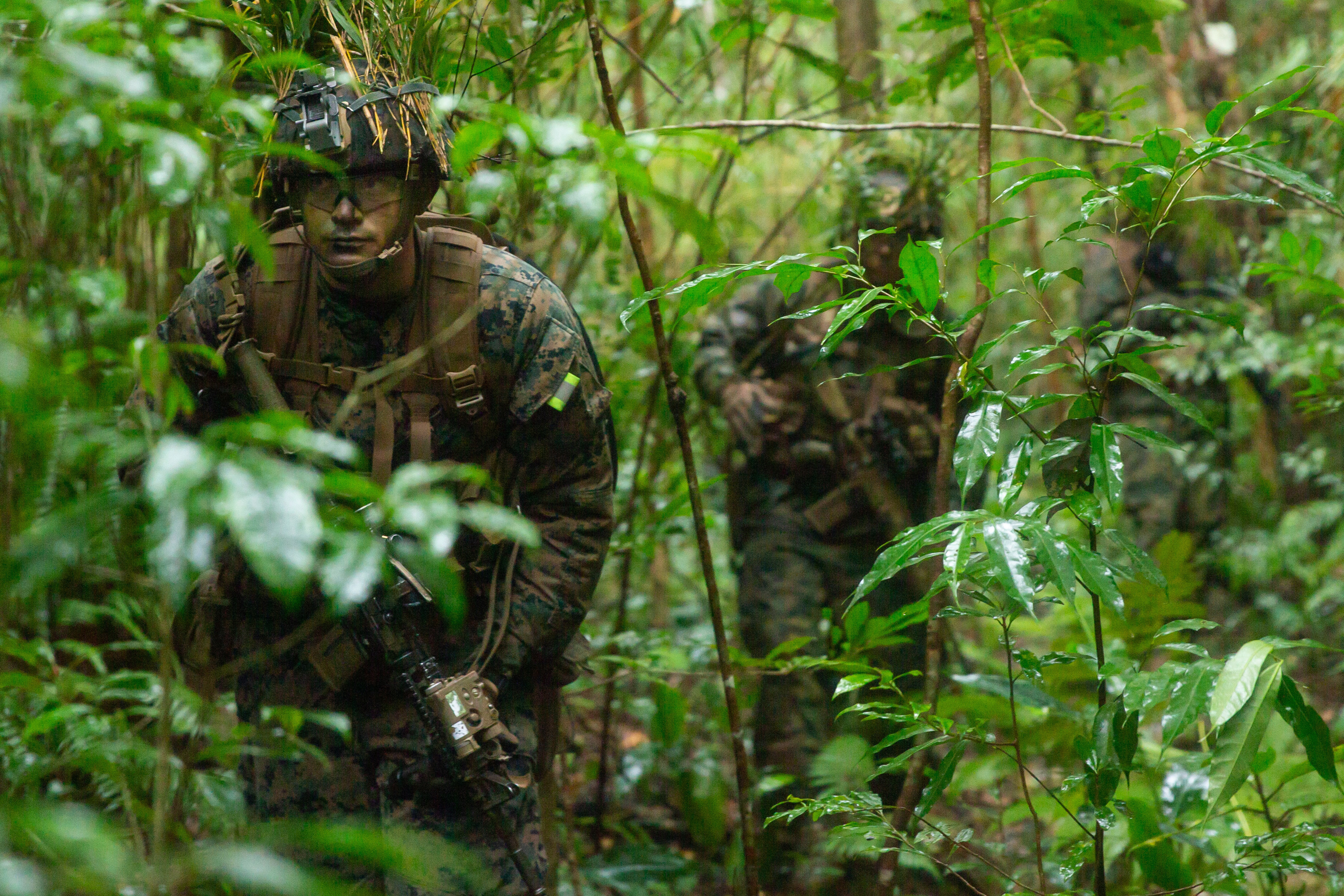
Marines conduct a squad attack during the 3d Marine Division's rifle squad competition at Camp Gonsalves, Okinawa, Japan, Jan. 12, 2021. The competition tests jungle survival skills, basic infantry tactics, and excellence in weapons handling.

Blue Watch


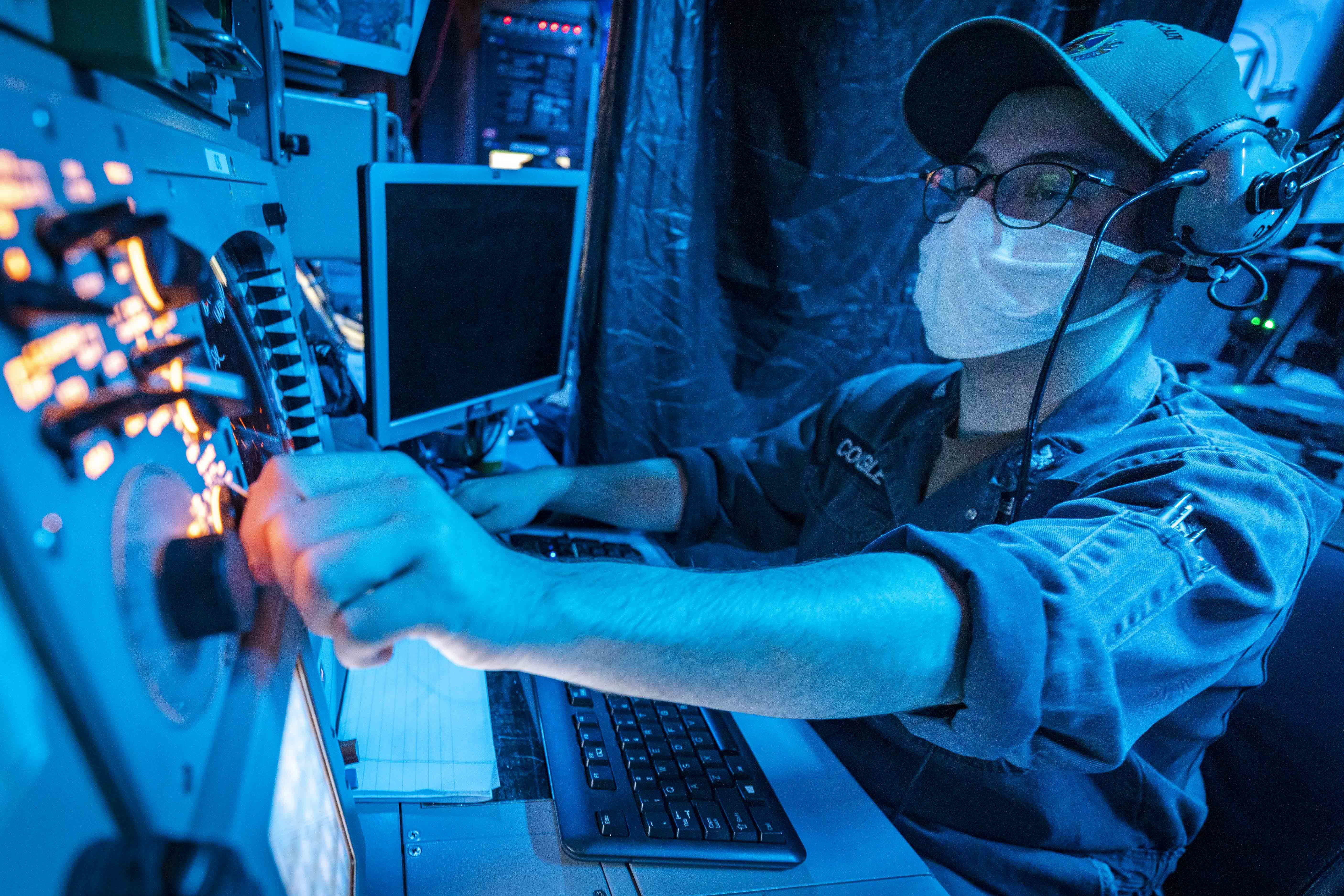
Navy Petty Officer 2nd Class Chance Coogle stands watch in the combat information center aboard the guided missile destroyer USS John S. McCain during operations in the South China Sea, Jan. 12, 2021.

Joint Chiefs Stress Service Members' Commitment to Constitution

 Jan. 13, 2021 | BY Jim Garamone , DOD News

In an unprecedented message, the members of the Joint Chiefs of Staff told service members that the Jan. 6 assault on the Capitol was an attack on the Constitutional process of the nation.

U.S. service members swear an oath to "support and defend the Constitution against all enemies foreign and domestic." The memo — signed by all eight members of the Joint Chiefs of Staff — stresses that commitment and the values behind it.

The memo, signed yesterday, said the actions in the Capitol "were inconsistent with the rule of law. The rights of freedom of speech and assembly do not give anyone the right to resort to violence, sedition and insurrection."

As service members, we must embody the values and ideals of the nation. We support and defend the Constitution. Any act to disrupt the constitutional process is not only against our traditions, values and oath, it is against the law."
Joint Chiefs of Staff memo

The memo stresses that the United States military "will obey lawful orders from civilian leadership, support civil authorities to protect lives and property, ensure public safety in accordance with the law, and remain fully committed to protecting and defending the Constitution of the United States against all enemies, foreign and domestic."

The chiefs said the attack on the Capitol — as members of Congress were performing their constitutional duties of counting the votes of the Electoral College — was a direct assault on the constitutional process. 

"As service members, we must embody the values and ideals of the nation," the chiefs wrote. "We support and defend the Constitution. Any act to disrupt the constitutional process is not only against our traditions, values and oath, it is against the law. On January 20, 2021, in accordance with the Constitution, confirmed by the states and the courts, and certified by Congress, President-elect Biden will be inaugurated and will become our 46th commander in chief."

The chiefs urged service members all around the world to "stay ready, keep your eyes on the horizon, and remain focused on the mission. We honor your continued service in defense of every American."

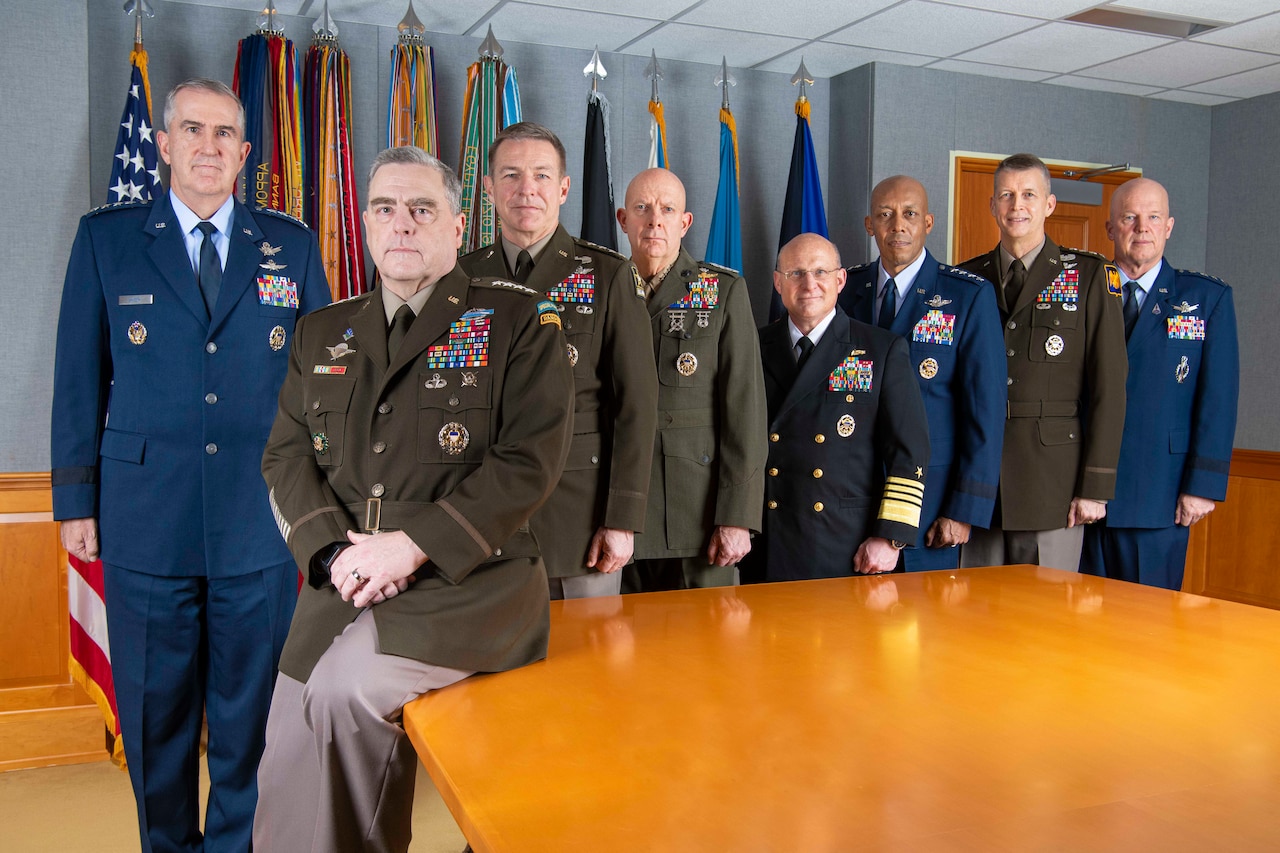
Eight men wearing military uniforms gather around a table; a number of flags are in the background.

The memo was signed by: Army Gen. Mark A. Milley, the chairman of the Joint Chiefs of Staff; Air Force Gen. John E. Hyten, the Joint Chiefs vice chairman; Army Chief of Staff Gen. James C. McConnville; Marine Corps Commandant Gen. David C. Berger; Chief of Naval Operations Adm. Michael M. Gilday; Air Force Chief of Staff Gen. Charles Q. Brown; Chief of Space Operations Gen. John W. Raymond; and Chief of the National Guard Bureau Army Gen. Daniel R. Hokanson.

Pentagon chief of staff Kash Patel told Fox News that the Defense Department is working to ensure a seamless transfer of power to the Biden administration.

"When it comes to the defense of the country, there is no honeymoon period granted by our enemies for a new administration's learning curve," Patel wrote. "That is why, as the department's chief of staff and head of the transition, I ordered the DOD to fully cooperate with President-elect Joe Biden." 

The department stands ready to welcome Biden administration officials and will take part in protecting the Inauguration. The National Guard will help defend the ceremony with 15,000 troops deployed to Washington to uphold the Constitution and rule of law, Patel said.

"Here at the Department of Defense, we will ensure that the new leaders of the world's most powerful military are fully prepared to assume the helm at noon [on] Jan. 20," Patel wrote. "Along with the entire department, I wish them the utmost success and am grateful for their service to the country. I'm sure leading the brave men and women who wear the cloth of our nation will be the greatest honors of their lives, as it has been for me."

Confidence Course


Marine Corps recruits overcome an obstacle during the confidence course at Marine Corps Recruit Depot, San Diego, Jan. 12, 2021. Drill instructors keep a close watch to ensure the obstacles are being executed correctly and safely.

COVID-19 Technique


Army Maj. (Dr.) Douglas Ruhl, a surgeon at Madigan Army Medical Center, Joint Base Lewis-McChord, Wash., uses the COVID-19 airway management isolation chamber to perform a mastoidectomy, which removes a growth behind the eardrum, Jan. 5, 2021. This procedure requires drilling into the skull, creating bone dust and aerosolized droplets.

Emergency Supplies


Army Pfc. Trenton Choate packs a food box at the Emergency Food Network warehouse in Fife, Wash., Jan. 6, 2021. The National Guard helped pack more than 8,000 emergency food boxes for the residents of Pierce County.

COVID-19 Vaccine


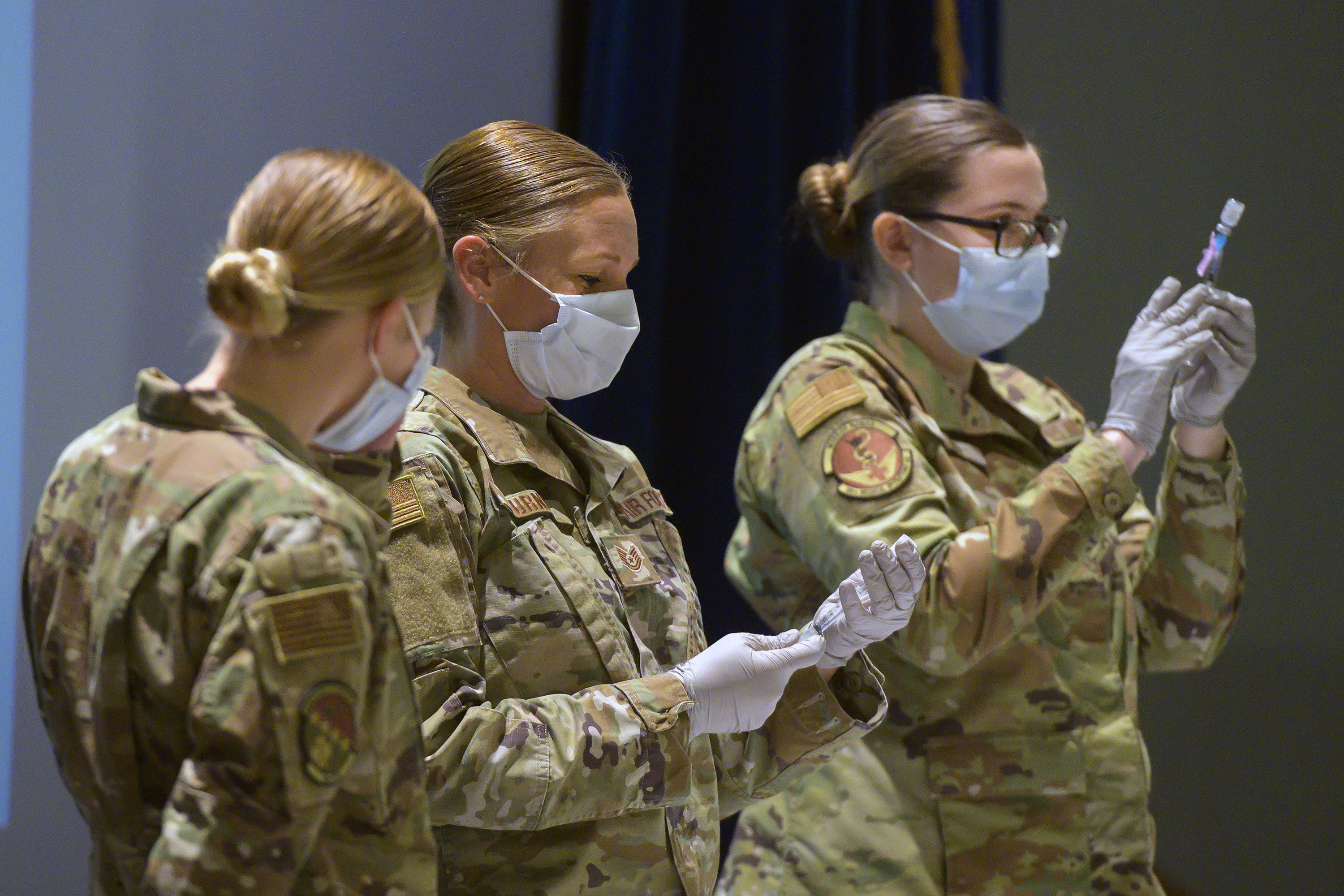
Air Force Staff Sgts. Allison Turner and Elizabeth Ciero, both assigned to the 88th Healthcare Operations Squadron, fill syringes with the COVID-19 vaccine in the Wright-Patterson Air Force Base, Ohio, Medical Center auditorium, Jan. 8, 2021. The airmen were preparing the syringes to vaccinate health care workers and other phase-1 airmen.

Offloading Supplies


A NASA Armstrong Flight Research Center crewmember offloads supplies from a DC-8 for an emergency field hospital at Air Force Plant 42 in Palmdale, Calif., Jan. 11, 2021. Samaritan’s Purse, a charitable organization, has partnered with Lancaster Baptist Church, the city of Lancaster and AV Hospital to provide a 70-bed temporary field hospital to support COVID-19 patients.

Patient Care


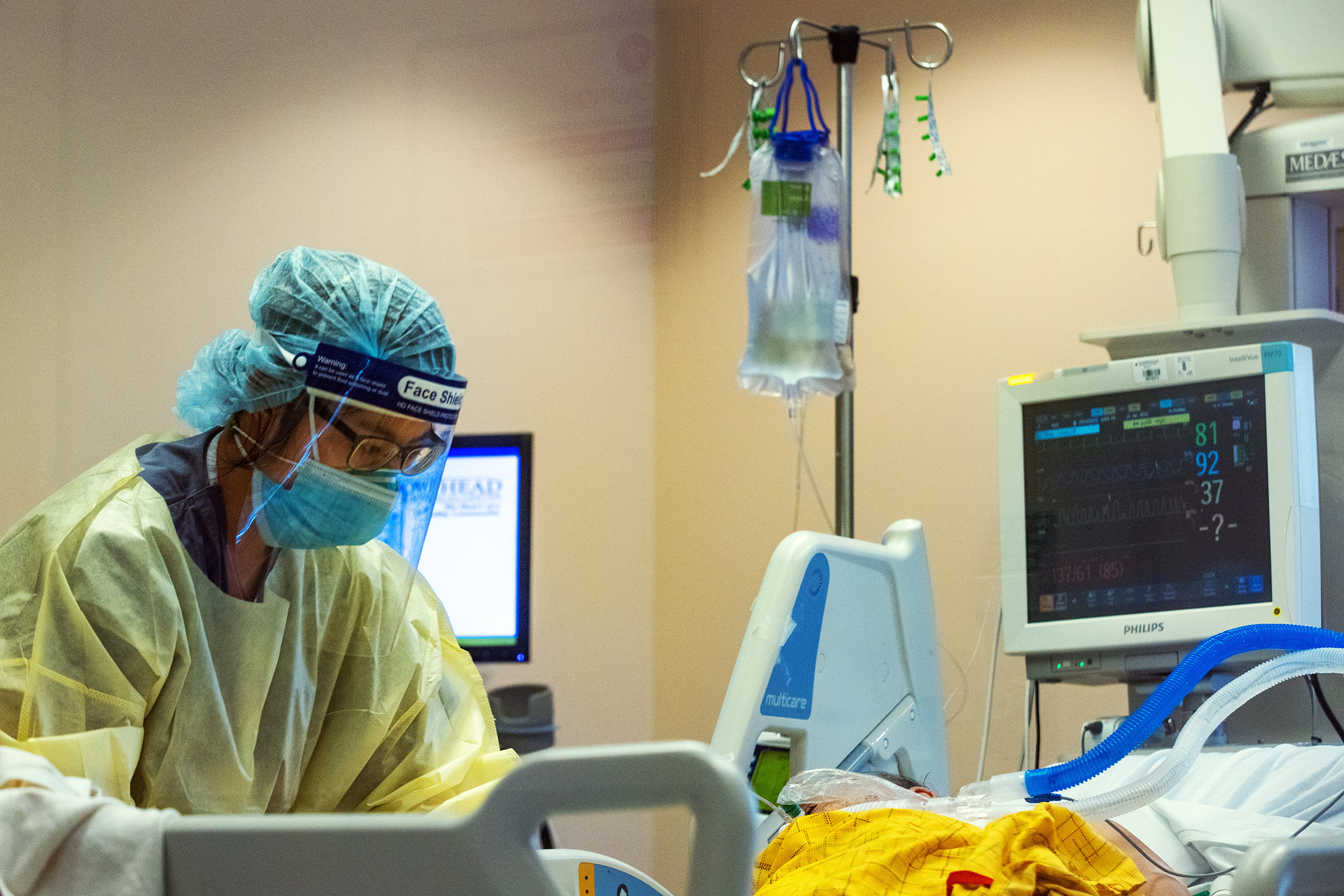
Air Force Capt. Whay Cheng, a physician assigned to the 60th Medical Group, 60th Air Mobility Wing, Travis Air Force Base, Calif., tends to a patient at Arrowhead Regional Medical Center, Colton, Calif., Jan. 11, 2021. Defense Department medical teams integrated into California hospitals to provide medical support alongside hospital medical personnel in response to the COVID-19 pandemic.

Taking Measurements


Navy Petty Officer 1st Class Reyna Montue looks through a stadimeter aboard the aircraft carrier USS Theodore Roosevelt during operations in the Pacific Ocean, Jan. 12, 2021.

DOD's Autonomous Vessel Sails Through Transit Test, Participates in Exercise Dawn Blitz

 Jan. 13, 2021 | BY C. Todd Lopez , DOD News

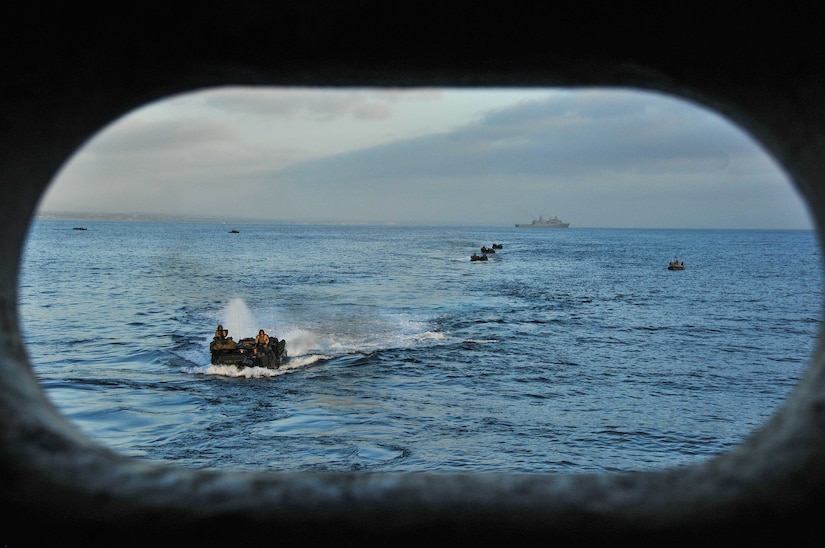
A Ghost Fleet Overlord unmanned surface vessel, part of a partnership between the Defense Department's Strategic Capabilities Office and the Navy, recently traveled a distance of more than 4,700 nautical miles, almost entirely autonomously. Afterward, it participated in exercise Dawn Blitz where it again spent nearly all of its underway time operating autonomously.

A boat moves through the water.

"This is a historic milestone for the program and the Navy. It represents what SCO does best: integrate mature technologies to accelerate service priorities and create new capabilities for our warfighters,'' Jay Dryer, director of the SCO said.

The Ghost Fleet Overlord program is part of an effort to accelerate the Navy's push to incorporate autonomous vessels within its fleet to better expand the reach of manned vessels. Autonomy includes more than just straight-line passage through large areas of the ocean; it also involves such things as collision avoidance and following the rules of the sea.

The Navy's efforts to adopt the unmanned vessel concept involve several classes of ships and an array of missions, such as offensive operations and intelligence, surveillance and reconnaissance with reduced risk to crew and legacy vessels. The Ghost Fleet Overlord program has demonstrated continued maturity in the autonomous USV concept since it stood up in late 2018. 

Small Navy vessels move through the water.

The most recent display of that maturity involved a USV traveling from the Gulf Coast to the coast of California, moving autonomously approximately 97% of the time. While the USV did have a crew on board, remote mission command and control for the trip was done from a remote location by sailors with Surface Development Squadron One.

One of the few times the USV was guided by its onboard crew was when it traversed the Panama Canal. 

Optionally manned vessels provide a stepping stone to allow the Navy and its sailors to more easily become familiar with the concept of autonomous operations than what would be possible with a fully autonomous ship.

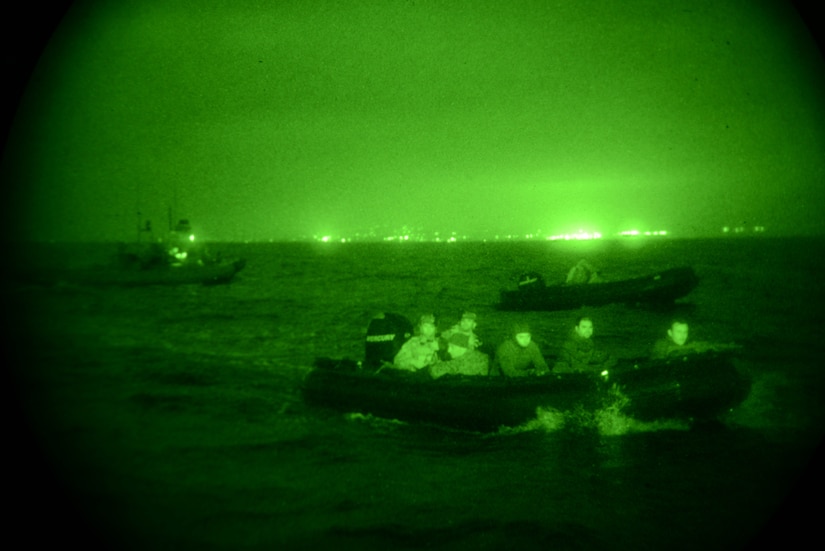
After arriving on the West Coast of the U.S., the Ghost Fleet Overlord USV participated in December's Dawn Blitz exercise with the Navy and Marine Corps. There, it successfully demonstrated compliance with international regulations for preventing collisions at sea, station keeping, loiter and transit missions. It was the first time a Ghost Fleet Overlord USV interacted with actual assets in the Navy fleet.

Service members move through the water in inflatable boats.

During its participation in Dawn Blitz, the Ghost Fleet Overlord USV operated autonomously for more than 130 hours and traversed roughly 950 nautical miles — accounting for approximately 98% of its underway time.

The Ghost Fleet Overlord program has been an accelerant to the Navy's adoption of unmanned surface vessels, enabling it to more rapidly bring such vessels into the fleet.

"Our close partnership with SCO on the Overlord program is accelerating the technology demonstration, CONOPs development and operational command and control of unmanned surface vessels in direct alignment with the Navy's plans," CAPT Pete Small, Navy Program Manager for USVs, said.

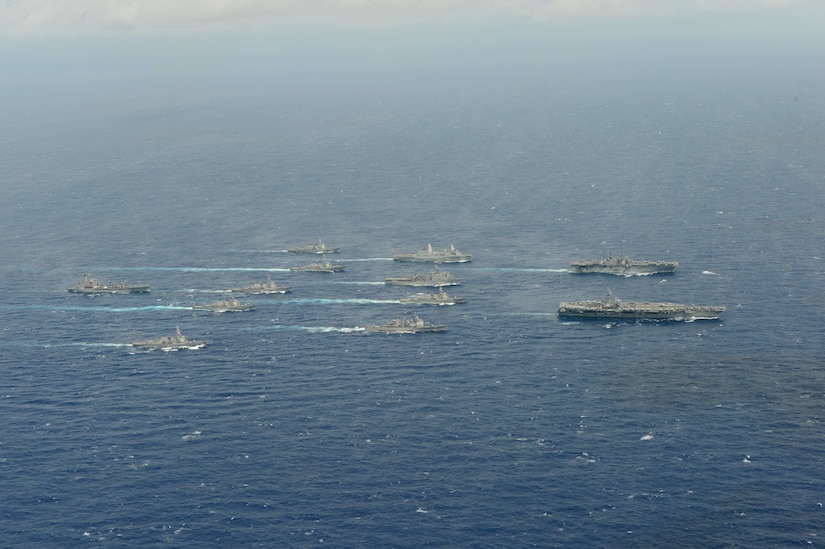
A dozen Navy vessels move through the ocean.

To help the Navy advance its goal to incorporate autonomous vessels within the fleet, the SCO's Ghost Fleet Overlord program has taken commercial ocean-going vessels and integrated both commercially-available and government-provided equipment on board to create unmanned surface vessels. Phase II of the Ghost Fleet Overlord program, which focuses on the integration of government-furnished command-and-control systems and payloads and more complex and challenging naval operations experimentation, began in September. The SCO will transition its two Ghost Fleet Overlord prototypes to the Surface Development Squadron One by the end of fiscal year 2021. The Navy is currently acquiring two more Ghost Fleet Overlord prototypes to accompany the two SCO built to continue unmanned systems testing and fleet experimentation. 

Funeral Honors


Soldiers assigned to the 3rd U.S. Infantry Regiment, known as “The Old Guard,” conduct modified military funeral honors for retired Army Maj. Gen. Donald C. Hilbert at Arlington National Cemetery, Va., Jan. 11, 2021. Hilbert was selected to command The Old Guard in 1977, and held several other important command and staff positions during his military service.

Troop Talk


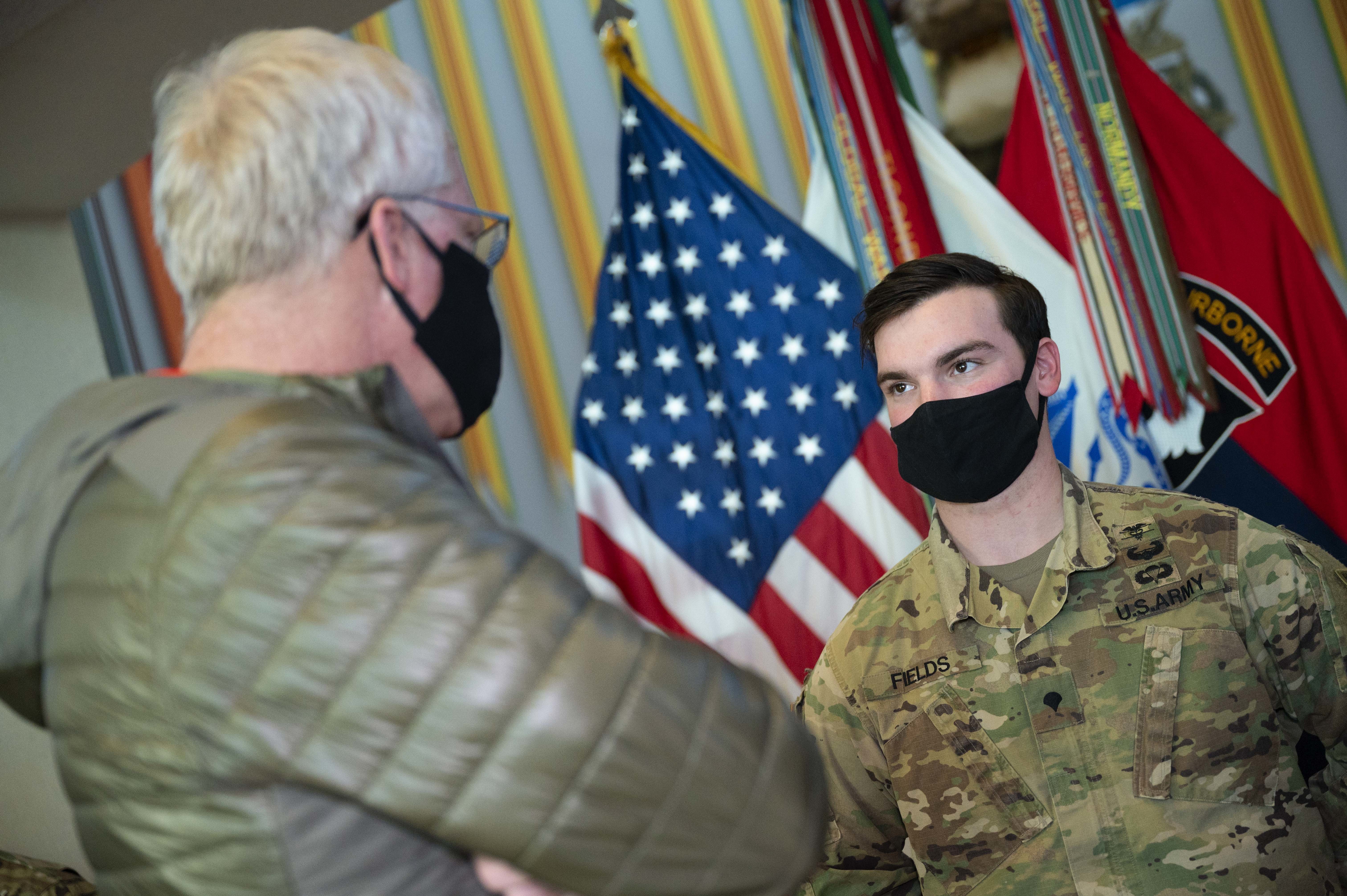
Acting Defense Secretary Chris Miller talks with a service member during a visit to Fort Campbell, K.Y., Jan. 12, 2021, where he and Senior Enlisted Advisor to the Chairman Ramón "CZ" Colón-López recognized high-performing troops.

Tuesday, January 12, 2021

Bomb Inspection


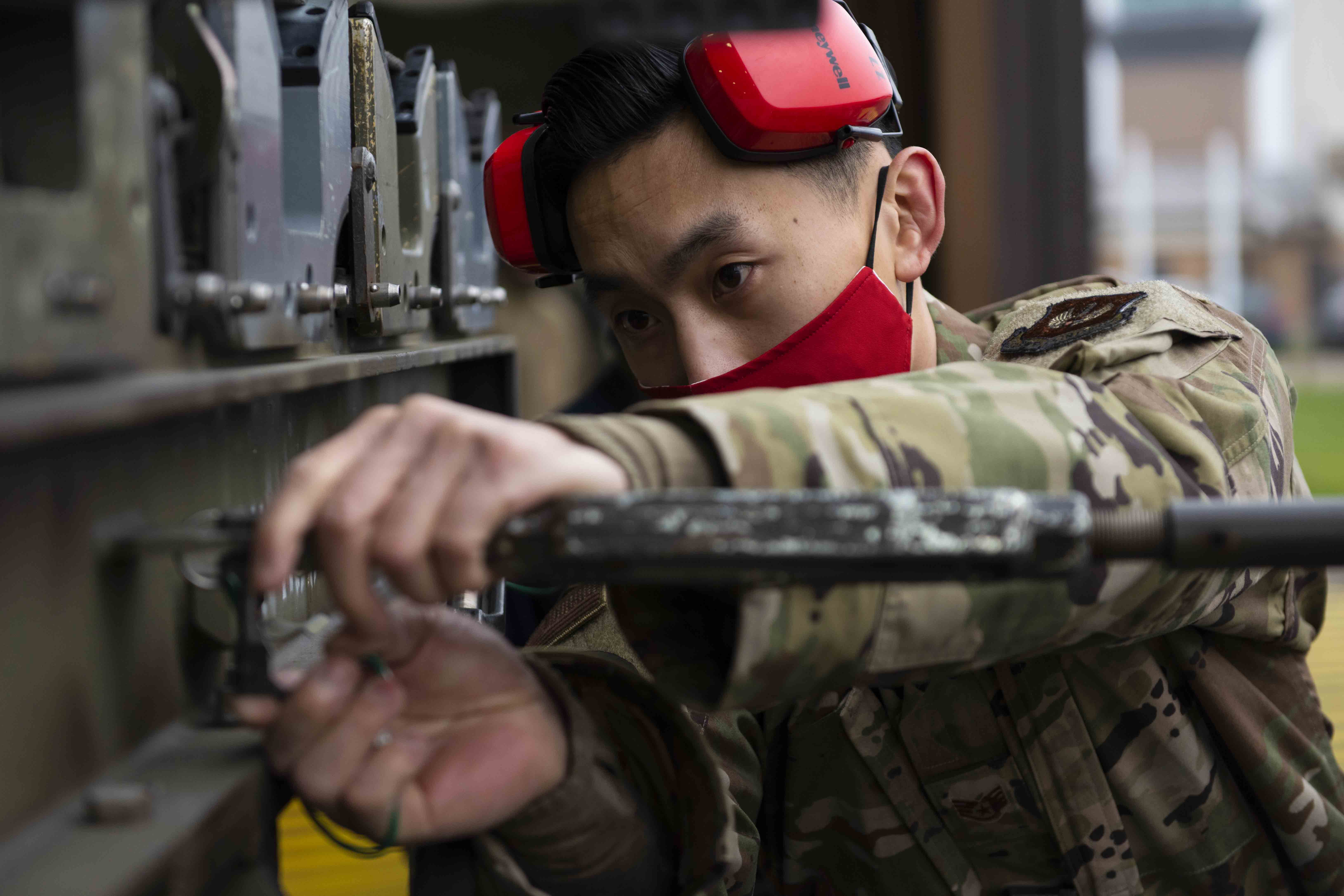
Air Force Staff Sgt. Fong Thao inspects a bomb rack before a quarterly load crew competition at Royal Air Force Lakenheath, England, Jan. 8, 2021.

Fleet Feet


Sailors participate in a 5K run on the flight deck of the USS Nimitz in the Arabian Sea, Jan. 11, 2021.

Route Reconnaissance


Marine Corps Lance Cpl. Ethan Sawyer conducts route reconnaissance during the 3rd Marine Division Rifle Squad Competition at Camp Gonsalves in Okinawa, Japan, Jan. 11, 2021. The weeklong competition tests jungle survival skills, basic infantry tactics and weapons handling.

Pugil Partners


Marine Corps recruits fight with pugil sticks during training at Marine Corps Recruit Depot Parris Island, S.C., Jan. 11, 2021.

Readout of PDO Under Secretary of Defense for Policy Anthony Tata's Meeting With Moroccan Minister for Administration of National Defense Abdellatif Loudiyi and Inspector General of the Royal Moroccan Armed Forces Abdelfatah Louarak

 Jan. 12, 2021


Anthony Tata, performing the duties of (PDO) under secretary of defense for policy, met separately with Abdellatif Loudiyi, Morocco’s minister-delegate to the head of government in charge of the National Defense Administration and Abdelfatah Louarak, inspector general of the Royal Moroccan Armed Forces, during a visit to Morocco January 12.  Mr. Tata also co-chaired the 11th U.S.-Morocco Defense Consultative Committee with General Louarak.  

During the Defense Consultative Committee, PDO USD(P) Tata and General Louarak signed the Bilateral Country Action Plan to implement the U.S.-Morocco Roadmap for Defense Cooperation signed during former Secretary Esper’s trip to Rabat in October 2020. The action plan focuses on enhancing Moroccan military capacity, deepening interoperability, boosting force readiness, and supporting Morocco's role as a contributor to regional security.

PDO USD(P) Tata, Mr. Loudiyi and General Louarak affirmed both countries’ commitment to the strategic bilateral partnership to deter threats and address shared challenges.  They noted the enduring ties created over 244 years of partnership and pledged to work closely together to safeguard both countries’ national security interests.  

PDO USD(P) Tata specifically hailed the Moroccan military’s significant contributions to African and international stability and security under the leadership of His Majesty King Mohammed VI.  He also highlighted Morocco’s participation in more than 100 military engagements with the United States yearly, its hosting of AFRICAN LION - the largest yearly U.S. military exercise in Africa, and Morocco’s role exporting security abroad.  

The U.S. Department of Defense will continue to execute its mission, including by reassuring allies and partners of our nation’s steadfast resolve, as we uphold our oath of office and the Constitution. 

Registration Process


The Puerto Rico National Guard started operations at the Bayamón regional vaccination center at the Rubén Rodríguez Coliseum in San Juan, Jan. 7, 2021. This center will serve health professionals of the municipalities from Bayamón, Cataño, Toa Baja, Dorado, Vega Alta, Corozal, Orocovis, Barranquitas, Comerío, and Toa Alta on different days of the week. The vaccination process starts with registration at 7 a.m., from Monday through Saturday. On Saturdays, doctors and dentists will be vaccinated.

Vaccination Day


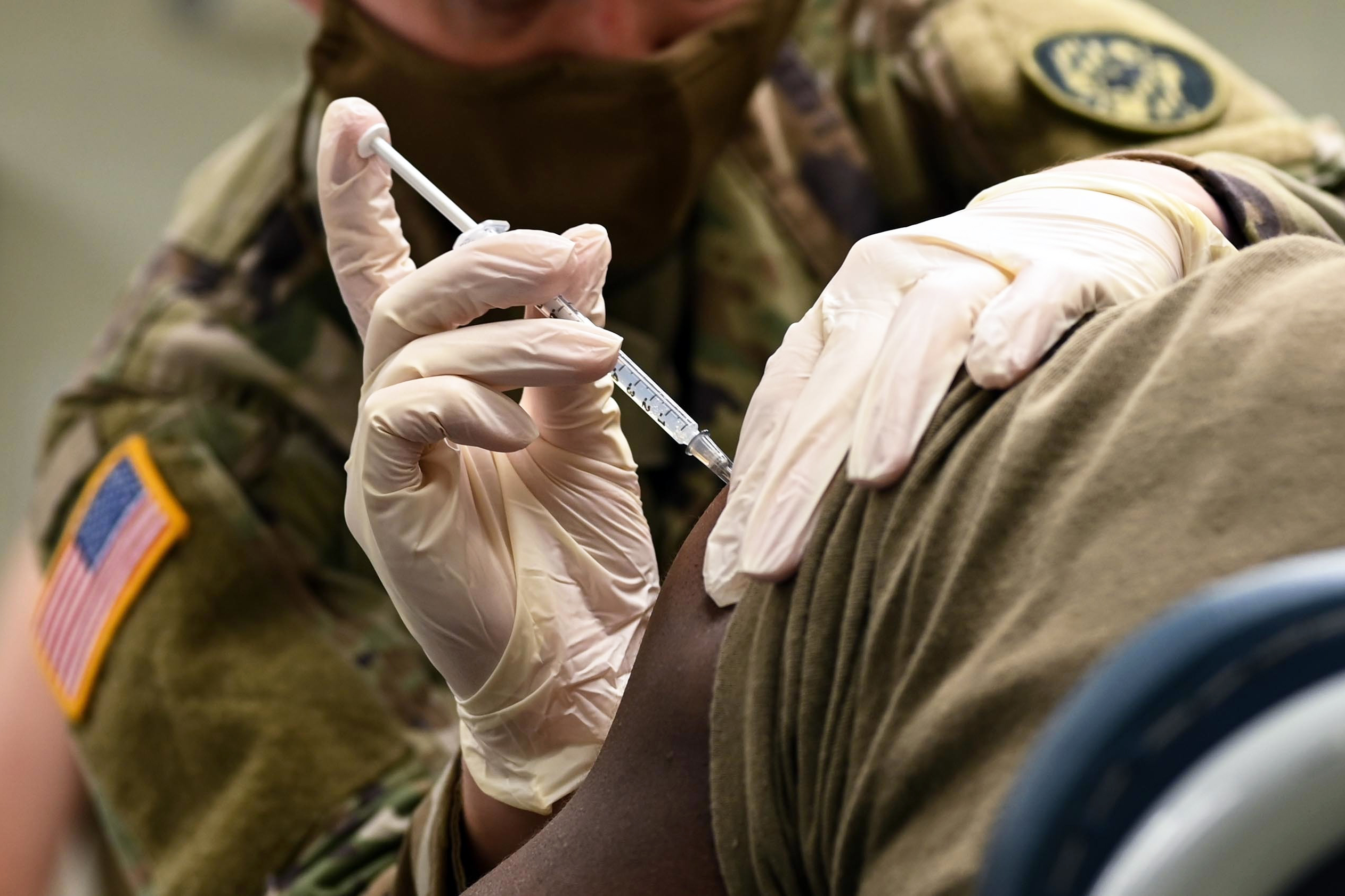
Army Spc. Victoria Yarborough, a health care specialist for the Maryland Army National Guard Medical Detachment, administers a COVID-19 vaccine to a soldier at Camp Fretterd Military Reservation in Reisterstown, Md., Jan. 8, 2021. Maryland National Guard soldiers and airmen are supporting the state’s COVID-19 vaccination initiative with mobile vaccination support teams, which are providing medical and logistical support to county health departments during the global pandemic.

Rocky Route


A Marine rappels during the 3rd Marine Division Rifle Squad Competition at Camp Gonsalves in Okinawa, Japan, Jan. 11, 2021. The weeklong competition tests jungle survival skills, basic infantry tactics and weapons handling.

Growler Takeoff


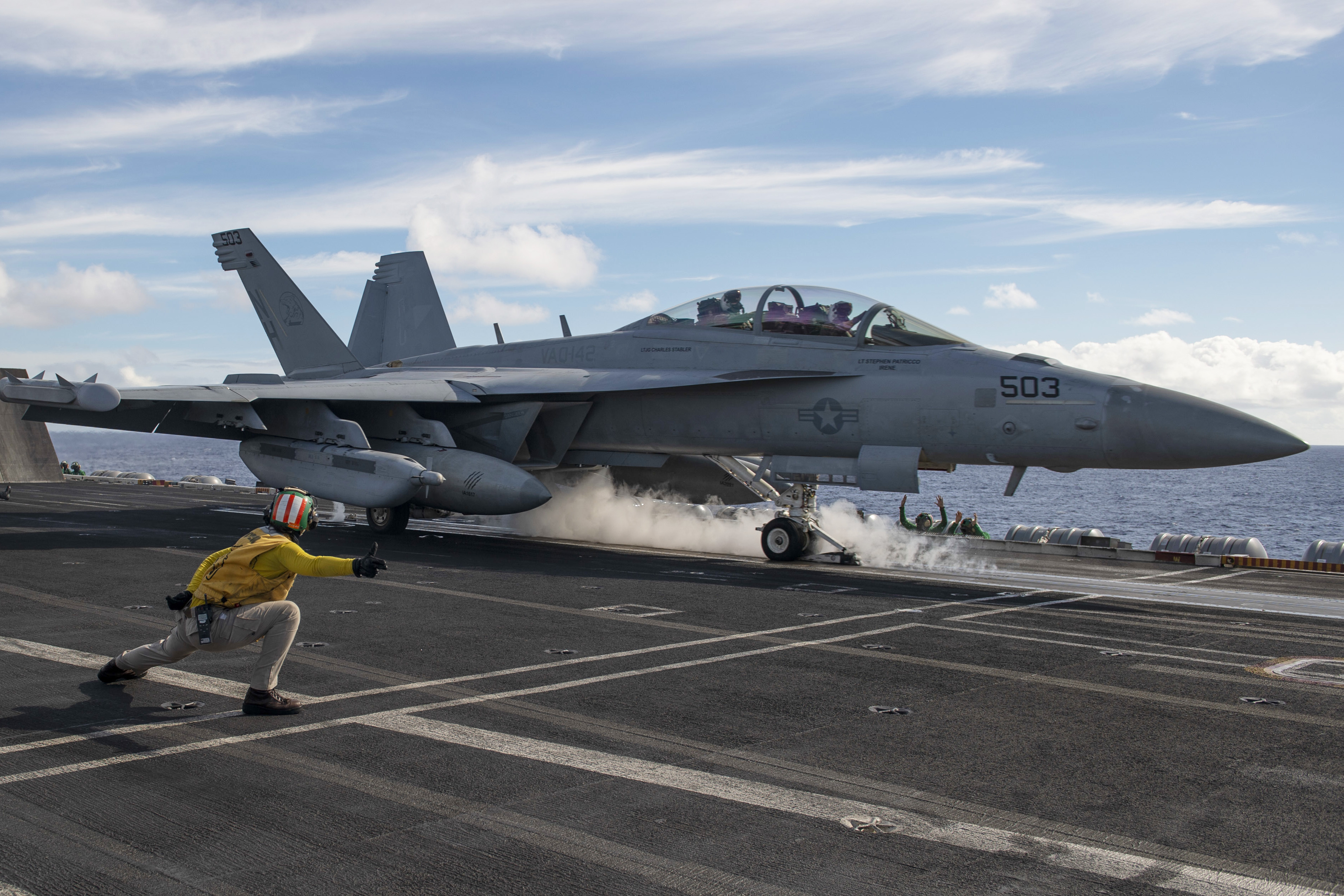
Navy Lt. Cmdr. Kelly Altschul signals the pilot of an EA-18G Growler to take off from the flight deck of the aircraft carrier USS Theodore Roosevelt during operations in the Pacific Ocean, Jan. 7, 2021.

Sports Heroes Who Served: Navy Enlistment Helped Spark Football Legend's Career

 Jan. 12, 2021 | BY David Vergun , DOD News

Sports Heroes Who Served is a series that highlights the accomplishments of athletes who served in the U.S. military.

Daniel Eugene "Rudy" Ruettiger became a famous college football athlete, but he got his big start by joining the Navy in 1968 and serving two years at sea as a yeoman.

Using his Vietnam GI Bill benefits, he enrolled in Indiana's Holy Cross College in 1972 and then at the University of Notre Dame in 1974, playing in the Orange Bowl in 1975 and the Gator Bowl in 1976 — the year he graduated.

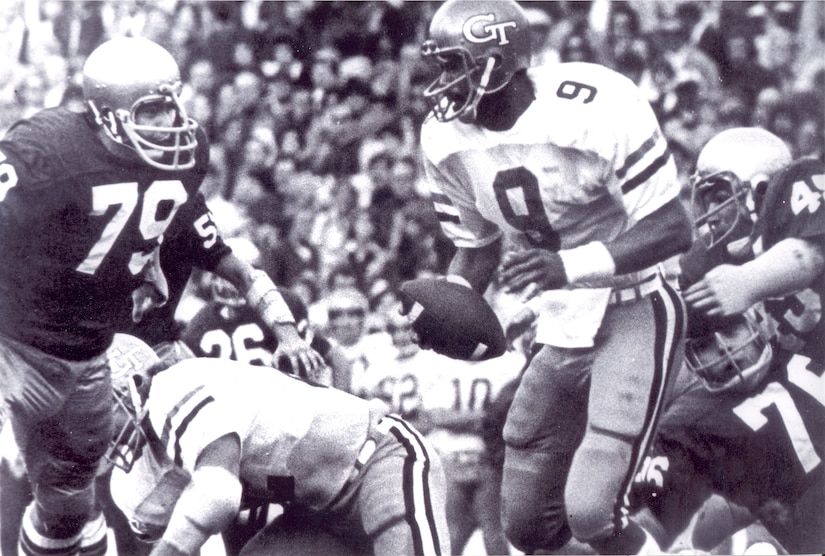
Football players make a play during a game.

Despite being undersized for a football player — 5 feet, 6 inches tall and 165 pounds—Ruettiger was accepted as a defensive end on Notre Dame's Fighting Irish football team due to his drive and determination.

His claim to fame was brief, but spectacular. On Nov. 8, 1975, he was put in the game against Georgia Institute of Technology. During the final play of the game, he sacked Georgia Tech quarterback Rudy Allen.

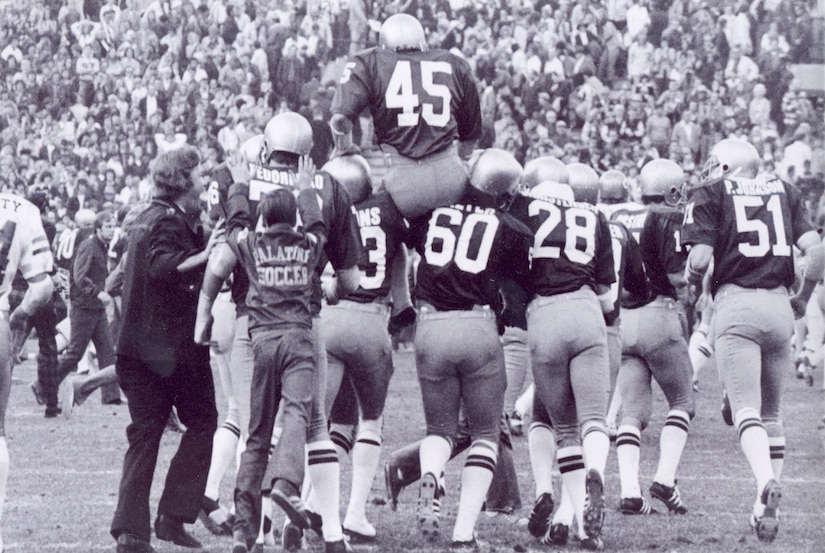
People are running off a football field as a football player is carried by teammates on their shoulders. In the background, the stands are filled with people.

Ruettiger's teammates were ecstatic, and they carried him off the field; at the time, he was the only player ever to receive such an honor.

The story of the undersized young man being allowed to play and sacking the opposition's quarterback led to the 1993 movie "Rudy" based on Ruettiger's short football career. Ruettiger was played by actor Sean Astin.

Ruettiger actually appeared in the movie as a fan in the final scene. Although Hollywood often takes liberties to make events more dramatic when making films based on true stories, Ruettiger said the film was 92% accurate.

These days, Ruettiger likes to visit service members and give motivational speeches.

A line of football players carries another player on their shoulders off the field.

During one such visit to Fort Huachuca, Arizona, on Oct. 7, 2010, he told the soldiers that "the Navy actually changed my thinking around, my attitude around, and who I was."

Ruettiger said members of the armed forces are great Americans. "This is an honor for me to come here. I'm real humbled and real privileged," he said.

During his motivational speech he talked about how everyone has the potential to be whatever they want to be.

A man speaks into a microphone as soldiers sit at tables to listen.

"It's not your age, it's your attitude," he said, adding that people who work hard deserve a shot.

Ruettiger also told the soldiers all it takes to succeed is what he called the four Cs: character, courage, commitment and contribution. "The little things make a big difference," he said. 

Moderna Vaccine


Doses of the Moderna COVID-19 vaccine are ready to be administered to airmen of the 163d Attack Wing, California Air National Guard, at March Air Reserve Base, Calif., Jan. 9, 2021. Military members can receive the vaccine voluntarily, and the initial doses have been prioritized for airmen on the front lines of the COVID-19 pandemic response.

Monday, January 11, 2021

Ready Refuel


A Marine refuels an AH-1Z Viper attack helicopter during a training exercise in Okinawa, Japan, Jan. 5, 2021.

Aerial Escort


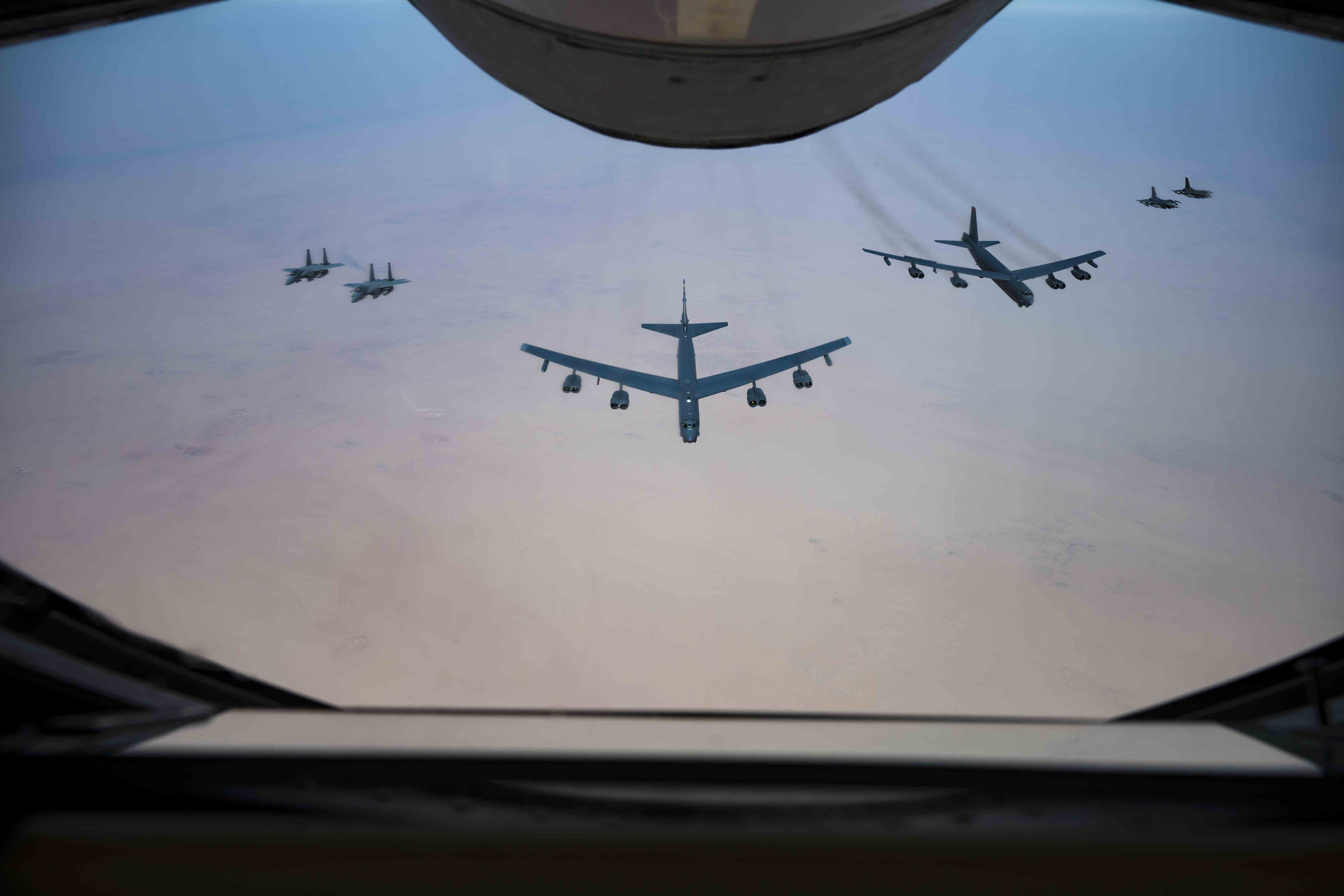
Air Force B-52 Stratofortresses and F-16 Fighting Falcons fly in formation with Saudi F-15SAs over the U.S. Central Command area of responsibility, Jan. 7, 2021.

Osprey Ops


Navy Petty Officer 1st Class Leo Gonzales prepares to move a Marine Corps MV-22 Osprey aboard the USS Makin Island in the Indian Ocean, Jan. 7, 2021.

Motor Move


Navy Petty Officer 2nd Class Donovan Chin raises a motor from a varnish tank aboard the USS Makin Island in the Indian Ocean, Jan. 6, 2021.

Vaccine Inspect


Medical staff assigned to the Brian D. Allgood Army Community Hospital inspect and store the first shipment of the COVID-19 vaccine to South Korea at Army Garrison Humphreys, South Korea, Dec. 28, 2020. The hospital is one of three Defense Department medical treatment facilities in South Korea inoculating medical staff and other key personnel during the initial worldwide distribution of the vaccine.

COVID-19 Test


Air Force Academy cadets, returning from winter break, receive a rapid result COVID-19 test before entering a restriction of movement phase to start the semester at the Air Force Academy in Colorado Springs, Colo., Jan. 5, 2021.

Receiving Vaccine


Air Force Col. Jessica Spitler, 30th Medical Group commander, and Air Force Senior Airman Dakota Orozco-Garcia, 30th MDG member, receive their vaccinations against COVD-19 during Operation Fight Back at Vandenberg Air Force Base, Calif., Jan. 6 2021. Medical workers from the 30th Medical Group set up a point of distribution system to help administer the first round of COVID-19 vaccines.

Acting Secretary Miller Travels to CONUS Bases

 Jan. 11, 2021


Acting Secretary of Defense Christopher C. Miller embarks Tuesday, Jan. 12, to visit the National Nuclear Security Administration in Oak Ridge, Tennessee; the Tennessee National Guard; Fort Campbell, Kentucky; U.S. Strategic Command in Omaha, Nebraska; and U.S. Space Command and U.S. Northern Command in Colorado Springs, Colorado. 

In Tennessee, Secretary Miller will visit NNSA partners at the Y-12 National Security Complex, as well as Tennessee National Guardsmen focused on COVID-19 response efforts.  At Fort Campbell, he will meet with service members assigned to the 101st Airborne Division, the 160th Special Operations Aviation Regiment, and the 5th Special Forces Group. 

Secretary Miller will also meet with leadership and personnel protecting our nation every day in all domains of warfare at USSTRATCOM, USSPACECOM and USNORTHCOM. 

First Responders


Maryland National Guard medical personnel administer the COVID-19 vaccine to Charles County first responders at the Regency Furniture Stadium, Waldorf, Md., Jan. 6, 2021. More than 140 Maryland National Guard members are gearing-up to directly support the COVID-19 vaccination initiative. Mobile vaccination support teams are providing direct support to county health departments, assisting with the acceleration of vaccination efforts.

Reviewing Charts


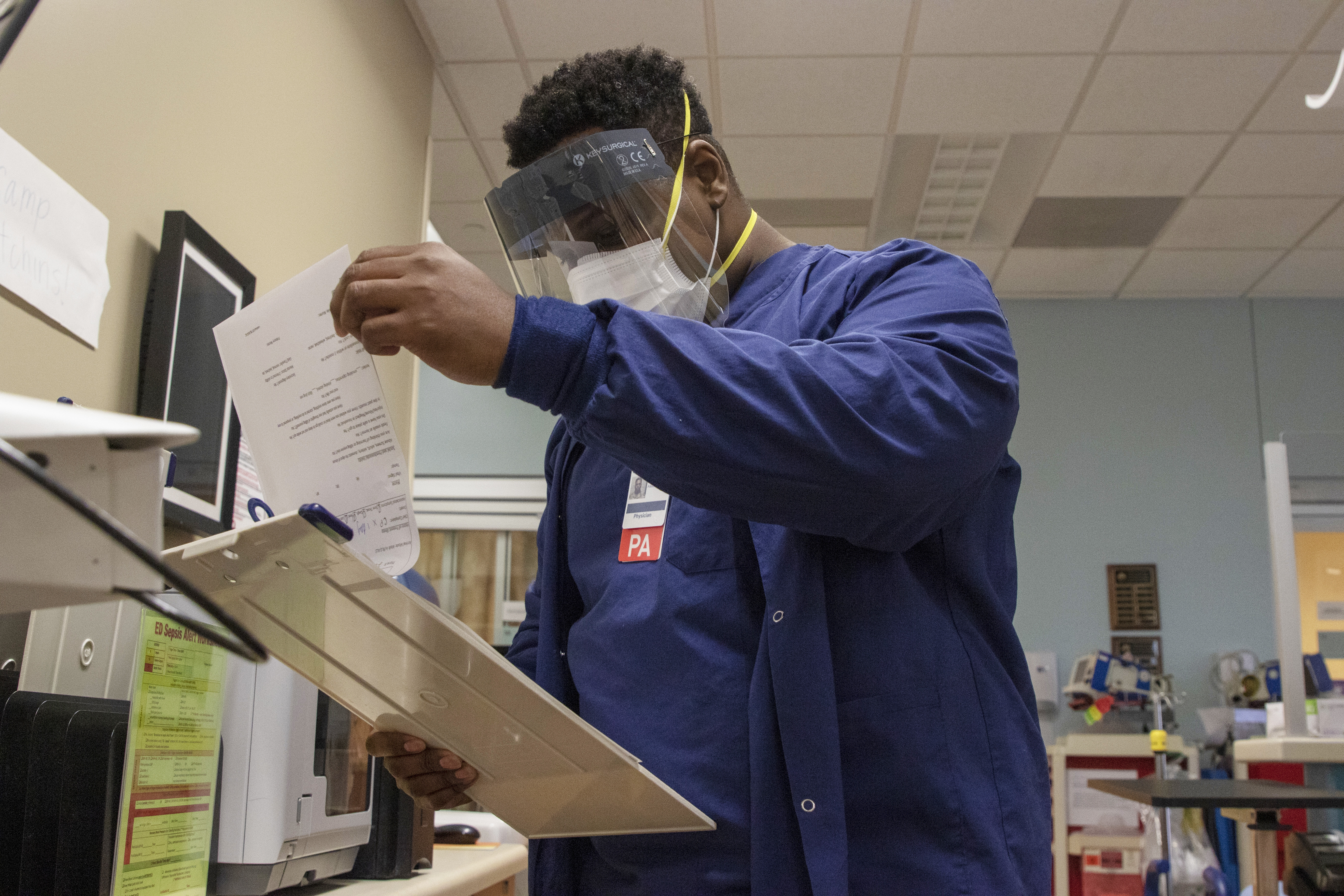
Air Force Capt. Dana Hunter Jr., physician assistant assigned to the 60th Medical Group, Travis Air Force Base, Calif., reviews a chart at Adventist Health Lodi Memorial Hospital, Lodi, Calif., Jan. 6, 2021. Northern Command, through Army North, remains committed to providing flexible Defense Department support to the whole-of-America COVID-19 response.

Rapid Results


Staff from the Air Force Academy’s 10th Medical Group administer rapid result COVID-19 tests as cadets return from winter break at the Air Force Academy in Colorado Springs, Colo., Jan. 5, 2021.

Vaccine Load


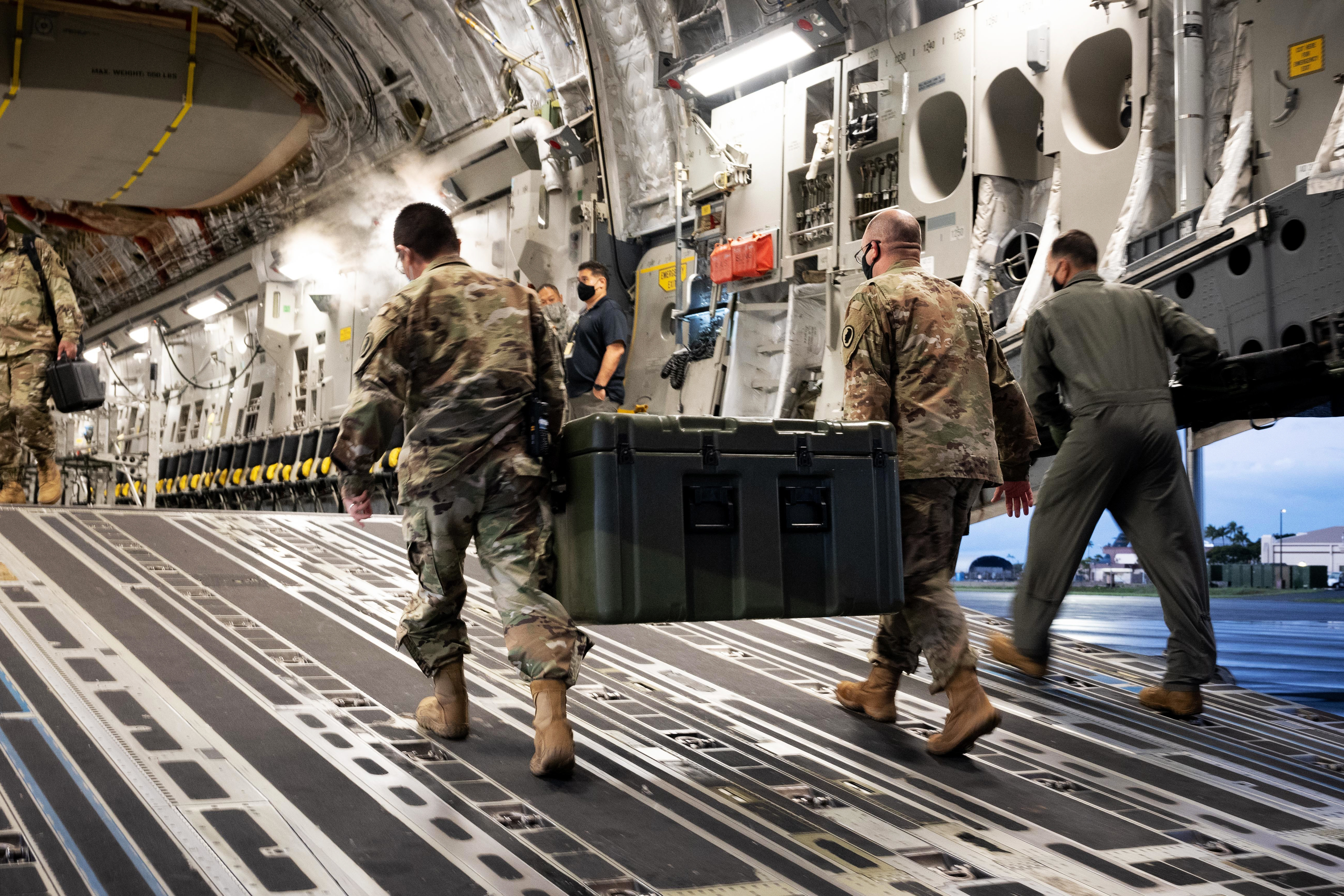
Soldiers assigned to the Medical Detachment, Hawaii National Guard, carry COVID-19 vaccinations onto a C-17 Globemaster III, at Joint Base Pearl Harbor-Hickam, Hi., Jan. 5, 2021. The aircraft, operated by 154th Wing airmen, was modified into a mobile vaccination clinic to administer the vaccine to activated guardsmen on neighboring islands.