Dec. 18, 2020
|
BY Jim Garamone
, DOD News
The Joint Chiefs of Staff will grow by one member when Space Force
Gen. John "Jay" Raymond joins the highest-ranking military, deliberative
body in the Defense Department on Dec. 20.
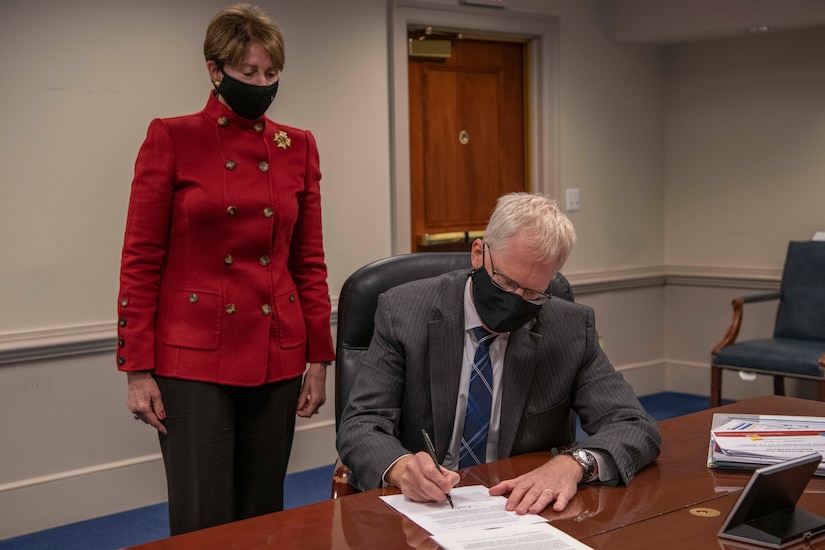
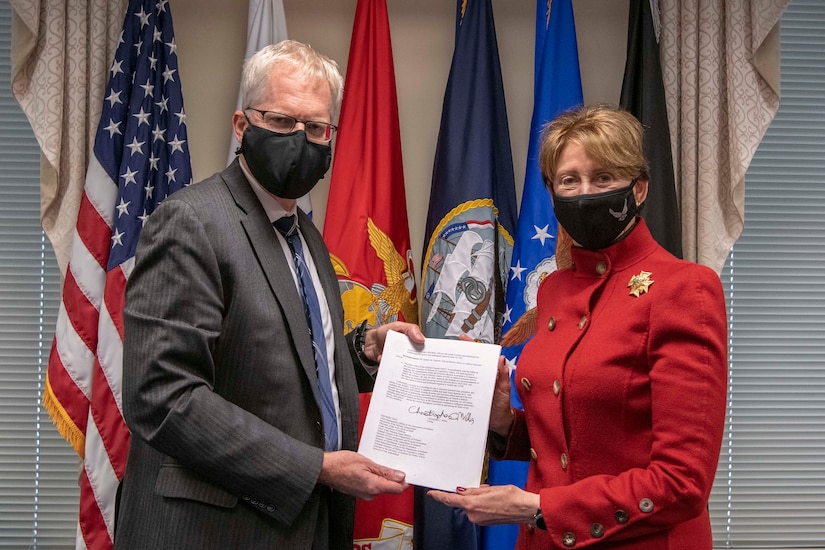
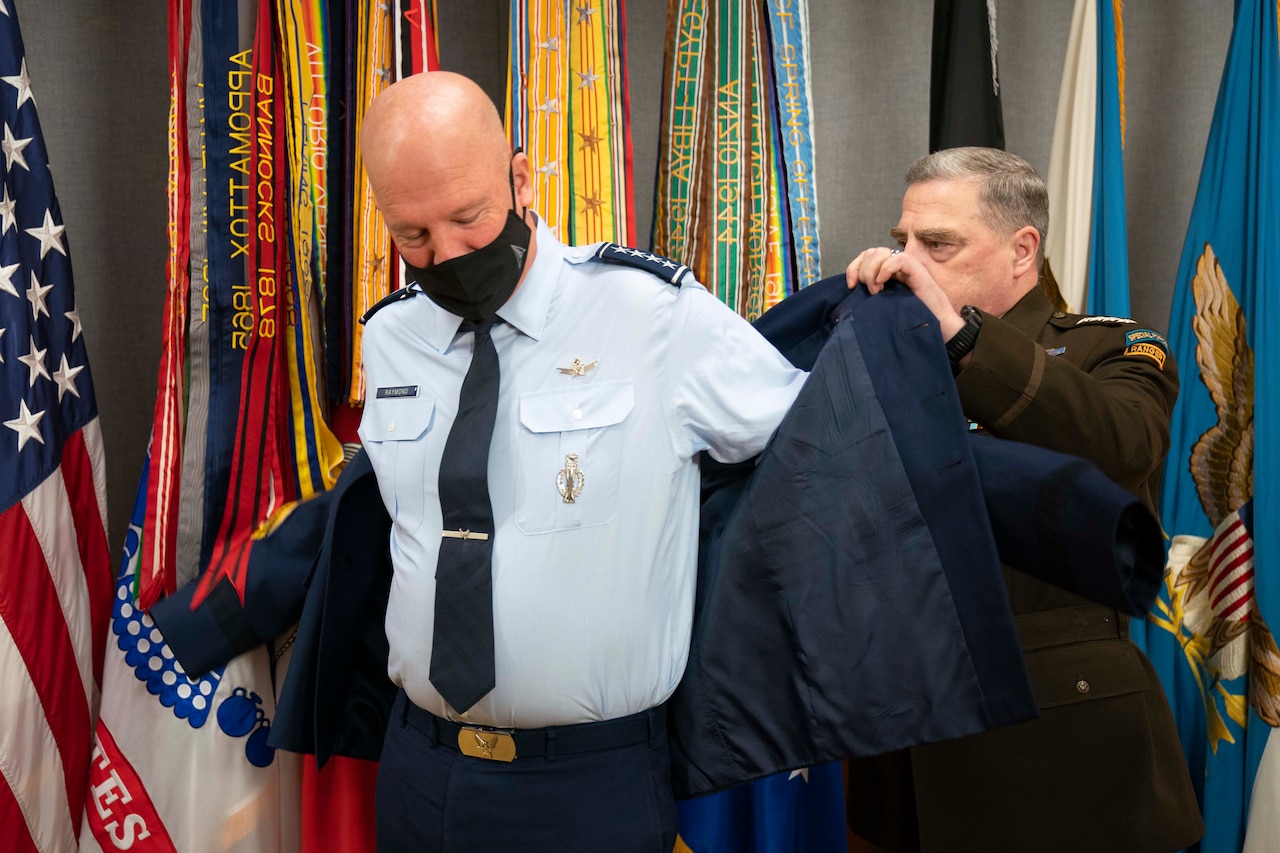
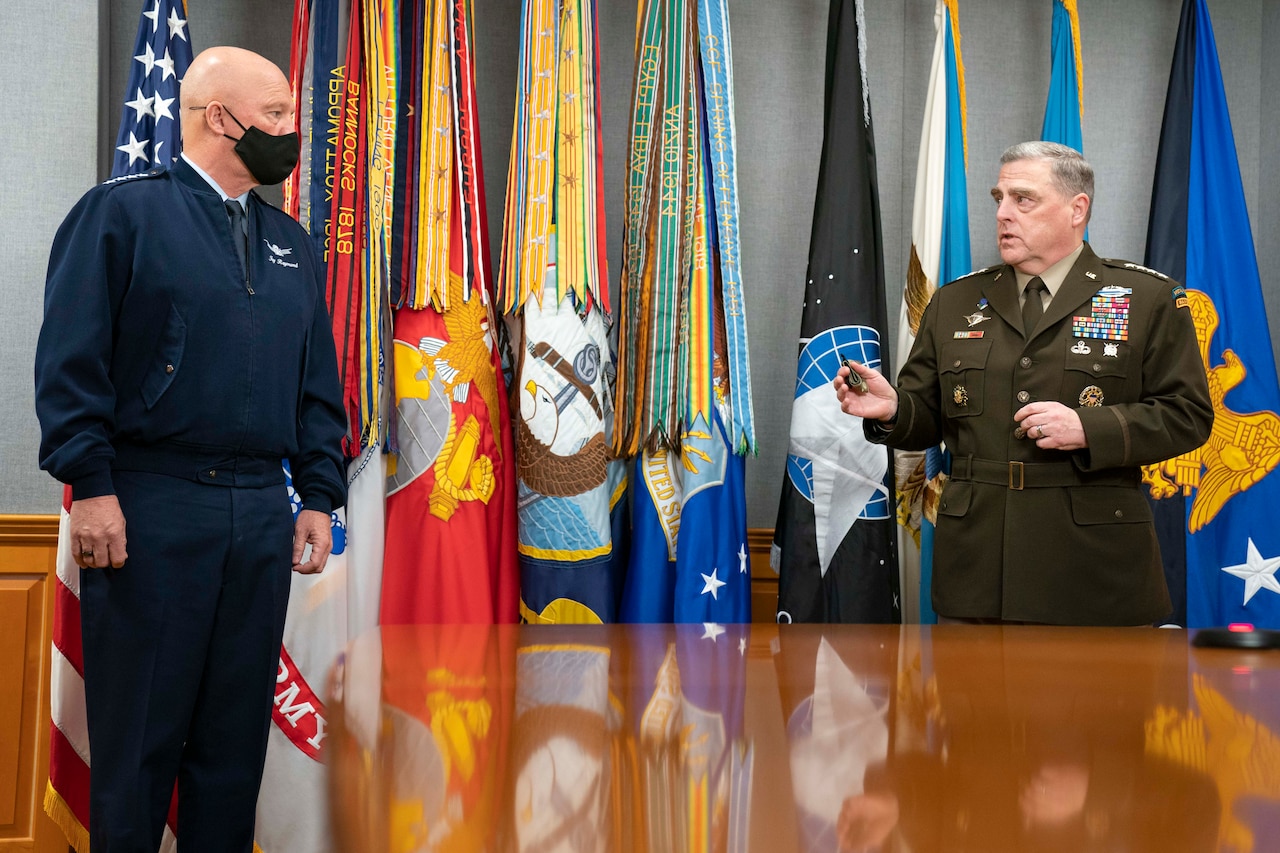
Chairman of the Joint Chiefs of Staff Army Gen. Mark Milley inducted
Raymond, the chief of space operations, into the Joint Chiefs of Staff
at a ceremony on Dec. 11. He becomes an official member of the body on
the same day the Space Force celebrates its first anniversary as an
official service branch.
The law stated that the chief of space operations would become a
member of the Joint Chiefs a year after it was signed. "But under your
leadership and under [the] leadership [of] the vice chairman, you said
'We're not going to wait!,' and you've treated me like a member ever
since [the law was signed]," Raymond said during the ceremony at the
Pentagon. "I can't thank you enough. I can't thank my teammates enough.
It's a real privilege to sit at this table."
The induction of Raymond points to the growing importance of space in
American life. It also highlights the increased importance of the
domain to the military. "We recognize it clearly as a warfighting
domain. And we also know that we, the United States, we've got to
maintain capabilities in that domain if we are going to continue to
deter great power war," Milley said during the ceremony. "This is an
incredibly important organization for the United States military and for
the United States as a country. And it's really important what we're
doing today, which is [to] induct you as an official member into the
Joint Chiefs of Staff."
The United States Space Force is a separate service under the
Department of the Air Force. It will grow to about 20,000 members with
most coming from the Air Force, but with other services also providing
personnel. The Air Force will provide all the services the new force
needs, allowing the space professionals to concentrate on their
missions.
"How fitting: The Chief of Space Operations is now officially a
member of the Joint Chiefs of Staff, in keeping with the pivotal role of
space in national defense," said Air Force Secretary Barbara Barrett.
"Incomparable Gen. Jay Raymond is building an agile, innovative and bold
Space Force. With the other chiefs, Gen. Raymond will offer his best
military advice to the president, National Security Council, Homeland
Security Council and defense secretary as they implement the National Defense Strategy."
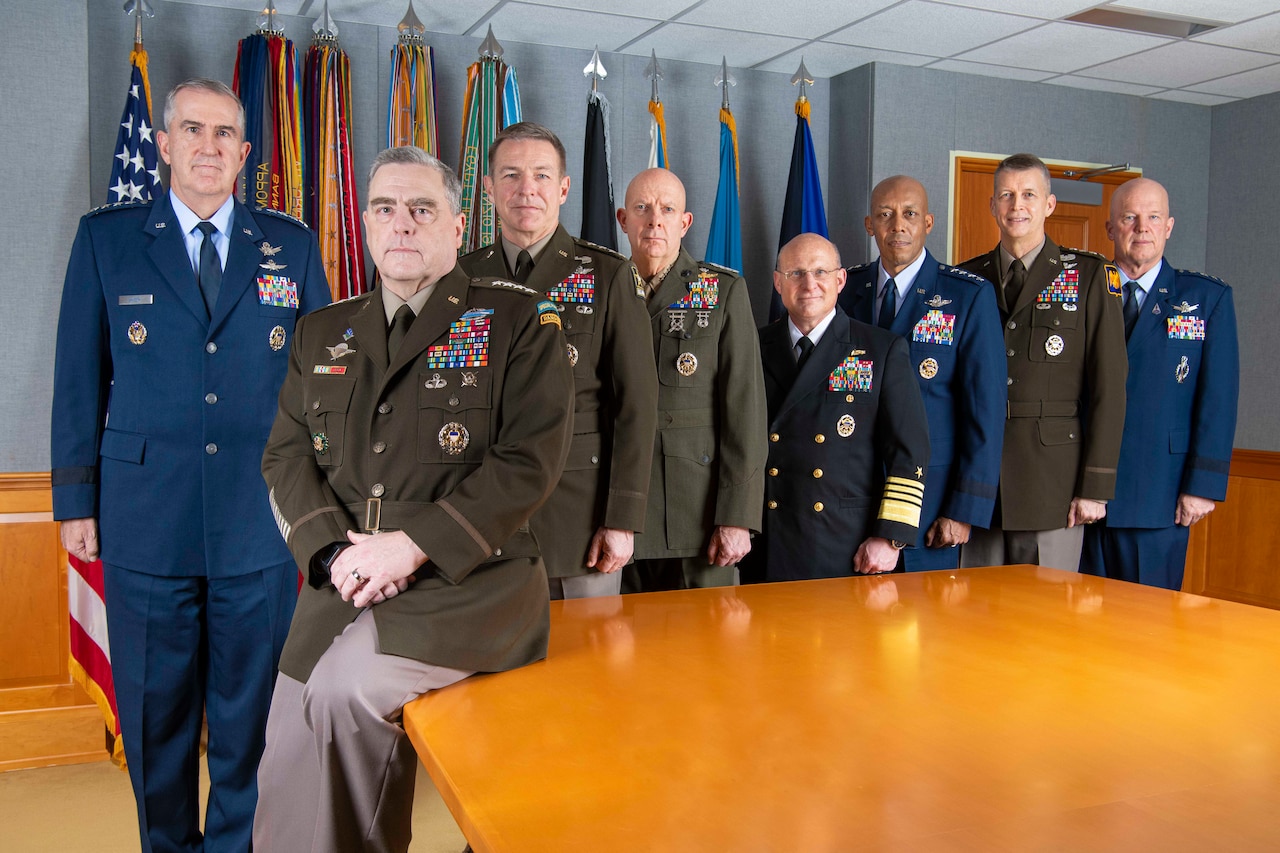
Membership on the Joint Chiefs of Staff is set by law. The members
are the chairman of the Joint Chiefs of Staff, the vice chairman, the
Army chief of staff, the commandant of the Marine Corps, the chief of
naval operations, the Air Force chief of staff, the chief of the
National Guard Bureau and, now, the chief of space operations.
The body has grown and changed since it was formed out of the
destruction of World War II. When formed, the Joint Chiefs were the
chairman, the Army chief of staff, the chief of naval operations and the
Air Force chief. The commandant of the Marine Corps was included when
issues pertaining to the Marine Corps were discussed by the chiefs but
he was not a member of the Joint Chiefs of Staff, said David Crist,
Joint Staff historian.
Through the Berlin blockade, the Korean War, the Cuban Missile Crisis
of October 1962, the Vietnam War and its aftermath, the body remained
the same. The first personnel change came in 1978 when the Marine Corps
commandant became a full-fledged member of the body.
In 1986, came the Goldwater-Nichols Act. It would be hard to
understate the legislation's effects on the Joint Chiefs of Staff. The
legislation increased the visibility, responsibilities and reach of the
chairman and added the office of the vice chairman of the Joint Chiefs
of Staff. It changed the way the Joint Staff was manned and stressed the
importance of joint duty for military officers and personnel.
The next change in the make-up of the body was the inclusion of the chief of the National Guard Bureau in 2012.
With the creation of the Space Force, comes the newest change.
Each chairman uses the body a bit differently, Crist said. The most
recent three chairmen — Army Gen. Martin E. Dempsey, Marine Corps Gen.
Joe Dunford and current chairman Army Gen. Mark A. Milley — convened the
chiefs regularly for deliberations on many issues, Crist said.
This is not to say the Joint Chiefs is a consensus organization. The
chairman decides what the best military advice is for the defense
secretary, president and the rest of the National Security Council.
Still, the chairman can — and does — pass along dissenting opinions from
the other members of the Joint Chiefs when appropriate.
The Army, Marine Corps, Navy, Air Force and Space Force members of
the joint chiefs are responsible for manning, training and equipping
forces. But when they enter "the Tank" — the room in the Pentagon where
they convene — they are expected to think and act for the good of the
joint force. Their experience as a soldier, Marine, sailor or airman may
color their perspective, but as members of the JCS, they are expected
to embrace the larger military culture, Crist said.

























 Posts
Posts

