Thursday, December 17, 2020

National Guard Supports Vaccination Efforts for Michigan

 Dec. 17, 2020 | BY Penelope Carroll, Michigan National Guard

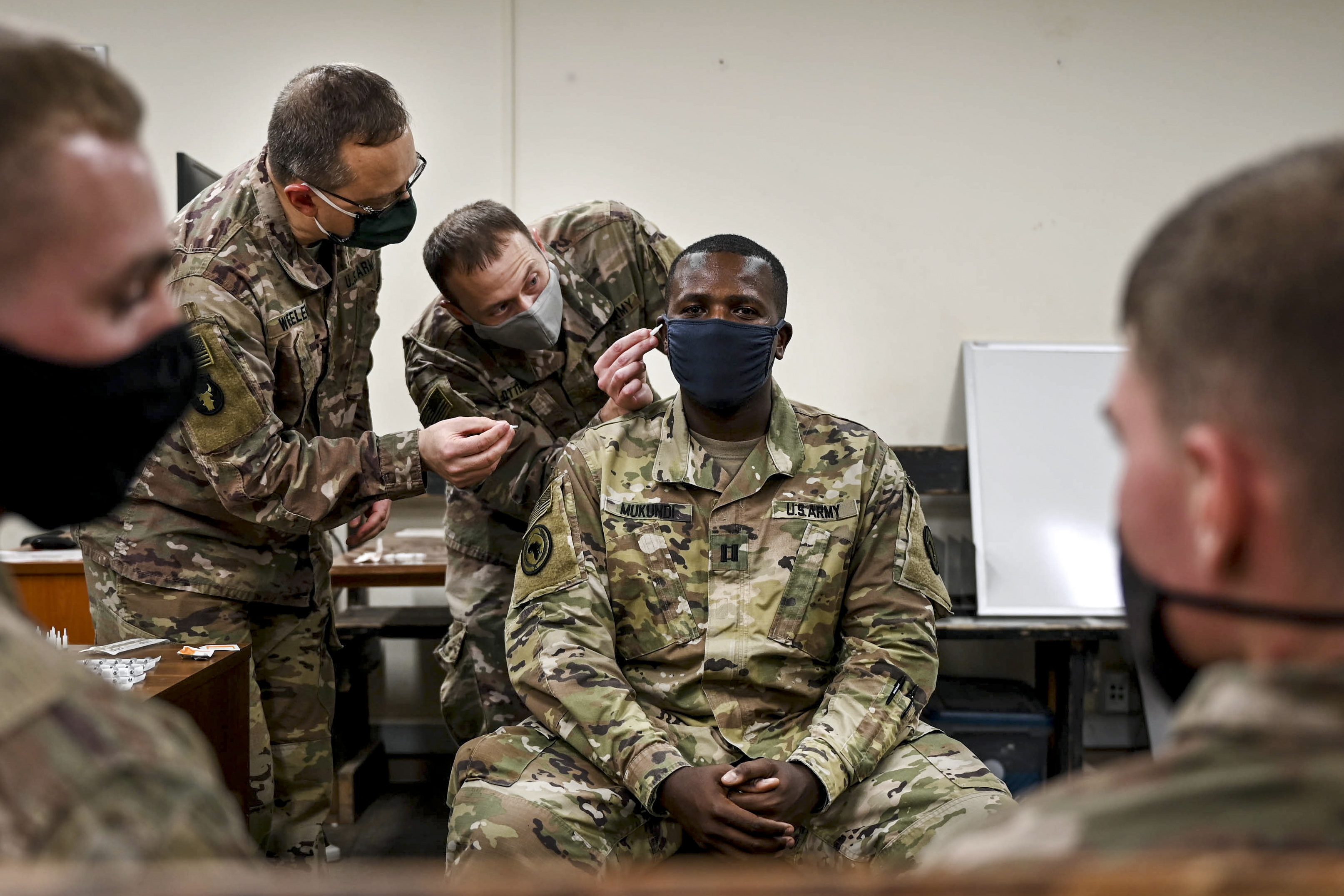
The Michigan National Guard received a request from the Michigan Department of Health and Human Services to support community health care organizations with logistical and medical assets for COVID-19 vaccinations across the state. Guard leadership has analyzed its medical assets and logistical requirements and plans to augment health care providers across the state, where requested, in the administration of the vaccine.
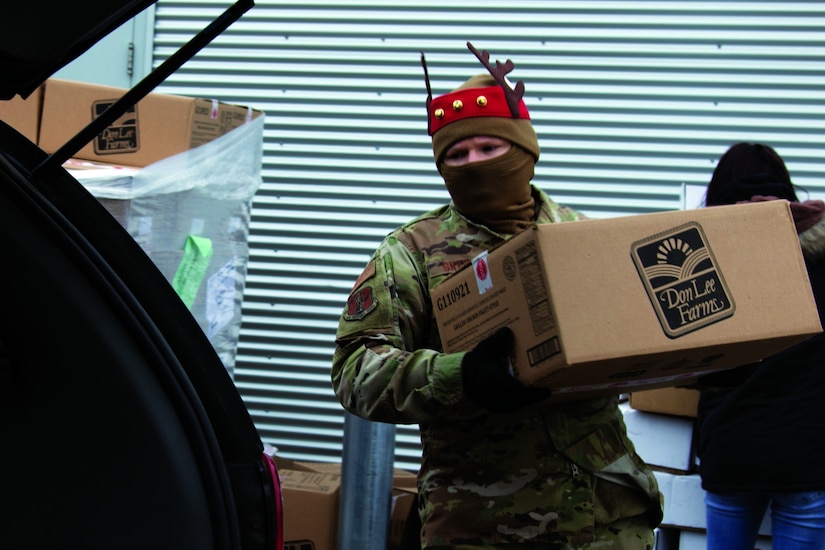
An airman loads a box.

The guard will first staff approximately 50 COVID-19 vaccination and testing teams, or CVTTs, that are composed of a uniformed medical technician and one or two administrative support personnel. The CVTTs will report to four hospital locations deemed priority by the state of Michigan.

"We will provide medics and administrative support to hospitals and local health care organizations and work to fill their needs," said Army Col. Ravindra Wagh, Michigan National Guard joint operations officer. "For some locations that will mean directly administering the vaccine to their staff.  We will also provide administrative support when needed, freeing up critical front-line hospital employees and allowing them to focus on the ongoing battle against COVID-19."

The first priority of the allocated vaccines in Michigan will be to front-line health care workers and the residents and staff of long term health facilities. After that, MDHHS says they will expand vaccinations to people who work in long-term care facilities, nursing homes, essential workers and those people who are at high-risk for severe COVID-19 illnesses. 

Two airmen help distribute food.

The guard is ready to surge their CVTT capacity when needed and in any location throughout Michigan's 83 counties. The COVID-19 vaccination mission will be an ongoing endeavor as the Michigan National Guard works to stay in front of the demands of the health care system throughout the state.

"The Michigan National Guard remains focused on supporting our communities, our neighbors, in this important task," said Army Maj. Gen. Paul Rogers, adjutant general and director of the Michigan Department of Military and Veterans Affairs. "They are professionals who have proven they have the tenacity and right skillset to support the state of Michigan's ongoing response to COVID-19."

The guard has been integrated into the state's emergency response to the pandemic since Gov. Gretchen Whitmer announced its activation on March 18. Across the state of Michigan, the guard continues to support COVID-19 testing and assisting at local food banks. There are currently several hundred Michigan National Guard members supporting these missions. COVID-19 vaccination support by the guard is expected to continue into spring 2021.

Michigan residents seeking more information about the COVID-19 vaccine can visit Michigan.gov/COVIDvaccine.

Defense Officials Discuss Special Operations, Irregular Warfare Initiatives

 Dec. 17, 2020 | BY David Vergun , DOD News

This year, the Defense Department released a declassified summary of its Irregular Warfare Annex to the 2018 National Defense Strategy. The annex details how the department seeks to institutionalize and operationalize this form of warfare amid the ongoing recalibration of its focus on peer and near-peer adversaries. 

In the annex, irregular warfare is defined as ''a struggle among state and non-state actors to influence populations and affect legitimacy.''

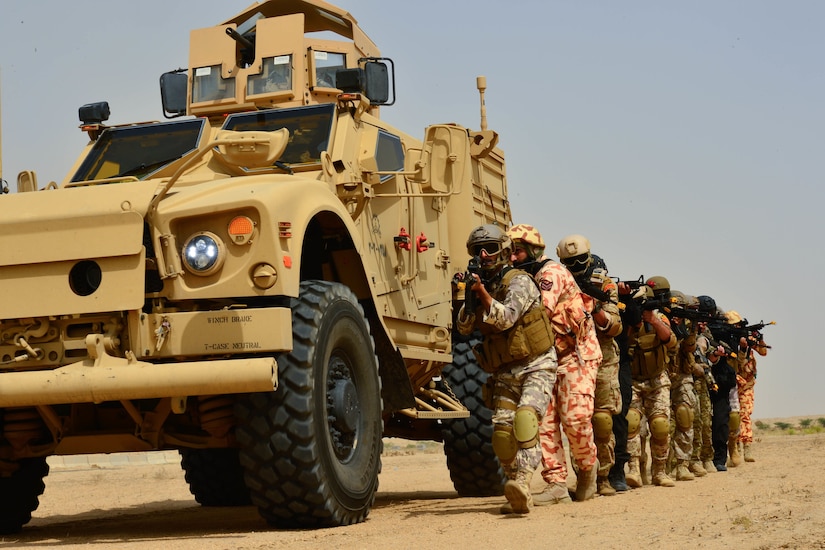
Troops with guns move forward next to truck

The DOD is currently working on crafting a new irregular warfare annex to the next NDS.

Kristen R. Hajduk, national security innovation network director of operations; Daniel ''Deak'' Roh, acting principal director for special operations and combating terrorism; and David Stephenson, director of the Joint Chiefs of Staff's office of irregular warfare, spoke about the topic on a National Defense Industrial Association panel discussion yesterday.

Irregular warfare doesn't necessarily mean that the struggle by a state or non-state actor has to involve violence, although it can, Stephenson said. It could also include influencing populations through propaganda or intimidation.

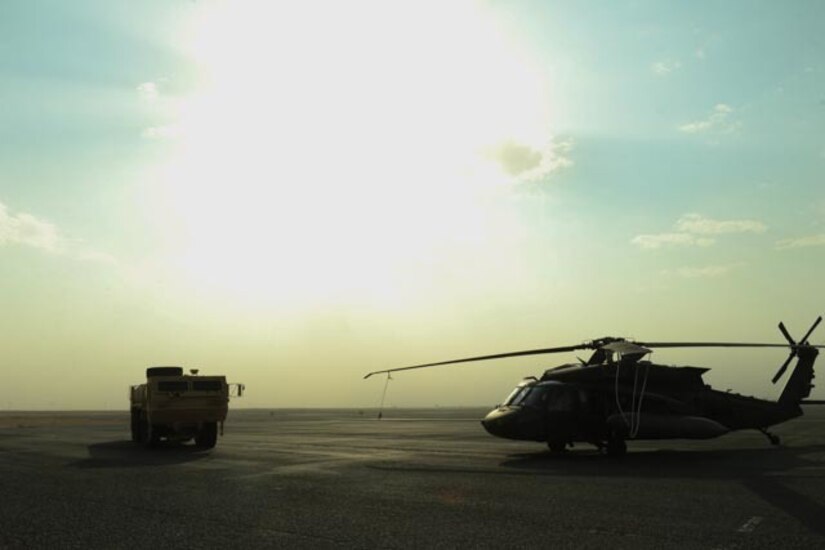
A helicopter and a vehicle sit on the desert floor.

In order to influence a population, they have to be able to trust you. They have to understand where your motivations are coming from, Haiduk added.

To succeed at irregular warfare, the department can't rely solely on special operations forces, Stephenson said. Partnerships play a bigger role —meaning with the joint force, industry and interagency partners including the State Department, Treasury Department and U.S. Agency for International Development, as well as allies and partners.

Haiduk agreed: "The operators that are most effective are those that have the best relationship with the country," she said, meaning that special operations forces and others serving abroad in a conflict zone are most effective if they gain the trust of the local military and government.

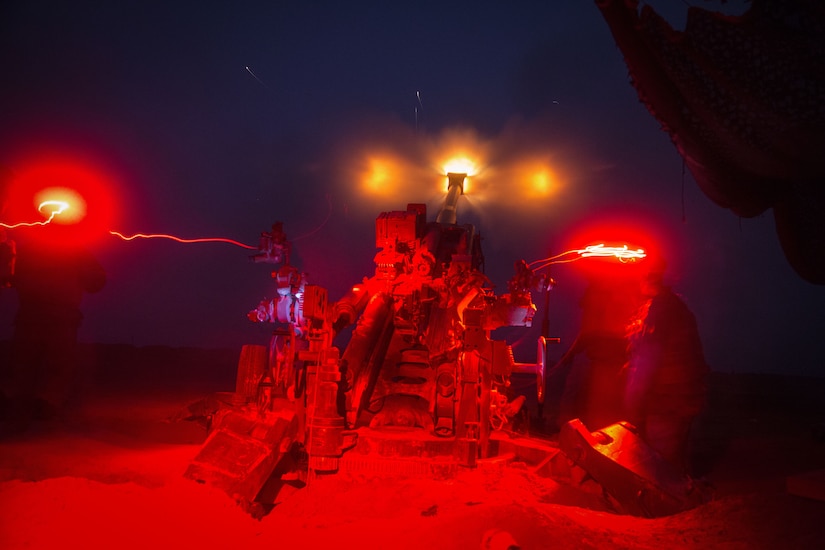
Artillery piece fires at night

It is not necessary for every warfighter to understand the concepts of irregular warfare, Roh said, but noncommissioned officers and field-grade officers should have a basic knowledge of why it is important and what it means in shaping the battlespace and the feelings of the local populace.

Stephenson noted that the young generation entering the military is digitally savvy and has an understanding about what role social media can play in influencing populations.

The NDS and the annex are not political documents, Stephenson emphasized. "They're based on the threats the nation faces and what capabilities there are to counter them," he said, expressing optimism about the incoming administration's approach to irregular warfare.

Mission Ready


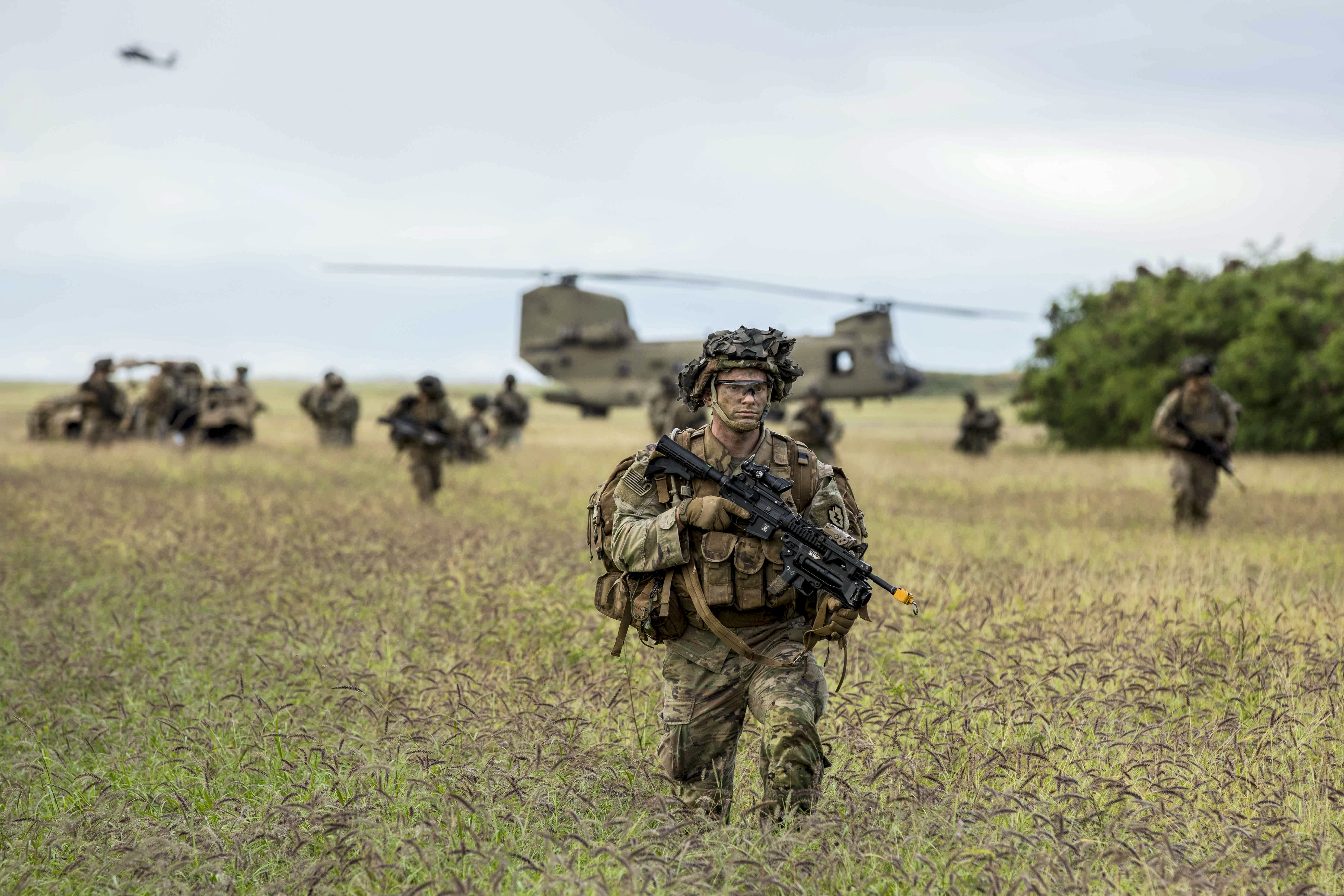
Soldiers conduct an emergency deployment readiness exercise mission at Pacific Missile Range Facility Barking Sands on the island of Kauai, Hawaii, Dec. 10, 2020. The exercise provided soldiers assigned to the 2nd Battalion, 35th Infantry Regiment an opportunity to rehearse and showcase the unit's ability to rapidly deploy to any location and successfully conduct any mission with which they are tasked.

Decorating Crew


Sailors decorate stockings during a USS Constitution holiday event in Boston, Dec. 11, 2020.

Searching Stares


Air Force Staff Sgt. Steven Matias and military working dog Eenoch provide perimeter security during Exercise Razor Talon 21-1 at Marine Corps Air Station Cherry Point, N.C., Dec. 2, 2020. The exercise provided agile combat employment using multi-functional airmen in an austere environment.

Wednesday, December 16, 2020

First Vaccine


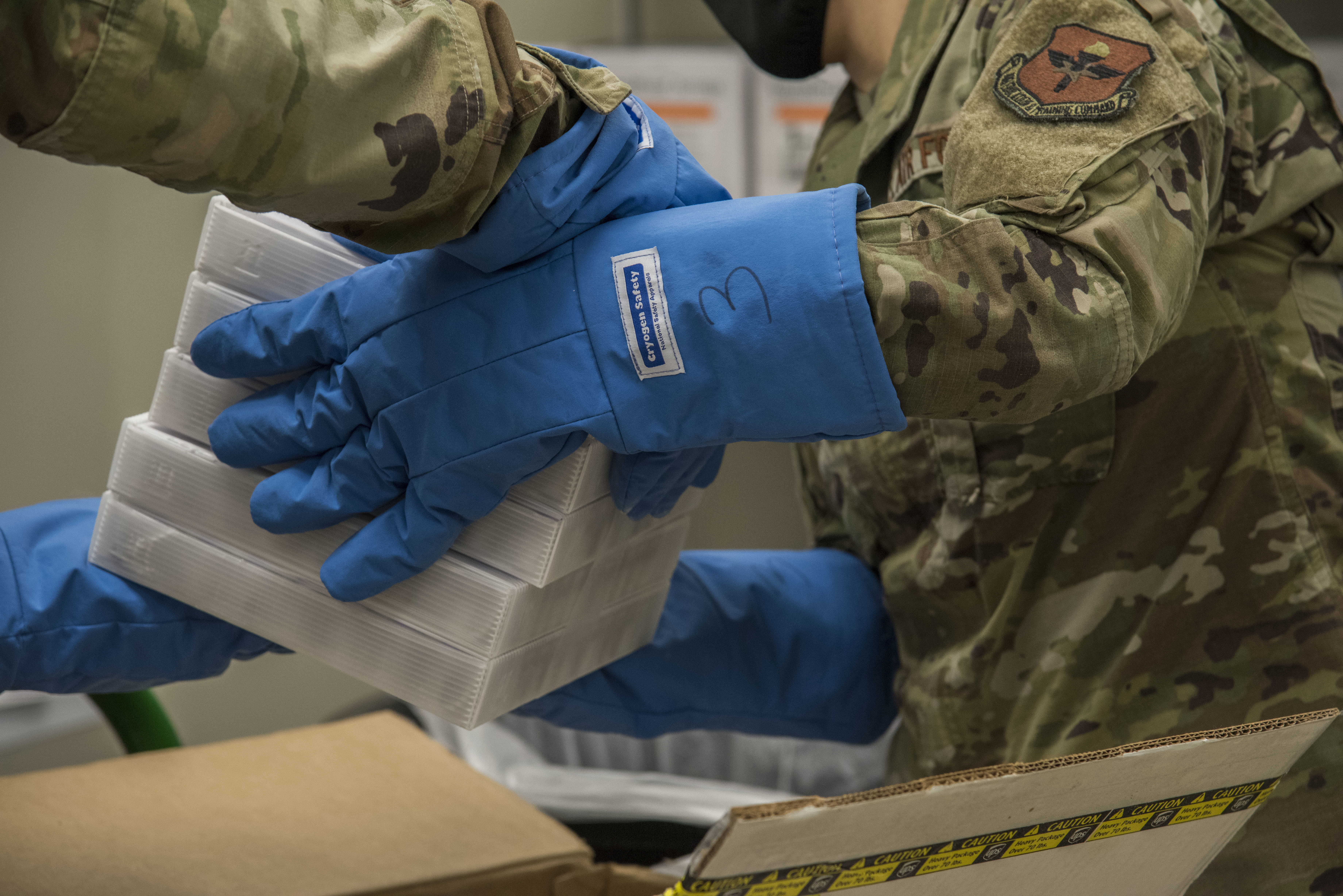
Air Force Airman 1st Class Raymond De Jesus, assigned to the 59th Medical Wing as a medical logistics technician, and Air Force Staff Sgt. Romina Guridi, assigned to the 59th MDW as a medical logistics warehouse supervisor, pull out the first five cases of the San Antonio Military Health System’s Pfizer COVID-19 vaccine shipment at Wilford Hall Ambulatory Surgical Center, Joint Base San Antonio-Lackland, Tx., Dec. 14, 2020. The Defense Department's prioritization will be derived from the data-driven, national prioritization to help ensure fair and equitable access to everyone.

Thumbs Up!


Navy Seaman Norelle Dry, assigned to Naval Medical Center San Diego, completes prescreening paperwork for a COVID-19 vaccine in San Diego, Dec. 15, 2020. NMCSD’s mission is to prepare service members to deploy in support of operational forces, deliver high quality health care services and shape the future of military medicine through education, training and research.

Vaccination Volunteer


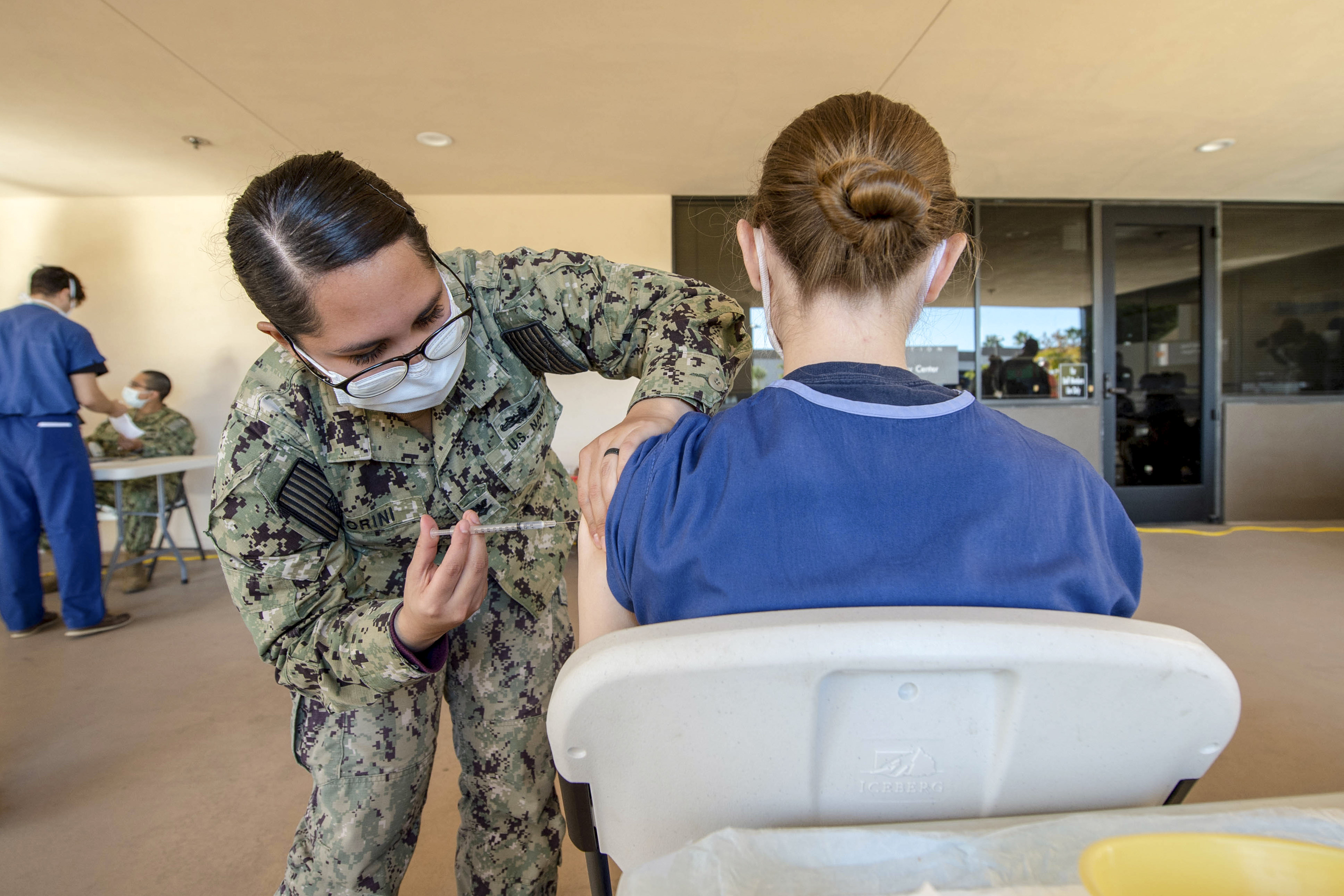
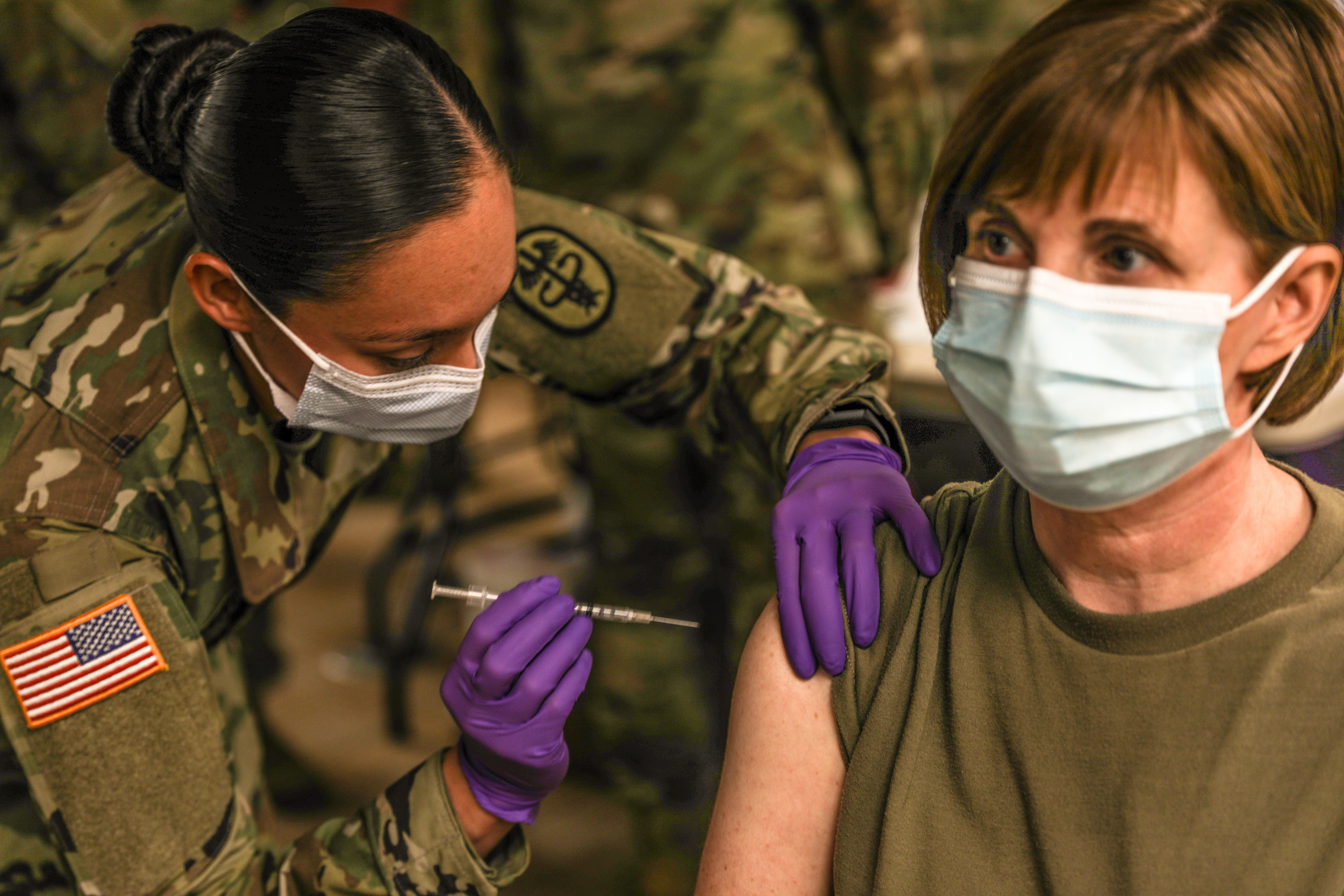
Navy Petty Officer 2nd Class Jasmin Fiorini, assigned to Naval Medical Center San Diego, vaccinates a volunteering service member in San Diego, Dec. 15, 2020. NMCSD’s mission is to prepare service members to deploy in support of operational forces, deliver high quality health care services and shape the future of military medicine through education, training and research.

Tube Inspection


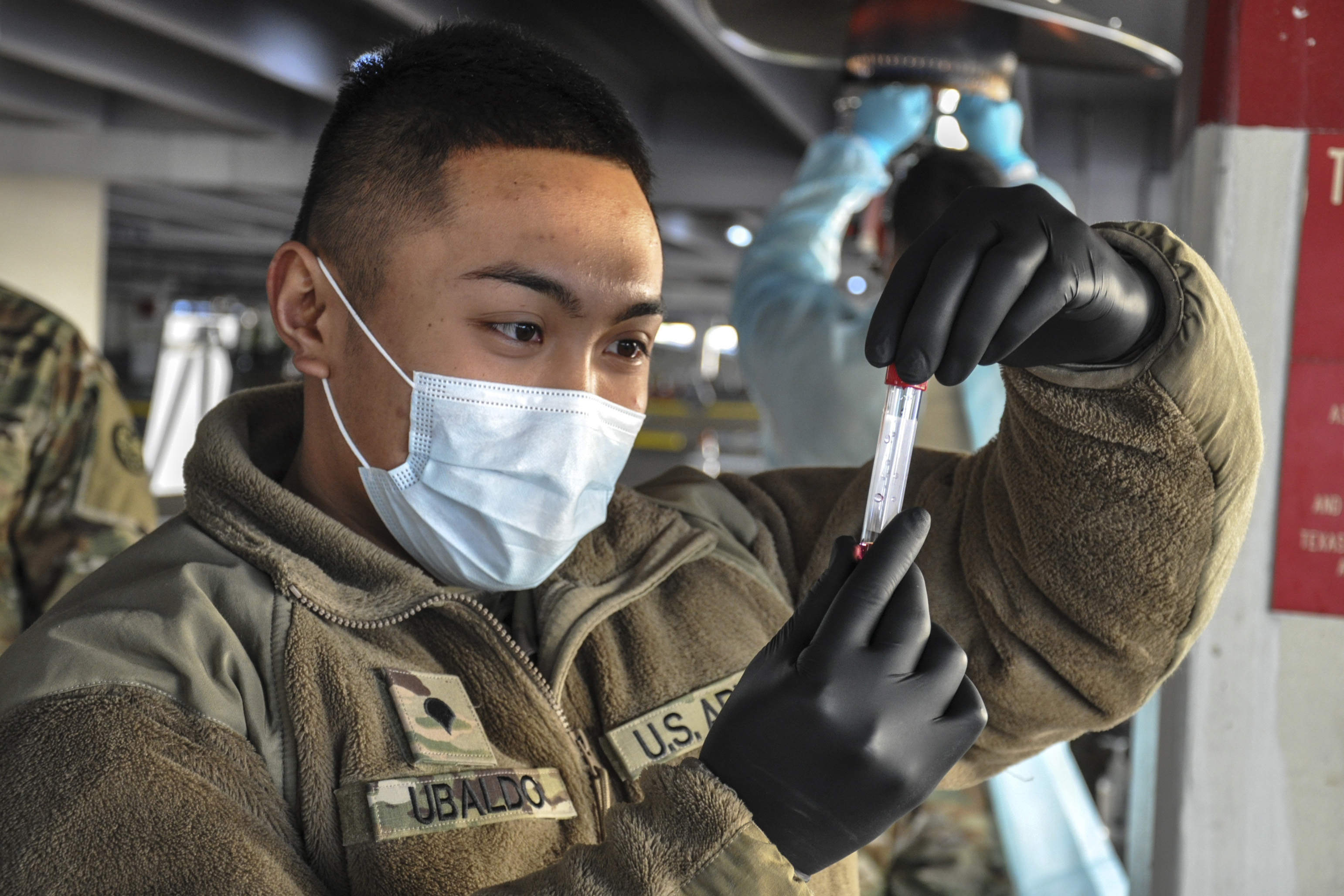
Army Spc. Emil Ubaldo, a motor transport operator assigned to the 1864th Motor Transportation Company, inspects a sample tube before assisting the medics at the Texas Station Hotel and Casino's COVID-19 community based collection site in Las Vegas, Dec. 4, 2020. Ubaldo works with the Nevada Army Guard’s Task Force South in response to the COVID-19 pandemic.

Vaccine Screening


Sailors assigned to Naval Medical Center San Diego fill out COVID-19 prescreening forms before being administered the COVID-19 vaccine in San Diego, Dec. 15, 2020. NMCSD employs more than 6,000 active duty military personnel, civilians, and contractors in Southern California to provide patients with world-class care anytime, anywhere..

Icy Unpack


Norberto Seda-Ortiz, with Tripler Army Medical Center's logistics division, unpacks a COVID-19 vaccine shipment from a dry ice container in Honolulu, Dec. 15, 2020.

Sunlit Shot


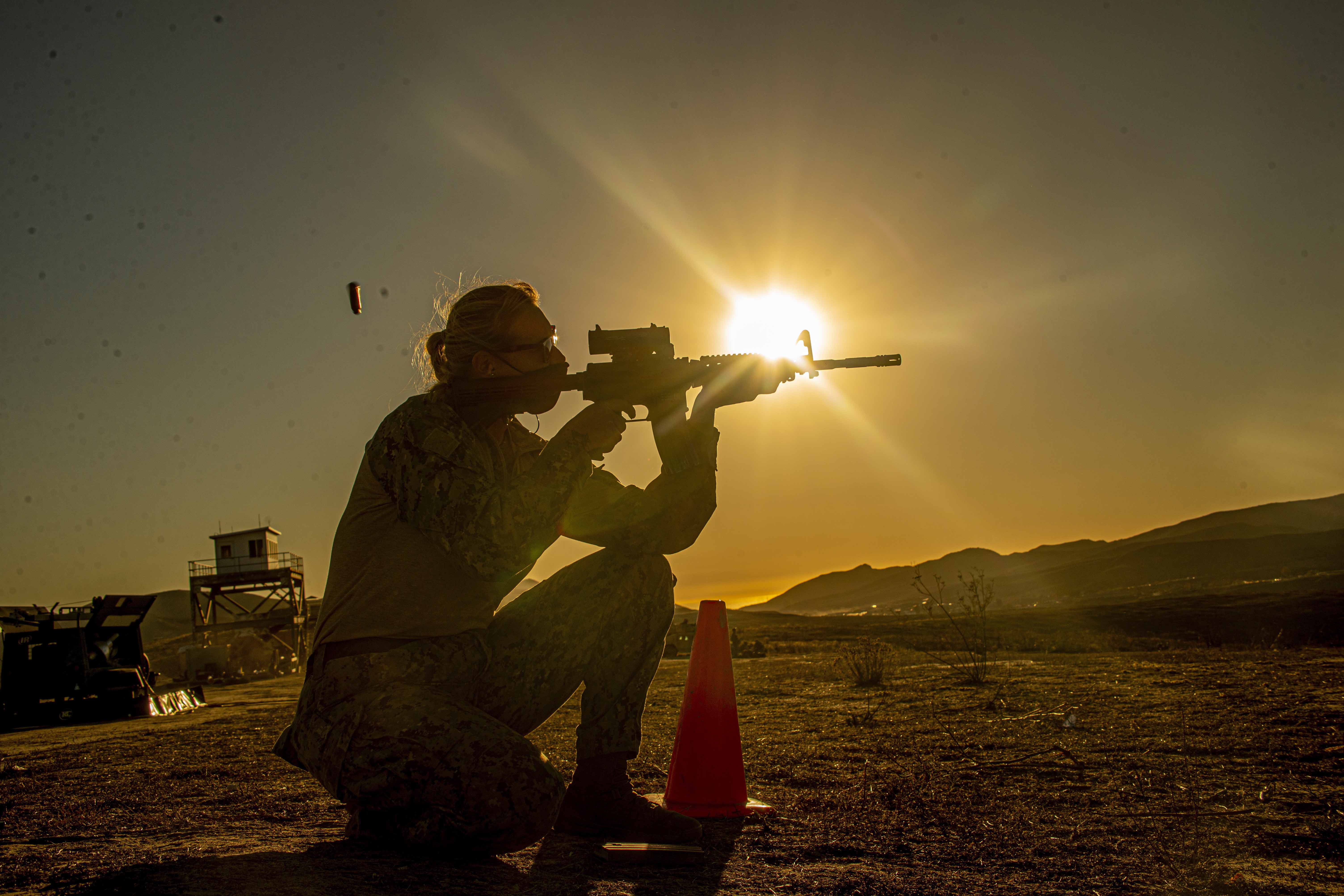
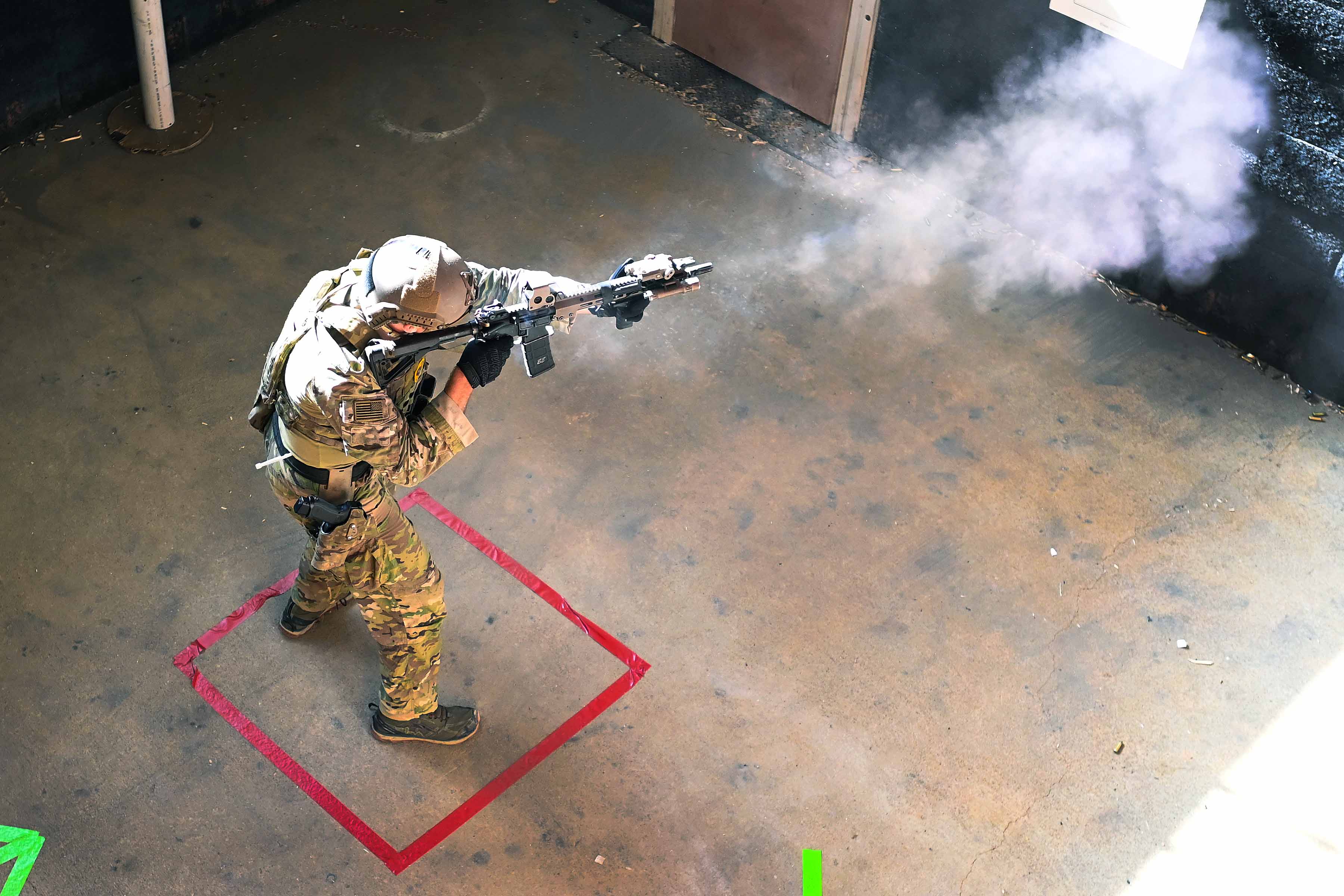
Navy Petty Officer 1st Class Amber Burns fires an M4 carbine rifle during live-fire training at Marine Corps Base Camp Pendleton, Calif., Dec. 15, 2020.

Lei'd Arrival


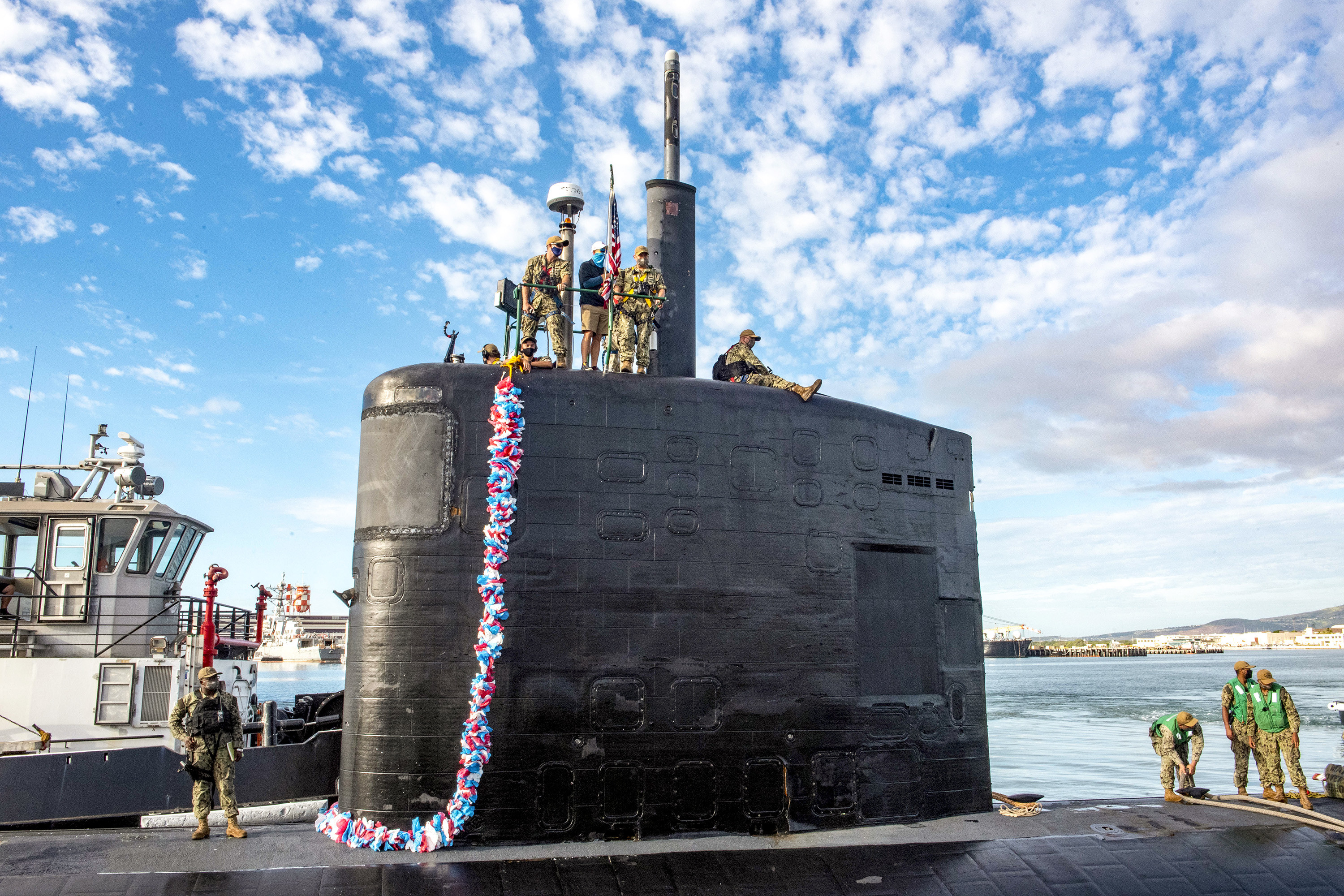
The fast attack submarine USS Topeka arrives in Pearl Harbor, Hawaii, Dec. 15, 2020, after completing a change of home port from Guam.

Mask Task


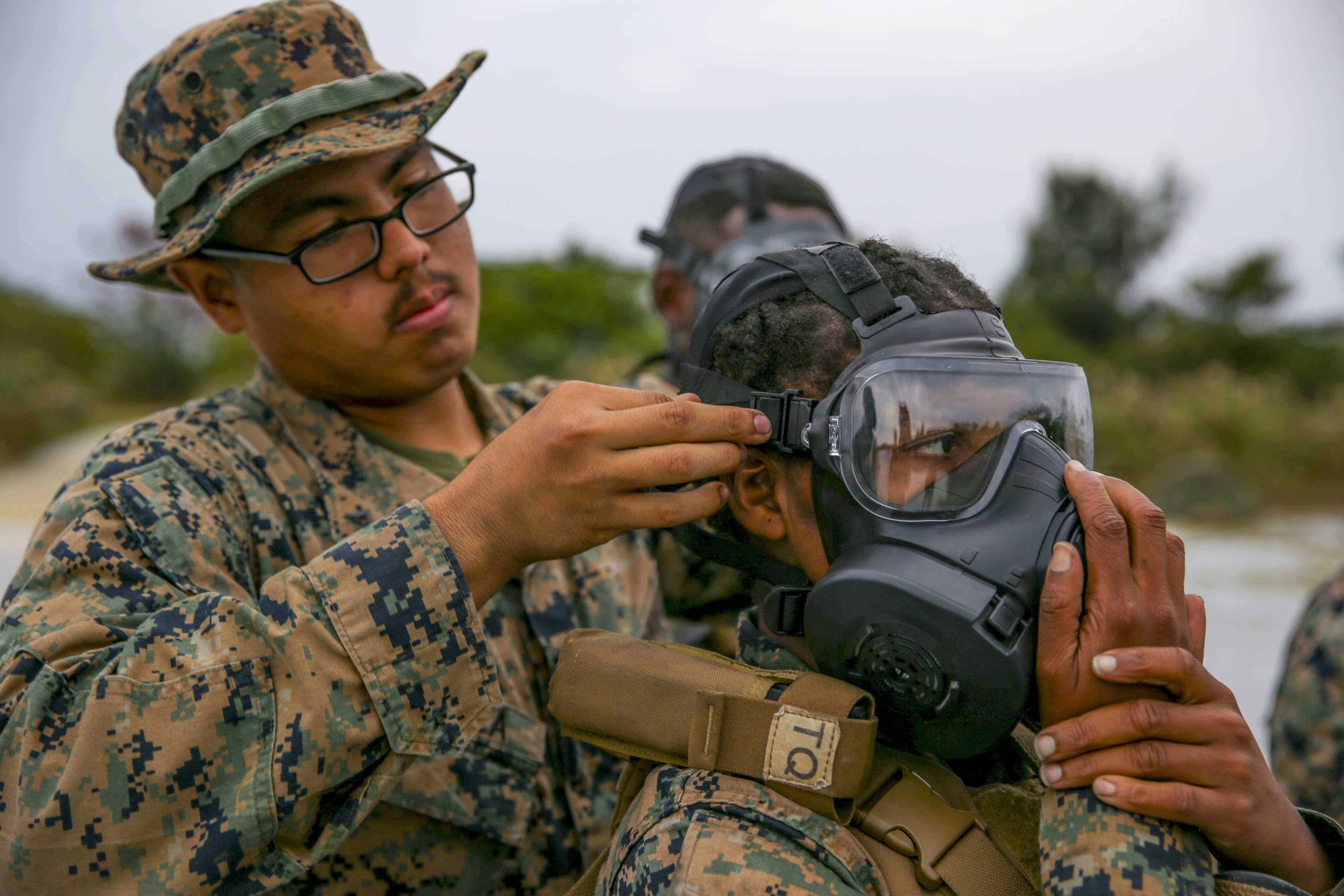
Marine Corps Lance Cpls. Eric Ariaza, left, and Abriel Joseph practice gas mask procedures during Exercise Samurai at Camp Hansen in Okinawa, Japan, Dec. 8, 2020. Marines demonstrated their ability to expeditiously stand up a command and control node during the exercise.

Ocean Ops


A Navy MH-60S Seahawk conducts a vertical replenishment on the flight deck of the USS Carl Vinson in the Pacific Ocean, Dec. 3, 2020.

Sharp Shooter


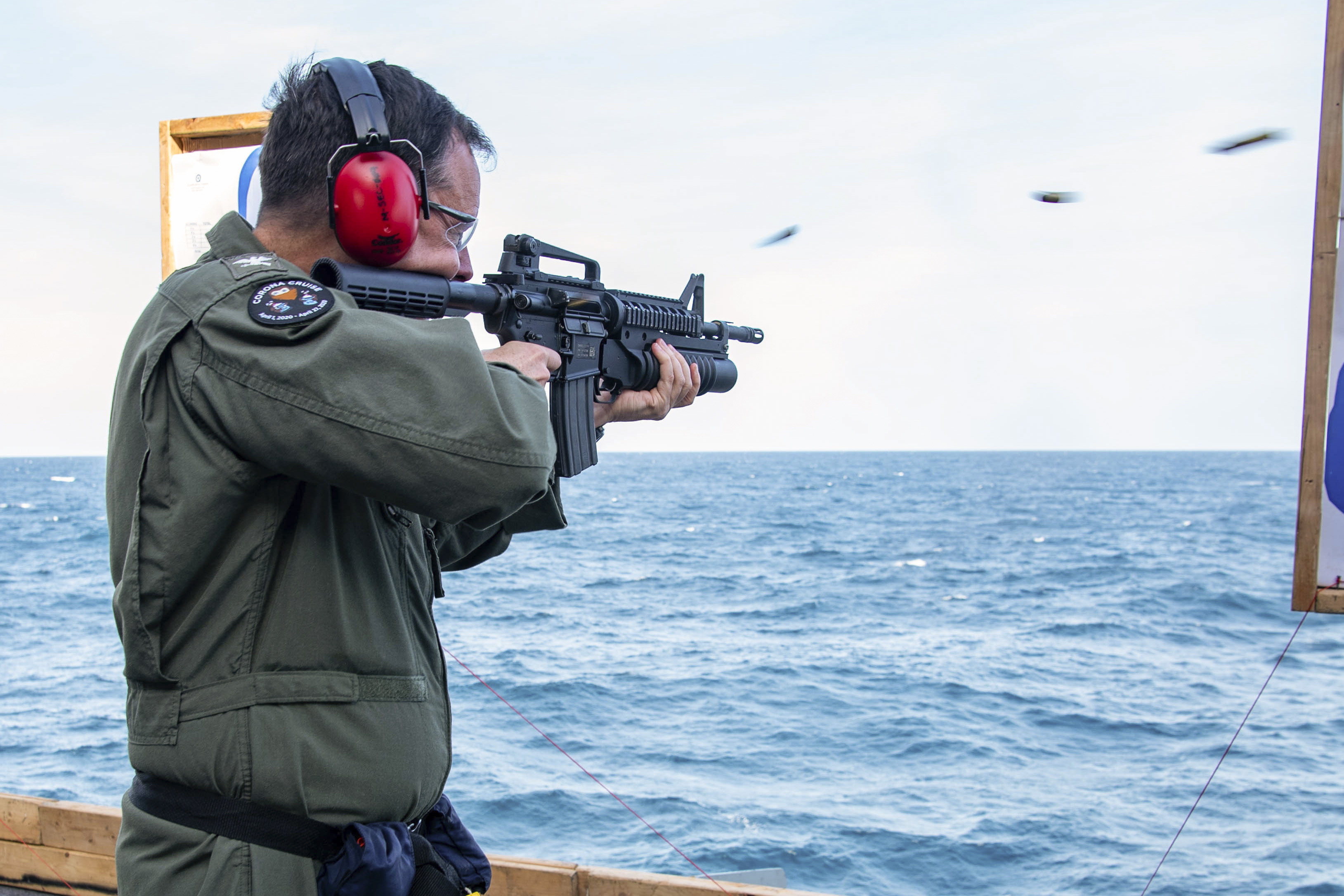
Navy Capt. Max Clark fires an M4A1 carbine during a qualification course aboard the USS Nimitz in the Arabian Sea, Dec. 15, 2020.

Chilly Chore


Navy Petty Officer 2nd Class Jason Noel knocks down ice dams from a building at Naval Air Facility Misawa, Japan, Dec. 16, 2020.

Needle Know-How


Army Maj. Ronovan Ottenbacher teaches a battlefield acupuncture class to soldiers at Camp Lemonnier, Djibouti, Dec. 14, 2020. Ottenbacher is a deputy joint force surgeon assigned to Combined Joint Task Force Horn of Africa.

Tactical Challenge


A soldier fires a rifle at targets during the Special Forces Tactical Challenge at Fort Bragg, N.C., Dec. 10, 2020. Eight teams of soldiers and celebrities competed in the challenge with pistols, battle rifles and sniper rifles.

Vaccination Validation


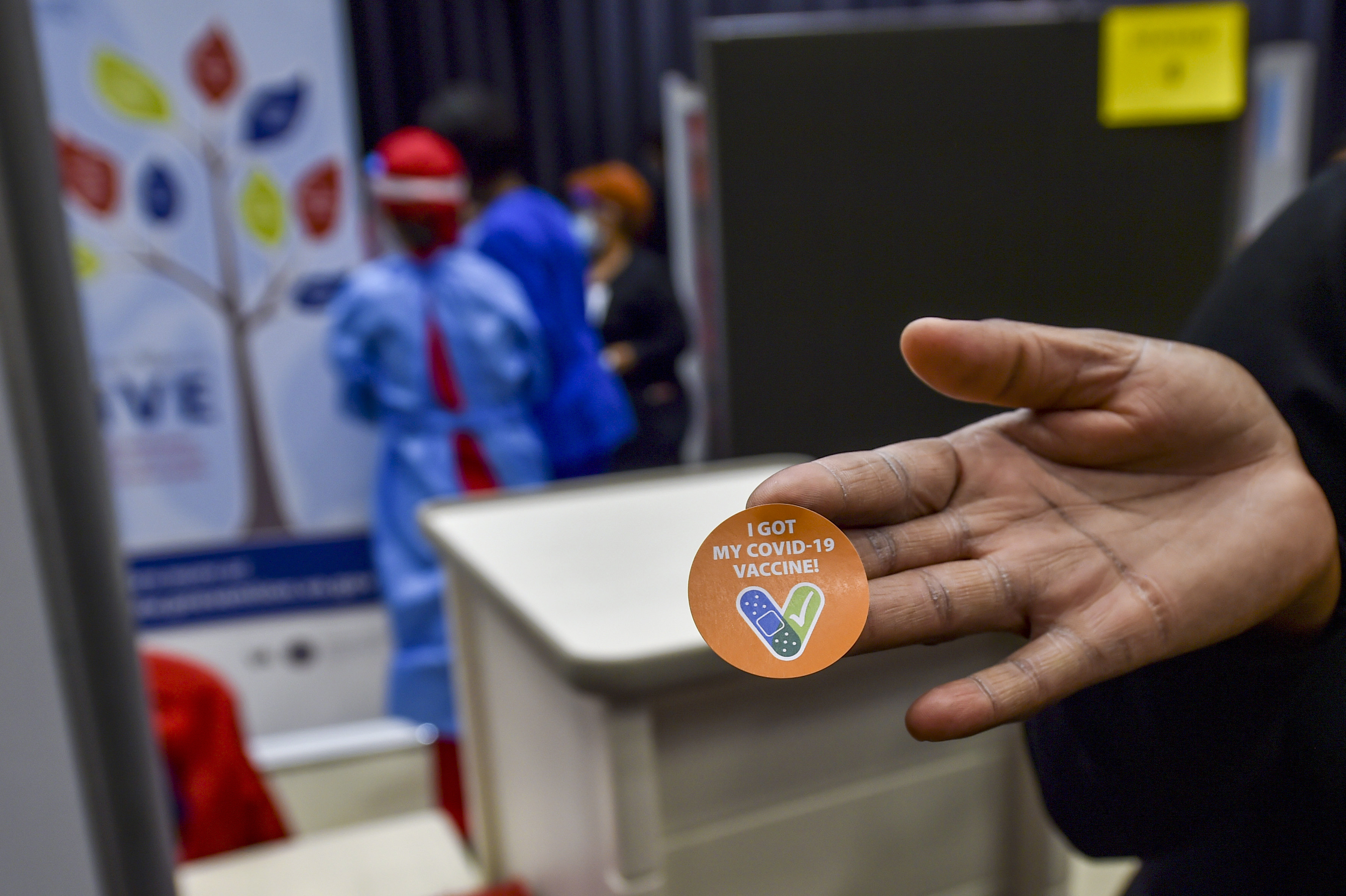
Medical workers who received the Pfizer COVID-19 vaccine at the Washington D.C. Veterans Affairs Medical Center were also given a sticker commemorating the event, Dec. 15, 2020. The vaccine was delivered as part of Operation Warp Speed, a whole-of-America effort to rapidly develop, manufacture and distribute safe and effective COVID-19 vaccines to the American people.

Refueling Ops


Navy Seaman Philip Simpson opens the suction valve of a fuel service supply point on a fuel line during aviation refueling operations in the U.S. 5th Fleet area of operations, Dec. 6, 2020.

Vaccine Inoculation


Army Staff Sgt. Brenda Collins administers the COVID-19 vaccine to a patient after its arrival at Fort Hood, Texas, Dec. 15, 2020.

Tuesday, December 15, 2020

Pilot Practice


An Air Force T-6A Texan II aircraft flies in tactical formation with instructor pilots during training near Laughlin Air Force Base, Texas, Dec. 11, 2020.

Air Assault


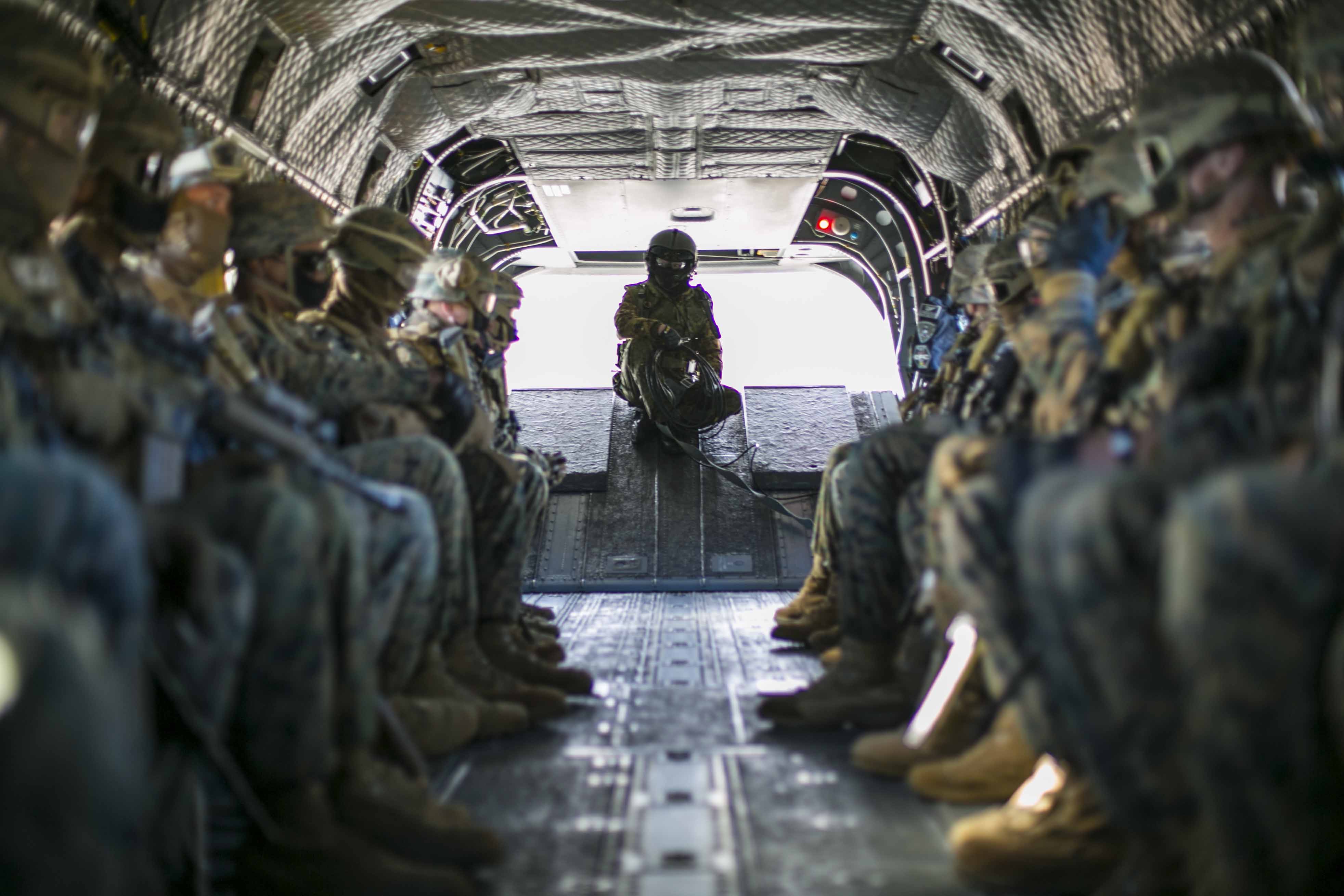
A Japanese soldier and U.S. Marines conduct a simulated air assault in Japan, Dec. 15, 2020, during Forest Light, an annual bilateral exercise that strengthens the interoperability and readiness of U.S. and Japanese troops.

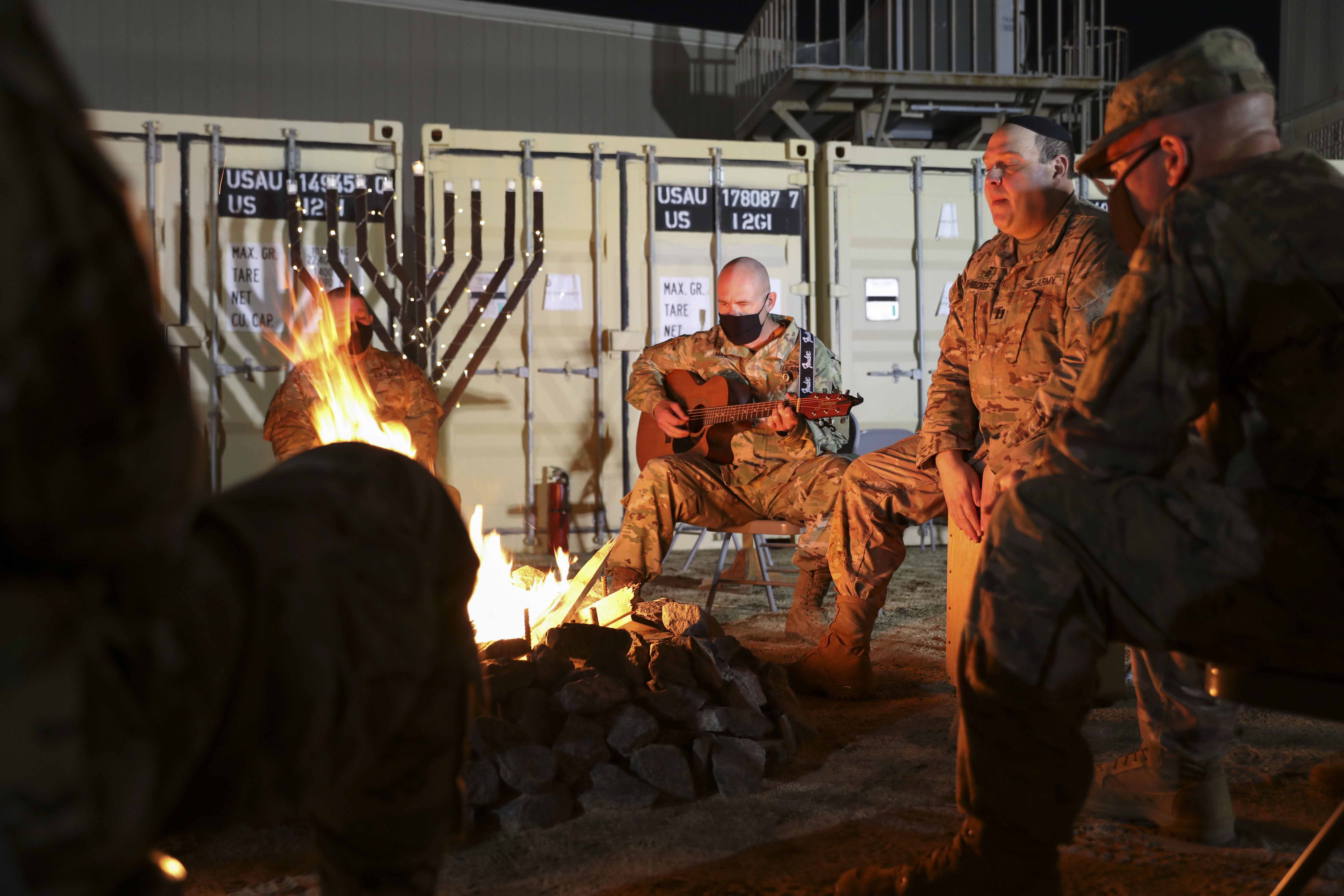
Hanukkah Song


Army Maj. Kenneth May plays the guitar for attendees of a menorah lighting ceremony at Camp Arifjan, Kuwait, Dec. 10, 2020. The ceremony celebrated the Jewish holiday Hanukkah.

Mural Master

Navy Seaman Apprentice Hannah Blakely paints a mural aboard the USS Gerald R. Ford in the Atlantic Ocean, Dec. 8, 2020.


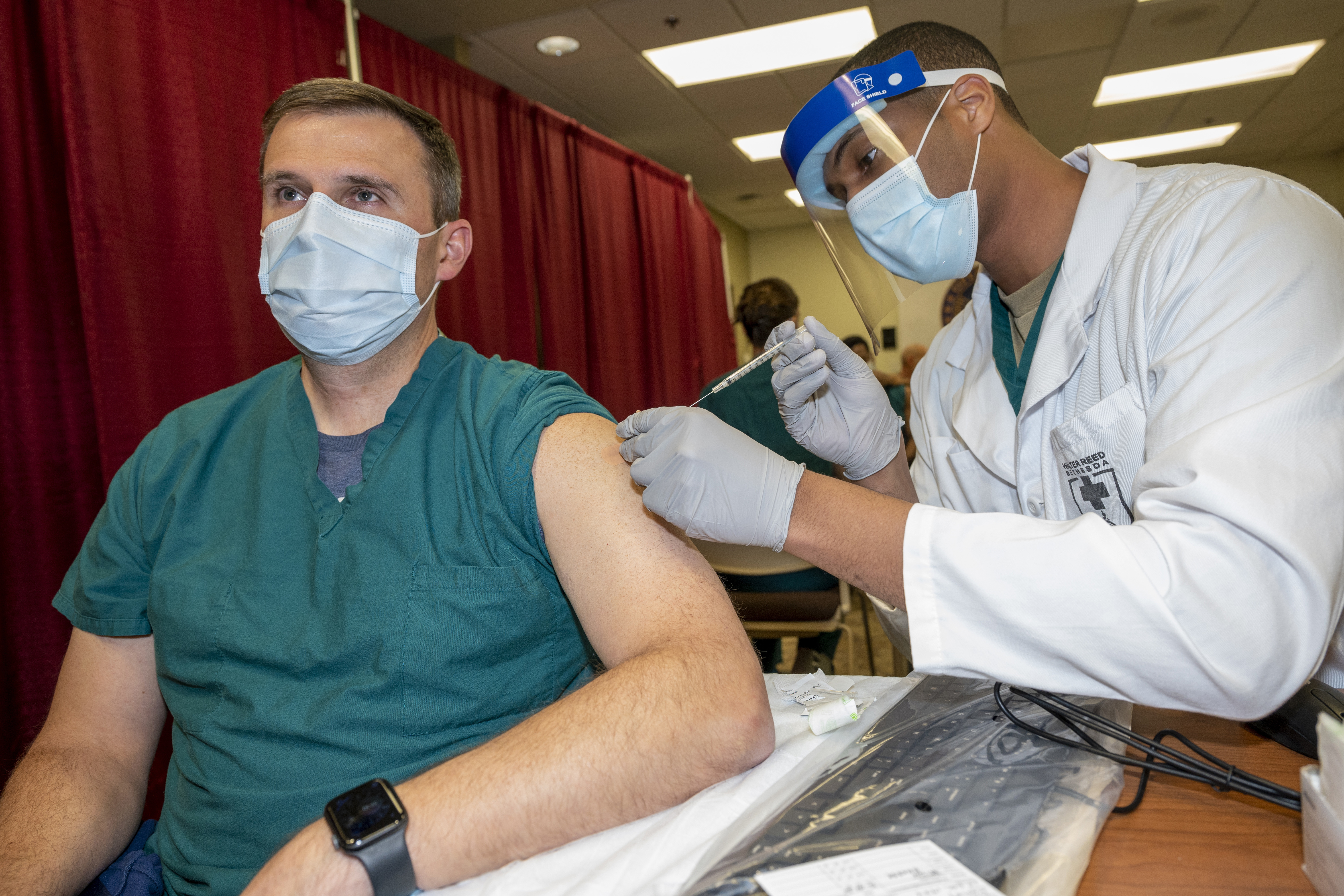
Miller Vaccination


Acting Defense Secretary Chris Miller receives the COVID-19 vaccine from Navy Seaman Samantha Alvarez at Walter Reed National Military Medical Center, Bethesda, Md., Dec. 14, 2020.

Doctor Discussion


Acting Defense Secretary Chris Miller talks with Navy Lt. Cmdr. Nate Aranas, a nurse in the Emergency Department at Walter Reed National Military Medical Center, after they received the COVID-19 vaccine at Walter Reed in Bethesda, Md., Dec. 14, 2020.

COVID-19 Vaccination


Army Col. (Dr.) Sean Dooley, a pulmonologist at Walter Reed National Military Medical Center, receives a COVID-19 vaccination at Walter Reed in Bethesda, Md., Dec. 14, 2020.

Sports Heroes Who Served: World Heavyweight Boxing Champion Served in WWII

 Dec. 15, 2020 | BY David Vergun , DOD News

Sports Heroes Who Served is a series that highlights the accomplishments of athletes who served in the U.S. military.

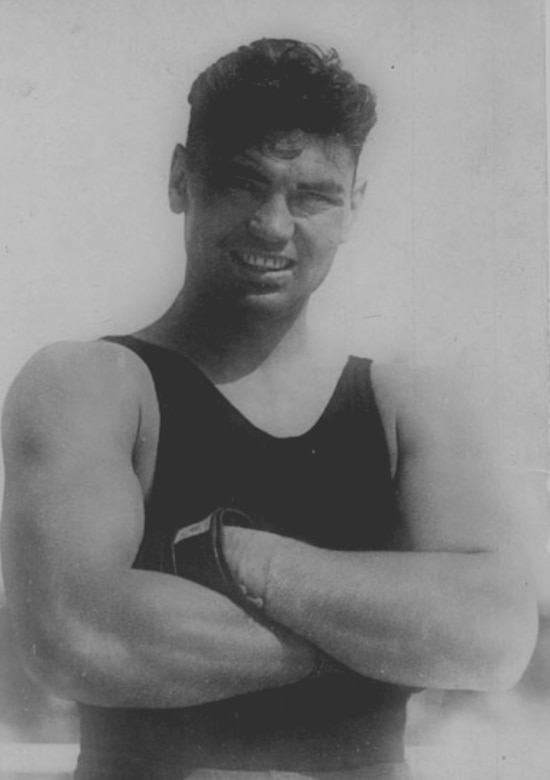
William Harrison "Jack" Dempsey was the world heavyweight champion from 1919 to 1926.

A man wearing a tank top has his arms crossed as he poses for a photo.

Dempsey grew up poor in Colorado, then West Virginia and Utah. In "Dempsey," his 1977 autobiography, he wrote that as a teenager, he would visit saloons and challenge everyone inside, saying "I can't sing, and I can't dance, but I can lick any SOB in the house."

He mentioned that he rarely lost any of these barroom brawls and made money from bets that were placed.

During World War I, Dempsey worked in a Philadelphia shipyard.

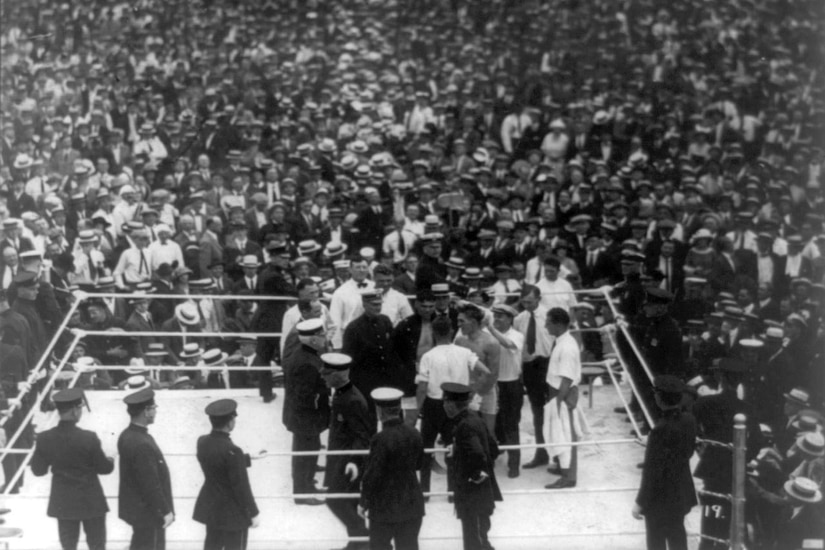
Dempsey's fame came on July 4, 1919, when he met World Heavyweight Champion Jess Willard in the ring in Toledo, Ohio.

A photo provides an aerial view of a group of people in a boxing ring surrounded by a large crowd.

Despite being 6-foot, 1-inch tall and 187 pounds, Dempsey knocked Willard down repeatedly. Willard was 6-foot, 7-inches tall and 245 pounds.

After the match, Willard said "Dempsey is a remarkable hitter. It was the first time that I had ever been knocked off my feet. I have sent many birds home in the same bruised condition that I am in, and now I know how they felt."

Dempsey successfully defended his title against Billy Miske in September 1920; Bill Brennan in December 1920; Georges Carpentier in July 1921; Tommy Gibbons in July 1923; and Luis Angel Firpo in September 1923.

A boxer knocks his opponent from the ring.

In September 1926, Dempsey fought Gene Tunney, a former U.S. Marine, in Philadelphia. Dempsey lost his title on points, rather than a knockout or technical knockout, in 10 rounds.

Dempsey later explained the loss to his wife, saying, "Honey, I forgot to duck." Decades later, President Ronald Reagan borrowed that quote when his wife Nancy visited him in the emergency room after the attempt on his life.

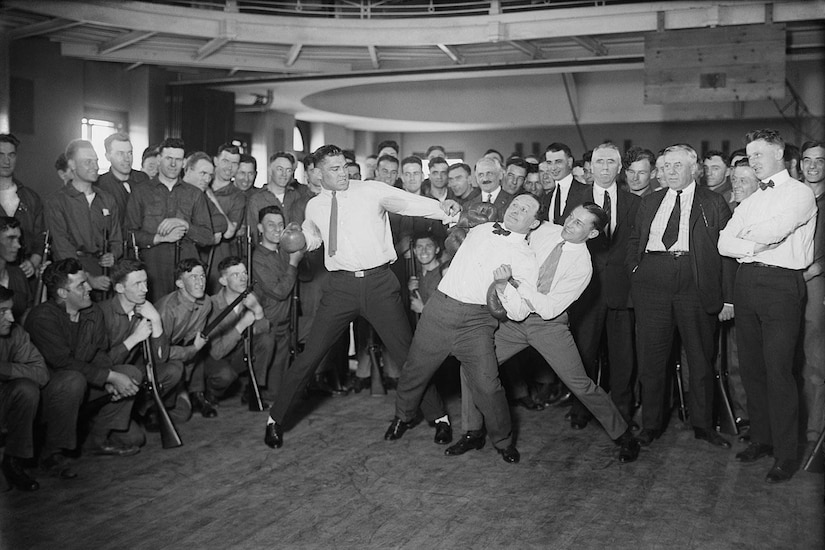
Two men wearing dress shirts, ties and boxing gloves pretend to fight in front of a crowd. A third man, who is also wearing a dress shirt and tie,  holds the arms of one of the men.

On July 21, 1927, Dempsey knocked out future heavyweight champion Jack Sharkey in round seven. The fight was an elimination bout for a fight against Tunney.

On Sept. 22, 1927, Dempsey again lost to Tunney; after it was over, Dempsey decided to retire.

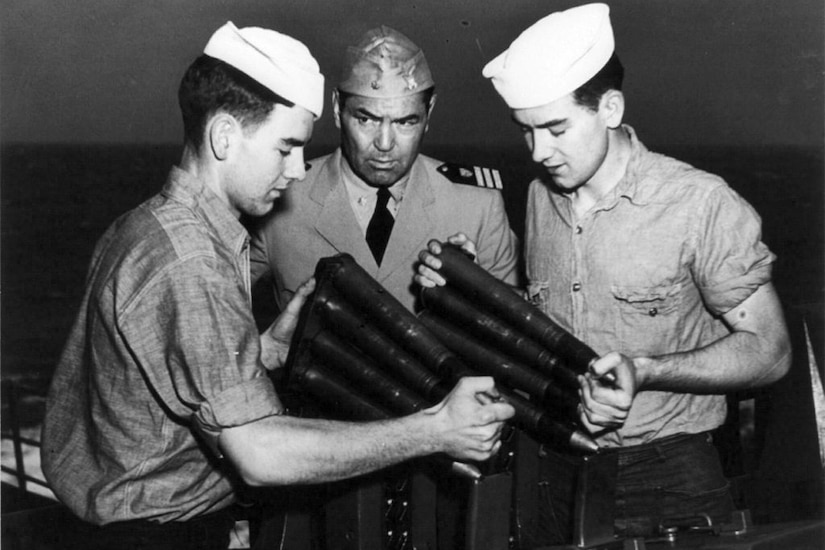
When World War II started, Dempsey joined the New York State Guard and was commissioned a first lieutenant. He later resigned that commission to accept a Coast Guard Reserve commission.

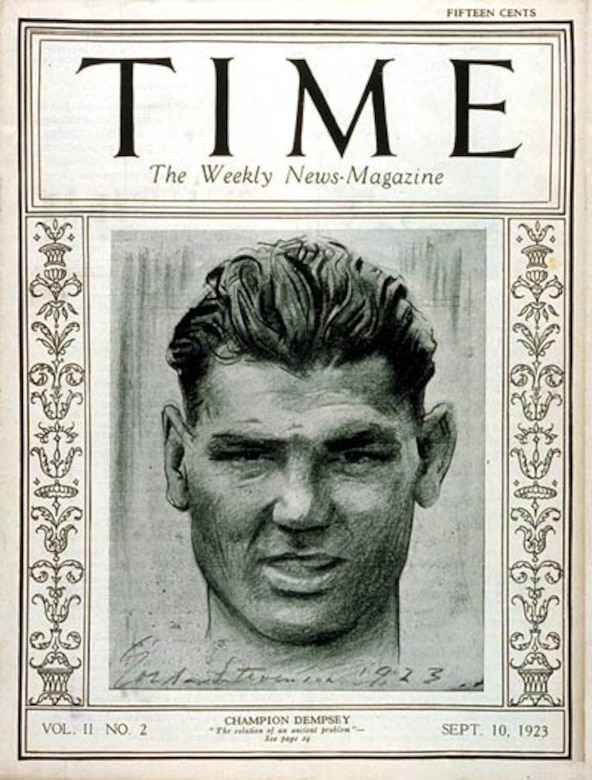
The cover of Time magazine shows a drawing of a man; the words "Champion Dempsey" are written beneath the drawing.

He reported for duty in June 1942 at Coast Guard Training Station, Manhattan Beach in Brooklyn, New York, where he was the director of physical education.

After being promoted to commander in March 1944, Dempsey was assigned to the transport USS Wakefield. In 1945, he was on the attack transport USS Arthur Middleton for the invasion of Okinawa. He also spent time on the USS General William Mitchell.

Two young men in sailor uniforms load an antiaircraft gun while an older man in an officer’s uniform looks on.

Dempsey was honorably discharged from the Coast Guard Reserve in 1952.

On May 31, 1983, Dempsey died at the age of 87 in New York City.

Harbor Hover


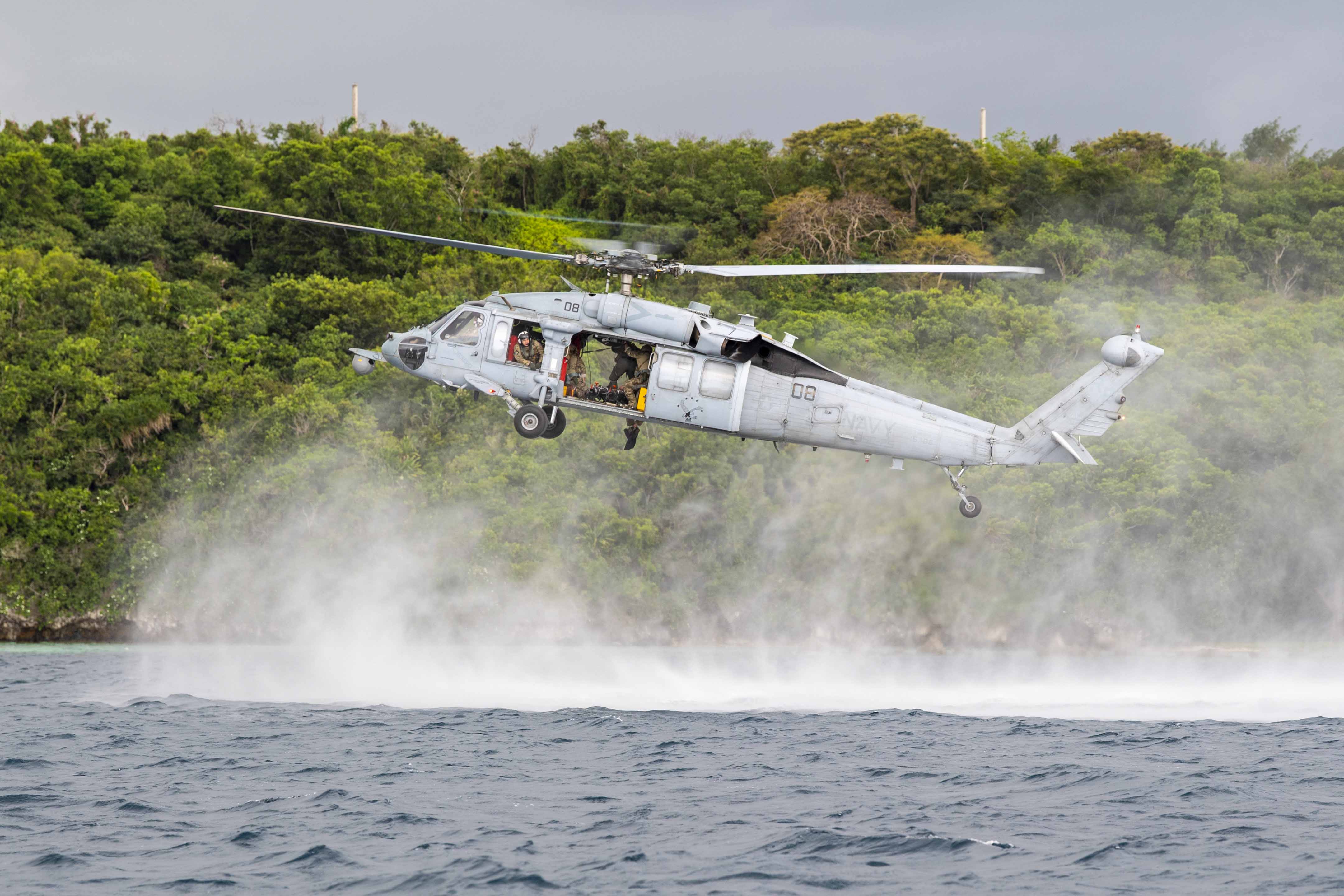
A Navy MH-60S Seahawk helicopter conducts unmanned underwater vehicle training over Apra Harbor, Guam, Dec. 9, 2020.

Statement on New Appointments to the Defense Health Board

 Dec. 15, 2020


Today, the Department of Defense announced that Acting Secretary Chris Miller intends to appoint Dr. Dana Gordon to the Defense Health Board (DHB) Neurological/Behavioral Health Subcommittee as well as SBA Assistant Administrator Sery Kim to the Defense Health Board Public Health Subcommittee.

The Defense Health Board provides advice and recommendations for health related matters across the Department of Defense.

“Dr. Gordon and Assistant Administrator Kim bring a wealth of knowledge and experience which will help to inform and advise the Defense Health Board immensely,” said Dave Vasquez, a Department of Defense Spokesman. “The Department is fortunate to welcome them to these respective subcommittees within the DHB and we look forward to their service.” 

About the Defense Health Board
The Defense Health Board is a Federal Advisory Committee to the Secretary of Defense that provides independent advice and recommendations to maximize the safety and quality of, as well as access to, healthcare for Department of Defense health care beneficiaries.

Acting Secretary Miller Travels to Naval Air Station Key West

 Dec. 15, 2020


Acting Secretary of Defense Christopher C. Miller will travel to Naval Air Station Key West, Fla., Dec. 16.

While there, Secretary Miller will meet with Navy Adm. Craig S. Faller, commander of U.S. Southern Command.  SOUTHCOM is one of the nation’s six geographically-focused unified commands with responsibility for U.S. military operations in the Caribbean, Central America and South America, as well as security cooperation with defense forces in the region.

He will also receive a briefing on the Joint Interagency Task Force South (JIATF South), and its work with 26 partner nations to degrade transnational criminal organizations, while reducing illicit trafficking to the United States. JIATF South conducts detection and monitoring operations throughout its Joint Operating Area to facilitate the interdiction of illicit trafficking in support of national and partner nation security.

Media Advisory on Designation of Acting Assistant Secretary of Defense for Special Operations and Low Intensity Conflict

 Dec. 15, 2020


The White House designated Dr. Joseph M. Tonon as the Acting Assistant Secretary of Defense for Special Operations and Low Intensity Conflict. 

Dr. Tonon performs the duties as outlined in the memorandum on the organizational roles of ASD SO/LIC signed by the Acting Secretary of Defense on November 18, 2020. You can read the full memo here.

Dr. Tonon has been in this leadership role since December 4, 2020.

Also, the Deputy Secretary of Defense signed the memorandum regarding the implementation plan on this restructuring on December 3, 2020. You can read the full memo here.

Recruit Ready


A Marine Corps recruit takes on an obstacle during a confidence course at Marine Corps Recruit Depot Parris Island, S.C., Dec. 15, 2020

Monday, December 14, 2020

Proper Procedures


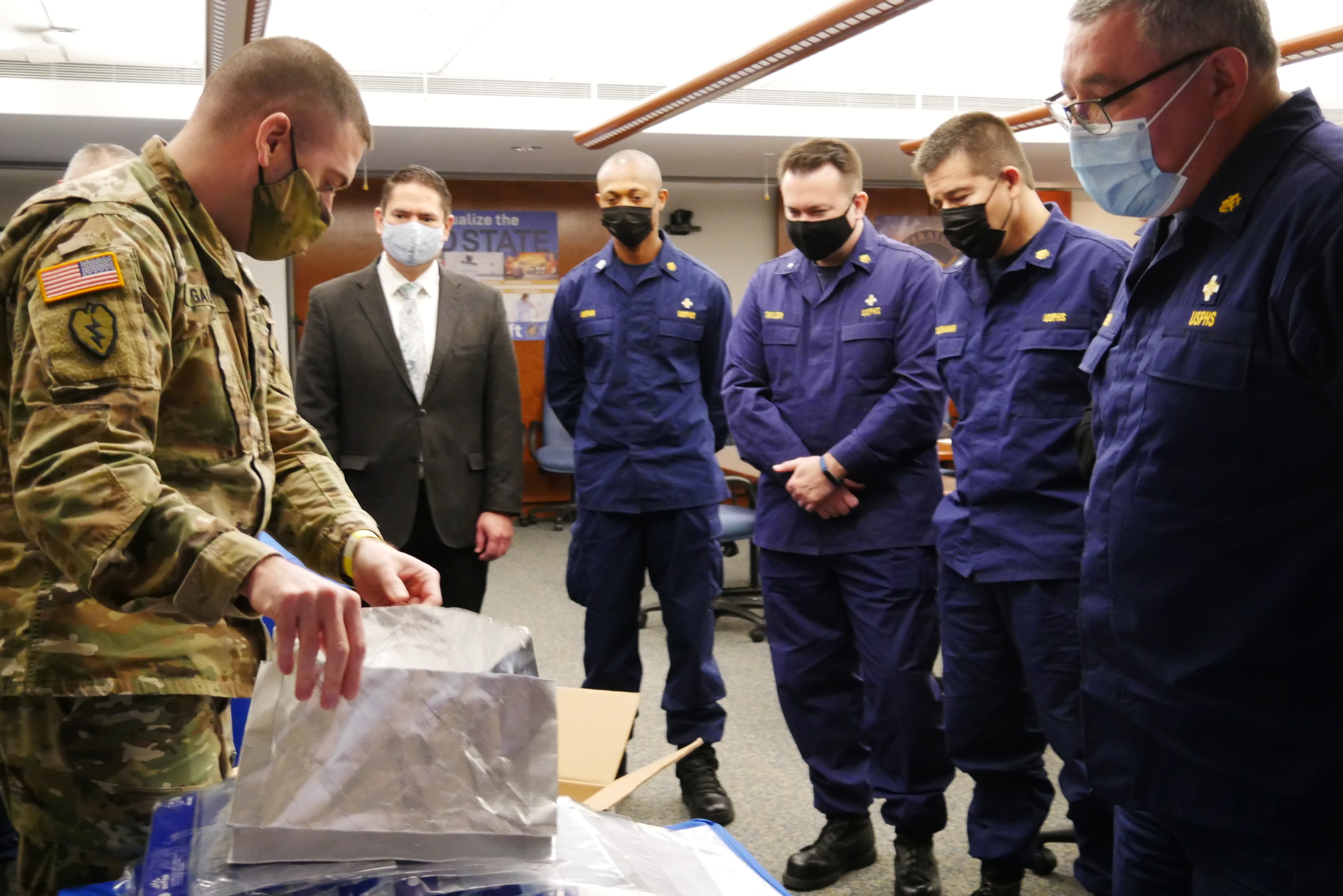
Operation Warp Speed's Army Maj. Nick Gauvin describes to Indian Health Service officials what to expect when the Pfizer vaccine arrives to administration sites with a demonstration kit in Washington, D.C., Dec. 10, 2020.

Lab Work


Air Force Senior Airman Arienthea Gray and Airman 1st Class Kaylin Rice, 66th Medical Squadron laboratory technicians, record lab work results at the medical laboratory at Hanscom Air Force Base, Mass., Dec. 3, 2020. Laboratory technicians are responsible for collecting and testing all routine lab work and COVID-19 tests done on the installation.

OWS Greetings


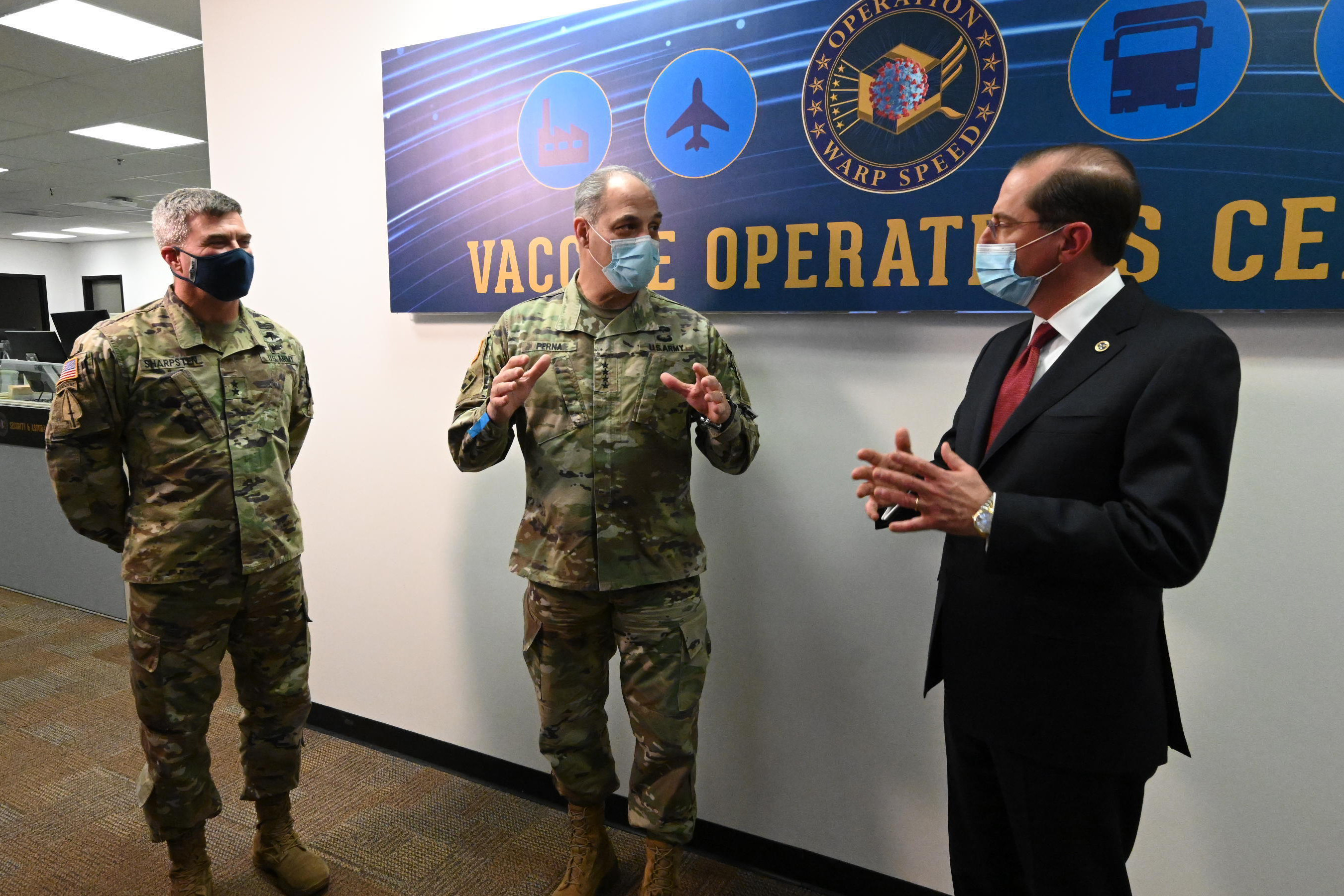
Operation Warp Speed leaders Maj. Gen. Chris Sharpsten, left, and Gen. Gus F. Perna, center, greet Health and Human Services Secretary Alex Azar, right, in the vaccine operations center in Washington, Dec. 12, 2020.

Promotion Day


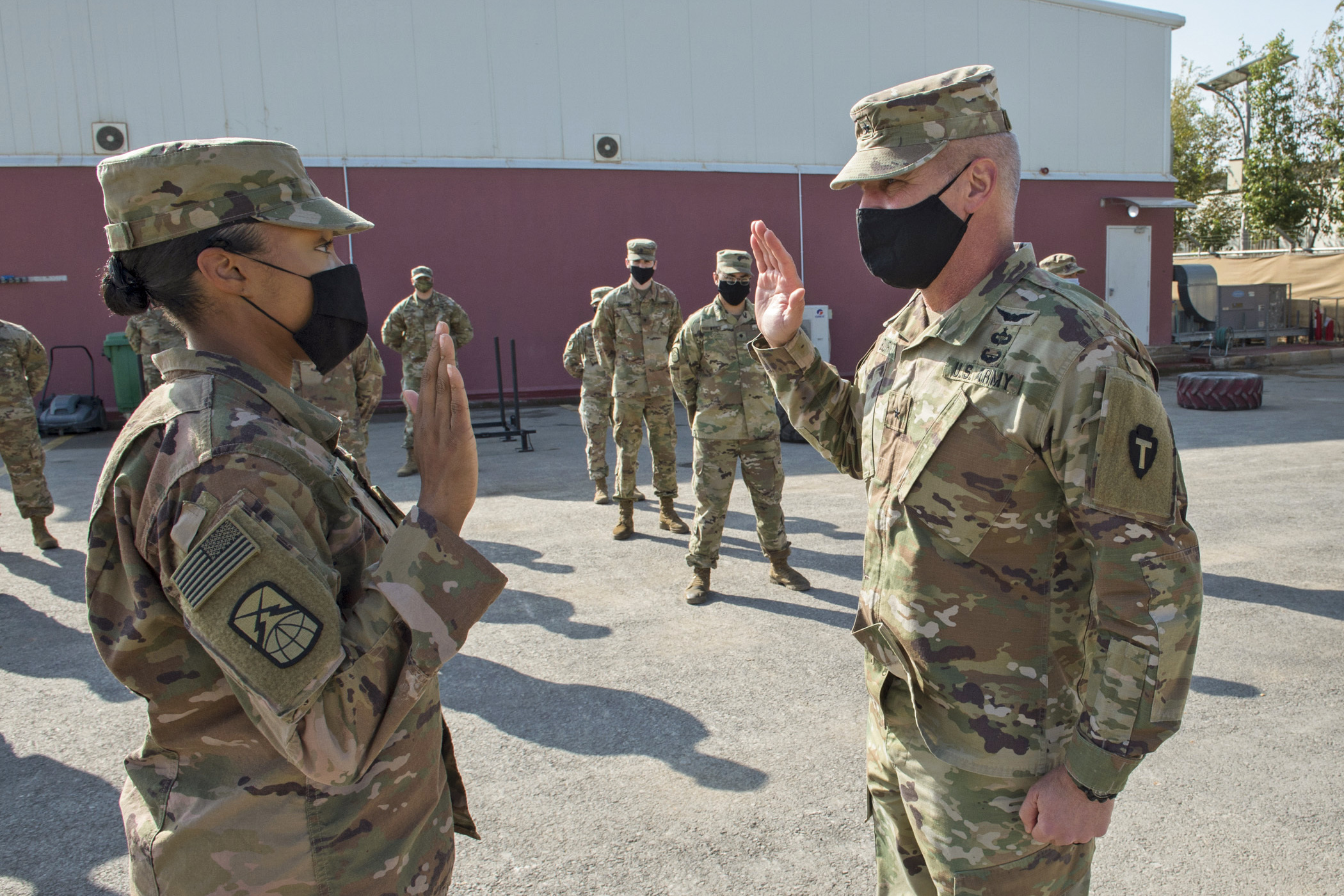
Army Brig. Gen. Win Burkett promotes 2nd Lt. Ericka Boney to first lieutenant during a ceremony in Jordan, Dec. 2, 2020. Boney is assigned to the 146th Expeditionary Signal Brigade, Florida Army National Guard.

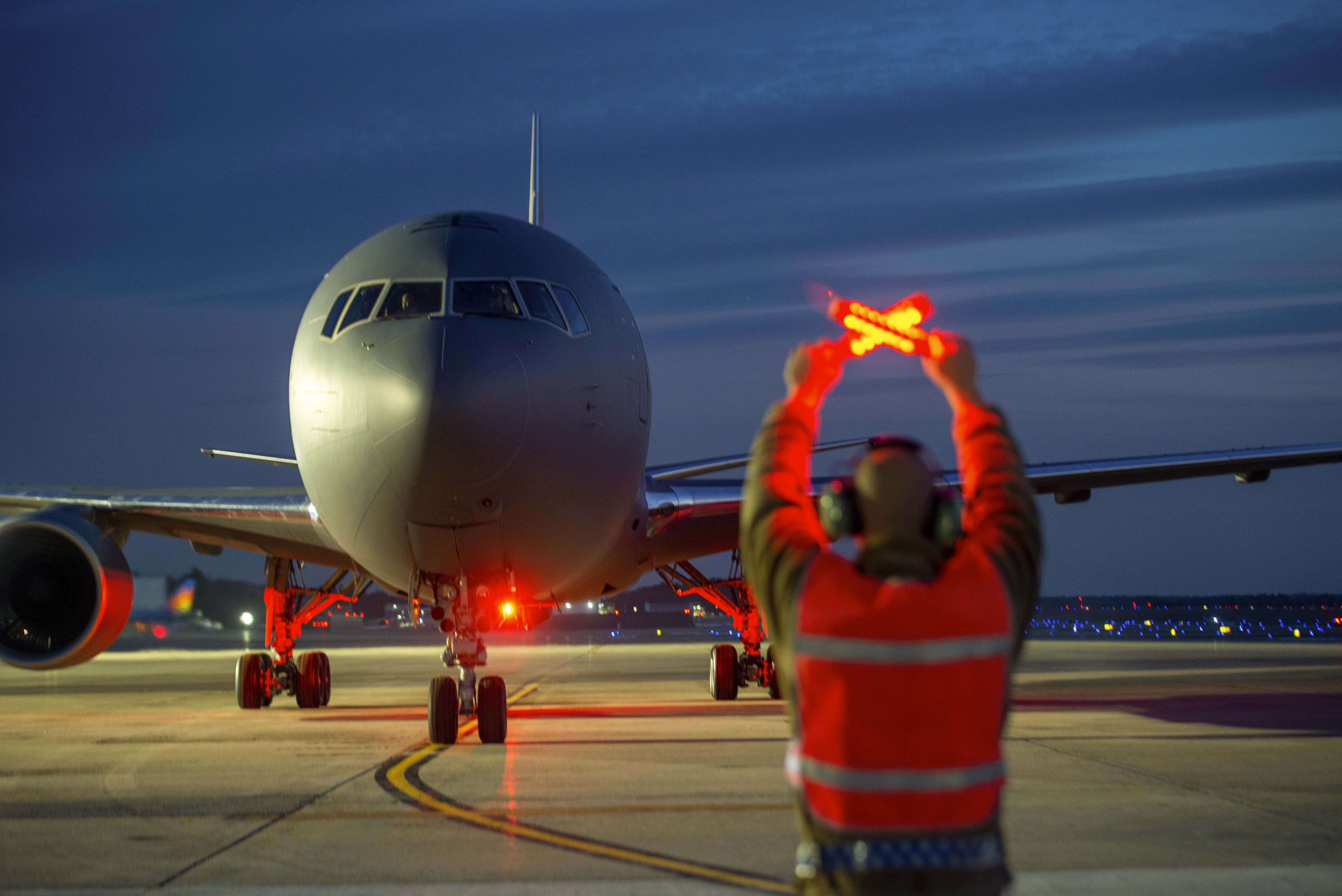
Direction Duty


Air Force Staff Sgt. Joshua Poticha, a New Hampshire Air National Guardsman, marshals a KC-46A tanker at Pease Air National Guard Base, N. H., Dec. 11, 2020.

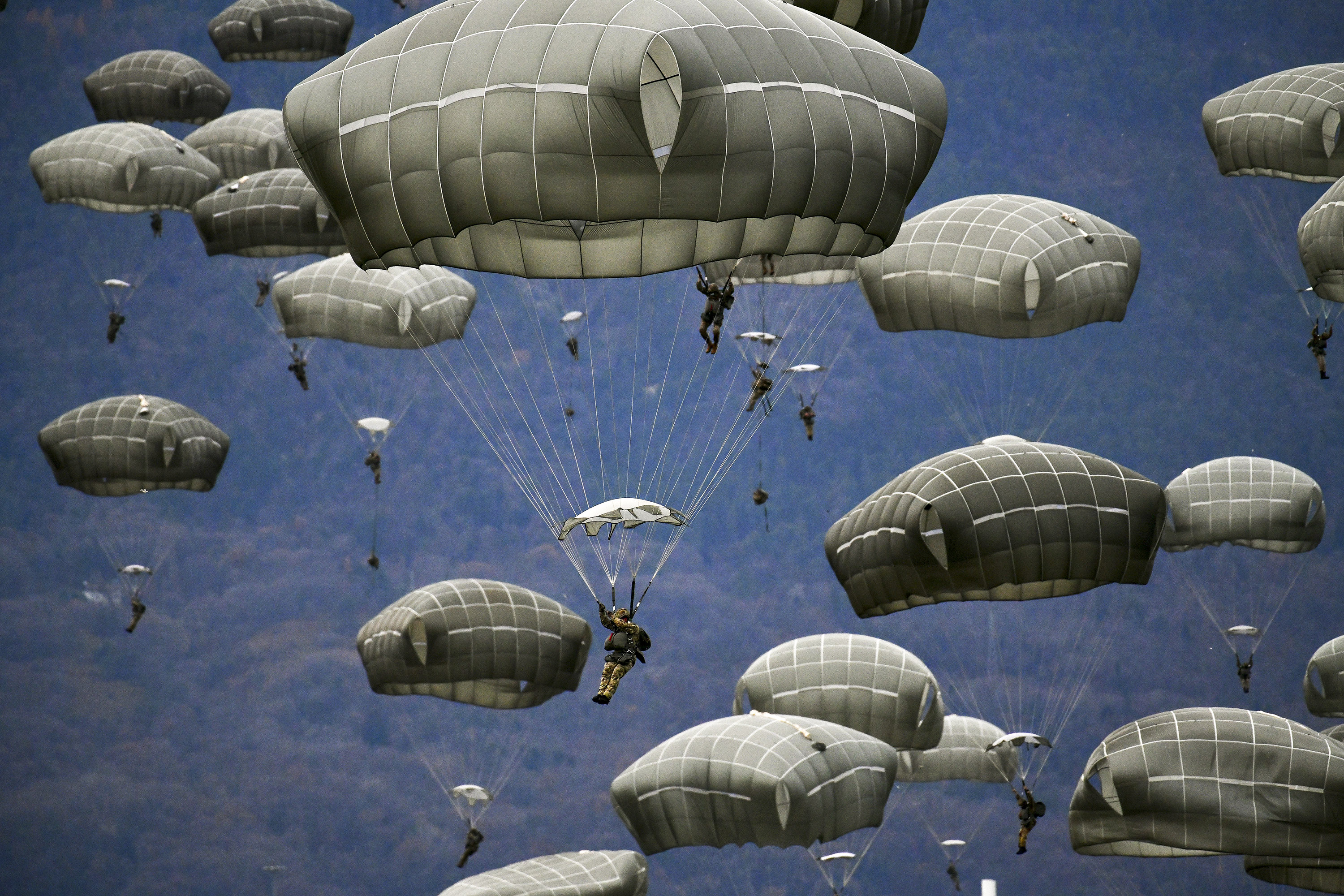
Drop Zone Descent


U.S. and Italian army paratroopers conduct an airborne operation at the Juliet drop zone in Pordenone, Italy, Dec. 10, 2020.

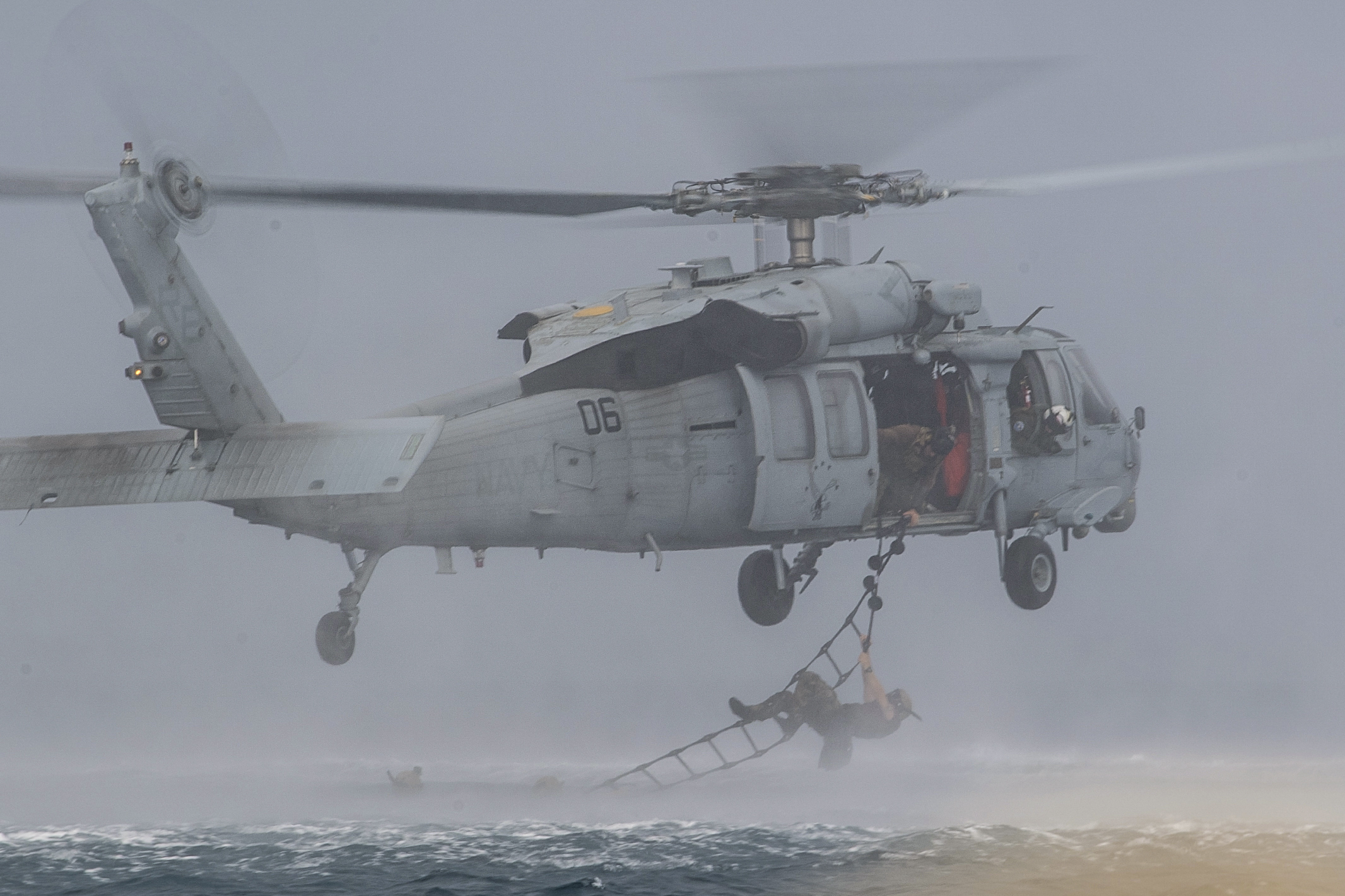
Hazy Helocast


Sailors conduct helocasting training operations from an MH-60S Seahawk helicopter in Apra Harbor, Guam, Dec. 7, 2020.

Brigade Focuses on Suicide Prevention During Holidays Amid Pandemic

 Dec. 14, 2020 | BY Cameron Porter

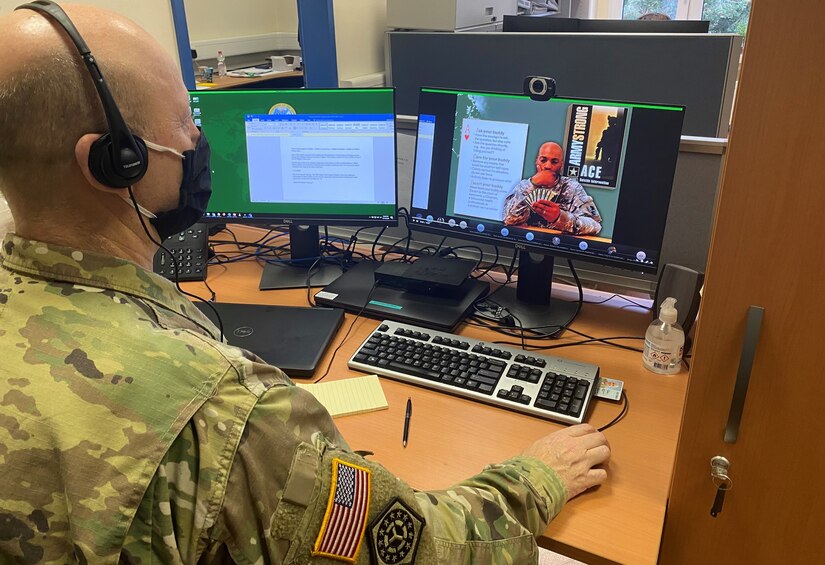
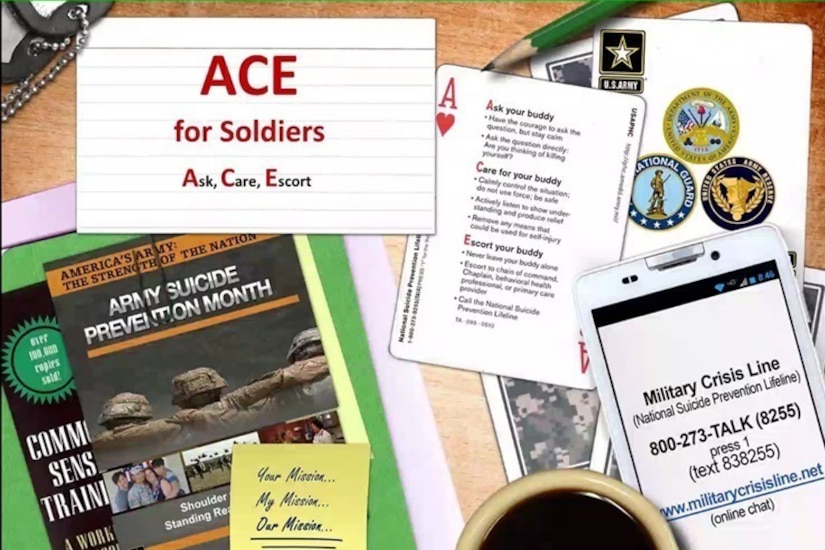
Actively caring for each other was the central theme for the suicide awareness and prevention training, and equal opportunity introduction training conducted for the soldiers and civilians from the 405th Army Field Support Brigade, Kaiserslautern, Germany, Dec. 10, 2020.

Due to the constraints and measures in place to prevent the spread of COVID-19, one might expect the training to be reduced to small groups or cancelled all together, but that was not the case for the 405th AFSB team, who optimized technology to meet together and listen to each other virtually, as these very important topics were discussed.

A soldier wears a face mask while participating in a digital conference call.

The commander of the 405th AFSB opened the virtual training session with his own personal experiences and thoughtful words of encouragement and advice.

This is really important – especially coming up on the holidays, which is a high-risk time for depression and suicidal ideations, plus COVID-19 and everything that's going on with that, said Army Col. Brad Bane, the 405th AFSB commander.

Just recently, there were two suicides in the 21st Theater Sustainment Command's 16th Sustainment Brigade as well as many cases of soldiers, civilians and family members here in U.S. Army Europe showing suicidal ideations and a lot of near misses, Bane said.

"When the near misses happen, it's usually because there's a good support network involved," Bane said.

"I can tell you – speaking for myself – going through my life there are times I wake up saying 'wow, this is really, really hard.' I've been placed in very difficult situations that seem very finite," Bane said. "Sometimes I feel overwhelmed, depressed and helpless – but speaking from experience – even though I felt that way at times, things turned around very quickly."

"The key is to have a support network in place and feel open to talk about it," he added.

The primary guest speaker for the training was Army Chaplain (Maj.) Michael Dawson, the family life chaplain at U.S. Army Garrison Rheinland-Pfalz. Dawson used a presentation as well as a video and his own sage words of advice and encouragement to emphasize suicide awareness and prevention key points.

"There have been recent suicides in our community so it is very real,” Dawson said, “and it's always sad to me when we lose a member of our community to suicide. How can we help them with whatever they are dealing with – with whatever is in their rucksack? You are the most import tool to assist in the prevention of suicide."

A graphic showing a slide presentation.

Army Sgt. 1st Class Johnny Tadlock, the 405th AFSB equal opportunity advisor, provided a short introduction to equal opportunity and included his contact information. Tadlock said he is planning to conduct a more in-depth training event virtually in January.

Army Command Sgt. Maj. Kofie Primus, the 405th AFSB command sergeant major, said the biggest take away from his perspective is the value of life and increased value of trust.

"That means leader to soldier – soldier to supervisor – soldier to civilian – civilian to soldier," Primus said.

One of the points covered in the training was the importance of memorizing or keeping on your person the National Suicide Prevention Lifeline. The number is 800-273-TALK (8255). Press 1 for the Military Crisis Line.
Suicide prevention is an integral component of the Army's readiness and resilience. When feeling distressed or hopeless, thinking about death or wanting to die, or if concerned about someone who may be suicidal, seek help.

(Cameron Porter is assigned to the 405th Army Field Support Brigade.)

Friday, December 11, 2020

Test Card


Army Pfc. Erick S. Alulema, a combat medic specialist assigned to Headquarters and Headquarters Troop, 102nd Cavalry Regiment, New Jersey Army National Guard, prepares a COVID-19 Ag testing card during COVID-19 testing at the New Jersey Veterans Memorial Home at Menlo Park in Edison, N.J., Dec. 9, 2020. The test detects the presence of protein antigens from SARS-CoV-2, the virus that causes COVID-19. There are currently 26 New Jersey National Guard soldiers and airmen assisting at New Jersey’s three Veterans Memorial Homes.