Thursday, December 03, 2015

Gen. Welsh discusses airpower future at Atlantic Council


By Senior Airman Hailey Haux, Secretary of the Air Force Public Affairs Command Information / Published December 02, 2015

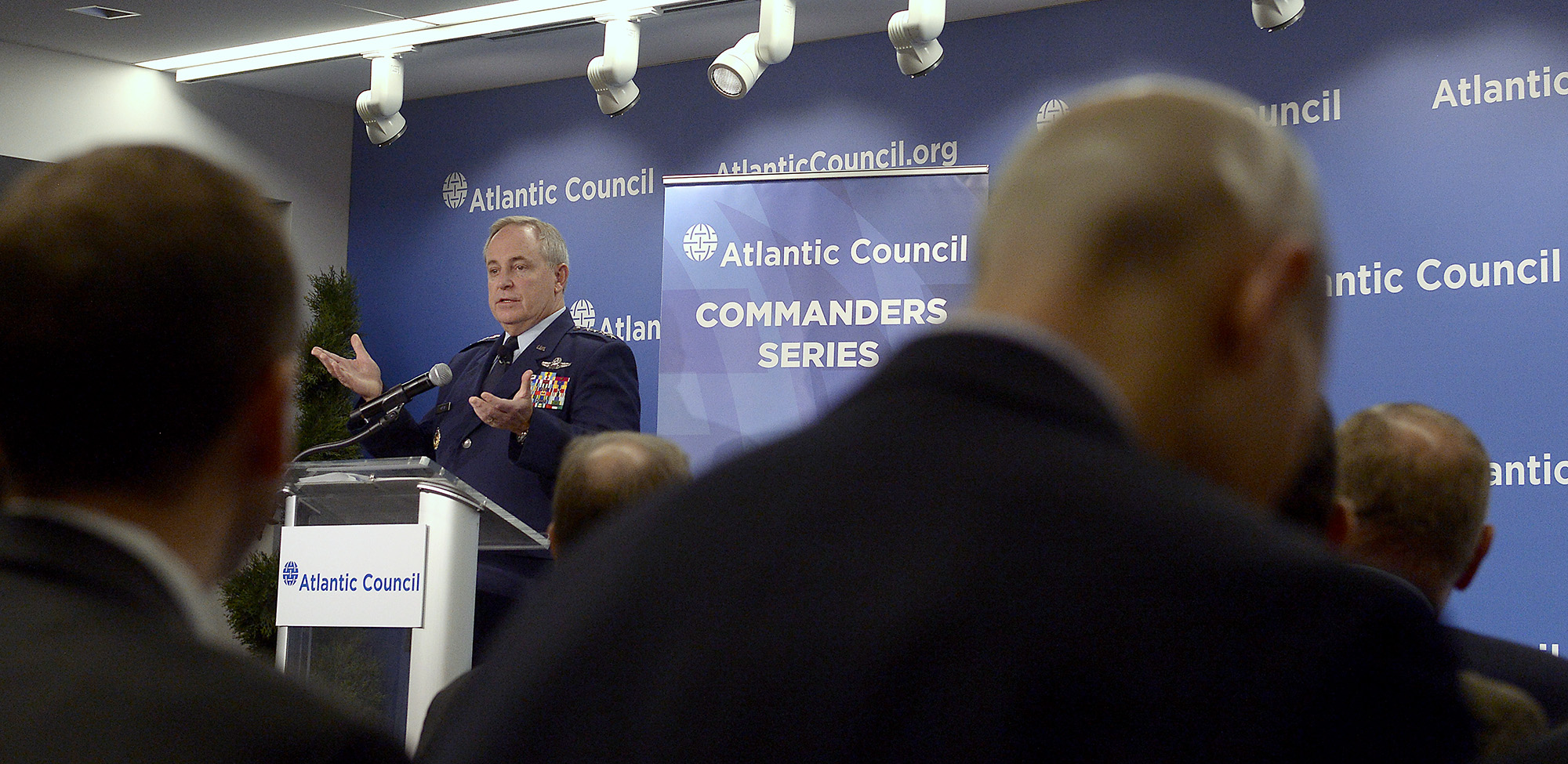
WASHINGTON (AFNS) -- Air Force Chief of Staff Gen. Mark A. Welsh III spoke on the future of American airpower during a Dec. 1 event at the Atlantic Council in Washington, D.C.

The event was part of the Commanders Series, a preeminent platform for military and defense leaders to discuss strategic issues with an audience drawn from the community.

“Over the last 68 years, we have basically brought American airpower to all corners of the globe and I don’t anticipate that changing any time soon,” Welsh said. “The demand signal for airpower will continue to go up, it’s been going up for a long time now and it will continue to go up because our people bring great, great capability for the joint force.”

Welsh spoke for the need to modernize aircraft and infrastructure, not just to prepare for the conflict of the next few years, but 25 to 50 years in the future.

“We must modernize. Holding on to everything that made us great will not make us great in the future; it’s just a fact,” Welsh said. “It is important for us to understand before we think about that force of the future, that capability gap we have enjoyed here in the United States for years is closing and it is closing fast.

“If we don’t pay attention to this, airpower will no longer be an asymmetric advantage of the U.S. military. The impact of that could be catastrophic … The U.S. way of war will have to be adjusted.”

Welsh said every day is a good day being the Air Force chief of staff because he gets to stand with people he respects, and represent a force he loves and values while serving a nation he would die for.

“The only thing that personally keeps me awake at night is worrying about letting them down. That would kill me,” Welsh said. “I love the people in my Air Force. I just love them and if I felt I wasn’t working hard enough or I didn’t care enough or I let them down in some way, I wouldn’t sleep at all.”

Moody deploys first HC-130Js


By Senior Airman Ryan Callaghan, 23rd Wing Public Affairs / Published December 03, 2015

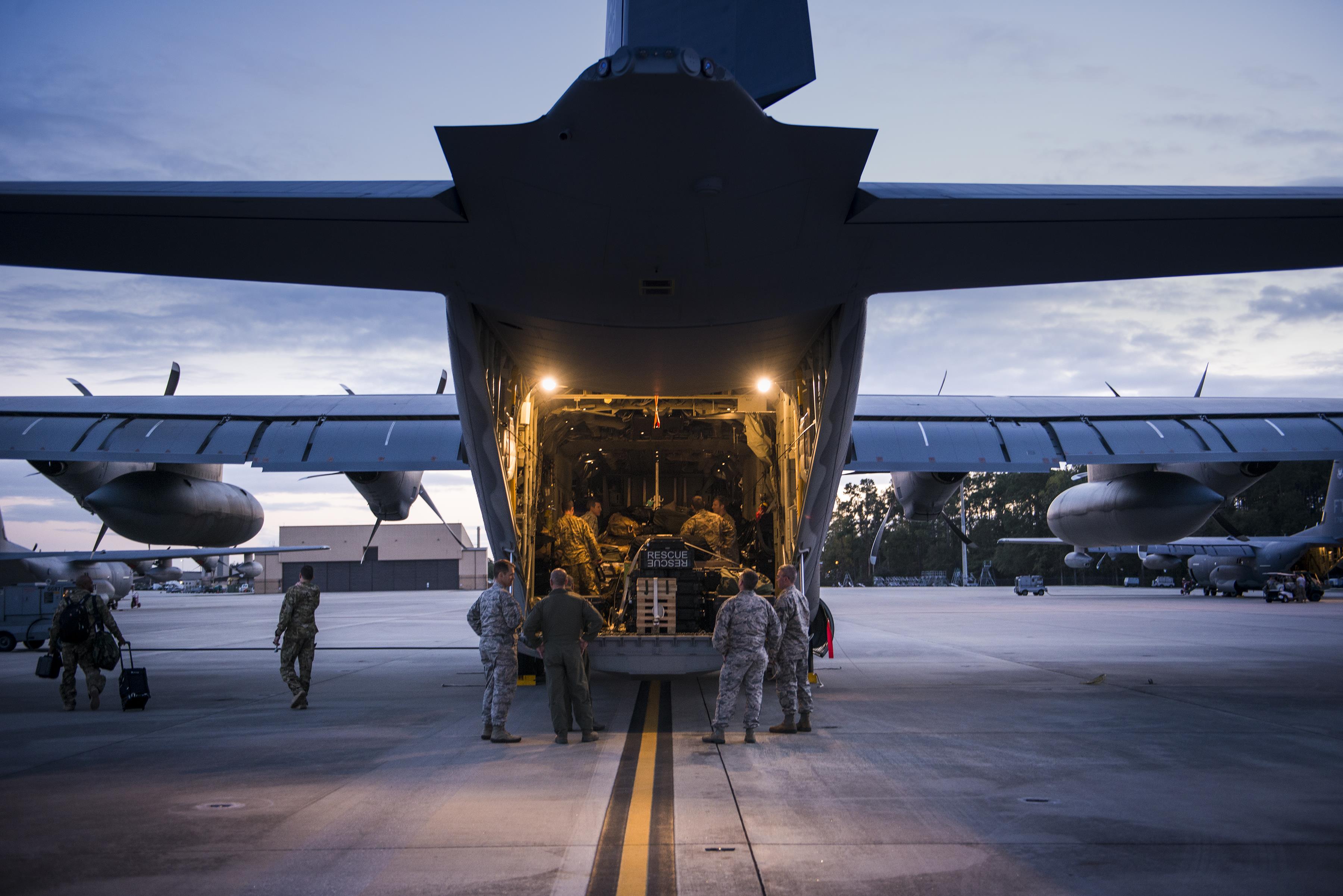
MOODY AIR FORCE BASE, Ga. (AFNS) -- The 71st Rescue Squadron deployed two HC-130J Combat King II aircraft for the first time Nov. 27.

The HC-130Js, which deployed with more than 60 aircrew, support and maintenance personnel, bring a new set of capabilities to the airspace in support of Operation Inherent Resolve. During the deployment, the aircraft will be used for personnel recovery, ensuring U.S. personnel do not become isolated.

"It's the start of another era," said Lt. Col. Gary Symon, the 71st RQS director of operations. "We flew the P-model aircraft here for about 15 to 16 years, throughout multiple deployments, and now it's this new aircraft's turn."

Replacing the HC-130P/N model aircraft, the HC-130J features improved navigation, threat detection and countermeasure systems, among other additions. It has been at Moody since July 2013.

"The previous aircraft were built in the early 1960s," Symon said. "There's been significant technological improvement. They can fly faster, they can fly higher, they can carry more and they burn about 10 percent less fuel, so it's much more efficient. Additionally, this aircraft is capable of air-to-air refueling, provides heavy equipment airdrop and has improved sensors on it for personnel recovery."

Equally as important to the mission as having the best possible aircraft is having the people to support it, Symon said.

"They're trained and ready to go," he said. "Every single one of the individuals here has worked very hard over the last couple of months to get themselves combat-mission ready and prepared to go downrange and prove these capabilities."

621 CRW builds partnerships in Colombia

by 621st Contingency Response Wing

12/3/2015 - TRAVIS AIR FORCE BASE, Calif. -- A mobile training team comprised of approximately 18 members from the 621st Contingency Response Wing's 571st Mobility Support Advisory Squadron stationed here recently returned from a building partner capacity operation at the Comando Aereo de Transporte Militar in Bogota, Colombia.

Building on lessons from previous missions to Colombia, the MSAS's Air Advisors continued to conduct classroom and hands-on instruction while strengthening relationships with the partner nation's military.

The instructions focused on operational mobility and command and control capabilities of the Colombian Air Force, focusing on aeromedical evacuation, airdrop cargo rigging and loading, aircrew life support equipment maintenance, aircrew survival program, maintenance quality assurance program and air traffic control proficiency.

"With each mission comes unique challenges," said Maj. Adrian Martin, 571st MSAS air advisor. "This mission highlights the successes the COLAF has made since the MSAS's most recent mission in early March."  

According to Martin, the biggest victories achieved were in the areas of maintenance quality assurance, airdrop operations and Survival, Evasion, Resistance, and Escape training. During the maintenance quality assurance program the MSAS found that the COLAF's maintenance quality assurance program had made great strides and progress in the areas of tool control, facility cleanliness and quality control since the MSAS's last mission, less than six months prior.

According to Master Sgt. Troy Daland, 571 MSAS air advisor, during his two day evaluation, he observed tremendous improvements from previous assessments.

"The COLAF is moving in the right direction with developing training and obtaining equipment to conduct survival training," Daland said.

Tech. Sgt. Bryan Rudquist, and air advisor assigned to the 571 MSAS said he was immediately able to build a level of rapport with COLAF students and felt a strong level of confidence during the engagement.

"The COLAF students are very excited to learn more about USAF processes and procedures in order to standardize their own," Rudquist said.

Air Mobility Command's MSASs execute the command's building partner capacity missions. The 571st MSAS is aligned with and supports U.S. Southern Command's engagements, while the 818th MSAS at Joint Base McGuire-Dix-Lakehurst, N.J., supports U.S. Africa Command. AMC's building partnerships capability resides in a Contingency Response Wing structure and the 621st CRW is the overarching organization responsible for the administration, training and support of each MSAS.

Each MSAS has more than 70 technical experts, many with previous air advisor experience, representing nearly 35 Air Force specialties.

"The 571st MSAS continues to deploy its best, staying committed to continued cooperation and building partnerships with the COLAF," Martin said. "Together, we are creating lasting relationships that benefit both our nations."

Wednesday, December 02, 2015

Face of Defense: Injured Cyclist Supports Transitioning Soldiers


By Lori Newman Brooke Army Medical Center

JOINT BASE SAN ANTONIO, Texas, December 2, 2015 — Soldiers assigned to Brooke Army Medical Center’s Warrior Transition Battalion here often have to deal with more than just the business of soldiering. Many deal with chronic pain and medical appointments along with their daily routine.

Army Sgt. 1st Class Samantha Goldenstein, the WTB reception noncommissioned officer in charge, understands this better than most.

Goldenstein suffers from femoroacetabular impingement, a condition that affects her hip joints.

“I’ve been a warrior in transition, so I understand the frustration soldiers experience when they are trying to heal and all the other stuff they have to deal with on a daily basis,” Goldenstein said.

According to the American Academy of Orthopedic Surgeons, femoroacetabular impingement, or FAI, is a condition where the bones of the hip are abnormally shaped. Because they do not fit together perfectly, the hipbones rub against each other and cause damage to the joint.

“My hips are pretty much destroyed at this point,” Goldenstein said. “I’ve had two surgeries already and the doctors told me I will need total hip replacement in the future.”

Adaptive Sports Program

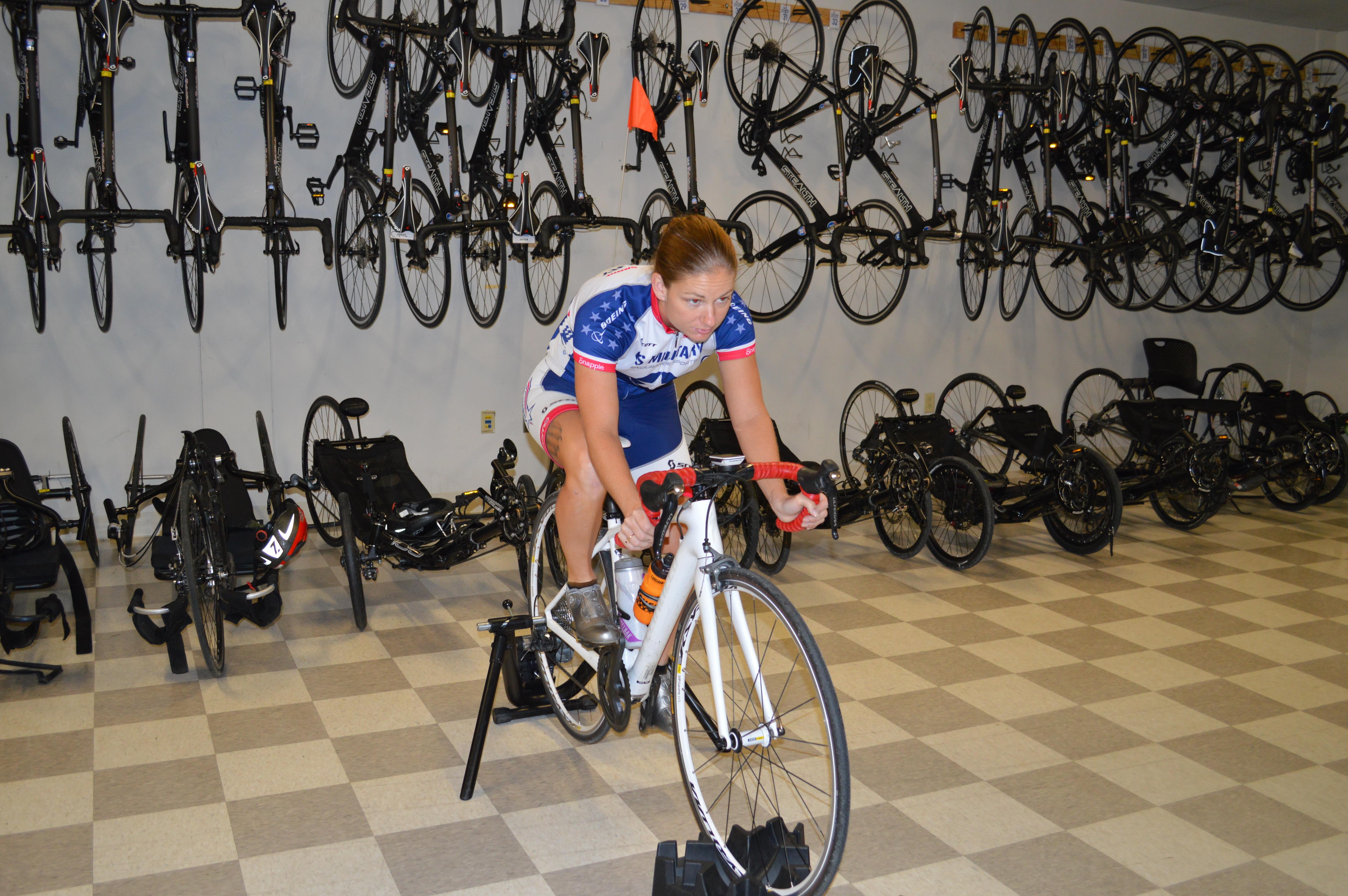
Once an avid long-distance runner, adaptive cycling helped Goldenstein fill a void and reduce her pain.

“I did a couple of trips with Ride to Recovery and really got into cycling,” she said. “That was my jumpstart into the adaptive sports realm.”

Goldenstein became an adaptive sports site coordinator at Fort Leonard Wood, Missouri.

“It was a good fit because of my fitness background,” she explained. She has a bachelor’s degree in exercise physiology and nutrition from the University of Missouri-Columbia.

Goldenstein and Army veteran Dave Smith currently run the adaptive cycling program here.

Army Capt. Michael Rash said he appreciates Goldenstein’s dedication and guidance.

“She’s focused on the cycling performance, teaching us how to stay in our lines or how to do certain things while we are cycling,” Rash said. “She inspires you, keeps you going and keeps pushing you.”

Rash received internal injuries from a bomb blast in 2007, and since then he hasn’t been able to do the things he did before his injury.

“I couldn’t run, do push-ups or sit-ups, after the injury,” he said. “Riding bike has changed my life. I was able to get back out and get physically active; doing something besides sitting and gaining weight from not being able to be active.”

Rash said other wounded service members inspire him. He gave an example of a recent ride he was on where the weather conditions were very poor and he was hurting badly.

“A quad amputee riding an upright bike rode past me. I told myself, ‘If that guy can do this, I’ve got to do this.’ It’s seeing people like that who inspire me to keep going,” he said.

Rash has participated in multiple training events with Goldenstein as part of the WTB here. He said he also enjoys the social aspect of cycling and interacting with other injured service members.

“I may not always understand their injuries,” Goldenstein said, “but they know I’m not just this random person asking them jump on a bike and ride.”
The soldiers cycle about two hours Tuesdays and Thursdays. Most trips are about 20 miles, but a couple of days a month the group goes on longer rides of 40 miles or more.