Tuesday, December 01, 2015

Face of Defense: Airman Recounts Struggles on Path to Pilot Dream


By Air Force Airman 1st Class Sean Campbell 92nd Air Refueling Wing

FAIRCHILD AIR FORCE BASE, Wash., December 1, 2015 — "I went from thinking I was the tip-top to struggling to make it through."

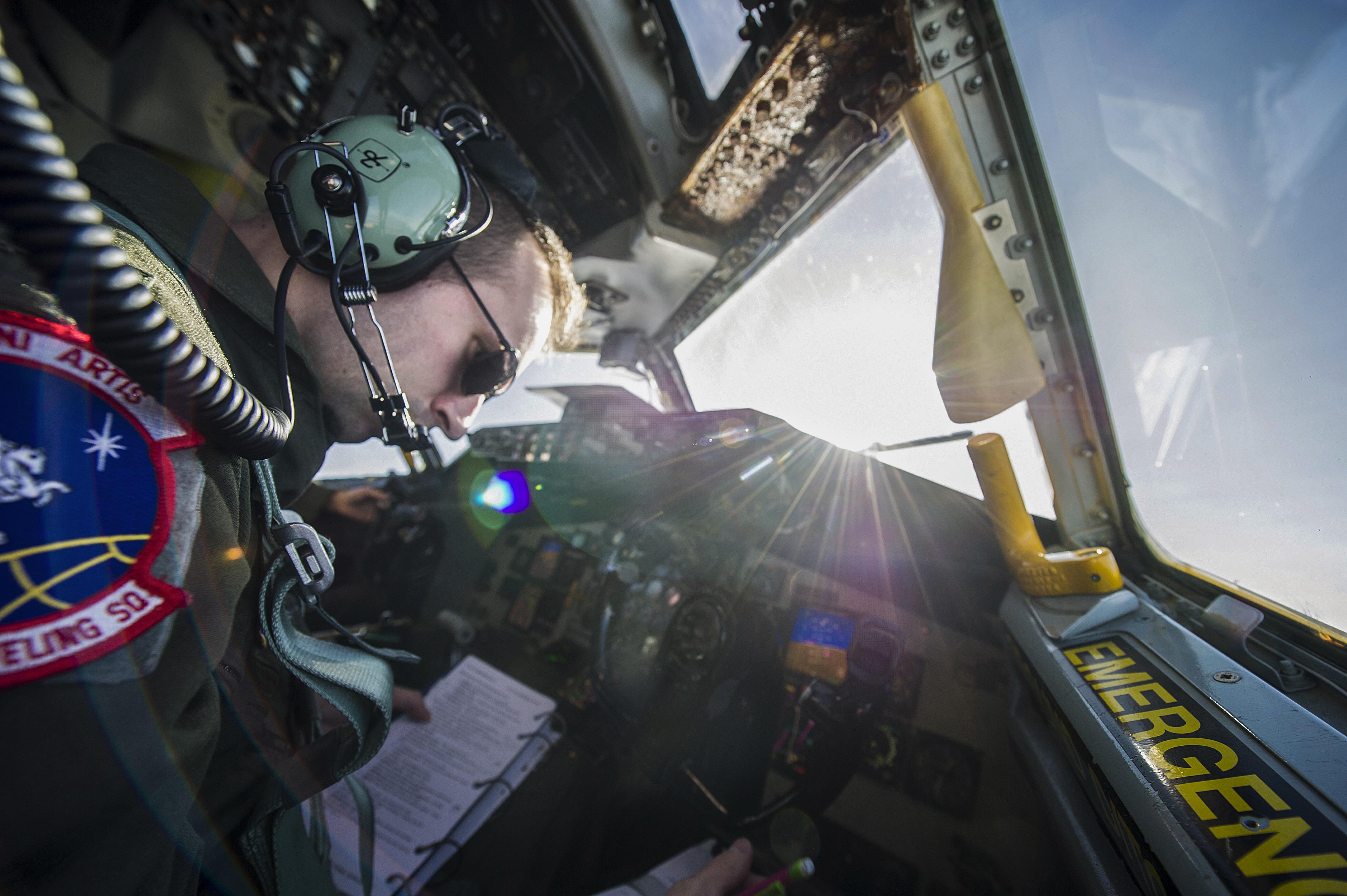
That's how Air Force 1st Lt. Steven G. Strickland, 93rd Air Refueling Squadron co-pilot, remembers his experience in pilot training. "But because I struggled, I was able to learn more and I became more grateful for the opportunity to be a pilot," he said.

Strickland said he knew from a very young age that being a pilot was something he wanted to achieve. Growing up on Air Force bases, Strickland saw planes flying frequently and attended many airshows, which he said, instilled in him the dream of being a pilot.

During his high school years, Strickland lived in Colorado Springs, Colo. The Air Force Academy was not far from the high school he attended, and he said recruiters visited frequently.

"The recruiters would tell us all these cool things about the Air Force," Strickland said.  "Already wanting to be an Air Force pilot, the recruiters made the Air Force Academy seem like the best route to take."

'Pilot Training Doesn't Wait for Anybody'

Strickland applied to the AFA and was accepted into the class of 2011. Before completing his four years, he took a two-year sabbatical to conduct a mission in Paraguay for his church. After two years he returned to the Academy and graduated with the class of 2013.

Strickland arrived at Columbus AFB, Miss., in August of 2013. The first step after arriving at Columbus AFB was to begin Initial Flight Screening, a process that helps determine if someone can learn quickly enough to progress through pilot training.

"Unfortunately pilot training doesn't wait for anybody. You don't go at your own pace," Strickland said. "There is a specific curriculum, a specific syllabus that you have to complete by a certain amount of time."

After IFS the instructors begin to teach basic airmanship including flying, taking off, landings and basic aerobatics. Students then learn how to fly with instruments, in different weather situations and in formation.

Strickland said learning how to land was a struggle for him. He said that changed when one of his instructors told him to look down to the end of the runway and picture himself floating down.

"For some reason the way he explained it clicked, and I was able to land from that point on without any issues," he said.

A Heavy Choice

The pilots eventually have to decide whether to go on the fighter pilot track or the "heavy" track, which includes larger cargo and transport planes.

"I was not a huge fan of being in the plane myself," Strickland said. "I like the concept of being with a crew and having someone to back you up. So I chose to go the T-1 Jayhawk route, which is the heavy trainer."

Strickland said he found his interest in air refueling during the last phase of pilot training -- mobility fundamentals. Many of Strickland's instructor pilots were former KC-135 Stratotanker pilots. He said they inspired him to become a tanker pilot with their stories about the different aspects of flying the KC-135 and the tanker lifestyle.

Before leaving training, pilots are given a list of the planes that are available, and the students rank them by what they want to fly.

"The KC-135 was the second plane on my list and Fairchild Air Force Base was the first location I wanted for the KC-135, so I was pretty pumped," he added.

Last Stages of Training

Following graduation from pilot school, Strickland went to Fairchild AFB to complete Survival, Evasion, Resistance and Escape school. Out of the comfort of everyday living, he said he soon realized how real SERE situations could be, and that led Strickland to learn things about himself.

"SERE really teaches you to be resilient and to trust in everything the United States and the Air Force stands for," he said.

After SERE training, Strickland went to Altus AFB, Okla. where he completed a five-month course to get acquainted with the KC-135. "While at Altus, they kind of bring you into the brotherhood of tanker pilots, and it's really cool," he said. "When I graduated the academy, I thought 'I'm going to be a pilot. I'm pretty much already a pilot.' I was super prideful.

"Going through training was a humbling experience because you recognize that you're not good at flying," he said. "There were moments were I thought I was going to wash out."

Because of that sense, he said, Strickland studied more and learned more than he otherwise would have.
"Everyone struggles at some point when initially learning how to fly, but Lieutenant Strickland has an amazing attitude and work ethic that ultimately saw him through," said Air Force Lt. Col. George Vogel, 93rd ARS commander. "What he probably didn't tell you is that he received an 'Exceptionally Qualified' rating on his instrument/qualification check ride at the KC-135 schoolhouse. That rating is the highest one possible and is reserved for the top 5 percent of aviators. The 93d Air Refueling Squadron family could not be more proud of him."

Monday, November 30, 2015

U.S. Equipment to Arrive in Romania for Operation Atlantic Resolve


By Lisa Ferdinando DoD News, Defense Media Activity

WASHINGTON, November 30, 2015 — About 70 pieces of U.S. military equipment will arrive in Romania from Germany tomorrow to support Operation Atlantic Resolve, a Pentagon spokesman said today.

Other equipment will arrive in Bulgaria and Lithuania later in December, Navy Capt. Jeff Davis told reporters.

Defense Secretary Ash Carter announced during a trip to Estonia earlier this year that the U.S. will temporarily stage enough vehicles and associated equipment in Central and Eastern Europe to support an armored brigade combat team.

The placement allows U.S. rotational forces in the region to move more quickly and easily to participate in training and exercises, Davis explained.

The equipment in Romania will be the first set arriving in that country, the captain said.

The items are part of the European Activity Set, which includes some 12,000 pieces of equipment, including tanks, infantry fighting vehicles and artillery. The EAS equipment will be moved around the region for training and exercises as needed, he said.

Carter also announced earlier this year that Bulgaria, Estonia, Latvia, Lithuania, Poland and Romania agreed to host company- to battalion-sized elements of EAS equipment. Germany already hosts EAS equipment.

The gear will be used in support of Operation Atlantic Resolve training and exercises that demonstrate the U.S. commitment to the collective defense of NATO allies, Davis told DoD News following the briefing.

"These continuing engagements strengthen our ability to work effectively among our allies, enhance trust, and help build enduring relationships that will be the foundation for future security in the region," he said.

Storing the U.S. equipment within allied and partner nations allows regionally allocated forces easier access to that equipment when and where it is needed for training, which saves time, resources and money, Davis added.

Airmen aid cyclist in roadside accident

by Airman 1st Class Justine Rho
100th Air Refueling Wing Public Affairs


11/25/2015 - RAF MILDENHALL, England -- On the dark drive home from work, heavy fog cloaks the roadway. Down the road, cars begin to slow and wait to pass an obstruction in traffic. As the line of cars merge into the oncoming lane of traffic, it becomes apparent that the obstacle is a person lying in the middle of the lane.

The evening of Nov. 2, 2015, Staff Sgt. Richard Odame, 727th Air Mobility Squadron air freight supervisor, and Senior Airman Jacob See, 100th Security Forces Squadron combined controller, are the first at the scene of a car and cyclist collision near Mildenhall, Suffolk.

"At about 6 p.m. it was already dark and that day the fog had rolled in thick," described See. "My girlfriend and I were driving from Lakenheath to my house in Mildenhall. We were no more than 20 seconds from the house when we saw an SUV stopped by the zebra crossing in the middle of the road. We were the first ones to stop."

"I noticed I was driving around a body lying by the side of the road," Odame recalled. "The vehicle directly ahead and me immediately pulled over and checked on the woman lying in the street. The woman was responsive and we proceeded to keep her calm and warm."

A vehicle struck the cyclist from behind and mangled her bike.

"The lady that hit the bicyclist looked distraught," Odame said. "I felt bad for both individuals involved because it was a very unfortunate accident."

The Airmen and several onlookers directed the flow of traffic before local authorities and emergency responders arrived at the scene.

"It felt really good to help," See said. "It was good to know there wasn't any unrecoverable damage done to the poor lady."

Odame explained how his military background gave him the confidence to respond in this scenario.

"Training kicked in," Odame said. "Having situational awareness made me able to make instinctive decisions to aid the cyclist."

Both Airmen felt that their actions weren't heroic, but simply the right thing to do.

"We are all human and we need to take care of each other," Odame said. "Being overseas, we need to be ambassadors for our country and leave a positive impression here in the UK."

Real-life training prepares Airmen for real-world threats

by By Senior Airman Kate Thornton
100th Air Refueling Wing Public Affairs


11/25/2015 - RAF MILDENHALL, England  -- As Airmen shuffle into the classroom with a general consensus to simply endure yet another "death by PowerPoint," Staff Sgts. Michael Garrison and Daniel Montgomery, 100th Security Forces Squadron trainers, prepare to teach valuable defenses against a very real threat: active shooters.

The difference with this expeditionary active shooter training is its emphasis on threats at deployed locations, as well as during travel to and from deployments. This new training was implemented Oct. 1, 2015, to prepare deploying Airmen for an environment where firearms are potentially more prevalent, and where they might be armed, appointing them to protect themselves and others from active shooters.

"When we were tasked to create this training, we could've just done the slideshow, but we wanted people to be afraid," Garrison said. "We wanted to use simulated-munitions so they'll have the mindset to not get shot."

Like most formal training, there was a PowerPoint presentation and even a short YouTube video featuring the "run, hide or fight," instructions from the Department of Homeland Security, but then the Airmen were forced outside of their comfort zone and into the shoot-house.

"With the state of things in the world right now, we all need a heightened sense of awareness," said Tech. Sgt. Richard Maurer, 100th Maintenance Group NCO in charge of the maintenance operation center and recent student of the training.

Airmen from all career fields are participating in the training - the only requirement is to be qualified to deploy.

When in a deployed location there's a possibility that service members from any branch of the military, including foreign military members, could be armed. This leaves room for error and heroism. After Airmen first enter the shoot-house, they're taught a series of tactical movements during an active shooter threat. Students are taught this purely for defense - not to pursue taking down the active shooter. They would use these movements to run, hide or fight, but if armed, they are then obligated to protect those around them who are unarmed in their attempt to do so.

"I've never had this type of training before," Maurer said. "The use of simulated-munitions made it so much more realistic."

There have been multiple threats in the world recently, some involving active shooters, and nobody really knows how they'll react in that exact moment, but this training is designed to help.

"In the past, we used the rubber guns and said 'bang bang'," Montgomery said. "When you actually have simulated-munitions flying at you, your senses kick in and you can know even just a fraction of how you might react in a real situation."

Although it's more interactive than the average computer-based training, these are skills no one wants to use, but according to subject matter experts, these Airmen are ready.

137 ARW family receives National Guard volunteer award

by Senior Airman Kasey Phipps
137th Air Refueling Wing Public Affairs


11/24/2015 - WILL ROGERS AIR NATIONAL GUARD BASE, Okla. -- A 137th Air Refueling Wing family won the 2015 National Guard Family of the Year award as a part of the 2015 National Guard Volunteer Awards announced earlier this year.

The Kettler family, Information Protection Chief Lt. Col. Elizabeth Kettler, her husband Scott, and their two daughters, Katie and Connie, were recognized for their volunteerism, contributing their time to many organizations throughout their community.

"We didn't even know that we had been nominated," said Lt. Col. Kettler. "But we don't do it for the award. We do it because we love Family Programs."

The Kettlers give their time to their community by volunteering for a number of organizations, including: Special Olympics, the Oklahoma City Veteran's Administration Medical Center, Life Church, Midwest City - Del City Public Schools Parent/Teacher/Student Association, 4-H Youth Development, and National Guard Bureau Family Programs.

"We love it all," said Lt. Col. Kettler. "It's not work to volunteer for people like Family Programs."

According to the award memorandum, the National Guard Family of the Year award is presented to one Air National Guard family and one Army National Guard family that "demonstrates outstanding and exceptional service to Family Programs."

The Kettlers are among 25 other volunteer award recipients in seven different categories who were recognized nationally.

As a service member, Lt. Col. Kettler knows the importance of giving back to the community that provides support for the military and their families, she said.

"I've had so many great experiences in 30 years," said Lt. Col. Kettler. "There were so many mentors pouring into my life. It's only the right thing to do. We're just trying to pay it forward."

As parents, the Kettlers want to set an example for their daughters by working alongside them and leading through example, Scott said.

"You help mold and guide kids while also mentoring yours," he said. "You get the benefit of helping both."

Katie and Connie also enjoy the experiences of volunteering and want to continue to volunteer in the future, they said.

"It's fun," said Katie. "We make friends, and we know we're helping. It takes you out of your comfort zone, and sometimes that's good."

Though the Kettlers have worked with Family Programs and other volunteer organizations for years, Lt. Col. Kettler understands that sometimes volunteering, especially around children, doesn't come naturally to everyone, she said.

"Some people can fish or pull apart weapons or can interact with kids, and I honestly felt intimidated by it all," she said. "But everyone can do something, even if it is administrative work."

After seeing the results of volunteerism, Lt. Col. Kettler no longer hesitates to lend a helping hand, she said.

"Whenever Family Programs needs anything, they just call us."

The National Guard Volunteer Awards were established in 2008 by National Guard Family Programs as a way to honor volunteers who inspire others to engage in volunteer service and recognize outstanding volunteers and organizations for their valuable contributions to the National Guard.

"It's an unexpected and huge honor," said Scott. "You feel appreciated and validated, which really makes you want to do more. We hope to inspire others to volunteer too."

Saturday, November 28, 2015

Work Visits Middle East, East Africa to Thank Troops for Their Service


DoD News, Defense Media Activity

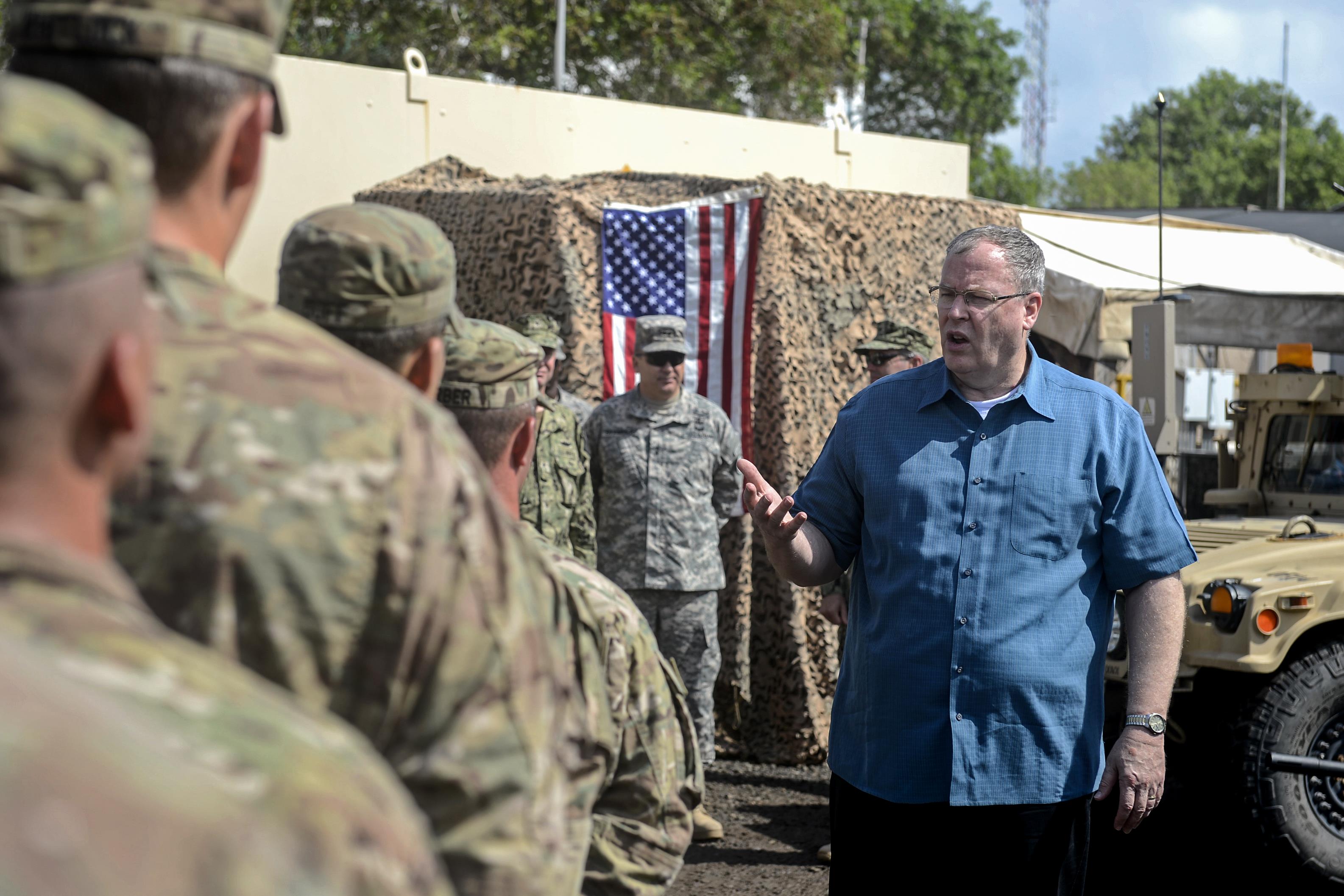
WASHINGTON, November 27, 2015 — Deputy Defense Secretary Bob Work is on a three-day trip to the Middle East and East Africa that includes stops in Djibouti and Qatar to visit U.S. service members during the Thanksgiving holiday and thank them for their service, Defense Department spokesperson Navy Lt. Cmdr. Courtney Hillson said in a statement released today.

On Nov. 26, the deputy secretary visited Camp Lemonnier in Djibouti and met with military leaders, including Army Maj. Gen. Mark R. Stammer, the commander of Combined Joint Task Force - Horn of Africa.

During their discussions, Work highlighted the U.S. commitment to fighting terrorism throughout the Horn of Africa and emphasized the importance of continued bilateral and regional cooperation with partner nations in operations to defeat al-Shabab, Hillson said.

Camp Lemonnier is home to Combined Joint Task Force-Horn of Africa, a U.S. military headquarters that works with partner nations, coalition forces, and interagency and governmental organizations to achieve a unified effort in countering violent extremist groups in East Africa.

Work’s next stop was Al Udeid Air Base in Qatar, where he met with U.S. Central Command Commander Gen. Lloyd Austin and Air Force Brig. Gen. Darren James, the commander of the 379th Air Expeditionary Wing, Hillson said.

During his two-day visit to the camp, Work spoke with service members, re-enlisted a soldier and visited Centcom forward headquarters and the Combined Air and Space Operations Center. Throughout his visit, Work underscored the strong partnership between the United States and Qatar in the areas of security and defense, she said. Additionally, he expressed appreciation for the support Qatar provides U.S. forces in the country, Hillson said.

At each location, Work met with deployed service members and also conveyed the appreciation of Defense Secretary Ash Carter for their service and that of their families during this critical time, she added.