Tuesday, December 15, 2015

CSAF, CMSAF bring message of thanks to deployed Airmen


By Tech. Sgt. James Hodgman, 379th Air Expeditionary Wing Public Affairs / Published December 14, 2015

AL UDEID AIR BASE, Qatar (AFNS) -- Air Force Chief of Staff Gen. Mark A. Welsh III and Chief Master Sgt. of the Air Force James A. Cody visited Airmen in Jordan, Kuwait, Iraq and Qatar from Dec 8-11.

“Our Airmen are laser focused, and they understand the importance of what they’re doing,” Cody said.  “The day-to-day impact they are having in this theater is amazing.”

The Air Force’s top officer and enlisted leader made the trip to meet with deployed Airmen and thank them for all they do to defend America.

“Our Airmen are really good at their jobs, really good at understanding how they fit into the bigger scheme of things and they’re inventing new and better ways to do every job from maintenance to delivering strikes on the enemy,” Welsh said. “They continue to prove they are better than Airmen have ever been; that’s one of the things that make this Air Force great.”

While Welsh remained proud of America’s Airmen, he also stressed the Air Force faces many challenges in the future such as modernization and continuing to build partnership capacity.

“Air forces that fall behind the technology curve fail,” he said. “We must modernize the Air Force and we must give our Airmen the tools to do the job five, 10 and 50 years from now.”

Another challenge facing the Air Force, Welsh said, is ensuring America’s Airmen never forget how valuable they are to the mission.

“I think the greatest challenge is making sure every Airman knows they are valued, they are critically important to the team, and their opinions are respected and sought after,” Welsh said. “I think if we can keep our Airmen proud of who they are and who they stand beside, our Air Force will solve every other problem. It’s all about Airmen loving being Airmen. If we do that, we’re fine.”

Welsh and Cody also emphasized how important it is for supervisors and commanders to know their Airmen. 

“They have to know you care about them and you have to get to know them,” Cody said. “We have great Airmen and they bring great capabilities, but first and foremost they are people. They have to feel valued for who they are and you have to know their stories to do that.”

Without knowing the background of Airmen, knowing what motivates them and what they care about, it’s impossible to lead them,” Welsh said. “Their stories are unique. Some are uplifting. Some are sad, but each one is unique to that Airman and if you don’t know that story it’s hard to lead that Airman as well as you could otherwise.”

“People like to feel valued, they like to know people care about them, about their future, their job, their opportunities and their family,” Welsh continued. “If you don’t know their stories, it’s hard to lead Airmen. It’s all about making the Air Force more effective and that starts by making every Airman more effective.”

Before departing the region, Welsh and Cody had one final message of gratitude for America’s Airmen.

“We appreciate everything you do every day,” Cody said. “We’re also grateful for the continued support of our families back home.”

“Thank you for everything you do,” Welsh said. “Thank you for who you are, for what you do, how well you do it, thanks for what you represent, thanks for standing by each other, thank you for serving.”

Gone but not forgotten: Wreaths honor those who gave all


By Sean Kimmons, Air Force News Service / Published December 14, 2015

ARLINGTON, Va. (AFNS) -- Once Susan Zerbe learned that a CH-47 Chinook helicopter had been shot down in Afghanistan, killing all 30 U.S. troops on board, she knew her son was one of them.

“I heard it on the news that morning and I just knew he was on there,” she said of her son, Tech. Sgt. Daniel Lee Zerbe.

Hours later, her premonition came true when military officers knocked on the door to inform her that Daniel was on that helicopter, as he and others traveled to help Army Rangers in a fierce battle against insurgents.

“It was a horrible feeling,” she recalled of the Aug. 6, 2011, incident. “Your heart just sinks.”

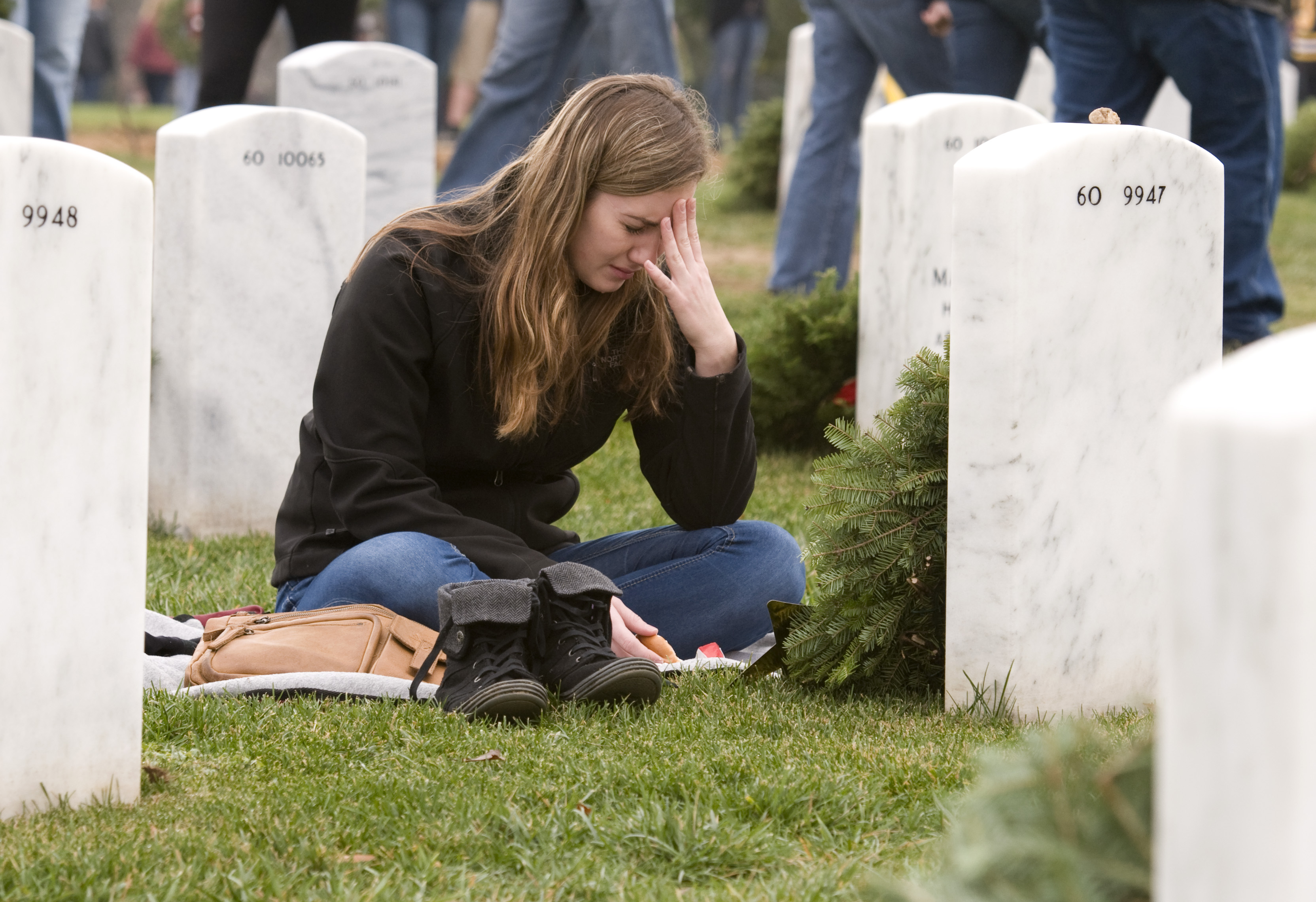
Zerbe and her family laid a wreath on Daniel’s headstone Dec. 12 during Wreaths Across America Day at Arlington National Cemetery.

The event drew roughly 50,000 family members of fallen troops and volunteers who placed more than 240,000 wreaths on the white marble headstones that line the cemetery to symbolize their respect for those who gave all.

“All of these people don’t get to come home for Christmas,” Zerbe said. “It’s our way to honor and remember what they did for all of us.”

But the wreaths, which were also placed at more than 1,000 locations across the country, were not just for decoration.

“We’re not here to decorate graves,” Karen Worcester, co-founder of the nonprofit Wreaths Across America, told a crowd at Arlington. “We’re here so you can … remember not their deaths but their lives.”

Memories

Emily Johnson traveled from Wisconsin to rekindle memories of her older brother, Army 1st Lt. David Andrew Johnson, who was killed by an improvised explosive device while on a dismounted patrol in Afghanistan in 2012.

“I wanted to spend the holidays with my brother,” she said. “It was always a really special time for him.”

Emily, 20, sat on a blanket in front of David’s headstone as she reminisced about her 24-year-old brother and his “goofy smile.”

“I don’t get to see him that often so I’ll probably be here all day,” she said. “I wish he was at home but at the same time it’s a big honor for him to be here.”

Nearby, Bob and Pat O’Kane-Trombley recalled memories of their son, Capt. Thomas Gramith, an F-15E Strike Eagle weapons systems officer who died along with the pilot when their aircraft crashed in Afghanistan.

They said he was “everybody’s big brother” who had a selfless, humble attitude that even earned him a humanitarian of the year award at Seymour Air Force Base, North Carolina.

“He really did a lot of community service that others noted, but he never talked about it,” Bob said.

The loss of Thomas in 2009 hit the family hard, they said, especially since the 27-year-old Airman had 9-month-old twin daughters at the time.

“We got the knock on the front door and the minute I looked out of a small window on the door, I could see the gleaming silver cross,” Pat said of the insignia of the chaplain who would tell them the tragic news.

“That was the day when everything came crashing down,” Bob added.

Thomas and his pilot, Capt. Mark R. McDowell, 26, were only two young men of countless others who died defending the country. None of them should ever be forgotten, Bob said.

“If we fail to remember them,” he said, “we will lose everything we have.”

Fundraising

To honor the fallen, fundraising efforts amassed about 910,000 wreaths that were placed on headstones across the country on Dec. 12. One of the largest fundraising groups was the Civil Air Patrol, which helped bring in about one-third of the wreaths.

“They solicited wreath donations for over 1,000 sites,” CAP Col. Dan Leclair, a retired Air Force master sergeant, said of the thousands of volunteers from the Air Force civilian auxiliary. “We’re very privileged to do this.”

The annual event started in 1992 with 5,000 wreaths. For the first time last year, volunteers had enough wreaths for every headstone at Arlington.

“We did this and then the American people with their American spirit got under us and lifted us up,” Worcester said.

But placing wreaths was just one mission that volunteers were asked to do when recognizing those buried in Arlington.

“Please read the name out loud,” Worcester said of the headstones. “Because we do die twice: when we stop breathing and the last time when a human being mentions our name out loud.”

Finding strength, resiliency through Air Force family


By Airman 1st Class Christopher Thornbury, 22nd Air Refueling Wing Public Affairs / Published December 14, 2015

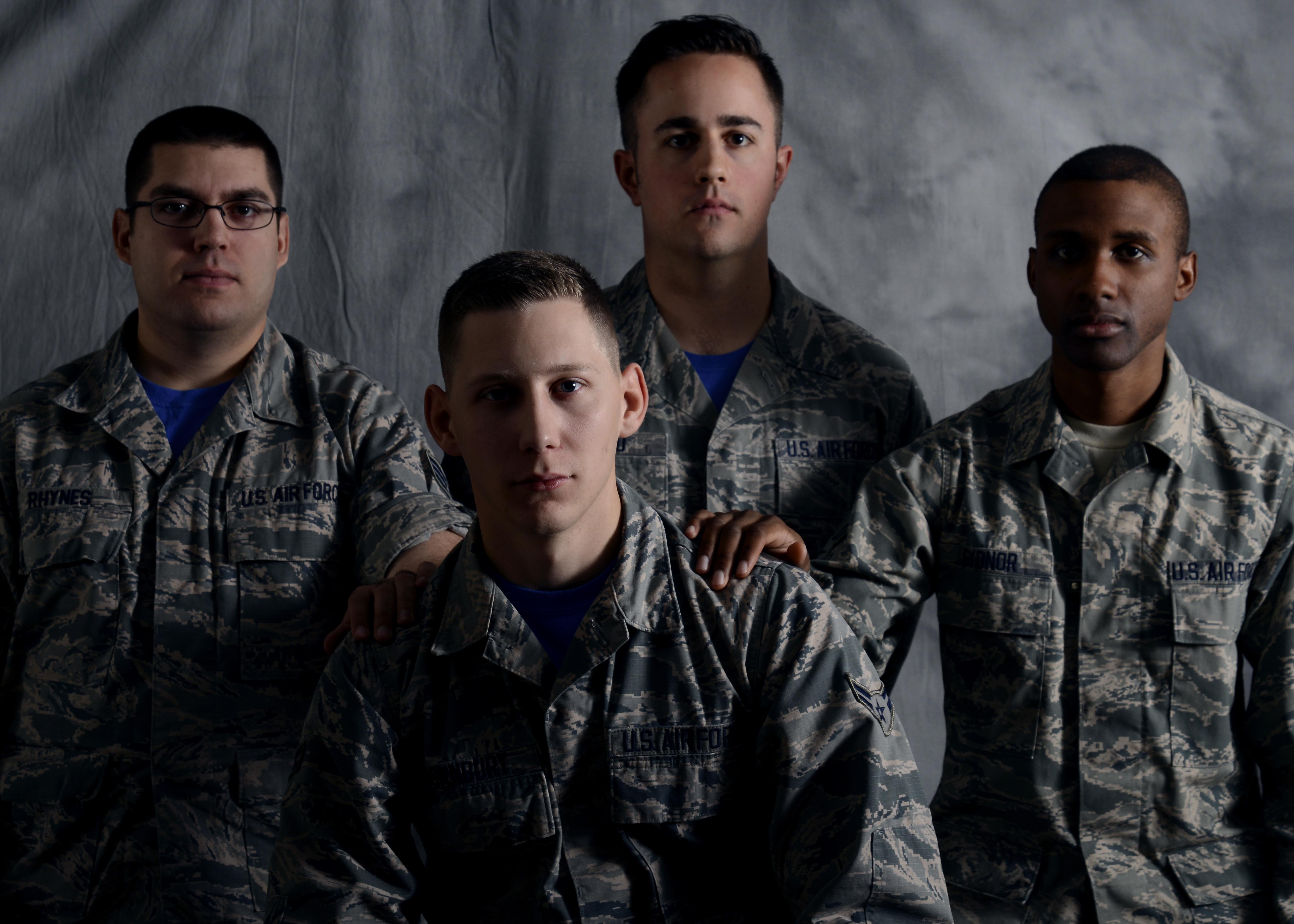
MCCONNELL AIR FORCE BASE, Kan. (AFNS) -- I joined the military to provide for my family, but I never would have expected the challenges my family would face and how we would evolve.

When I enlisted in the Air Force I joined another family without intent. This family has been with me ever since, especially during my family's darkest tragedy.

Family

After completing basic military training and tech school, my family and I made the 303-mile drive from our hometown, Lebanon, Missouri, to McConnell Air Force Base, Kansas. We didn't know anyone or anything about the area before arriving. It was only my wife Kristina, my daughter Kierstin and myself.

My co-workers welcomed us and within a few months, I had made friends at work. We soon found out that our immediate family was going to grow. We were going to have a baby boy, who we decided to name Emmitt Alan Thornbury.

On Sept. 18, 2015, Emmitt was born.

Hardship

We didn't have the chance to raise Emmitt. We'll never know what kind of man he would become, if he'd have my blue eyes or his mother's dimples. We won't be able to take him to ballgames or pick him up after a fall. We won't be able to hold and comfort him when he is upset -- because he isn't with us anymore, but he is still with us in our hearts.

His fragile body couldn't support life outside his mother's safe womb. He only lived a little over an hour but the impression he left will last forever.

We didn't go in blind though. We knew Emmitt was going to face challenges when the doctors spoke to us about his deformities caused by his condition, Trisomy 18. It was gut-wrenching when they began talking about how much time we would have with him. They weren't talking about years or even months, not even days; they were talking about minutes and hours. Hearing this hit me harder than a speeding train and took me to an emotion I didn't know existed.

Leadership

My leadership was incredible. They made sure I was at every appointment and ensured I knew all my options so we could take the best course of action. This allowed Emmitt and Kristina to go to one of the best hospitals in the nation for children with severe problems. If he had any chance of survival, it would be there and my leadership made it possible.

I was given emergency leave so we could stay at the nearby Ronald McDonald House allowing us to be close to the hospital with the best care possible. In the end, the doctors couldn't save our son but knowing we tried has made our situation easier to live with.

Air Force family

I received calls, texts and messages from many people sending condolences and asking if there was anything they could do. A vast majority of those people I had just met within the year and a half of my enlistment, not in my 24 years before; they were co-workers, mentors, instructors and my leadership. It was my Air Force family that really made the effort to make sure we were OK.

We had the funeral in our hometown, so he could be near family. It was a difficult day that I wish no parent will ever have to go through.

Before the funeral, my brother came up to me and said, "Your friends are here." As I went to the back of the room, I saw four familiar faces that I recognized from base. A chaplain, two co-workers and my fearless leader traveled the 303 miles to be there for me and my family. I felt overwhelmed with emotion to the point I could barely breathe.

It may not be as obvious as time passes, but they are still helping me; whether they know it or not, just by being a friend, mentor and always understanding. I don't know what would have happened without the resources provided to my family by the Air Force and to my family back at McConnell, but I do know that because they picked me up, I can put my best foot forward.

Monday, December 14, 2015

Canadian officer in deputy position at USARAK

by David Bedard
JBER Public Affairs


12/14/2015 - JOINT BASE ELMENDORF-RICHARDSON, Alaska -- D-Day. The English Channel. M4 Sherman tanks of Canada's 1st Hussars Tank Regiment - enshrouded in inflatable flotation screens and motivated by duplex-drive propellers - sputtered toward the Juno Beach shoreline, fighting the pitching channel waters as much as they would soon grapple with the Nazis.

Close enough to the shore to deflate their screens, 1st Hussars crews hastily transformed their tanks in an effort to get their 75-mm guns in action. Still track-deep in the water, the tanks blasted away at Nazi bunkers, machine gun nests and anti-tank guns. Once they were satisfied they had achieved fire superiority, the Canadian Shermans marauded up and down the shoreline destroying any crew-served enemy emplacements they could find.

Operating American-made tanks and fighting in the massive Allied invasion of France, the Hussars' effort was one in a long line of cooperation between the Canadian Armed Forces and the United States military.
Indicative of this longstanding partnership is the recent assignment of Canadian Army Col. Martin Frank to U.S. Army Alaska as deputy commander-operations, the second-highest ranking position in the two-star headquarters.

Assignment Alaska
Previously, the second-in-command of USARAK was the deputy commander stationed at Fort Wainwright. With Frank's assignment, the Fort Wainwright position - currently held by Col. Shawn Reed - transitioned to deputy commander-sustainment.

Responsible for operations, Frank said he felt his previous command of the Canadian Manoeuver Training Center prepared him well for his new billet.

"Because I was involved in the training of brigade-size units coming through our training center, I think it made me a really good fit for being the deputy commander-operations who is responsible for the readiness and training of the USARAK force," Frank said. "It was a really good fit."

Weeks after his arrival, Frank found himself knee deep in USARAK operations. He issued division-level orders to 4th Brigade Combat Team (Airborne), 25th Infantry
Division for exercise Spartan Fusion, and was exercise director for the brigade's command post computer-aided force-on-force exercise.

"The one thing I really did highlight with everybody was I was the only new addition to the headquarters," Frank explained.

"I didn't arrive here at USARAK with an army of staff officers that could work on projects I thought were really important.

"So I was very conscious of the fact that all the great work that needs to be done to enable training was being done before I got here," he continued. "I was coming into a position no one had occupied before, so I was able to define my own space and role within the headquarters."

Though responsible for operations, Frank said there is a distinct delineation between what he does and what the G-3 operations officer does. Likewise, there is a delineation between what Reed does and what the G-4 logistics officer does.

"It is very clear to me that there is one commanding general, and [Maj.] Gen. [Bryan] Owens is the commander," Frank elaborated. "But, with me on the operations side and Colonel Reed on the sustainment side, we're another tool in his toolbox to be able to address operations, training, readiness and sustainment as well as logistics and infrastructure issues."

Among the Yanks
Wearing the Canadian Disruptive Pattern Uniform - somewhat similar to the green U.S. Marine Corps digital Marine Pattern uniform - Frank stands out on Alaska's military installations. Despite wearing a colonel rank comprising two ornate stars and a Saint Edward's crown, Frank said U.S. Soldiers still know to salute him. Perhaps word has trickled to the Soldiers to keep an eye out for the Canadian tank officer, or perhaps they are simply following the age-old rule: when in doubt, salute.

Belonging to an Army that traces many of its traditions back to the British Army, Frank nonetheless said there is little to discern between the Canadian and U.S. armies.

"I don't think there's a lot of difference quite honestly," the colonel said. "I think we're both focused on the readiness of our troops and making sure they're trained to the best of their capabilities. We take the resources that are available, the constraints that are placed on us, and we come up with the best possible solutions to make sure our soldiers are ready to go where they're needed."

With the Canadian Army scheduled to send a Light-Armored Vehicle III platoon to the upcoming USARAK exercise, Arctic Anvil, Frank said it is critical U.S. and Canadian soldiers learn to work together through training exercises.

"We worked shoulder to shoulder in Afghanistan," he said. "Canada no longer has a role in Afghanistan, but we know for sure that we will be going somewhere else again, and we will be working with our partners in dangerous areas in combat.

"We need to maintain those relationships and build those relationships during peacetime here, now, so we can hit the ground running when we go down range."

Growing up Army
Frank's father was a soldier in the Royal Canadian Engineers. He and his family trundled around from base to base in Canada, exposing the younger Frank to a life of adventure, deployments and explosions.

"I saw a lot of what it was like to be in the Army," Frank said. "So I always felt a life in uniform was for me."

After attending college for a few years, Frank enlisted in the Canadian Army and pursued the Army Officer Cadet Training Plan, ultimately attending armor officer phase training and earning an Army commission.

His early career would see a variety of command assignments with Leopard 1 tank units and include two tours to Bosnia with the NATO-led Stabilization Force.

Eventually, he would rise to the prestigious command of the Royal Canadian Dragoons, a reconnaissance regiment equipped with Coyote Reconnaissance Vehicles - similar to the LAV and the U.S. Army's Stryker Reconnaissance Vehicle.

Upon taking command of the regiment, regimental Colonel-in-Chief Prince Charles sent a congratulatory letter to Frank, requesting occasional correspondence in return detailing the status of the unit.

Frank twice deployed to Afghanistan, most recently as deputy commander for the Canadian Operational Mentoring and Liaison Team in Kandahar in 2010, when he mentored the commander of 1st Brigade, 205th Corps, Afghan National Army.

"Having an opportunity to look at the Afghanistan situation from a different perspective was really unique," Frank said.

Arctic warrior
By the time Frank was able to unpack his Harley-Davidson Electra Glide Ultra Classic touring bike, it was too late. An early September snowfall at Joint Base Elmendorf-Richardson had closed the base to motorcycling.

Perhaps it was an ignominious introduction to Alaska, but the colonel took it in stride.

Frank said he looks forward to the opportunity to fish for salmon, hunt big game, and rent an RV with his wife, Margo, heading north to explore the vast state.

The Canadian officer recently attended the Cold Weather Orientation Course at the Black Rapid Training Site with USARAK leadership.
He said he was impressed with U.S. Army equipment, specifically American snowshoes and the seven-layered Generation III Extended Cold Weather Clothing System.

"I want to learn as much as I can about soldiering in Alaska, so I can professionally improve as an officer, broadening my understanding of - not just the way the U.S. Army conducts operations - but also [with the U.S. Air Force] on the Elmendorf side."

Frank said his goals for his time as the deputy commander-operations are simple.

"I'm hoping I have a positive impact on the way USARAK Soldiers are trained and the way USARAK Soldiers maintain readiness," he said. "I'm hoping I will be able to assist General Owens in the execution of his wide range of duties and responsibilities."

Though he answers to the general, Frank said he also serves small-unit leaders.

"I'm here to work for companies," the colonel said. "I'm here to work for company commanders and company first sergeants to ensure they have what they need to train their Soldiers."