Army Staff Sgt. Stanley Martinez was the last man to step off the truck. It was autumn of 1951, somewhere north of Busan, South Korea, the deuce-and-a-half tactical vehicle he had ridden in from the country's southern tip had been dropping replacements all day: a soldier here, two there, each stepping into a slot another had just vacated.
Martinez waited for his turn, listening to artillery thump in the dark.
"You couldn't see anything, but you could hear it going off," he said.
Now, decades later, at 96, he is one of two surviving members of his local Korean War Veterans Association chapter. He served as a tank driver assigned to the 7th Infantry Division, whose hourglass patch remains worn by soldiers at Joint Base Lewis-McChord, Washington, today.
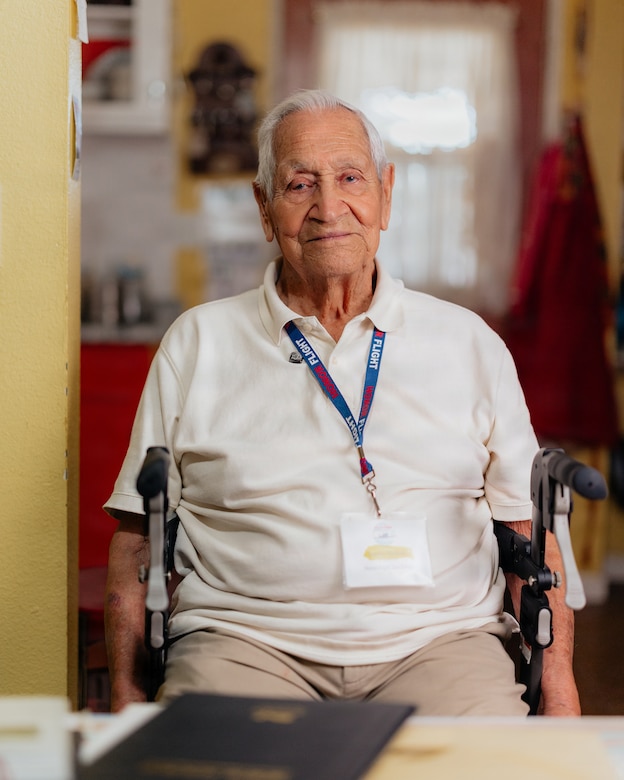
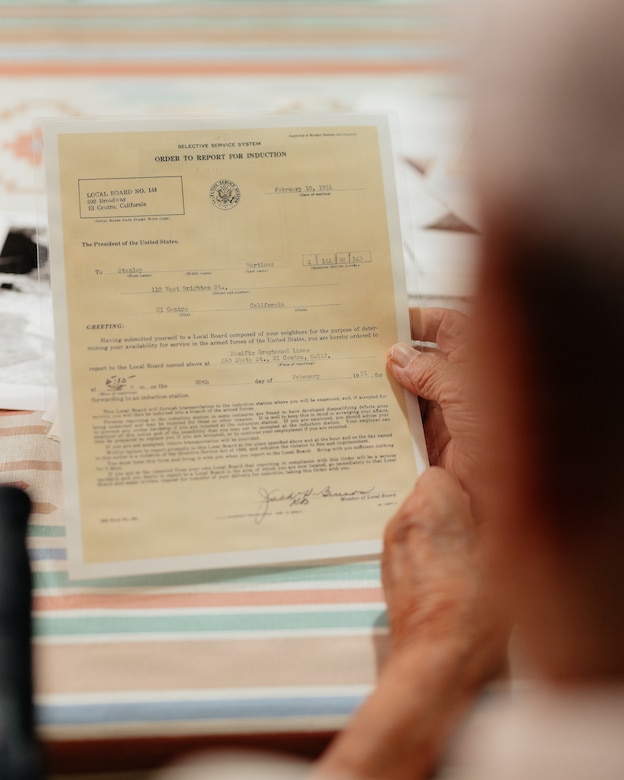
He moved to El Centro, California, in 1947 to live with one of his sisters. At that time, gas cost 17 cents a gallon, and Hank Williams was just starting to climb the country charts. He almost enlisted before being drafted.
He and his childhood friend, Guillermo, walked to the post office, where young men would sign their enlistment papers at that time.
On the way, a car pulled up alongside them, with a couple of guys inside and cold beer in the back seat.
"I let [Guillermo] go [in] by himself, and I jumped in the car," he recalled. [He] was shipped to Korea, and soon after was reported missing in action.
"To this day, they still haven't heard anything from him," Martinez said. "No bones. Nothing."
Martinez's draft notice arrived months later, signed by President Harry S. Truman. By then, one of his brothers had died during World War II in the English Channel in December 1941, seven months after high school, when a German U-boat sank his ship. Remembering the loss, Martinez said he was proud to be called up, especially since he had been ready to volunteer.
Within a week of receiving the notice, he was on a bus to San Diego for a physical. Soon after, he went to Camp Roberts, California, a World War II installation the Army was hastily reactivating.
Sixteen weeks of infantry training followed. After graduating, he took a 13-day voyage to Yokohama, Japan, then traveled by train to Sasebo, Japan, took a ferry to Busan, South Korea, and then endured a long, slow truck ride north.
Martinez began his military career as an infantryman but did not stay one for long. A few weeks after arriving in South Korea, an officer asked if anyone could drive a truck. Martinez had hauled carrots and watermelons in Southern California, so he volunteered.
"They put me in a tank," he said. "All they did was show me the gears and the clutch."
He drove for a four-man crew supporting infantry patrols for about a year. His world narrowed to a 10-inch periscope slit. The crew slept inside the tank while the infantry soldiers slept in foxholes. Hot food was served twice a month; the rest was C-Rations, prepackaged food. Whenever the Air Force struck the hills, Martinez watched napalm explode from a distance.
"That was some dangerous stuff," he said. "All you could see was the fire. It was white."
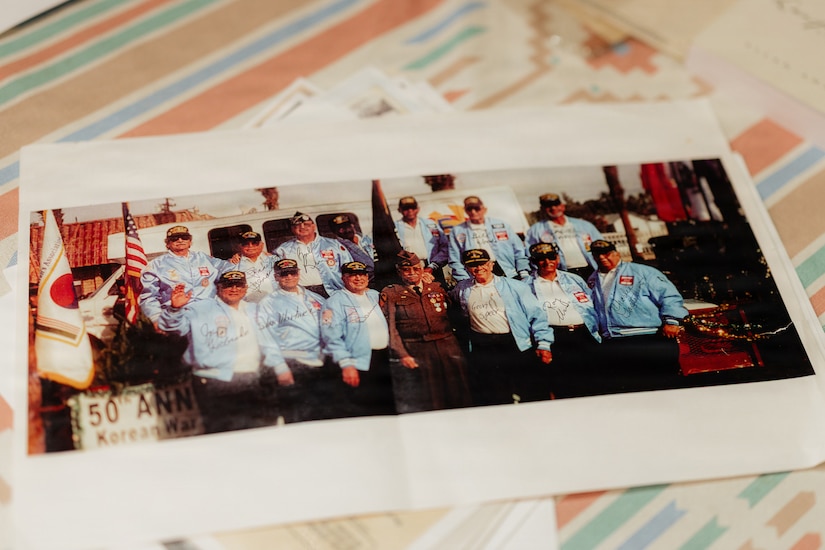
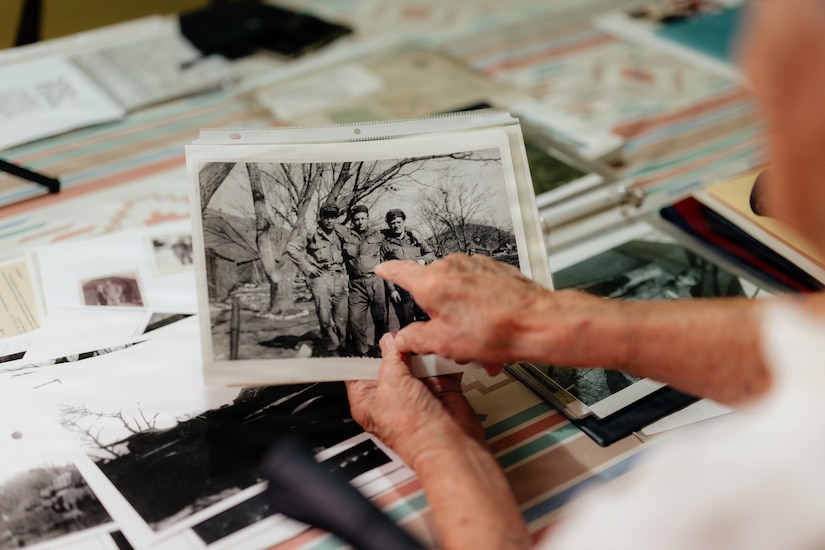
Several years ago, he returned to South Korea, on a trip sponsored by the South Korean government. The villages he remembered as rubble had become a metropolis.
"It's something like San Francisco now," he said.
When asked what he would advise young soldiers wearing his old patch, Martinez paused.
"I think everybody should spend a couple of years in the service," he said. "Learn some discipline. It makes a difference."


 Posts
Posts


No comments:
Post a Comment