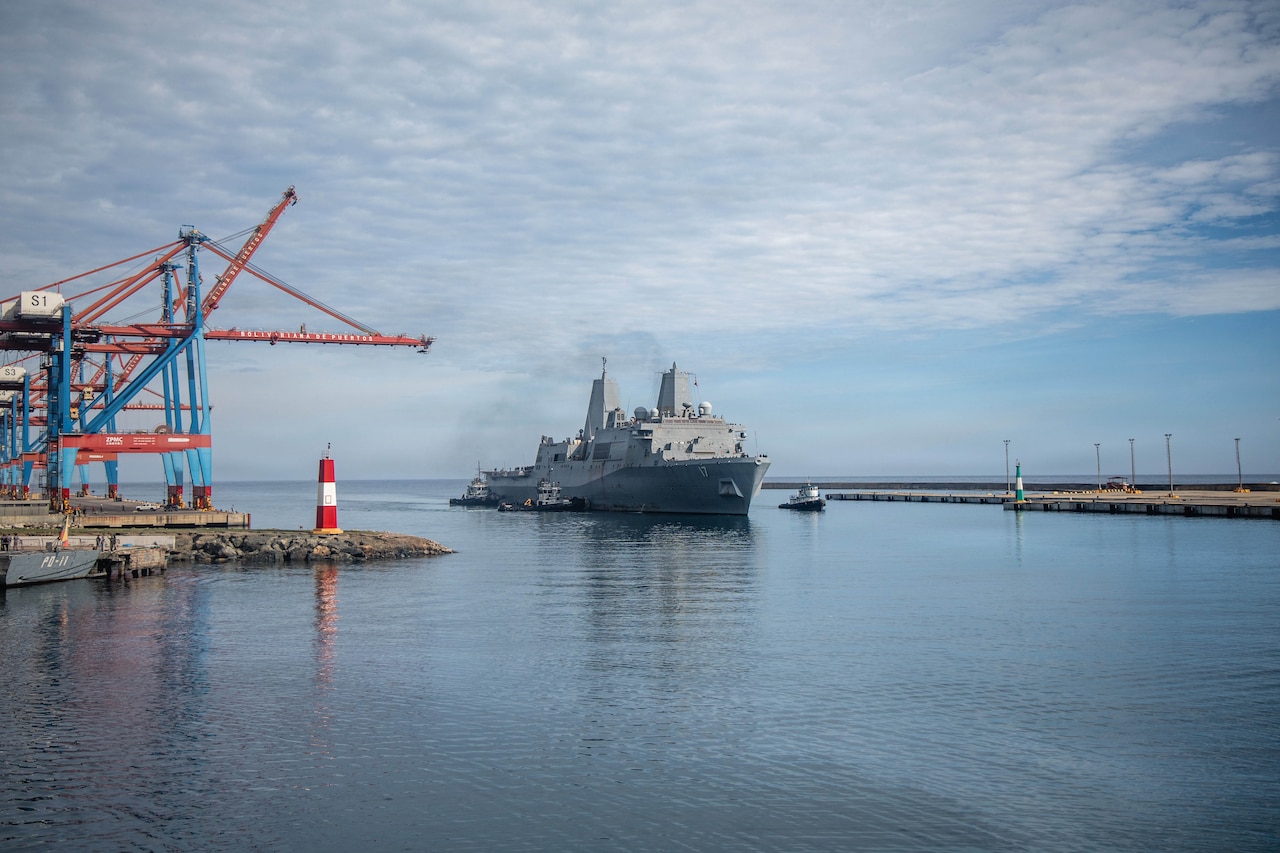
Supporting ongoing disaster relief efforts, the amphibious transport dock USS San Antonio arrived at the port in La Guaira, Venezuela, July 9, relieving the USS Fort Lauderdale as the primary maritime component of the State Department-led humanitarian assistance mission following the devastating June 24 earthquakes.
After the Fort Lauderdale's historic arrival June 28 — the first Navy port call to Venezuela in decades — the San Antonio will now take over as the primary afloat coordination hub and continue sustained recovery efforts. The ship's robust command-and-control infrastructure enables U.S. Southern Command to work seamlessly with the State Department, interagency partners and Venezuelan authorities to distribute resources and direct rapid relief operations across the affected areas.
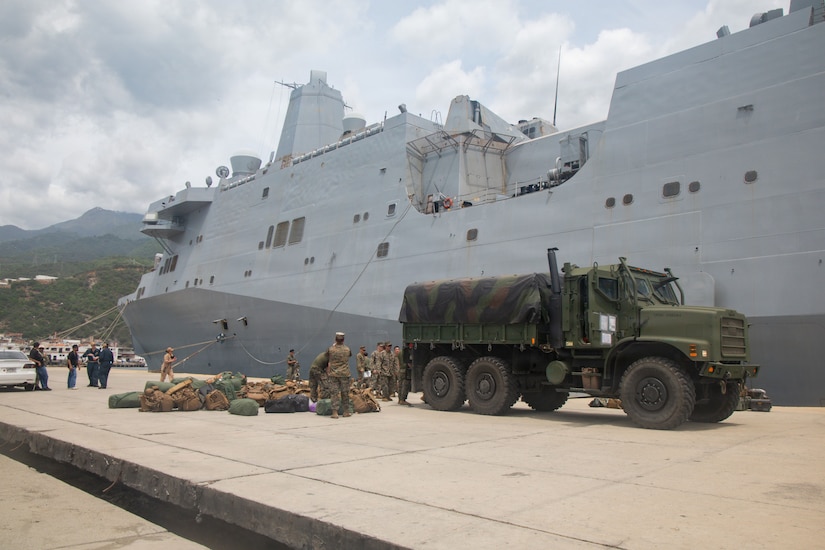
"The sailors and Marines of [the] USS Fort Lauderdale and Littoral Combat Force 24 have worked tirelessly to deliver humanitarian assistance to the people of Venezuela," said Navy Capt. Jiwan Mack, USS Fort Lauderdale commanding officer. "Our Navy-Marine Corps team remains ready to respond rapidly to emerging crisis."
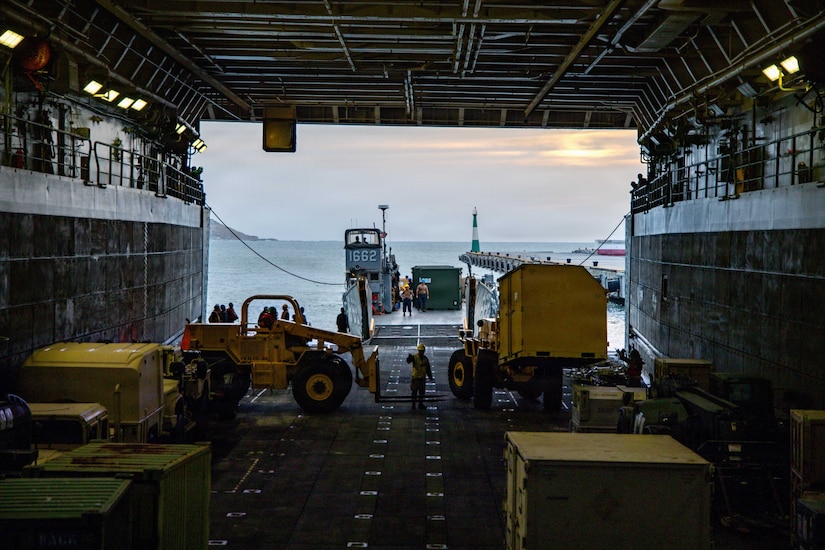
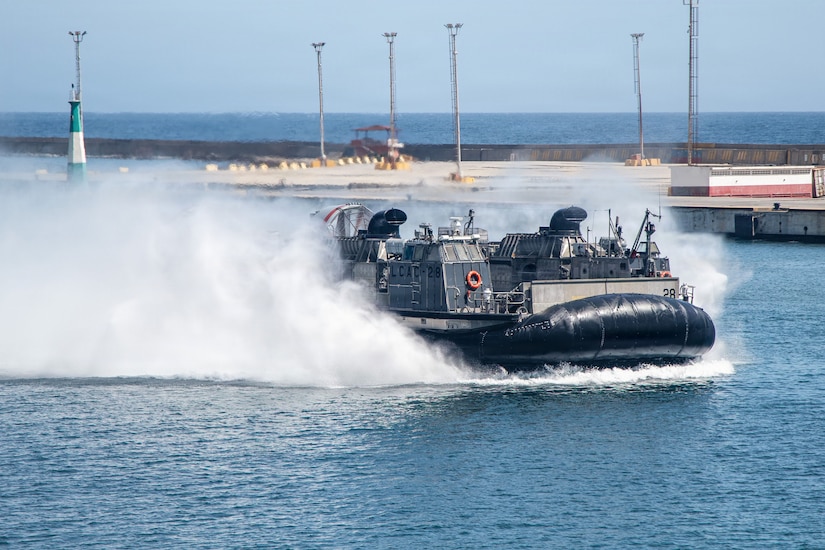
Beyond serving as a communication hub, the San Antonio brings advanced onboard medical facilities, an expansive flight deck to support ongoing rotary-wing search and rescue operations, and a well deck capable of launching amphibious landing craft to deliver heavy cargo and vital supplies directly to damaged coastal infrastructure.
"We are prepared to continue the vital mission that [the] USS Fort Lauderdale began," said Navy Capt. Tom Uhl, USS San Antonio commanding officer. "The presence of [the] USS San Antonio and Littoral Combat Force 24 in La Guaira represents more than just a transition of ships; it demonstrates the resolve and inherent capabilities of the Navy-Marine Corps team in supporting Department of State-led disaster response efforts to bring relief to the Venezuelan people."
The transition between the two Navy vessels was executed safely and efficiently, with the San Antonio immediately integrating with U.S. aviation assets already operating in the region, including elements of Helicopter Maritime Strike Squadron 48 and Marine Medium Tiltrotor Squadron 365.
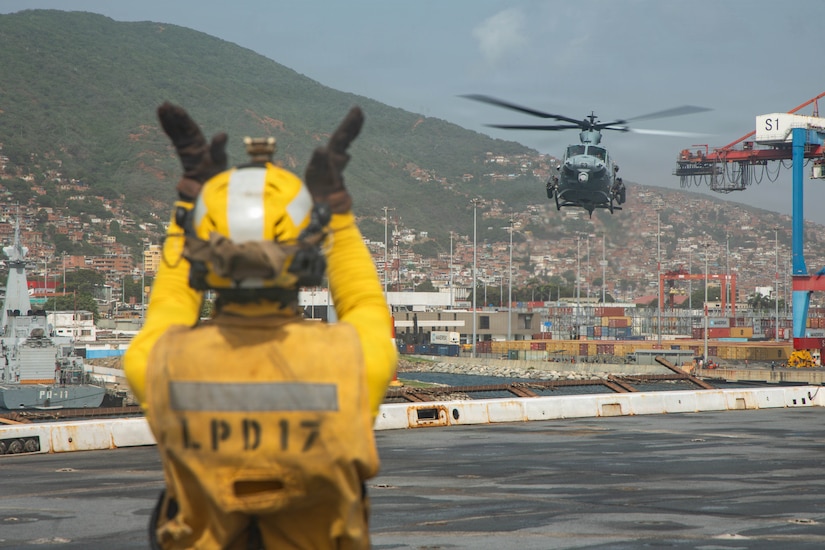
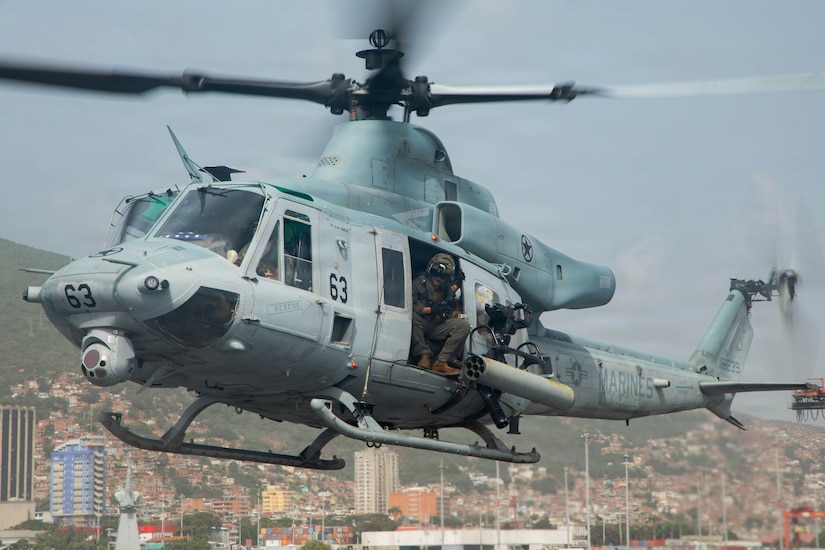
The U.S. military forces supporting Venezuela are built for rapid, short-term response to stabilize a crisis, minimize immediate suffering and save lives. This presence is temporary, remaining active for as long as requested, ready to transition relief tasks to nongovernmental organizations, international aid groups and local authorities as soon as the immediate crisis is stabilized.


 Posts
Posts


No comments:
Post a Comment