Service members based in Japan will likely see a reduction in their overseas cost-of-living allowance in the coming weeks because of a long-term drop in the value of the Japanese yen and a corresponding increase in the value of the dollar.
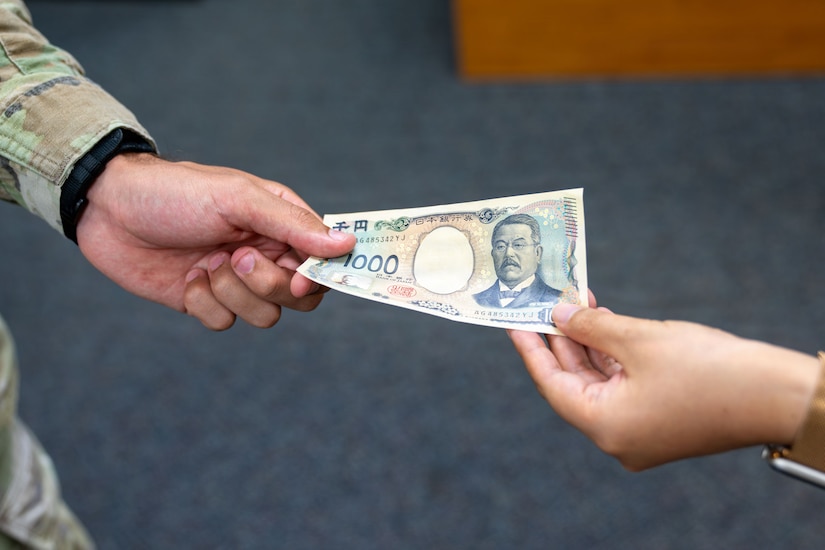
The yen recently reached a 40-year low against the dollar. Because the U.S. currency now buys significantly more goods and services on the local economy than it did previously, the supplemental allowance required to equalize purchasing power, commonly known as COLA, is shrinking.
Overseas COLA is a nontaxable supplemental pay allowance designed to offset overseas prices of goods and services, ensuring purchasing power remains equal to service members stationed in the contiguous U.S. It is not a fixed pay entitlement and is explicitly designed to fluctuate with currency exchange rates.
The COLA index for many installations in Japan is projected to drop to 100 and below, meaning the allowance will be zero. If that number is below 100, no pay is deducted from service members and the allowance simply remains at zero until economic conditions warrant an increase.

While the dollar amount on a member's leave and earnings statement regarding COLA will decrease, their actual ability to purchase goods on the local economy remains the same or better because of the highly favorable exchange rate.
"With the dollar this strong compared to the yen, service members can find a lot of value buying food and household goods on the local economy," said Air Force Col. John Severns, U.S. Forces Japan Public Affairs director.


 Posts
Posts


No comments:
Post a Comment