Saturday, February 03, 2018

U.S. Troops Training Ukrainian Soldiers, Mattis Says


By Terri Moon Cronk DoD News, Defense Media Activity

WASHINGTON, Feb. 2, 2018 — Military trainers from the United States, Canada, Poland and Lithuania are training Ukraine service members at a training base in western Ukraine, Defense Secretary James N. Mattis told reporters at the Pentagon this morning.

Just ahead of his afternoon meeting with Ukraine’s defense minister, Stepan Poltorak, the secretary said, “What we want is the same thing the United States has stood for, for a long time in our history. That is an independent sovereign Ukraine, [in which the government is] making their own decisions about their own future,” he added.

“We're working with them on reform of their military,” Mattis said. “That will be a lot of what we discuss today. The minister is leading the reform effort, so we're working with him. And it is … an ongoing effort to make sure that they stay independent and sovereign.”

ISIS ‘On The Ropes’

Turning to the campaign in Iraq and Syria to defeat the Islamic State of Iraq and Syria, Mattis said the enemy “is on the ropes,” adding, “I think now it's pretty much undeniable that they're in trouble.”

Yet, the secretary told reporters, the fight against ISIS is not over yet.

“We need to keep the pressure on," he said.

The U.S.-led coalition wants to get back to finishing off ISIS and destroying all of its geographic holdings, so that they're on the run, Mattis said.

He added the fight against the enemy needs to “Get it driven down to a point that in Syria, we're freer to go into the Geneva process, and you now see that that is on track again for all the people who've questioned we'd ever get there.”

On the Iraq side, Iraqi forces and the coalition are going after the “small sleeper cells, the small concentrations out in the desert,” Mattis said. “So we want to stay focused on this. That's what we're trying to do.”

Friday, February 02, 2018

Second Lady Karen Pence Advocates Art Therapy for Wounded Warriors


By Mikaela Cade, Carl R. Darnall Army Medical Center

FORT HOOD, Texas, Feb. 2, 2018 — Speaking with Second Lady Karen Pence during her Jan. 29 visit to the Intrepid Spirit Center here, it's apparent that championing art therapy is not just an initiative, but a passion.

Pence's passion is driven by the human and scientific evidence of art therapy's healing properties.

"People think its arts and crafts, but that's not what art therapy is," she said. "It is a mental health profession where a trained therapist uses art as their medium to help guide someone through the healing process."

Power of Art Therapy

Pence first learned of the power of art therapy to help people heal a decade ago when she observed an art therapy program for kids with cancer. Since then, the second lady's number one goal is to raise awareness of the unique form of therapy and how it benefits everyone from those battling cancer to those dealing with the invisible wounds of war.

Pence has partnered with the Creative Forces Military Healing Arts Network, a joint pro-arts initiative amongst the National Endowment for the Arts, the Defense Department and Veterans Affairs, which put creative arts therapies at the core of patient-centered care at Fort Hood and 10 other military medical facilities across the country.

As she travels across the nation advocating for art therapy, Pence said she is excited to meet active-duty soldiers and veterans who have embraced the therapy method and are thriving.

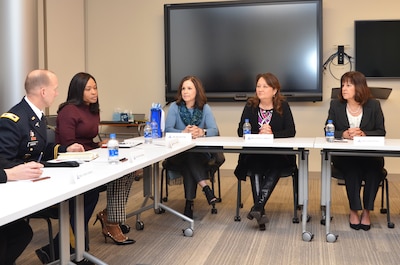
Her trip to Fort Hood included a tour of the Intrepid Spirit Center, an orientation to its Healing Arts program and a roundtable discussion with community leaders about the integration of art therapy in caring for service members.

"I hear a lot of stories about soldiers who initially don't want to go into art therapy sessions because it doesn't seem like the strong or tough thing to do," Pence said. "But then I hear them talk about the tremendous relief and success they experience after art therapy. One soldier confided in me that he doesn't go to that dark place anymore. Hearing success stories like that is powerful. It shows that art therapy saves lives."

The idea of patients being apprehensive, but quickly becoming appreciative is all too familiar to the team at the Intrepid Spirit Center.

Effective Treatments

"Art and music therapy are effective treatment modalities that enhance the total treatment regimen to help the recovery process," said Dr. Scot Engel, a clinical psychologist and director of the Intrepid Spirit. "When interweaving creative art therapies into our patient care plans we are improving clinical outcome for our warriors."

Peter Buotte, healing arts and therapy coordinator, believes art therapy benefits the patient as it fosters a safe, supportive environment for therapeutic self-expression.

"At its deepest, the art therapy process can go beyond the verbal -- and even beyond the recognizable image -- in order to emotionally engage with the patient/client," Buotte said.

Art and music therapy have been integral components of the Intrepid Spirit Center's multi-disciplinary approach to restoring service member's medical readiness for more than a year. The center is one component of the comprehensive system of behavioral health care offered for service members and their families at the Carl R. Darnall Army Medical Center here.

Before visiting Fort Hood, Mrs. Pence shared her message of art therapy significance with more than 140 local community arts professionals and military behavioral health care specialists at the Texas Creative Forces Arts and Military Conference held in Killeen, Texas. The conference aimed to support and grow collaborative relationships between local artists, arts organizations and military populations to help service members reintegrate after deployment.

Omani, U.S. Troops Conduct Combined Arms Maneuver


By Army Sgt. David Nye U.S. Army Central

THUMRAIT, Oman, Feb. 2, 2018 — Surrounded by clear blue skies and bright orange sand, Omani and U.S. forces conducted a simulated assault here against dozens of enemy fighters, Jan. 31, in the culminating event of Inferno Creek 18, a three-week training exercise conducted by the U.S. and Omani armies.

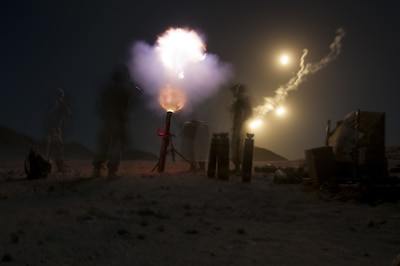
The joint exercise allowed multiple elements of the militaries to practice working together with the countries each contributing scouts, mortars, infantry, engineers, and other elements that worked hand in hand to complete their task: an assault on a simulated enemy compound followed by a hasty defense against an armored enemy counterattack.

The success of the training mission relied on seeds planted three weeks earlier, when leaders met to work through the military decision-making process, or MDMP, according to Army Lt. Col. Jonathan M. Genge, the U.S. task force commander for the exercise.

“It’s been great since day one, the Omanis coming in right on time, every day, for MDMP, energetic, ready to tackle the task of the day,” he said. “They’ve come in with their experiences [and] we’ve learned from that as well. They took the lead in a lot of things with MDMP as well as [course of action] development, the wargaming.”

New Challenges, Experiences

For the grunts on the ground, working with the Omanis presented new challenges but allowed for great experiences.

“I feel pretty excited about it, because I’m working with someone from an entirely different country,” said Army Pfc. Tyiamarte J. Linley Jr., a mortarman with Headquarters and Headquarters Company, 1st Battalion, 35th Armored Regiment. “New language, new culture, new everything, and it’s just fascinating, just learning more about a different country, a different person, completely.”

The first elements hitting the objective were the scouts. Omani vehicles dropped off U.S. forces near their planned observation posts and most of the Americans dismounted to go on foot the last few hundred meters to observe the battlefield. A few of the Americans went with the Omani vehicles, which acted as mobile weapon platforms during the fight.

“At first, before the maneuver force gets to the objective, we will be observing the objective area, identifying key personnel, key weapon systems, any obstacles that could hinder their movement up to the objective,” said Army Cpl. Jacob Kehler, the sniper team noncommissioned officer for the exercise. “Once they get up to 100 meters or so, right before their assault on the objective, we’ll transition up north to where we’re expecting an enemy armored reconnaissance unit.”

As the maneuver force, made up primarily of Omani and U.S. infantry and engineers, made its way up, the scouts and infantry automatic weapons teams laid down a base of fire. With multiple teams from two armies fighting at once, coordination was a challenge.

“It really tests our preparedness and our rehearsals,” Kehler said, “to be able to coordinate between different units, us being scouts and the infantry and the added personnel of the Omanis. So the coordination between all units really has to be on point, it really tests how well you can conduct everything going on, how proficient you are at communication between the units.”

An engineer team with personnel from each force breached the wire protecting the target compound with Bangalore torpedoes, explosive tubes made for clearing obstacles, before the U.S. and Omani infantry squads poured through the gap created by the detonation. Finally, an Omani rocket-propelled grenade team destroyed a simulated T-72 tank that was attempting to take back the compound.

Developing Combined Force Skills

While the exercise was complex, junior leaders emphasized to their soldiers the importance of learning to work with other forces.

“We were up in Iraq for a couple weeks back in November,” Kehler said. “And, when we were up there, there were British forces, Danish forces and then French forces. So Americans aren’t the only people in these combat zones right now. So being able to communicate even between those is very key to not having any fratricide, being able to work smoothly, and contributing to the combined effort is very important.”

Genge, the task force commander, agreed and praised the value of the exercise for reinforcing and building partnerships. He also expressed a hope that, while 2018 was the largest iteration of the annual exercise yet, it would grow even larger.

“Inferno Creek 2018 is an opportunity for the U.S. and our partner, the Omanis, to bridge a gap and build a relationship here in the Middle East and to develop ourselves at the company and tactical level and now make our way from the lower levels, the individual, all the way up to the battalion and, looking to the future, maybe make our way up to the brigade level and higher with not only just the maneuver but maybe a command post exercise,” Genge said.