Friday, May 18, 2018

Trump, NATO Secretary General Discuss Alliance at White House Meeting


By Jim Garamone, DoD News, Defense Media Activity

WASHINGTON -- President Donald J. Trump and NATO Secretary General Jens Stoltenberg discussed alliance unity and the upcoming NATO summit in Brussels in July during a May 17 meeting at the White House.

Trump and Stoltenberg also discussed how NATO is gaining strength and capability.

“We've really strengthened NATO and the NATO alliance,” the president said. “The strong working partnership we forged has helped to produce significant increases in member-state contributions. We've worked very hard on that.”

At the Wales summit in 2014, NATO nations pledged to dedicate 2 percent of gross domestic product to defense matters. At that time, only the United States, the United Kingdom and Greece were above that goal. This year, eight members are expected to hit the goal -- Poland, Romania, Estonia, Latvia, Lithuania, Greece, the United Kingdom and the United States. A total of 15 nations are scheduled to make it by 2025. There are 29 nations in NATO.

Increased Commitment to Defense

“We're delighted to report that last year, as a result of our joint efforts, we witnessed the single-largest increase in defense spending among European member states and Canada in a quarter of a century,” Trump said.

Trump reaffirmed the U.S. commitment to Article 5 of the NATO pact, that an attack on any member state is an attack on all. The president has also called on NATO allies to improve their counterterrorism capabilities.

“I also discussed with Secretary General Stoltenberg our commitment to stopping nuclear proliferation, including the denuclearization of the Korean Peninsula,” the president said. “We want a future of safety, security, peace for all Koreans and for the entire world.”

The United States will continue to work with other nations to halt not only Iran's nuclear ambitions, but the country’s destabilizing activities throughout the Middle East.

‘Strength, But Peace’

“The strength of the NATO alliance does not depend on military might alone, but also the deep ties of history, culture and tradition that have long united our civilization,” Trump said. “Now we must renew these ties and rededicate ourselves to our shared heritage. And in heritage, we want a heritage of peace. Strength, but peace.”

Stoltenberg thanked the president for his strong commitment to the alliance.

“Last time we met, your main message was that NATO had to do more in the fight against terrorism and more on defense spending,” the secretary general said to the president. “All NATO leaders agreed and now we are delivering. We are stepping up our efforts in the fight against terrorism.”

Stoltenberg emphasized that NATO is integral to training Afghan forces, and he mentioned that the alliance is planning to launch a new training mission in Iraq. NATO leaders will discuss that plan at the summit in July.

“On defense spending, I would say that I agree with you,” Stoltenberg said. “We had to do more and I would like to thank you for your leadership. … It is impacting allies because all allies are now increasing defense spending.”

Thursday, May 17, 2018

Qatar, West Virginia Guard Establish New Partnership


By Army Sgt. Zoe Morris, West Virginia National Guard

CHARLESTON, W.Va. -- Key leaders from Qatar, the state of West Virginia and the West Virginia National Guard met here May 14 to discuss and celebrate their newly formed partnership.

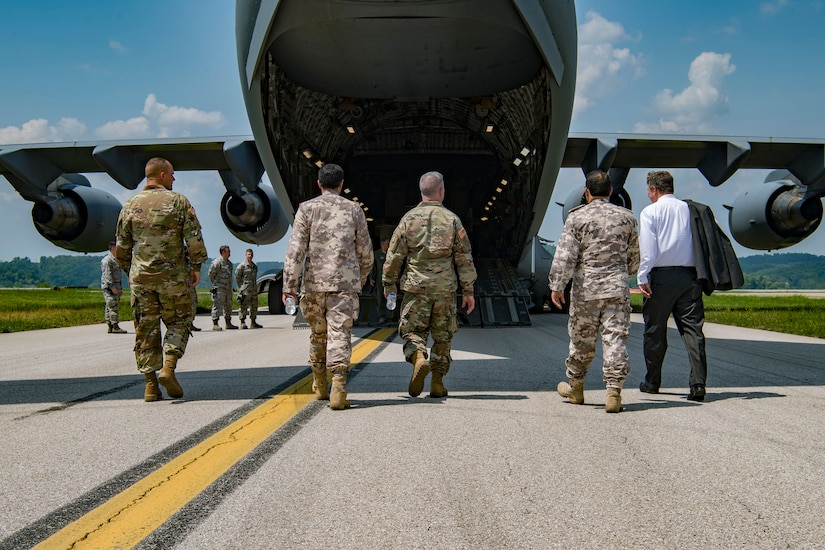
West Virginia Gov. Jim Justice and Army Maj. Gen. James A. Hoyer, the adjutant general of the West Virginia National Guard, hosted Qatar’s defense attache, Brig. Gen. Yousef Al Kuwari; Qatar’s air force attache, Col. Mohamed Al Manai; and Qatar’s army attache, Col. Khalid Al Naimi, along with Qatar defense attache government affairs representative, Sarah Elzeini for the introductory meeting at the state capital and later toured the facilities of the 130th Airlift Wing.

State Partnership Program

This was the first meeting between the new State Partnership Program partners since the announcement of the West Virginia National Guard’s selection to be linked with Qatar in April. The Guard leadership capitalized on the opportunity to showcase the breadth and depth of experience to the Qatari delegation in multiple facets of domestic response, training, civil support, emergency response and contingency operations during the visit.

“The National Guard State Partnership Program has brought West Virginia and Qatar together -- and is a point of pride for us and great interest, as West Virginia is home to strategic airlift operations and Special Forces,” said Al Kuwari during a press event.

“We are also looking forward to build off of the West Virginia National Guard and Qatar Armed Forces partnership,” he said.

“Qatar is exceptionally important to the United States as an ally and as a partner in dealing with violent extremism, in supporting NATO, in Afghanistan and other places,” Hoyer said.

The general added, “I think it’s a testament to the men and women of the West Virginia National Guard, to our governor, to our [elected officials] who all came together to say we want to be a broader part of the nation’s defense and take on an even greater role with the establishment of this partnership with Qatar.”

U.S.-Qatar Partnership

Qatar has recently announced increased funding for infrastructure improvements and long-term basing to support American and coalition forces fighting in the region.

“It is our hope that the Qatar armed forces and American military personnel not only work and fight terror together on the base,” Al Kuwari said, “but will live side by side as they stabilize the Middle East. This effort is a reflection of Qatar’s hospitality and warm friendship with Americans.”

Through the partnership with Qatar, the West Virginia National Guard will seek to increase military and diplomatic cooperation, develop and expand defense capabilities and mutually beneficial training interactions. In addition, the two entities will work to increase interoperability of forces and deter and disrupt criminal and terrorist activities in the region.

“The premise of the State Partnership Program is to promote peace and stability throughout the world,” said program director Army Capt. Joshua Goforth. “Our new partnership will play a significant role in ensuring that premise is carried out through our enduring relationship with Qatar and their military forces.”

In the following months, leaders plan on signing a memorandum of understanding as well as establishing concrete plans for training and support missions between the military forces.

This is the second partner nation for the West Virginia National Guard and the sixth partnership in the U.S. Central Command area of responsibility.

NATO Must Adapt, Alliance’s Military Committee Chairman Says


By Jim Garamone, DoD News, Defense Media Activity

BRUSSELS -- The world situation is highly volatile, and NATO must be adaptable and constantly ready to respond to any threat or challenge, the chairman of the alliance’s Military Committee said here today.

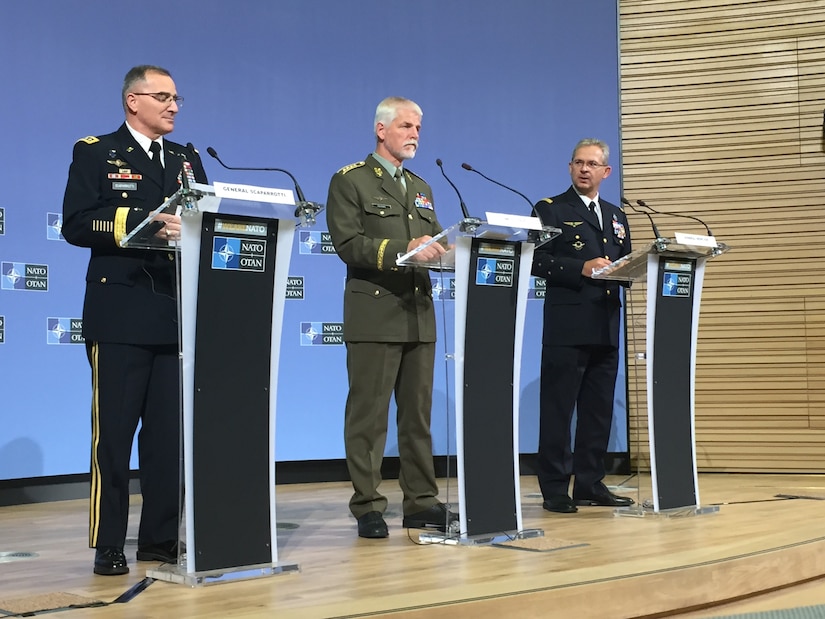
Gen. Petr Pavel of the Czech army told reporters that this week’s meeting of NATO’s chiefs of defense addresses the range of challenges from defense and deterrence to threats from the Middle East and North Africa.

Pavel briefed alongside U.S. Army Gen. Curtis M. Scaparrotti, the alliance’s supreme allied commander for Europe, and Gen. Denis Mercier of the French air force, the supreme allied commander for transformation.

“With instability and conflict in the Middle East, North Africa and the Sahel, coupled with terrorism that continues to threaten our societies, the chiefs of defense exchanged views on what more the alliance can provide to our partners – such as, for example, training,” Pavel said.

The chiefs of defense also discussed the NATO training and capacity building effort in Iraq, as well as the need to discuss that effort with the new Iraqi government once it is formed, Pavel said. They also wanted to make sure the NATO effort in Iraq complements efforts in Iraq by other nations and the European Union.

Importance of Exercises

Scaparrotti and Mercier highlighted the exercises that the alliance is planning.

“This is an important element in alliance readiness and adaptation to new security challenges,” Scaparrotti said. “They ensure our troops are ready to respond to challenges from any direction and demonstrates the alliance stands ready to defend all allies and is committed that our alliance is committed to defending our values.”

Mercier said Trident Junction 2018 is designed to ensure that NATO forces are trained and ready. The exercise will encompass 40,000 service members and be held in and around Norway in November. “It will be an important test and a tremendous display of our collective abilities,” he said. In addition to the live exercise, it will include a tabletop exercise conducted in Naples, Italy.

A Deterrent Message

Scaparrotti said Trident Juncture is part of the deterrence of Russia. “It’s a demonstration of our capability and how we see the world and what we’re able to do,” the general said. “It’s a deterrent message. If you look at our exercise versus what Russia does, our exercise is focused on defense of the sovereign nations that are a part of NATO. That’s what we do, and that is what this will represent, as well.”

The exercise is a demonstration of alliance unity and outreach, as a number of NATO partners will participate, Mercier said. “It is also a good demonstration of our interoperability,” he added, calling Trident Junction a prime example of NATO allies and partners working together in peacetime as well as crisis.

Mercier also talked about the changes being contemplated to the NATO command structure to make the alliance operate at the speed it needs to in this challenging world.

“I firmly believe this change is only a step to keeping a competitive edge,” he said. “Our alliance has to continue to innovate and adapt to a very challenging environment.”