Tuesday, July 21, 2020

Air Force Reveals Cold Facts on New Arctic Strategy

July 21, 2020 | BY C. Todd Lopez , DOD News

As conditions change in the Arctic region, the Department of the Air Force has revealed a new strategy for how it will contribute to regional stability there, what new partnerships it should pursue and how its mission might evolve.

Within the U.S. military, the Department of the Air Force has the largest presence in the Arctic region, with assets in both Alaska and Greenland. As the environment changes in the Arctic, new routes for transportation have opened up and new resources are being discovered. This creates both new opportunities in the region as well as new security challenges, the secretary of the Air Force said.

Military aircraft move down a runway. In the background are mountains.

"Historically, the Arctic, like space, was characterized as a predominantly peaceful domain," Barbara A. Barrett, said today during a panel discussion hosted by the Atlantic Council. "This is changing with expanded maritime access, newly discovered resources and competing sovereign interests."

Russia, she said, has the largest permanent military presence in the Arctic — no other country matches its presence there.

"Recent Russian investments in the Arctic include a network of offensive air assets and coastal missile systems," she said. "The Arctic defines Russia. Almost 25% of Russia's [gross domestic product] comes from ... north of the Arctic Circle, ... mostly from hydrocarbons."

Barrett said that Russian economic reliance is one explanation for its growing military initiatives in the region. But Russia is not alone in its interest in the Arctic. China, which is not itself an Arctic nation, has also staked claims there, she said.

"China is trying to normalize its presence in the Arctic to gain access to regional resources, which are said to include over 90 billion barrels of oil and an estimated trillion dollars' worth of rare earth metals," she said. "In 2018, China linked its Arctic activities to its 'One Belt, One Road' initiative. Many are concerned that China may repeat what some see as predatory economic behavior, to the detriment of the region."
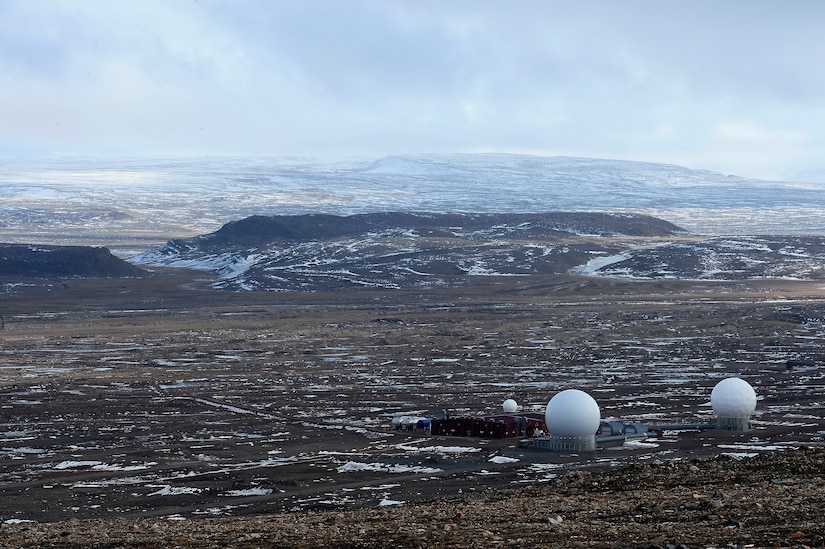
Golf-ball-like radar domes sit on a rocky, snowy landscape.

As long-time Arctic occupants increase their activity there, and newcomers begin staking claims as well, the Department of the Air Force has developed, as part of its Arctic strategy, four strategic priorities to guide its involvement in ensuring the United States is equally and fairly represented in the region.

First, Barrett said, the department is increasing vigilance for both deterrence and defense in all domains.

"Vigilance encompasses everything from weather forecasting and consistent communications, to threat detection and tracking," Barrett said. "Physical facilities delivering vigilance include advanced systems like the long-range discriminating radar at Clear, Alaska, and the north warning system, stretching from Alaska to Labrador."

Second, Barrett said, is a focus on projecting power through a combat-credible force.

"Bases in Alaska benefit from the region's strategic geography," she said. "When the full complement of planned F-35s arrive at Eielson Air Force Base, Alaska's unparalleled concentration of fifth-generation fighters will project unmistakable influence."
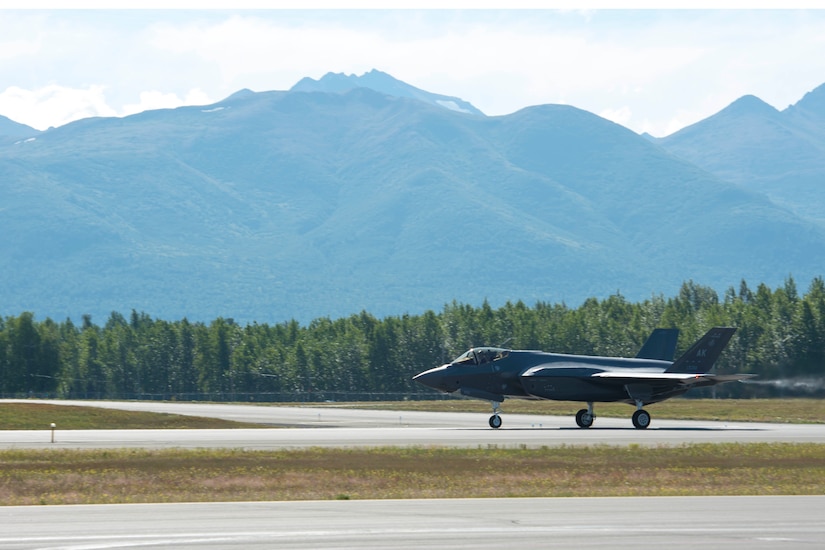
A military aircraft moves down a runway. In the background are mountains.

Third, the Department of the Air Force will continue to focus on cooperation with existing allies and partners and on building new partnerships — a goal aligned with the National Defense Strategy.

"The United States deeply appreciates its strong defense relationships with six of the seven other Arctic nations," she said. "Building upon past collaboration and expanding existing cooperation in the Arctic will continue as our priority. Already, air and space forces are increasing interoperability with allies and partners through everything from military exercises to satellite launches."

Finally, she said, the Department of the Air Force will focus on preparation for Arctic operations.

"For example, at Alaska's [Joint Pacific Alaska Range Complex], the Air National Guard and the Air Force Reserve augment specialized exercises and training to prepare for Arctic air and space missions."

A service member walks alone across wet, desolate terrain. He carries a rifle.

The Department of the Air Force isn't alone in operating in the Arctic, Air Force Chief of Staff Gen. David L. Goldfein said. Successfully operating in the Arctic and ensuring free access to the region by the United States and its allies will require a joint effort from all U.S. services, including the Coast Guard.

"The Department of Defense does its very best work when we operate as a joint team," Goldfein said. "While this is [the] Department of the Air Force strategy, it is completely nested with and must stay nested with the Coast Guard, ... with the Navy, and with the Army, and with the Marine Corps."

Goldfein said he and Space Force Gen. John W. "Jay" Raymond, the chief of space operations, are working through a concept called "joint all-domain operations" that addresses the need for a joint effort in the Arctic.

A golf-ball-like radar dome sits in a snowy landscape.

"It's a technological approach, but it really at the end feeds a leadership approach to joint operations, across the spectrum, from peacetime and competition, all the way to open warfare," he said. "No one domain is going to be dominant in that operation. The whole idea is to connect this team so that we can bring to bear military capabilities, from air, from space, from surface, from subsurface, manned, unmanned, all of the above."

The Space Force is new to the Department of the Air Force, but Raymond said space operations have happened in the Arctic for a long time now — and the environment in the Arctic is ideal for conducting those operations.

"If you look at one of the most critical missions that we do, and that's missile warning, the Arctic is our front edge of that mission," Raymond said. "We do that mission both at Thule, Greenland, north of the Arctic Circle, with our space professionals that are assigned there at Thule Air Base. We also do it in Alaska, at Clear Air Force Station."

Raymond said the Arctic's geographic location makes it the best place to conduct space operations.

In a night sky, colored lights appear in the sky above a military installation.

"If you look at the key terrain aspect of that environment, we also command and control satellites," he said. "If you're going to command and control satellites that are in polar orbits, where better to do it then on top of the world at the pole? It allows us to get great access to those satellites to be able to command and control and do that business. So that geography and the position on the globe ... makes it an extremely advantageous place to operate from."

Barrett said the Department of the Air Force's new Arctic policy involves both the land-based military air power the Air Force provides and the space-based capabilities provided by the Space Force.

"The U.S. air and space forces value the Arctic," she said. "Access and stability require cooperation among America's allies and partners, along with a commitment to vigilance, power projection, and preparation. The Arctic should remain a free and open domain for benevolent actors, and it is a critical domain to protect America's homeland."

Aerial Ops

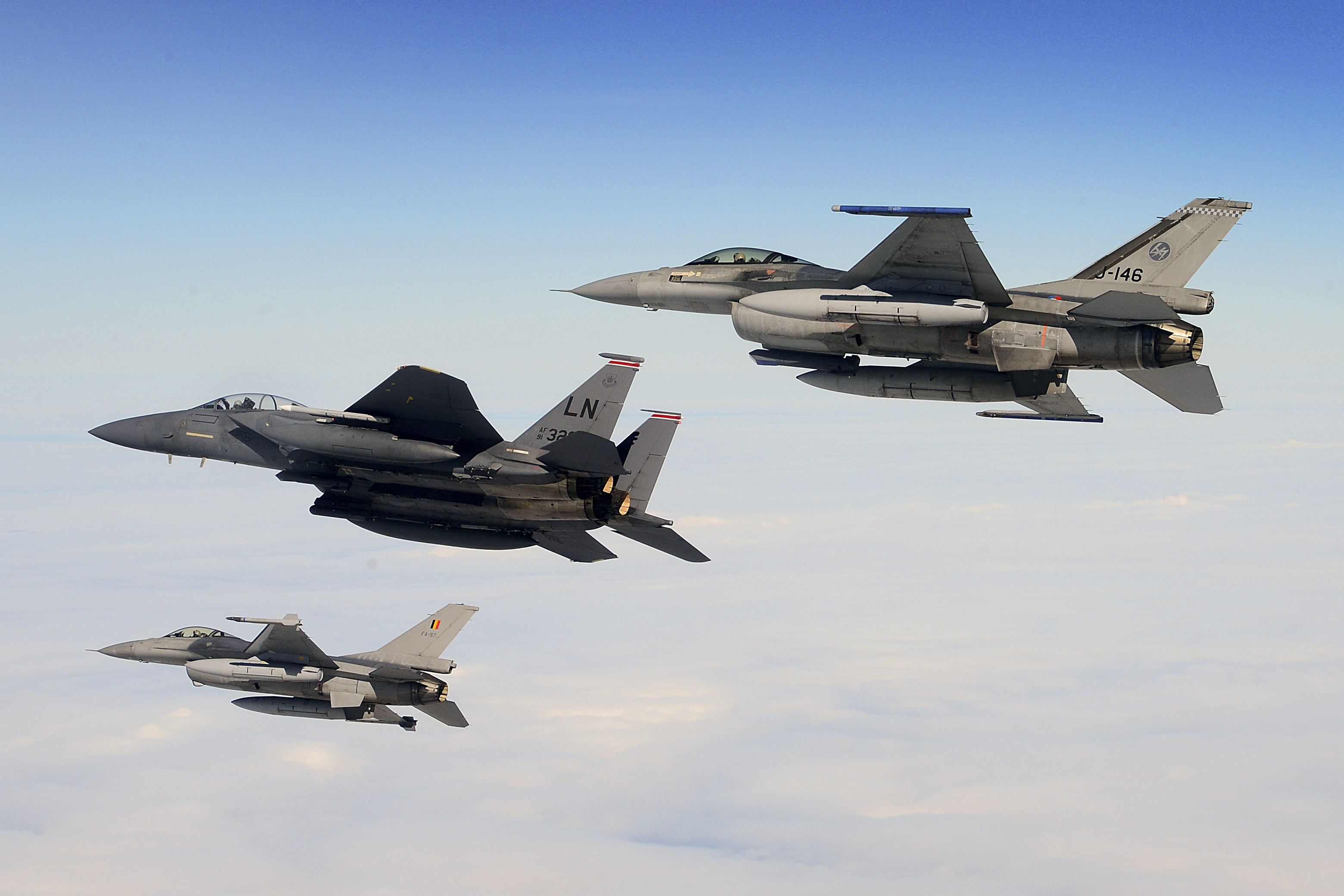
A U.S. Air Force F-15E Strike Eagle, middle, a Royal Netherlands Air Force F-16, top, and a Belgian Air Component F-16 conduct aerial operations over the North Sea, July 17, 2020.

Fierce Formation

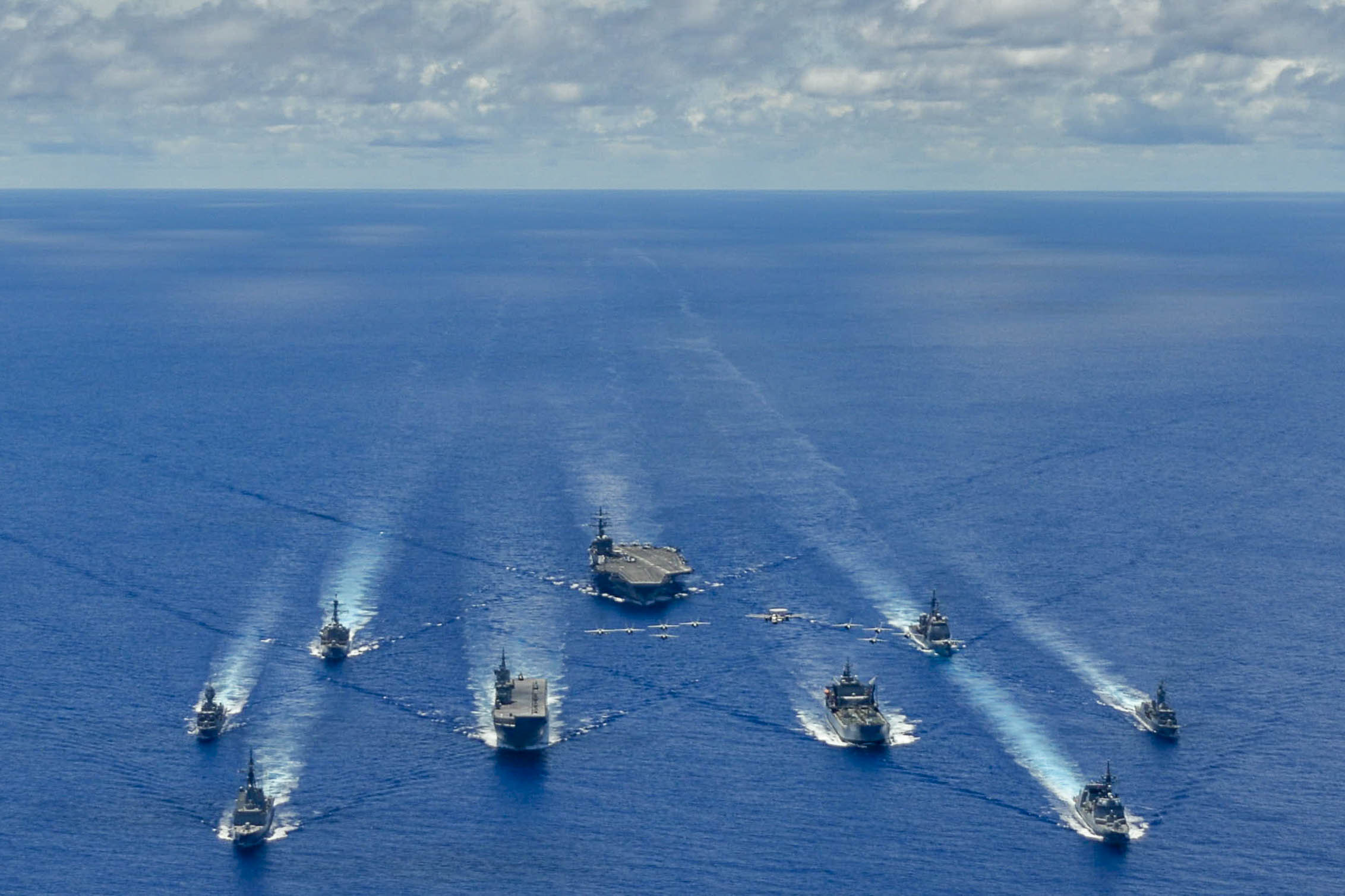
The USS Ronald Reagan and the USS Antietam sail in formation with Australian and Japanese vessels during a trilateral exercise in the Philippine Sea, July 21, 2020.

Army Sponsorship Program Helps Ease Transition for Soldiers, Families

July 21, 2020 | BY LAURA KREIDER

In the past few years, U.S. Army Garrison Italy held Total Army Sponsorship Program training and events designed to help soldiers become better sponsors to newly arriving soldiers, civilians, contractors and their families by learning more about sponsorship resources from their respective garrison agencies. Although the COVID-19 pandemic has necessitated changes in format and location, the program's purpose remains the same.

The program, available to active duty Army, Army National Guard, Army Reserve, and civilian employees, focuses on the sponsor, who is key to integrating newcomers as quickly as possible while making a good first impression.

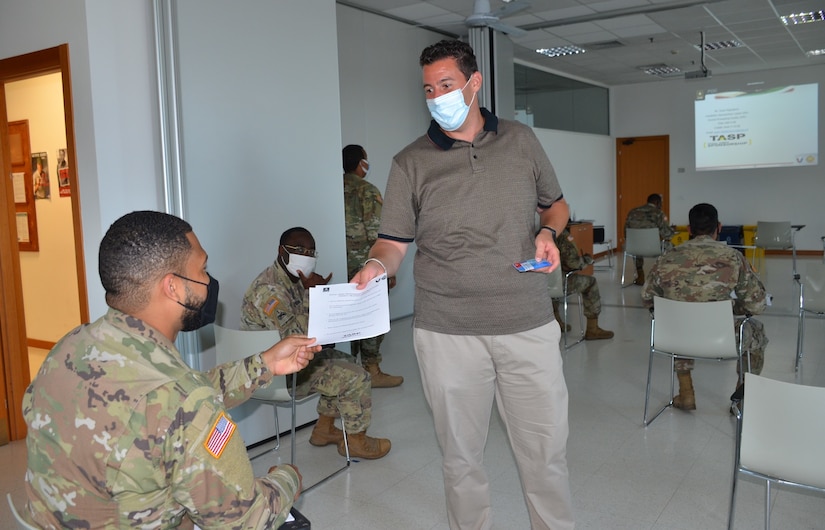
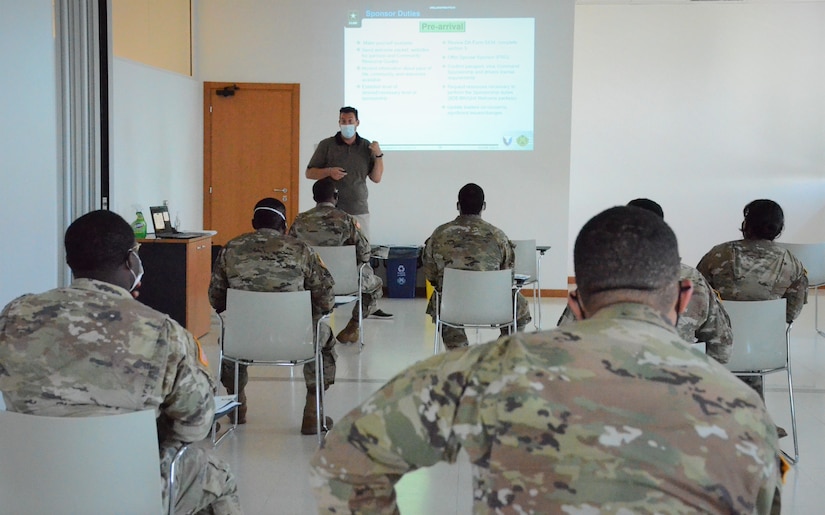
A man wearing a face mask hands pamphlets to a masked soldier seated in a classroom setting.

A permanent-change-of-station move to Italy is a unique experience that requires the assistance of well-trained sponsors to set the standard for future personnel to come, said Giulio Rigodanzo, USAG Italy installation sponsorship liaison.

''During the weekly training we can have up to 15 trainees in attendance per iteration to ensure social distancing, where each of them needs to bring his own personal protective equipment,'' he said. In this uncertain period of COVID-19 travel restrictions, the training is constantly evolving to ensure the sponsor is a key player to assist the individual arriving here, he added.

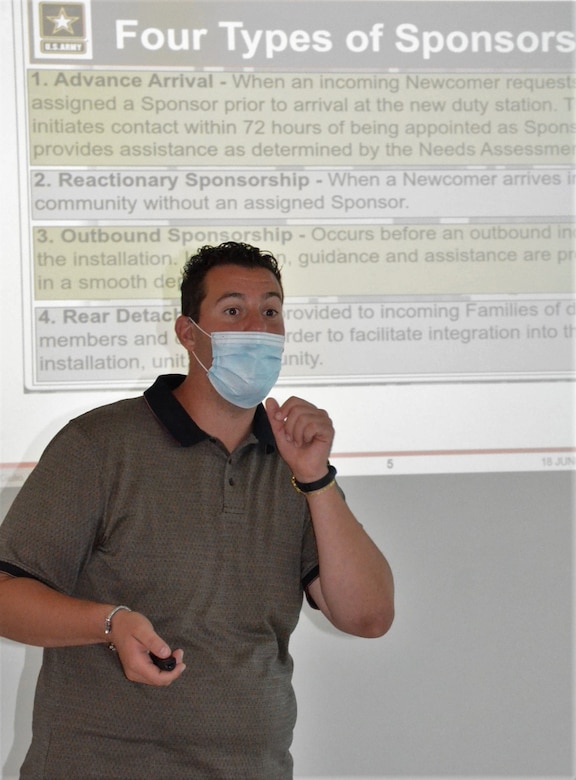
''We cover step by step what a sponsor is supposed to do to ease the transition of a newly arrived community member,'' he said.

While active duty soldiers and Army civilians take the TASP training online prior to attending face-to-face training, contractors and family members can attend it without taking the online portion first. ''We just ask each unit to send us an attendees roster to ensure we don't go over the allowed maximum capacity of participants per session due to COVID-19,'' Rigodanzo said.

A man wearing a face mask speaks to an audience, with a briefing slide projected behind him.

The program, which will be offered until the end of September, is meant to be taken once.

''The final objective is to train and equip future sponsors with all the necessary information,'' Rigodanzo said. ''My favorite quote about the program is: 'Pay it forward,' which is what we are trying to achieve — a fair and smooth transition from [the United States to an overseas duty station] for all our new community members.''

Participants in the July 8 class on the Caserma Ederle military complex in Vicenza, Italy, expressed positive feedback about what they learned.

''I believe the program is helpful to future sponsors because it gives them all the information needed before the soldiers come to the base,'' said Army Sgt. Domoniq Clowers, with the 386th Movement Control Transportation Detachment, who was training to be a sponsor for the first time.

''I enjoyed the welcome packet and believe it will be helpful to all the future soldiers to come,'' Clowers said.

Army Staff Sgt. Preston L. Jackson from U.S Army Africa agreed with his classmate.

''The training helped me understand why we need to have sponsors and learn the different aspects of being one for a future soldier or family,'' he said. ''With COVID-19 going on, it can be stressful for families; and during today's training, we learned what we need to do to help others with the process.''

A man wearing a face mask presents a briefing to masked soldiers who are seated in a classroom.

Jackson added that he believes TASP is one of the greatest programs the Army has invented for soldiers, families and civilians.

''Without this program, people would be lost at their duty station,'' he said, noting that he was contacted months before moving to Italy to let him know about the program and what to do to get ready for arrival.

''My sponsor reached out and told me about the different scenarios that can happen when arriving, including getting a passport, talking about barracks availability and shipping a car,'' he said. ''[His sponsor] stayed in touch with me throughout the whole PCS. He even picked me up from the airport. If it wasn't for this program, I would be lost.''

(Laura Kreider is assigned to U.S. Army Garrison Italy.)

Sports Heroes Who Served: Baseball Legend Brooks Robinson

July 21, 2020 | BY David Vergun , DOD News

Almost every sporting event in the United States has been postponed due to the COVID-19 pandemic. To help fill the void, this series looks at sports heroes who also served in the military.

Most baseball fans recognize the name Brooks Robinson. He played for the Baltimore Orioles from 1955 to 1977 and is widely considered to be the best defensive third baseman ever.

A man plays baseball.

Robinson joined the Arkansas Army National Guard in March 1958. He was activated and assigned to Fort Chaffee, Arkansas, and later to the Army's 78th Field Artillery Regiment at Fort Hood, Texas.

Robinson served  as an ordnance parts specialist. While on the rifle range for qualification with the M1 Garand rifle in November 1958, Robinson received a commendation for his performance as a squad leader for his unit. It stated, ''He has performed his duties in an excellent and commendable manner. It is recommended he be considered for more rapid promotion than his contemporaries.''

A man plays baseball.

Officials with the Arkansas National Guard at Camp Joseph T. Robinson in North Little Rock, Arkansas, said he was honorably discharged from Company A, 739 Ordnance Battalion, in Little Rock, Arkansas, on Jan. 2, 1962. 

In 1966, Robinson, by then a civilian, visited troops in all four corps areas of South Vietnam. Traveling with him on the morale-boosting tour were Stan Musial of the St. Louis Cardinals, Joe Torre and Hank Aaron of the Atlanta Braves, Harmon Killebrew of the Minnesota Twins, and sportscaster Mel Allen.

A man plays baseball.

During the tour, Killebrew was heard telling Robinson that the league champion Orioles played the best ball in the American League that year and that the Orioles deserved to win the pennant.

Brooks Robinson helped the Orioles advance to the postseason six times, with Baltimore winning four American League pennants (1966, 1969, 1970, 1971) and two World Series (1966, 1970) during his career. In 39 career postseason games, Robinson hit .303 with five homers and 22 runs batted in.

The Orioles retired his No. 5 jersey in 1977. He led all American League third basemen 11 times in fielding percentage and eight times in assists. His 2,870 games at third base rank No. 1 on the all-time list.

A man plays baseball.

Frank Robinson, another baseball great, once said that Brooks Robinson was the best defensive player at any position. ''I used to stand in the outfield like a fan and watch him make play after play. I used to think, 'Wow! I can’t believe this,''' he said.

Frank Robinson also played for the Orioles. His time with the team overlapped with that of Brooks Robinson from 1966 to 1971.

More About Brooks Robinson

  • As a  boy, Robinson operated the scoreboard at Lamar Porter Field in Little Rock. The baseball sequence from the 1984 film ''A Soldier's Story'' was filmed there.
  • In 1955, Robinson played baseball in South America; he played in Cuba in 1957.
  • In 2012, a large bronze statue of him was unveiled at Oriole Park at Camden Yards in Baltimore.


Service With a Smile

July 21, 2020 | BY Amanda Urena

With the ability of the coronavirus to spread rapidly, a tiger team from Pearl Harbor Naval Shipyard & Intermediate Maintenance Facility worked with skilled employees there and at Naval Facilities Hawa to quickly fabricate protective barriers to keep the facility open for business.

Navy sailors and contractors working.

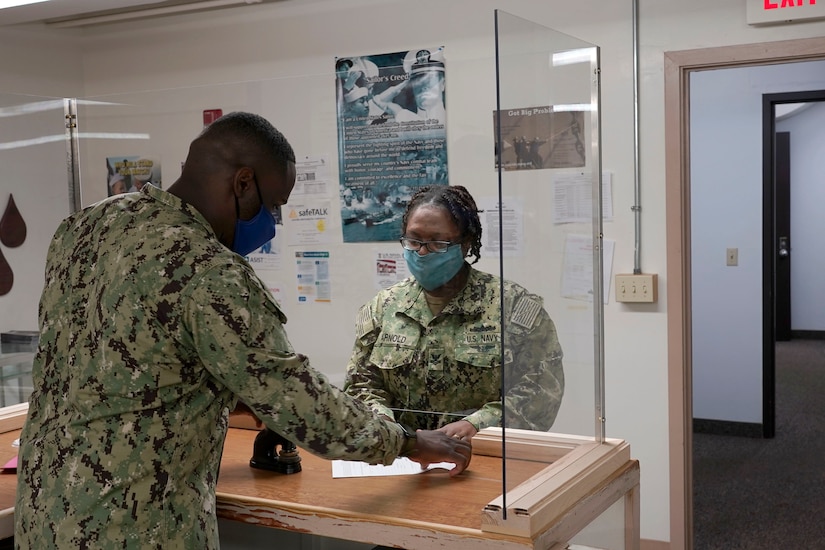
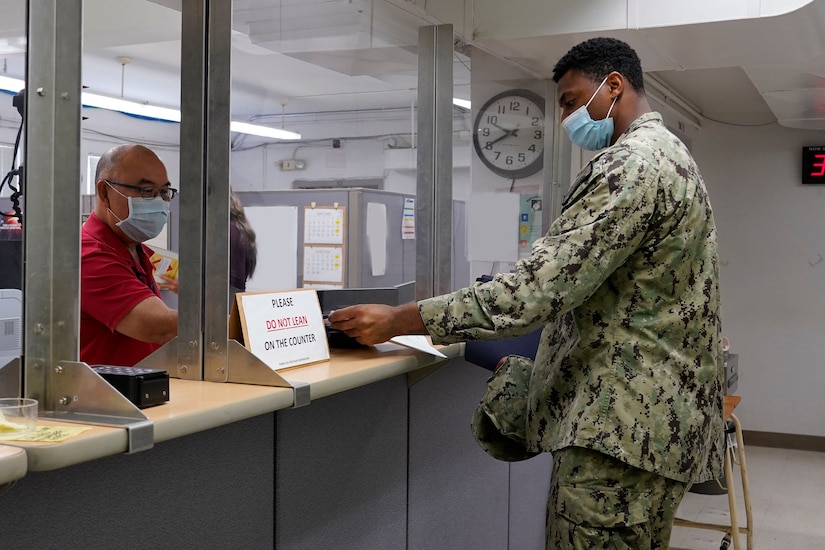
Several codes —  offices with specific responsibility, such as Pass and ID and Document Control — conduct daily interactions with shipyard workers, contractors, military personnel and visitors. This creates a higher risk for potential spread of the virus. To mitigate this risk, the codes requested support from the tiger team.

Working with safety experts and fabrication employees, the tiger team determined that Plexiglas would provide the best protection while maintaining customer experience, both critical for safety throughout the shipyard.

Specific measurements of the areas where Plexiglas would be installed were taken from each customer service location to develop a custom installation specific to each code's needs. The measurements were then taken to Naval Facilities Hawaii for assistance in manufacturing the custom designs.

Navy sailors and contractors working.

The customization was initially expected to take more than a week to complete, but expedited manufacturing and installation resulted in a custom installed solution for each code in just one to three days.

Shipyard personnel working in the Pass and ID office were thrilled with the solution developed. Walter Fung, a security assistant, commented on the impressive work done by the team."I feel more comfortable with the Plexiglas installed," he said. "It's a relief of stress."

This protective measure not only improved safety from airborne droplets that can carry the coronavirus, but also prevented customers from leaning over the counter and potentially seeing personal identifiable information, officials said.

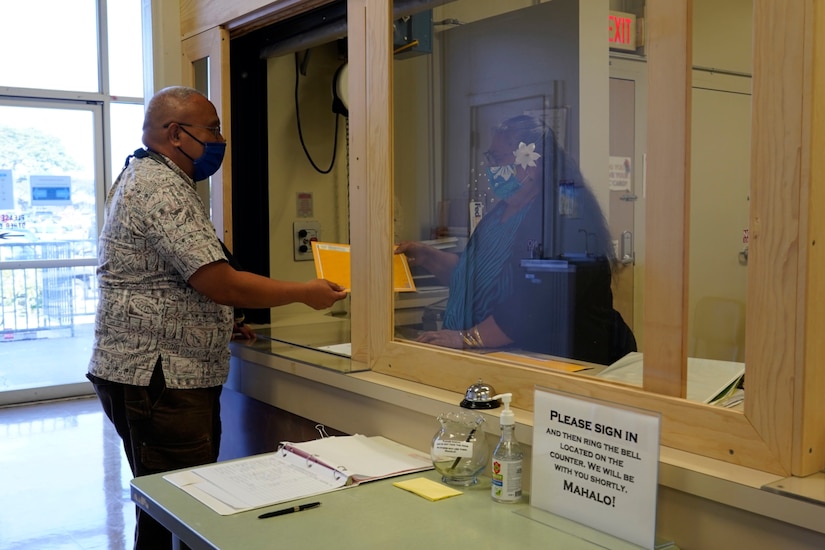
A man hands a file to a woman through a window. Both are wearing face masks.

The Document Control Center team also was excited about the new custom barriers. "They were quick," said Talalelei Toomata, a file and mail clerk. "The customers like it. It's fantastic — I love it!"

The new protective barriers made shipyard customer service personnel feel safer and also protect customers from potential exposure, making interactions between both parties safer, shipyard officials said,  allowing everyone to practice the shipyard's COVID-19 priorities of protecting people, minimizing the spread of the virus, and maximizing the mission, even during face-to-face interactions.

(Amanda Urena is assigned to the Pearl Harbor Naval Shipyard and Intermediate Maintenance Facility.)

Monday, July 20, 2020

Tactical Watch

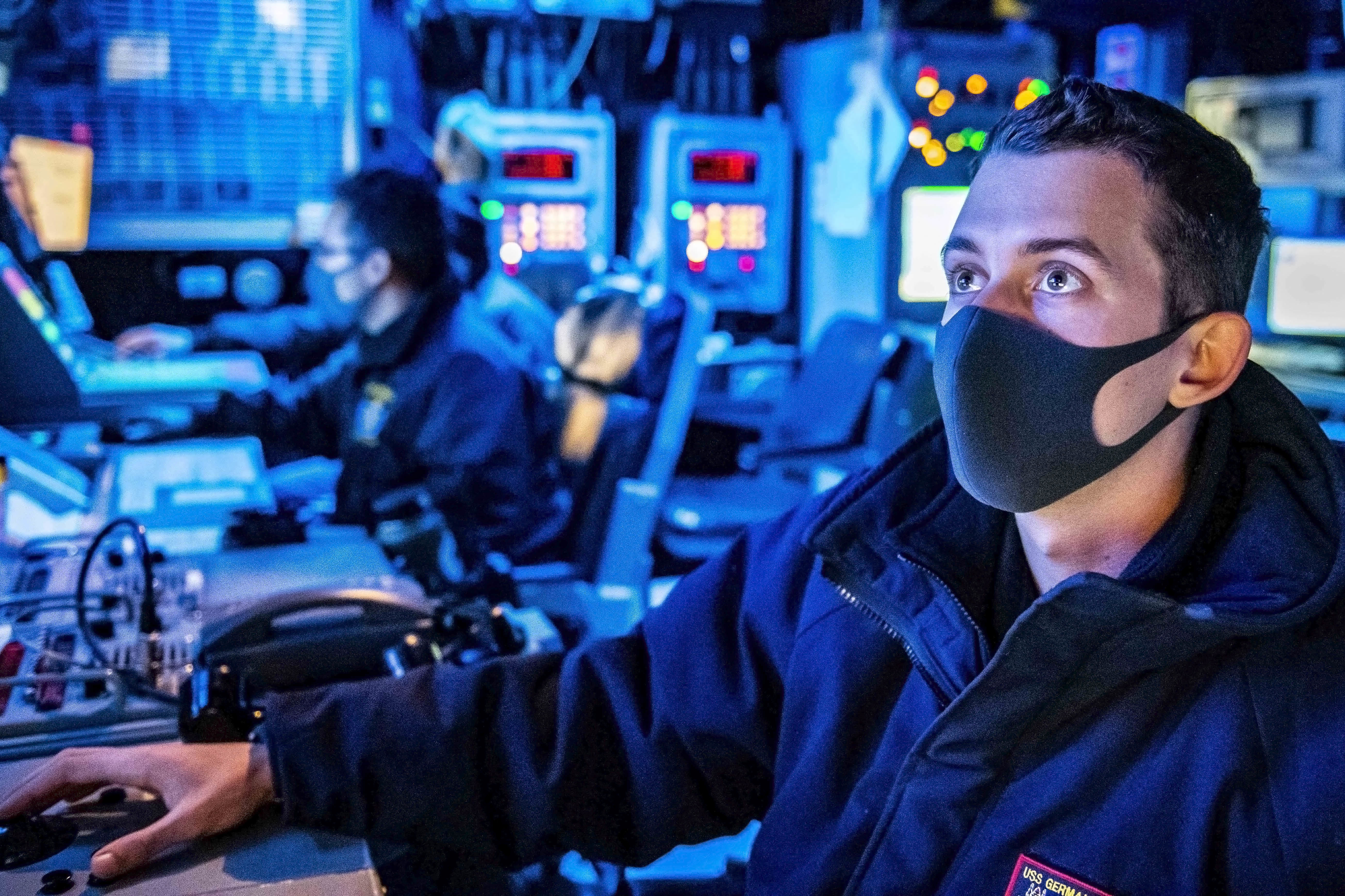
Navy Lt. Louis Petro stands watch as the tactical action officer in the combat information center aboard the USS Germantown in the East China Sea, July 17, 2020.

Ministry of Defense Advisors Program Seeks Applicants

One small Defense Department program has a big global impact. The Ministry of Defense Advisors Program, or MODA, was established in 2009 during the height of the troop surge in Afghanistan. The goal was, and still is, to standardize the selection and training of the DOD's highest civilian performers and transform them into the world's best advisors, DOD officials said.

Since 2010, MODA has recruited, trained and deployed 600 senior DOD civilians, and is highly regarded by senior DOD leaders and ministerial heads around the globe, they added.

The program is now overseen by the Defense Security Cooperation Agency through the Defense Security Cooperation University and the Institute for Security Governance. MODA personnel work with other DSCA institution capacity building elements to ensure projects are aligned with other security cooperation activities, including global training and equipping and foreign military sales. Deployed personnel are embedded in partner-nation defense ministries to best achieve national security and foreign policy objectives.

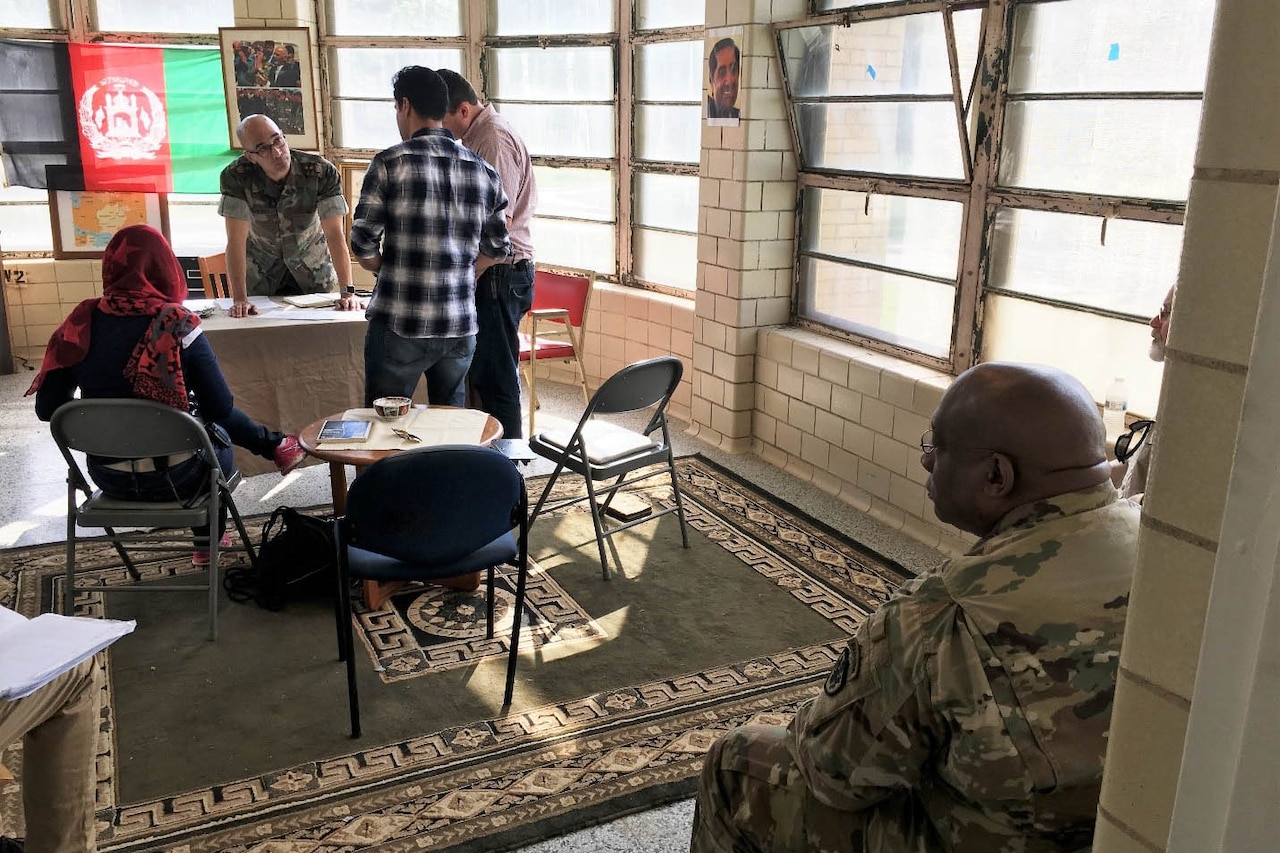
A group of people stand around a table.

The working definition of a ministry of defense advisor is a proven subject matter expert who can be an executive coach and mentor to a foreign partner. The advisor is not a liaison, consultant or tutor, officials explained, but rather is a relationship builder who demonstrates empathy, humility and respect while forming trust-based partnerships through daily interaction and personal engagement.

It's someone who can leverage those relationships to get to the root of the problem or capability gap and facilitate the partner's problem-solving effort, an official said. Last and most important, the official said, a minister of defense advisor is someone who enables enduring, local solutions that build partner capacity.  

Finding local solutions to local problems is the primary objective of any ministry of defense advisor serving in a partner nation. Security cooperation professionals are trained to develop and implement a total capability for the partner, using all of the tools in the security cooperation toolbox. MODA program candidates and the advisors they become have complementary and unique roles in the security cooperation enterprise as the professionals who are able to influence and shape outcomes supporting the partner and American national security goals through their daily proximity to the partner and expertise.

Minister of defense advisors are increasingly important as the global U.S.footprint expands into territories that are important to the National Defense Strategy, national security interests and the security cooperation mission, officials said. Stepping up to the challenge to serve as a minister of defense advisor requires careful consideration of the following, they added:

  • Candidates should be GS-13/14/15 permanent DOD civilian employees;
  • Candidates will engage in high-visibility, ministerial-level advising; and
  • Candidates will undergo six to seven weeks of training, which will include the Strategic Advisor Course. 

Interested candidates should submit the following as part of their application package to mailbox dsca.ncr.bpc.list.moda@mail.mil:

  • A cover letter summarizing why the candidate would be a good fit;
  • A narrative chronological resume;
  • A current SF-50 with social security number and birthdate redacted;
  • References from the candidate's current supervisor and at least one supervisor from any previous deployments; and
  • Component approval.

Minister of defense advisor opportunities can be found here

In Formation

Ships assigned to the Nimitz Carrier Strike Group sail in formation with Indian navy ships during a cooperative deployment in the Indian Ocean, July 20, 2020.

Airborne Ops

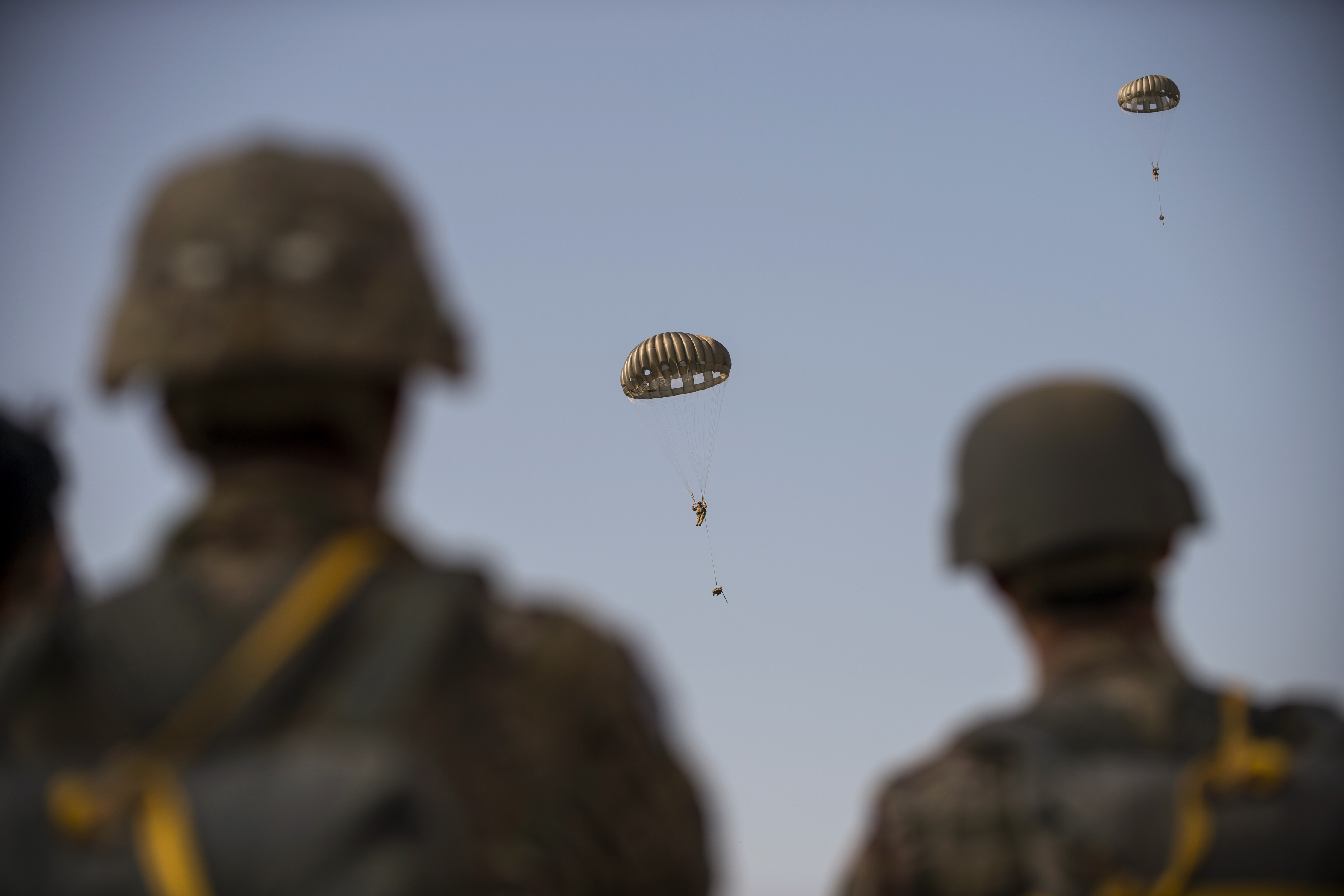
Soldiers watch fellow soldiers parachute during an airborne operations jump from UH-60 Black Hawk helicopters at Fort Bragg, N.C., July 17, 2020.

Live Fire

Navy Petty Officer Presley White fires a machine gun system from a remote operator console aboard the USS Germantown during a live-fire exercise in the East China Sea, July 17, 2020.

Mascot Strut

Lance Cpl. Chesty XV, the Marine Corps mascot, participates in an evening parade at Marine Barracks Washington in Washington, D.C., July 17, 2020.

Command Senior Enlisted Leader Assignment

July 20, 2020

The Office of the Senior Enlisted Advisor to the Chairman of the Joint Chiefs of Staff (OSEAC) announced today the following assignment:

Navy Command Master Chief Alexandre Hebert, currently assigned as the command master chief of the Center for Security Forces, Virginia Beach, Virginia, has been selected to assume responsibility from Army Command Sgt. Maj. Shawn F. Carns as the command senior enlisted leader for the Joint Task Force Horn of Africa, Camp Lemonnier, Djibouti.

Maintenance Squadron Maintains Ops With Minimal Manning

July 20, 2020 | BY Air Force Airman 1st Class Jayden Ford

When the COVID-19 pandemic swept across the nation, the 19th Aircraft Maintenance Squadron at Little Rock Air Force Base, Arkansas, was already operating at reduced manning levels, with almost a quarter of the unit deployed. Social distancing and mitigation efforts to preserve the health of the remaining force cut that number in half.

Tasked with maintaining and servicing one of the largest C-130J fleets in the world, the squadron established a plan to safeguard airmen while simultaneously completing critical training and maintaining normal operations with heavily reduced manning.

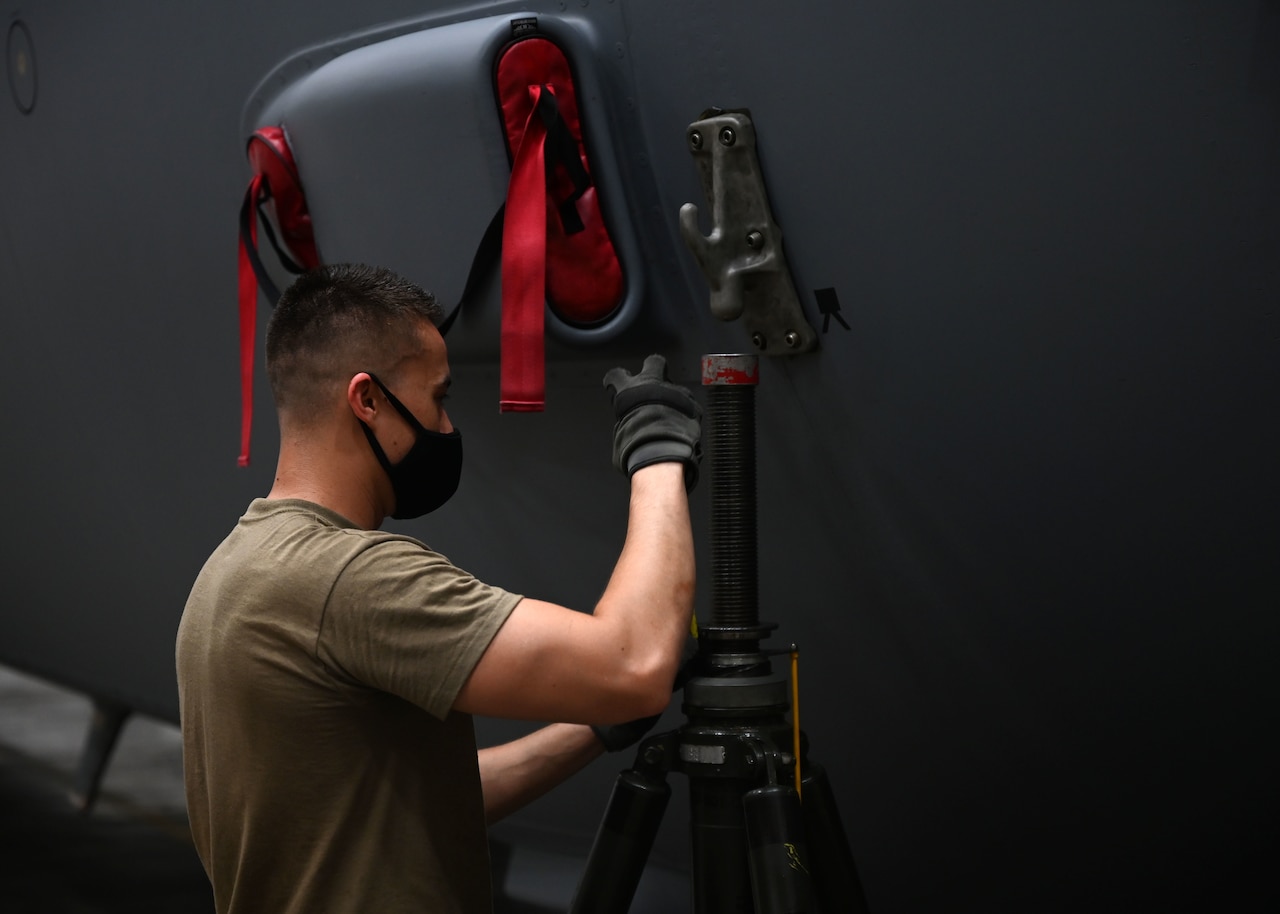
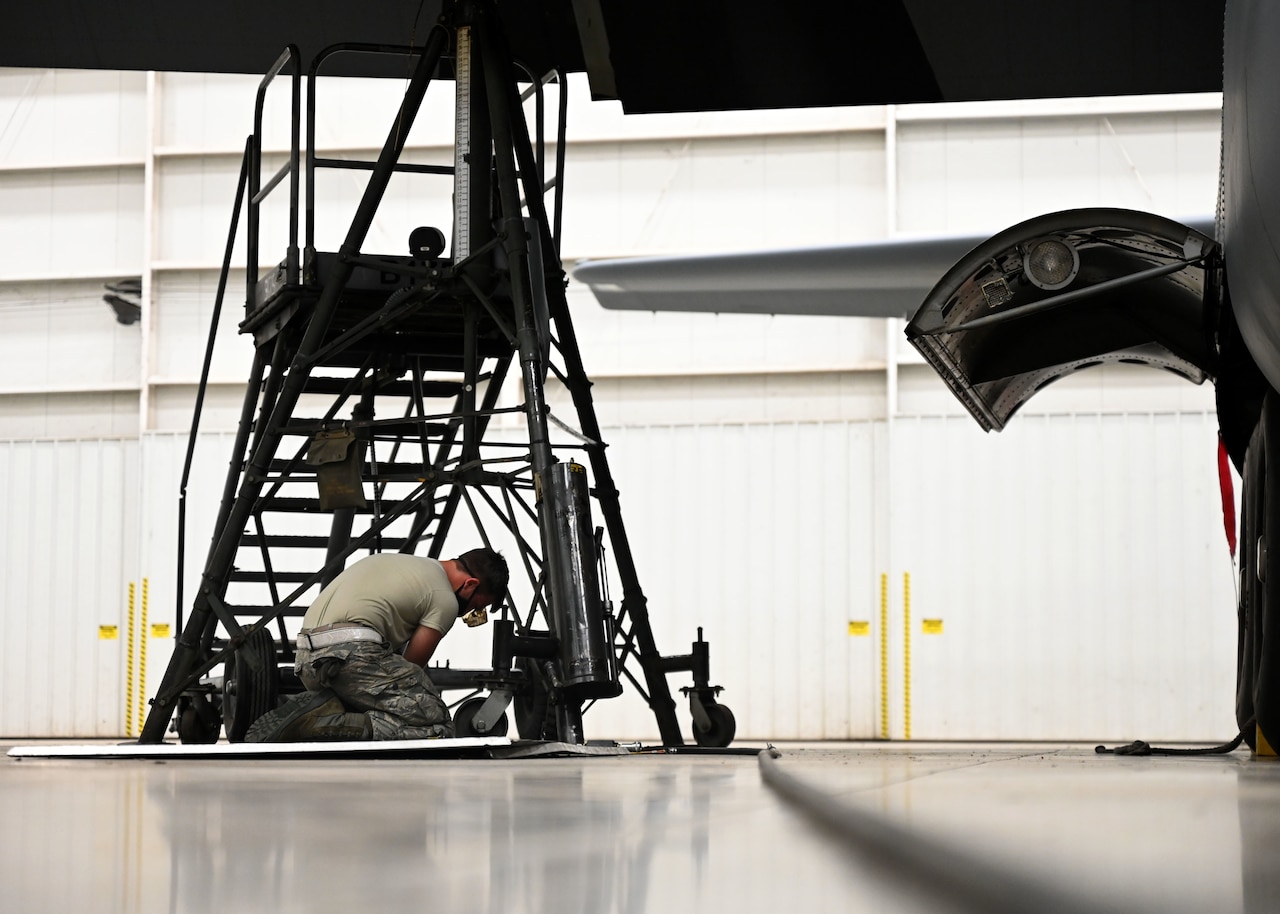
An airman works on a C-130J Super Hercules.

“After airmen from our unit joined the 61st Airlift Squadron on a recent deployment, we were left with little over half of our team,” said Air Force Tech. Sgt. Sam Bishop, 19th AMXS flightline expediter. “The airmen who stayed at home station were then split again due to COVID-19. Some are helping out by flying and performing scheduled maintenance while other groups are training.”

Devised by all levels of leadership within the squadron, the plan actively sought input and feedback from frontline airmen to ensure the new schedule ran smoothly and effectively.

“The plan put into place for our operations during COVID-19 was a collective collaboration between our leadership, senior [noncommissioned officers] and the lead technicians,” Bishop said. “Our leadership charged the lead technicians to figure out whether or not we can support this plan and gave ideas on the best way to move forward.”

An airman connects a hose to a hydraulic pump.

Even amid a global pandemic, junior airmen still needed essential on-the-job training to better accomplish their assigned tasks in a safe and effective manner.

''One of our challenges was training our new airmen while maintaining operations with the manning we had,'' Bishop said. ''We have a lot of new personnel who are not yet qualified to work independently. The few people we do have, who are qualified, are having to train the airmen to get them up to par to help support the mission.''

Air Force Master Sgt. Michael Pearson, a production superintendent with the 19th AMXS, acknowledged that leadership within the squadron understood right away the importance of caring for their airmen more than ever due to possible isolation people may feel from COVID-related restrictions.

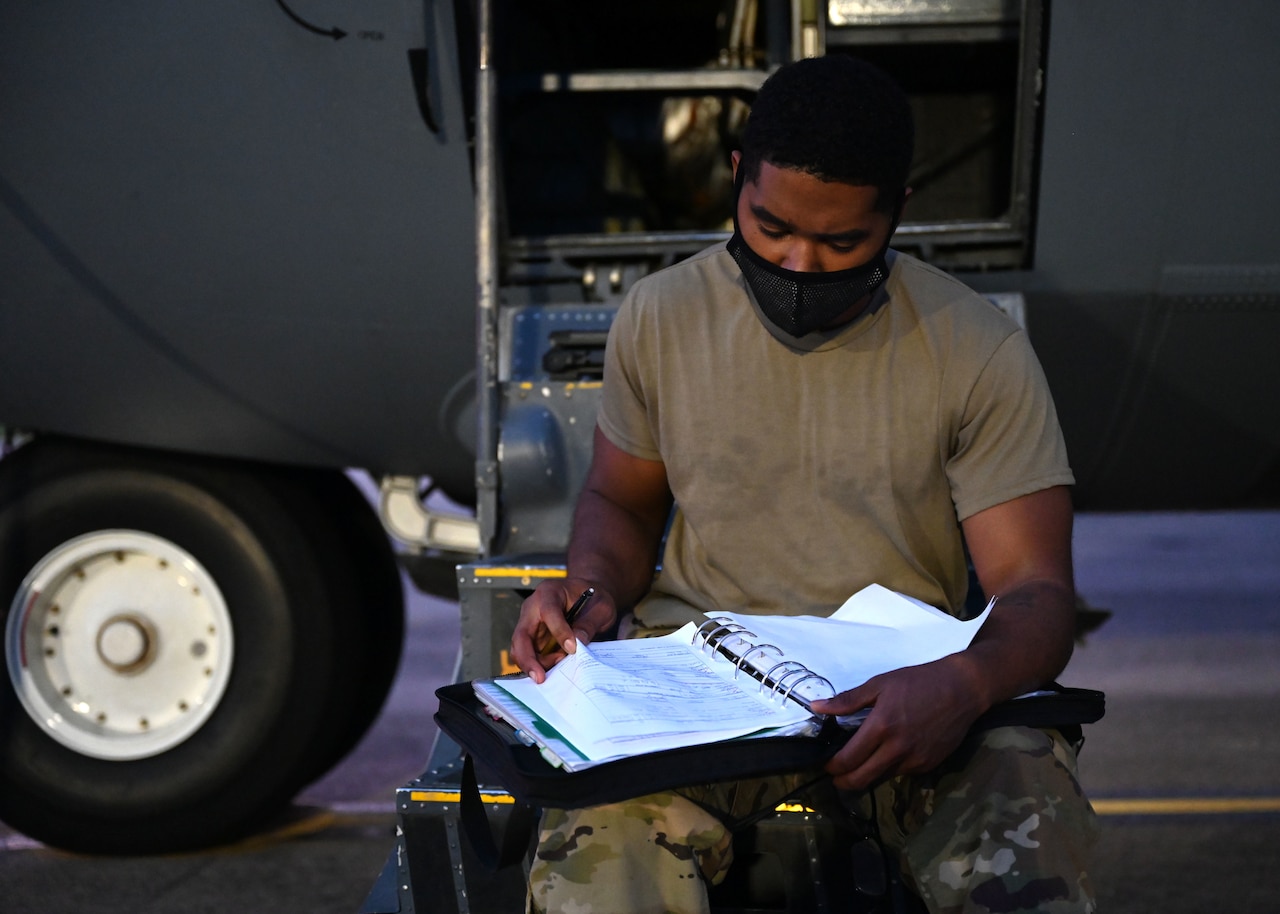
An Air Force crew chief flips through a notebook.

''It took some adapting at all levels,'' he said. ''We've been doing our best to try to accommodate and help everyone through the changes. That way we know their mind is in the game, and we are completing the mission safely.''

''General Giulio Douhet once famously stated, 'Flexibility is the key to air power,''' said Air Force Lt. Col. Donald Hudson, 19th AMXS commander. ''That's just what aircraft maintainers do, and that's when they're at their very best. They make it happen; and they absolutely make you proud when they not only figure out how to get past that challenge, but also improve upon how we actually execute that mission when faced with a challenge.''

(Air Force Airman 1st Class Jayden Ford is assigned to the 19th Airlift Wing.)

Combat Aviation Brigade Prepares to Deploy During COVID-19 Pandemic

July 20, 2020 | BY Army Capt. Travis Mueller

Despite challenges presented by COVID-19, soldiers with the Pennsylvania Army National Guard's 28th Expeditionary Combat Aviation Brigade mobilized from their home stations to Fort Hood, Texas, to prepare for their deployment to the Middle East.

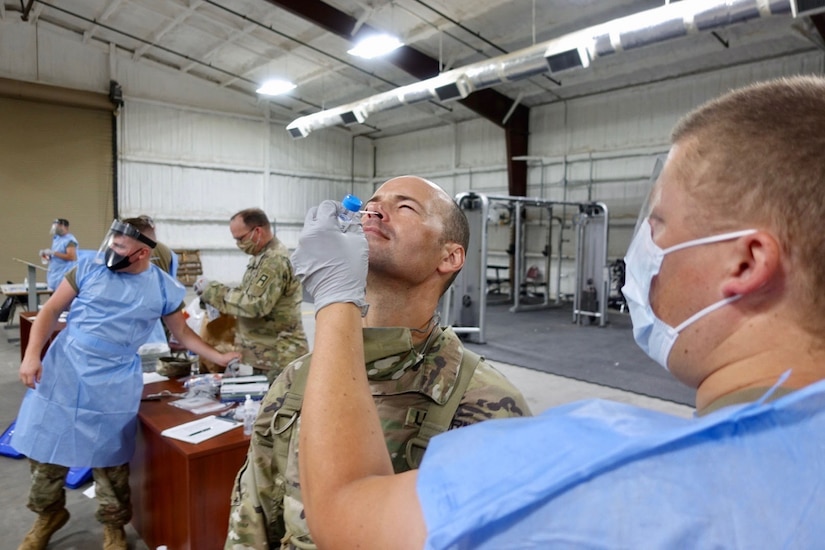
Soldiers receive COVID-19 tests.

The 28th ECAB is preparing for deployment and is taking precautions to ensure soldiers receive the training, experience and confidence to accomplish their missions and stay safe. They will soon deploy to the Middle East, where they will assist U.S. Central Command with increasing regional security and stability in support of U.S. interests.

Our soldiers have been counseled frequently about the precautions for COVID-19 and the importance of wearing masks, and we keep up on each other and keep an eye out for each other."
Army Maj. Todd Lupold, Surgeon, 28th ECAB

Though he acknowledged that there were some delays due to weather and lost baggage, Army Col. Howard Lloyd, commander of the 28th ECAB, described the movement of the brigade to Fort Hood as "spot on."

"Almost 1,400 soldiers embarked for this place without any hiccups," Lloyd said. "They are here, all safe. They are all bedded down. Our unit movement officers and logisticians did a great job to support the force."

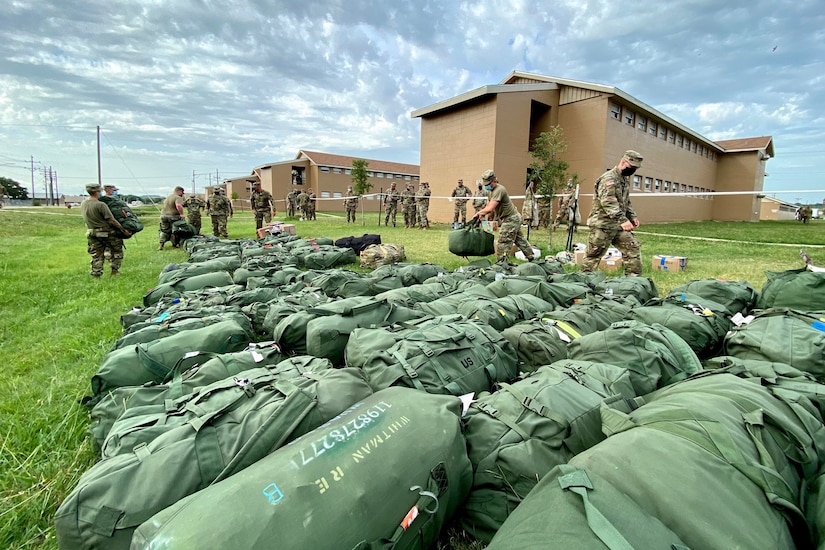
Soldiers line up dozens of stuff duffel bags after unloading them from a truck.

The command team understands the concerns about COVID-19 and its potential to spread within the formation. It is very important that soldiers remain healthy, and the brigade has taken numerous steps to ensure the virus doesn’t spread.

"Some of the precautions we are taking to prevent transmission of COVID-19 are wearing masks whenever we are within 6 feet of each other," said Army Maj. Todd Lupold, surgeon with the 28th ECAB. "We are socially distancing as much as possible. We are also keeping up with frequent hand washing and sanitization of our areas. Our soldiers have been counseled frequently about the precautions for COVID-19 and the importance of wearing masks, and we keep up on each other and keep an eye out for each other."

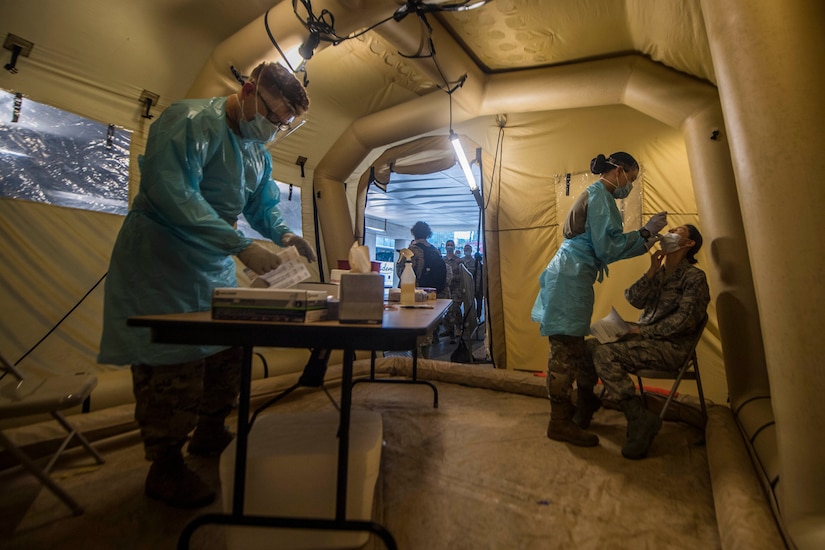
The soldiers also underwent COVID-19 testing in the first couple days after arriving at Fort Hood. A small number of positive cases were discovered, but although the soldiers were asymptomatic, they were taken into isolation to receive the best care and stop any potential spread of the virus.

Soldiers are engaged in a mandatory 4-day quarantine. They are unable to shop at the post exchange, go to the normal dining facilities or use the post gym.

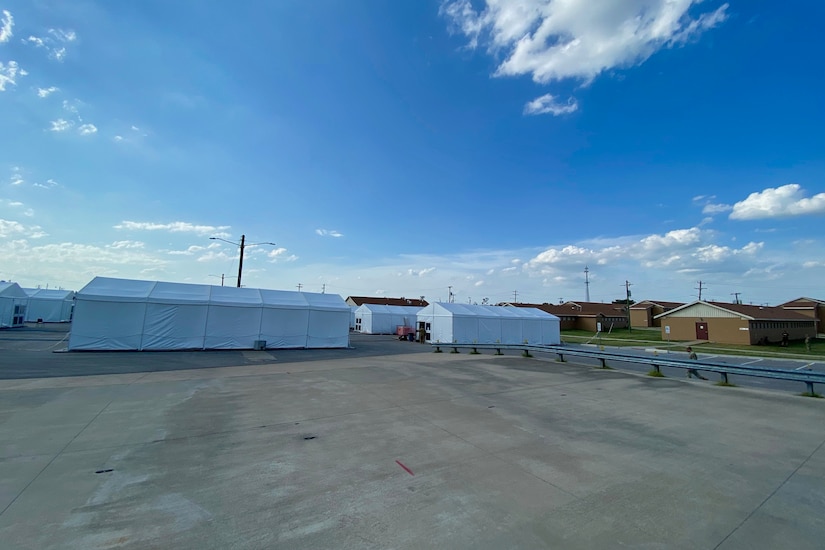
A parking lot is dotted with several white tents.

Two to three barracks are grouped into cohorts. Each cohort is assigned a dining tent, a morale tent and an exercise tent with select gym equipment. Separating cohorts this way limits the spread of any viruses in common areas, officials explained.

At the end of the mandatory 14-day period, assuming there are no outbreaks of the virus, things will open up for the 28th ECAB soldiers However, they will still be advised to take personal measures to prevent the spread of illness and stay healthy.

Following these precautions will keep the threat of COVID-19 in the formation low, and will allow the 28th ECAB to aggressively train without fear of spreading the virus deploying personnel training for the deployment. Meanwhile, they're doing what they need to do to be ready for their deployment.

"The soldiers are owning it," Lloyd said. "They are doing a fantastic job to get the job done. We're already out there at the airfield doing maintenance on aircraft. We're doing maintenance on vehicles. We're setting up our mission command right now. Everything is on-track, even with the restrictions."

(Army Capt. Travis Mueller is assigned to the 28th Expeditionary Combat Aviation Brigade.)

Sunday, July 19, 2020

DOD Awards $3.5 Million Contract to Crosstex International, Inc. to Increase Domestic Production of Surgical Masks

July 19, 2020

On July 17, the Department of Defense, in coordination with the Department of Health and Human Services, signed a $3.5 million contract award with Crosstex International, Inc. to increase domestic production of surgical masks.

Surgical masks are critical pieces of personal protective equipment for our nation’s medical community on the frontlines of the COVID-19 pandemic response.

Crosstex currently operates mask production lines at full capacity in its upstate New York facilities. The $3.5M investment would support capital investments to procure additional machine lines through its longstanding partnership with its current domestic machine fabricator. The additional lines would increase Crosstex’s production by an additional 100 million surgical masks a year.  The increases to production will begin in May 2021, when Crosstex anticipates delivery of their first new machine line. The remaining three lines will be delivered and fully operational no later than November 2021.

This contract award is part of the ongoing collaboration between DOD and HHS, led by the Department’s Joint Acquisition Task Force (JATF) and funded through the CARES Act, to enable and support domestic industrial base expansion for critical medical resources.

Friday, July 17, 2020

Soldiers Describe Initial COVID-19 Fight

July 17, 2020 , Army News Service

It's an invisible enemy. At least that's how soldiers felt about COVID-19 after their six-week stint at the overburdened University Hospital in Newark, New Jersey, where they said it was more like a war zone.

They worked countless hours to assist beleaguered civilian doctors and nurses — from the frantic hallways in overcrowded hospitals to quiet moments at a patient's bedside, holding their hand as they passed away alone, they said.

While there were no bombs or gunfire, the infectious disease still mounted attacks as exhausted health care workers hurried to save lives.

One soldier places a specimen in a bag at a table in a tent while another soldier administers a COVID-19 test to someone seated in a chair. Both soldiers are wearing personal protective equipment.

Starting in March, the Army deployed thousands of soldiers to help health care providers nationwide.

"Our integration was seamless," Army Maj. Erin Velazquez said after her unit's warm reception by the hospital staff. "We were greeted with open arms, and we made sure to have the greatest impact possible in all areas [of the hospital]."

Velazquez commanded Urban Augmentation Medical Task Force 332-1, one of the Army Reserve's 15 task forces that were initially sent to Newark and elsewhere to battle the disease. And now, as cases in the first locations subside, new hotspots have surfaced in southern and western states, with soldiers preparing to assist again.

I knew at that moment we had to use our skill set and training to make a positive, impactful contribution."
Staff Sgt. Mauricio L. Pena

The 85-member task forces have critical care personnel who have rapidly deployed across the country, in what has become the largest domestic mobilization in Army Reserve history, they said. Each team is made up of various medical specialties from doctors and nurses to supply and administrative support. At the height of its overall response in April, U.S. Northern Command had more than 9,000 military medical personnel, including those teams, in the fight.

Early in the pandemic, New Jersey became one of the country's worst-hit states by the virus and is also where Urban Augmentation Medical Task Force 332-1, an arm of the 332nd Medical Brigade out of Nashville, Tennessee, called home for nearly six weeks.

Other units were sent to similar critical areas, including New York City; Baton Rouge, Louisiana; and Seattle.

By the time the task force arrived on April 14, the Garden State had roughly 70,000 confirmed cases and more than 2,800 deaths. As with other COVID-19 breeding grounds, the exact tally was hard to count and growing by the hour. It was spring, and the University Hospital in Newark "was at its breaking point," said Staff Sgt. Mauricio L. Pena, UAMTF 332-1's top enlisted Soldier and a respiratory therapist. As cases surged, many hospitals had run out of beds to care for the sick.

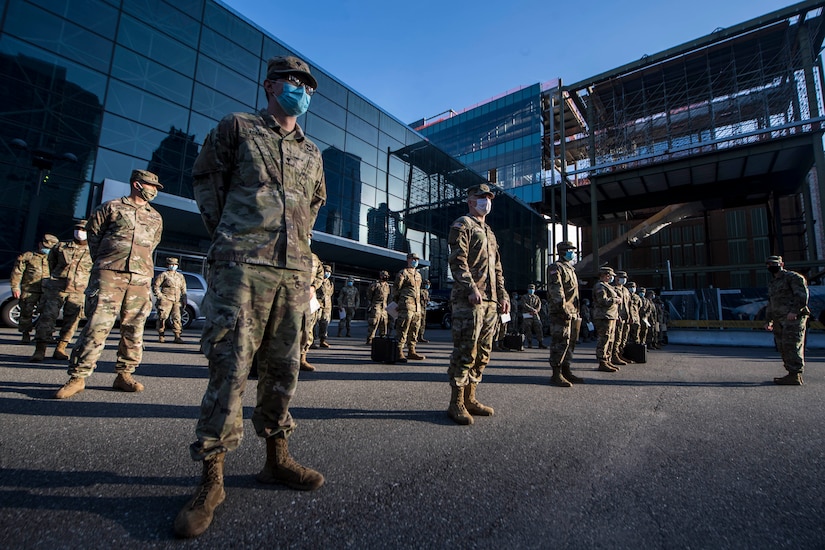
Service members wearing camouflage uniforms and face masks stand in a socially distanced formation.

In those days, the academic hospital was stretched beyond its limits. "I was taken aback and saddened by the conditions in New Jersey," Pena recalled. "The emergency department was overwhelmed, even though the hospital [staff] was moving as fast as they could."

The virus had outpaced their best efforts. The hospital's emergency room was jam-packed with sick people, many with coronavirus-like symptoms. The need for care didn't slow down even when the hospital reached its capacity, so many patients were forced into the hallways ofthe emergency room. "I knew at that moment we had to use our skill set and training to make a positive, impactful contribution," Pena said, regarding the Reserve troops' unique ability to combine military training with their civilian medical experience.

They should all be extremely proud of what they accomplished during this historic mission."
Army Col. Kimberlee Aiello

Upon arrival, the soldiers in Newark also noticed that many members of the undermanned staff were visibly burned out as the countless long days at the hospital had worn them down. "They were on the verge of collapsing," Pena said.

Before the task force arrived, doctors and nurses had already worked for weeks at a time — even after many of their colleagues tested positive for the virus, which reduced the number of available health care workers. But with each passing day, things inched from chaotic back to stable. On May 20, the unit's last day at University Hospital, the facility was running smoothly again, Velazquez said. The cohesion between the soldiers and hospital staff was immediate, she added. Once integrated, they worked side by side to provide support to more than 100 COVID-19 positive patients daily.

Along the way, the task force went on to assist all around the hospital, not only providing care to COVID-19 patients, but also helping to give mental health support to the hospital staff, patients and other soldiers, Velazquez said. They also volunteered with other daily tasks, such as N95 mask-fitting and sterilization.

"This was an exceptional mission that provided our soldiers with the opportunity to support our most burdened communities in a time of great need," Velazquez said. "Many lives were not only saved but forever touched by the collaborative impact between the Department of Defense and state health care professionals."

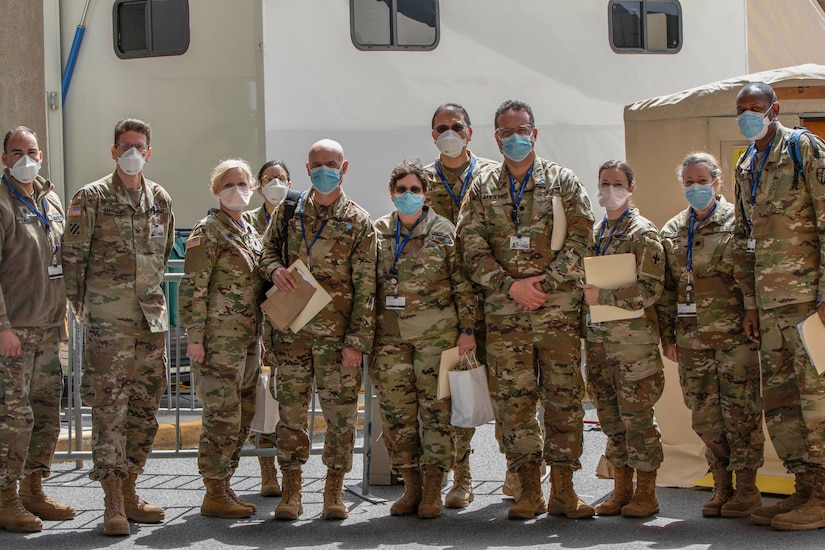
Members of a military medical task force wearing face masks and camouflage uniforms pose for a group photo. Some hold file folders.

Ten miles from University Hospital across the Hudson River was the nation's epicenter of the virus: New York City. That's where the 44th Medical Brigade assumed the role of Task Force Silver Dragon, which oversaw more than 3,000 troops in medical units across six states as part of Federal Emergency Management Agency operations.

The task force's headquarters was in a converted convention center in Manhattan, dubbed the Javits-New York Medical Station, where more than 500 service members treated nearly 1,100 patients, said Army Col. Kimberlee Aiello, the brigade commander.

Despite daily interactions with COVID-19 patients, service members only had a 0.05% infection rate, Aiello said, adding not everyone was tested due to limited supplies. "When we looked across the United States, [we] saw there were limited testing capabilities," she said. "Therefore, we wanted to be good stewards of our nation's resources, [so] we only [tested] those who were symptomatic for COVID-19."

While normalcy returns to parts of the country, the battle against COVID-19 persists elsewhere. About 740 military medical and support personnel have been assigned this week to go to Texas and California in support of FEMA missions, U.S. Army North officials. More troops are on prepare-to-deploy orders, according to Army officials, in case the demand for additional forces are needed in other hotbeds. And if called on again, the Reserve Soldiers will be able to tap into their real-world experience.

"COVID has not stopped. This is ongoing," Aiello said. "We did a great job with what we knew at the time, and we learned from our partners on how to care for patients. They should all be extremely proud of what they accomplished during this historic mission."

Department of Defense Announces New Director for Defense Commissary Agency

July 17, 2020

The Department of Defense announced today that William Moore has been selected to be the new director and chief executive officer of the Defense Commissary Agency (DeCA). 

The DeCA director position has been vacant since June 2017. In November 2017, DOD leadership asked retired Navy Rear Adm. Robert J. Bianchi, CEO of Navy Exchange Service Command (NEXCOM), to step into the DeCA leadership position as interim director and later special assistant for commissary operations to the assistant secretary of defense for manpower and reserve affairs. He has been overseeing both organizations simultaneously for the past 33 months. 

Under Bianchi’s leadership, DeCA reversed a six-year trend of slumping commissary sales and exceeded the congressionally mandated market basket savings rate of 23.7% for commissary patrons each year. DeCA also introduced over 900 store brands to provide popular items to shoppers at lower price points and began modernizing the commissary shopping experience with the implementation of the Click2Go online shopping program. 

Acting Assistant Secretary of Defense for Manpower and Reserve Affairs Virginia Penrod recently praised Adm. Bianchi’s performance saying, “Rob was the right leader at the right time for DeCA. His ability to anticipate requirements and build coalitions of diverse stakeholders has been key to keeping the commissary store shelves stocked and all of our stores open during the COVID-19 pandemic.” 

Moore currently serves as the principal deputy to the Army’s deputy chief of staff for logistics, where he is responsible for programming, budgeting and execution of Army logistics. He has also worked in executive leadership positions with the Army’s Training and Doctrine Command and Combined Arms Support Command. 

The DeCA director oversees the management, acquisition, operation, and sustainment of 236 commissaries, as well as distribution centers, a meat-packing plant in Europe, and other facilities, located in 45 states, 13 countries and 2 territories. DeCA also employs more than 13,000 people, and its operations generate almost $5 billion in annual sales. 

Moore’s tenure is expected to begin in August 2020.

Secretary of Defense Dr. Mark T. Esper Guidance on Public Display or Depiction of Flags in the Department of Defense

July 17, 2020

Today Secretary of Defense Dr. Mark T. Esper provided guidance to Defense senior leaders and commanders on the public display or depiction of flags in the Department of Defense. The Secretary noted that flags are powerful symbols, particularly in the military community for whom flags embody common mission, common histories, and the special, timeless bonds of warriors. The Secretary also noted that the flags we fly must accord with the military imperatives of good order and discipline, treating all our people with dignity and respect, and rejecting divisive symbols.

In addition to honoring the American flag, which is the principal flag that DoD is authorized and encouraged to display, the Secretary provided a list of other flags, or representational depictions, that service members and civilian employees are authorized to display that promote unity and esprit de corps.

Secretary Esper remains committed to fielding the most powerful military force the world has known by strengthening the bonds of our most valuable resource – our people.

Thursday, July 16, 2020

Norfolk Naval Shipyard Takes on Innovative Solutions During COVID-19 Pandemic

July 16, 2020 | BY KRISTI R. BRITT

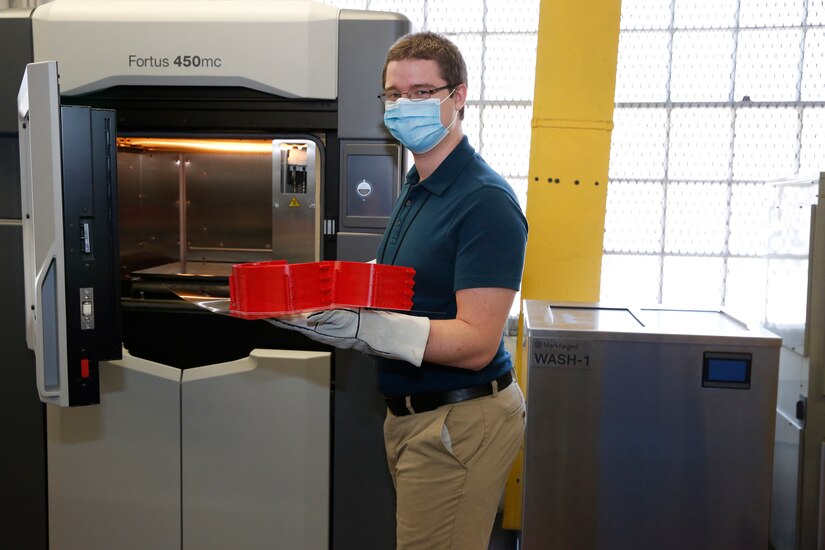
Innovative employees at Norfolk Naval Shipyard in Virginia came together to face the challenges of the COVID-19 pandemic head-on by using additive manufacturing to produce face shields.

In Mid-March, Naval Sea Systems Command reached out to innovation programs at its shipyards and other departments acto assess additive manufacturing capability to produce personal protective equipment so workers could safely maneuver through the current environment.

Simultaneously, requests began pouring in from individuals across the shipyard with a strong desire to assist in the development and production efforts.

A man holds a 3-D printed headband.

''It was a developing situation with COVID-19, and the growing concern for the need of PPE to continue daily service,'' said Dale Berkley, the Norfolk Naval Shipyard's technology insertion manager. ''We saw the need and began gauging each of the shipyard's [additive manufacturing] labs to scope their availability, capacity and material inventory. It became a group effort to answer the call, and we began formalizing printing at the end of March.''

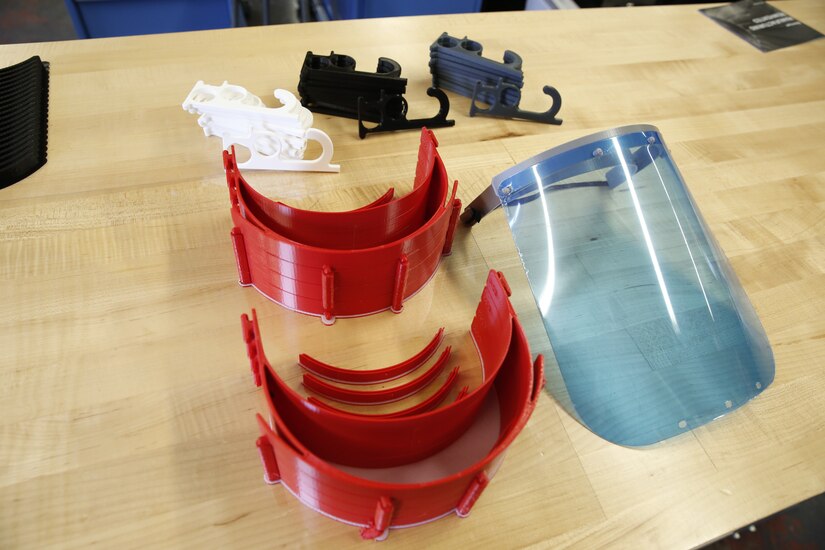
The face shields are composed of four parts: a headband to hold a clear plastic shield, an elastic strap and a reinforcement clip at the bottom to strengthen the plastic's curve. The technology and innovation lab joined with additive manufacturing labs across the shipyard — including the Nuclear Mechanical Group, Non-Nuclear Mechanical Group, Non-Nuclear Inspection Division , Carrier Programs, Radiological Engineering Division and Nuclear Special Emphasis Division —  to begin researching designs approved by the National Institutes of Health.

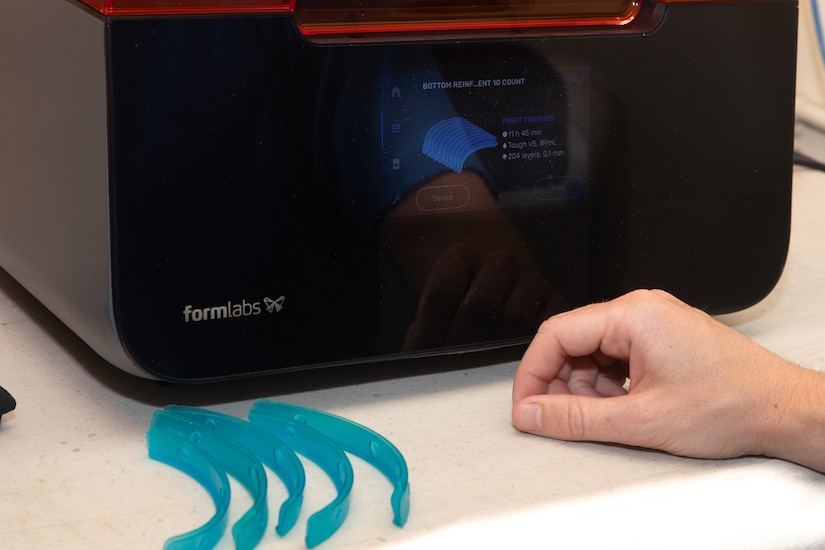
With alignment on a single approved design for the face shields, the labs hit the ground running, printing the headbands and reinforcement clips using desktop, industrial and resin 3D printers. The Nuclear Fluid Systems and Mechanical Engineering Division and the shipyard's technology and innovations lab handled printer material orders to ensure the teams had what they needed to get the job done as quickly as possible. Finally, once the clips and headbands were completed, they were turned over to the Production Resource Department, Facilities Department, Pipefitting Group and the SIOP Program Management Office for development of the plastic shields, finalizing assembly and distributing them across the shipyard, as well as to local partners.

3-D printed personal protective equipment components are displayed on a table.

''As a team, we were able to take these designs and iron out the printing and assembly process, testing and perfecting it, so that we were able to make these masks as quickly as possible,'' said Kyle Cooper, the coordinator of nuclear continuous training and development. ''It's been a learning experience for everyone. We were able to cut down the printing of headbands themselves down to 57 minutes, which initially was three and a half hours. It came down to trial and error, sharing our input and working towards making the best product possible.''

''This is a true testament to the teamwork here at NNSY, everyone coming together to provide their input and services with a common goal in mind,'' said Jessica Roberts, the NNSY Technology and Innovation Community of Practice lead and the Additive Manufacturing Subcommittee lead. ''It was a challenge we hadn't really faced before, to this degree, as this was the first time all the AM labs across the shipyard had come together for a single project. So many departments needed to be aligned and understand each other's abilities and what they would be bringing to the table. It was an evolving process and communication was key to ensure everything went as smoothly as possible.''

The Non-Nuclear Inspection Division's Adam and Joel Seamster used their large-capacity additive manufacturing lab, composed of more than 20 desktop printers, to mass-produce headbands and clips. They helped ensure the technical aspect of the job was handled, working with the various labs to optimize the selected design for quicker and more cost effective printing, as well as testing materials for the best quality.

James Keim, with the technology and innovation lab, noted that working together for a common goal to protect their fellow shipyarders was a great experience. 

A man sets up a 3-D printer.

''While the waterfront was working to adapt to the new constraints created by COVID-19, the Innovation Program wanted to find ways to alleviate that burden and prevent it from getting worse,” Keim said. “When it was evident that PPE was becoming scarce, it was clear that it was an immediate action we could take. We did not want to wait for the requests to come in because, by then, it would be too late. It made more sense to us to be ready with a stockpile for when the need hit.

“As for starting the process,'' he continued, ''we looked to what other groups had started. Since Virginia was not hit as hard, as fast as other states, we were able to make use of other's experience to make ours smoother. The National Institutes of Health had actually started a collection of PPE designs that they approved. We chose one as a starting point and adjusted our print parameters and materials until we came up with a print package that worked best for us.

It truly was a team effort,'' Keim said.

''There was a ton of eagerness across the board to get started and assist,'' he said. ''We have many in the AM community with varied experience. When we were optimizing our prints, we made sure any improvements we found went out to all the other labs so they could try them. As material shortages hit us, we got together to prioritize where our resources went to make sure we had the highest production possible.''

Carrier Programs had been pursuing efforts in AM for quite some time to quickly design and prototype tooling required to complete special emphasis work, said Daniel Miller, a nuclear engineer. ''When there was a call to action, we were there to assist,'' he added.

A machine that is part of the 3-D printing process.

Carrier Programs worked closely with the Radiological Engineering and mechanical engineering Divisions. We were able to break down everyone's role and responsibility and learn from one-another, Miller said.

''This was a partnership that provided a resource stream of this vital equipment for our community,'' said Jason Markle the Program Management Office integrator. ''We were able to maintain a flow of fabrication materials, inventory levels, while coordinating storage, distribution and supply lines. Each code and each team member had a part to play to ensure the success of the mission.''

Markle said that in addition to providing PPE to the shipyard at large, the team was able to deliver two batches of face shields to the Portsmouth Naval Hospital for testing and use. ''This effort readied NNSY to be called upon to lend our aid for equipment supply to those who need it in the community at large,'' he said.

(Kristi R. Britt is assigned to the Norfolk Naval Shipyard.)