Thursday, April 09, 2020

Guardsmen Remain Adaptable in Face of Coronavirus


April 9, 2020 | BY Jim Garamone , DOD News

More than 28,000 National Guardsmen are helping to fight the coronavirus across America, the chief of the National Guard Bureau said.

Air Force Gen. Joseph L. Lengyel and Army Brig. Gen. D. Keith Waddell, Louisiana's adjutant general, remotely briefed Pentagon reporters yesterday on the Guard's contribution to the fight.

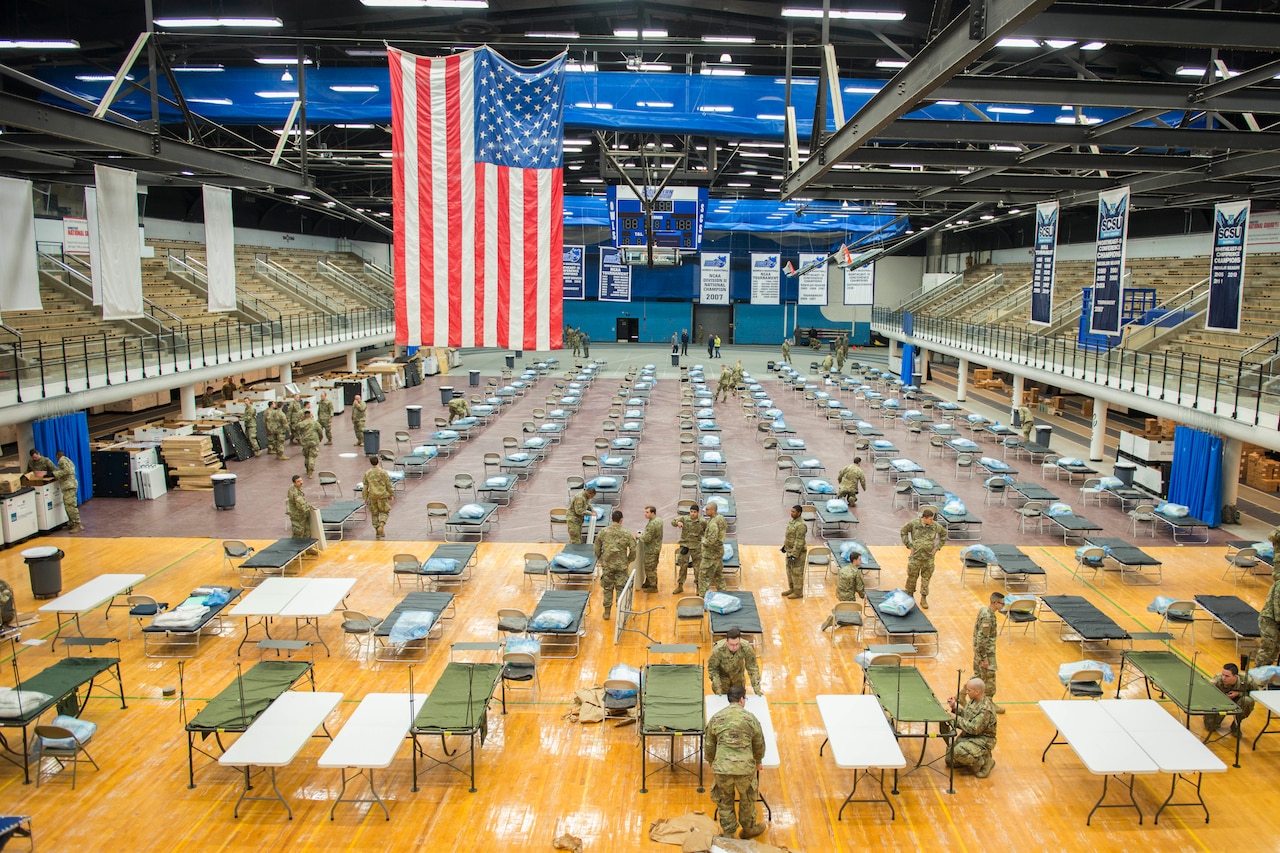
The Guardsmen have been seamlessly working with state and territory civilian officials and the Federal Emergency Management Agency since the beginning of the pandemic. Guardsmen have set up testing stations, helped establish overflow hospital beds, delivered food and necessities, and delivered critical protective gear for medical workers.

After New York, Louisiana is one of the states most hit by the pandemic. Waddell briefed on what his soldiers and airmen are doing. "Our motto in the Louisiana National Guard is 'Protect What Matters'" he said.

Guardsmen have delivered protective equipment to medical workers in all 64 parishes of the state, he said. This has covered 120 medical facilities. "The 139th Regional Support Group has completed over 600 distribution missions," he said.

Guardsmen also are providing medical support. "Soldiers from the 256th Infantry Brigade Combat Team and the [airmen of the] 159th Fighter Wing have been providing medical support to the drive-through testing sites in Orleans and Jefferson Parish," the general said. "These soldiers and airmen have swabbed over 11,000 symptomatic citizens from these two parishes. And we have more medics supporting other medical testing sites throughout Louisiana."

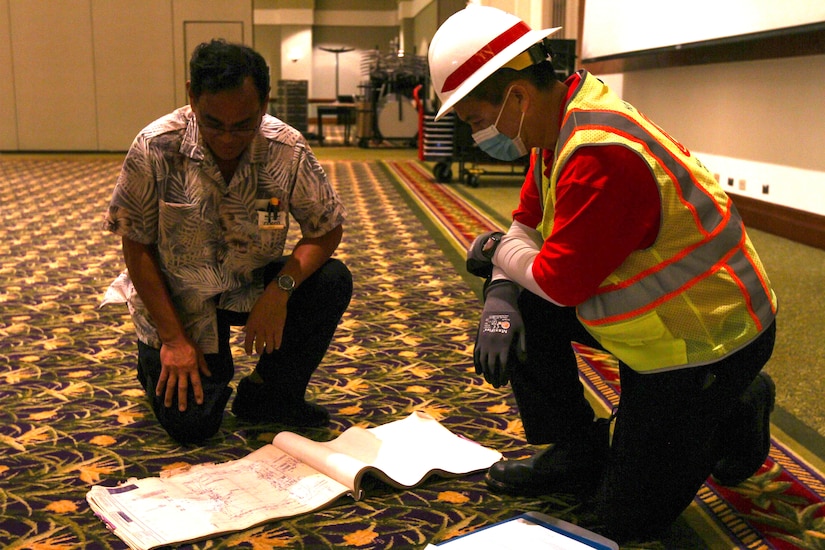
Louisiana expects a surge of COVID-19 patients in the coming days and weeks. Waddell noted that the 225th Engineer Brigade is working with the State Fire Marshal's Office, the Louisiana Department of Health and the Army Corps of Engineers to conduct engineer assessments of overflow medical facilities throughout Louisiana. "This collaborative effort by all stakeholders resulted in over 70 assessments, some of which were chosen for construction or remodeling," he said.

The National Guard is aimed at battlefield medicine. Guard capabilities are more involved with transporting soldiers and airmen from the battlefield to trauma clinics to longer care facilities. Still, members of the National Guard are actually supplying staff for alternate care facilities, in some cases right alongside active duty personnel, Lengyel said.

But the Guard is flexible — as demonstrated in past years as guardsmen from one state moved to others to help in natural disasters like hurricanes. That is already happening, Lengyel said, as Oregon and California, for example, have transported ventilators to New York and New Jersey.

But the Guard is already looking beyond the immediate needs. Planners are looking to understand what the peak of the coronavirus pandemic means in any given locale. "Is it a sustained peak, or is there going to be some sort of a drawdown on the other side that makes the supplies or staff available to go someplace else?" Lengyel said. "I think that one of the most stressing things on the hospital system has been the duration of this event."

Lengyel said he believes that as the coronavirus event continues, the Guard will adapt. "We anticipate that people will be able to share supplies, and perhaps some staff as well," he said. "So that's how we're looking at this in the future."

Wednesday, April 08, 2020

Corps of Engineers Rapidly Assessing, Building Hospital Spaces


April 8, 2020 | BY David Vergun , DOD News

At the request of mayors and governors from multiple states and territories, Army Corps of Engineers personnel are assessing or building structures for both non-COVID-19 and COVID-19 hospitals.

"The last thing we want to do is have someone die for lack of a bed space," said Lt. Gen. Todd T. Semonite, commander of the Army Corps of Engineers.

Semonite, who spoke with reporters at the Pentagon today, is in Miami, where he's working with the governor and mayors to assess and build hospitals.

The Corps of Engineers is pushing contractors hard to build quickly in hot spots, Semonite said. "We don't have time to deal with red tape and bureaucracy."

The Federal Emergency Management Agency and the Department of Health and Human Services are taking the lead on where construction will take place, and they've been providing modeling updates that forecast where the need will be the greatest and where the number of cases have peaked. The Army Corps of Engineers is getting updated models daily, the general said.


The size of hospitals will vary based on the need, Semonite said. If fewer beds are needed, then a hotel could be easily converted. If the needs are greater, as in a metropolitan area, a convention center might serve as a hospital. But they take longer to convert, he added.

Semonite provided a breakdown of alternate care facilities being built, pending or under assessment as of today:


  • 834 of the 914 facility assessments requested  have been completed.
  • 23 facilities totaling 8,571 beds are pending construction.
  • 17 facilities designed by the Corps of Engineers with a total of 5,869 beds will be built by the states, not the Corps of Engineers.
  • 17 facilities with a total of 14,759 beds have been built by the Corps of Engineers.

    
In the next several months, Semonite said, 40 to 50 total facilities might be built by the Corps of Engineers, but he acknowledged that's just an estimate because it depends on the number of COVID-19 cases.

As of today, Semonite said, some of the facilities designed by the Corps of Engineers that will also be built by them are:

The Jacob K. Javits Convention Center in New York City: COVID-19 design for 2,100 beds, 98% completed.


  • Westchester County Center in White Plains, New York:COVID-19 design for 110 beds, 15% completed.
  • McCormick Place in Chicago: COVID-19 design for 3,000 beds, 70% completed.
  • State University of New York at Stony Brook, in Stony Brook, New York: non-COVID-19 design for 1,038 beds, 26% completed.
  • Sherman Hospital in Elgin, Illinois: COVID-19 design for 283 beds, 20% completed.
  • Metro South Medical Center in Blue Island, Illinois: COVID-19 design for 550 beds, 30% completed.
  • State University of New York at Old Westbury in Old Westbury,  New York: non- COVID-19 design for 1,024 beds, 8% completed.
  • TCF Center in Detroit: COVID-19 design for 1,000 beds, 95% completed.
  • Gibson Medical Center in Albuquerque, New Mexico: COVID-19 design for 200 beds, 21% completed.

DOD Ramps Up COVID-19 Response Efforts From Coast to Coast


April 8, 2020 | BY C. Todd Lopez , DOD News

The coronavirus pandemic is slowing down a lot of things, but not the Defense Department's medical apparatus, which is now operating from coast to coast to bring its medical expertise and capacity to bear on the medical crisis around the nation.

In Seattle, the Army's 627th and 47th Field Hospitals are now fully operational and maintain a 250-bed medical treatment facility at the CenturyLink Events Center.
"We have an important mission," Army Col. Hope Williamson-Younce, commander of the 627th Hospital Center, said last week as the facilities in Seattle were set up. "We are expeditionary, we're agile, and we're responsive. We have medical doctors, nurses and support staff from all over the world. They mobilized in a moment's notice to support the American people."

In California, the Navy hospital ship USNS Mercy arrived at port in Los Angeles 12 days ago and started accepting patients just two days later.

"I couldn't be more proud of our crew for all the hard work they did to get us here and ready in such a short time," said Navy Capt. (Dr.) John Rotruck, the Mercy Military Treatment Facility’s commanding officer.

The Mercy has treated 28 patients so far and currently has 11 beds occupied. If the situation in Los Angeles is anything like that in New York, where the hospital ship USNS Comfort is aiding the effort, then the number of patients aboard the Mercy will start to rise as local hospitals learn about DOD's capabilities.
Army Maj. Gen. William A. Hall, commander of Joint Task Force Civil Support in New York, said better communication between DOD medical professionals now operating in New York City and local civilian medical providers there have helped with that level of understanding, so the Comfort's patient count has gone up.

In New York, considered by many as the epicenter of COVID-19 in the United States, DOD is working hard to crush the spread of the virus. A Pentagon news release said today that the department is "aggressively pursuing a three-pronged effort in New York City."

That effort involves augmentation of area hospitals with military medical professionals, the Comfort being expected to eventually have 500 patient beds, and the standing up of a medical care facility at the Jacob K. Javits Convention Center. Both the Comfort and the Javits Center are now taking on patients with COVID-19. The Comfort has treated 58 patients so far, while the Javits Center is currently treating 104 patients.

More military service medical professionals are also arriving in or headed to New York and the surrounding region each day. Eight Army urban augmentation task forces began deploying yesterday, with four going to the Javits Center, three headed to the New Jersey Exposition Center, and one to conduct operations in Stamford, Connecticut.

An additional 775 Air Force and Navy medical personnel arrived yesterday at Joint Base McGuire-Dix-Lakehurst in New Jersey, about 60 miles south of Manhattan, and will continue their movement to New York City to support relief operations there.

On the Gulf Coast, a Navy expeditionary medical facility is now operational at the Ernest M. Morial Convention Center in New Orleans and has started medical operations with the treatment of 19 patients. Also in Louisiana, the National Guard is managing multiple food banks across the state and is distributing more than 134,000 pounds of food at five locations.

In other states, nearly 24,000 National Guardsmen are joining the fight against the coronavirus as requested by their governors. Those citizen soldiers and airmen are focused on supporting community-based testing sites, creating additional medical capacity and providing logistical support such as transportation and distribution of medical supplies and food.


In Connecticut, Guard units are expanding hospital capacity across the state with a focus on creating space for non-COVID patients to be seen. In Georgia, guardsmen are deploying infection control teams to nursing homes, assisting staff with cleaning facilities and training on proper cleaning methods to prevent the spread of disease. In New Hampshire, guardsmen are supporting 14 alternate care sites with about 1,700 beds.

Jonathan Rath Hoffman, assistant to the secretary of defense for public affairs, said that in addition to providing personnel to directly work with COVID-19 patients and to bring relief to communities where needed, DOD is one of many agencies and businesses working on the medical science side to find a cure for COVID-19.

"While the DOD emergency science efforts don't physically touch New York, they are taking place in our labs around the country," he said. "U.S. military researchers are at the forefront of vaccine and therapeutic development."

Hoffman said the Army Medical Research Institute of Infectious Diseases began non-human primate vaccine testing April 6.