Friday, April 10, 2020

25,000 'Soldiers for Life' Respond to Nation's Call


April 10, 2020 | BY Thomas Brading , Army News Service

As the COVID-19 pandemic persists, many civilian medical providers' capabilities are being stretched thin. To help fill this gap, the Army has deployed its own medical professionals to the field and is now calling on former soldiers to join the battle.

Last month, the Army reached out to about 800,000 retired "gray-area" and Individual Ready Reserve soldiers, asking them to join the response effort.

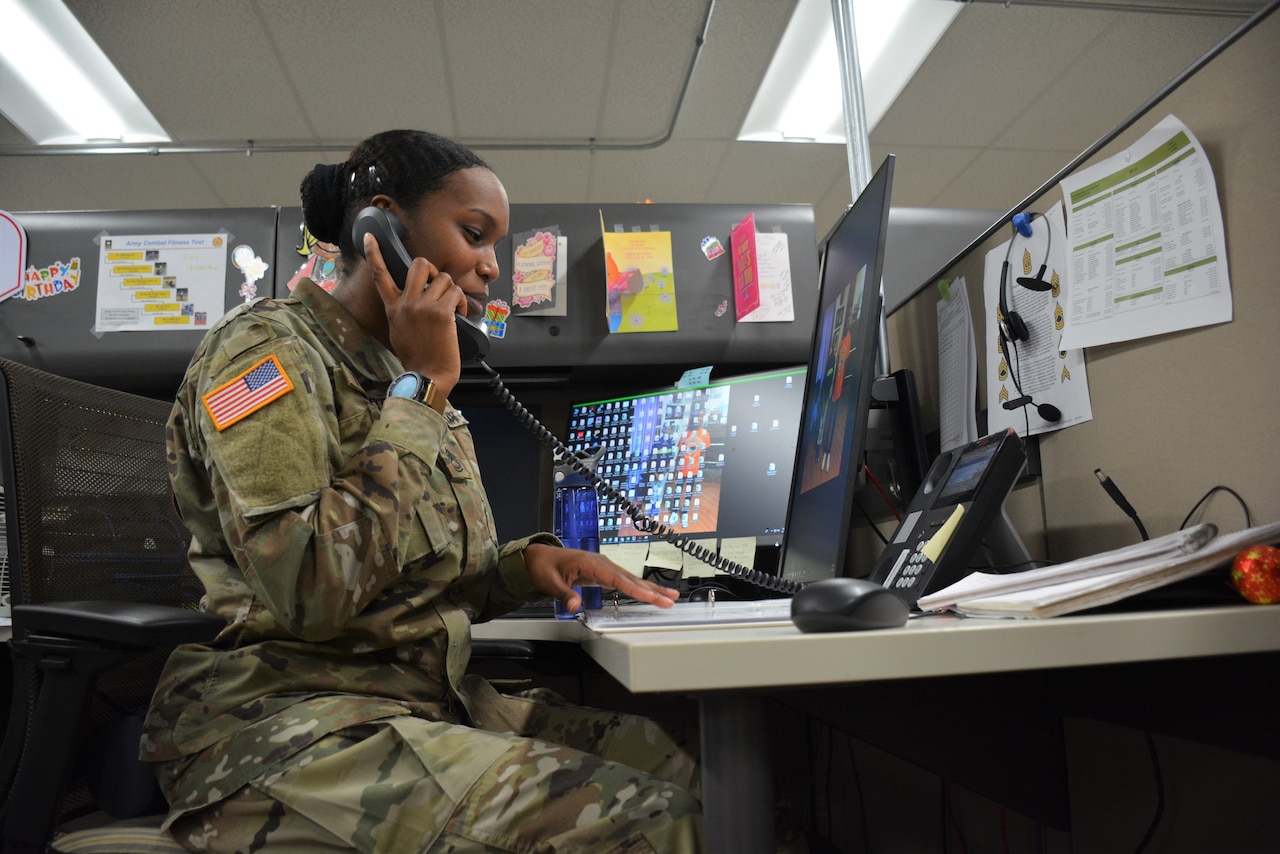
So far, roughly 25,000 from numerous backgrounds have volunteered to rejoin the Army team, said Brig. Gen. Twanda E. Young, U.S. Army Human Resources Command deputy commanding general and reserve personnel management director at Fort Knox, Ky.

Many nonmedical respondents volunteered through the command’s website, Young said. Once screened, qualified individuals will provide additional capabilities to support the COVID-19 pandemic response, she said.

"This effort seems very simplistic — soldiers volunteer and we just bring them back on active duty — but it requires a specialized team of professionals knowledgeable in reserve policy, which the reserve personnel management directorate provides," Young said.

This is a herculean effort, she added. "We understand the urgency," she said, "thus, we are working multiple shifts to sift through screening volunteers to get them at the point of need."

Soldiers who are currently licensed in medical fields are preferred, but Army officials are encouraging all soldiers to step up in the fight against COVID-19.

"Army health care providers are heroes in the fight against COVID-19. Protecting our citizens from the novel coronavirus requires a vital call to action, and we need the help of many of our retired or recently separated medical professionals," Army officials stated in a news release.

However, the Army doesn't plan to mobilize veterans currently in medical jobs, Young said.

"If individuals are already serving in their local communities, we are proud of their service, and want them to continue serving in those communities, as this effort is not to detract from current community support, but to enhance it," she said.

Potential volunteers may include medical students, retired doctors, or former soldiers not involved in the medical community. Key medical military occupational specialties needed include critical care nurses, anesthesiologists, nurse anesthetists, critical care nurses, nurse practitioners, emergency room nurses and respiratory specialists, Young said. Who is accepted and where they will go is decided case by case, depending on the Army's needs of the Army, she added.

Although 25,000 former soldiers have stepped up to the plate so far, Young said, she expects that number to continue to increase as more people reach out every day.

"When we talk about someone being a soldier for life, I don't think you can get any better example than these individuals," she said. "These soldiers are willing to rejoin the team and continue to serve."

After HRC receives volunteer requests, officials sift through and validate initial requests, then sort them by specialty, Young said. The duration of the orders is open-ended.

"These are individuals who are putting their lives on hold," Young said. "Even though we want to get them on as quickly as possible, we have to take into consideration they must get life affairs straight and give them the necessary time."

After combing through volunteers' credentials, the next step is matching them to what the Army needs, then getting the volunteers on orders, Young said.

The vetting process works like a funnel, Young said, and filters the volunteers into smaller numbers based on their credentials, requirements, background checks and capabilities. Occasionally, "life happens," and some qualified volunteers are unable to commit to the Army's requirements.

The goal is to get volunteers on-board quickly so the Army can get them to the places where their skills, expertise and knowledge are needed the most, Young said.

"Requirements are changing for what is needed," she said. "When we talk to soldiers and explain that we are looking to bring them on, we caveat that statement by ensuring they understand this is at the point of what the Army needs, and acceptance to be recalled is voluntary."

Individuals who don't volunteer are no less of a soldier for life, Young said. "Our word is that we will take care of soldiers and make sure that they and their families are taken care of," the general added.

These soldiers have gone through the gauntlet, she said, and the Army is proud of their service. They are skilled to operate in some very uncertain and complex times.

"It makes me proud to be a soldier — not just a general officer — but a soldier in America's Army, to see the level of commitment and dedication of those currently serving and those who have served, and their willingness to rejoin the team," Young said.

Soldiers who are interested should provide their information using the COVID-19 voluntary recall survey on the HRC website.

Precautions Protect Air Force Trainees From COVID-19


April 10, 2020 | BY David Vergun , DOD News

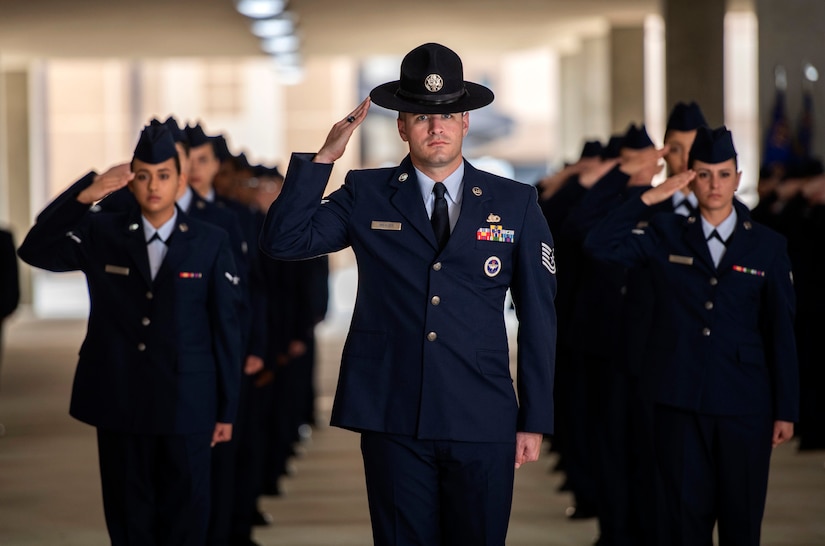
The Air Force is taking a proactive approach to reduce the risk of trainees contracting COVID-19, a top Air Force general said.

Air Force Lt. Gen. Marshall B. "Brad" Webb, commander of the Air Education and Training Command, told Pentagon reporters by telephone today about the new approach the Air Force is using to conduct a variety of training during the COVID-19 pandemic.

To help maintain social distancing, Webb said, the Air Force is accepting only 460 new trainees per week instead of the usual 600 to 800. In addition, starting with those who arrived March 17 at Joint Base San Antonio-Lackland in Texas, enlisted basic trainees are under restricted movement in their first 14 days and have no contact with trainees who started training after that 14-day period, he noted.

No new recruits reported to basic military training last week, he said, and that will continue until the Air Force has had time to implement new procedures to protect against COVID-19. This period of time was also needed to sanitize dormitories, dining facilities and other spaces, he added.

The Air Force has implemented medical screening at both initial entry and at the end of the two-week period of restricted movement, Webb told reporters.

Basic training has been shortened from eight and a half weeks to seven weeks to maximize training effectiveness and space utilization, the general said, achieved by spending less  time on drill and ceremony training and streamlining the process of issuing uniforms.

Basic training is also being conducted at Keesler Air Force Base, Mississippi, starting this week, to help in increasing social distancing at Joint Base San Antonio-Lackland, which had been the Air Force's sole basic training venue, he said.

After basic training, airmen receive technical training in one of their 265 military occupational specialties at 78 locations across the United States and a few overseas locations. Commanders at these technical training sites have been directed to similarly modify their courses to reduce the risk of COVID-19, Webb said.

Modifications include splitting training into shifts to reduce class sizes, using distance learning more often, and moving classrooms outdoors, he noted. Training that can only be done in close quarters or large groups has been deferred.

Officer Training School at Maxwell-Gunter Air Force Base, Alabama, has adopted the same procedures as enlisted basic training, the general said. Meanwhile, he added, ROTC cadets are completing their training through distance learning, and recruiters are using innovative social media techniques to communicate with prospective airmen. The Air Force may retain aspects of distance learning and social distancing necessitated by the pandemic in its training after the pandemic is over, Webb added.

As of today, the Air Force had only five cases of COVID-19 among trainees and none among instructors, he said, crediting that to the precautions the Air Force is taking.

DOD Employee Sews Compassion Into Face Masks for Coworkers, Friends


April 10, 2020

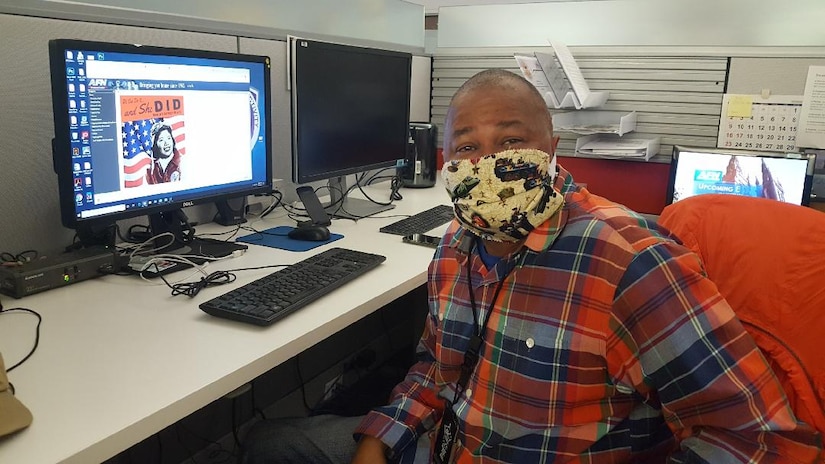
When Defense Secretary Dr. Mark T. Esper directed Defense Department personnel to wear cloth face coverings when they can't maintain 6 feet of social distance at work, Defense Media Activity employees in Riverside, California, were already wearing them.

That's because a big-hearted woman with extraordinary sewing skills took the initiative to make them. Broadcast journalist Rolla Suttmiller sewed 160 cloth masks in a few days for her comrades, friends and neighbors at no cost to them. She started making them last week when Riverside County mandated that all essential service workers wear a cloth face covering as a COVID-19 preventive measure.

''I wanted to do it to protect myself at first,'' Suttmiller said. ''Then, I got a call from someone from work with an urgent request for masks for people in the building. ''I made 31 in four hours and brought them over the same day.''

Suttmiller has been sewing since she was 12, does crafts all the time, and belongs to a multitude of sewing and crafts groups.

''I compiled a bit from all of them and did my own design with three layers,'' she explained.  ''If you go to the [Centers for Disease Control and Prevention] website, you’ll see they recommend a high-weave cotton. You want that for breathability.  But there are still tiny little holes in it. What I did is I have the decorative outer layer, a white layer that touches your face, and a middle layer called interfacing. It’s made of something denser that doesn’t let light transfer through.''

She decided to sew scores of masks because of three factors. ''I have thousands of pounds of fabric on hand, I have the skill, and, three, it would be immoral of me to not to put the two of these together and make them for people,'' she said.

''Those custom-made masks, made with such attention to detail with an assembly line of just her, are spectacular,'' coworker Roy Mason said.

Jordana Jacobs, a television master-control supervisor, laughed and said, ''She’s really got those Suzy Homemaker skills down, …and I love the design!''

Suttmiller is continuing to make masks, already fielding improved versions with a narrow elastic band. One version has elastic loops that go over the ears, and another type ties behind the head.

While Suttmiller crafts face masks for teammates, she also continues to serve the overseas military, DOD civilians, and their family members. Suttmiller is a senior editor, creating quality television messages that inform viewers what's airing when on American Forces Network Television. AFN serves Americans serving in 168 different countries and territories and 200 Navy ships around the world.

(George A. Smith is assigned to the American Forces Network Broadcast Center.)