More than 700 paratroopers assigned to the 2nd Infantry Brigade Combat Team, 11th Airborne Division, executed a historic company live-fire exercise at the Infantry Squad Battle Course at Joint Base Elmendorf-Richardson, Alaska, April 27-May 8.
The event marked the brigade's first exercise incorporating friendly
kinetic and strike small unmanned aerial systems with paratroopers
employing first-person-view drones to strike simulated enemy positions
and defend against live adversaries in the form of drones.
"This was the first time our companies had organic FPV drone pilots
executing live-fire strikes on critical targets," said Army Capt. Ian
McKibbin, lead range safety officer and member of the brigade operations
staff. "The drones, built with components from [the] 11th Airborne
[Division] Innovations [Team] and the [2nd Infantry Brigade Combat Team,
11th Airborne Division], Multifunctional Reconnaissance Company, were
entirely controlled by the units on the ground. No live munitions were
used, but the effect and accuracy were tremendous."
The exercise challenged paratroopers to clear a six-room shoot house,
breach wired obstacles, clear trench systems and engage reinforced
bunkers, all while reacting to contact from enemy drones. The small UAS
attacked with simulated munitions, forcing commanders to rapidly employ
counter-small UAS and adapt their tactics in real time.
"Company live fires are designed to be complex and demanding," McKibbin
said. "This event was especially difficult due to the presence of
hostile drones, which observed friendly movement and actively attacked
with simulated munitions. It's the first time we've had a live, thinking
enemy in the form of these drones for this type of training exercise."
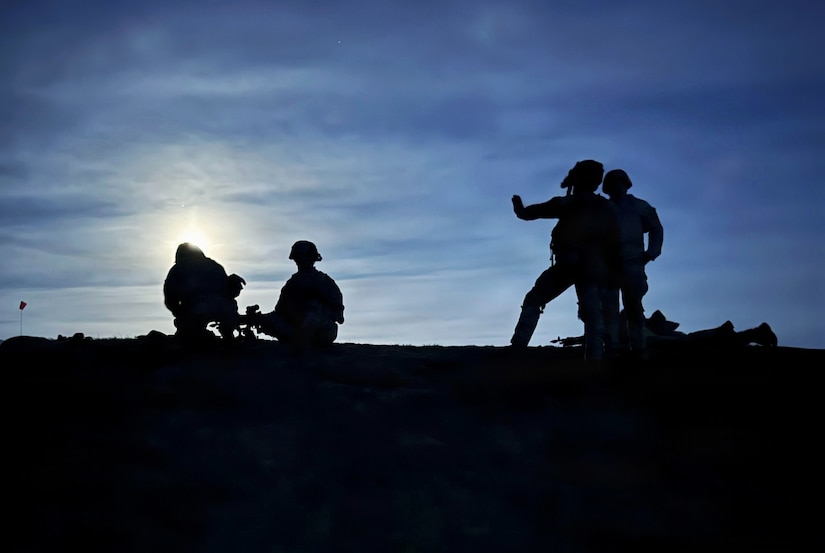
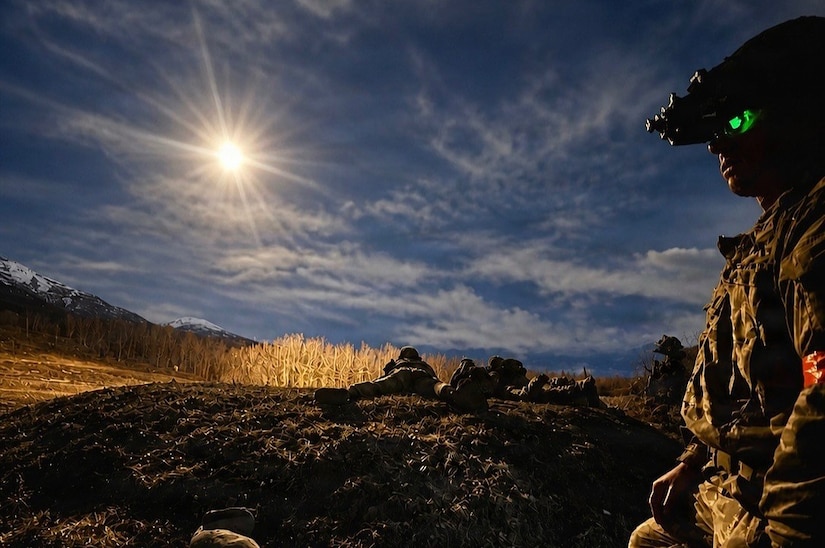
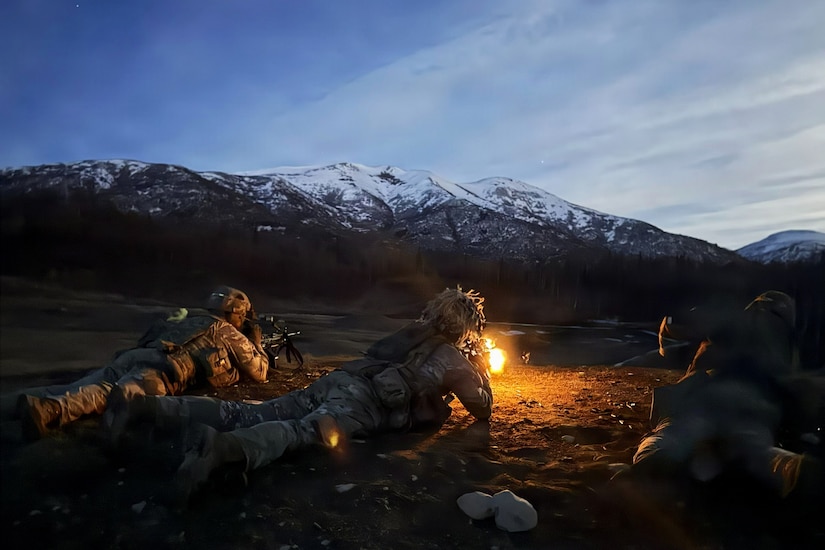
Day and night lanes were executed with both blank and live
ammunition. Parachute flares illuminated targets during night
engagements, enabling soldiers to protect maneuvering squads and provide
signaling or degrade enemy night vision capabilities.
The entire company maneuvered on the lane, with commanders assigning
platoons and squads to objectives. The event validated company
commanders' ability to integrate direct and indirect fires and
demonstrate proficiency in complex, live-fire operations.
The event included participation from three battalions and extensive
support from brigade headquarters. The small UAS also captured video of
critical points for maneuvering elements, enabling near-real-time
after-action reviews for companies.
"This exercise represents a significant step forward in integrating new
technology and realistic threats into our training," McKibbin said. "Our
paratroopers demonstrated adaptability, teamwork and the ability to
fight and win in a complex environment."


 Posts
Posts


No comments:
Post a Comment