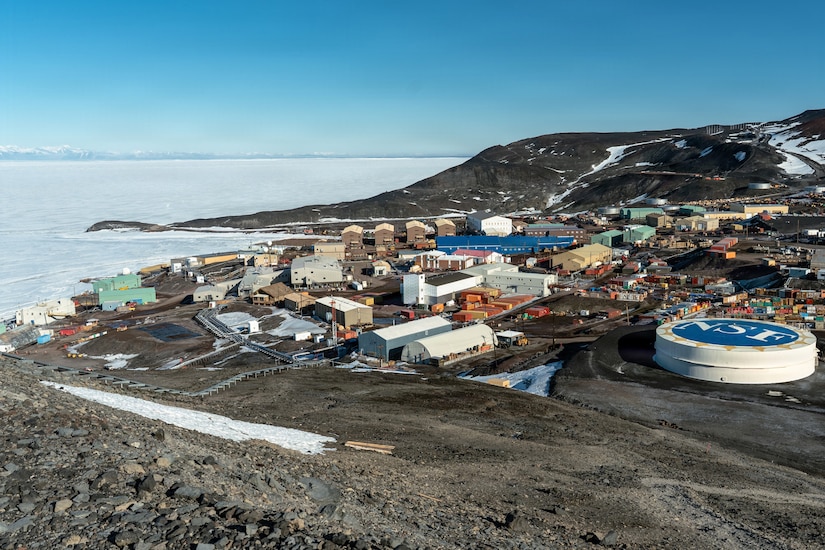
The Military Sealift Command chartered heavy lift ship Plantijngracht is conducting cargo offload operations at McMurdo Station, Antarctica, as part of MSC's ongoing support of the annual Antarctic resupply mission: Operation Deep Freeze 2026.
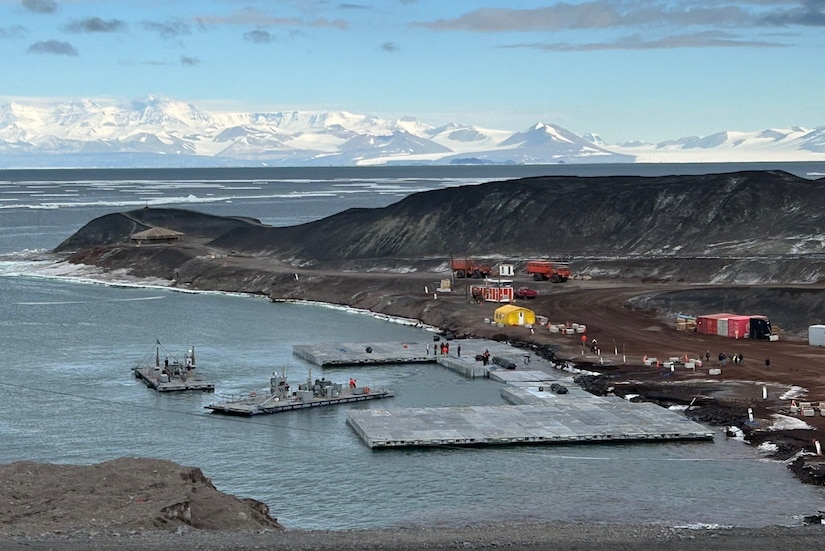
The Plantijngracht arrived in Winter Bay, Antarctica, Feb. 4, where
its crew offloaded a 65-ton floating modular causeway system. Sections
of the system were assembled on the ship's deck before being offloaded,
connected and floated into place by the Army's 7th Transportation
Battalion. The causeway is being used instead of the traditional ice
pier this year due to the size and weight of the ship's cargo.
While the focus of the mission is on cargo delivery, the causeway system
came with its own unique set of challenges that planners had to
anticipate and account for to ensure a smooth operation.
"The [causeway system] adds to the overall timeline of the cargo
offload. It takes approximately three to four days to build at the start
of the operation and the same amount of time to break down at the end,"
said Marie Morrow, the ship's liaison to the Joint Task Force Support
Forces Antarctica staff. "Weather starts to deteriorate quickly in the
second half of February, as the summer season comes to a close, so those
extra six to eight days can increase the likelihood of weather
challenges."
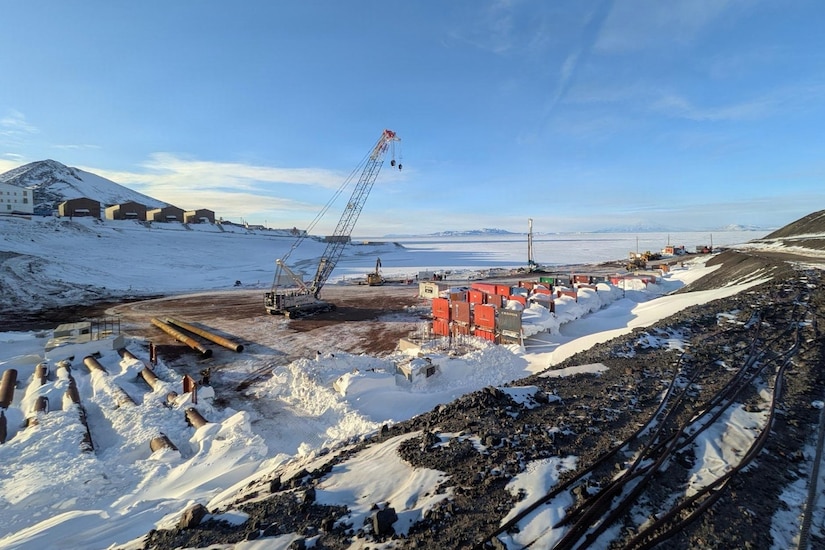
Once the system was in place and secure, the ship was met by members of Navy Cargo Handling Battalion 1 and cargo offloading operations began. The ship is delivering 372 pieces of cargo, consisting of containers filled with dry goods and supplies needed for survival at the remote Antarctic outpost.
Logistical moves are nothing new for Military Sealift Command; in fact, around the world, they are almost a daily occurrence. However, moving cargo in the harshest environment on Earth is a mission unto itself. Antarctica is known for its bitterly cold temperatures, harsh winds, ice conditions and weather that can change in a matter of minutes. All factors that need to be considered as operations unfold.
"The austere environment adds a lot of challenges to the operation. Unpredictable weather conditions, freezing cargo gear and high winds are common hurdles faced in the cargo operation. Ice conditions vary from year to year and bring different problems," Morrow said.
The presence of thick ice can slow down the ship's arrival at the station. Little to no ice or open water conditions can cause shoreside erosion at the wharf.
"To handle all of the challenges, we control what we can within the
operation," she said. "We use past lessons learned to handle challenges
that come up."
Following the offload, the ship will be loaded with containers of
retrograde cargo for transportation off the continent. This includes
trash and recyclable materials for disposal and equipment no longer
required at the station, as well as the causeway system.
Before departing McMurdo Station, the crew will also load ice-core
samples that will be stored on the ship in a subzero freezer. The
samples will be delivered to the U.S. for scientific study.
"The cargo delivery from California to Antarctica is one of the longest
supply chains in the world. The ship plays a huge role in delivering
cargo that supplies and sustains multiple stations on the continent,"
Morrow said. "The crews are always quite enthusiastic to be a part of
such a unique and remote operation. For most, it is a once-in-a-lifetime
opportunity."


 Posts
Posts


No comments:
Post a Comment