Iran has blocked safe passage through the Strait of Hormuz for commercial cargo and tanker vessels, trapping thousands inside the Persian Gulf and halting the free flow of commerce in the region.
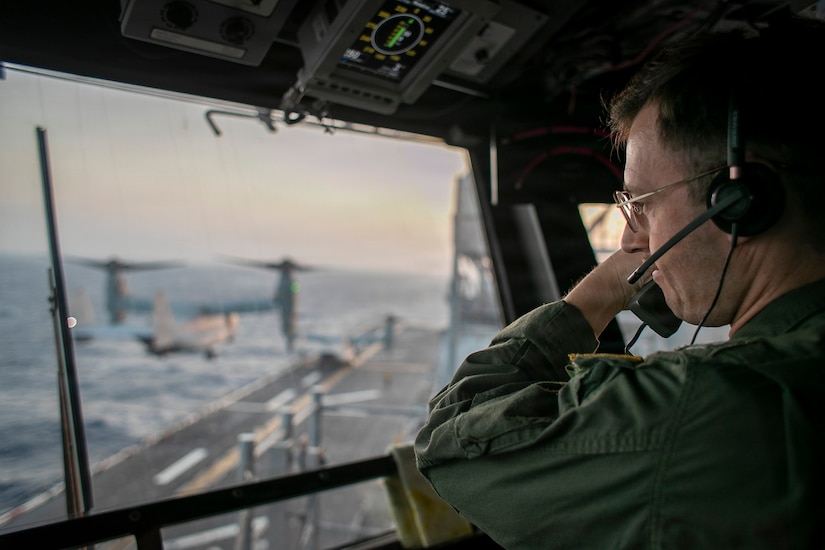
Project Freedom is meant to reopen the strait to commercial vessels, said Secretary of War Pete Hegseth during a briefing today at the Pentagon. It is also independent of Operation Epic Fury, which for now, is in a ceasefire.
"President [Donald J.] Trump has directed U.S. Central Command to restart the free flow of commerce through the Strait of Hormuz under the umbrella of Project Freedom," Hegseth said. "Project Freedom is defensive in nature, focused in scope, temporary in duration [and] with one mission: protecting innocent commercial shipping from Iranian aggression."
The secretary said as part of Project Freedom, American forces won't need to enter Iranian waters or airspace, but also, that Iran can no longer be allowed to stymie international commerce.
"Iran ... cannot be allowed to block innocent countries and their goods from an international waterway," Hegseth said. "Iran is the clear aggressor, harassing civilian vessels, threatening mariners from every nation indiscriminately and weaponizing a critical choke point for its own financial benefit."
Already, Hegseth said, two U.S. commercial ships, along with American destroyers, have traversed the strait, proving that Iranian control of the strait is an illusion.
"We know the Iranians are embarrassed by this fact," he said. "They said they control the strait — they do not. So, American ships led the way, commercial and military, shouldering the initial risk from the front — as Americans always do. Right now, hundreds more ships from nations around the world are lining up to transit."
The secretary said Centcom and partner nations are working with ships, shipping companies and insurers to let them know it's safe to move out.
"All of these ships from all around the world want to get out of the Iranian trap that they have been stuck inside," he said.
Air Force Gen. Dan Caine, chairman of the Joint Chiefs of Staff, said right now, there are more than 1,500 vessels with about 22,500 mariners trapped inside the Persian Gulf.
"Over the past seven weeks, Iran has repeatedly threatened and attacked commercial shipping in the strait in order to effectively cut off commercial traffic and damage the global economy," Caine said. "By obstructing one of the world's most critical maritime checkpoints, a vital transit route for approximately one-fifth of the global oil consumption, Iran is weaponizing the global supply chain."
Now, Caine said, Centcom is executing Project Freedom to open the strait up to commercial traffic.
"Project Freedom is designed to protect commercial shipping and help restore the flow of commerce through the strait and sustain freedom of navigation," he said. "Centcom has established an enhanced security area on the southern side of the strait that is now protected by U.S. land, naval and air assets to help defeat further Iranian aggression against commercial shipping."
Caine said Centcom is using guided missile destroyers and other warships to detect and defeat Iranian threats, including fast boats and one-way attack drones. He said right now, the threat from those fast boats includes rifles and small machine-gun fire.
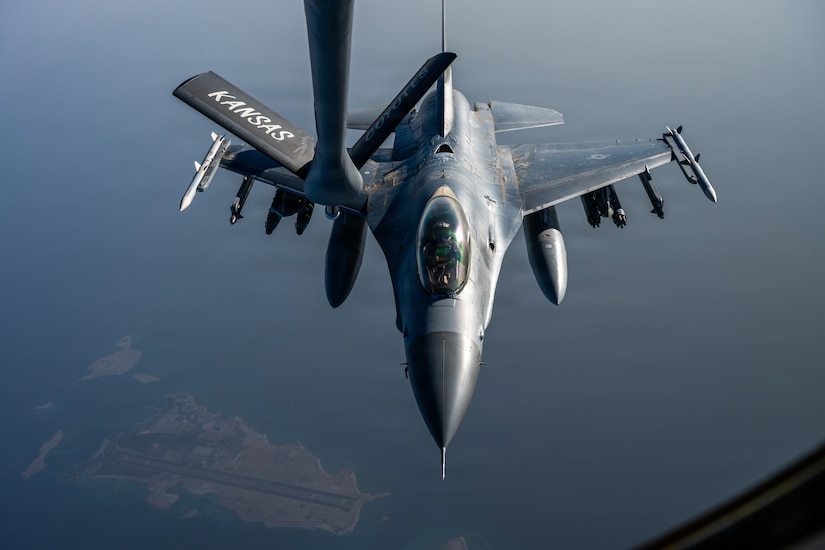
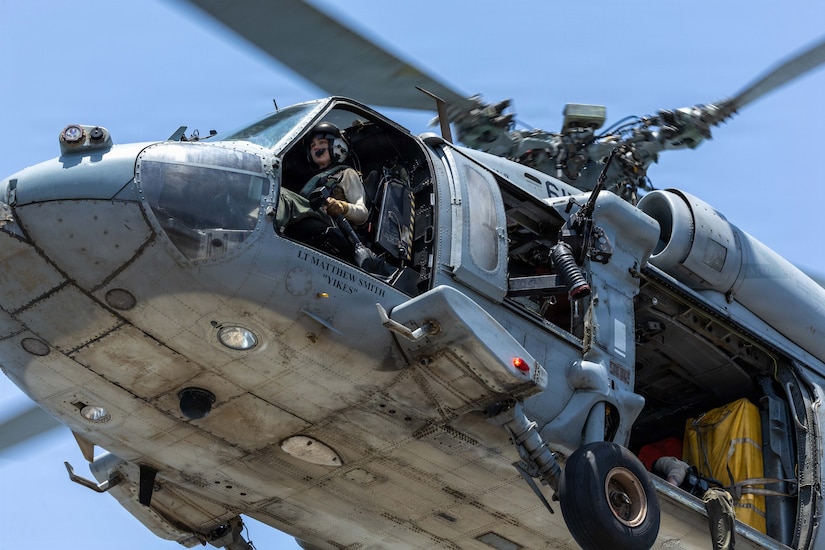
In the air over the Persian Gulf, Caine said, are more than 100 fighters, attack aircraft and other manned and unmanned aircraft, all synchronized by the 82nd Airborne Division.
"[They] are in the air 24 hours a day, providing defensive overwatch for the enhanced security area and its approaches," he said.
Making the Persian Gulf safe for commercial vessels, Caine said, are more than 15,000 American service members who are providing very visible overwatch that commercial ships should recognize when they see it.
"Commercial vessels that transit through the area will see, hear and frankly, feel U.S. combat power around them, on the sea, in the skies and on the radio," he said. "And as of this morning, as was mentioned prior, two U.S.-flag merchant vessels have transited, and we anticipate more to transit over the coming days."


 Posts
Posts


No comments:
Post a Comment