Wednesday, December 24, 2025

Home at Last: Honoring the Return of a Flying Tiger

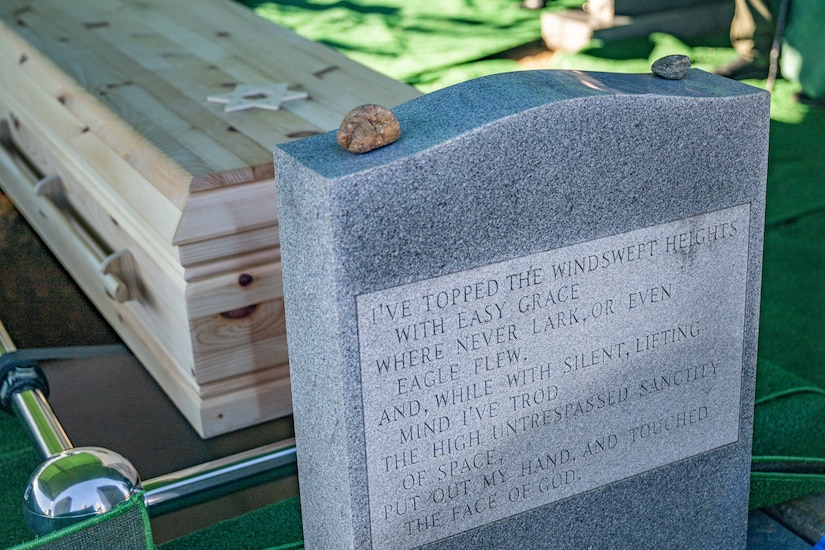
For years, there was only a name and a legacy his family never let fade. On the afternoon of Dec. 14, family members and uniformed service members moved toward a granite headstone at a cemetery in Greenville, South Carolina, that had stood for more than eight decades without the man it was meant to honor. 

A headstone is shown with an engraving on it and a casket behind it.

On this day, that changed. The memorial finally met its purpose. 

Army Air Forces 1st Lt. Morton Sher was killed in action Aug. 20, 1943, when he crashed the P-40 Warhawk fighter-bomber aircraft he was piloting during a combat mission over Hunan, China, during World War II. Sher's remains were finally accounted for this summer. What had once been an empty marker became a place of return, bringing closure to his family and community. A name once lost to history is spoken aloud again. He is accounted for, remembered and finally home. 

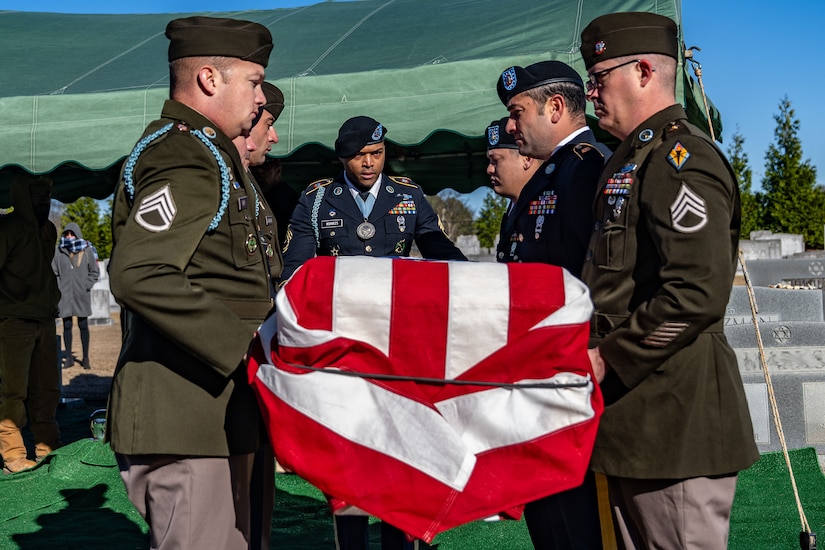
Seven service members in military dress uniforms lower a casket draped with the American flag into a grave.

Sher, a Greenville native, was a 22-year-old fighter pilot in the Army Air Forces. He was assigned to the 76th Fighter Squadron, 23rd Fighter Group, 14th Air Force, the unit that carried on the legacy of the famed Flying Tigers. Sher flew combat missions during World War II as part of the Allied air effort in China, and like many of his generation, he entered the war at a young age, trained for a dangerous role and left behind a life and a future still just beginning. 

Sher's time in China wasn't only about the mission that would end his life, but it was also marked by moments that revealed both the dangers he faced and the connections he made along the way. Flying a P‑40 Warhawk, he escorted bombers and flew hazardous combat missions in the China‑Burma theater.  

During an October 1942 mission, engine damage forced him down in a Chinese village, where villagers welcomed him with food and celebration. The villagers, grateful for U.S. protection from Japanese forces, celebrated Sher as a hero with a feast. He entertained 15,000 with songs and a story, received a silk banner for his missions and was warmly escorted through nearby mountain villages back to his base.  

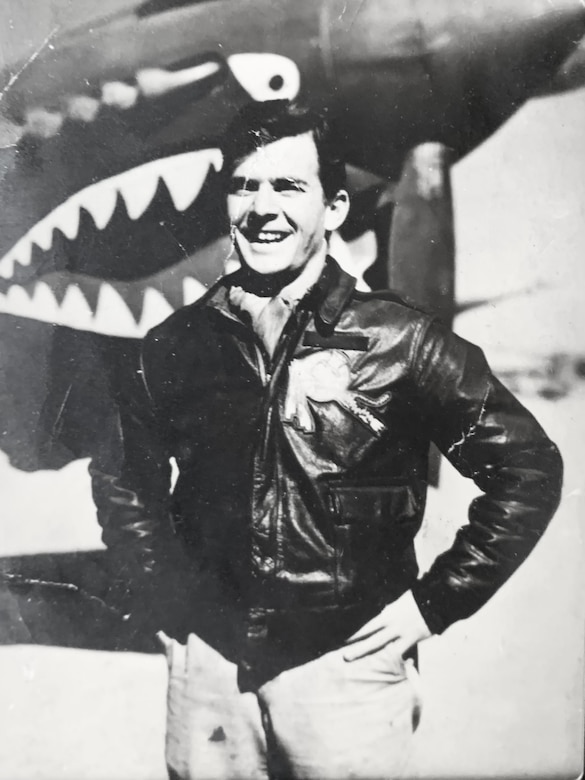
A man in military pilot uniform poses for a photo in front of a military aircraft. The man is smiling and has his hands on his hips.
Sher later recounted the experience in an Army newsletter that the Associated Press picked up: "I sang a few American songs for them, and they were highly pleased," he said. "The banquet turned out to be one of the biggest surprises of the trip." 

Through his letters and interviews, Sher consistently conveyed that he was where he was meant to be, fully committed to his duty and the people he served alongside. That sense of purpose and vitality has left a lasting impression on his family. 

"We never knew Morton, but he was larger than life in the stories our family told us, his photos and his writings," said Bruce Fine, Sher's nephew. "He was certainly a man who filled his pages of life with meaning, and he lived every day to its fullest. In fact, the day before he died, on Aug. 19, 1943, he wrote a letter home telling his parents, 'I let another pilot take that instructing job, for I find things too exciting here to leave right now,' and the very next day, he was gone." 

His dedication wasn't just in words, but it was also evident in the choices he made every day in the air. 

"Lt. Sher was shot down on Oct. 25, 1942, and returned to the 76th Fighter Squadron to fly, fight and win another day," said Mark Godwin, 23rd Wing historian. "He had an opportunity to return home and become an instructor pilot but chose to stay and continue the fight. He personified the last two core values: service before self and excellence in all we do." 

In the summer of 1943, Sher's service placed him directly in combat. He was killed during a mission near Hengyang City, China, when his aircraft crashed and burned in a rice paddy in Xin Bai Village.  

The local villagers honored his bravery by placing a memorial stone at the crash site. He was posthumously awarded the Purple Heart in September 1943, presented to his mother, Celia, at the family home in Greenville. Despite a postwar U.S. search and recovery effort, a board of review concluded on Sept. 8, 1947, that his remains had been destroyed in the crash and officially classified him as killed in action and unrecoverable. 

Even in that brief time, Sher left a lasting impact. 

"Sher spent just over a year in China during World War II," Godwin said. "He racked up three aerial victories before his untimely death. ... He gave his life to protect his fellow Flying Tigers. He should forever be remembered for his courage and sacrifice." 

Decades later, that same courage and sacrifice inspired a renewed effort to bring him home. In 2012, a private citizen contacted the Defense POW/MIA Accounting Agency with a photo of his memorial site in China. The agency visited the site in 2019 but found no remains. A more extensive search in 2024 recovered the plane wreckage and Sher's remains, which were positively identified through DNA testing using his nephew's samples after the remains were returned to a lab in Hawaii. 

After more than eight decades, Sher finally returned home to his family. The successful return of Sher's remains reflected a shared commitment that transcended borders, with the Chinese government, local civilians, DPAA personnel and his family working together to bring him home. 

"This was through team effort," said Air Force Col. Brett Waring, 476th Fighter Group commander. "The teams that continue to scour the earth for our missing and KIA are beyond impressive. They're part of that American commitment to individuals that endures across generations." 

Waring said even though the security landscape has evolved and the War Department must meet pacing challenges, moments like these when people work together for a common purpose should be treasured. 

"We understand that Morton fought for the Chinese people in that war and theater, and when he was shot down, the local populace protected him when he survived the first [crash], and then prevented the enemy from taking his aircraft and body when he was killed in action," he said. "That speaks to the humanity that connects us all, even when other circumstances point towards adversarial actions." 

This is a personal connection that transcends politics and nationalities, Waring continued.  

"It's a respect that allows us to understand that, should we ever be the ones at the focus of such a search, there are incredible teams that work tirelessly to ensure that we all come home," he said. "That commitment and purpose remain foundational to every crew member associated with the combat search and rescue mission as well." 

Sher was welcomed home by his family and community during a memorial that reflected the significance of his sacrifice. From remarks delivered by his nephew to the precision of the honor guard and a flyover conducted by the 476th Fighter Group, each moment underscored a long-awaited homecoming.  

A man in winter attire speaks in front of a podium to dozens of people in similar attire gathered at a cemetery.

What began as a name etched into stone more than 80 years ago became, at last, a place of remembrance, closure and honor for a pilot who gave his life in service to his country and was never forgotten. 

Sher's homecoming not only honored his sacrifice but also connected past and present generations of service members. 

"The legacy that we're honored to carry on today was started by that generation of warriors who left home to fight for another country in a cause that they absolutely believed in," Waring said. "It was a level of commitment that we are challenged with maintaining. It's a legacy that goes beyond painted teeth on an airplane or a patch on our shoulder. It's history, it's heritage and it's a legacy that we're proud to carry on through our generations." 

The bond of commitment to one another is enduring between all service members, Waring continued. 

"None of us knew Morton Sher; we didn't know his name until recently, but as soon as we learned of his coming home, we leapt at the opportunity to honor him and support his family," he said. "From the maintainers coming in to generate sorties, to public affairs researching facts about him, to the wing historian finding additional media and stories, to the pilots who flew the jets emblazoned with the same shark's teeth that the 76th [Fighter] Squadron dominated the skies in 1943 with, it emphatically states that the bond that we share never dies, and no one is left behind or ever forgotten." 

For years, Sher's story existed in fragments through letters, photographs and a name carved into stone. Now, those pieces had come together, allowing his journey to move forward at last. The pilot who once left Greenville to serve his country was finally returning, not as a memory, but as a son brought home. 

Sher's homecoming closed one long chapter, but it also points to a story still unfolding. Across battlefields and oceans, thousands of service members remain unaccounted for, their families holding onto the same hope that guided Sher's return and the same promise that continues to drive the mission to bring them home. For pilots like Sher, that hope and dedication are echoed in the skies themselves. 

A woman in winter attire holds a folded American flag in one hand as she hugs another woman in similar attire with her other arm. There are several other people in similar attire standing around them.

As family and friends poured dirt from Israel and the surrounding ground onto Sher's grave, the memorial was finally made whole. What once stood as a marker of loss now stands as a place of return, where absence gave way to remembrance, and sacrifice to honor. 

Sher loved what he did and created a legacy that endures. His story, once unfinished, now stands a complete testament to service, sacrifice and a nation's promise to remember those who gave everything. That enduring legacy, woven from history, heroism and personal courage, continues to inspire both the families who remember him and the generations who follow. 

"There's no limit to the commitment that we share with the generations that formed the legacy that we carry," Waring said. "Up until a few months ago, I may never have known of Lt. Morton Sher. Now, I'll never forget his name, and I know that's the same for every member of the 476th that heard his story over the last few months. They say that a warrior dies two deaths: one physical, and the second when their name is forgotten. If that's true, then Morton lives on in the hearty laughter and boisterous camaraderie that flows from the 76th Fighter Squadron today." 

A man in a military dress uniform salutes a woman seated in a chair. The woman has a blanket covering her body and a folded American flag in her lap. There are three people in winter attire gathered around the woman.

His heroism is not only preserved in his family's memories but also carried forward by those who follow in his footsteps, ensuring that his name and story remain alive. 

"Our family tree produced a real hero," Fine said. "The kind you read about and see on the big screen, except he was real. We hope his bravery and his courage will inspire the family members who follow us to believe anything you can dream can be truly possible if you're willing to commit to it and work hard to achieve it."

U.S. Space Forces Japan Celebrates First Year of Activation

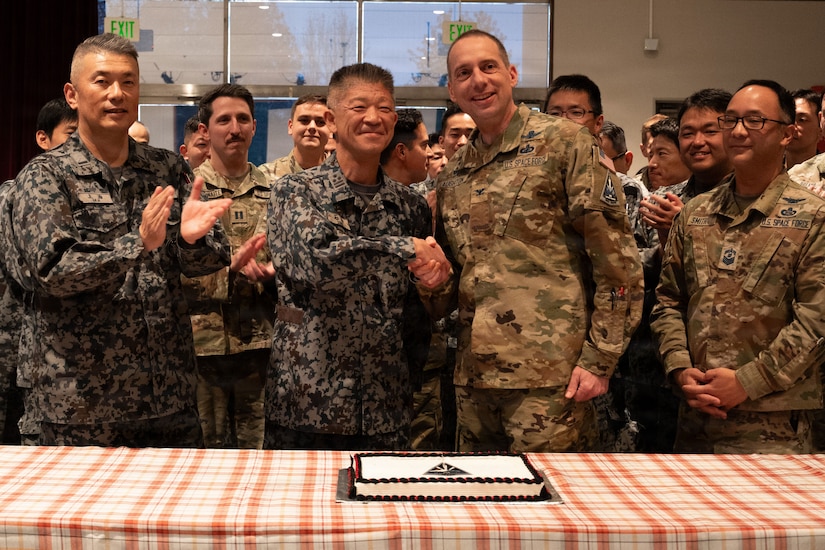
U.S. Space Forces Japan celebrated its first year of activation at Yokota Air Base, Japan, Dec. 4.  

Two men in military camouflage uniforms shake hands while standing behind a table with a cake on it. They are surrounded by other service members in similar attire, who are clapping.

As the newest independent service in the War Department and a newly activated component in the Indo-Pacific region, this small but essential team of guardians advances space expertise for Japan and joint partners.  

U.S. Space Forces Japan is the second component under U.S. Space Forces Indo-Pacific, following the activation of U.S. Space Forces Korea in 2022. The subcomponent supports the rapidly developing Japan Ministry of Defense space organizations and capabilities, and the need for robust space expertise to support U.S. forces in Japan 

"I am proud and honored to have been chosen to lead this organization," said Space Force Col. Ryan Laughton, commander of U.S. Space Forces Japan. "It's exciting to be able to come in and craft a component into something that's never been done before, but ultimately it's been a team effort." 

Over the last year, the component has experienced significant growth in expertise, manpower and operational capabilities. This includes building out directorates, establishing robust processes and developing strong relationships with counterparts at U.S. Forces Japan, other service components, U.S. partners and U.S. Space Forces Indo-Pacific. 

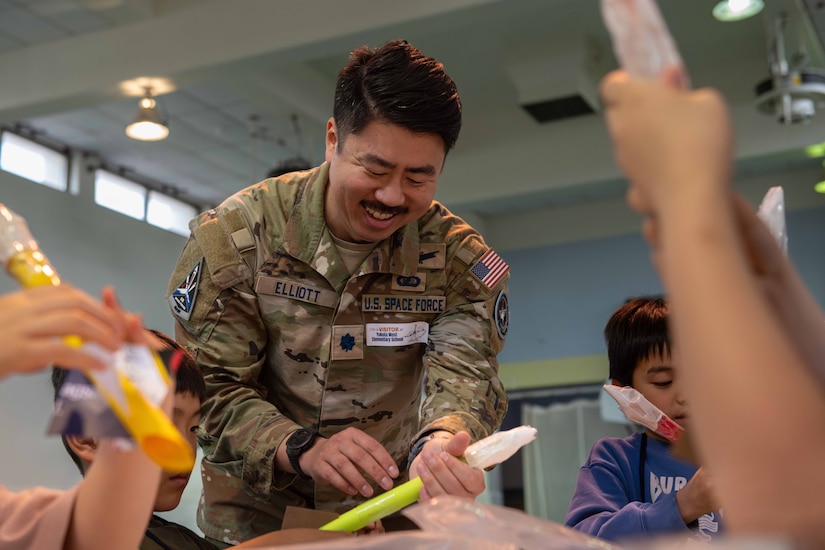
A man in a military camouflage uniform smiles while holding a model rocket. He is standing at a table with children as they put together model rockets.

The activation ensures space forces can plan, integrate, coordinate and execute efforts in Japan on behalf of U.S. Space Forces Indo-Pacific to best support the U.S. partnership agreements with Japan, deepen integration with Japanese space counterparts, and meet dynamic regional challenges to ensure a free and open Indo-Pacific.  

"It's incredibly rewarding," said Space Force Capt. Rafael Fermin, chief of engagements at U.S. Space Forces Japan, "It comes with significant responsibility, but I'm proud to play a role in shaping [the command] and contributing to its long-term foundation and success." 

The bilateral alliance with the Japan Air Self-Defense Force's Space Operations Group has strengthened exponentially over the year.  

"Working with SOG, especially in my current role, has shown me how strong and steadily growing our collaboration is," Fermin said. "It's clear that we share many of the same goals and priorities, and we approach them as true partners. I'm excited to see how this relationship continues to deepen as our missions evolve." 

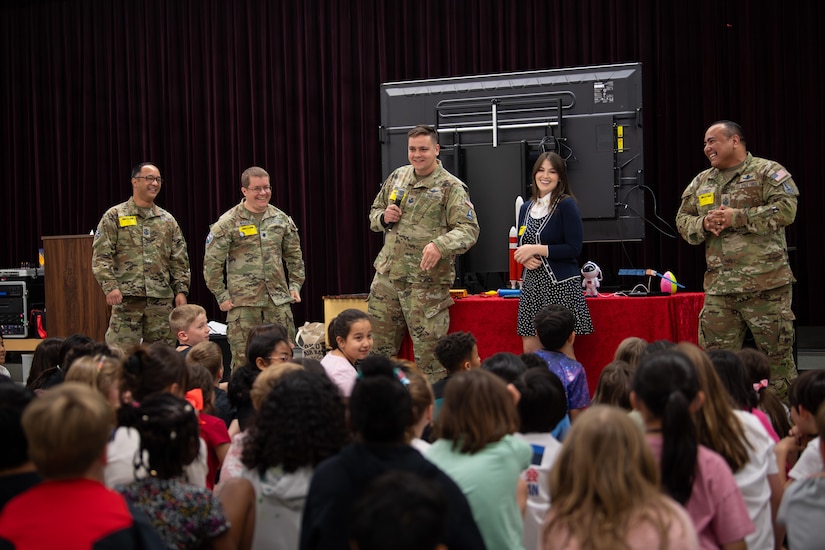
Four service members in military camouflage uniforms and a woman in business attire smile while standing in front of a group of seated children.

Further emphasizing that strong partnership, Laughton noted that Japan is also investing heavily in its space capabilities.  

"As the [operations group] continues to grow, it has been an exciting challenge to learn how to be effective in performing our missions together," Laughton said, "But overall, working side by side with Japan's space guardians has been phenomenal." 

The stars are the limit for U.S. Space Forces Japan's future. The component plans to continue its work to establish itself as the "one voice for space in Japan," providing a hub for collaboration with Japanese space partners, operating space effects for joint warfighters in the region and bringing options to U.S. Forces Japan as they move forward in their own transformation to a joint force headquarters. 

Monday, December 22, 2025

Trump Announces New Class of Battleship

President Donald J. Trump today announced the Navy's intent to develop a new class of American-designed, 30,000 to 40,000-ton large surface combatants, or battleships, that will be employed to meet the realities of modern maritime conflict. 

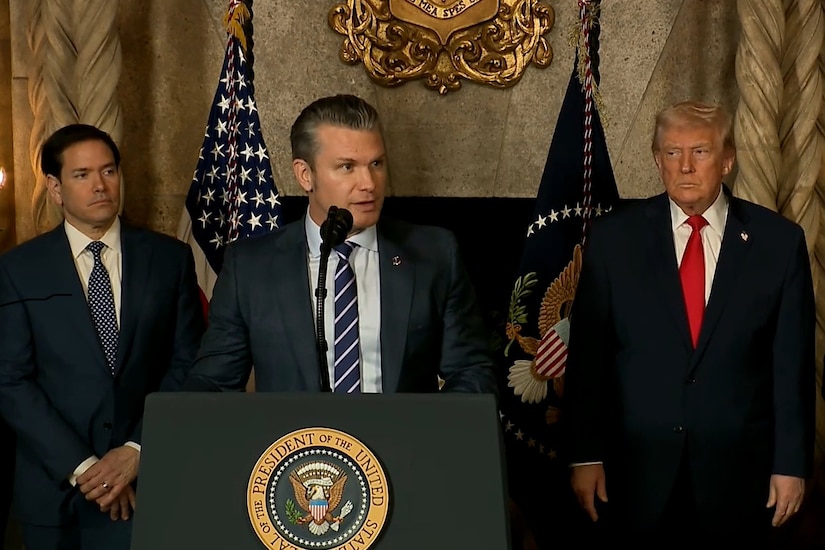
A man in business attire stands and speaks at a lectern with the American flag to the left behind him. Three men in similar attire stand behind him.

"As commander in chief, it's my great honor to announce that I have approved a plan for the Navy to begin the construction of two brand-new, very large — largest we've ever built — battleships," Trump announced from his Mar-a-Lago residence in Palm Beach, Florida. He was joined by Secretary of State Marco Rubio, Secretary of War Pete Hegseth and Navy Secretary John Phelan. 

The new Trump-class of ships — which the president said will contribute to a new "golden fleet" of advanced warships — are currently in the design phase, with construction of the first battleship, the USS Defiant, targeted for the early 2030s. 

Phelan said that the new class of battleship is something the Navy "desperately needs." The president noted that the Navy aims to have a fleet of 20 to 25 ships eventually. 

"The future Trump-class battleship, the USS Defiant, will be the largest, deadliest and most versatile and best-looking warship anywhere on the world's oceans," Phelan said, adding that he wanted to thank the president for his vision to make the future battleship a game-changing capability for the U.S. Navy.    

Phelan also compared the future Trump-class battleships to the former Iowa-class battleships, which were a cornerstone of the Navy's warship fleet for much of the 20th century. 

"The Iowa was designed to go on the attack with the biggest guns, and that's exactly what will define the Trump-class battleships: offensive firepower from the biggest guns of our era," Phelan said.  

"This ship isn't just to swat the arrows; it is going to reach out and kill the archers," he added. 

During his remarks, Hegseth said that strengthening the Navy's fleet ties directly to the War Department's key goals of restoring the warrior ethos, rebuilding the military and reestablishing deterrence.  

"American strength is back on the world stage, and the announcement of the golden fleet anchored by new battleships — the biggest and most lethal ever — accomplishes all three of those things and marks a generational commitment to American sea power across the entire department," Hegseth said.  

During the announcement, Trump made clear that the new battleships are intended to be constructed entirely in the U.S. by American citizens. 

"The construction will create thousands of American jobs. We're going to have the jobs be created," he said. 

Along with standard guns and missiles, Trump said the new battleships will be equipped with hypersonic weapons, electronic rail guns and high-powered laser-based weaponry. 

He added that the Navy will take the lead in the ships' design, while partnering with the U.S. defense industrial base. 

"We're going to make battle groups great again, and this is just one piece of the president's golden fleet that we're going to build with the investments," Phelan said.  

The new Trump-class battleships will replace the Navy's previous plans to develop a new class of destroyer, the DDG(X). However, the sea service intends to incorporate the capabilities it had planned to employ on that platform into the new Trump-class ships.  

The last time the Navy used battleships in combat was in 1991 during the first Gulf War, when the now-decommissioned Iowa-class battleships USS Missouri and USS Wisconsin provided naval gunfire support against Iraqi targets along the coast of Kuwait.   

Today's announcement of the Trump-class battleships comes on the heels of the Navy's Dec. 19 announcement of the FF(X), a new class of frigates intended to replace the Navy's recently cancelled Constellation-class frigate program. 

The War Department Announces First Round of FY 2026 APFIT Projects, Surpassing $1 Billion Awarded to Small Businesses

The War Department today announced the first round of Accelerate the Procurement and Fielding of Innovative Technologies (APFIT) projects selected for Fiscal Year (FY) 2026, marking a historic milestone in advancing defense innovation and small business engagement for the program. With this announcement, APFIT has now awarded more than $1 billion to small businesses and non-traditional defense contractors across the nation, accelerating groundbreaking capabilities, strengthening the U.S. industrial base and enhancing warfighter readiness.

The FY 2026 project slate represents the next wave of innovative technologies rapidly transitioning from development to fielding and initial production. These awards continue to focus on delivering mission-critical capabilities at scale while expanding opportunity for small businesses in every region, including those in traditionally underrepresented and remote states.

"Crossing the billion-dollar threshold underscores APFIT’s commitment to America’s small business innovators," said Emil Michael, Under Secretary of War for Research and Engineering, "and we are proud to accelerate the delivery of these critical capabilities to our warfighters."

This year’s initial selections reflect the growing scale and maturity of the APFIT portfolio, with the average FY 2026 award now exceeding $30 million per project. The program also recorded its highest single award to date at $49.7 million, issued just under APFIT’s $50 million maximum statutory cap, demonstrating both the depth of operational need and APFIT’s ability to efficiently transition and scale mature technologies.

APFIT remains a cornerstone of War Department’s strategy to accelerate innovation and ensure the United States maintains its technological advantage. Additional FY 2026 projects will be announced throughout the fiscal year as they are selected.

The initial round of FY 2026 selections include*:

  • Autonomous Unmanned Ground Vehicle (UGV) for Ground Based Air Defense (GBAD), $20.00 million, U.S. Marine Corps
  • Deployable, Attritable Optical Systems, $22.15 million, U.S. Space Force
  • Domestic High Performance UAS Batteries, $28.00 million, U.S. Navy
  • Gremlin Low-Cost Munition, $35.00 million, U.S. Marine Corps
  • High Frequency Intercept Direction Finding and Exploitation (HIDES), $21.66 million, U.S. Army
  • Kraken 18 Communications Pod, $33.00 million, U.S. Navy
  • Miniaturized Gyroscope for Resilient Navigation, $20.00 million, U.S. Marine Corps
  • Mobile Smart Manufacturing for Airframe Spares, $25.00 million, U.S. Air Force
  • Augmented Maneuver Vehicle for Satellites, $48.50 million, U.S. Space Force
  • Real-Time Command and Control at the Tactical Edge, $49.70 million, U.S. Army
  • Small Uncrewed Maritime Vessels, $24.00 million, U.S. Navy/U.S. Marine Corps
  • Tactical High-Bandwidth, Low-Latency, high-capacity data network, $10.00 million, U.S. Marine Corps
  • Trolling Uncrewed Navigation Assistant (TUNA) Seeker, $35.00 million, U.S. Marine Corps
  • Whaleshark Autonomous Low-Profile Vessel (ALPV), $29.49 million, U.S. Marine Corps

*Does not include classified selections.

The Department of War Releases the 2026 Continental U.S. Cost-of-Living Allowance Rate

The Department of War released the 2026 Continental United States Cost-of-Living Allowance rates today. These new rates will go into effect Jan. 1, 2026. As a result of the 2026 adjustment, $99 million will be paid to approximately 127,000 uniformed service members stationed within Continental United States next year.

Continental United States Cost-of-Living Allowance is a supplemental allowance provided to service members and designed to help offset higher living expenses in the highest-cost locations in Continental United States. An area is considered high-cost if the non-housing cost of living for that area, inclusive of categories such as transportation and goods and services, exceeds a threshold of 107% of the national average. 

By law, a Continental United States Cost-of-Living Allowance rate is only prescribed when the index meets a certain threshold above the Continental United States average. Service members assigned to duty stations where the non-housing cost of living is at least seven percent above the national average are eligible for Continental United States Cost-of-Living Allowance. Data is adjusted to account for Basic Allowance for Subsistence, which is meant to offset the costs for a service member's meals and cost savings gained from shopping at commissaries and exchanges. 

For 2026, these are the Continental United States Cost-of-Living Allowance changes:

  • Six military housing areas will begin receiving Continental United States Cost-of-Living Allowance; 
  • Eight military housing areas will receive an increase in Continental United States Cost-of-Living Allowance; 
  • Two military housing areas will continue receiving the Continental United States Cost-of-Living Allowance; 
  • Two military housing areas will receive a decrease in Continental United States Cost-of-Living Allowance;
  • Nine military housing areas will no longer receive Continental United States Cost-of-Living Allowance; and
  • 21 counties will lose Continental United States Cost-of-Living Allowance for non-military housing areas in non-metropolitan counties. 

Military housing areas with the highest Continental United States Cost-of-Living Allowance rates:

  • San Francisco, California        8%
  • Oakland, California            6%
  • Santa Clara County, California    5%
  • Staten Island, New York        5%
  • Seatle, Washington            5%

Military housing area with the largest decrease: 

  • Humboldt County, California    5% to 0%

Military housing area with the largest increase: 

  •  Seattle, Washington            0% to 5%

The total amount of Continental United States Cost-of-Living Allowance a service member receives varies based on geographic duty location, pay grade, years of service, and dependency status. Service members can calculate their Continental United States Cost-of-Living Allowance rate at https://www.travel.dod.mil/Allowances/CONUS-Cost-of-Living-Allowance/CONUS-COLA-Rate-Lookup/.  

Additional information about Continental United States Cost-of-Living Allowance can be found on the Defense Travel Management Office website at https://www.travel.dod.mil/Allowances/CONUS-Cost-of-Living-Allowance/

FY25 Sees Best Recruiting Numbers in 15 Years

 Dec. 22, 2025 | By Matthew Olay, Pentagon News

In fiscal year 2025, the military's recruiting efforts returned to levels not seen in more than a decade. 

"Since November 2024, our military has seen its highest recruiting percentage of mission achieved in more than 15 years," stated Chief Pentagon Spokesman Sean Parnell. 

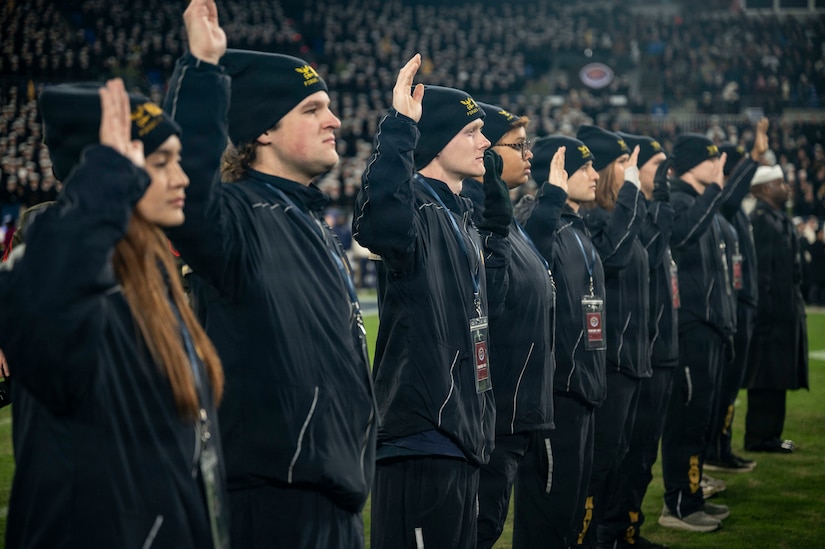
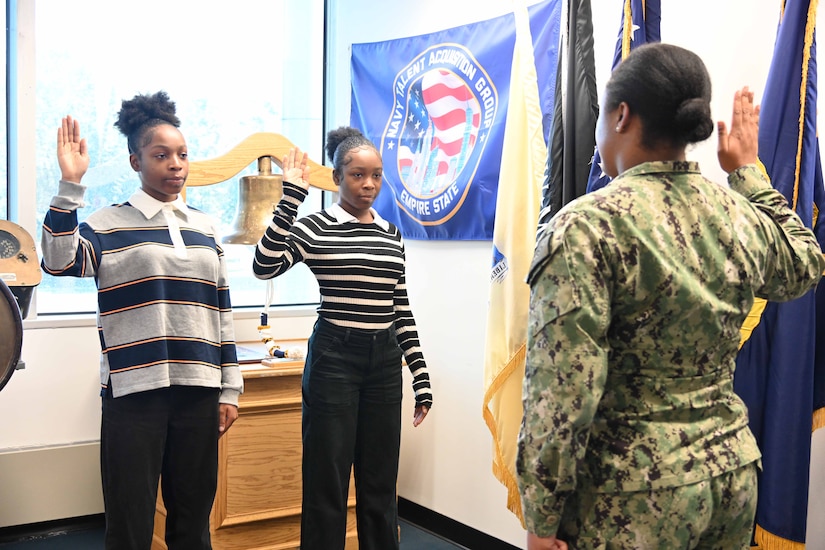
About a dozen people in winter athletic clothing stand on a field of grass, raising their right hands.

This fiscal year, all active-duty services made mission. Most reserve components also met their mission goals, with the exception of the Army Reserve, which met 75% of its goal. 

How the active-duty components of each branch met their goals breaks down as follows: 

  • The Army had a goal of 61,000 recruits and attained 62,050, totaling 101.72% of its goal. 
  • The Navy had a goal of 40,600 recruits and attained 44,096, totaling 108.61% of its goal. 
  • The Air Force had a goal of 30,100 recruits and attained 30,166, totaling 100.22% of its goal. 
  • The Space Force had a goal of 796 recruits and attained 819, totaling 102.89% of its goal. 
  • The Marine Corps had a goal of 26,600 recruits and attained 26,600, totaling 100% of its goal. 

All told, the five service branches collectively accomplished their mission with an average completion rate of 103%. 

Department leaders noted several factors that contributed to the strong recruitment numbers.  

"In 2025, the department exceeded our annual active-duty recruitment accession goals across all five services. ... Why? Because we have a commander in chief and a secretary of war who are focused on our troops and our mission, and on ensuring that we remain the most lethal fighting force on the planet," Undersecretary of War for Personnel and Readiness Anthony J. Tata said during a speech at a defense forum earlier this month.  

"Our nation's young people are responding," he added. 

Two women in casual attire stand in a room, their right hands raised, facing a woman in a camouflage military uniform who is also raising her right hand.

Parnell also noted that leadership was a major factor in this year's recruiting results.  

"If you look at the data from November, from the election of President Trump and then Secretary Hegseth's confirmation thereafter, the numbers that we've seen during that time period have been historic." 

Tata and Parnell co-chair the department's Recruitment Task Force. 

Beyond the quality of leadership in recruitment, driving up numbers, the services have instituted practical improvements that are supporting recruiting gains. These changes include courses that help improve overall aptitude among recruits and enhanced medical screening processes.  

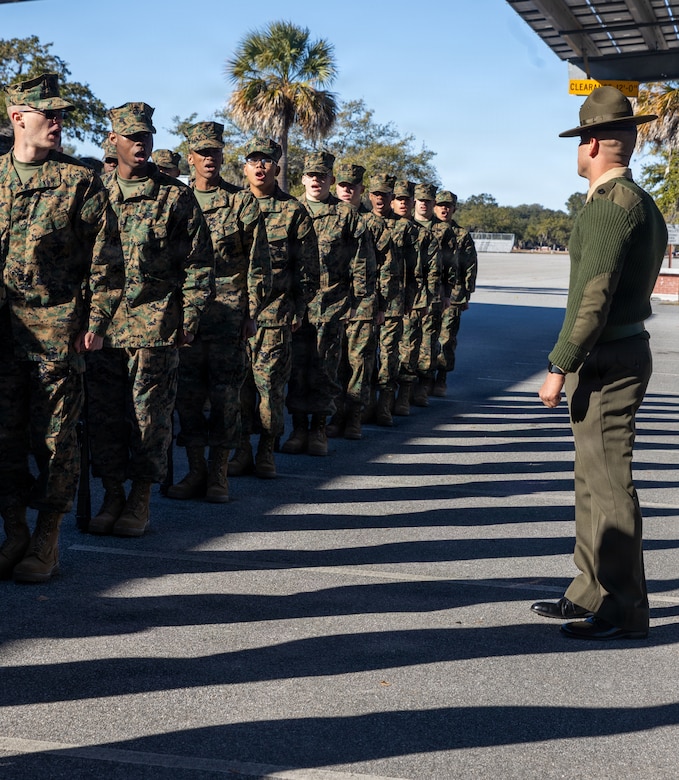
Ten people in camouflage military uniforms stand in line outdoors as a man in a formal military uniform observes them.
As an example of the latter, a medical records accession pilot program has significantly cut down on waiting times from when a recruit's initial paperwork is submitted to when they are allowed to be taken in by their local Military Entrance Processing Station. 

As little as a year ago, it could take up to 10 days between when a recruiter submits a recruit's initial accession paperwork and when that individual could find out if they have been cleared. Today, it takes one day or less. The new focus on speed helps avoid potential recruits from losing interest in serving.  

Regarding the current fiscal year, the department's recruiting efforts are already off to a strong and promising start, with the department having met nearly 40% of its delayed entry program accession mission at the start of fiscal year 2026.

"This is a historic figure and a testament to our support from the president and the secretary, as well as the great work being done by each of the services," said Tata. "The department is on track to once again meet our recruiting mission." 

There are always challenges in recruiting, with recruiters continuously working to increase interest among the youth market and medical disqualifiers plaguing the potential recruiting pool among them. 

To address some of these, the department is working to counter any pervasive misconceptions among the youth market about what it means to serve by highlighting the benefits of wearing the country's cloth. 

"Recruiting is a no-fail mission," Tata said. "We will continue to maintain focus on sustaining our momentum, meeting our targets and securing the warriors we need to achieve peace through strength."

Medal of Honor Monday: Army Tech. Sgt. Peter Dalessandro

By valiantly fighting his way through Europe and surviving as a prisoner of war, Army Tech. Sgt. Peter Joseph Dalessandro became one of the most highly decorated soldiers of World War II. When he started a career as a state senator afterward, he did so as a Medal of Honor recipient.

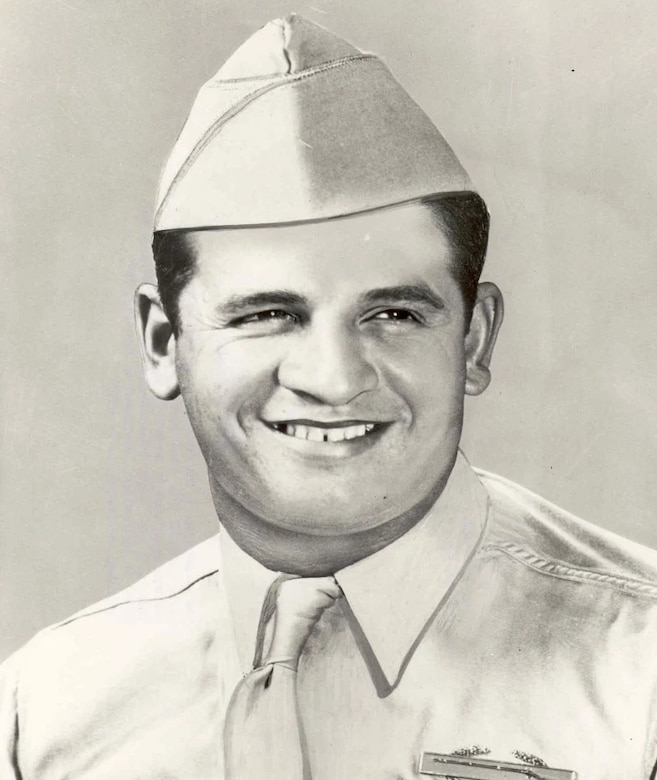
A man in a cap and military dress uniform smiles for a photo.

Dalessandro was born May 19, 1921, in Watervliet, New York, to Emilio and Maria Dalessandro. He had three brothers and two sisters and was educated in public schools. Little else has been published about his childhood.

When World War II broke out, Dalessandro joined the Army, and it didn't take long for him to get involved in combat overseas. He took part in the invasions of North Africa, Sicily and Normandy, France, before fighting his way across Europe toward Germany.

Dalessandro was part of Company E, 1st Battalion, 39th Infantry Regiment, 9th Infantry Division, during the winter of 1944. Around Christmastime, his unit was ordered to replace another on the Belgian-German border during what became known as the Battle of the Bulge, Germany's last major offensive that surprised exhausted Allied troops in the region.

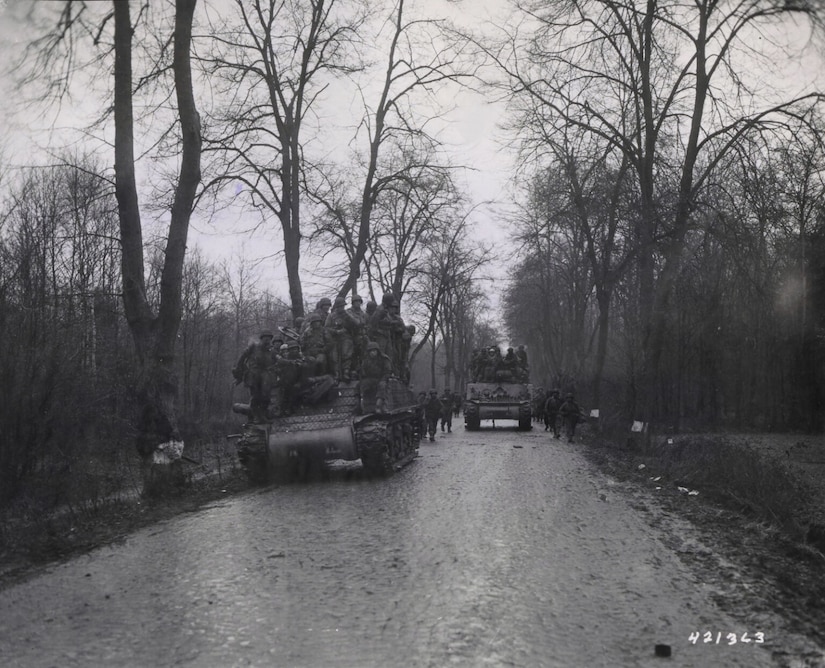
Several men in military uniforms ride on the outside of two tanks as they move along a paved road lined with trees. Several other soldiers in similar attire march behind the tanks.

On Dec. 22, 1944, Dalessandro's platoon was preparing to hold the line at an important road junction on high ground near Kalterherberg, Germany. They had only been there for about two hours when three enemy companies fired an intense round of artillery and mortars in their direction. Soon after, enemy soldiers charged at them in an attack that threatened to overwhelm the platoon's position.

Dalessandro saw his men faltering, so he braved the intense fire and made his way through the group to give them encouragement. Dalessandro then moved to a fully exposed observation post, where he adjusted mortar fire onto the enemy soldiers while firing at them with his rifle. The whole time, he continued to encourage his platoon to push back the attack.

When the enemy launched a second attack later that day, Dalessandro again took control of the situation by rushing to a forward position and calling for mortar fire.

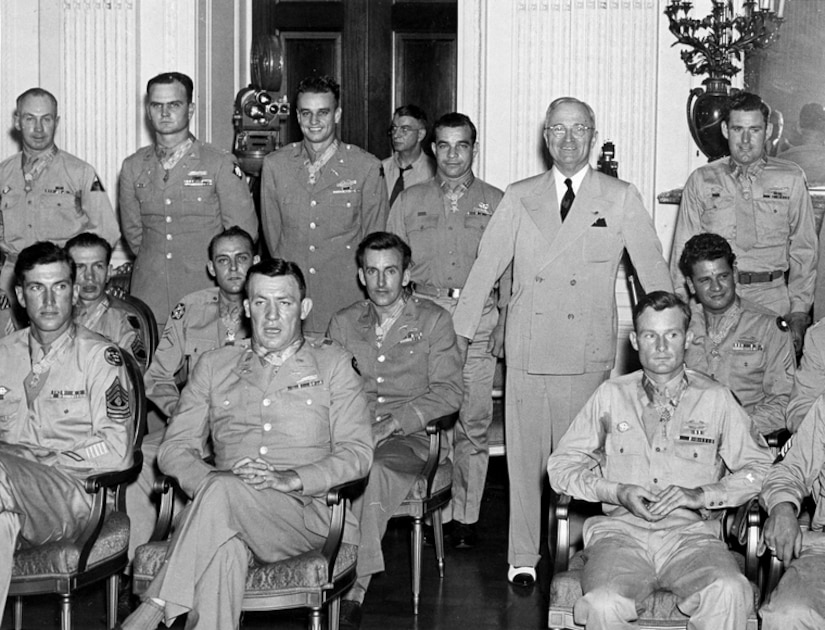
A man in a suit stands next to seated and standing men in military dress uniforms as they pose for a photo.

When he ran out of rifle ammunition, Dalessandro crawled 30 yards across exposed ground to grab a light machine gun, which he took back to his position and fired toward the enemy at nearly point-blank range until it jammed. Thankfully, Dalessandro managed to get the gun to fire one more burst, which took out four German soldiers who were about to kill two wounded U.S. soldiers and a medical corpsman in a nearby foxhole.

As the enemy moved in, Dalessandro didn't retreat. Instead, he hurled grenades and called for mortar fire that came closer and closer to his position, all while covering his platoon so they could withdraw. As German soldiers swarmed him, Dalessandro was heard calling for yet another barrage, yelling, "OK, mortars, let me have it right in this position!"

Dalessandro's bravery and fearlessness allowed his fellow soldiers to escape. However, he was captured and held prisoner for about five months until the war ended. He was then sent back to the U.S.

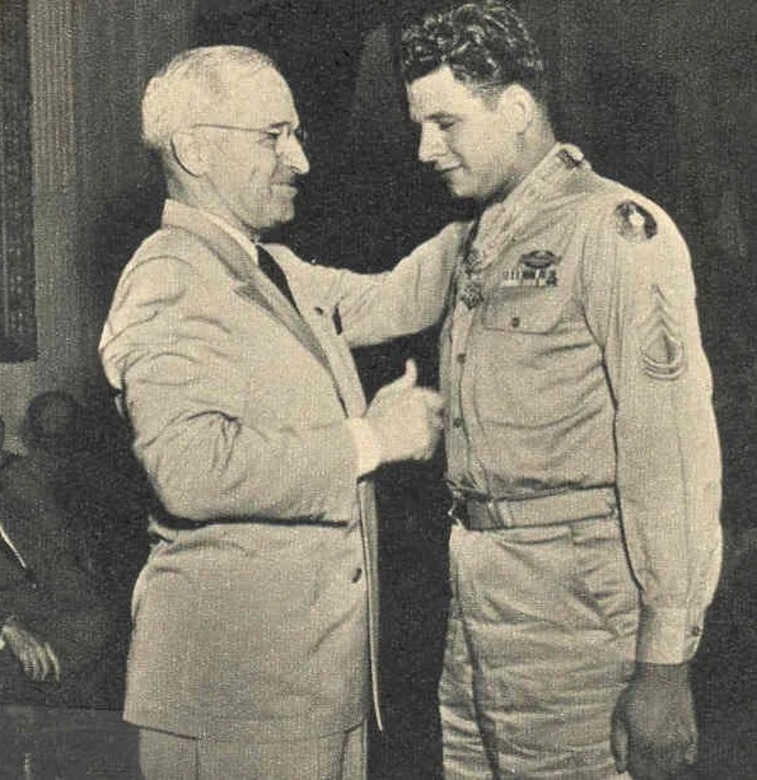
An older man in a suit puts his hand on the shoulder of a younger man in a military dress uniform.
During a White House ceremony Aug. 23, 1945, Dalessandro received the Medal of Honor from President Harry S. Truman for his courage in Europe. He was one of 28 service members who received the honor that day. Dalessandro had also received three Purple Hearts, two Silver Stars, a Bronze Star and the French Croix de Guerre, making him one of the most decorated soldiers of World War II.

Soon after returning home, Dalessandro turned to politics. He was elected as a Democrat to the New York state senate in 1946 and served six terms in that capacity until resigning in 1957 to become the secretary to the Senate minority leader, according to a 1997 article in the Massachusetts newspaper the North Adams Transcript.

That same year, Dalessandro married Patricia Farley. The pair had two daughters, Maribeth and Bernadette.

Dalessandro moved to Latham, New York, in 1969, where he remained until he died on Oct. 15, 1997. The World War II veteran is buried in Saratoga Springs National Cemetery in Saratoga Springs, New York.

In 1987, Dalessandro Boulevard in Albany County, New York, was dedicated in his honor.

Friday, December 19, 2025

War Department Ensures Valuable Wage Grade Employees Earn Prevailing Wages

The War Department released updated pay tables for Federal Wage System employees nationwide to ensure that skilled and talented workers earn the prevailing wages they deserve, no matter where they serve.

Sparks fly as a welder repairs a piece of metal.

"FWS employees are essential to our operations, our readiness and our mission. They are key to U.S. dominance around the globe. With the support of President [Donald J.] Trump and Secretary [of War Pete] Hegseth, we are taking action to recognize and retain this high-demand, low-density talent within the department, and build our pipeline for the future," said Undersecretary of War for Personnel and Readiness Anthony J. Tata. 

About 140,000 FWS employees will see pay increases as a result of the updated pay tables, approved by the wage committee on Nov. 25, a senior War Department official said. Additionally, because for a short time the wage committee was unable to update the pay tables to reflect prevailing wages, those employees will also receive back pay. 

The department's FWS employees include men and women with the skills to repair or overhaul submarines, ships, airplanes and other military hardware, and to also do other kinds of skilled labor. The senior official said those pipefitters, welders, plumbers, electrical and sheet metal workers, for instance — about 210 trade, craft and labor occupational fields in all — are in high demand in both the private and public sector, and they are critical to maintaining the readiness and lethality of America's combat systems. 

"Our wage grade employees are on the line building the ships, building submarines, and making sure that the Department of War has the equipment it needs to win wars," the senior official said. "They're irreplaceable; they're highly essential to our mission and ... we need to make sure that they're properly paid for their invaluable contributions."

A man wearing casual attire and a visor stands atop a metal surface inside an aircraft hangar and uses a handheld vacuum inside an aircraft’s opening.

The senior official said ensuring FWS employees get prevailing wages is important for two reasons. First, it's one way the department retains the talent that keeps its warfighting equipment in top shape. And second, it's how the department attracts new talent. 

"For potential applicants, it is important that they know that we are constantly meeting the mark to recruit them and that if they come to work for the Department of War, we will pay them a prevailing rate. We will pay them for their hard work and dedication to this mission that is so important to our nation." 

When newly minted welders, plumbers or electricians, for instance, begin looking for work, they could go anywhere. The senior official said that when the government offers prevailing wages, it becomes an even more attractive option for work, especially when coupled with the War Department's mission. 

"You get to see the results of your work being used to defend the nation, sailing the seas, flying the skies and protecting not only your family but the families of those around you. There is a great sense of accomplishment in that." 

Marine Corps Announces Updated Physical Fitness Standards

The Marine Corps is implementing changes to its physical fitness test and body composition standards in accordance with the secretary of war's military fitness standards memorandum issued Sept. 30. These changes, announced in MARADMIN 613/25, will take effect Jan. 1, 2026.

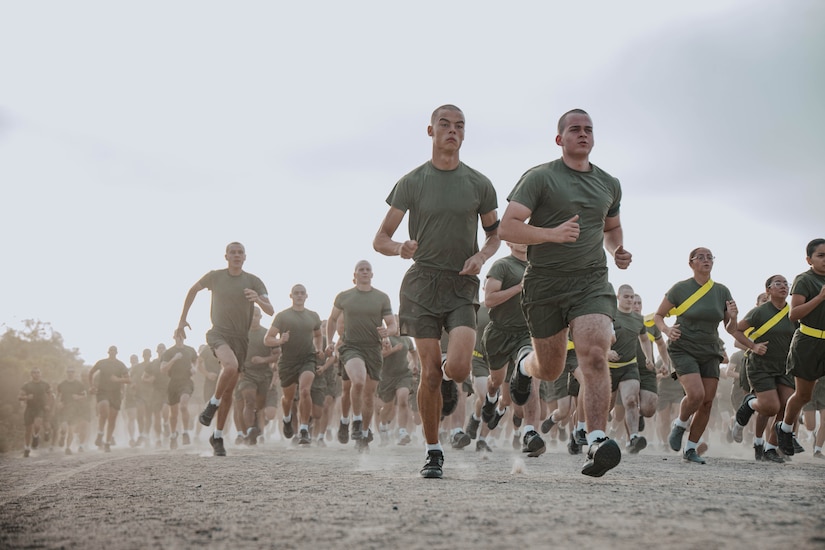
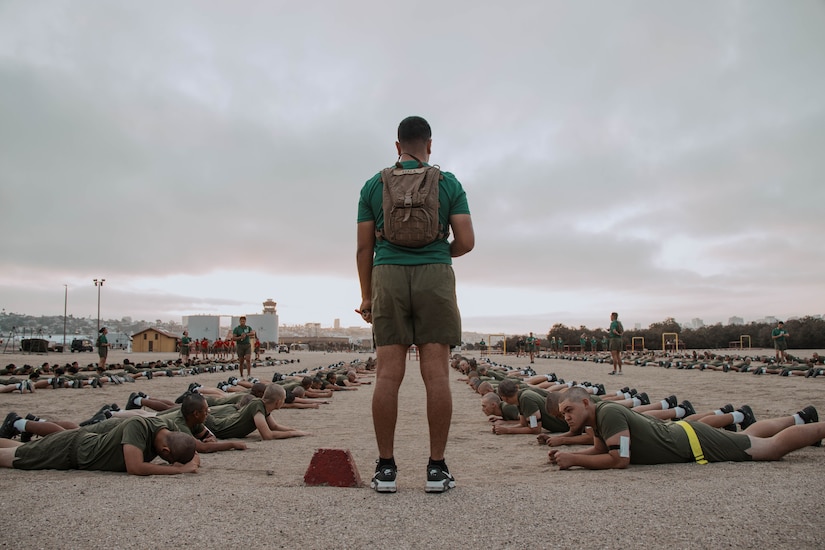
Marines in athletic wear run on a dirt road.

The Marine Corps will institute sex-neutral scoring for the physical fitness test for Marines with a combat arms primary military occupational specialty. The PFT will require those Marines to achieve a minimum score of 210 points, 70% of the total possible points, using the male, age-normed scoring standard outlined in Marine Corps Order 6100.13A.  

The PFT will continue to be administered annually, from Jan. 1 to June 30. Noncombat arms Marines will continue to follow existing sex- and age-normed standards.   

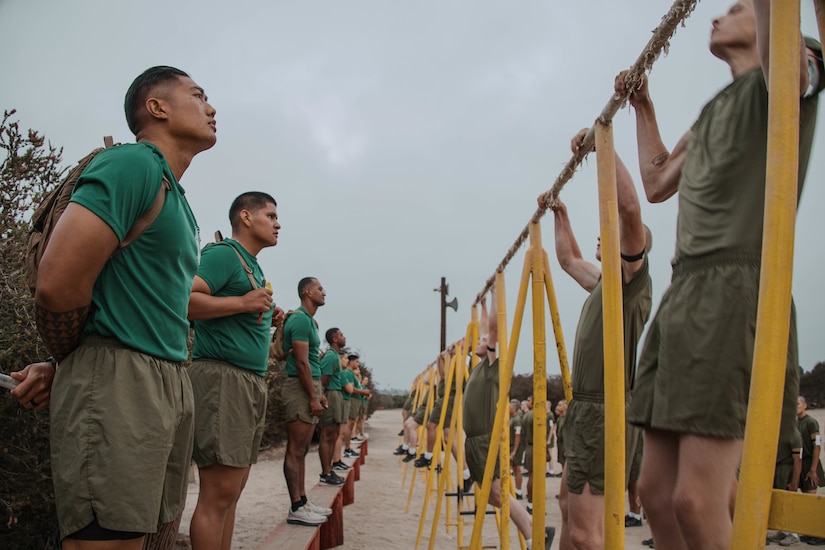
A group of Marine physical fitness leaders in athletic wear stand on a bench as they monitor a group of Marine recruits in similar attire as they perform pullups.

The new PFT standards reflect the unique physical demands of combat arms roles, ensuring Marines are prepared for the sustained physical performance required in direct combat. Those who do not meet the 210-point requirement by the end of the reporting period will be assigned to remedial physical training and may be subject to reclassification and/or promotion restriction.   

"Our combat arms MOSs require rigorous physical readiness for direct ground combat," said Marine Corps Col. James Derrick, director of the Training Standards Division at the Marine Corps Training and Education Command. "These changes ensure all combat arms Marines meet the same high sex-neutral standards."   

A Marine in athletic wear stands and monitors a group of Marines in similar attire who are lying on the ground while doing physical fitness.

The Marine Corps is also revising its body composition evaluation process. The current height and weight standards, along with the tape test, will be replaced by a new waist-to-height ratio method. The Marine Corps will publish service-specific standards upon receipt of additional War Department guidance.  

In the interim, the current height/weight and tape tests will continue, with body composition analysis used for additional assessments when necessary.   

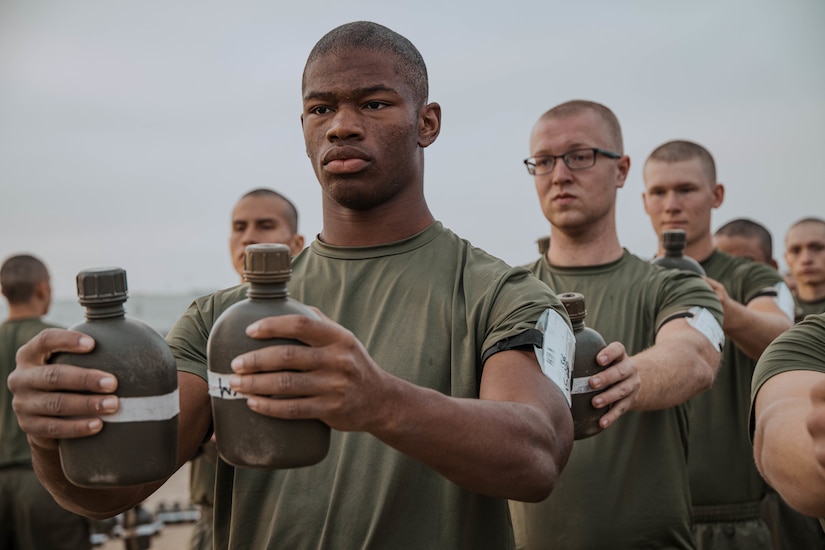
Marines in athletic wear each hold two canteens while standing in formation during a physical fitness test.

Although the new PFT standards will begin Jan. 1, 2026, updates to Manpower Information Systems are expected to take six to eight months, with full implementation projected within a year. The Marine Corps is committed to ensuring a smooth transition and will continue to coordinate with stakeholders to support these changes.   

Units are required to follow interim administrative guidance until full implementation of the system and policy revisions as outlined in MARADMIN 613/25 are complete.   

These changes ensure that the Marine Corps' physical fitness standards continue to support operational effectiveness and combat readiness. The Marine Corps will continue to assess guidance and execution to ensure compliance with higher headquarters.

DLA Troop Support Subsistence Keeps Morale Alive With Holiday Meals

While Santa Claus prepares his Christmas Eve deliveries, the Defense Logistics Agency has already delivered holiday cheer in the form of meals to service members stationed around the world. 

Men and women wearing military camouflage uniforms stand in two lines in front of a food service area for a Thanksgiving meal.

"There's no question our team understands the importance of holiday meals and the tremendous impact they have on warfighter morale," said DLA Troop Support Subsistence Director Navy Capt. Tim Griffin. "Our team takes tremendous pride in providing holiday meals to warfighters around the globe each year; it's one of our most important missions. The planning phase begins in the spring, and we receive orders soon after."  

A feat like this does not come without its challenges.  

Men dressed in military camouflage uniforms and civilian attire stand in line while other men wearing aprons and chef hats along with military camouflage uniforms serve food.

Griffin noted the USS Gerald Ford Carrier Strike Group was initially planned to spend Christmas in a different global location, but when they were diverted to U.S. Southern Command to support Operation Southern Spear, DLA Troop Support Subsistence had to quickly pivot to ensure meals were delivered on time.   

"Our team sprung into action and worked closely with our mission partners in U.S. 5th Fleet, U.S. 6th Fleet, Naval Supply Systems Command, Military Sealift Command, Commander Task Force 53, Commander Task Force 63, DLA Troop Support Europe and Africa, and one of our subsistence prime vendors in Europe to deliver meals to the Ford CSG before they departed their previous [area of responsibility] in early November," Griffin said. 

A man wearing a sports shirt and a baseball cap cuts a turkey for serving.

An additional challenge that impeded the mission of the Christmas meals was avian bird flu import restrictions in Japan, which hindered the subsistence prime vendor from finding turkeys for service members in that country.  

"Eventually, we located compliant turkeys in another AOR and worked with that vendor to obtain the proper [U.S. Department of Agriculture] certification to legally ship those turkeys into Japan," said Sean Gemmell, DLA's division chief for prime vendors outside the continental United States. "As expected, Troop Support overcame every challenge presented and successfully delivered Christmas meals to service members serving around the globe."  

"Everyone in subsistence — including 33% who are veterans — knows mission failure is not an option when providing a taste of home to the warfighter," said Robin Whaley, DLA’s division chief for customer operations outside the continental United States. "Eggnog, candy, and desserts such as cakes, pies and ice cream are major morale boosters for our service members."

A woman wearing a military camouflage uniform and apron slices a roast while another woman dressed similarly watches.

In addition to those sweet treats, this year, military members will feast on: 

  • 101,943 pounds of turkey (includes whole and roasted turkey), 
  • 85,439 pounds of beef, 
  • 40,615 pounds of ham,  
  • 24,495 pounds of shrimp,  
  • 4,339 cans of sweet potatoes,  
  • 6,426 cases of pies and cakes, 
  • 1,496 cases of eggnog,  
  • and other holiday treats. 

"Sitting down to enjoy a good holiday meal, made from food provided by Troop Support, helps to build morale, combat loneliness and [aid] homesickness," Whaley said. "For every service member serving in isolated locations of foreign countries, knowing they can look forward to having a meal that reminds them of home is priceless."

Thursday, December 18, 2025

K9 Holistic Health Is Doggone Delightful

For the handlers of the 525th Military Working Dog Detachment, 18th Military Police Brigade, readiness isn't just about the mission — it's about maintaining the total health of their most trusted partners.

A soldier walks with a dog on his shoulder. The dog has a red squishy ball in its mouth.

Through the U.S. Army's new Canine Holistic Health and Fitness program, the detachment based in Vicenza, Italy, is redefining what it means to be mission-ready, one paw at a time. 
 
The Army established the K9H2F program under Army Directive 2025-16 to enhance the wellness, performance and quality of life of MWDs Aug. 21. The directive mandates all Army MWD units to implement comprehensive health and welfare standards, aligning with War Department and Army veterinary care policies. 
 
Modeled after the Soldier Holistic Health and Fitness system, K9H2F takes a science-based, whole-dog approach — addressing physical fitness, nutrition, behavioral health and recovery. For the 525th MWD team, that means every dog receives the same level of conditioning and care as any elite military athlete in uniform. 
 
"Our dogs are tactical athletes," said Army Staff Sgt. Payton R. May, kennel noncommissioned officer in charge, 525th MWD Detachment, 18th Military Police Brigade. "They train hard, they work hard and they deserve the same attention to fitness, nutrition and injury prevention that we give our soldiers. The H2F program helps us keep them in top condition so they can perform safely and effectively in any environment." 
 
A key component of the directive, the Partner and Wellness program, ensures handlers and their assigned MWDs relocate together during permanent changes of station, strengthening continuity and the human-K9 bond.

A dog sniffs the grass.

 
"When I [moved] to Italy, being able to bring my dog with me made a huge difference," said Army Spc. Matthew C. Skalisky, a patrol explosive detector dog handler assigned to the 525th MWD. "It helps us maintain that trust and teamwork that can't be replaced. The PAW program makes sure that bond doesn't get broken." 
 
Each MWD now follows structured conditioning routines designed to build strength, endurance and agility while reducing the risk of injury. Specialized diets, recovery protocols and enrichment activities round out their regimen, ensuring each dog remains physically capable and mentally resilient. 
 
According to Army Sgt. Maj. Viridiana Lavalle, Headquarters, Army Military Working Dog program manager, the initiative marks a major step forward in modern K9 care. 
 
"Proactive and data-driven K9 care is essential for optimizing the performance and longevity of MWDs, directly impacting mission readiness and effectiveness," Lavalle said. "By leveraging advanced analytics to monitor health metrics, exercise regimens and behavioral patterns, handlers can implement tailored care strategies that enhance the holistic health of MWDs." 
 
This strategic approach not only improves the physical capabilities of these vital assets but also supports K9 mental resilience, ensuring they are fully prepared for the demands of their critical roles.

A soldier holds a dog by a leash as they search a grassy area.

 
"Ultimately, investing in comprehensive K9 care through data-driven insights enhances operational effectiveness, contributing to mission success and the overall safety of military personnel," Lavalle added. 
 
The holistic approach extends beyond the kennel. Handlers train alongside veterinary and behavioral specialists to better understand each dog's unique needs, improving communication and enhancing mission effectiveness. 
 
"The bond between handler and dog is everything," May said. "When you have that trust, that connection, the dog performs with confidence. The H2F program helps us strengthen that bond through better training, stress management and recovery practices." 
 
From explosive and narcotics detection to patrol duties across Europe and Africa, the 525th's military working dogs play a vital role in safeguarding soldiers and installations. The K9H2F program ensures those capabilities remain sharp on every mission, in every environment. 
 
"Investing in our dogs' health is investing in readiness," said Army Spc. Abigail M. Bentle, a patrol narcotics detector dog handler assigned to 525th MWD. "They're not just assets, they're teammates. When they're healthy, confident and capable, our entire formation is stronger."

A dog runs toward the back of a woman wearing a padded suit.

 
Under the directive, the Army Provost Marshal General oversees program criteria and compliance, while the Surgeon General of the Army coordinates implementation guidance. Commanders are required to meet new kennel and enrichment standards within 90 days, and the policy will be incorporated into Army Regulation 190-12 within two years. 
 
For the soldiers and K9s of the 525th MWD Detachment, holistic fitness isn't just a program; it's a commitment to excellence that keeps both handlers and their four-legged partners ready for any mission. 

Hegseth, Senior Leaders Honor Military's Top Recruiters

Secretary of War Pete Hegseth and other senior War Department officials honored the military's top recruiters today during the inaugural Recruitment Excellence Forum at the Pentagon.

A large group of people in various dress military uniforms pose for a photograph with a man in the center of the group wearing civilian business attire.

A byproduct of Hegseth's recently established Recruitment Task Force, the event aimed to recognize the hard work put in by 26 of the most successful recruiters from the departments of the Army, Navy and Air Force during fiscal year 2025. 

"This is to say thank you — first and foremost — and to recognize excellence, which is what we want to do here, in every service: [recognize] the best of the best, incentivize everybody [to] work hard and [then] reward that," Hegseth told the recruiters while gathered in the Pentagon's press briefing room. 

The secretary praised the recruiters for achieving the highest number of enlisted accessions in the past 15 years, with all branches averaging a roughly 104% mission completion rate. 

"There's a lot of things contributing to [why] someone may or may not qualify to get into the military [and] you guys cut through all of that. You find great Americans who want to serve, and you've signed them up in record numbers," Hegseth said. 

A man in business attire stands behind a lectern speaking into a microphone. A seal on the lectern shows an eagle and reads, “Department of War.” Behind the man is an American flag and a sign depicting a five-sided building that reads, “The Pentagon.”

He noted that recruiting is closely monitored at the highest levels — including as high up as the White House — because it serves as a "feedback loop" from the American people.  

"You can talk about polls, [and] you can talk about money, but men and women willing to serve and put on the uniform is a reflection of the belief they have in civilian leadership and military leadership," Hegseth said.  

Along with recognizing the recruiters, Hegseth said the forum was an opportunity for the department to get feedback from the recruiters on how their jobs could be made easier — a sentiment echoed by other senior War Department leaders who attended the event. 

"What we want to hear is how [we] can help you. You're the best of the best; you're the most successful [recruiters] out there. How can we help you be more successful, and how can we help those that come behind you be more successful?" Undersecretary of War for Personnel and Readiness Anthony J. Tata said at the start of a roundtable discussion. 

A man in business attire stands behind a lectern speaking into a microphone. Behind the man is an American flag, another flag with a large eagle in the center and a sign depicting a five-sided building that reads, “The Pentagon. A large group of people, their backs to the camera, are listening to the man speak.

"[Recruiting is] tough work. … You're convincing and talking to people about making a life-changing decision about service, and that is really difficult work," Chief Pentagon Spokesman and Senior Advisor Sean Parnell told the recruiters during the roundtable. 

"And we just want to let you know from the top of this building that you're appreciated … [and] we're going to do everything that we can to empower you, to cut red tape and to help you accomplish your mission," he added. 

Many of the recruiters in attendance explained what motivates them to do such a demanding and often taxing job. 

"It's 100% because of the impact that we make on young lives, on the individuals that I recruit that [might be] homeless, that don't have anything going for themselves … and they want to do something bigger with their lives and just serve their country," said Marine Corps Gunnery Sgt. Abel Layton Jr., a recruiter assigned to El Paso, Texas. 

"Watching them come back as Marines — that's 100% the main reason why I enjoy doing this job," he added. 

"[Recruiting is] important to me, and I think it's important to everyone I know who's in recruiting, because we are dedicated to the organization — and the goals and values of the organization — and [to] aligning those goals and values with the American public," explained Army Staff Sgt. Ryan Dupuis, a National Guard recruiter assigned to Denver. 

"We don't take people and give them a job; we take civilians, and we make them members of the military," he added. 

Some of the recruiters also expressed their appreciation for being invited to Washington and for being recognized by the Recruiting Excellence Forum. 

"It's an absolute honor to be here, first of all. It's really awesome to be recognized for the work that we're doing day in and day out, because it's not easy to be on recruiting duty, and I don't think a lot of people really understand it until they've been in it," said Navy Petty Officer 1st Class Ashley Lynch, a recruiter assigned to Atlanta. 

"For them to put on something like this and to recognize the work that we're doing, I think it speaks volumes," she added. 

Hegseth closed out his remarks by once again underscoring the War Department's commitment to equipping the recruiting community with the tools it needs for success. 

"Our job is to create an environment to make you more successful as sailors, as warfighters … [and], if we're making your job easier and making you more effective, then we're doing our job correctly," he said. 

"Please give us all the information that you have … [and] feed it to our folks while you're here today so that we can improve even more," Hegseth told the recruiters, adding, "And just keep being the best of the best."

Wednesday, December 17, 2025

Department of War Statement on the Rotorcraft Operations Transparency and Oversight Reform Act

Assistant to the Secretary of War for Public Affairs and Senior Advisor Sean Parnell provided the following statement:

"The Department of War thanks Chairman Cruz, Ranking Member Cantwell, Sen. Moran, Sen. Marshall, and Sen. Duckworth for their leadership on the Rotorcraft Operations Transparency and Oversight Reform Act which would enhance communications to improve aviation safety. The Department supports this legislation and appreciates the Committee on Commerce, Science, and Transportation's continued partnership and dialogue to account for critical national security operations. The Department looks forward to continuing the productive dialogue with the Committee to finalize the bill, and working towards its ultimate passage."

Trump, Hegseth, Caine, Nordhaus Honor Soldiers, Interpreter Killed in Syria

President Donald J. Trump, Secretary of War Pete Hegseth, Air Force Gen. Dan Caine, chairman of the Joint Chiefs of Staff, and Air Force Gen. Steven S. Nordhaus, chief of the National Guard Bureau, attended a dignified transfer today at Dover Air Force Base, Delaware. 

Two individual portraits of men in camouflage military uniforms, both posed in front of an American flag.

The fallen are Army Sgts. William Howard and Edgar Torres Tovar, both assigned to 1st Squadron, 113th Cavalry Regiment, 2nd Infantry Brigade Combat Team, 34th Infantry Division, Iowa Army National Guard, and Ayad Mansoor Sakat, who was working as an interpreter. They were deployed in support of Operation Inherent Resolve.   

They died Dec. 13 in Palmyra, Syria, from injuries sustained while engaging with hostile forces. 

Earlier in the week, leaders commented on the news. 

"We mourn the loss, and we pray for them and their parents and their loved ones," Trump said. 

In a social media post, Hegseth asked the nation to join him in "prayer for the souls of the brave soldiers ... who were killed by Islamic terrorists in Syria," adding, "Their memory will live on through their families, their fellow warriors still serving our country, and in my unwavering commitment to our warfighters around the globe."   

Nordhaus said in a social media post that the entire National Guard family mourns their loss. 

"Our hearts are with their families, loved ones and the Iowa National Guard during this time of profound sorrow," he added. "We honor their courage and sacrifice, and we will never forget them or their service." 

Tuesday, December 16, 2025

NORAD Celebrates 70 Years of Tracking Santa

This Christmas season marks seven decades of the North American Aerospace Defense Command tracking Santa Claus on radar as he flies his reindeer-powered sleigh around the globe. 

"NORAD tracks Santa, but only Santa knows his route, which means we cannot predict where and when he will arrive at your house," said a senior NORAD official. 

Fighter pilots have intercepted Santa many times over the years. When they do, the pilots tip their wings in greetings and often take photos, the official said. 

Three men in camouflage military uniforms put up Christmas decorations.

NORAD has Santa cams in space that take video of him flying. These videos appear online almost every hour on Christmas Eve. 

NORAD's Santa Operations Center is fully functional beginning Dec. 24 at 4 a.m. MST. Children can call 877-446-6723 to talk directly to a Santa tracker, who will be able to tell callers his current location. Operators are available until midnight. 

More than 1,000 Canadian and American uniformed personnel, War Department civilians and local participants at Peterson Space Force Base in Colorado Springs, Colorado, where NORAD is located, volunteer their time Christmas Eve to answer the hundreds of thousands of phone calls that come in from around the world. 

Two women dressed in Christmas garb speak into headsets in front of a world map.

Santa is currently at the North Pole where he lives with Mrs. Claus and the elves, who make toys and take care of the reindeer year-round. Each year on Dec. 24, Santa Claus and his reindeer launch from the North Pole very early in the morning for their famous trip around the world. 

The minute they launch, NORAD starts to track him, the official said. 

Besides tracking Santa, NORAD is responsible for aerospace and maritime warning in defense of North America. The organization is jointly run by the U.S. and Canadian militaries. 

NORAD's predecessor, the Continental Air Defense Command, began tracking Santa in 1955. NORAD took over in 1958.