Thursday, February 12, 2026

Railhead Operations Drive Strategic Mobility for Exercise in Alaska

Large-scale arctic exercises far into the Alaska tundra require support just as sophisticated and robust as the operations themselves. It takes a coordinated network of planners, inspectors and transportation specialists working behind the scenes to move equipment safely and efficiently.

A person wearing a camouflage military uniform and a hard hat stands on a flatcar and gestures with his hands to guide a military vehicle; another person in similar attire stands on the ground and observes.

In support of the Joint Pacific Multinational Readiness Center 26-02 exercise at Fort Wainwright, Alaska, logistics professionals assigned to the 773rd Logistics Readiness Squadron and the 486th Movement Control Team, 17th Combat Sustainment Support Battalion, 11th Airborne Division, transported critical equipment for several Army units across Joint Base Elmendorf-Richardson, Alaska. 

"The entire operation is a coordinated effort between the deploying units, the division transportation office, the movement control center, the installation transportation office, and Alaska Railroad representatives," said William Lower, installation mobilization officer for the squadron. "It's a continuous flow from planning through final execution."

A man wearing a camouflage military uniform and gloves lets gravel fall from his cupped hands outside under a blue sky with a large tower light in the background.

The logistics workflow starts long before equipment enters the rail yard. Personnel working with unit movement officers identify all gear to be shipped, then work with the movement control center and other transportation offices to book the necessary railcars. Training for the loading teams ensures personnel are prepared and proficient when operations begin. 

"By working in tandem with the [movement control center], our team ensures every piece of equipment is not only properly inspected but also loaded onto railcars precisely, according to the approved load plan," said Army Capt. Benjamin Mohn, 486th Movement Control Team commander. "This meticulous oversight is essential for maximizing the use of available space and ensuring equipment meets the Alaska Rail standards, guaranteeing that the train can transport the maximum amount of equipment possible in a single movement." 

A vital phase of the process is the transportation integrity and preparation for shipment inspection. At the designated marshaling area, each vehicle and piece of cargo undergoes a detailed examination for transportability, mechanical soundness, proper documentation and safety compliance before being cleared for movement.

About eight people wearing camouflage military uniforms, safety belts and helmets remove snow from a flatcar at a railhead outside under a blue sky with tower lights and other military vehicles in the distance.

"Every piece of equipment receives a thorough TIPS inspection to ensure it's mechanically sound, properly secured and documented for movement," Lower said. "That step is essential to moving equipment safely and efficiently." 

Central to that effort was the railhead operation, a core logistics process that inspects, documents and loads military vehicles and cargo onto commercial railcars for movement up to the Joint Pacific Multinational Readiness Center. Railhead operations serve as a key node in the broader logistics network, ensuring that vital equipment arrives intact and on schedule. 

By housing both the movement control center and the installation transportation office within the 773rd LRS, the squadron ensures seamless integration of planning and execution, from initial coordination to cargo departure. This integration enabled the 257 TIPS inspections of the 65 railcars carrying vital equipment in support of the Joint Pacific Multinational Readiness Center.

A man wearing a camouflage military uniform, safety belt and helmet shovels snow from the surface of a flatcar at a railhead; Another flatcar loaded with military vehicles is in the background.

"The [movement control center] and [installation transportation office] are integral parts of the 773rd LRS," Lower said. "By bringing those capabilities together, we're able to synchronize the entire process and guarantee assets are deployed safely, securely and on schedule." 

Railhead and movement control operations often go unseen by soldiers whose gear is already en route or in place. Still, these logistics professionals provide the backbone that enables units to meet training and operational objectives. 

"The strong, trusted partnership between the [movement control team], the [movement control center] and all participating units is the bedrock of our success," Mohn said. "This shared understanding allows our team to remain agile and effectively solve the inevitable challenges and friction that arise during complex operations, ensuring the mission is always accomplished."

Hegseth Calls for Military Unity Across Western Hemisphere at Inaugural Defense Chiefs Gathering

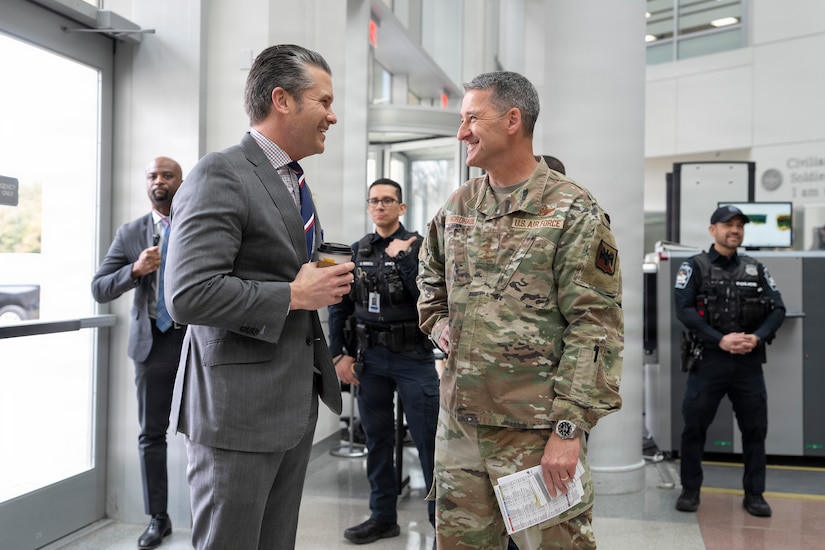
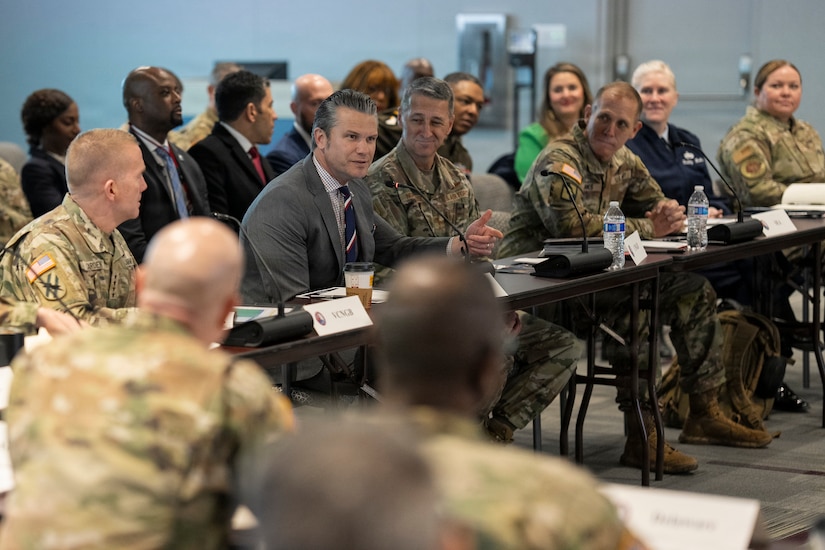
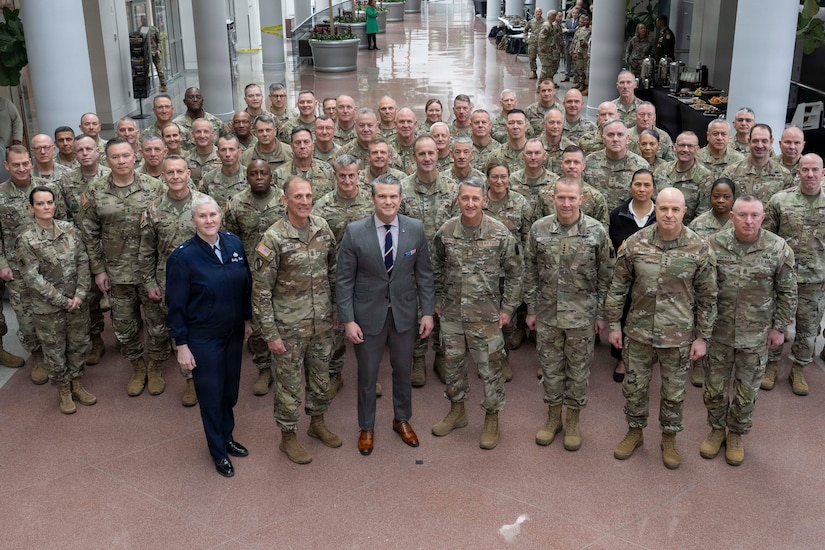
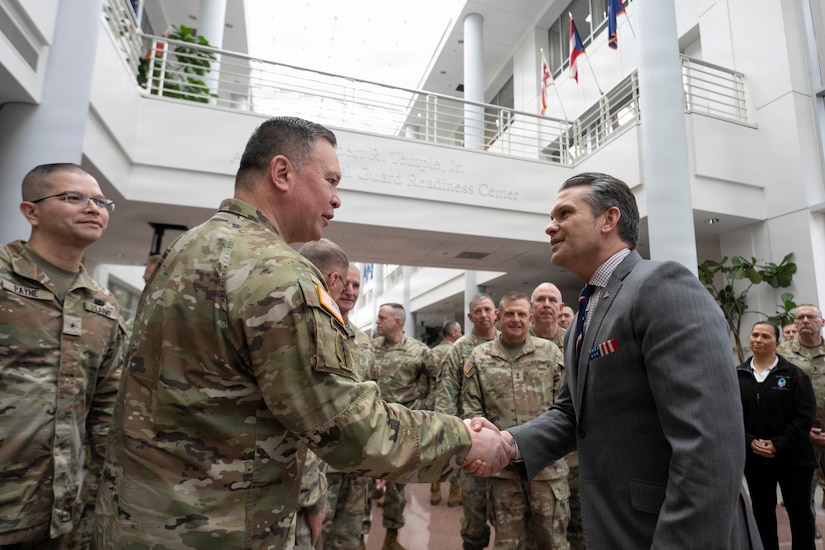
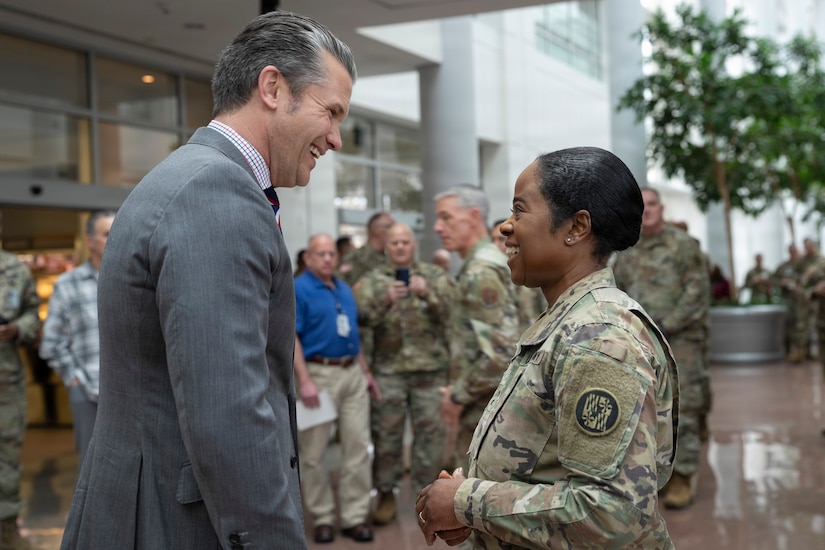
Secretary of War Pete Hegseth today called on defense chiefs and other senior military leaders from 34 Western Hemisphere countries to unite in deterrence against bad actors who may already be operating in, or working to encroach upon, the region. 

Convened by Air Force Gen. Dan Caine, chairman of the Joint Chiefs of Staff, and held in downtown Washington, the daylong, first-of-its-kind Western Hemisphere Chiefs of Defense Conference focused on regional security cooperation against narco-terrorism and other criminal enterprises throughout the hemisphere, while also analyzing common security priorities between allies and partner nations.  

While delivering prepared remarks at the meeting's outset, Hegseth said the U.S. — like all countries represented at the conference — desires a hemisphere of peace, which is why all those countries must work together to achieve and preserve it. 

"We, like you, want — and will — achieve a permanent peace in this hemisphere. So, let's work together [with] our militaries: exercising, training, operations, [intelligence], access, basing, overflight, you name it — let's work together," Hegseth told the gathered leaders.  

"To achieve these goals, we have to stand together; there's no other way to do it," he added.  

Hegseth said the War Department, under the leadership of President Donald J. Trump and his administration, is prioritizing protecting the homeland and key territories throughout the hemisphere for the first time in decades. 

"The United States is asserting, reestablishing and enforcing the Trump corollary of the Monroe Doctrine," Hegseth explained. 

Issued in 1823 by President James Monroe, the Monroe Doctrine declared that the Western Hemisphere was off-limits to any new attempts at colonization by European nations, and that any interference by those powers would be viewed as a hostile act against the United States.  

Reciprocally, the U.S. pledged not to interfere with any of Europe's internal affairs and not meddle in any of Europe's colonial affairs. 

"It's common sense: restoring American power and American strength in our hemisphere through shared priorities and common interests and threads with partners against our adversaries," Hegseth said.  

He went on to reiterate a core tenet of the Trump administration's philosophy on homeland security: that, for far too long, the U.S. had focused on securing and defending other nations around the world while neglecting security within the U.S. and throughout the Western Hemisphere. 

"The consequences of this have been dire for our nation and for your nations; fentanyl, cocaine [and] other deadly drugs poured across our border, poisoning and killing millions of Americans. The number of deaths for Americans to those weapons and those threats is far higher than American casualties in any kinetic war," Hegseth said, adding that illegal mass migration and human smuggling had risen exponentially in the years leading up to the U.S. closing its southern border last year.  

Along with the residual benefits of closing the border — which Hegseth said include the biggest drop in illegal border crossings in the past 50 years, as well as a significant reduction in the U.S. murder rate — he also pointed out the successes that the U.S. military and law enforcement are having through the anti-narco-terror mission to the south, specifically with Operation Southern Spear. 

Launched last year by U.S. Southern Command, Southern Spear is a joint U.S. military campaign aimed at disrupting drug trafficking in the Caribbean and Eastern Pacific, particularly by conducting lethal airstrikes against suspected traffickers.  

"Operation Southern Spear has restored deterrence against the narco-terrorist cartels that profit from poisoning Americans and killing our people and your people," Hegseth told the group, adding that the number of narco-terror boats in the region has diminished significantly since the U.S. strikes began in September 2025.  

"Narco-traffickers know that the true cost of flooding our country with deadly drugs is death for themselves — a real deterrent," he said. 

Hegseth also pointed to the success of Operation Absolute Resolve, in which U.S. forces last month captured Venezuelan leader Nicolás Maduro and his wife. 

"Operation Absolute Resolve demonstrated, once again, the bravery and skill and capability of America's best: our warfighters," he said. 

As his remarks drew to a close, Hegseth underscored that Trump and his administration believe that sovereignty and territorial integrity depend upon military power, and not just traditional law enforcement. 

"Yes, policing is important [and] enforcing is important, but military power is [also] important," Hegseth said, adding that the countries represented during the day's conference must work together to combat and dismantle narco-terrorism and drug trafficking cartels in the Western Hemisphere.   

"We need to build those bonds of partnership to defeat the challenges to our security and our sovereignty," he added. "So, as you might say, we can make the Americas great again."  

Senior Enlisted Advisor to Chairman Testifies on Quality of Life

Warfighters are the foundation of War Department lethality, said Senior Enlisted Advisor to the Chairman David L. Isom, who testified before the Senate Armed Services Committee's personnel subcommittee on service member and family quality of life, yesterday.

The love and support from their families make their service possible, he added.

As the joint force works tirelessly to ensure the safety and security of the nation, DOW and the nation must also work tirelessly to ensure service members have full support and that they have what they need to fight and win when called upon, the SEAC said.

"Humans are more important than hardware, because the true strength of our military isn't just in our ships and our tanks or our aircraft. It's the unwavering spirit and the trusted hands of our people, our total joint force," Isom said.

The U.S. Capitol building is flanked by trees in the winter with two flags flying to the left of the dome.

Isom told the subcommittee that he and Air Force Gen. Dan Caine, chairman of the Joint Chiefs of Staff, have three priorities:

  • First, the joint force must be properly armed — the right capabilities and capacity when needed to fight and win.
  • Second, the joint force must be globally integrated across all domains — with interagency, industry and with allies and partners.
  • Third, DOW must build a ready joint force. Being ready is about repetitions, tough training and building muscle memory. This also includes being clear-eyed about the future and being candid with the force and its families.

"Underpinning these priorities is our most important asset, and that's our people," Isom said. "We recruit America's best, and we must retain this talent by taking care of them and taking care of their families."

Senior enlisted leaders from all the service branches also testified.

Tuesday, February 10, 2026

Airman Heads Back to Olympics to Compete in Skeleton

Air Force Staff Sgt. Kelly Curtis, a knowledge operations technician assigned to the 31st Fighter Wing Communications Squadron at Aviano Air Base, Italy, is preparing to represent Team USA on the world's biggest stage for the second time at the 2026 Milan Cortina Winter Olympics.

A woman wearing winter Olympic gear cheers in front of a crowd.

 
Qualifying for the Olympics is brutally competitive. Only 232 American athletes earned spots to represent the U.S. in Italy. The news station NBC Olympics reported that thousands of athletes competed through years of races, rankings and trials to qualify for the Games. For Curtis, this moment is the culmination of years of discipline, sacrifice and resilience, both as an athlete and as an airman. 
 
"When I first asked the Air Force [World Class Athlete Program] if I could be assigned to Aviano [Air Base], the goal was always these Olympic Games," Curtis said. "Four years ago, I qualified for my first Games in Beijing, but Milano Cortina was always the plan." 
 
Raised in a highly competitive household, Curtis grew up immersed in athletics. As the youngest of four siblings, she credits her upbringing and her father's experience as a former NFL player for shaping her drive. 

"I was always trying to keep up," Curtis said. "I competed in everything: wrestling, track and field, softball, baseball and basketball. I never specialized in a specific sport early, and I believe that helped me more than anything." 

A woman dressed in winter Olympic sledding gear bends down toward a sled while on ice.

Her diverse athletic foundation eventually evolved from traditional collegiate sports to the bobsled, and ultimately the skeleton, an event that demands power, precision and fearlessness. 

Balancing Olympic-level training with military readiness wasn't always easy. As a mother, noncommissioned officer and world-class athlete, Curtis describes her daily routine as a careful balancing act, made possible by strong leaders and teamwork within the 31st Communications Squadron. 

"Staff Sgt. Curtis' ability to balance the demands of military service with world-class competition shows our airmen that anything is possible, so long as you're passionate, dedicated and driven to reach a goal," said Lt. Col Ryan Williams, 31st Communications Squadron commander.

While leaders point to her example, Curtis points back to her team, emphasizing that their confidence in her allows her to carry the same focus and discipline from the workplace to the world stage.  

"My leadership has been incredible," she said. "From my commander down to my supervisor, they've been extremely accommodating while still ensuring I'm fulfilling all my responsibilities as an airman. Their trust frees me to focus when it's time to perform."

A smiling woman holds up closed fisted hands.

As the current points lead for skeleton on the U.S. team, Curtis prepares to carry more than her personal goals onto the frozen track. She also carries the weight of family legacy and of representing the Air Force. Despite the pressure, Curtis remains grounded in the values that brought her to this point: discipline and resilience. 

"After the Games, I'll be right back at Aviano Air Force Base doing my job," she said. "But for now, I have the privilege of representing the U.S. Air Force on the world stage, and I don't take that lightly. At the end of the day, all I can do is prepare the best I can and put it together when it matters." 

Curtis hopes her journey inspires other airmen to pursue their own athletic ambitions. 

"Reach out. Research Air Force sports and look into the Air Force World Class Athlete Program," she said. "There's more support out there than people realize, from intramural sports all the way to the Olympics."

DOW Restructures Foreign Military Sales, Prioritizes Speed, Efficiency

In a video posted on social media today, Secretary of War Pete Hegseth announced that the War Department moved two agencies critical to getting American-made combat gear into the hands of allied and partner nations under the War Department's Office of Acquisition and Sustainment. 

"On Nov. 7, we laid out the Department of War's vision for strengthening the defense sales enterprise," Hegseth said. "Today, we're turning that vision into decisive action." 

Both the Defense Security Cooperation Agency and the Defense Technology Security Administration are part of how the United States helps partners and allies get access to American-made weapons and equipment. They will now fall under the Office of the Undersecretary of War for Acquisition and Sustainment, led by Michael P. Duffey, according to the memorandum. 

Airman push a container into the back of an open aircraft on a dark flight line.

The Defense Security Cooperation Agency, for instance, is largely responsible for facilitating the sale of U.S. weapons to partners and allies. However, the agency is also responsible for developing and planning the long-term partnerships and training opportunities that accompany those sales. The Defense Technology Security Administration is responsible for identifying and mitigating any risks associated with transferring technology to partners and allies. 

By moving both agencies under the department's Office of Acquisition and Sustainment, Hegseth aims to make weapons sales to allies and partners faster and more efficient, as well as help revitalize America's defense industrial base. 

"This executive order is our mandate: leverage America's record-breaking defense sales to revitalize our industrial base and support our partners," Hegseth said. "On nearly every overseas trip that I take, the demand is clear, every single time; our allies want to buy the world's most lethal weapons: American weapons." 

The realignment, Duffey said, has created a single coherent defense sales enterprise within the department, one that moves at the speed of war, but with the purpose of deterring aggression. 

People guide a forklift carrying a wooden box into the open nose of a large aircraft at night.

"Coupled with this new executive order, we're now positioned to leverage the total aggregated global demand for U.S. weapons to grow our nation's industrial might, while maintaining the American warfighters' technological edge," he added. 

Duffey noted that the changes will unlock foreign investment, power production lines, fuel investments in new American manufacturing plants and create thousands of new jobs in the U.S. 

"When we promise to provide American military capabilities, we must deliver," Hegseth said. "Thanks to President [Donald J.] Trump's leadership, these efforts are game changers for the way we do business with our allies and partners around the globe: more and better weapons delivered faster for our warfighters and our allies."

Department of War Finalizes Realignment of the Defense Security Cooperation Agency and the Defense Technology Security Administration

 Feb. 10, 2026

The Department of War (DoW) today announced the realignment of the Defense Security Cooperation Agency (DSCA) and the Defense Technology Security Administration (DTSA) to the Under Secretary of War for Acquisition and Sustainment (USW(A&S)). This significant transformation, directed by the Secretary of War, unifies critical acquisition, sustainment, industrial base policy, security cooperation, defense sales, and arms transfer functions under a single organization to improve efficiency, enhance the U.S. industrial base, and enable greater burden-sharing with our allies and partners.

"The President has laid out a clear vision for aggressive promotion of U.S. defense sales through his groundbreaking America First Arms Transfer Strategy," said USW(A&S) Michael Duffey. "This realignment will increase and accelerate the delivery of lethal weapons and advanced capabilities to our allies and partners, empowering them to shoulder a greater share of their self-defense. By unifying our arms transfer enterprise with our acquisition system, we will move with the purpose and speed required to strengthen our alliances and ensure the United States remains the partner of choice in global arms sales."

The realignment establishes a clear and unambiguous line of authority, creating a single enterprise to oversee the execution of defense sales from initial acquisition to final production and delivery. The structural reform is also a key component of the Department's broader effort to improve the speed and accountability of the arms transfer enterprise.

By aligning DSCA and DTSA with the Department's acquisition, industrial base, and technology security functions under USW(A&S), the DoW will integrate technology security considerations earlier in the acquisition life cycle, enhance forecasting of global demand to better meet the defense needs of the United States and our partners, and facilitate the delivery of warfighting capability at the speed of relevance while protecting the U.S. technological edge.

The realignment directly supports the National Defense Strategy and the President's commitment to revitalizing the defense industrial base, including through Executive Action to improve arms transfers. The move will unlock strategic opportunities to leverage allied and partner investments, contributing to the creation of American jobs and ensuring the readiness and security of our Warfighters, allies, and partners. 

Monday, February 09, 2026

Soldier-Olympian to Compete for First U.S. Biathlon Medal

Tears pooled in Army Staff Sgt. Deedra Irwin's eyes as she stood at the starting line of the National Biathlon Centre in the Zhangjiakou cluster, a mountainous stretch of land three hours northwest of Beijing. 

A woman wearing goggles and ski sports gear holds skis while smiling and waving.

As the soldier breathed in the piercing cold, she reflected on the journey that brought her to her first Olympic Games in 2022. 

"I definitely was like, once I start this race, I'm an Olympian," said Irwin, a member of the Army World Class Athlete Program. "And I think that kind of emotion kind of just like came over me like, I get to say that." 

She quickly wiped the tears away before they froze on her face. The soldier clutched her ski poles tighter to keep the blood circulating in her fingers and narrowed her focus. 

Irwin took an unorthodox path to become an Olympian, from training as a cross-country skier in Idaho to attending her first biathlon camp in upstate New York and finally to an enlistment in the Army. 

As a child watching the 2008 Summer Olympics, she dreamed of one day reaching the pinnacle of track and field. Days before her first Olympic race, she attended the opening ceremonies at Beijing National Stadium, in the same city that captivated her on television. 

"It felt definitely full circle for me to kind of have those first memories growing up," Irwin said. "The Olympic dream kind of was always there." 

At the time, Irwin didn't rank among the top 50 female biathletes in the world. But that day she would ski faster and fire more accurately than ever before. 

The temperature grew so cold that Irwin couldn't feel her fingers during shooting sessions, yet she still hit 19 of 20 targets. The cold didn't faze Irwin, as she finished in seventh place, the highest 15-kilometer finish ever by a U.S. biathlete. Irwin fell a single shot shy of winning the first U.S. Olympic medal in the sport. 

After crossing the finish line, Irwin let out a nervous, excited laugh. 

"I had a crazy day," she said. 

Still running on adrenaline, Irwin said she didn't sleep for days following the race. 

Now at her second Olympic Games at 33, Irwin and her U.S. teammates vie to become the first Americans to medal in the biathlon at the 2026 Milan Cortina Olympics that began yesterday. 

"I think we have really, really strong athletes on both the men's and women's side," Irwin said. "And I think I showed at the last Olympics that anything is possible."

A woman wearing ski sports gear aims a rifle at a target.

Irwin, who ranks 26th in the world and No. 1 in the U.S., has a contingent of friends and family who traveled to northern Italy to support her, after COVID-19 restrictions prevented spectators from attending the Games in 2022. 

Irwin notched her second top-10 World Cup finish of the season recently at the Nove Mesto World Cup in Prague. She hit 19 of 20 targets and finished 10th in the 12.5-kilometer mass start race. 

"My story is a unique way to show persistence and just believe in yourself," Irwin said. "And really just kind of continuing on, even when you're met with changes." 

To prepare for the Olympics, Irwin and the U.S. Biathlon team traveled to what she called an "elevation camp" in northern Italy to grow accustomed to competing at a high altitude. The Antholz-Anterselva Biathlon Arena, one of the highest biathlon competition venues in the world, sits more than 5,200 feet above sea level. The athletes log 12-20 hours of endurance training each week and work on interval sets to maintain peak physical fitness. 

Irwin will be joined by Army Spc. Sean Doherty on the U.S. Olympic team, and as she learned in the Army, the United States will compete as a team. Doherty, an eight-time World Championship team member, will be competing in his fourth Olympics having placed seventh in the mixed relay at Beijing and 42nd in the men's individual race.

A Biathlete in the Making

Irwin didn't know it then, but she laid the groundwork for her future athletic career while growing up in the rural Midwest. Unlike many of her teammates, Irwin discovered the sport later in life. 

Irwin competed in basketball, track and cross-country in Pulaski, a small Wisconsin town 20 miles west of Green Bay. At age 16, she began Nordic skiing during the Badger State's frigid winters to stay in shape for the track and cross-country seasons. 

Irwin attended Michigan Technological University in Michigan's Upper Peninsula. There at the remote rural campus, she competed in cross-country and track. Irwin joined MTU's Nordic ski team, which trains at Mont Ripley, a ski area in the wilderness of Hancock, Michigan. Following graduation in 2016, she fell in love with Nordic skiing. 

Irwin moved to Sun Valley, Idaho, in the Pacific Northwest, to pursue a spot on the U.S. Olympic Ski team. There she joined the Sun Valley Ski Education Foundation's Cross Country Gold Team. 

Irwin had to humble herself and live within her financial means. 

She said she became homeless for a short time, driving her car from house to house sleeping on friends' sofas while working as a dog caretaker. She struggled to earn income while training and remained on her parents' health care plan. 

Irwin posted some of the best times in the nation, but she knew she needed to compete at a higher level to make the Winter Olympics. 

When it became clear that she would not qualify for the Olympic team following the 2017-2018 World Cup season, she decided to move away from cross-country skiing. 

Then, her best friend, Joanne Reid, asked her to give the biathlon a try, inviting Irwin to attend the U.S. biathlete camp in Lake Placid, New York. 

The mental shift from racing down a slope to firing at a target became a motivating addiction. She learned the nuances of sight adjustment and trigger pressure. 

"When you know you're doing well," Irwin said. "And then you get on the range, and you see all those shots go down; it's the coolest feeling in the world." 

Irwin still struggled financially. She could barely afford gas, and fortunately, a friend donated her first rifle. 

Irwin signed a contract with the Vermont National Guard Biathlon Program in 2019 and eventually joined WCAP. 

"I don't think I would have gotten this far in biathlon without the support of the U.S. Army," Irwin said.  

Gradually, she grew faster on the slopes. She started hitting targets more accurately and refined her shooting discipline. At the 2019 Biathlon National Championships, Irwin placed seventh in the sprint, fourth in pursuit and eighth in super sprint. Soon after she began improving on the World Cup circuit, finishing in second in the women's relay at the 2022 World Cup in Antholz, Italy. 

After qualifying for the 2022 Olympics, Irwin reached a new pinnacle. 

"I was never a state champion in running," Irwin said. "I was never an NCAA champion in Nordic skiing or anything like that. But I just knew that I had more in me and I wanted to keep pushing myself and I wanted to keep seeing how far I could get [in the biathlon]." 

Irwin attended basic training at Fort Leonard Wood, Missouri, in 2019, followed by advanced individual training at Fort Jackson, South Carolina, where she studied to become a human resources specialist. 

The discipline and learning to work with other soldiers changed Irwin. 

"[Basic training] was one of the most mentally difficult things I've ever done," she said. "But ... I learned a lot about resilience and working as a team." 

At boot camp, Irwin learned to fire an M16 rifle, a much heavier weapon than the lightweight, .22-caliber long rifle used by biathletes.

A woman wearing goggles and ski sports gear holds ski poles while skiing down a snowy slope.

Guard, Army Comes to Her Aid

Irwin had repeatedly shielded Reid from the advances of a ski wax technician who abused Reid for years, according to an Associated Press report. 

Irwin recalled learning about the Army's Sexual Harassment/Assault Response and Prevention Program, a concentrated effort by the service to eradicate sexually related crimes within its ranks. 

Irwin reported her teammate's case to her chain of command at the Vermont National Guard. Her leaders took immediate action, eventually prompting an 18-month investigation by the U.S. Center for SafeSport, which safeguards Olympic athletes from abuse. 

"Being able to tell my chain of command in the Vermont National Guard and having such overwhelming ... resources, they really made sure that I was taken care of, and that I was talking to the professionals," Irwin said. 

During the PowHERful podcast, Irwin added that she risked her athletic career to bring change to the misogyny and abuse against women within the U.S. Biathlon program. 

"We have to start the conversation for the 12-year-old athlete who wants to be in our position," Irwin said. "How do we make it better for them?" 

During the investigations, Irwin still stayed on top of her fitness and used biathlon training as therapy. Irwin got lost in her training; running, skiing and shooting harder. 

She said she never considered walking away from the sport. 

"Continuing to train was therapeutic," she said. "It was my way of continuing to be in control of my life. A lot of that anxiety and stress or whatever is causing that in my life, it melts away." 
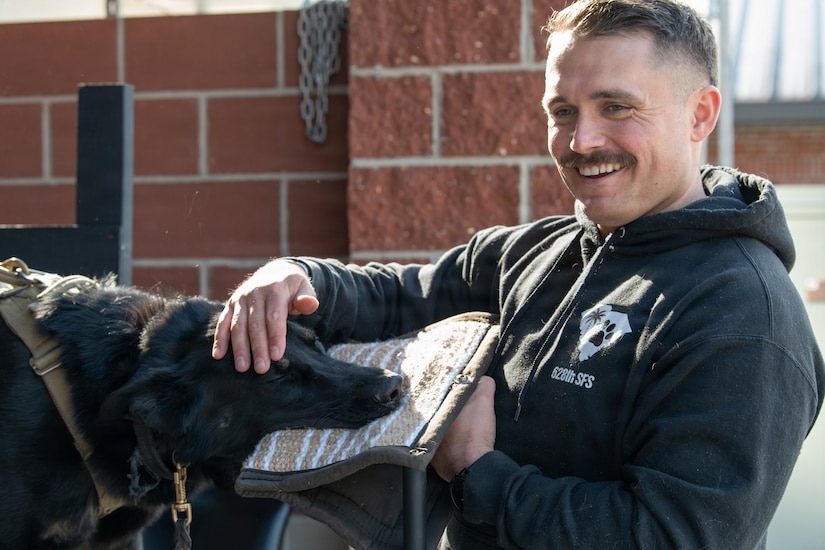
Irwin said she not only represents the U.S. but also the Army and National Guard in this year's Winter Olympics. WCAP places athletes on active-duty orders during their pursuit of Olympic glory while supporting athletes with health care and training resources. 

Irwin works remotely with nutritionists who analyze athletes' bloodwork and provide vitamin supplements. Irwin communicates directly with Army nutritionist Maj. Kelly Kaim through texts and emails. 

"It's been a really amazing program to be a part of and the resources," Irwin said. "Everybody within their program has been a really, really huge help in this last push for the 2026 Olympics." 

Irwin competed as part the U.S. Biathlon team in the mixed relay 4x6 kilometer event yesterday, finishing 14th.

U.S., Italian Soldiers Earn German Military Qualification

U.S. and Italian soldiers accepted the challenge of earning the German Armed Forces Proficiency Badge during a military qualification assessment at various locations throughout Caserma Del Din, Italy, Feb. 2-6.

An overhead view of a man in athletic attire holding his chin over a bar on a piece of gym equipment as another man observes him. Two dozen other people in camouflage military uniforms and similar athletic attire are standing around the gym.

The proficiency badge is a German armed forces decoration that is one of the few foreign awards approved for wear on formal U.S. service uniforms. 

Over 110 candidates reported for the challenge. U.S. participants included 99 soldiers representing: 173rd Airborne Brigade, 207th Military Intelligence Brigade, 517th Geospatial Planning Cell, 79th Theater Sustainment Command (FWD), 21st Theater Sustainment Command and U.S. Army Southern European Task Force, Africa. They joined Italian paratroopers in their quest for the badge. 

German soldiers assigned to the Support Battalion 8, 10th Panzer Division, oversaw the assessment that determined whether candidates met the standard to wear one of the badge's three qualification levels: gold, silver or bronze. 

The goals of the challenge included strengthening bonds between U.S. service members, building partner-nation military relations, and promoting esprit de corps while showcasing military and physical preparedness.

A man in a military camouflage uniform fires a pistol at a target inside a firing range. There is a bullet casing flying away from the gun.

U.S. Army 1st Lt. Mitchell Hansen, executive officer for the U.S. Army Southern European Task Force, Africa's intelligence and sustainment company, said earning the badge would be an important accomplishment at his command, considering the extensive work his team does with allies and partners in Europe. Hansen took on the challenge while serving as an officer in charge during the assessment, primarily acting as a liaison. 

"It builds trust and camaraderie working with our German partners … so we can complete our mission both in Europe and in Africa," Hansen said. "This training has really opened my eyes, working with our Italian and German partners, because they each have different processes for completing the mission." 

Over four days, participants completed the German armed forces' basic fitness test, swimming and pistol marksmanship assessments, as well as a road march ranging from 3-7 miles with a 35-pound pack. Academic testing required participants to demonstrate competency and proficiency in chemical, biological, radioactive and nuclear first-aid training. 

Hansen considered the 100-meter swim to be the most challenging single event, which required candidates to swim the distance in full military uniform, then take off their blouses and trousers and throw them out of the pool.

An underwater view of a man in a camouflage military uniform as he reaches his hand out for the pool wall while swimming.

U.S. Army Staff Sgt. Michelle Alvarado, an all-source intelligence analyst assigned to the 17th Military Intelligence Company, 173rd Mobile Brigade Combat Team, agreed with Hansen on the difficulty of the badge's swim requirement. Having previously earned her U.S. Army Expert Soldier Badge, Alvarado said the swim presented "a different type of challenge," highlighting it as an example of the skill sets candidates needed to improve for the testing. 

"I would usually never be [swimming] for my occupation," Alvarado said. "Training with allied forces teaches us how differently they operate in different environments, what they're proficient in and what we can learn from them." 

German Army Capt. Stefanie Mayer, executive officer for 2nd Company, Support Battalion 8, led the team that administered the testing and noted that both American and Italian candidates were "very fit and very trained." She also pointed out other benefits of allies forming personal bonds while rising to meet the same challenges together. 

"Especially notable was the camaraderie between the candidates," Mayer said. "They were cheering each other on and having fun with these disciplines. We are looking forward to repeating this event again, maybe forming a lasting partnership [with the U.S.], and hopefully having the opportunity to come back or have a team do something with an American proficiency badge for German soldiers." 

The weeklong assessment ended with an awards ceremony Feb. 6, where candidates received recognition for their efforts. After organizers calculated the final scores, U.S. recipients earned 11 gold, 30 silver and 19 bronze badges. The Italian cohort received six gold and six silver badges.

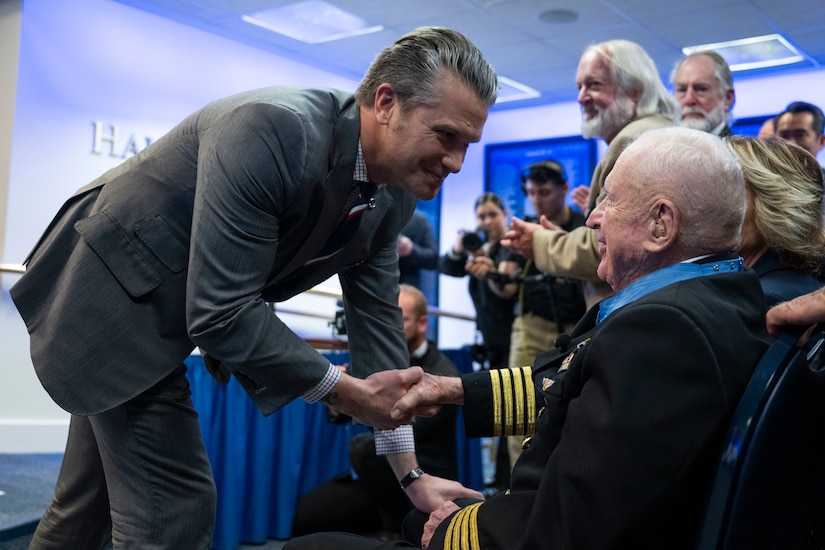
Medal of Honor Monday: Navy Lt. Carlton Hutchins

Navy Lt. Carlton Barmore Hutchins was a skilled aviator who did his best to save his crew during one of the worst naval air disasters before World War II. He kept his damaged plane in the air long enough for a few crewmates to parachute out. Hutchins went down with his aircraft, but his bravery and selflessness earned him the Medal of Honor.  

A man wearing a white Navy uniform poses for a photo.

Hutchins was born Sept. 12, 1904, to Walter and Clara Hutchins. He had two younger brothers and grew up in Albany, New York, before graduating high school in 1922 and attending the U.S. Naval Academy.

After commissioning into the Navy in 1926, Hutchins served on the USS Pennsylvania until 1928, when he went to flight training school in Pensacola, Florida. That same year, he married his girlfriend, Elizabeth Poehler. The couple later had a son, Walter.

By February 1929, Hutchins had earned his wings as a naval aviator. He spent the next few years flying fighter aircraft and scouting planes before studying aeronautical engineering at the California Institute of Technology. In 1937, he served with a seaplane squadron in the Caribbean before being transferred to Patrol Squadron 11 aboard the USS Langley based at Naval Air Station San Diego (now Naval Air Station North Island).

A large seaplane sits on the tiled floor of a museum. Other aircraft and their wings can be seen nearby.

On Feb. 2, 1938, Hutchins was piloting one of several PBY-2 Catalina seaplanes that were taking part in one of the largest fleet exercises of the time about 70 miles off the California coast. According to the Naval History and Heritage Command, nine aircraft were flying in formation at night during a bombing training run when a sudden rain squall began and they flew into a cloud bank without warning. Because of the sudden lack of visibility, Hutchins' aircraft collided with another seaplane.

While the second aircraft crashed immediately, killing all seven on board, Hutchins managed to keep his failing aircraft in the air long enough to give his crewmates the chance to parachute to safety. He was only able to keep the aircraft afloat for a few minutes, but that was enough for four of the six men to jump out. The remaining two were in the plane's forward compartment with Hutchins and died with him as the plane went down.

One of the men who parachuted out died the following day, but three survived thanks to Hutchins' ability to keep calm and steady the aircraft for as long as possible.

A large ship moves through the ocean.

The crash killed a total of 11 men. At the time, it was considered one of the worst aircraft disasters in Navy history.

On Aug. 3, 1938, Secretary of the Navy Claude Swanson announced that Hutchins would receive the Medal of Honor for his bravery. The nation's highest honor for valor was presented to his widow in a ceremony 10 days later.

Sadly, Hutchins' remains were never recovered.

In his memory, the destroyer USS Hutchins was commissioned in November 1942 and used throughout World War II.

At the Naval Academy's Bancroft Hall, one of the world's largest collegiate dormitories, Hutchins has a room dedicated to him, as do all other Medal of Honor recipients who attended the prestigious school.

Friday, February 06, 2026

Hegseth Reenlists More Than 100 National Guardsmen in Nation's Capital

More than 100 National Guard personnel from nine different states gathered in front of the Washington Monument on the National Mall in Washington today to recite the oath of enlistment and extend their service contracts.

The secretary of war raises his right hand while facing dozens of troops raising their right hands in front of American flags.

Secretary of War Pete Hegseth administered the oath. 

Those guard members — from Alabama, Arkansas, Florida, Indiana, Mississippi, Ohio, Oklahoma, South Carolina and West Virginia — are among the more than 2,600 guardsmen currently serving in Washington, at the behest of President Donald J. Trump, in support of the D.C. Safe and Beautiful Task Force mission. 

The task force stood up in August 2025, after the president declared a crime emergency in the nation's capital.

Washington is safe again — thanks to the work of the thousands of guard personnel who have volunteered for the mission over the past six months, Hegseth said. 

About a dozen people wearing camouflage military uniforms stand in formation, raising their right hands; two American flags wave in the background.

"What you've accomplished on your mission in this city is historic, life-changing, actually," he said. "Anybody who arrived in this city in 2024, early 2025, knows exactly what we walked into — a city full of crime, graffiti, lawlessness. The folks that lived here kind of got used to it, but visitors showed up and asked what happened to the capital." 

Crime is down in the district, Hegseth said, both visitors and residents feel safe again, and it's because National Guard members are working hand-in-hand with local law enforcement and federal partners to secure the city and make it safe and beautiful.

"This is a brand-new city; a fundamentally different city," he said. "President Trump promised to deliver that. I talk about it. The Army talks about it. Your leadership talks about it. You guys do it every day ... that gives assurances to the people that live here, the people that are visiting here, and you provide a capital that Americans deserve, that the world should see. You should be extremely proud." 

For a year now, Hegseth said, the U.S. military has seen phenomenal recruiting numbers — numbers that indicate young Americans want to sign up to serve their country. But just as important as recruiting numbers, he said, are retention numbers. When service members reenlist, it means the War Department and military services are doing things the right way, in terms of mission and providing the right kind of support to service members. 

A man in business attire stands near a stone wall outside on a cloudy day, speaking to more than a dozen people wearing camouflage military uniforms; three American flags wave in the background.

"It's a great sign," the secretary said. "It's a great sign of your leadership. It's a great sign of belief in the mission. You've got good leaders ... taking care of you. And that's the view that we've had from the department from the beginning. ... We're going to ask you to do tough things, but we're also going to ensure that we have your back the entire time in every way that we can." 

While addressing the guardsmen, Hegseth pointed out the significance of where their reenlistment was happening — right at the center of a handful of landmarks that represent the very ideals U.S. military personnel are sworn to protect.

"When I heard there was some reenlistments, I said, let's pile them all up — as many as we can — and do it as a group to show to the American people how dedicated [and] together we are to this beautiful mission, this beautiful city [and] this beautiful country," Hegseth said. 

This year, the United States commemorates 250 years as a nation, and Hegseth pointed out monuments that represent the nation's history — each visible to those in attendance.  

As he spoke, he pointed to the Washington Monument, representing the father of the nation, George Washington; the Lincoln Memorial, representing the American president who kept the nation together despite having endured a brutal civil war; the U.S. Capitol, where the laws that define a nation are written; and finally the White House, where the words that are written in the Capitol become the nation's laws. 

"Our job is to be willing to raise our right hand and defend it all," Hegseth said. "There's laws that are made, declarations that are made, and then there are men and women who defend [them]. That's exactly what you do."

A man wearing a camouflage military uniform smiles for a portrait; dozens of people in similar attire are blurred in the background.

Army Sgt. Christian N. Brown, a public affairs specialist assigned to the Mississippi National Guard, was one of those reenlisting in the frigid cold on Friday morning. He's been in the Army for seven years, he said, and he's been on mission in Washington since September 2025, as part of Joint Task Force Magnolia, which comprises units from the Louisiana and Mississippi National Guards supporting the D.C. Safe and Beautiful Task Force. 

"I pretty much document everything that Joint Task Force Magnolia does throughout the area of operations, both inside the [area of operation] and back at command," Brown said. 

Being able to reenlist with the secretary of war administering the oath, he said, means a lot, as does his military service.  

"I'm very proud to be both in the Mississippi National Guard and to be in the Army," Brown said. "I joined when I was 19; I didn't expect much when joining, but I've actually found a family here with the military, and I love my job. I've always loved being in the military and being in the Army, and it is such a great honor."

A woman wearing a camouflage military uniform smiles for a portrait; dozens of people in similar attire are blurred in the background.

Army Spc. Cristal Sanchez, a field artillery specialist assigned to the Alabama National Guard, has been in Washington since September 2025, as part of Task Force Yellow Hammer. 

"We're patrolling the streets; we're helping law enforcement maintain the city," Sanchez said, adding that she feels good about what she's doing. "I am proud; I think we're doing a good job maintaining D.C., safe and beautiful." 

This is Sanchez's third year in the Army, and she said it's an honor to be reenlisted by the secretary of war. 

"I feel privileged," she said. "It's not an opportunity you get every day."
A man wearing a camouflage military uniform smiles for a portrait; dozens of people in similar attire are blurred in the background.

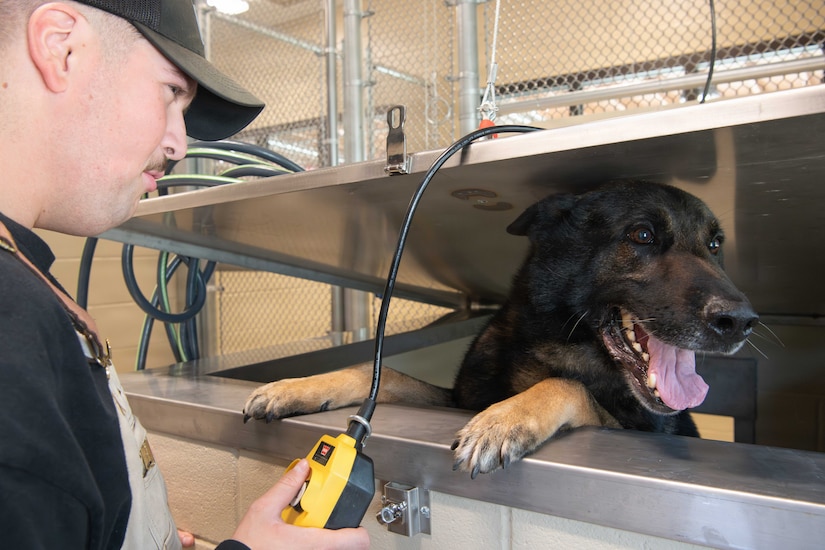
Army Master Sgt. Michael E. Eschenfelder is assigned to the Florida National Guard and has been in the Army for 36 years, both active duty and with the guard. 

"We're making D.C. beautiful and safe again for the people to walk around," Eschenfelder said. "I think every American should have the right to walk their streets without fear, and if we're out here helping them do that — it's an honor to do that." 
Eschenfelder said the work he and his team of soldiers typically do involves disaster response, such as hurricanes, so this work is new to them.

Dozens of people in camouflage military uniforms stand in formation around a man wearing business attire. Behind them stands a row of eight American flags, and in the distance is the Lincoln Memorial.

"We always get Florida back up and running real quick," he said. "But here we're on a different mission. We're not doing logistics. We're doing security. My people work in Foggy Bottom ... there's a lot of people coming up to us ... and they're talking about how great it is to see us here. They can feel that everything is relaxing." 
Eschenfelder is mostly proud of what he is involved in, and proud to be reenlisted by the secretary of war. 

"It's an honor to be here," he said. "I've never been more proud to be a soldier. I'm telling you right now, this is a good time to be a soldier. I'm just so happy and pumped up to be here for this event. It's amazing."

War Department Cuts Ties With Harvard University

Secretary of War Pete Hegseth today announced the War Department would sever its academic ties with Harvard University, because attendance at the school no longer meets the needs of the War Department or the military services. 

"For too long, this department has sent our best and brightest officers to Harvard, hoping the university would better understand and appreciate our warrior class," he said. "Instead, too many of our officers came back looking too much like Harvard — heads full of globalist and radical ideologies that do not improve our fighting ranks." 

Beginning with the 2026-2027 school year, the War Department will discontinue graduate-level professional military education, fellowships and certificate programs at the school. Hegseth noted that military personnel who are currently attending classes will be able to finish those courses of study. 

The secretary said the U.S. military has, in the past, had an important and often positive relationship with Harvard. 

"In 1775 ... Gen. George Washington took command of the Continental Army in Harvard Yard and used the university as a military base," he said. "From that time, through the Korean War, military service was commonplace at Harvard. There are more recipients of our nation's Medal of Honor who went to Harvard than any other civilian institution in the United States." 

Today, Hegseth said, Harvard is no longer a welcoming institution to military personnel or the right place to develop them.

The secretary also cited as a problem the relationships Harvard has with foreign powers, and an on-campus culture that is incongruent with military and American values and interests. 

"Campus research programs have partnered with the Chinese Communist Party," he said. "And university leadership encouraged a campus environment that celebrated Hamas, allowed attacks on Jews, and still promotes discrimination based on race in violation of Supreme Court decisions." 

While the War Department announced cessation of academic relations with Harvard, the secretary said in the coming weeks, the department and military services would evaluate similar relationships with other schools. 

"[We] will evaluate all existing graduate programs for active-duty service members at all Ivy League universities and other civilian universities," he said. "The goal is to determine whether or not they actually deliver cost-effective strategic education for future senior leaders when compared to, say, public universities and our military graduate programs." 

Going forward, Hegseth said, the War Department will focus on developing warriors, increasing lethality and reestablishing deterrence. 

"That no longer includes spending billions of dollars on expensive universities that actively undercut our mission and undercut our country," he said.

3 Consequential Days in the American Revolution

This year, the nation celebrates its 250th birthday, marked by the approval of the Declaration of Independence on July 4, 1776.

Men in historical attire stand around a table filled with documents as others in the distance are seated or standing in a room with a high ceiling.

On July 2, 1776, the Second Continental Congress enacted a resolution declaring the separation of the 13 American colonies from Great Britain. Two days later, in Philadelphia, the Continental Congress adopted the Declaration of Independence, penned by Thomas Jefferson and edited by John Adams, Benjamin Franklin and others. 

The 56 signers of the document were aware they were risking their lives, as the British considered this act treasonous. 

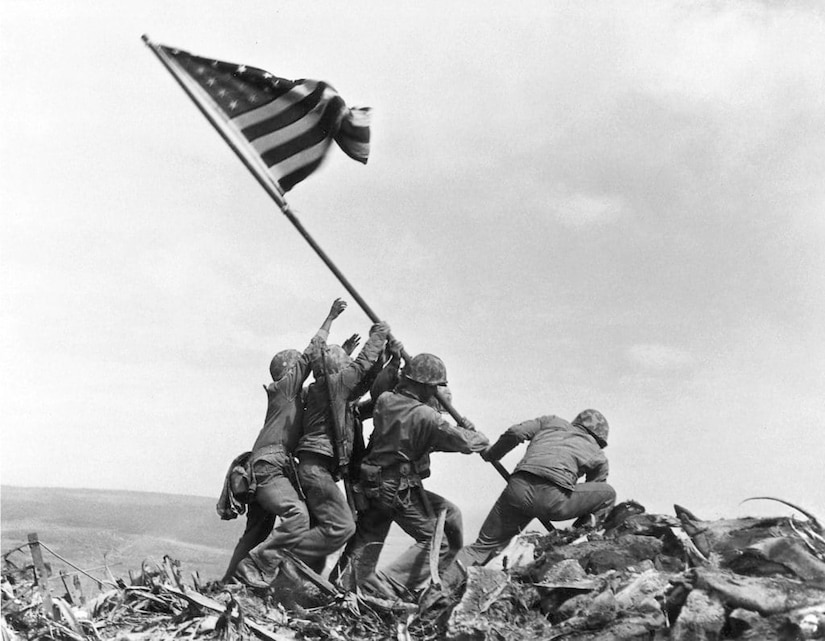
On those three eventful days, while Congress was meeting in Philadelphia, the Continental Army, Navy and Marine Corps, along with state militia, were battling British forces, German hired troops, loyalists and Native American tribes allied with Great Britain during the Revolutionary War.

Men in military uniforms hold a cannon on a wooden boat tied to a dock in a river at night, as one of them holds a smoking torch.

Gen. George Washington, the commander in chief of the Army, was in New York City leading about 10,000 troops preparing defenses against nearly 20,000 British combined forces, who had landed on Staten Island July 2. 

It was the largest battle of the war in terms of the number of combatants, with the outcome resulting in the British occupying Manhattan and the port of New York. The British held New York City until Nov. 22, 1783. 

Washington received word of the declaration signing July 9 and ordered it read to his troops.

Fleets of many small sailing ships do battle in a lake under a partly cloudy sky.

From July 2 until July 4, 1776, Army Brig. Gen. Benedict Arnold was in the vicinity of Crown Point, New York, leading the retreating American forces from Canada and overseeing the construction of a naval fleet on Lake Champlain in New York. 

Beginning July 3, 1776, the North Carolina militia fought against the Cherokee at the Battle of McDowell's Station near present-day Morganton, North Carolina. The battle ended July 12, 1776, with the Cherokee withdrawing. 

While Continental forces were retreating from Canada and New York City in early July 1776, success would come later.

A U.S. postage stamp depicts a man sitting on a horse that is standing on a hill. The man is pointing his right arm, while small sailing ships and cannons can be seen in the distance.

After a series of losses, Washington's forces defeated the British at the Battles of Trenton and Princeton in New Jersey over the winter of 1776-1777. Those victories revitalized the troops' morale. 

The Battle of Saratoga in New York in 1777 was a turning point in the war, convincing France to enter the war as an American ally. 

Other battles followed, the last major one being the British defeat at the Siege of Yorktown, Virginia, in 1781. 

After eight years of battle, the Treaty of Paris, signed Sept. 3, 1783, formally ended the war. 

Army Marksmanship Instructors Increase Lethality During M7 Training

Soldiers assigned to the 25th Infantry Division trained at the Schofield Barracks, Hawaii, in January on the Army's newest service rifle, the M7, with instructors from the U.S. Army Marksmanship Unit providing hands-on support focused on marksmanship fundamentals.

Three people in camouflage military uniforms and helmets stand and observe a man wearing casual attire and a baseball cap as he stands and aims a military rifle out of frame; the rifle is balanced on a white support structure, and trees are in the background.

The instructors worked alongside soldiers to reinforce proven shooting techniques that apply across weapon systems and assisted with ongoing M7 fielding efforts alongside program partners.

"We are working with instructors from [the program executive office] and [the U.S. Army Tank-automotive and Armaments Command] to assist in the net fielding efforts and provide marksmanship instruction and guidance to both the students and instructors as they field the next generation squad weapon," said Army Sgt. 1st Class Alexander Deal, team chief for the U.S. Army Marksmanship Unit Service Rifle Team, adding fundamentals remain critical when soldiers transition to a new platform.

Two men in camouflage military uniforms, one standing and one kneeling in a grassy terrain, aim military rifles out of frame; the rifles are balanced on white support structures. Three other people in similar attire are doing the same in the background.

"It's hard to say what fundamentals matter the most. They're all equally important, but establishing a consistent and stable position, consistent head placement, proper sight alignment, and trigger control are going to make shooting a new weapon system a lot easier," Deal said.

According to Deal, competition-style training exposes shooters to stressful and unfamiliar scenarios that highlight their strengths and weaknesses.

"[It] can help soldiers' combat effectiveness by putting them into new scenarios they may not have been in before and putting them under the stress of time, speed or accuracy to assess their level of training and where there may be room for improvement," he said.

Deal emphasized that consistency must come before speed, especially for developing shooters.

A man in casual attire and a baseball cap holds a military rifle outside in grassy terrain on a cloudy day with trees in the background, as a person in a camouflage military uniform stands partially out of frame and observes.

"It's hard to start fast and figure out what you're doing wrong versus slowing things down, assessing fundamentals and building up speed and distance [over time]," he said.

The training course is focused on noncommissioned officers returning to their units.

"The NCOs are getting familiarized with the weapon systems and optics so they can go back and train other NCOs, officers and their soldiers, and begin proper marksmanship training," Deal said, adding that the long-term goal is to sustain improvement across Army units.

Two men in camouflage military uniforms, one standing and one kneeling in a grassy terrain, aim military rifles out of frame; the rifles are balanced on white support structures. Three other people in similar attire are doing the same in the background.

"They're going to transfer that knowledge to their soldiers and peers and hopefully make improvements to their marksmanship programs that carry over into better practices and increased lethality," he said.

Naval Installation Optimizes Warfighter Fitness

The Navy's first and only Human Performance Optimization Program is officially open for business on board Naval Base San Diego. Navy Capt. Brian Bungay, base commanding officer, marked the milestone during a ribbon-cutting ceremony at the Harborside Sports and Fitness Complex Feb. 2.

About a dozen people in athletic attire and camouflage military uniforms stand in front of a ribbon as a man in a camouflage military uniform uses large scissors to cut the ribbon. There is a large building in the background.

The program is a comprehensive, performance-based initiative designed to enhance an individual's physical, mental, emotional and nutritional capabilities in order to maximize effectiveness, productivity and overall well-being. 

"The Navy's vision is clear — to enhance individual and team effectiveness by ensuring the health and viability of our warfighters," Bungay said. "We must treat our sailors like world-class athletes, and the HPO initiative is a direct reflection of that vision." 

Navy fitness is expanding beyond traditional gym access and group exercise by introducing specialized staff, performance education and recovery-focused services specifically tailored to support warfighter readiness and resilience. 

"As we move forward with the Total Sailor: Fit to Fight initiative, we must have the tools in place to ensure sailors remain our top priority and are postured for maximum combat readiness," said Navy Master Chief Petty Officer Brian S. Metzger, Naval Surface Force, U.S. Pacific Fleet, command master chief. "The HPO Program brings top experts in nutrition, cognitive performance and fitness together under one roof — right near the waterfront — which is exactly what our sailors need and something that has never been done before."

Bungay emphasized that the program is designed to provide sailors with the resources necessary to build and sustain peak physical and mental performance.

A man in a camouflage military uniform speaks into a microphone while standing behind a lectern. There is a large building in the background.
"While Navy fitness focuses on general facility access, group exercise and standard routines, HPO delivers the Navy's first performance-based program that supports the warfighter both inside and outside traditional brick-and-mortar facilities," Bungay said. "It's a place where sailors can push their limits, build resilience and develop the physical and mental toughness required to meet any challenge." 

Mary Kirby, Fleet and Family Readiness regional program director for Navy Region Southwest, echoed that sentiment, highlighting what sets HPO apart from existing programs. 

"Our [morale, welfare and recreation] fitness programs are outstanding, but sailors typically choose their own path," Kirby said. "What's different here is that sailors begin with a series of evidence-based assessments." 

Those assessments — conducted by specialized, credentialed staff operating within defined professional scopes — include body composition analysis, recovery modalities, physical training evaluations, sleep and recovery strategies, stress management tools and nutrition fueling education. 

"This model has been available at off-base commercial businesses and within select special warfare communities, but we're excited to be the first to offer it at the installation level," Kirby said. "Once metrics are collected and evaluated, the intent is to expand this program across the enterprise."

A man in athletic attire points to pamphlets on a table as another man in a camouflage military uniform looks down at the table. There are several people in camouflage military uniforms standing in the background.

Navy Petty Officer 2nd Class Troy Torres, an intelligence specialist assigned to Expeditionary Strike Group 3, encouraged fellow sailors to take advantage of the program. 

"Step one is easy — come to the [Harborside Sports and Fitness Complex]," Torres said. "Step two, talk with an HPO specialist. You'll quickly realize that fitness isn't just about gym equipment, sets and reps."