Army Sgt. Gordon Douglas Yntema, a Green Beret, fought until his last breath to make sure the Vietnamese troops with whom he served could withdraw in the face of a firefight they couldn't win. His selflessness and dedication to the cause earned him a posthumous Medal of Honor.
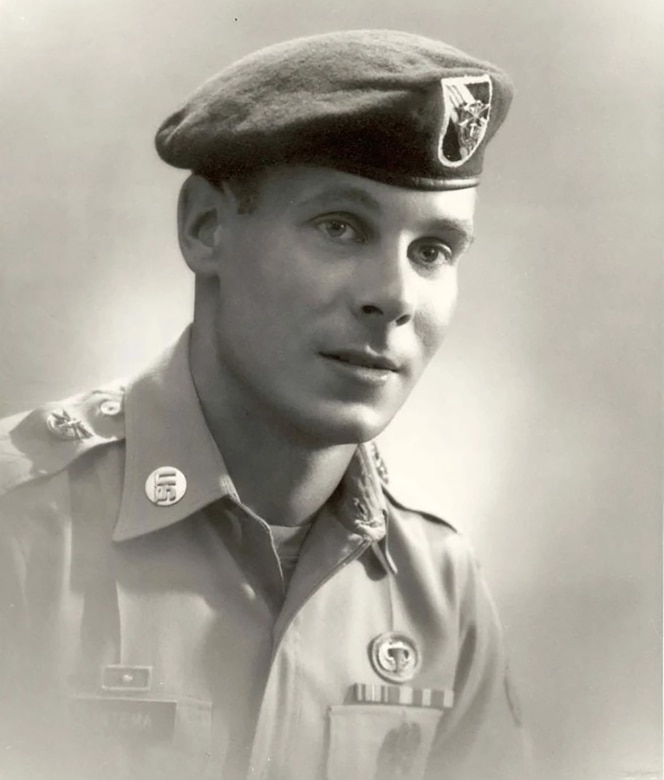
Yntema was born June 26, 1945, in Bethesda, Maryland, to Dwight and Cynthia Yntema. He had a brother named David.
When he was a little more than a year old, the family moved to Holland, Michigan, so his father could work as a professor of business administration at Hope College, according to The Grand Rapids Press.
After first going to public school, Yntema attended two preparatory schools, Culver Military Academy in Indiana and Fountain Valley School in Colorado. His military education must have stuck with him because in July 1963, shortly after he turned 18, he enlisted in the Army.
Around the same time, Yntema married Peggy Brown, also from Holland. They had two daughters, Elizabeth and Jane.
After graduating from airborne school, Yntema was assigned to the 82nd Airborne Division, where he learned helicopter mechanics. After deploying for four months to the Dominican Republic in the summer of 1965, Yntema decided he wanted more of a challenge. He then went to U.S. Army Ranger School, qualifying in 1966, before joining Special Forces in January 1967, earning his green beret.
By this time, the U.S. military presence in Vietnam was building, so Yntema was sent to the country in October 1967 with a detachment assigned to Company D of the 5th Special Forces Group, 1st Special Forces. That same month, he received a Purple Heart for wounds he suffered while stationed in a Special Forces camp west of Saigon.
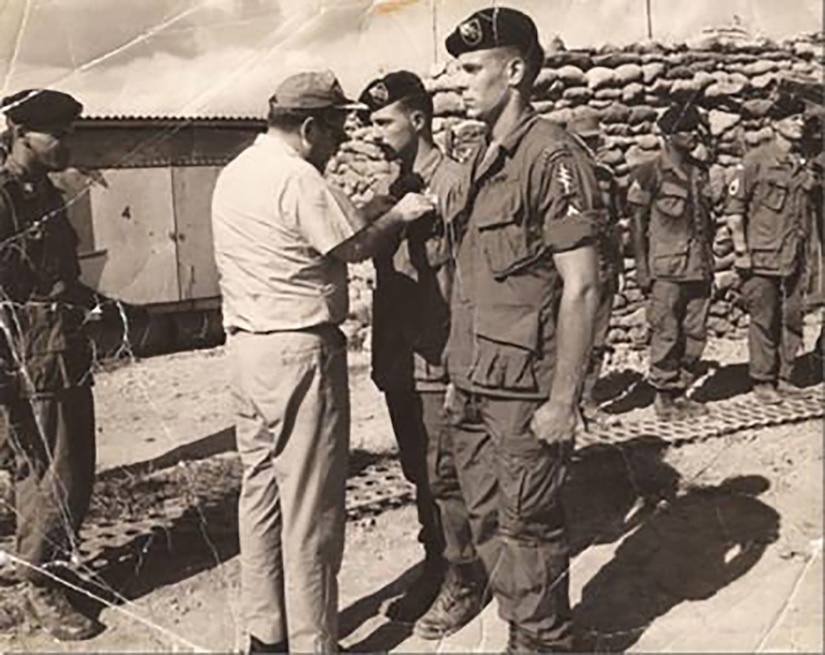
By mid-January 1968, Yntema was serving as an advisor to a Vietnamese reconnaissance platoon at Camp Cai Cai, along the Cambodia border. On Jan. 16, 1968, his team and another platoon were sent to block enemy movements near the village of Thong Binh when a firefight broke out with the Viet Cong.
The group's friendly South Vietnamese commander was seriously wounded, so Yntema assumed control of the platoons and moved them forward to within 50 meters of the enemy's bunkers. After 30 fierce minutes of fighting, they were forced to pull back to a trench for better protection so they could still carry out their blocking mission.
The situation went from bad to worse. A company of enemy soldiers moved into a position that pinned the platoons down on three sides before unleashing a mortar barrage that inflicted heavy casualties on exposed soldiers. Yntema's remaining platoonmates were low on ammunition, so many of them chose to flee.
Yntema was seriously wounded and also ordered to withdraw, but he refused to leave his fallen comrades. As enemy fire continued, the sergeant carried the wounded Vietnamese commander and another mortally wounded U.S. Special Forces advisor to a small gully about 50 meters away to try and give them some form of protection.
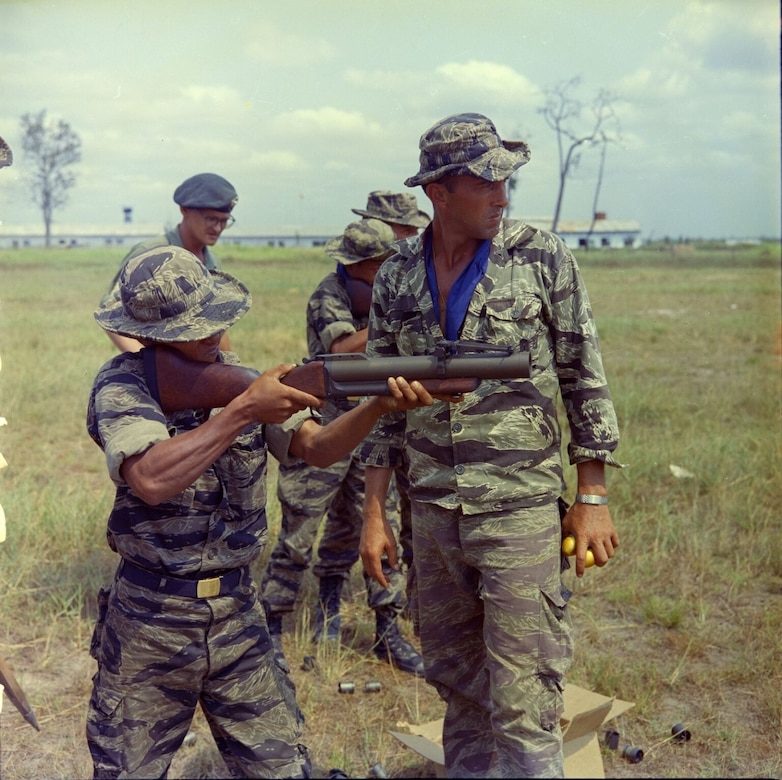
He then continued to push back the attackers, who were trying to overrun the position, until he ran out of ammunition and was surrounded. The enemy gave him the opportunity to surrender, Yntema's Medal of Honor citation stated, but he refused. Instead, he used his rifle as a club to fend off about 15 Viet Cong. His resistance was so fierce that the enemy was forced to shoot him.
Despite insurmountable odds, Yntema refused to give up, instead giving his life to make sure his surviving platoonmates could escape.
For that supreme sacrifice, Yntema received a posthumous Medal of Honor from Vice President Spiro Agnew Nov. 18, 1969, during a White House ceremony. His wife, Peggy, accepted it on his behalf.
Yntema's body was eventually returned home and buried in the Pilgrim Home Cemetery in Holland.
His sacrifice has not been forgotten. A dining facility at the U.S. Army John F. Kennedy Special Warfare Center and School at Fort Bragg, North Carolina, is named in Yntema's honor. In 2011, a section of highway near his hometown was designated the "Medal of Honor Recipients Highway" in his honor and that of three other Michigan recipients: Army Sgt. Paul Chambers, Army Lt. Col. Matt Urban and Army Cpl. John Essebagger Jr.


 Posts
Posts


No comments:
Post a Comment