Inside a shop tucked away between the hangars and flight line, sparks glow bright against steel while steady hands maneuver equipment with precision, as airmen assigned to the 86th Maintenance Squadron Metals Technology Shop quietly forge the foundation of operational capabilities.
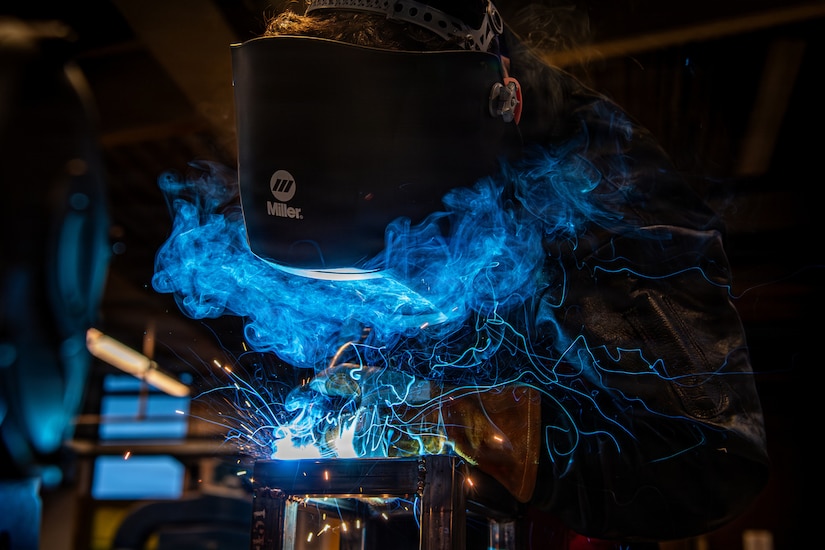
Metal technicians are responsible for fabricating, welding and
machining components that help keep aeronautical ground equipment and
aircraft functional. When a part is unavailable or damaged, metal techs
step in to provide solutions that keep maintenance timelines moving and
aircraft in the air.
"If we're not here, a lot of other jobs slow down," said Air Force
Senior Airman Noah Dunn, a metals technician journeyman. "Crew chiefs
and other shops rely on us. We're usually the last stop before something
has to go to the depot."
The work is technical, deliberate and often misunderstood. Welding on
aircraft is not simply striking an arc and fusing metal. It requires
awareness and adherence to technical orders, approved materials and
knowing the exact procedures.
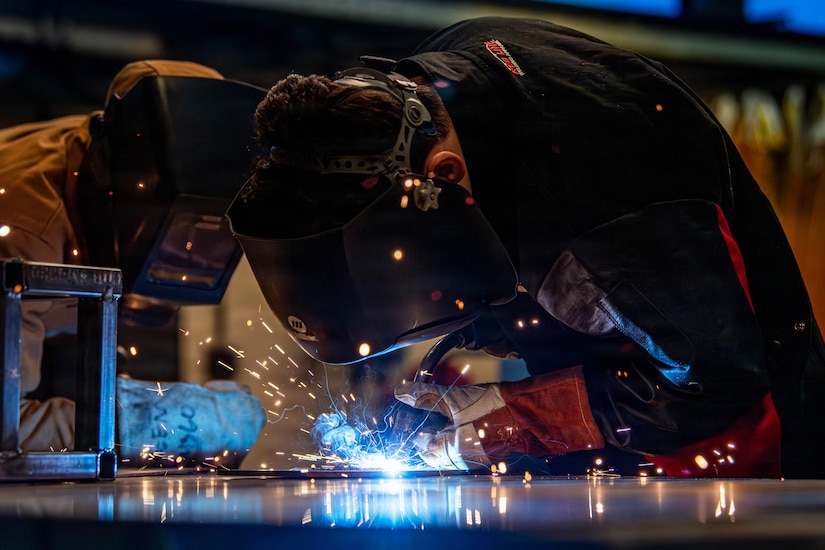
"People think it's just metal, so you can just weld it," said Air
Force Senior Airman Jordan Green, a metals technician journeyman. "You
have to know the material, the authorized filler rod, what heat settings
to use and what processes are approved. Even the weld bead has to meet
specific standards."
Preparation alone can take longer than the weld itself. Areas must be
cleaned and inspected, and fire safety measures must be in place. In
some cases, engineering approval is required before work even begins.
"Welding is mostly prep work," said Air Force Staff Sgt. Richard Forney,
the aircraft metals technology noncommissioned officer in charge. "If
you rush that part, you'll see it in the final product."
Forney emphasized that machining follows the same disciplined approach.
"It's not just putting a block in a [computer numerical control]
machine and pressing go," he said. "You have to review the program, run
simulations, verify your tooling and make sure your feeds and speeds are
correct. If something is off, you can break a tool or scrap
materials."
The satisfaction is evident in the finished products that leave the
shop. Each completed weld and machined component represents more than
craftsmanship. It showcases how one can discover strengths within
themselves that they did not see before.
"This job taught me that I can handle more complex procedures than I
thought," Green said. "If you stay focused and don't overwhelm yourself,
you can get through it."
Though the metals technology shop may operate away from the spotlight,
its contribution is unmistakable. Every aircraft that launches from
Ramstein's runway and lands safely carries with it the work of airmen
who shaped, repaired and fabricated parts that made the mission
possible.


 Posts
Posts


No comments:
Post a Comment