As part of Pegasus Charge, 1st Cavalry Division's effort in support of the Army's "Transforming in Contact" initiative to modernize armored formations, soldiers assigned to the 2nd Armored Brigade Combat Team, 1st Cavalry Division, conducted Fort Hood's first live-fire exercise of the Switchblade 600 Loitering Munition System, Sept. 15.
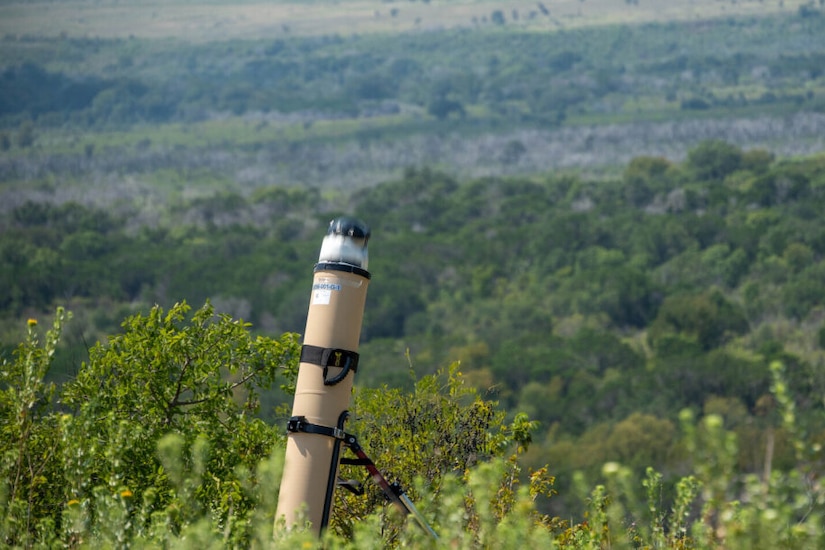
The Switchblade 600 — a tube-launched, unmanned aircraft system — has already seen extensive use by Special Operations Forces, light infantry units and foreign partners. The 1st Cavalry Division is among the first armored units to field the system.
"This is the first time for all of our soldiers to see these munitions fired, and you can feel the excitement in the air," said Army Capt. Jeffrey Weller, Multifunctional Reconnaissance Troop commander, 2nd Armored Brigade Combat Team, 1st Cavalry Division. "The Switchblade enables the brigade to engage targets with precision between 5 and 15 kilometers in front of our forward line of troops, extending our reach and lethality."
Modernizing the Fight
The Army's broader Transforming in Contact initiative aims to overhaul how armored formations fight by integrating new technologies, particularly drones and advanced communications.
"A huge thing the Army has seen across multiple battlefields, whether
in Ukraine or elsewhere, is the rapid modernization and high usage of
drones," Weller said. "We're taking those lessons learned and revamping
our [unmanned aircraft] systems to stay ahead of adversaries."
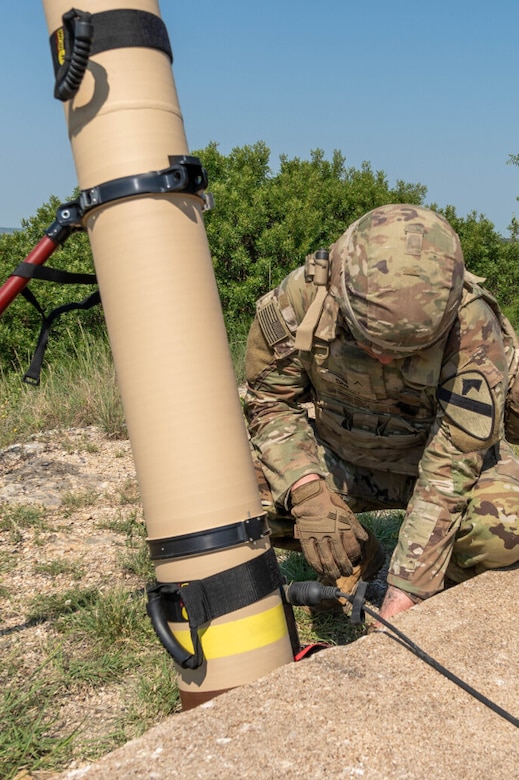
Roughly 5 feet long and weighing 75 pounds, the battery-powered
Switchblade 600 resembles a drone, but carries a Javelin multipurpose
warhead. It has a flight time of 40 to 45 minutes, a range of up to 27
miles and delivers a 5-pound explosive payload.
"It's a remote-controlled missile that flies like a drone until it gets
to the target," explained a flight operations supervisor with the
system's manufacturer. "The operator uses onboard cameras to identify,
select and engage the target."
Once launched from its tube, the Switchblade can navigate through
waypoints, loiter over the target area and strike with precision.
Operators also retain the ability to wave off a strike mid-flight if
conditions change.
"The Switchblade allows us to target vehicles or small groups of
personnel from much farther away than before," Weller said. "It
increases our lethality, minimizes collateral damage and helps protect
soldiers on the front lines."
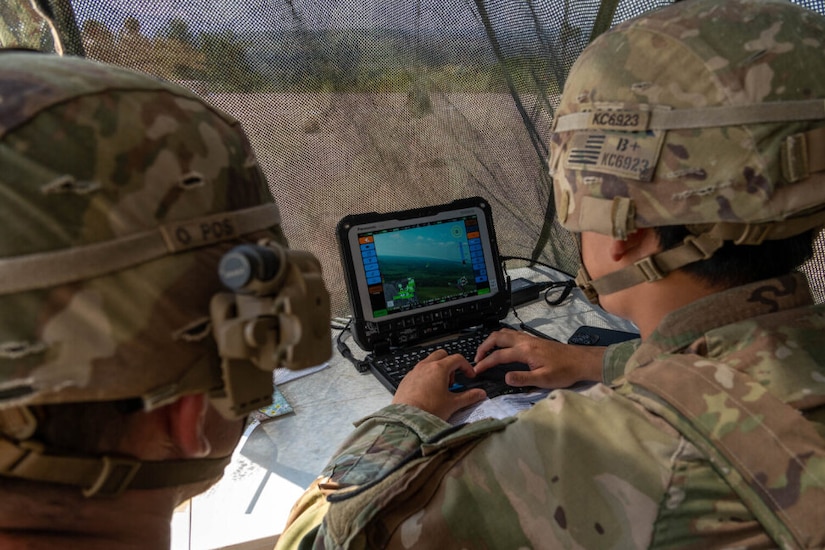
Before the live-fire exercise, soldiers completed a five-day training
course with the manufacturer, during which they learned to set up, arm
and program the drones for flight and strike missions.
Army Spc. Drake Cross, a Switchblade operator who has flown RQ-7 Shadow
and RQ-28 Quadcopter drones for the division, said this was his first
experience with a munition-carrying UAS.
"Everything else I've flown has been for surveillance and target
acquisition," Cross said. "This is the first one where I can actually
deliver a round. It's exciting because it saves soldiers' lives by
hitting targets without putting us in danger."
Cross said the system was user-friendly and similar to other UAS
platforms, adding, "There's not much of a learning curve. Once you
identify and lock onto a target, you can adjust right up until impact to
make sure you're hitting what you want."
Looking Ahead
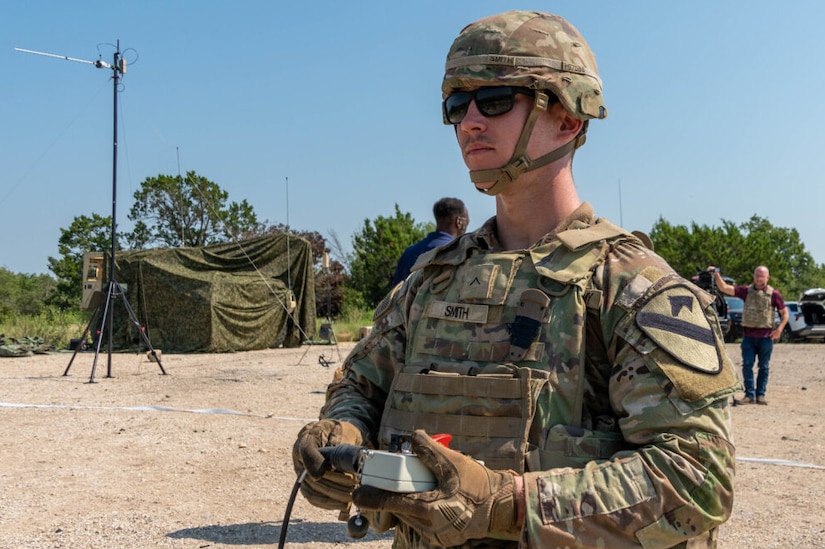
Weller said the Switchblade is just one example of how Transforming
in Contact is reshaping the 1st Cavalry Division's armored formations.
He noted that the unit will use the system during their upcoming
rotation at the National Training Center at Fort Irwin, California.
"The battlefield is constantly changing, and the Army has to modernize
to keep pace," he said. "Seeing systems like the Switchblade in action
shows us the future of how our formations will fight. It's a big step
toward keeping our soldiers safer and more lethal."


 Posts
Posts


No comments:
Post a Comment