Friday, May 29, 2026

Gunsmiths Play Essential Role in Winning Revolutionary War

During the American Revolutionary War, gunsmiths were essential to the patriot cause, providing, repairing and maintaining firearms for the Continental Army, Navy, Marine Corps and state militias.

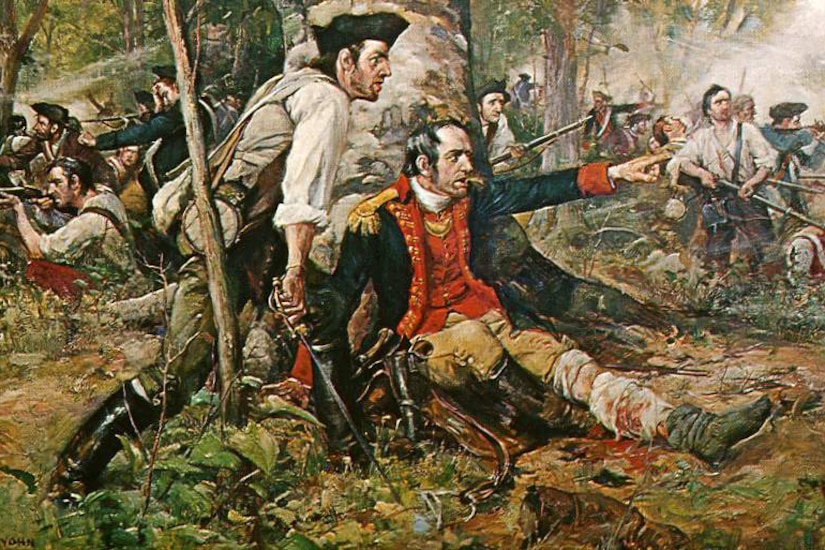
A painting depicts men in Revolutionary War uniforms fighting with long guns while some are wounded.

Operating in small shops, they created American-made, handcrafted rifles, pistols and muskets.  

While some parts were imported, gunsmiths often made complete firearms from scratch, including custom iron barrels and wooden stocks. Each gun was hand-filed and fitted, making every weapon a unique, one-of-a-kind piece.  

Unlike the guns of today, parts were not interchangeable, a huge drawback. Soldiers could not cannibalize parts from broken weapons on the battlefield to fix their own. Because parts were hand-forged and unique to each gun, there was no quick fix for a broken internal part. 

Only bore size, aka caliber, was somewhat standardized so that soldiers could use the same size lead balls.

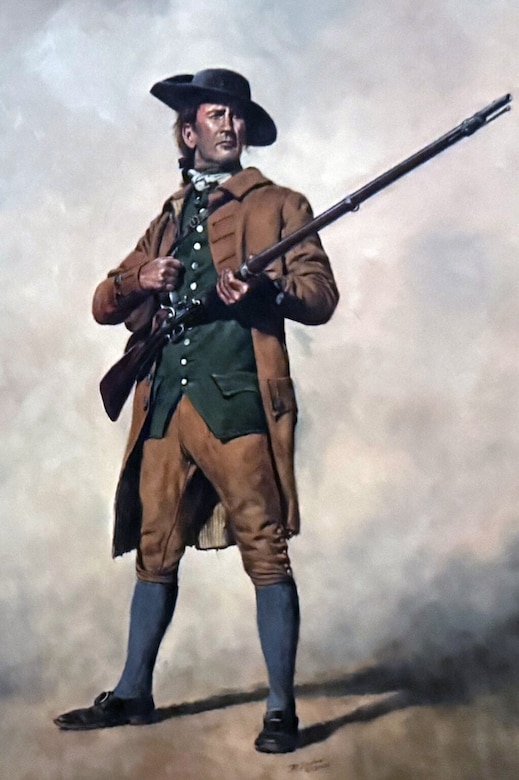
A painting shows a man in a Revolutionary War uniform holding a musket.
In the heat of battle, black powder residue called fouling, broken flints, or mechanical failures would often render a significant percentage of a unit's muskets useless after just a few shots. 

A flash in the pan occurred when the priming powder in the external pan ignited, but the spark failed to travel through the main charge in the barrel. This resulted in the gun making a puff of smoke but not firing. 

Flints typically lasted for only 20 to 30 shots before they became too dull to produce a spark. The hammer would strike the steel, but no spark would fall into the powder. 

Black powder is highly sensitive to moisture. Even high humidity could turn the powder into useless sludge. The flint would spark, but the damp powder would fail to catch fire.

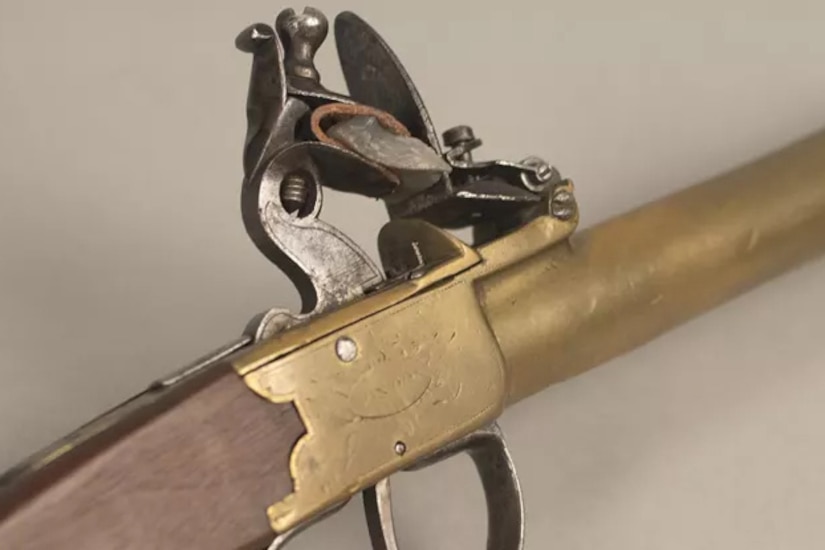
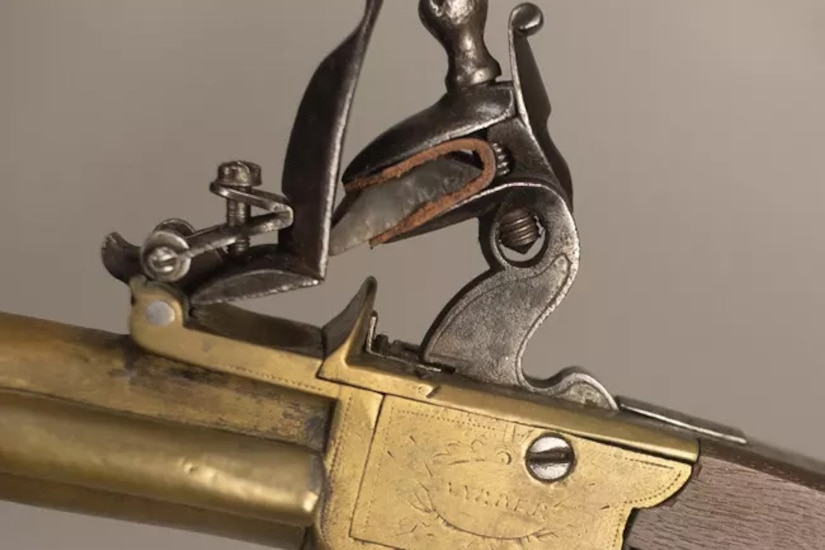
A pistol trigger mechanism is on display.
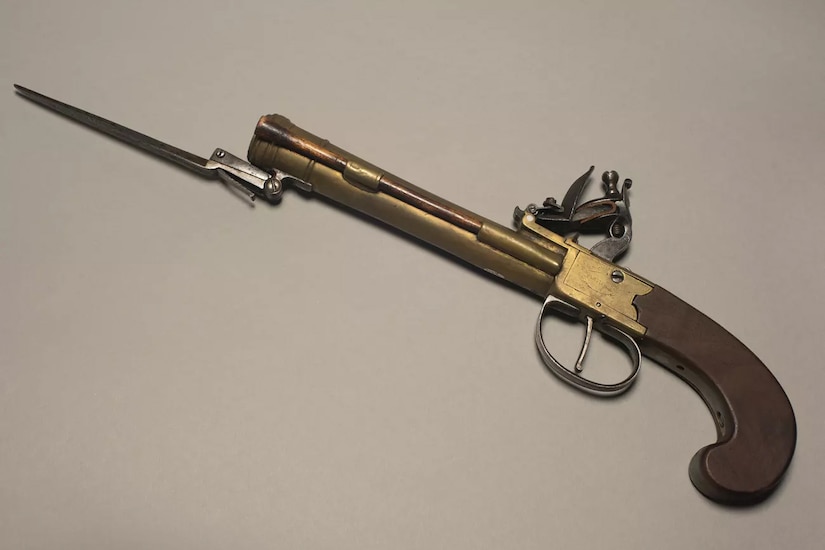
A wood and brass pistol with a small bayonet is on display.
The heavy spring that drives the hammer forward was under immense tension. If it snapped, the hammer would simply hang loose, making the weapon completely inoperable. 

Sear spring failure is the smaller internal spring holding the hammer at half-cock safety or full-cock, ready to fire. If it broke, the gun might fire prematurely or fail to stay cocked. 

The wooden stock was thinnest at the wrist where the soldier grips it. Dropping the gun or using it too forcefully in a bayonet charge often caused the wood to splinter or snap entirely. 

Broken hammers were often a weak point and could shear off at the neck after repeated use.

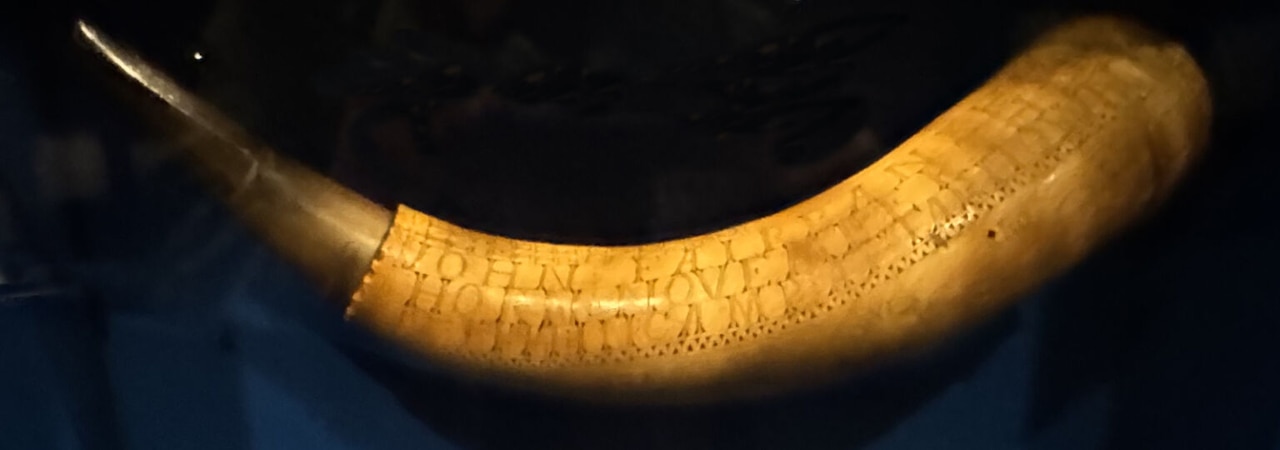
A golden color powder horn with engravings is on display.

If the gun's firing mechanism broke, it was still an effective 5-foot spear with the bayonet affixed. 

A gunsmith was as much a craftsman as a manufacturer. They had to be capable carpenters, blacksmiths and engravers to produce their rifles. A single rifle could take weeks or even months to make, depending on the desired quality and access to needed materials. Wood was plentiful in the dense forests of Colonial America, but materials like steel and the proper tools had to be obtained from cities or even Europe.

In most cases, a master gunsmith would have several apprentices who would spend years learning the trade. Once they were deemed sufficiently trained, usually after completing a weapon entirely by themselves, the apprentice would craft a set of their own tools based on the master's and set up their own shop.

The most difficult, but most valued, step was rifling the barrel. Rifling is spiral grooves inside the barrel. It increases the ball's range and accuracy. While this was done by hand with a specialized drill at first, later gunsmiths were aided by the invention of rifle-boring machines, which greatly eased the process.

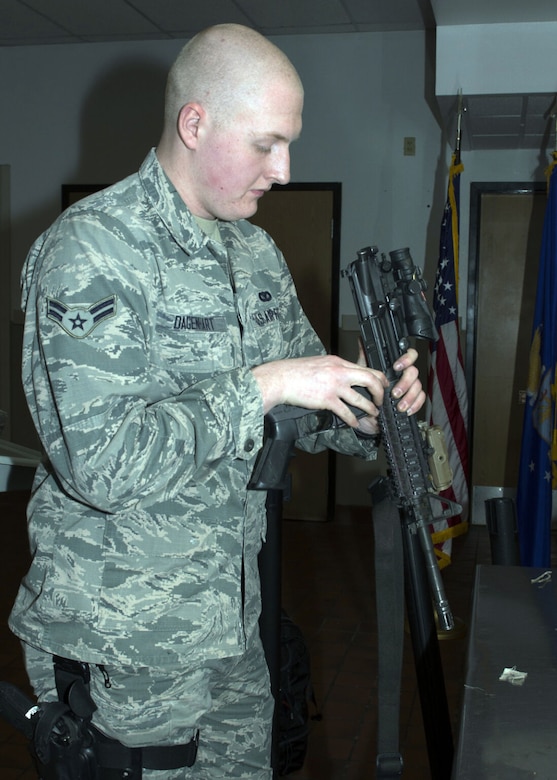
A man wearing a camouflage uniform inspects a weapon in an armory.

Until the Industrial Revolution of the late-1800s, the gun manufacturing process remained largely the same. The advent of interchangeable parts increased gun manufacturing as pieces could be made individually and replaced as needed. Parts could also be swapped, meaning a person could have two barrels for the same gun and switch them as they needed.

Prior to this, if a gun was damaged, the gunsmith would often need to spend days crafting a replacement piece specifically for that weapon. 

Now parts are stamped from sheets of metal or cast into molds that can be used repeatedly. This ability to produce intricate, delicate mechanisms from tiny, machined parts enabled the invention of automatic firearms.

Modern soldiers carry spare parts, cleaning kits, firing pins and other supplies. Revolutionary War soldiers carried almost nothing for repairs except extra flints. 

A modern armorer maintains and repairs firearms with factory-provided parts, ensuring the unit's weapons meet technical standards for combat readiness.  

A gunsmith is a skilled artisan capable of everything an armorer does, as well as custom fabrication and machining. 

Double-Amputee Paratrooper Trains for Historic Jump Into Normandy

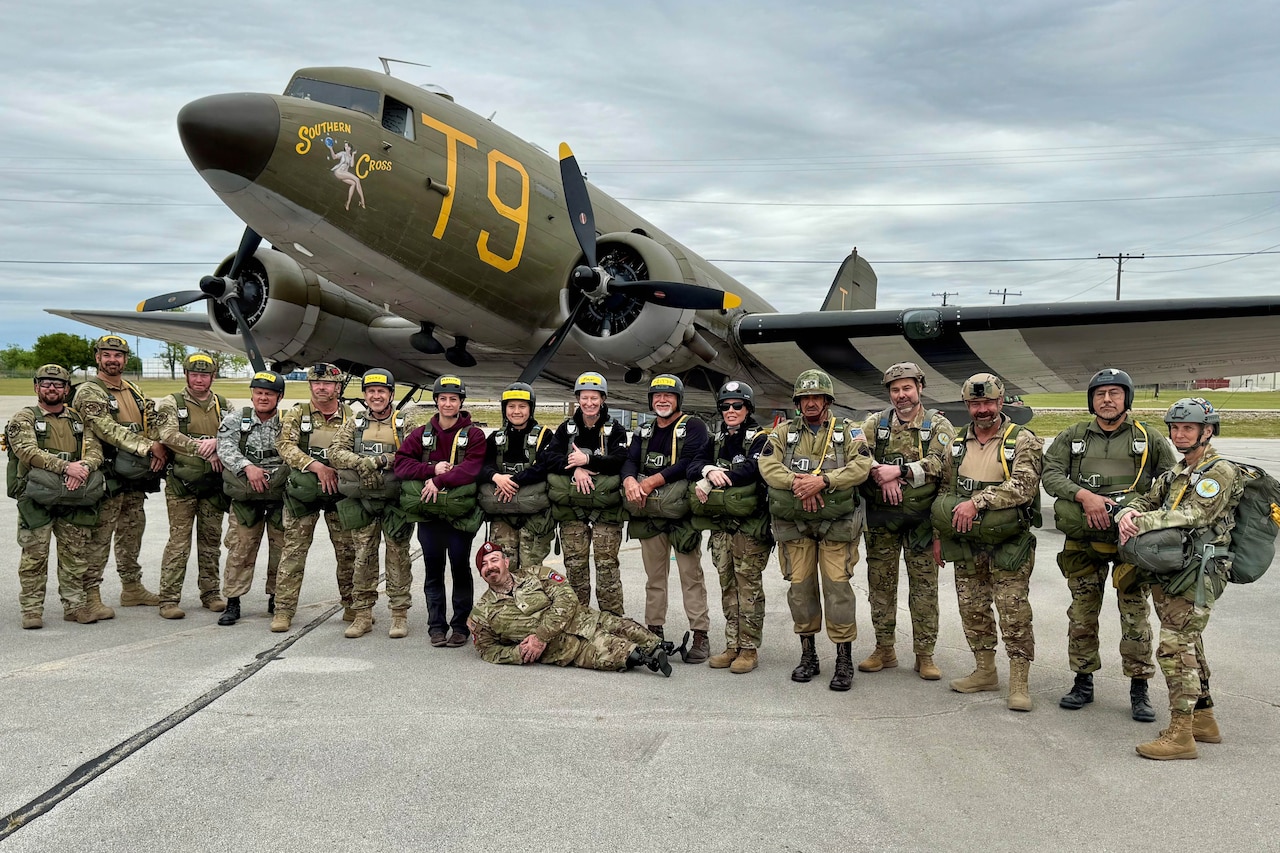
More than a dozen people in camouflage military uniforms pose in front of a World War II-era aircraft parked on a flight line. One person lies on the ground while the others stand.

Fourteen years after an explosion in an Afghan village took both of his legs and nearly his life, former 82nd Airborne Division paratrooper Jon Harmon is preparing to step into the door of a World War II‑era C‑47 over Normandy, France, and jump again. 

For Harmon, 32, the moment will mark more than a return to the sky. It will mark a return to himself. 

"Normandy's everything," Harmon said. "That's where our guys made their history, and to be able to jump in those drop zones, in front of the men who actually dropped there, is the greatest honor of my life." 

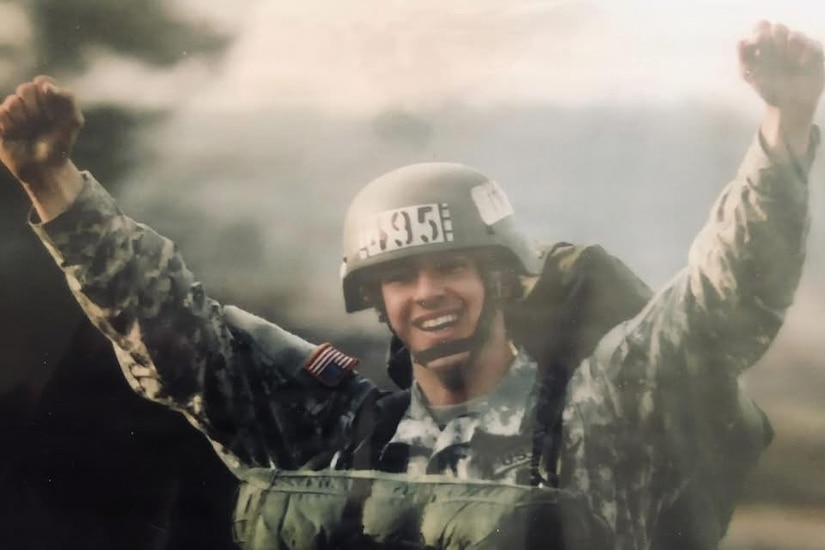
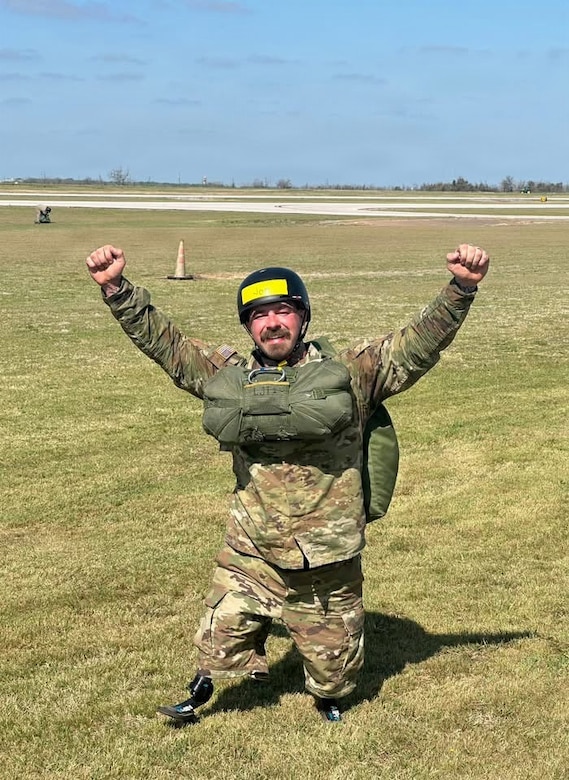
A man in a camouflage military uniform and helmet smiles and raises his fists in the air while wearing a parachute outside on the ground.

Joining the Ranks 

Harmon grew up in Cedarville, California, raised on stories of his grandfather's service and inspired by the paratroopers of World War II. 

"'Band of Brothers' came out, and then I learned who [Army Maj. Gen. Jim] Gavin was," he said. "I started reading books and researching. I thought, 'This is incredible.'" 

Harmon enlisted in 2011 — a couple of months out of high school — as an airborne infantryman. He arrived at Fort Bragg, North Carolina, as a teenager with a beret still in the post exchange bag. 

"I got immediately destroyed by one of the airborne females who picked me up because I didn't have a beret yet," he said with a laugh. "The next day, we were doing a 20K. It was everything I expected, and more." 

A year later, he deployed to Kandahar Province, Afghanistan, with the 4th Brigade Combat Team, 82nd Airborne Division. 

Harmon was a 19‑year‑old private first class on his first deployment as part of Task Force Fury, when his life changed in an instant, June 7, 2012.  

He said the mission that day began as a routine patrol and key leader engagement with village elders, about a mile and a half from their strongpoint. Harmon was serving as a machine gun ammo bearer at the time. The platoon had been in a firefight in that exact location on a previous mission. 

It was midafternoon when the maneuver element began moving into the village. Harmon and his gunner set up the support‑by‑fire position. He gave his gunner sectors of fire, checked his angles and stepped to the side of a low wall and berm, where the machine gun was positioned. 

"And that's when I stepped on it," Harmon said.  

"It" was an improvised explosive device; the blast threw Harmon into a cloud of dust and debris. 

"It was a total brownout," he said. "I kept trying to stand up. I didn't understand why I couldn't, until I looked down and saw my [tibia and fibula] sticking out." 

Army Pfc. Brandon Goodine, who was positioned near Harmon, stepped on a second device moments later. 

As medics fought to save Harmon, Goodine and multiple other casualties, a stretcher team carrying Goodine triggered a third IED. 

"They carried him right over me," Harmon said. "And then, the stretcher team stepped on another plate. It was … it was bad. It killed Brandon instantly." 

Harmon remained conscious throughout the evacuation, giving himself aid and applying his own tourniquets. His unit suffered nearly a dozen casualties during the mission.  

"It was like something out of 'Apocalypse Now' — just a pile of guys in the Blackhawk. The last thing I remember was the American flag on the ceiling as they pushed me into the surgical unit," he said. 

Everything has Changed 

Harmon woke up days later in Germany. He had undergone surgeries in Afghanistan, Germany and finally, Walter Reed National Military Medical Center in Bethesda, Maryland, where doctors amputated his left leg above the knee.  

His right leg was already gone. 

At Walter Reed, Harmon found himself surrounded by soldiers who had survived similar wounds, including his former squad leader, Army Staff Sgt. Travis Mills, a quadruple amputee. 

"He came bopping into my [intensive care unit] room on his little shorty prosthetics," Harmon said. "Seeing him made it impossible to lose yourself." 

Another noncommissioned officer, a double below‑knee amputee, showed Harmon what was possible. 

"He lifted his pant leg and said, 'It doesn't end here.' From that moment on, I wanted to be like him," Harmon said. 

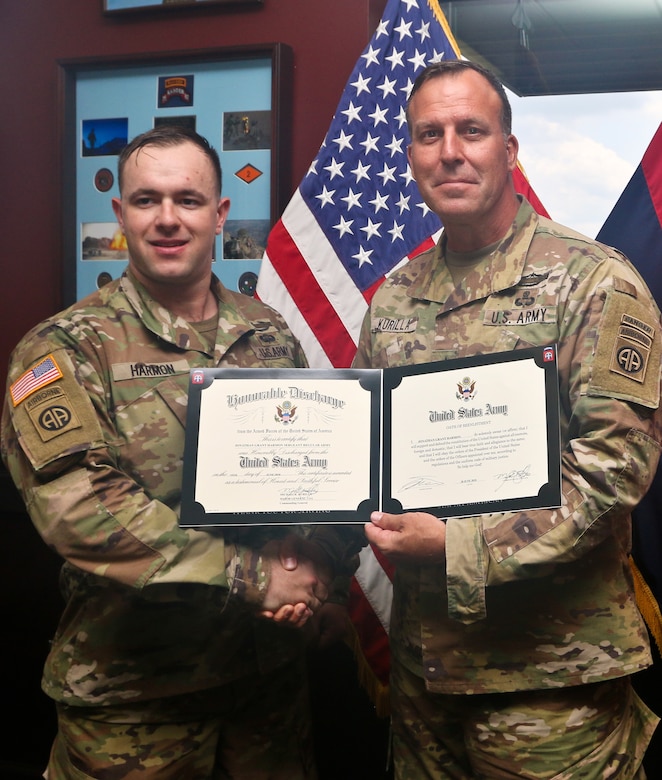
Two men in camouflage military uniforms hold a certificate and shake hands while posing for a photo indoors; an American flag is behind them.

Harmon not only recovered. He became the 82nd Airborne Division's first double above‑knee amputee soldier to return to active-duty service through the Army's Continuation on Active Duty program. 

"They actually gave me for that when I retired," he said. "I was the first person to ever do it." 

He spent years at Walter Reed as the XVIII Airborne Corps liaison, helping wounded soldiers and their families navigate the hardest days of their lives. 

"It was the greatest job I ever had," he said. "I got to inspire and motivate my paratroopers every day." 

Harmon eventually left the Army to continue his education after nearly eight years of service. 

Answering the Call 

He thought his static-line parachuting days were over. However, that changed when Dominic Mancuso, a fellow combat infantryman from his time in service, called with an unexpected question: "Would you want to jump into Normandy?" 

Mancuso told Harmon that Army 1st Sgt. Ramon Alvarez was recruiting veteran paratroopers to take part in a commemorative event. 

Alvarez and Mancuso had been deployed to Afghanistan together. Now stationed at Fort Benning, Georgia, Alvarez is the cofounder and executive director of a nonprofit organization that provides resources, support programs and life-improving opportunities for veterans and their families. 

"Eight months ago, if someone said that was possible, I would've laughed them out of the building," Harmon said. "But once it became a possibility, it was mission mode — how do we do this? What prosthetics? What padding? And then it was off to the races." 

Harmon trained with the Liberty Jump Team, a veteran-led, all‑volunteer commemorative parachute organization based in Corsicana, Texas. The team preserves airborne history by performing World War II‑style, static‑line jumps at historic sites and memorial events. Harmon tested short prosthetic legs, specialized feet and relearned the mechanics of parachuting. 

He is believed to be the first double above‑knee amputee to complete a static‑line parachute jump. He has completed three jumps, bringing his total to 10, and said he has no plans to stop. 

When Harmon stepped into the door of a C‑47 Skytrain aircraft in March, for the first time since 2012, he said something clicked. 

"I grabbed the door and thought, 'This is so cool,'" he said. "When I landed and stood up, I just broke down crying. I couldn't believe I walked away unscathed." 

His wife, Carmen, encouraged him to jump again. 

He said, "As soon as my wife saw how insanely happy it made me, she said, 'Yeah, you need to do this.' And after I came back from [basic airborne refresher], she told me, 'You need to keep doing this. I haven't seen you this happy in years.'" 

A man in a camouflage military uniform and helmet smiles and raises his fists in the air while wearing a parachute outside on the ground.

Reminding Others

For Harmon, returning to jumping isn't about proving something to himself; it's about reminding other amputees who they are. 

"If I can use what I'm doing to help my guys, so they're not hurting themselves, I'll do that for the rest of my life," he said. "I want young paratroopers to know you can go into battle [and] get hurt, and life is not over; you can keep doing incredible things." 

On June 7 — 14 years after the day that changed his life — Harmon will jump into Sainte‑Mère‑Église, the same drop zone where the 508th Parachute Infantry Regiment and the 82nd Airborne fought on D‑Day. 

"The fates always have an odd sense of irony in my life," he said. "Jumping on my 14th alive day — into the drop zone [that] my 508 guys jumped — it's surreal." 

During the jump, Harmon will carry Goodine's necklace, lent to him by Goodine's daughter and his original Army ID card. The grandfather who served in the Korean War and told him stories about this time as an infantryman died recently. Harmon will also carry some of his ashes. 

"I'll be jumping with all my guys," Harmon said. "Every paratrooper who came before me." 

Harmon hopes his story reaches two distinct audiences: young paratroopers and fellow wounded warriors. To those currently serving, his message is a call to appreciate the unique nature of their mission. 

"Stay airborne," Harmon said. "It's the greatest place on Earth." 

To his fellow wounded warriors, he offers a reminder of the identity that remains, regardless of injury. "Life isn't over; you can still do insane things," he said. "You just need someone to remind you who you are."

Harmon is a paratrooper who refused to let the worst day of his life define the rest of it. As he looks back on his journey to the drop zone in Normandy, his thoughts return to the legacy of the 82nd Airborne Division and the predecessors who paved the way. 

"I hope I'm making them proud," he said. "General Gavin, the World War II guys — all of them." 

Stay tuned for a follow-up story following Jon Harmon's historic jump into Normandy, France, next month. 
Jury Convicts Former National Guard Task Force Member for Illegal Firearm Possession Offenses That Came to Light During an Investigation into Leaks of Sensitive Operational Information

SACRAMENTO, Calif. — A federal jury on Tuesday found Ruby Celly Uribe, 37, of Sacramento, guilty of unlawfully possessing a machine gun and possessing an unregistered short‑barreled rifle, U.S. Attorney Eric Grant announced.

With certain exceptions, federal law prohibits the possession of machine guns and unregistered rifles with barrels shorter than 16 inches.

According to court documents and evidence presented at a trial, Uribe was assigned to the logistics shop at the California National Guard Headquarters in Mather, California, and was a member of the Counterdrug Task Force (CDTF). The CDTF supports local, tribal, and federal law enforcement entities in the interdiction of drug trafficking organizations. While assigned to this unit, Uribe leaked information about upcoming drug raids to a person she knew to be involved with drug dealing. Text messages recovered from Uribe’s and the drug dealer’s phones revealed she shared sensitive information about upcoming operations, including the date and location and the number of military vehicles and aircraft involved.

A federal search warrant of Uribe’s residence resulted in the discovery of a short-barreled rifle. The firearm had been modified to fire in full-automatic mode as a machine gun. In addition, it was a privately made firearm with no serial number, commonly referred to as a ghost gun. A search of Uribe’s cellphone revealed that she was also engaged in trafficking other non‑serialized, short-barreled machine guns, including to a coworker on July 20, 2022.

During preparation for trial in this case, the FBI learned of another illegal firearm that Uribe sold in August 2022. The FBI safely recovered that firearm, which is also a machine gun and short-barreled rifle. 

Short Barrel

Picture 2

The Federal Bureau of Investigation and the Bureau of Alcohol, Tobacco, Firearms and Explosives conducted the investigation with assistance from the California Military Department. Assistant U.S. Attorneys Adrian T. Kinsella and Nicole M. Vanek are prosecuting the case.

Uribe is scheduled to be sentenced by U.S. District Judge Dena Coggins on Sept. 11, 2026. Uribe faces a maximum statutory penalty of 10 years in prison and a $250,000 fine. The actual sentence, however, will be determined at the discretion of the court after consideration of any applicable statutory factors and the federal Sentencing Guidelines, which take into account a number of variables.

This case is part of Operation Take Back America, a nationwide initiative that marshals the full resources of the Department of Justice to repel the invasion of illegal immigration, achieve the total elimination of cartels and transnational criminal organizations, and protect our communities from the perpetrators of violent crime.

44th Medical Brigade Integrates Drones Into Medical Resupply Operations

Soldiers assigned to the XVIII Airborne Corps' 44th Medical Brigade are expanding battlefield medical support capabilities by integrating unmanned aircraft systems into medical resupply operations.

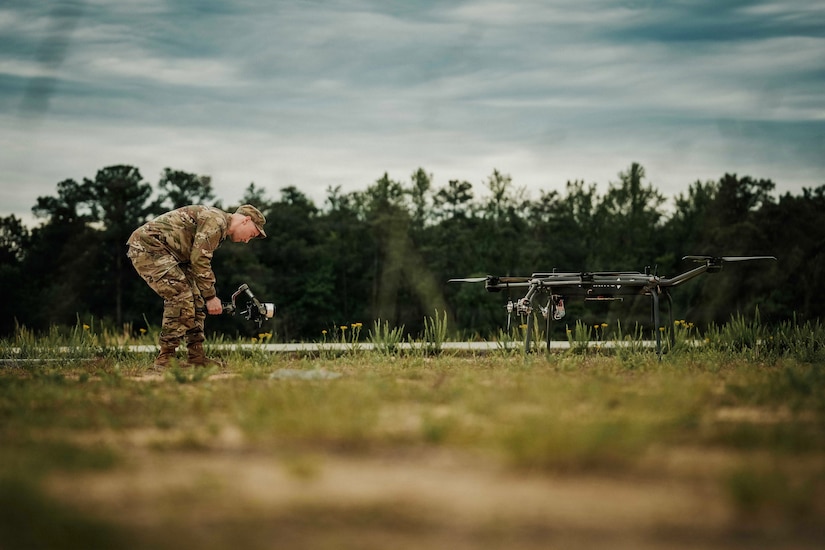
Army 1st Sgt. Fisamuel Reggans and Cpl. David Sanchez, both dental specialists assigned to the brigade's dental company area support element, recently graduated from the unmanned aircraft systems course at Clemson University's Drone Academy.

A man in a camouflage military uniform uses a device to take a photo of a military drone in a grassy field.

The eight-week online program provided training in drone operations and expanded the unit's ability to support medical resupply missions during field training exercises and deployed operations.

The program supports the Army's modernization efforts. It highlighted the need for medical units to adapt to sustain operations in contested and austere environments where traditional resupply methods may be delayed or restricted.

Reggans said UASs provide the unit with the flexibility to quickly and effectively resupply soldiers, keeping them in the fight. He added that it also enhances soldier safety, allowing commanders to mitigate unnecessary risk.

"We would rather send out a drone than a soldier," he said.

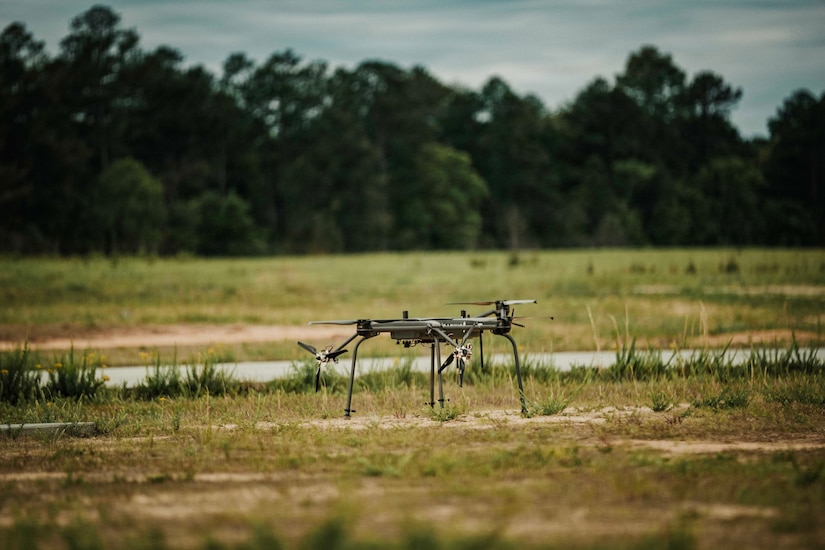
A military drone sits in a grassy field.

The new capability allows medical personnel to rapidly transport critical supplies necessary for patient care and treatment while reducing the manpower and risk associated with traditional ground resupply methods. Unmanned systems can improve response times, extend operational reach and reduce exposure for soldiers operating in hazardous environments.

The training also encouraged medical personnel to think beyond traditional medical roles and develop technical skills that support future battlefield operations.

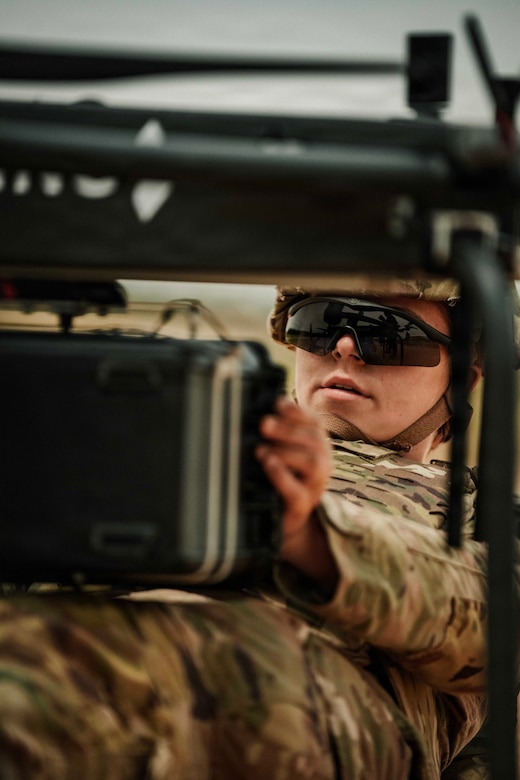
A person in a camouflage military uniform and sunglasses looks down at a screen outside while lying on their back.

Reggans said one of the most valuable aspects of the course was learning how to operate the systems manually, providing additional flexibility if automated systems fail during operations.

Sanchez said that with medical operations, there will always be a need for supplies. This capability not only makes resupply easier, but it also reduces delivery times.

The graduates said unmanned systems can significantly improve continuity of care by delivering supplies more quickly and efficiently while reducing the need to place additional personnel in dangerous operational areas.

The training also provided opportunities for collaboration across multiple warfighting functions while expanding operational knowledge beyond traditional medical specialties. Leaders within the brigade said emerging technologies, such as unmanned systems, will continue to play a growing role in future medical operations by improving speed, flexibility and survivability across the force.