Monday, December 15, 2025

Medal of Honor Monday: Army Pfc. Dirk Vlug

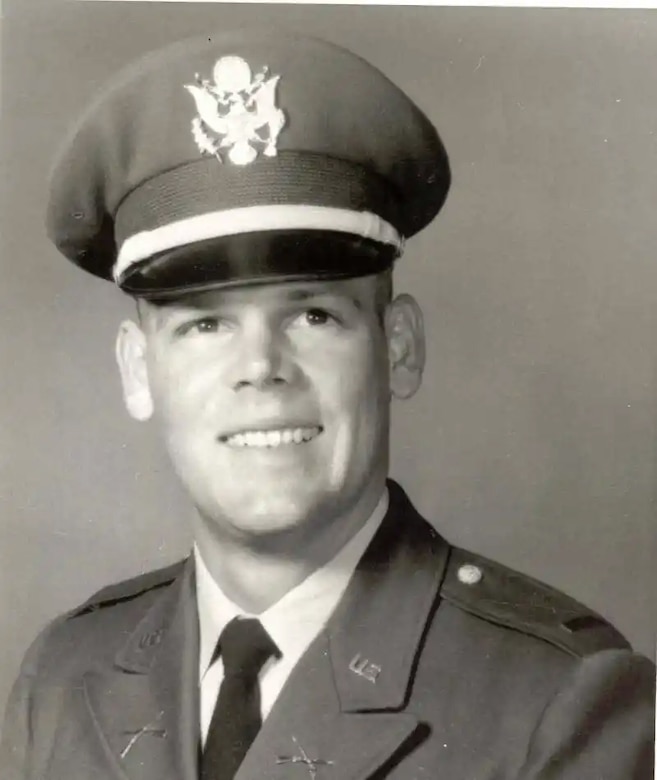
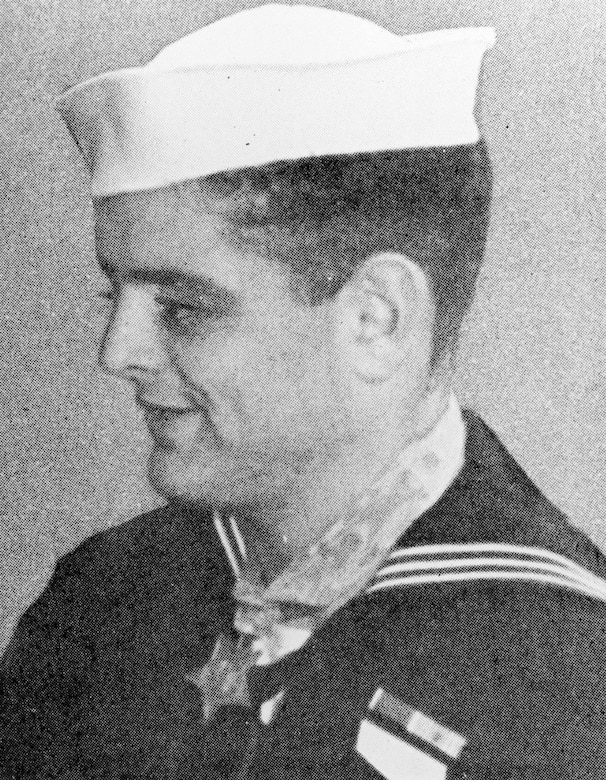
During World War II, Army Pfc. Dirk John Cornelius Vlug singlehandedly went up against five enemy tanks during the liberation of the Philippines, and miraculously, he won. The modest Midwesterner's brazen actions allowed his company to further its goal, and they made him the recipient of the nation's highest honor for valor.

A man in a military uniform and cap smiles for a photo.

Vlug was born Aug. 20, 1916, in Maple Lake, Minnesota, to Dutch immigrants Isaac and Mina Vlug. He had four sisters and a brother.

When Vlug was 6, the family moved to Grand Rapids, Michigan, so his father could pursue better work opportunities. According to a 1987 Grand Rapids Press newspaper article, when the Great Depression hit, Vlug dropped out of high school and began working to help support the family.

By April 1941, Vlug was drafted into the Army as a cannoneer assigned to the 1st Battalion, 126th Infantry Regiment, 32nd Infantry Division. After the attacks on Pearl Harbor, the division was one of the first Army units sent to the Pacific theater in April 1942. The 32nd Infantry Division went on to spend more days in combat than any other division.

A boat crowded with land vehicles and men moves through water.

Vlug took part in several island-hopping campaigns across the Pacific. By autumn 1944, the 32nd Infantry had landed on Leyte Island in the Philippines as part of the campaign to liberate it from Japanese forces that had pushed the Allies out two years prior.

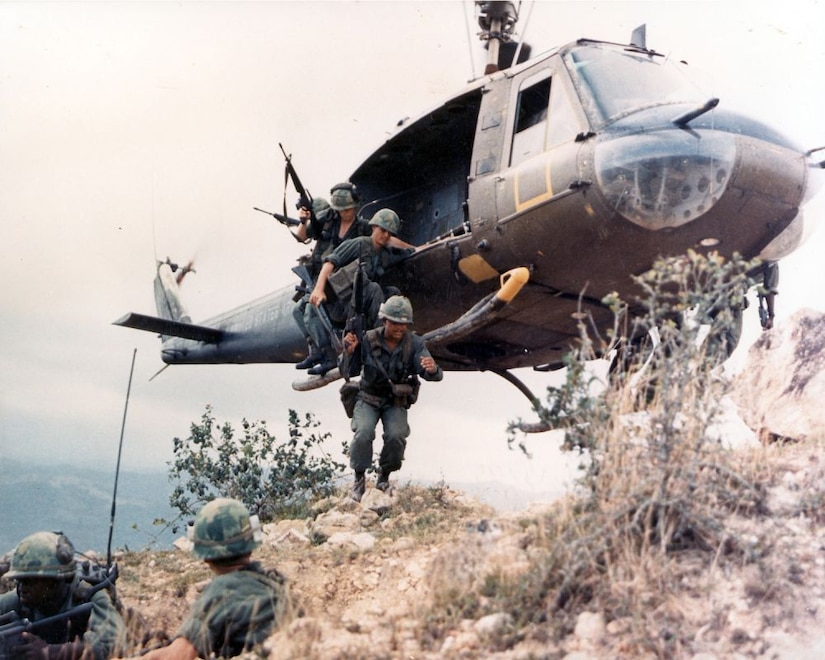
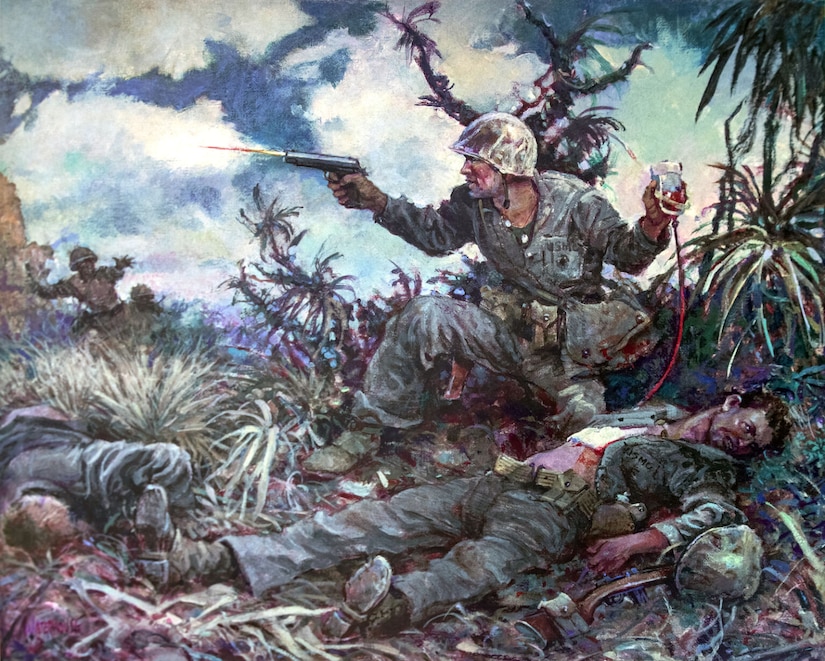
On Dec. 15, 1944, Vlug's Headquarters Company was defending an American roadblock near the village of Limon when they saw a group of enemy tanks moving toward them. Almost immediately, Vlug left the safety of his covered position and moved alone toward the tanks, despite the intense enemy machine gun and 37 mm fire directed his way. Armed with a rocket launcher and six rounds of ammunition, he took aim and fired, destroying the first tank and killing all its occupants with a single round.

As the crew of the second tank jumped off their vehicle to attack on foot, Vlug killed one of them with his pistol. The other attackers then ran back to their tank; however, once they were inside, Vlug proceeded to destroy it with a second rocket launcher round.

Soldiers move around a tank that sits in dense brush.

When three more enemy tanks moved up the road, Vlug flanked the first and took it out before pushing through a hail of enemy fire to destroy the second. He then used his last round of ammunition on the final tank, causing it to crash down a steep embankment.

Without any assistance, Vlug had destroyed five hostile tanks and killed numerous enemy soldiers. That heroism helped his company hold the blockade and later push forward toward liberation.

After being discharged from the Army in June 1945, Vlug returned to Grand Rapids and worked for the Department of Veterans Affairs for a short time before taking a job at a manufacturing plant where his brother also worked. He was on the job when he learned that he was to receive the Medal of Honor. It was an honor he remained modest about his whole life.

"I was no different than any other soldier. I saw a chance and took it," Vlug said of his actions during a Grand Rapids Press interview in 1980. "I guess, though, you have to be a keyed-up sort of guy to do what I did. You can't just sit back and let things happen."

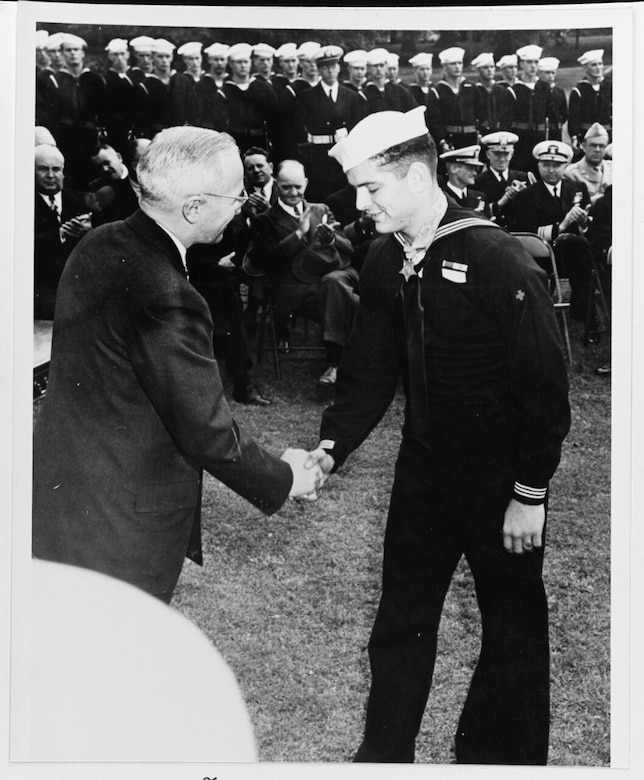
Two men shake hands on a vast lawn as others in the background watch.

On June 7, 1946, Vlug received the nation's highest honor for valor from President Harry S. Truman during a White House ceremony that also honored three other soldiers and one Marine.

Later that year, Vlug married Angie Sikkema, whom he'd initially been introduced to during the war via mail and later met in person after returning to the States, newspapers reported. The couple went on to have three daughters.

Vlug continued his military service by serving for two years in the National Guard, rising to the rank of master sergeant. He took a job as a mail carrier in 1950 and held that position for 26 years before retiring.

In his later years, Vlug enjoyed golfing, bowling and building birdhouses, and he remained active among veterans' groups. According to his family and friends, his life was characterized by humility, and he rarely talked about his exploits during the war.

Dozens of men move past fallen trees into a patch of tropical forest.

In 1992, Vlug received Michigan's highest military honor, the Distinguished Service Medal. Two years later, the 78-year-old was one of two Medal of Honor recipients invited to attend the 50th commemoration of the liberation of the Philippines. Vlug and his wife made the trek to the island nation, his first time setting foot there since the war.   

Vlug died on June 25, 1996, at the age of 79. He is buried at Greenwood Cemetery in Grand Rapids.

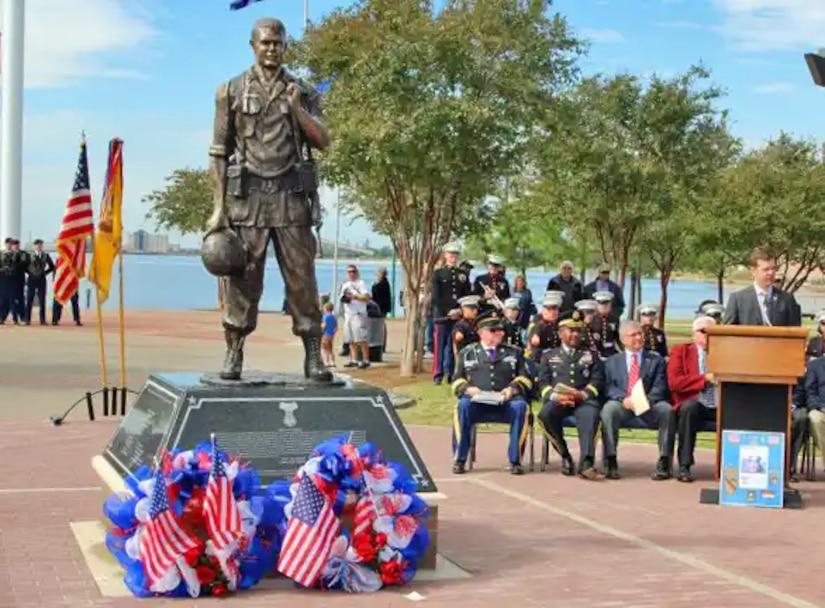
His home state has not forgotten his heroics. In 1999, a section of the Veterans Memorial Parkway in Grand Rapids was renamed Dirk Vlug Way. His Medal of Honor is also on permanent display at the Michigan Heroes Museum in Frankenmuth, Michigan.  

Trump Awards Soldiers, Marines Border Defense Medal

President Donald J. Trump awarded a group of 13 soldiers and Marines with the recently established Mexican Border Defense Medal during a ceremony today at the White House.  

Established Aug. 13, 2025, via a memo signed by Secretary of War Pete Hegseth, the MBDM — which is backdated to Jan. 20 — recognizes service members who deployed as part of Joint Task Force Southern Border to the U.S.-Mexico border to provide military support for the Department of Homeland Security and U.S. Customs and Border Protection. 

"On Day 1 of my administration, I signed an executive order making it [the] core mission of the United States military to protect and defend the homeland, and today we're here to honor our military men and women for their central role in the protection of our border," Trump said prior to the presentation of the medals. 

The president added that border security was an issue he placed a great deal of emphasis on during his most recent campaign for the presidency, and that the men and women of the military are doing an outstanding job of ensuring that security. 

"They're unbelievable; they make us all look good," Trump said of the service members. 

Hegseth spoke about the border mission's importance earlier in the day while meeting with the awardees at the Pentagon.  

"I think it's really cool that the folks that we have here … get a chance to stand there with their commander in chief in front of the country, for this incredible mission, which started on Day 1 of this administration," Hegseth told the group. 

He went on to say that border security is a core mission related to defending the U.S. in its own hemisphere.  

"It's getting down to that border and getting control of it; and whether it's hanging concertina wire and reinforcing fencing or patrolling … you guys have jumped at the mission, gotten after it, and I think it's been six months of effectively zero crossings on the southern border, which [was] the goal," he continued.  

Hegseth also explained that the newly issued MBDM is an exact replica of the original Mexican Border Service Medal, which was created in 1918 and awarded to U.S. troops who fought against the paramilitary forces of Francisco "Pancho" Villa during the Mexican Revolution.

Many of the awardees — who, according to Hegseth, represent approximately 25,000 service members who currently qualify for the MBDM — said they felt honored to be recognized for their efforts on the border. 

"It's an absolute honor, you know, because I have a lot [of friends] out there [on the border] that do a lot of good on this mission, and to see that what we do is actually making an impact and seeing the result is absolutely astonishing; it's awesome," said Army Sgt. Jhonier Marin, a reservist assigned to the 808th Engineer Company who spent months patrolling the border near El Centro, California, and Eagle Pass, Texas. 

"[The border mission] was very impactful. I feel what we're doing [benefits] the country, and it feels good to see the benefit of the work that [the military] has done," said Marine Corps Lance Cpl. Zeth Collins, who served as a welder and boom operator in support of JTF-SB.  

"This is not a secondary mission. … This is the front [line] of the defense of this country. We're taking it seriously [and] it starts with human beings," Hegseth told the awardees.

"You're on the front lines of locking it down for the American people; so, thank you for everything you've done," he added.  

Prior to the MBDM's aforementioned revival, service members who served on the border were recognized with the Armed Forces Service Medal.

Statement by Chief Pentagon Spokesman, Sean Parnell, on the Restoring Honor to Service Members Separated Under the Coronavirus Disease 2019 Vaccine Mandate Memorandum

The Secretary of War recently directed the military departments to proactively review personnel records of service members involuntarily discharged solely for refusing to take the COVID-19 vaccine and facilitate discharge upgrades as appropriate.  

Under the previous administration, the Department involuntarily separated approximately 8,700 Service members for failing to comply with the Department's since-rescinded COVID-19 vaccination mandate. Of those, more than 3,000 received less than honorable discharge characterizations. The military departments have been directed to complete their respective proactive reviews within one calendar year. Former service members won't need to do anything; the Department will look into the potential upgrades on its own.

Any service member or veteran who believes that their records reflect an error or injustice should visit the military review boards website at https://www.milreviewbds.mil for information on how to apply for relief.

Additionally, the Department is eager to welcome those former service members back to service. Individuals will have until April 1, 2026, to take advantage of this reinstatement opportunity. More information can be found at https://www.war.gov/Spotlights/COVID-19-Reinstatement/.

The Department is committed to ensuring that everyone who should have received a fully honorable discharge receives one and continues to right wrongs and restore confidence in, and honor to our fighting force.

High-Tech Helpers: NORAD Volunteers Track Santa's Journey

Each December, millions of families around the world follow along as Santa Claus makes his Yuletide trek around the globe, but the holiday tradition wouldn't be possible without the North American Aerospace Defense Command's Santa Tracker.  

The Santa-tracking enterprise has grown into a massive volunteer operation that started by accident decades ago. 

Santa Claus smiles for a photo in front of a fighter aircraft, parked in a hangar.

Kids across the U.S. have grown accustomed to following Santa's journey by tracking his flight path online or by making an old-fashioned phone call to NORAD to find out where his next stop is. They're also able to play games and watch videos of his progress through the mobile "NORAD Tracks Santa" app.  

All of this is possible, of course, thanks to hard-working personnel at NORAD. They start the task of tracking Santa each November, when NORADSanta.org starts getting inquiries from families. About 50 national and local contributors help set up the website, apps and phone lines, while about 1,000 uniformed personnel, War Department civilians, their families and supporters volunteer their time on Christmas Eve to answer questions on St. Nick's whereabouts.

High-Tech Tools Required 

NORAD protects the skies over North America all year long, so it makes sense that the command is especially equipped for this mission.

A woman wearing a headset and a Santa cap talks on the phone at a table decorated in Christmas decor. Others are doing the same in the background.
Several people sitting in a conference room covered in Christmas décor look at laptops and talk on headsets.
NORAD's powerful radar system, called the North Warning System, has 49 installations across Alaska and northern Canada. As soon as that radar system picks up on Santa departing from the North Pole, NORAD tracks him using infrared sensors from globally integrated satellites that normally allow NORAD to see heat from launched rockets or missiles. As Santa flies through the skies, satellites track his position by detecting Rudolph's nose, which gives off an infrared signature similar to that of a missile. 

NORAD also uses U.S. Air Force F-15, F-16, F-22 and Canadian Air Force CF-18 fighter jets to track Santa. On Christmas Eve, fighter pilots rendezvous with Santa off the coast of Newfoundland to welcome him to the continent. They then safely escort him through North American airspace until he's ready to return to the North Pole.  

Three men in military camouflage uniforms smile as they decorate small Christmas trees and wrap presents.

The operation has become a well-oiled machine over the years, but it wasn't always. In fact, the whole thing began as a fluke.  

An Accident Becomes Tradition 

In 1955, the folks at the previously named Continental Air Defense Command Operations Center in Colorado were working a typical night shift when Air Force Col. Harry Shoup received a phone call from a child in Colorado Springs. Using directions he found in a local newspaper ad, the boy tried to call Santa directly. However, the number in the ad was printed incorrectly, so instead, he called CADCOC.  

Shoup could have been a scrooge about the whole thing, but he wasn't. He entertained the boy's call as well as the rest of the calls that came through because of the misprinted number. Throughout the night, Shoup and his operators answered the calls, and thus began a new tradition. 

A man in an aircraft cockpit smiles for a photo.

The role of tracking Ole St. Nick was handed to NORAD when the command was formed in 1958, and it's been getting more popular and more technologically savvy ever since. Aside from calling in to talk, kids can now use social media and a mobile app to follow Santa. Artificial intelligence services help track him, and the website NORADSanta.org offers a countdown clock, games and videos available in several languages. 

New in 2025, people can call into the operations center directly through a free calling option on the website, allowing millions more families overseas to call NORAD for updates on Santa's journey.   

The tracking of Santa is a holiday tradition around the world. On Christmas Eve in 2024, NORADSanta.org received approximately 32 million views from around the globe, while call center volunteers answered about 380,000 calls. The @noradsanta Facebook page currently has 1.9 million followers, more than 207,500 follow along at @noradsanta on X and about 29,500 people follow @NoradTracksSanta_Official on Instagram.  

The call center opens at 6 a.m. EST Dec. 24. Kids can call 877-Hi-NORAD (877-446-6723) to find out Santa's location, or use the above website, mobile app or social media. But officials warned that Santa only comes if children are asleep, so make sure they get into bed early, so he doesn't miss your house. 

Happy tracking, everyone!  

Saturday, December 13, 2025

Seven Minutes of Silence

This is a fictional account. Yet nothing in it is imagined without reference. The systems, capabilities, and behaviors described are drawn from documented military realities and the lessons of past conflicts—lessons that history shows are often forgotten until they reappear under new names, in new places, with familiar consequences.


Precipitating Event 

The incident that would later be called The Gulf Miscalculation began without gunfire.

At 0417 local time, a Venezuelan air-defense radar site on the Paraguaná Peninsula detected a high-altitude track approaching from the north—steady speed, consistent heading, no transponder response. The operator, a lieutenant barely six months out of advanced training, flagged it as anomalous. The system had been temperamental for weeks, plagued by intermittent outages and calibration errors. But the track persisted.

The political atmosphere made caution impossible. For months, Caracas had warned of “imperialist reconnaissance flights” probing Venezuelan sovereignty. State television had replayed images of U.S. naval deployments in the Caribbean, narrating them as preparation for invasion. Senior officers had instructed air-defense units to demonstrate vigilance—any hesitation would be treated as dereliction.

The contact never crossed Venezuelan airspace. It did not need to.

At higher headquarters, a duty officer interpreted the track differently. The altitude and signature suggested a supporting asset—possibly an intelligence or refueling aircraft operating in international airspace but within theoretical engagement range. A request for clarification was sent up the chain. The reply came back terse: Maintain readiness. Do not allow provocation to go unanswered.

The rules of engagement had been rewritten two weeks earlier. They were defensive in language, aggressive in interpretation.

At 0431, the radar briefly lost lock, reacquired, then lost it again. The system’s software flagged potential electronic interference. To the operators, that confirmed hostile intent.

At 0436, authorization was granted at the sector level—not national command—to illuminate the track with fire-control radar. The action was framed as signaling, not attack.

The U.S. aircraft detected the illumination immediately.

Seven minutes later, a surface-to-air missile left its launcher—not on a firing solution, but close enough to remove doubt.

The missile self-destructed over the Caribbean.

The war began anyway.


Hour 0–6: Recognition

Washington learned of the incident not from Caracas, but from the crew.

The pilot’s voice came through calm but clipped: “We were painted. Missile launch detected. No damage. We are clear.”

In the National Military Command Center, the phrase missile launch detected froze the room. There was no ambiguity in the sensor data. This was not a flare. Not a radar glitch. Not a warning shot in the old sense.

It was an act.

The President was woken within minutes. The briefing was short, factual, and deliberately restrained. No mention was made of retaliation. Only confirmation.

Caracas, meanwhile, announced nothing.

Inside Miraflores Palace, the mood was celebratory, then uncertain. The Defense Minister framed the event as a successful deterrent action—proof that Venezuela would not be intimidated. The Foreign Ministry urged silence, hoping to shape the narrative before Washington could.

But Washington did not speak either.

That silence unnerved everyone.

Markets reacted before governments did. Oil futures spiked. Insurance underwriters quietly suspended coverage for commercial traffic in parts of the southern Caribbean. Airlines rerouted.

By dawn, both militaries had raised readiness levels—not mobilization, but posture. Ships adjusted spacing. Aircraft shifted orbits. Commanders were told to expect friction.

No one fired another shot.

Yet.


Hour 6–12: Posture

The United States did not respond with force. That decision surprised Caracas—and worried allies.

Instead, the response came as movement.

A Carrier Strike Group operating legally in international waters adjusted its position—not closer, but broader, widening its operational footprint. Support ships altered course. Surveillance assets multiplied. None crossed Venezuelan airspace.

This was escalation by geometry, not violence.

Publicly, the U.S. statement was brief: “An unprovoked missile launch against a U.S. aircraft operating in international airspace represents a dangerous and unacceptable action. The United States reserves the right to defend its forces.”

In Caracas, that sentence was dissected word by word.

Unprovoked.
International airspace.
Defend its forces.

State media denounced it as imperial rhetoric, but the military understood the subtext. The United States was asserting legal clarity, not emotional outrage. That was more dangerous.

Venezuelan air-defense units were ordered to disperse. Mobility drills commenced. Missile batteries relocated under camouflage nets and civilian cover infrastructure. Communications shifted to lower-power modes.

The problem was coordination.

Years of sanctions and internal political purges had hollowed out institutional trust. Units followed orders, but not always the same orders. Some commanders interpreted restraint as weakness. Others feared triggering something they could not control.

By mid-day, a Venezuelan coastal patrol vessel challenged a U.S. Navy ship over radio—routine, scripted language. The U.S. response was polite, professional, and recorded.

No shots fired.

But the sound of engines, radars, and voices filled the silence where diplomacy used to be.


Hour 12–24: Pressure Without Contact

The first night passed with no kinetic exchange.

That, too, was a decision.

U.S. doctrine emphasizes control of escalation—applying pressure without forcing the adversary into a corner where pride outweighs reason. That pressure came through information dominance.

Caracas discovered that several of its government websites were unreachable. No attribution was made. Power flickered briefly in parts of the capital, then returned. State television blamed aging infrastructure.

Inside the Venezuelan military, confusion spread. Orders contradicted each other. Some radar units were told to remain dark. Others were told to stay active. The fear was not attack—it was miscalculation.

In Washington, the President met with senior advisors late into the night. The question was not whether the United States could dominate the conflict. It was whether doing so would stabilize the region or shatter it.

Latin American allies urged restraint. Russia issued a statement calling for calm, conspicuously avoiding promises of support. China said nothing.

That silence was noticed.

At 0214 local time, a Venezuelan radar briefly locked onto another U.S. aircraft, then disengaged. The operator hesitated, finger hovering over the console.

He did nothing.


Hour 24–36: The First Casualties

The first casualties were not military.

A Venezuelan commercial vessel transiting near the Gulf of Venezuela reported GPS interference and altered course, colliding with a smaller fishing craft. Two sailors were lost at sea.

The government blamed U.S. electronic warfare. The United States denied involvement.

Both statements could be true.

By mid-morning, protests erupted in Caracas—not against the United States, but against uncertainty. Food deliveries slowed. Fuel lines lengthened. Rumors traveled faster than facts.

Inside the Venezuelan high command, a fracture emerged. One faction argued that the initial missile launch had succeeded—Washington had not struck back. Another argued the opposite: the absence of immediate retaliation meant the United States was shaping something larger.

The Defense Minister requested explicit political guidance.

The President hesitated.

Leadership in crisis is not about strength alone. It is about timing.

That hesitation would matter.


Hour 36–48: The Point of No Return

The second night brought clarity of a sort.

A Venezuelan air-defense unit, operating under degraded communications, detected a contact it believed was violating sovereign airspace. It was wrong. The track was a civilian aircraft rerouted due to regional instability.

The missile was launched.

It struck the aircraft at cruising altitude.

There were no survivors.

Within minutes, the truth was undeniable. The flight data. The debris field. The transponder logs.

This was no longer a bilateral incident.

Washington’s response was immediate and public.

“This was a tragedy born of reckless militarization,” the Secretary of State said. “It will not go unanswered.”

Carrier aircraft did not launch strikes. Not yet.

But the world understood what had changed.

The conflict was no longer hypothetical.

It had names.


Epilogue of the First Forty-Eight Hours

By the end of the second day, both sides had lost control of the narrative they believed they commanded.

The United States had not sought war—but it now faced one.

Venezuela had sought deterrence—but had demonstrated danger.

Neither had planned the path from radar lock to catastrophe.

That is how modern wars begin.

Not with declarations.

But with systems, stress, and human judgment failing at the same moment.

Friday, December 12, 2025

50 years of Army-Navy Student Exchange Program

Every year at the Army-Navy football game, one of the most anticipated traditions is the "prisoner exchange," and this year marks the 50th year of the exchange program between the U.S. Naval Academy in Annapolis, Maryland, and the U.S. Military Academy at West Point, New York. 

A midshipman wearing a Navy dress uniform and a soldier wearing a West Point dress uniform shake hands at midfield in a football stadium. They are surrounded by a line of midshipmen and cadets in similar attire to the left and right, who are standing at attention.

At midfield, a handful of cadets and midshipmen are ceremonially returned to their home side of the stadium after spending the fall semester at their rival academy. 

"The Service Academy Exchange Program is a voluntary and competitive application process at West Point," said Noah Keith, a class of 2027 West Point cadet. "At the beginning of second semester sophomore year, everyone with a cumulative GPA over 3.3 is invited to apply." 

Under the program, cadets and midshipmen spend the fall semester at their rival academy, living in barracks, attending classes and training together alongside the other service. The memorandum of agreement between each school's commandant formalized the process. Today, it is considered a one-for-one swap in most cases. 

"I got interested in the West Point exchange during my [freshman] year when I saw the prisoner exchange for the first time," said Michael Middleton, a Naval Academy senior. "I asked my upperclassmen who they were and how they got to do that. That interest grew as I became interested in commissioning as a Marine Corps officer." 

Reasons for applying may differ, but for each academy, it's not a guarantee you'll be accepted. 

"West Point selects the cadets going to each of the service academies. I found out I was going to [the Naval Academy] around spring break," Keith said. 

Eight people wearing military dress uniforms stand in a straight line in a stadium. Six of them are holding flags, including the American, Army and Navy flags, while the two standing to the far left and right of the line are holding rifles.

This tradition has its roots in much earlier academic exchanges and weekend trips. As far back as 1945, cadets and midshipmen began swapping campuses for short, informal weekend visits that laid the groundwork for this long-held tradition among the sister academies. 

"I got to study subjects like grand strategy and generalship that I would have never [gotten] the opportunity to study in Annapolis," Middleton said. "I would recommend for everyone at USNA to apply. It was an invaluable experience to learn the joint environment and make interservice friendships." 

In 1975, the program expanded into a semester-long service academy exchange. The program is designed to build professional understanding between the future officers of both services. 

"I have really enjoyed my time on the yard," Keith said. "This semester I have been taking sailing lessons on the [Nonsuch] 26 sailboats and earned my [basic] qualification — I've had a lot of fun learning to sail and being out on the water." 

On game day, the symbolic return is more than pageantry. It marks the end of a semester spent in "enemy territory" and showcases the balance between healthy rivalry and camaraderie. Once the exchange is complete, the cadets and midshipmen rejoin their classmates in the stands to cheer on their team for the remainder of the game. 

"I would highly recommend the exchange experience to cadets at West Point. It has been a very rewarding experience going into and embracing a new culture and military perspective," Keith said. 

The exchange serves as a symbol of unity between branches despite the competitive nature between both service academies. The midshipmen and cadets may battle fiercely on the athletic fields, but they share the same ultimate mission. After graduation, they will serve together in defense of our nation. 

"Being a part of this tradition makes me feel closer to the institution and more invested in our naval service. The Army vs. Navy game is not just a sporting event for me anymore. It is a reminder of the brothers and sisters I have in the Army and how we are all fighting for each other," Middleton said. 

Thursday, December 11, 2025

West Virginia Guardsman Laid to Rest

Army Spc. Sarah Beckstrom, a military police officer assigned to the 863rd Military Police Company, West Virginia Army National Guard, was laid to rest with full military honors during a ceremony at the West Virginia National Cemetery in Grafton, West Virginia, Dec. 9.

A woman surrounded by other people is handed a folded American flag by a man wearing a military dress uniform.
The top of a specialized burial vault lid is shown with an artistic portrait of a woman in a camouflage military uniform and the American flag and Army Seal. Written on the top of the lid is “Sarah Beckstrom, 2005-2025.”
Soldiers in military dress uniforms guide a casket draped in the American flag into a hearse. On the right, uniformed police officers stand in line saluting. There are snow covered buildings in the background.
Beckstrom, 20, died Nov. 27 after she was fatally wounded in the line of duty in a shooting the previous day near Farragut Square in Washington. 

"As you look across these hills and out onto the rows of headstones, each stone a brick to the foundation of freedom upon which we stand today, I encourage you to remember this," said Army Chaplain (Maj.) Christopher Bennett, 111th Engineer Brigade, as he presided over the ceremony. "No plots in the West Virginia national cemeteries can be purchased. Each must be earned, and we know Spc. Sarah Beckstrom has earned her place here among us today." 

Beckstrom is survived by her mother, Evalea Beckstrom, father, Gary Beckstrom, sisters, Nicole and Christina, and brothers, Bryan and Wesley.

A man dressed in a military dress uniform plays a bugle while others in the background are saluting.

The service was attended by family members, friends and dignitaries, including West Virginia Gov. Patrick Morrisey; Sens. Shelley Moore Capito and Jim Justice, Reps. Carol Miller and Riley Moore; Air Force Gen. Steve Nordhaus, chief of the National Guard Bureau; Army Lt. Gen. Jon Stubbs, director of the Army National Guard; and West Virginia National Guard Army Maj. Gen. Jim Seward, adjutant general, and Army Command Sgt. Maj. James Jones, senior enlisted leader.      

Sarah Diane Beckstrom was born May 17, 2005, and was a 2023 honor graduate of Webster County High School in Upperglade, West Virginia. She enlisted in the West Virginia Army National Guard not long after graduation and completed basic and advanced training at Fort Leonard Wood, Missouri, that summer. 

In August 2025, she and other members of the West Virginia National Guard, including members of her unit, were mobilized for service in Washington as part of the D.C. Safe and Beautiful Task Force, which saw more than 2,000 guardsmen from six states provide additional security at key locations in the district.    

Unit members described her as a quiet professional who exemplified dedication and always put others above herself. Many recalled her quick smile, infectious laughter and her ability to inspire others.

A casket draped in the American flag is displayed at a funeral home with an artistic portrait of a woman in a camouflage uniform shown behind the casket.

She was an observant person who loved exploring and spent her off-duty hours in the district taking in museums and overall city life, her family said.    

Beckstrom was enrolled at Glenville State University in Glenville, West Virginia, and intended to pursue studies related to mental health.    

A passionate lover of animals, she was a "dog momma to one pup," said family members, and was known to often carry snacks to share with squirrels she might have encountered. She was shy, quiet and reserved until she got to know people, her family said, and she loved music. Pasta was a favorite food, and she especially enjoyed playing arcade games. 

An avid reader, she was especially drawn to poetry and was reading Rupi Kaur's "Milk and Honey."

A man dressed in a military dress uniform salutes a casket as other men wearing military dress uniforms carry the casket out of a hearse.
Seven men wearing military dress uniforms and standing in a line point rifles in the air as another man also wearing a military dress uniform stands behind them.
Family members described her as "a gentle soul who loved and lived deeply," and someone who sought human connections. 

"There are many understandable responses to Sarah's tragic murder," Bennett said. "Anger, grief and confusion are natural and understandable, and God is big enough to handle all of those emotions and more. We can take comfort in knowing that God is just, and that in the end, justice will be served."    

Her military awards include the Defense Meritorious Service Medal, Army Service Ribbon, West Virginia Legion of Merit, the D.C. Distinguished Service Medal and the D.C. Humanitarian Service Medal.

Wednesday, December 10, 2025

Army Activates U.S. Army Western Hemisphere Command in Historic Transition Ceremony

The Army activated the U.S. Army Western Hemisphere Command in a ceremony held Dec. 5 at Fort Bragg, North Carolina — uniting U.S. Army Forces Command, U.S. Army North and U.S. Army South into a single, four-star operational headquarters.

Two men wearing camouflage military uniforms roll up a dark blue flag with gold fringe as a man in similar attire watches in the foreground; the American flag and other military flags are behind them.

The ceremony also marked the casing of the U.S. Army Forces Command colors and the retirement of its commanding general, Army Gen. Andrew Poppas, who led the command since July 2022. 

"Today we become something new, but [U.S. Army Forces Command]'s spirit of readiness, resilience and warfighting strength will not fade. Rather, that spirit will radiate throughout the Army," said Poppas, who retired after more than 37 years of service.

Army Gen. Joseph A. Ryan assumed command of West-Hemcom. He previously served as the Army's deputy chief of staff for Operations, Plans and Training.

The ceremony marked a significant moment in the Army's transformation as the establishment of West-Hemcom is part of a broader transformation campaign to modernize Army command structures and improve operational agility.

An up-close picture of the shoulder of a camouflage military uniform with a tab that says "Ranger" on top and a patch with an eagle head over a globe with four white stars depicted on a black background.

The newly established command is an operational warfighting theater command headquarters overseeing all Army plans, posture, operations and power projection in support of U.S. Northern and Southern Commands — and aligned with national strategic priorities. 

"Western Hemisphere Command is designed for speed, flexibility and relevance to effectively respond to challenges in our complex times," said Army Chief of Staff Gen. Randy George. "By consolidating these headquarters and aligning the theater, we will streamline processes, eliminate redundant efforts and free up talent and resources. This will allow us to better support our fighting formations." 

West-Hemcom unifies domestic-response capabilities from U.S. Army North, regional engagement expertise from U.S. Army South and large-scale readiness oversight from U.S. Army Forces Command. This integration delivers uninterrupted readiness, rapid force generation and expertise in homeland defense and civil support. It also enables the Army to respond more rapidly to crises and to continue building strong military alliances. 

"Today is much more than a change of command ceremony," Poppas said. "It's a major step toward the merger of three powerhouse Army headquarters into one operational, transregional team that will face the nation's top strategic priorities."

A man wearing a camouflage military uniform passes a guidon with a flag to another man in similar attire; the American flag and other military flags are behind them.

The activation of West-Hemcom is the first step in a conditions-based transformation. By February 2026, the new command will reach its initial operational capability and will be assigned to Southcom and Northcom to prepare to accept theater Army authorities and responsibilities. Following initial operational capability, U.S. Army North and U.S. Army South will inactivate. If all conditions are met, West-Hemcom will reach full operational capability by summer 2026. 

"Today, we continue in the Army's rich history of transformation — combining Forces Command, Army North and Army South — to form the United States Army Western Hemisphere Command," Ryan said. "The Army is making an enormous investment in this transformation, combining three important, effective and historically capable commands into one. It is our responsibility to deliver returns on that investment."

From Quadcopters to Micro-UAS: The Aircraft Used at DOW's Drone School

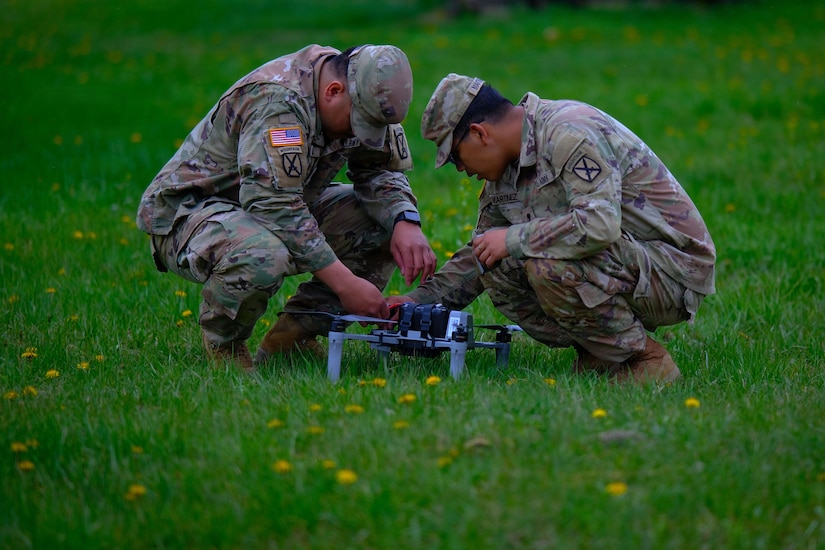
The increasing prevalence of drones on the modern battlefield means it's crucial for our service members to be familiar with the various systems they might encounter, which is why at the Joint Counter-Small Unmanned Aircraft Systems University at Fort Sill, Oklahoma, students learn the ins and outs of about two dozen of these aircraft.  

Two drones sit on a dirt patch. In the distance, several soldiers mill around.

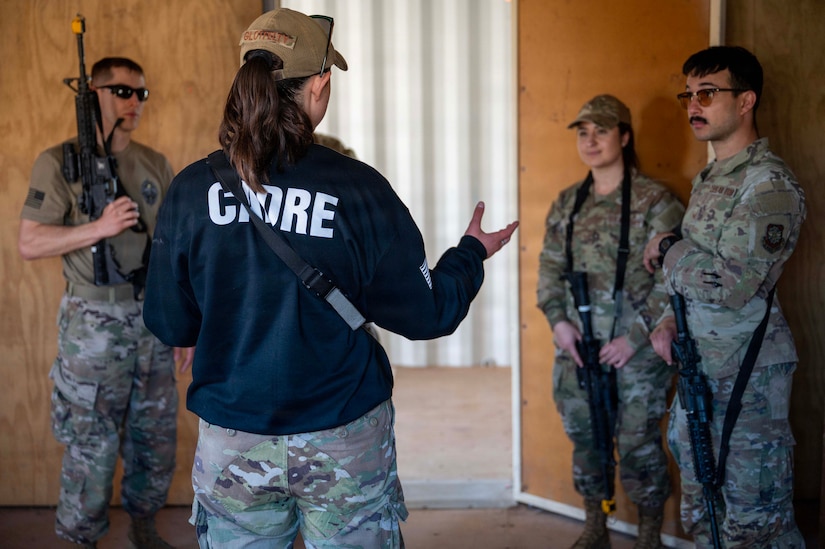
The JCU is the War Department's only joint training center aimed at countering the growing number of aerial threats U.S. troops face across the world.  It teaches service members of every branch how to operate drone equipment, plan counter-small UAS strategies and train others to defend installations.   

During the courses, students get to know 24 types of commercial off-the-shelf small UAS that they may see downrange, from "blue air" drones that are considered friendly to "red air" drones that are used by our adversaries.  

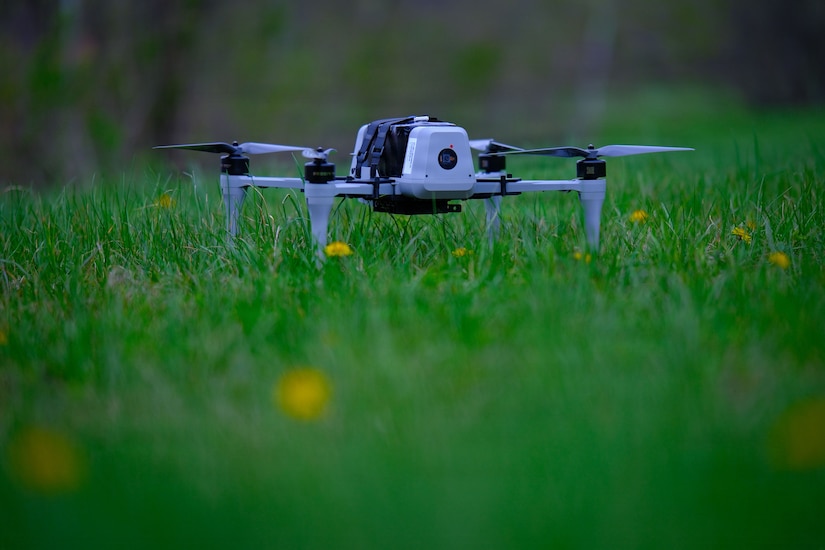
The types of aircraft the JCU trains students on range from commercial quadcopters to tiny micro-UAS and custom-built foam drones that can mimic real threats. Here are the highlights of a few of them:   

A small drone sits on a table.
 

The Black Hornet:  

The Black Hornet is the smallest drone currently used by the JCU. Developed under Special Operations Command, this tiny, covert drone does close intelligence, surveillance and reconnaissance — it can even be used inside buildings for hostage rescues. It includes an enhanced thermal camera and is small enough for service members to carry on their utility belts.  

A quadcopter drone hovers a few feet above gravel.

R80D SkyRaider:  

Developed exclusively for DOW and other federal agencies, the R80D SkyRaider is a vertical takeoff and landing quadcopter that's agile and can carry and deliver multiple payloads up to 7.7 pounds. It has one of the fastest, most powerful embedded artificial intelligence computing devices available for small UAS. It can also thrive in GPS- or communications-denied environments.  

A wide-winged drone with two propellers sits upright.

WingtraOne Gen II:  

The WingtraOne Gen II is one of the fastest mapping and surveillance small UAS on the planet. This fixed-wing drone has multiple cameras and a light detection and ranging — LiDAR — option, which can create precise 3D models of objects and environments. It can go about 36 mph and works well in high winds.  

A quadcopter drone sits on the ground.

IF 1200:  

Weighing between 21 and 55 pounds, the IF 1200 electric hexacopter is the most aggressive small UAS the school has, and it's mostly used for detection, said JCU Air Boss Jacob Cameron. The IF 1200 can adapt to any requirement set and can be used with LiDAR, radiation detection sensors, electro-optical/infrared sensors and delivery capabilities. It can travel up to 70 mph, carry up to 35 pounds and stay in the air for up to 45 minutes. 

"That drone can do flips," Cameron said. "You think it'd be slow and clunky, but that is probably the fastest hexacopter drone that we have, and it's the most capable."  

A quadcopter drone sits on the floor.

Alta X:  

The IF1200's larger counterpart, the Alta X, is the school's largest quadcopter, even though it's significantly quieter than the JCU's other drones. The all-electric Alta X is also mostly used for detection and can carry up to 40 pounds. It flies best when it's got a heavy payload. The Alta X can fold down to half its size in 20 seconds and can accommodate many sensors and third-party payloads, such as EO/IR, mapping and LiDAR. 

A small quadcopter drone sits on grass. In the background, another drone sits, and a man bends over to look at it.

TSM-800:  

Produced by the Army Threat Systems Management Office, this drone is designed for threat simulation and is capable of swarming up to 150 systems from a single ground control station. Each drone can carry a payload of 8 pounds. Three bomblets can be carried per drone. It is Wi-Fi compatible or can be used on a private LTE tower, Cameron said.  

A large drone that looks like a small airplane sits atop a wooden table.
 

Super Decathlon: 

The "Super D" is a larger aircraft that has a gas engine and can be used for autopilot and manual missions. It's primarily used for detection and identification in the JCU's operator's course, as well as for loitering munition demonstrations for the planner's course. 

If an enemy tries to electronically jam it while it's on autopilot, the Super D can still fly through that area without being affected, Cameron said. It's completely autonomous, can carry large payloads over long distances, and can fly up to 70 miles. Cameron said it's great for student practice because its size makes it easier to find on radar signatures.  

A quadcopter drone flies in the air amid a backdrop of leafless trees.

Vesper:  

The small Vesper quadcopter provides intelligence, surveillance and reconnaissance. At 2.2 pounds, it's light and easily portable. It has an EO/IR camera and can top out at 45 mph for about 50 minutes of flight time. It has low-light capabilities, extended endurance and stealth capabilities.  

A small, white drone sits on the floor. A larger drone sits on wheels in the background.

Opterra:  

The lightweight Opterra has multiple camera mounting stations and is predominantly used as a target drone. 

"The Opterra is outstanding for being shot at because it's foam, and bullets will pass straight through it unless you hit specific small components on it, like the engine itself," explained Army Maj. Dennis "Chip" Stanford, JCU's executive officer. "It can be shot a lot." 

The JCU also teaches students on the CarbonCub, Skywalker X8, Vector-Scorpion, Osprey, IF 800 and the JTAC24, a JCU-designed and 3D printed target drone, as well as a few others.  

U.S. Army Europe, Africa Launches First Drone Warfighter Competition

Ten teams are competing in the inaugural U.S. Army Europe and Africa Best Drone Warfighter Competition at the 7th Army Training Command's Grafenwoehr Training Area, Germany, Dec. 8-10.

A soldier wearing a camouflage military uniform lies in a grassy field and prepares to launch a small drone on a cloudy day.

The multinational competition is designed to test and showcase unmanned aerial system operator capabilities and to serve as a visible culmination of experimentation, readiness and transformational warfighting initiatives, ensuring that participating U.S., allied and partner soldiers are trained, tested and ready to deploy modern UAS capabilities in complex operational environments. 

"It's pretty exceptional that although we're competing, we're friends, we're partners, we're allies," said Army Brig. Gen. Terry Tillis, 7ATC commander, during the opening ceremony.

A soldier wearing a camouflage military uniform steadies a small drone on a wooden table outside and prepares it for launch.

"There's a larger picture," Tillis added. "It's not just about flying UAS. It's about utilizing the UAS as integrated enablers to achieve desired effects. It's about UAS facilitating the combined arms maneuvers of our ground forces into a position of advantage so they can seize and hold terrain." 

Army units permanently stationed in Europe and competing in the drone warfighter competition include the 1st Battalion, 4th Infantry Regiment, Joint Multinational Readiness Center, 7ATC; 173rd Infantry Brigade Combat Team, U.S. Army Southern European Task Force, Africa; 2nd Cavalry Regiment, V Corps; and 5th Battalion, 4th Air Defense Artillery, 52nd Air Defense Artillery Brigade, 10th Army Air and Missile Defense Command.

Three soldiers in camouflage military uniforms write on pieces of paper while seated at a table. Several other soldiers in similar attire, doing the same thing, are seated at a table in the background.

Other units rotationally deployed to the European theater under V Corps that are also competing include the 1st Armored Brigade Combat Team, 1st Infantry Division; 3rd Brigade Combat Team, 1st Cavalry Division; and 3rd Combat Aviation Brigade, 3rd Infantry Division. 

International teams from Italy and Spain are also competing. Each team has two to six soldiers, including a short-range reconnaissance drone team and a first-person-view drone team. 

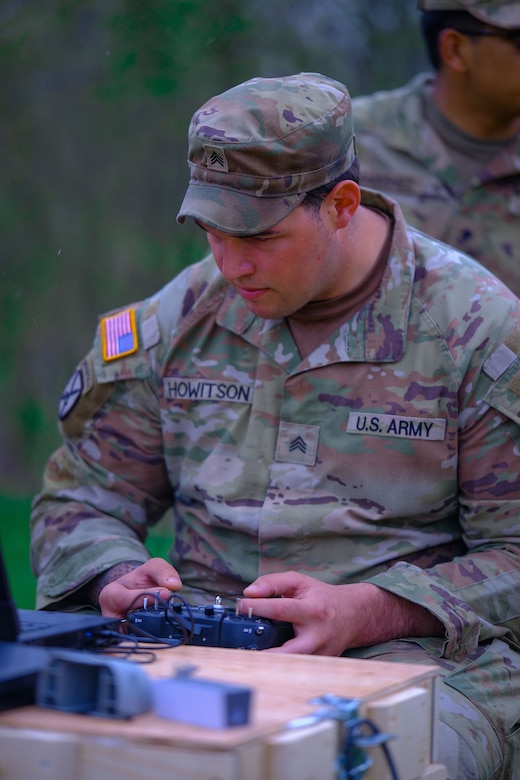
Teams are scored over three days of graded activities, including a written UAS knowledge exam and two training scenarios conducted on a variety of soldier skills within a time limit. 

A soldier in a camouflage military uniform stands in front of a table while talking to two soldiers in similar attire standing across from him. Several other people in similar attire are seated at tables around the room.

One area focuses on their tactical abilities to carry out an aerial reconnaissance and a strike mission using a variety of small UAS platforms against an enemy force in an urban environment, including establishing camouflage and security. 

The second scenario tests aerial land navigation, accuracy and maneuverability of a first-person-view drone through an obstacle course to clear and secure a trench, as well as team cohesion and decision-making during a call-for-fire mission. 

Teams are using a variety of issued and self-built drones. 

The top Army team will be announced at the end of the competition and go on to compete in the 2026 Army Best Drone Warfighter Competition.

Operation Christmas Drop: DOW's Longest-Running Humanitarian Mission in Pacific

Leaders from the U.S. Air Force, partnering nations and community members gathered for a traditional "push ceremony," marking the official beginning of Operation Christmas Drop 2025 at Andersen Air Force Base, Guam, Dec. 8, 2025.

A group of service members and civilians stand behind an open military aircraft in a hangar.
Three men push a large box down the back of a military aircraft.
The event served as the symbolic opening for the 74th iteration of the operation, the War Department's longest-running humanitarian airlift mission. It began in 1952 after an Air Force B-29 crew flying near Guam spotted islanders waving from below and dropped supplies as an act of goodwill.
 
"Operation Christmas Drop delivers more than just supplies," said Aren Palik, vice president of the Federated States of Micronesia. "It delivers hope, connection and the reassurance that even across a vast ocean, we remain part of one family. It is an accomplishment that speaks to the steadfast commitment of the United States and its Pacific partners to care for our people and our communities."

Two men, one a service member and the other a civilian, chat amongst a sea of supply boxes in an aircraft hangar. A military aircraft is in the background.

 
The ceremony concluded with Palik, Bruce Best — known at Operation Christmas Drop as "Brother Bruce" — and Air Force Col. Richard McElhaney, 374th Airlift Wing commander, loading the first official bundle into the cargo bay of a C-130J Super Hercules assigned to the 36th Airlift Squadron, operating under the 374th Expeditionary Wing.
 
"These bundles supply 56,000 people across 59 islands each year, but I don't think we can truly grasp that impact until we see the families wave and jump up and down in excitement as we fly by," McElhaney said. "While this is an amazing humanitarian mission, it's also an invaluable training event for participating aircrews. This training, and the work we do here, matters and translates to our readiness."

A man stands at a lectern and gives a speech to a seated crowd of civilians and service members inside an aircraft hangar.
Large boxes sit inside the back of a military aircraft.
Throughout the remainder of the operation, the Air Force and partnering nations will airdrop a total of 270 bundles filled with critical supplies to remote communities across the Pacific, delivering humanitarian assistance while simultaneously conducting valuable low-level flight, precision-airdrop and logistical coordination training — skills that strengthen the ability to execute rapid global airlift missions across the Indo-Pacific region.
 
"The people of the Federated States of Micronesia extend our deepest gratitude," Palik said. "Beyond the food, tools, fishing gear, school supplies and gifts, you deliver something far more valuable: the spirit of compassion that defines this Christmas season." 

Monday, December 08, 2025

Medal of Honor Monday: Army Sgt. Ray McKibben

On his third deployment to Vietnam, Army Sgt. Ray McKibben went after the enemy on numerous occasions when his unit was unable to do so themselves. McKibben didn't survive his tour of duty, but his courage and dedication to the mission led him to receive a posthumous Medal of Honor. 

A man in a military dress uniform looks stoic for a photo.

McKibben was born Oct. 27, 1946, in Felton, Georgia, to Albert and Dottie McKibben. He had an older brother named AJ.

Little has been published about McKibben's childhood, but he attended Buchanan High School before following in his brother's footsteps by joining the Army in the early 1960s.

According to a 1970 article in The Atlanta Constitution newspaper, McKibben had been in the Army for five years and was on his third tour of duty in Vietnam when he gave his life to save his comrades.

On Dec. 8, 1968, McKibben led a unit at the head of a reconnaissance patrol of Troop B of the 7th Squadron, 17th Cavalry Regiment, 1st Aviation Brigade. They were in enemy territory near Song Mao in southeast Vietnam, where the U.S. Army had a base.

As McKibben led his team along a well-traveled trail, they came under heavy automatic-weapons fire from a fortified bunker, forcing them to take cover. McKibben appraised the situation before charging through bamboo and heavy brush toward the position, killing its gunner and securing the weapon before directing his patrol to keep moving forward.

Men in combat gear move up a rocky, grassy slope.

As his men continued on, McKibben noticed enemy movement to the patrol's flank. He quickly called in a helicopter gunship for close-air support to neutralize the threat.

When the patrol rounded the bend of a river, they were hit by heavier automatic-weapons fire, this time from camouflage bunkers. When one soldier fell wounded, McKibben ignored the intense gunfire all around him and ran to the man's side, pulling him to safety behind a rock before giving the soldier rudimentary first aid.

McKibben then noticed more of his fellow soldiers were pinned down and unable to take out the enemy bunkers. So, he went on a one-man mission to take them out himself. McKibben charged through the brush amid a hail of gunfire to get to the first bunker, where he killed the enemy inside with his rifle before securing its weapon.

McKibben then charged the next bunker, using his rifle and the captured enemy gun as he went. When both weapons ran out of ammunition, he finished the bunker off with hand grenades.

Reloading his rifle, McKibben provided cover for his fellow soldiers as they continued moving. When he noticed yet another bunker blocking their advance, he once again took it upon himself to assault the position.

Sadly, his luck had run out. As McKibben got close, he was hit by gunfire and didn't survive. However, he was able to shoot one final burst from his weapon, once again killing the enemy inside.
Four men wearing military combat gear move away from a helicopter hovering just off the ground. In the forefront, another man in similar attire sits on a log.

McKibben's courage and commitment helped save the lives of his fellow soldiers and allowed them to finish their mission.

On April 7, 1970, McKibben's widow, Anna, received the Medal of Honor on his behalf from President Richard M. Nixon during a White House ceremony. Twenty other fallen Vietnam soldiers also received the nation's highest medal for valor that day.

McKibben is buried at the Center Baptist Cemetery in his Georgia hometown, where he has not been forgotten. A portion of Highway 120 near where he grew up was renamed in his honor in the 1990s.

The military continues to honor his sacrifice as well. In 1984, a renovated building was renamed McKibben Hall at the now-closed Fort Gillem, Georgia. In 2008, the 7th Squadron that he was once a part of dedicated a conference center and a memorial to him at the unit's new headquarters at Fort Campbell, Kentucky. 

Friday, December 05, 2025

Marine Corps Magazine Outlines History, Trends, Future

The Marine Corps, founded Nov. 10, 1775, marked its 250th birthday by publishing a comprehensive magazine introducing readers to foundational knowledge of the service branch.

A profile view of a Marine wearing a helmet.

Designed for Marines of all ranks, service members from other branches, civilians and anyone interested in gaining a clear understanding of the Marine Corps, the magazine highlights the service's history, structure and global presence. It opens with an accessible overview of the mission and major campaigns and battles — tracing the evolution of Marine Corps warfighting from its origins to modern-day operations.

It examines the Marine Corps' worldwide network of bases and installations, illustrating how forward-deployed forces enable rapid responses and sustained readiness. Readers are guided through the Marine Corps rank structure and organizational framework, which offer insights into how Marines are trained, led and employed across the Fleet Marine Force.

A Marine in tactical gear stands in front of columns of smoke during the day and aims a service weapon.

The magazine also reflects current Marine Corps demographic trends, showcasing how roughly 200,000 Marines serve today, as well as the path forward outlined by Gen. Eric M. Smith, the 39th commandant of the Marine Corps.

18th Wing Airmen Strengthen Kadena Air Base's Foundation for Airpower

Airmen assigned to the 18th Operations Support Squadron and the 18th Civil Engineer Squadron are teaming up to tackle one of Kadena Air Base's most ambitious airfield repair projects of the year in Okinawa, Japan. The project will strengthen the flight line that keeps airpower moving across the Indo-Pacific. 

Airmen dressed in military camouflage uniforms spread concrete on a runway.

The joint effort brings together airfield management and engineering specialists to replace worn pavement and upgrade vital runway sections, a job typically reserved for contracted construction crews. This time, the entire project is being completed in-house. 

"From the moment the first truck arrived, our team had to be precise," said Air Force Master Sgt. Maria Atondo, 18th OSS airfield management supervisor. "Every minute matters when you're working with materials that set fast. The planning, timing and teamwork have been outstanding." 

The operation requires careful coordination between airmen managing aircraft operations and those handling heavy equipment on the ground: balancing mission demands with safety and precision. 

"Asphalt and concrete work demand accuracy," said Air Force Master Sgt. Brock Butshke, 18th CES pavements and equipment section chief. "Every step impacts the runway's performance. Our goal is to make sure it's strong, smooth and ready for anything the mission requires." 

A man on the left wearing sunglasses, a tan T-shirt and pants, and rubber boots kneels next to a freshly poured patch of concrete while speaking to a man to his right who is also kneeling and wearing blue coveralls, hearing protection and glasses.

Once complete, the improved runway will enhance long-term durability and reduce the need for future repairs — ensuring Kadena Air Base remains a critical launch point for Air Force operations throughout the region. 

"It's been a challenge, but our airmen are proving once again they can deliver results," Atondo said. "When this project wraps up, we'll know that every inch of this runway was built by the hands of our own team." 

This collaboration highlights the base's commitment to maintaining mission readiness and the 18th Wing's ability to innovate and sustain airpower from the ground up.