Friday, May 01, 2026

King Charles III and Queen Camilla Honor a Shared History of Service and Sacrifice

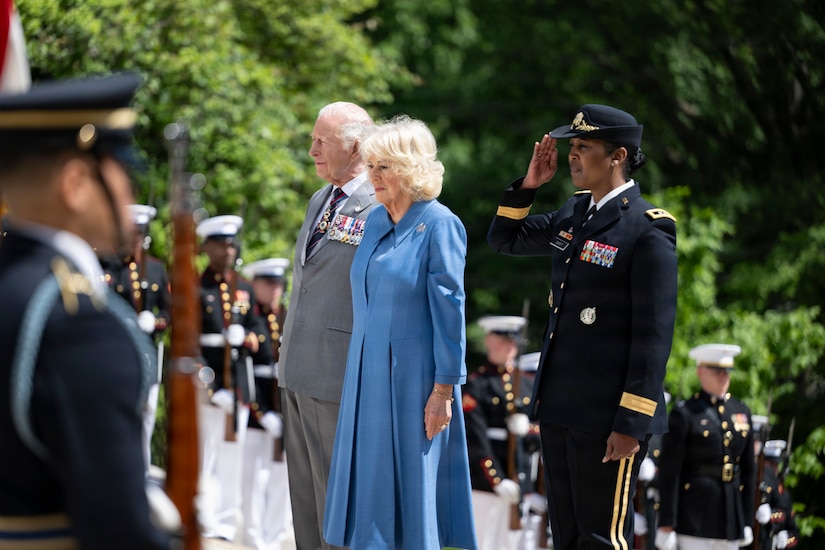
A man wearing a gray suit and a woman in a blue dress stand at attention while a woman in military dress uniform salutes. Rows of other people wearing military dress uniforms stand around them.

On April 30, King Charles III and Queen Camilla entered Arlington National Cemetery for a full honors wreath-laying ceremony at the Tomb of the Unknown Soldier, marked by a 21-gun salute. The ceremony was on the final day of their state visit, commemorating the 250th anniversary of American independence.  
 
The king and queen were escorted by Army Maj. Gen. Antoinette Gant, commanding general of Joint Task Force - National Capital Region and U.S. Army Military District of Washington; and Monica Crowley, U.S. ambassador, assistant secretary of state and chief of protocol. They stood at attention as the United States Army Band "Pershing's Own" played "God Save the King" and "The Star-Spangled Banner."  
 
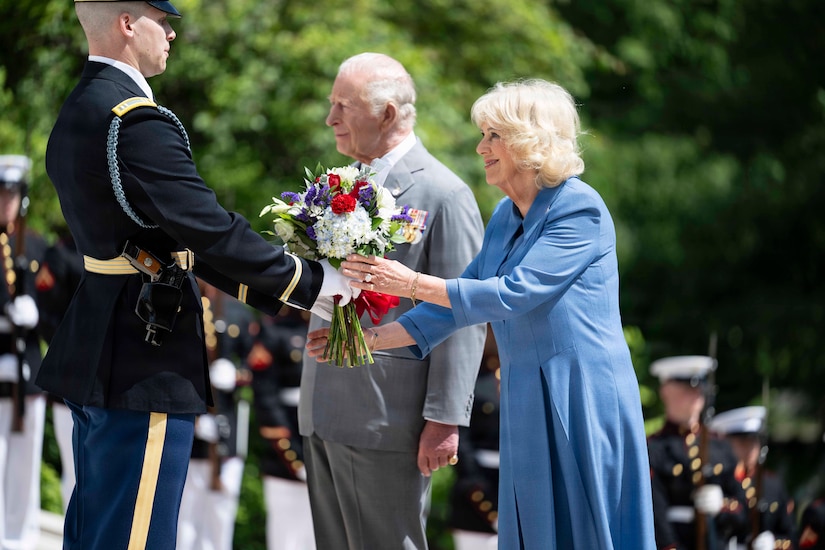
At the tomb, King Charles laid a wreath composed of red poppies, a symbol of remembrance in the British Commonwealth dating back to World War I. The wreath included a note from the king that read, "In everlasting remembrance." The queen then placed a bouquet of red, white and purple flowers next to the wreath.  
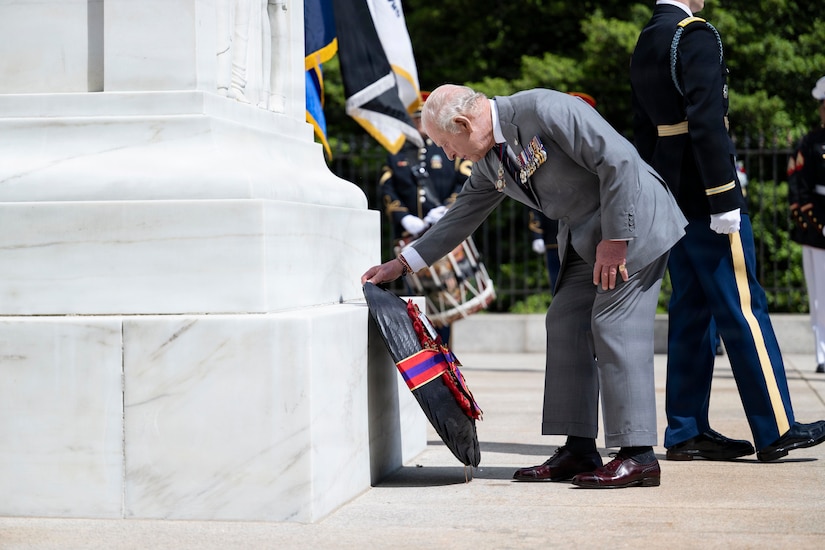
A man wearing a suit bends over to lay a wreath at the base of a marble memorial.
A man wearing a dress military uniform hands a woman in a blue dress a bouquet of flowers. A man in a gray suit is standing next to her.

The Tomb of the Unknown Soldier itself embodies the two nations' deep and poignant historical connections. Dedicated on Nov. 11, 1921, with the burial of an Unknown Soldier from World War I, the tomb at Arlington was partly inspired by Britain's Tomb of the Unknown Warrior at Westminster Abbey, dedicated exactly one year earlier. All three unknowns, representing American service members who died in World War I, World War II and the Korean War, fought in conflicts in which the United States and Britain were allies.  
 
After the wreath-laying ceremony, Karen Durham-Aguilera, executive director of Army National Military Cemeteries and Office of Army Cemeteries, greeted the royal couple inside the Memorial Amphitheater.  

"Arlington National Cemetery is honored that the king and queen visited these hallowed grounds while commemorating America's 250th birthday," Durham-Aguilera said. "The enduring bond between the United States and the United Kingdom stands as a testament to shared history and sacrifice."  
 
The king and queen's visit to the cemetery concluded at the Canadian Cross of Sacrifice — a memorial at which Elizabeth II and Prince Philip, King Charles' parents, had also paid respect during their 1957 state visit. This memorial honors Americans who volunteered to fight, and ultimately died, with the Canadian Expeditionary Force in World War I, prior to the U.S. entrance into the conflict.  

Like the tomb, the Canadian Cross reflects shared commemorative traditions. Designed by British architect Sir Reginald Blomfield for the Commonwealth War Graves Commission, the Cross of Sacrifice stands as an iconic emblem of World War I at CWGC cemeteries worldwide. Fittingly, the king and queen were accompanied at this memorial by service members from not only the U.S. and the U.K., but also British Commonwealth nations Canada, New Zealand and Australia.  
 
The royals' visit to Arlington National Cemetery — described by the British Embassy as "one of the most symbolically significant acts of remembrance a foreign dignitary can undertake on American soil" — reflected the enduring military, diplomatic and cultural alliance between the United States and the United Kingdom.

Synchronized Logistics Enable Engineer Unit Deployment

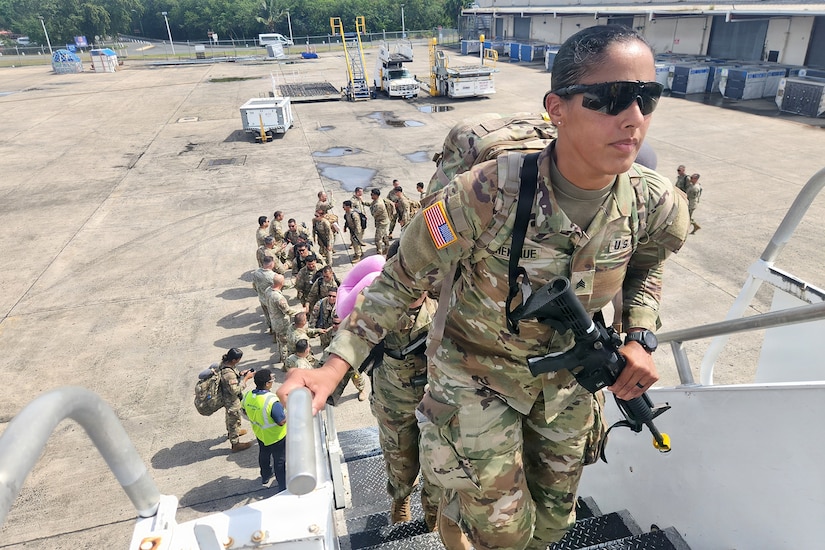
Fort Buchanan demonstrated its critical role as a readiness platform, April 29, when hundreds of soldiers assigned to the 756th Engineer Company, 1st Mission Support Command, deployed from the installation in Puerto Rico to a continental United States mobilization station in support of a future mission with a combatant command. 

A woman wearing a camouflage military uniform, carrying a training rifle, walks up a flight of mobile stairs to an airplane as several people in similar attire follow behind her shaking hands with people on the tarmac.

After training, the soldiers will deploy to an undisclosed location in support of operations in an Army area of operations. 

The installation's logistics readiness center, an element of the 407th Army Field Support Brigade, led mobilization. Its transportation division synchronized ground, maritime and air movement, ensuring a seamless transition from home station to mobilization platform. 

The readiness center provides logistics support to service members and units assigned to or mobilizing through Fort Buchanan, in both peacetime and contingencies. It develops and enforces installationwide policies for supply, maintenance, transportation and materiel readiness — ensuring units can deploy on time and fully mission capable. 

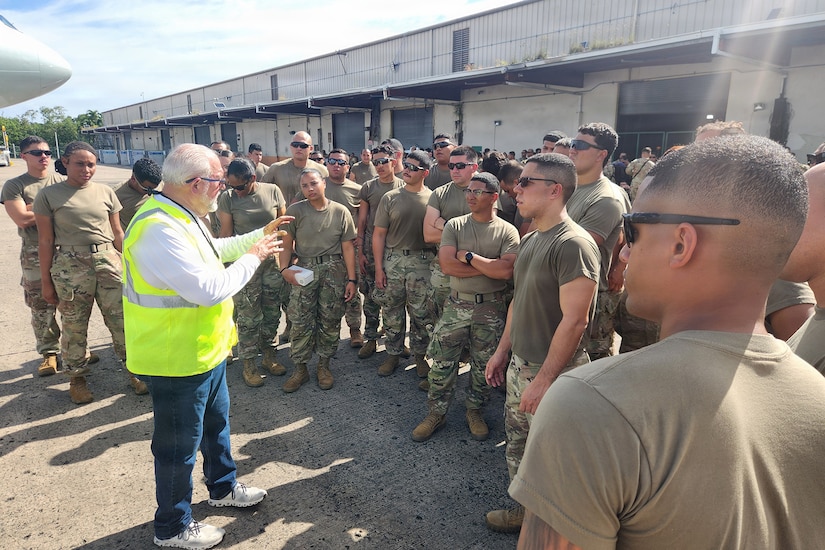
A man wearing casual attire and a reflective vest talks to a group of people in camouflage military uniforms standing outside on a tarmac with a building in the background.

For the transportation division, success begins long before movement day. 

"The process of mobilizing a unit starts a year in advance," said Luisa Segarra, installation movement coordinator. "From that point, units identify the equipment required for the mission and validate its readiness status. We also validate space requirements for equipment and personnel to coordinate movement through ground, air and sea."

Segarra emphasized that continuous coordination is essential to maintaining synchronization across all movement phases. 

The transportation coordinators develop a timeline and meet frequently with unit representatives to discuss progress and any changes, using an automated movement system to track organizational equipment and unit deployment lists, she said, ensuring accurate data and proper coordination across all transportation modes. 

While the process is streamlined, Segarra noted that readiness remains the decisive factor. 

"The key part is the level of readiness of the unit," she said. 

Deploying the 756th Engineer Company required close coordination across multiple transportation modes and support elements to ensure personnel and equipment moved safely and efficiently.

Face of Defense: Transportation Chief Builds His Marines Motor Tough

Leadership rooted in both compassion and accountability drives mission success in Marines assigned to Marine Wing Support Squadron 171, where senior enlisted leaders emphasize initiative and performance over simple compliance. 

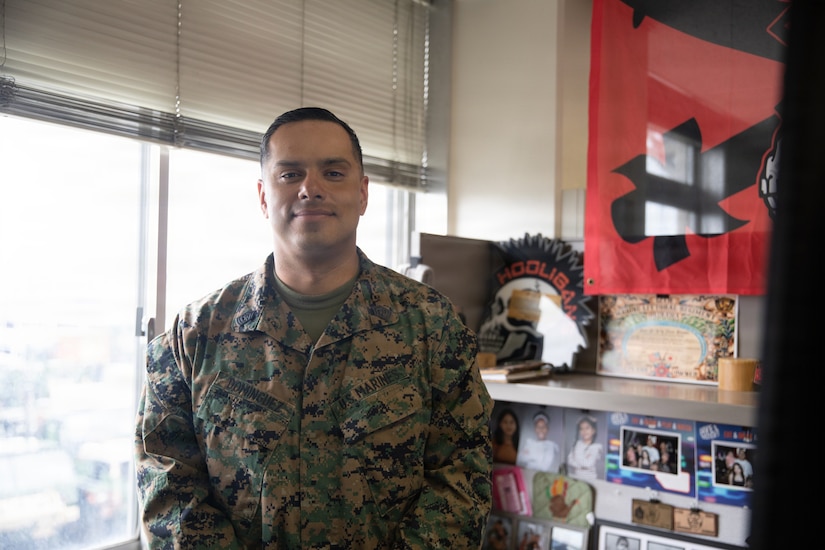
Marine Corps Master Sgt. Adam Dominguez, a motor transportation chief assigned to Marine Wing Support Squadron 171, Marine Aircraft Group 12, 1st Marine Aircraft Wing, at Marine Corps Air Station Iwakuni, Japan, describes his leadership style as compassionate yet firm.

Marine Corps Master Sgt. Adam Dominguez
A Marine stands and smiles in an office-like setting, with a large window in the background.
Job: Motor Transportation Chief
Stationed: Marine Corps Air Station Iwakuni, Japan
Unit: Marine Wing Support Squadron 171
Hometown: Watertown, Wisconsin
"I try to come off as an understanding person," Dominguez said. "I remember as a private first class, lance corporal, when I made a mistake, and I remember the additional information those Marines need in order to accomplish the mission."  

At the same time, Dominguez believes direct correction is essential, even when it is uncomfortable, because, "In the long run, you're helping them out," he said. 

Learning From Experience

His approach to leadership has been shaped by years of experience and a deep understanding of the challenges junior Marines face. By remembering his own early mistakes and addressing issues directly, Dominguez focuses on correcting deficiencies while developing Marines into confident, capable leaders who are prepared to operate independently.  

Dominguez prioritizes ensuring Marines understand the intent behind tasks rather than simply following instructions. He developed his leadership and knowledge through the Master Instructor Program at the Marine Corps Combat Service Support School at Marine Corps Base Camp Lejeune, North Carolina. He believes this approach enables Marines to think critically and act independently when conditions change.

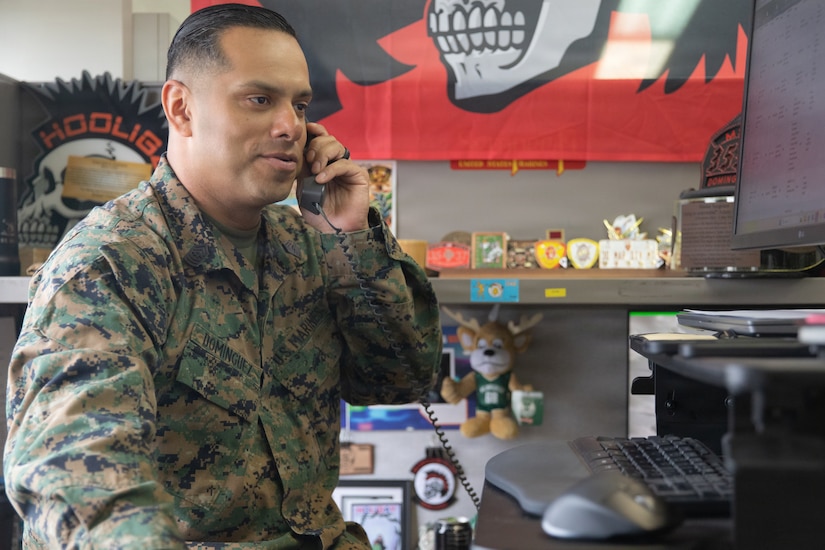
A Marine sitting behind a desk with computer equipment in an office setting holds a phone to his ear and speaks.

Supervision, Dominguez explained, is measured by results, not assumptions.  

"It's not somebody saying, 'Yeah, I can do that,'" he said. "It's, show me you can do that."  

Whether evaluating a Marine's ability to operate equipment or complete a qualification, he emphasizes demonstrated performance as proof of readiness. This results in a driven mindset within a Marine and reinforces accountability across the squadron, ensuring tasks are fully accomplished to the standard. 

Think Ahead

In Marine Wing Support Squadron 171's high-tempo aviation support environment, Dominguez encourages junior Marines and noncommissioned officers to anticipate requirements and think several steps ahead.  

"If you can be three or four steps ahead, that mitigates a lot of the friction," he said.  

By reframing common frustrations such as last-minute changes or delayed timelines as opportunities for leadership, he challenges Marines to take initiative rather than wait for direction.

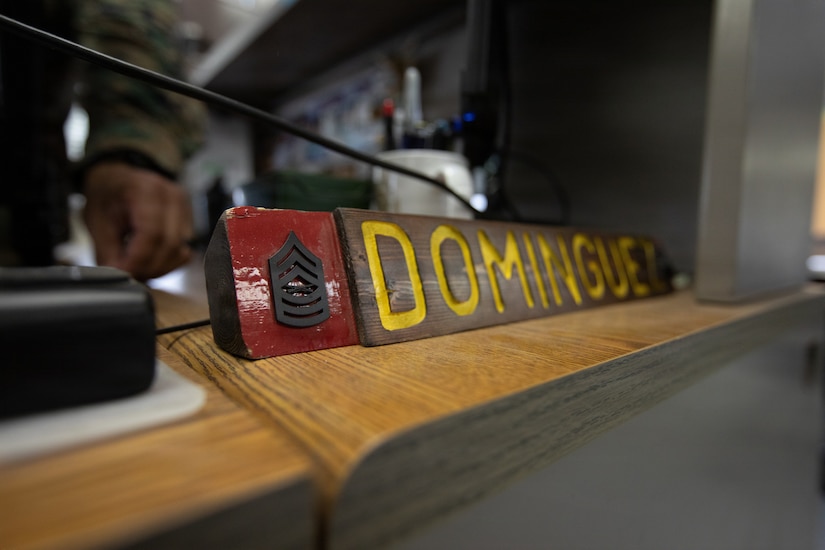
A placard with a military rank and reading "Dominguez" sits on a desk, with a person's hand and lower arm visible in the background.

Ultimately, Dominguez measures his success not by personal recognition but by the long-term readiness of the Marines he mentors.  

"If a Marine leader leaves a unit and it crumbles, that means you built the unit off yourself," Dominguez said. "What I'm trying to do is build it off of them."  

Through a combination of compassion, accountability and deliberate mentorship, he aims to leave behind a unit that continues to succeed long after his departure — Marines prepared not only to accomplish the mission today, but to strengthen the Marine Corps of tomorrow. 

The impact of leadership is often measured not by rank but by how effectively it develops those entrusted to carry out a mission. For Marines assigned to Marine Wing Support Squadron 171, Dominguez's leadership is reflected in their initiative and confidence. 

'Honest and Direct'

Marine Corps Cpl. Jimmy Molina, a motor vehicle operator assigned to the motor transportation section of Marine Wing Support Squadron 171, and a native of Rio Rancho, New Mexico, describes Dominguez's leadership style as "very honest and direct."  

Molina explained that Dominguez does not avoid difficult conversations or soften expectations.  

"He won't beat around the truth," Molina said. "If he has a point that he wants to get across, he'll lean into it and completely squash it. That directness reinforces accountability while eliminating ambiguity in high-tempo operations."

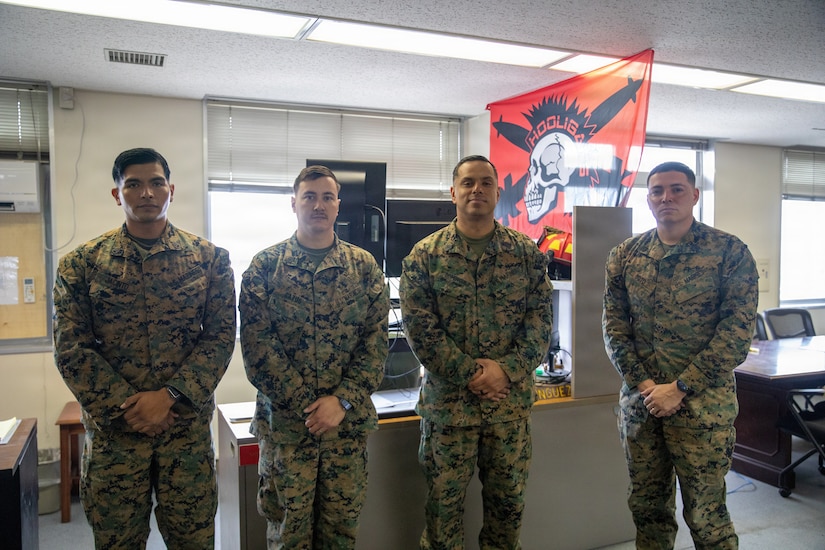
Four Marines in camouflage uniforms stand and pose for a photo in an office-like setting, with a red flag with a skull on it hanging in the background.

He recalled a recent instance while preparing vehicles for a training evolution to Fuji, Japan, when Dominguez assessed that readiness levels did not meet his expectations. Rather than accept partial effort and completion, Dominguez made it clear that standards will be met.  

"He told us, 'If we have to, we'll stay [until] 10 p.m., until this stuff gets done,'" Molina said.  

The message was to underscore the importance of initiative and personal responsibility in ensuring mission success. 

Mission-Focused Mindset

Beyond enforcing standards, Molina said Dominguez fosters an environment where Marines feel empowered to act decisively.  

"With him, it's more like, 'Make it happen and just get it done,'" Molina said, contrasting that with previous leadership styles that required seeking permission before acting.  

Molina said that the expectation to let your Marines think ahead and exercise their problem-solving skills strengthens his decision-making and reinforces the understanding of the bigger picture.

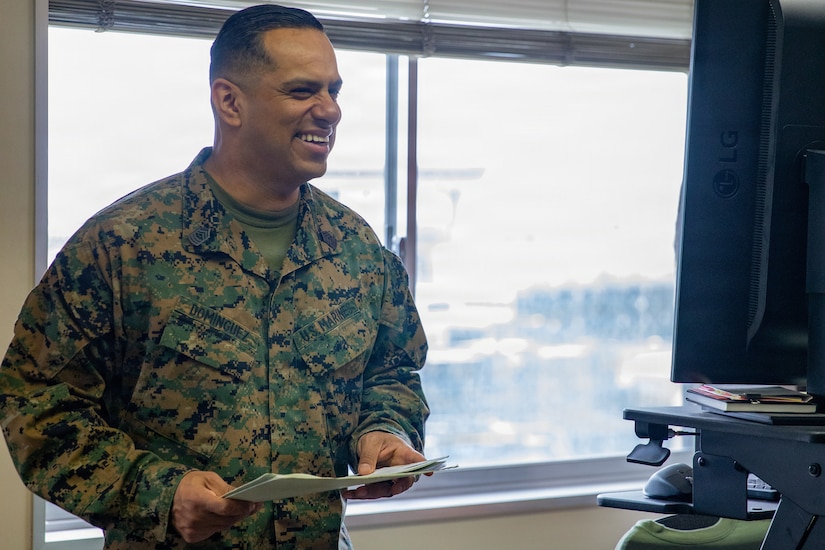
A Marine holding papers stands and smiles at something off-camera in an office-like setting, with a window in the background.

"His speeches are different," Molina said. "He'll remind you that you have a mission. At the end of the day, you signed the contract. When we get called, [we've] got to go." 

Molina said the steady direction Dominguez provides continues to shape the shop's tempo and focus every day.  

"He's the man that comes down and redirects us," Molina said.  

When morale dips or priorities seem unclear, Dominguez reinforces expectations and realigns the team with the mission. Through firm guidance, clear intent and empowered execution, Dominguez's leadership is reflected in Marines like Molina. 

Prussian Officer Established Drill Manual Used in American Revolutionary War

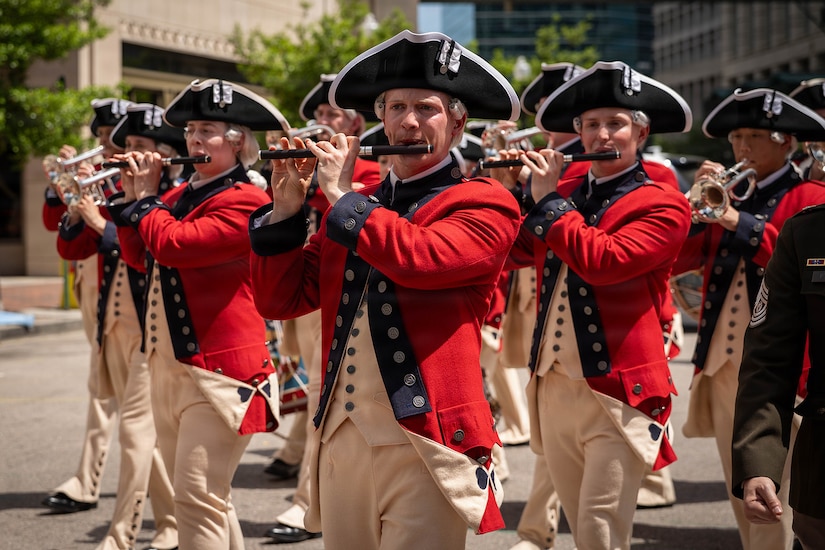
Troops in red historical uniforms play various musical instruments as they march in a parade through a city.

Drill plays a fundamental role in the military. It serves to build discipline, obedience, unit pride and cohesion, orderly and efficient movement, honor traditions and inspire leader development. 

As America observes 250 years of freedom, here's a look back on the development of drill in the American Revolutionary War. 

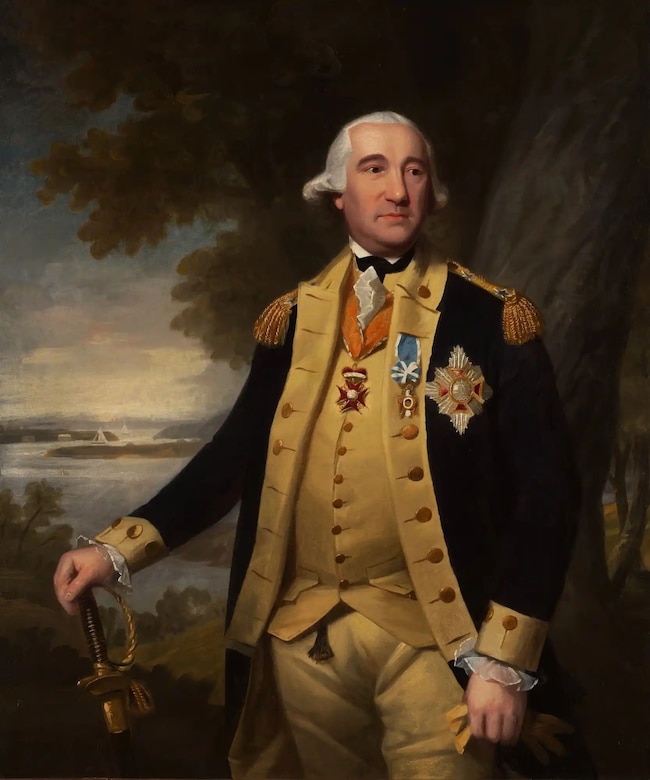
A painting depicts a man in a historical military uniform wearing medals as he rests his right hand on the hilt of his sword.

The development of drill is credited to Continental Army Maj. Gen. Baron von Steuben, who taught it to soldiers at Valley Forge, Pennsylvania, at the request of Gen. George Washington, commander of the Continental Army. Von Steuben learned drill while serving in the Prussian army from 1746 to 1763 as an aide-de-camp of Frederick the Great. Incredibly, he spoke no English, only French and German, so he was always accompanied by an interpreter. 

After training the soldiers, von Steuben wrote the "Regulations for the Order and Discipline of the Troops of the United States," commonly known as the "Blue Book." This manual was the foundation of discipline, drill and ceremony in the Army. He wrote the manual in French, which was then translated into English. 

In addition to drill and ceremony instructions, the Blue Book places in writing the duties of noncommissioned officers. These updated guidelines are still in use today, in Field Manual 7-22.7, The Army Noncommissioned Officer Guide and Training Circular 3-21.5. The other services have their own NCO manuals, which share many similarities. 

This manual established the military training and maneuvers that helped the armed forces become the premier fighting force that it is today. 

Von Steuben fought in several major battles and commanded one of the three divisions of the Continental Army at Yorktown in 1781. In 1783, he helped demobilize the Army, and resigned his commission in 1784. 

After the war, he became a naturalized U.S. citizen and lived on an estate in New York's Oneida County. He was born on Sept. 17, 1730, and died Nov. 28, 1794, at the age of 64. 

Every September, von Steuben Day parades take place throughout the nation in conjunction with German festivals, including Oktoberfest. 

A number of Navy warships carried the name USS Von Steuben, the most recent being a Cold War-era ballistic missile submarine. Also, some American cities and counties bear his name, and there are statues of him in various locations. 

The United States Army Old Guard Fife and Drum Corps soldiers stationed at Joint Base Myer-Henderson Hall, Virginia, wear Revolutionary War period uniforms and perform drill movements that were used during that war. 

As an official representative of the Army, the Fife and Drum Corps averages approximately 500 performances annually. It has entertained millions of people in major parades, pageants and historical celebrations throughout the country and has served America as a goodwill ambassador around the world.  

The Fife and Drum Corps has performed at major sporting events including NCAA bowl games, NBA games, NFL games — including Super Bowl XVI — the Kentucky Derby, the Indianapolis 500 and the 1980 Winter Olympics in Lake Placid, New York. 

In support of the president, the Fife and Drum Corps performs for all arrival ceremonies at the White House for foreign heads of state and has participated in every presidential inauguration parade since that of President John F. Kennedy in 1961.