Monday, May 25, 2026

Medal of Honor Monday: Army Pvt. Henry Johnson

Army Pvt. Henry Johnson, an infantryman, served in France in 1918 during World War I, which was then called the Great War. 

A man, wearing a military uniform, smiles for the camera.

Johnson was born July 15, 1892, in Winston-Salem, North Carolina. His name at birth was William Henry Johnson. There are conflicting accounts of who his parents and sister were, but it is thought that they worked in the tobacco fields. 

After the family moved to New York City when Johnson was a teenager, he worked various jobs, including as a porter at Albany's Union Station. 

On June 5, 1917, Johnson enlisted in the Army and was assigned to Company C, 369th New York Infantry Regiment, known as the Harlem Hellfighters. 

In December 1917, the 369th landed at Brest, France. By March 1918, the regiment began training under French command, as replacements were needed due to a high casualty rate. The 369th never served under American command during the war. 
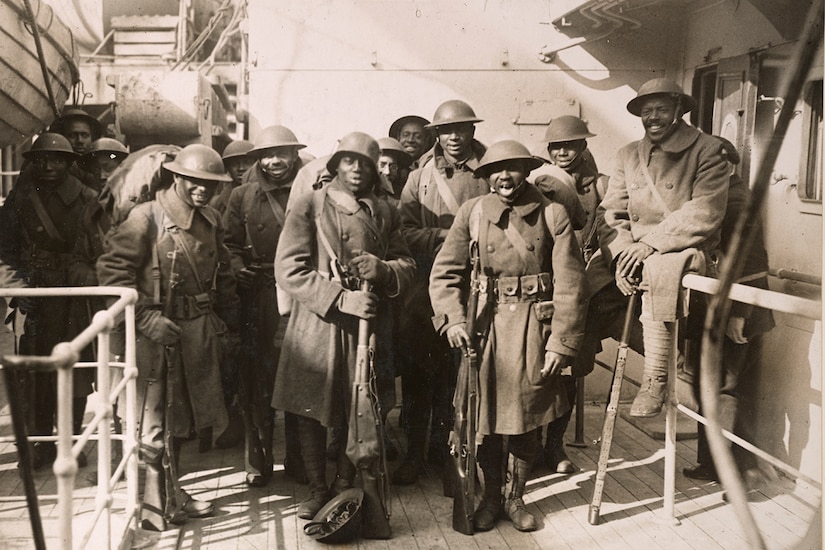
Men wearing military uniforms and holding long guns pose for a group photo aboard a ship.

Later in 1918, the 369th Infantry Regiment was ordered into battle. Johnson and his unit were brigaded with a French army colonial unit in frontline combat.  

In the early hours of May 15, 1918, Johnson and Army Pvt. Needham Roberts were on sentry duty at a forward outpost in the Argonne Forest, France, when they were attacked by a German raiding party of about 12 soldiers. 

His Medal of Honor citation reads in part: "While under intense enemy fire and despite receiving significant wounds, Johnson mounted a brave retaliation, resulting in several enemy casualties. When his fellow soldier was badly wounded and being carried away by the enemy, Johnson exposed himself to grave danger by advancing from his position to engage the two enemy captors in hand-to-hand combat." 

Wielding only a bolo knife and gravely wounded, he continued fighting. Johnson defeated the two captors and rescued the wounded soldier. Displaying great courage, he held back the larger enemy force until they retreated after suffering heavy casualties, leaving behind a large cache of weapons and equipment and providing valuable intelligence.  

Without his quick actions and continued fighting, even in the face of almost certain death, the enemy might have succeeded in capturing prisoners and the outpost. 

When French reinforcements arrived, they evacuated Johnson and Roberts to an aid station behind the main lines. During the battle, Johnson sustained 21 wounds. It is estimated that he killed four Germans and wounded 10 to 20 others, according to the National Park Service website. Johnson's actions on that day earned him the nickname "Black Death," according to the National Museum of the United States Army website.  

According to the website, when describing the battle, Johnson said that he did not consider himself a hero: "There wasn't anything so fine about it. Just fought for my life. A rabbit would have done that." 
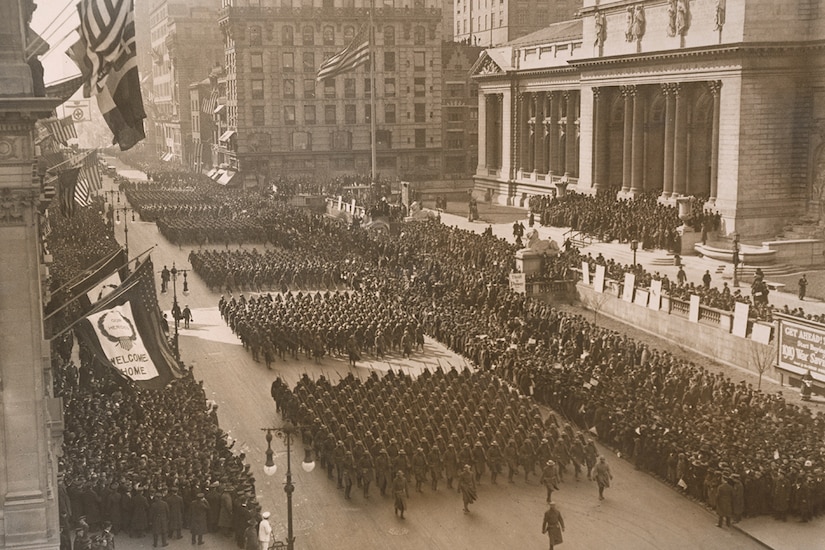
Soldiers march in large formations on a big city street as crowds look on.

For his battlefield valor in May 1918, Johnson became one of the first Americans to be awarded the French Croix de Guerre avec Palme, France's highest award for valor. By that summer, Johnson and the regiment were fighting in the Champagne-Marne Defensive and the Aisne-Marne Offensive. 

Subsequently, the Harlem Hellfighters saw combat during the Meuse-Argonne Offensive, which began Sept. 26, 1918. 

After the war ended, Johnson sailed home from France as a sergeant in February 1919, and led his unit in the New York City victory parade.  

Because of the severity of his wounds, he was unable to return to his pre-war porter position. He died July 1, 1929, and is buried in Arlington National Cemetery, Virginia. 

On June 2, 2015, Johnson was awarded the Medal of Honor by President Barack Obama in a White House ceremony. Army Command Sgt. Maj. Louis Wilson accepted on behalf of Johnson, since he had no known living relatives. 
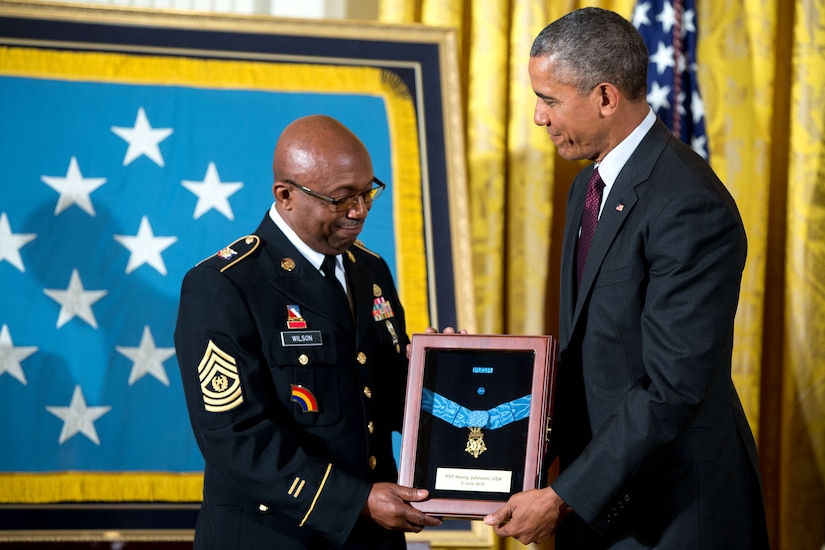
Two men hold a framed military medal with a large, framed flag behind them.

"The least we can do is to say, 'We know who you are, we know what you did for us. We are forever grateful,'" Obama said during the ceremony.  

Johnson was also awarded the Purple Heart in 1996 and the Distinguished Service Cross in 2002.

One Day for the Dead

The loudest place in American sports knew when to be quiet. 
 
At Charlotte Motor Speedway in North Carolina, the Coca-Cola 600 was everything it is supposed to be: horsepower, heat, noise and 600 miles of punishment. It was also something harder to stage and easier to cheapen. It was remembrance.

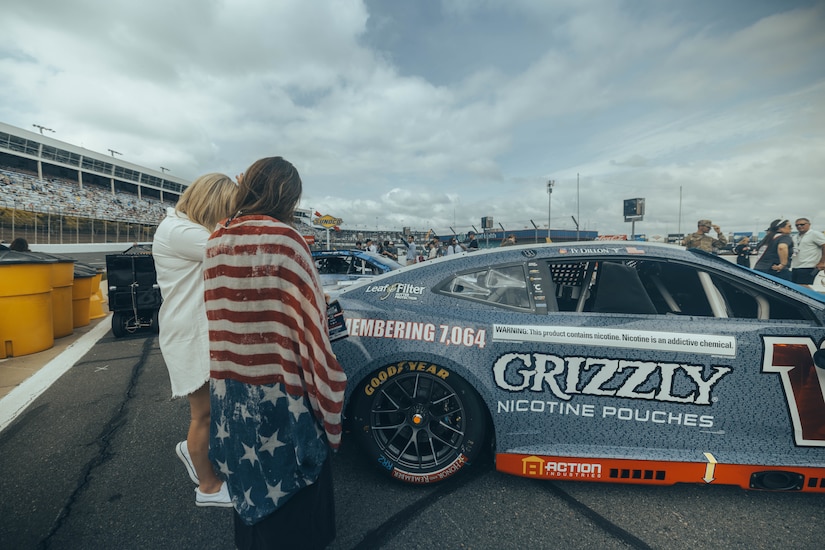
Two women in casual attire look at a race car parked on a track.

Charlotte Motor Speedway and NASCAR did not hide Memorial Day in a program note or a patriotic graphic between green flags; they built it into the race. Each car carried the name of a fallen service member. The Gold Star family luncheon — an annual feature of the race for years now — brought surviving families together with drivers, military leaders and guests. At the race's halfway point, the engines shut off, the grandstands went still and thousands of people were asked to stop long enough to remember why the weekend exists. 
 
For Jane Horton, one of those names was not a name on a windshield. It was her husband. 
 
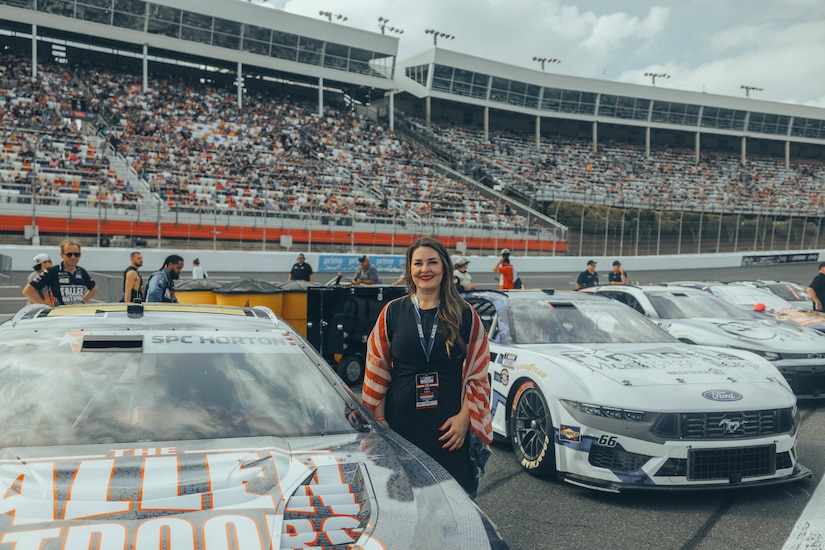
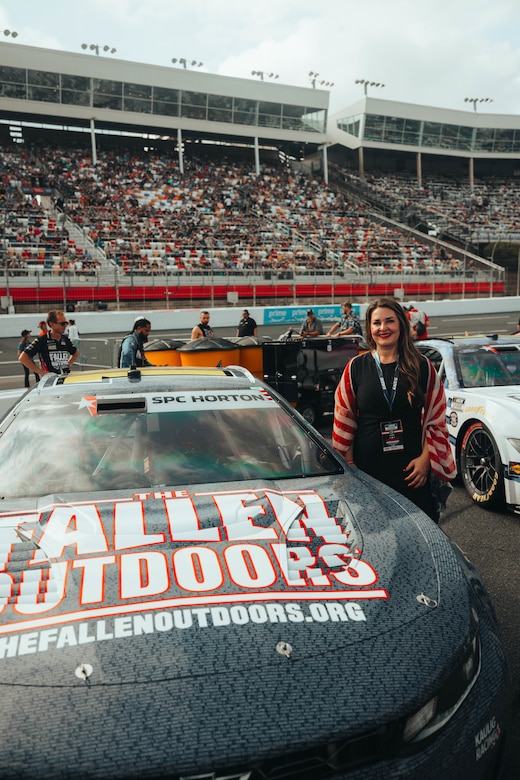
Army Spc. Christopher David Horton, a sniper assigned to the Oklahoma Army National Guard's 45th Infantry Brigade Combat Team, rode with Ty Dillon's No. 10 Chevrolet. He was 26 when he was killed Sept. 9, 2011, in Zormat district, Paktia Province, Afghanistan. He left behind parents, siblings, friends, soldiers who loved him and a wife who has spent nearly 15 years refusing to let his life become a slogan. 
 
Gold Star families are families of service members killed in combat operations. And Jane Horton knows how easily America turns sacrifice into ceremony without letting the ceremony change anything. 
 
"I haven't [been featured in] a Memorial Day article in years," Horton said during race weekend. "I used to go on the news all the time and talk about Memorial Day, because it would drive me nuts that the American people don't know what it is." 
 
Then she put the day into one sentence. 
 
"364 days out of the year is about you, and we could never do enough for you," she said. "But this one day is for the dead."

A woman in casual attire poses next to a race car on a track. Hundreds of people are in the stands behind her.

Even at the speedway, Horton kept looking for Gold Star badges. She watched lanyards, shirts and lapels the way others watched pit road. When she saw a family wearing that mark, she went to them. She traded contact information and exchanged phone numbers; not to network and not to be seen, but because she knows what it feels like to carry a loved one's death into a crowd. She wanted them to know their families had an advocate. She wanted them to know their fallen would not fade. 
 
That is what she does. At the Pentagon. In Congress. At Dover Air Force Base, Delaware. At a racetrack. On the phone at 1 a.m. 
 
"I'm just an advocate for them," Horton said. "If they need something, they'll call." 
 
That sentence sounds small only to someone who has never needed the call answered. 
 
Horton has spent her adult life making sure the government remembers that casualty assistance is not a process. It is a family standing in a doorway after the worst knock of their lives. It is a child who wants to follow a parent into service. It is a spouse who needs a fellowship in government service, a mother who needs answers, a father who needs someone to say his son's name without looking away. Horton has championed education benefits for surviving spouses, Gold Star family fellowships, survivor policy changes in defense legislation and initiatives that give families direct access to senior leaders. More recently, she has helped lead Gold Star family efforts from inside the secretary of war's office, where policy becomes real only if someone forces it to touch people. 
 
She learned that work first through Chris. 
 
Jane met him when they were 18 and 19 at a small school in New York City. They talked about America, government and politics. He was from Alabama and Oklahoma, a military school kid from seventh through 12th grade, a civilian shooter, a man who would become a sniper. 
 
He was not warm and fuzzy. 
 
"He was more like a warrior," Horton said. "He was stoic, but he also had a huge heart."

When he brought Jane to Oklahoma, his family was stunned. They never expected Chris to marry young. Then he sold his guns to buy her engagement ring. 
 
"Yes, Chris, the trained sniper, sold his guns," Horton said.

Dozens of people talk on a racetrack outside during daytime.

They married in 2009. War bent the calendar. He left for pre-mobilization in February 2011. They believed he would come home because he was good at what he did, because he had trained for war the way a surgeon trains for an operating room, because young couples have to believe the future belongs to them. 
 
Seven months later, he was dead. 
 
Two days after that, on the 10th anniversary of 9/11, Jane stood at Dover to receive the flag-draped casket of the man she had expected to grow old with. The war that began when America was attacked had taken him. His final flight home was not the one either of them imagined. 
 
Years later, Jane made the flight Chris never could take alive. 
 
In 2016, she traveled to Afghanistan with then-Marine Gen. Joseph Dunford, chairman of the Joint Chiefs of Staff, serving as a special assistant and ombudsman to the troops. She went not for closure. Closure is too clean a word for grief that never leaves. She went to see the land where Chris fought, bled and died. She went because the soil there held part of her life. She went because terrorism had killed her husband, but would not define his story. 
 
It was not her last trip. Horton eventually made six trips to Afghanistan in different official capacities, traveling with senior U.S. leaders, meeting Afghan officials and seeing the country not as a headline but as a people. She later served as congressional and military liaison for the Embassy of Afghanistan in Washington, where she helped connect the embassy with Congress, the Pentagon and the military community. 
 
Her work there was not just abstract diplomacy. 
 
She hosted hundreds of fellow Gold Star families at the Afghan Embassy so Afghanistan could become more than the place their loved ones died. She bought Afghan silver and lapis for the daughters of fallen heroes so they could hold something beautiful from the land where their fathers' blood remained. She told families about girls going to school, women serving in parliament and children building robotics teams. She wanted them to see that the sacrifice had produced life, that something good had grown in the hard ground. 
 
In 2017, she went outside the wire to Afghanistan's Presidential Palace. Afghan women she worked with helped her prepare, even warning her against the red lipstick she wore almost every day. She passed through layers of security and saw Afghan soldiers drilling in ceremonial uniforms. Former Afghan president Ashraf Ghani thanked her for the sacrifices of America's fallen and their families. 
 
The weight of that moment never left her. 
 
Neither did the weight of what came later. 
 
When Kabul fell in 2021, the country where Chris died collapsed before the eyes of Americans who had spent years not looking. For Horton, the withdrawal reopened wounds, not because she had mistaken Afghanistan for easy, but because she had seen the people who would pay for American forgetfulness. She had held Afghan children. She had met Afghan women who believed in the future they were promised. She had sat with troops and families who had given pieces of themselves to that mission. 
 
"Nobody paid attention to Afghanistan until it was over," Horton said. "They didn't. Nobody cared." 
 
After the withdrawal, she wrote that the fall of Afghanistan broke her in a way Chris' death had not. She saw his picture and the pictures of other fallen Americans thrown back into public debate under a cruel question: Did they die for nothing? 
 
Her answer demanded more from America than sympathy. 
 
"When I sent my husband to war, he was no longer mine," she wrote. "He was ours. He was America's." 
 
That is the line Americans should carry into Memorial Day. Not because it absolves the country, but because it indicts the country. If America sends its sons and daughters to war, America does not get to forget the war while they fight it. It does not get to discover Afghanistan only when the last C-17s are leaving Kabul. It does not get to thank a widow and avoid the harder question of whether she understood what her husband was ordered to do. 
 
And that is why the Coca-Cola 600 matters when it is done right. 
 
A race cannot repay a life. A luncheon cannot erase a knock at the door. A name on a car cannot bring Chris Horton home. But a racetrack can force a crowd to learn a name. A driver can carry a story. A speedway can make the living sit still with the dead. A family can walk into a room and be treated not as a prop for patriotism, but as part of the American story.

A woman in casual attire poses next to a race car on a track. Hundreds of people are in the stands behind her.
At Charlotte, Horton accepted the gratitude but kept redirecting it. 
 
When she saw police escorts and VIP treatment, she did not confuse it for something she earned. 
 
"That's for my husband," she said. 
 
That is the thread through her life. Turn it back to Chris. Turn it back to the fallen. Turn it into action. Hold people to their words. 
 
"I hold people's feet to the fire that say they care about Gold Star families," Horton said. "Thank you for saying you care, but how do you actually turn that into action?" 
 
It is a fair question for Memorial Day. 
 
There is room this weekend for joy. Horton believes that. Chris would want people to live. Go to the race. Take the trip. Fire up the grill. Laugh with your children. Enjoy the freedom bought for you by people you may never meet. 
 
But do not confuse enjoyment with ignorance. 
 
Patriotism is not a hand wave. It is not a rubber stamp. It is not a flag emoji, a furniture sale or a thank-you delivered without understanding. It is informed gratitude. It is knowing where America sent its troops, why they went, what they endured, who did not return and which families still carry their names. 
 
"Gold Star families are strong," Horton said. "We're serving as well in different roles and different capacities, and the best way you honor the fallen is by living the best life you can." 
 
She has done it the hard way. By answering calls. By walking the halls of power. By going to Afghanistan. By standing at Dover. By finding families wearing Gold Star badges in a crowd and giving them her number. By making sure Chris Horton's name is not trapped in a casualty report or a widow's memory. 
 
This Memorial Day, one of those names is Army Spc. Christopher David Horton. 
 
Say it. Learn it. 
 
Then learn another. 
 
And when the engines restart, when the crowd stands again and the noise returns, remember what the silence was for. 
 
One day is for the dead. 
 
The rest is what we do with what they left us.

We Remember: A Masonic Reflection on Memory, Service, and the Symbols on Military Tombstones

Across the rolling hills of America’s military cemeteries stand endless rows of white marble stones. They are uniform in shape, equal in height, and disciplined in arrangement. Yet carved into those stones are different symbols—crosses, stars, crescents, wheels, and emblems representing the many faiths and philosophies of the men and women who served beneath one flag. Among them rests another symbol quietly recognized by the United States Department of Veterans Affairs: the Square and Compasses of Freemasonry.

These symbols are more than decoration. They are final declarations of identity, belief, and moral aspiration. They remind the living that the dead were not statistics or abstractions, but individuals who sought meaning, duty, and purpose according to their own convictions. On Memorial Day, as Americans pause before these markers of sacrifice, the Masonic emblem offers a profound meditation on how we remember, why we remember, and what remembrance ultimately demands from the living.

Military cemeteries embody one of the deepest lessons taught in Freemasonry: the principle symbolized by the Level. In the lodge, the Level teaches equality—not equality of talent, ambition, or achievement, but equality before mortality and moral accountability. In death, rank disappears. Wealth loses its authority. Titles fade into silence. Generals and privates lie side by side beneath identical stones. The cemetery becomes a visible lesson in humility, reminding us that time ultimately places all men upon the same plane.

This is not meant to diminish accomplishment. Rather, it purifies our understanding of it. Memorial Day forces the living to confront the uncomfortable truth that legacy is not measured merely by power attained, but by character displayed while power was held. The rows of white stones quietly proclaim what Freemasonry has long taught through symbol and ritual: no man outranks eternity.

The VA-approved list of emblems carved upon military tombstones also reflects another principle deeply aligned with Masonic thought: unity without uniformity. The republic does not erase the beliefs of those who served it. Instead, it preserves them. A Christian cross may stand beside a Star of David, an Islamic crescent beside the Wheel of Dharma, and beside them all the Square and Compasses. These symbols testify that Americans of many beliefs fought, suffered, and died together in common cause.

Freemasonry has historically sought to create a similar harmony. Men of different faiths, backgrounds, professions, and political perspectives meet upon the level within the lodge, united not by theological sameness but by shared moral obligations. The military cemetery becomes, in many ways, a solemn extension of that principle. Beneath the silence of the flag and stone rests a vision of national brotherhood that transcends sectarian division.

Among these symbols, the Square and Compasses carry a particularly reflective message. The Square represents moral conduct measured against principle rather than convenience. It asks whether a man’s actions remained upright when pressure, fear, or self-interest tempted him to bend. The Compasses symbolize restraint—the discipline required to govern passions, desires, and impulses from within. Together, the emblem represents the lifelong labor of building character.

Placed upon a military tombstone, the symbol acquires even greater weight. It quietly declares that the life beneath the stone was viewed not merely as existence, but as construction. Freemasonry teaches that each man is both builder and stone, shaping himself through discipline, sacrifice, reflection, and service. The emblem suggests that the deceased understood life itself as moral labor—a continual effort to transform the rough stone of human nature into something more worthy, more useful, and more aligned with virtue.

This connection between military service and Masonic philosophy is not accidental. Both traditions emphasize duty above selfishness, fidelity to obligation, and the willingness to sacrifice personal comfort for a higher cause. Throughout American history, many military leaders who carried these virtues were also Freemasons. George Washington embodied disciplined restraint in both war and governance. General Douglas MacArthur spoke repeatedly about duty, honor, and country as moral imperatives rather than slogans. Audie Murphy, among the most decorated soldiers in American history, represented courage joined with humility and service.

The relationship between military virtue and Masonic virtue lies in a shared understanding: freedom survives only when individuals willingly subordinate impulse to principle. Neither the soldier nor the Mason is taught that liberty means the absence of restraint. Instead, both are taught that self-government is the foundation of all lasting freedom.

Freemasonry also approaches death itself with a distinct philosophy of remembrance. In Masonic funeral traditions, the evergreen acacia symbolizes immortality and enduring hope. The unfinished Temple represents the reality that every human life remains incomplete. No man perfectly finishes the work upon himself. Yet Masonry teaches that dignity lies not in perfection attained, but in sincere labor performed.

Memorial Day reflects a similar idea at the national level. The ceremonies, flags, flowers, and moments of silence are acts of collective memory. They resist the erosion of gratitude. They declare that sacrifice will not simply vanish into history unnoticed. A nation remembers not only to honor the dead, but to preserve the moral meaning of their sacrifice for the living.

And yet remembrance itself faces danger in the modern world. Societies increasingly consume history as information rather than inheritance. Wars become distant events stripped of personal consequence. The names engraved upon stones risk becoming anonymous. Memorial Day can easily dissolve into a long weekend disconnected from reflection.

Freemasonry warns against this kind of forgetting because memory is essential to moral orientation. A civilization that forgets sacrifice eventually forgets responsibility. Tombstones are not merely markers of death; they are markers of values. The symbols engraved upon them silently ask the living: What principles governed this life? What obligations did this person believe were worth defending? What kind of character was being built before time ran out?

The answer differs from stone to stone, symbol to symbol, faith to faith. Yet beneath every emblem rests the same sacrifice: a life surrendered in service to something larger than self.

On Memorial Day, the American flag waves above rows of white stones stretching toward the horizon. Some bear crosses. Some bear stars. Some bear the Square and Compasses. Their meanings differ, but their presence together tells a larger story about memory, freedom, and human dignity.

The Masonic emblem among the fallen carries a particularly quiet lesson. It reminds us that before death comes the work of construction. That integrity matters most under pressure. That character is built slowly through discipline and sacrifice. And that the final measure of a man is not what he possessed, but what he became.

Memorial Day is not only about those who died for the nation.

It is about whether the living remain worthy of their sacrifice.