Friday, March 20, 2026

Air Refuelers Among Transcom's Most Critical Assets

Aircraft such as the KC-135 Stratotanker and the new KC-46 Pegasus, both mid-air refuelers, play a major role in helping the U.S. Transportation Command extend the reach of the joint force worldwide.
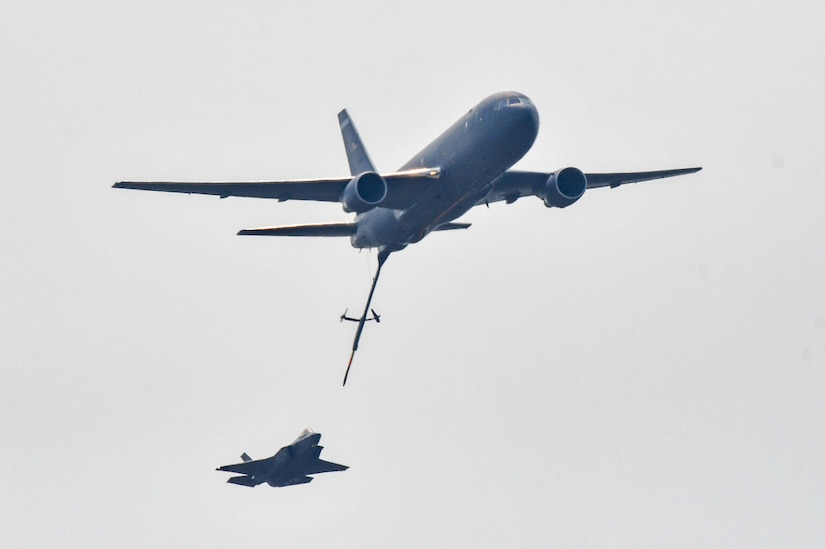
Two military aircraft fly near each other with the larger aircraft having a refueling boom extended toward the other.

"[Operation] Midnight Hammer showed just how much it actually takes to move the joint force at speed," said Air Force Gen. Randall Reed, Transcom commander, during testimony before the House Armed Services Committee's cyber, information technologies and innovation subcommittee, March 18. "And we continue to see that each time we engage in operations." 

Refueler aircraft played a large role in helping American bombers make it from the United States to Iran in June 2025 to execute Operation Midnight Hammer, where U.S. forces dropped massive bombs on Iran's Fordow Fuel Enrichment Plant, resulting in the destruction of Iranian nuclear capabilities. 

Reed told lawmakers during the hearing that refuelers are among the most critical assets in the Transcom inventory. 

"Currently, the air refueling fleet is the most stressed fleet that we have," he said. "But it is the one that I use the most to actually set the conditions to get the joint force on the move."

The KC-135 Stratotanker was first introduced in the late 1950s. It is an aircraft that is still playing an important role for Transcom, though it needs modernization to remain a contributor to the command's mission. Transcom is also using the newly introduced KC-46 Pegasus.
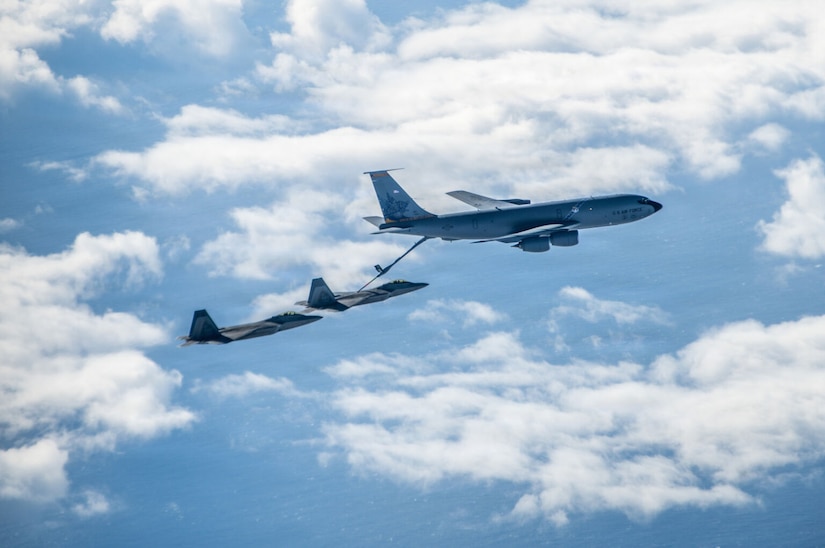
Three military aircraft fly near one another. One aircraft is connected to another with a refueling boom.

"For the KC-135 that we continue to fly, we appreciate the continued investment and sustainment and spare parts for it," Reed said. "It is a fantastic plane." 

Right now, Reed said, Congress is funding efforts to address connectivity issues with the KC-135. 

"Adversaries continue to advance in their ability to see us and to affect us," Reed said. "With that, we continue to press for increased connectivity of [the] fleet, to be able to get information inside the airplanes, to the crew, so that they could see what's happening around them, that I can give them direction and control and that they can be more responsive." 

As the Air Force continues to buy newer KC-46 Pegasus aircraft, older KC-135 Stratotankers will be retired, Reed said, adding that Transcom will always have enough refueling capabilities. 

"Once we get to the current end of the buy [cycle of KC-46], we will still have about 300 KC-135s," he said. "They will be close to 70 years old, and they will need some care. And so, whatever we do, we need to invest in the whole thing, because I need them all."
Army Aviation Takes Major Leap With Delivery of First Autonomous-Ready Black Hawk

The Army officially received a groundbreaking H-60Mx Black Hawk helicopter upgraded for autonomous or piloted flight. This next-generation optionally piloted vehicle begins a rigorous testing phase, marking a pivotal moment in the Army's push to build a safer, smarter and more versatile helicopter fleet for the future. 

A Decade of Innovation

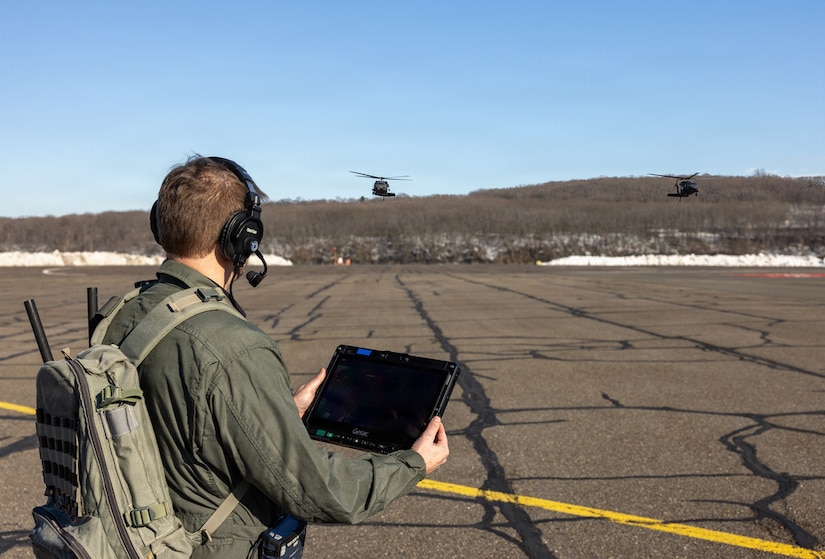
A man wearing a green flight suit, backpack and headphones, holds a tablet while watching two military helicopters in flight.

This achievement is not an overnight success. It is the result of more than a decade of pioneering work in autonomous flight. The technology at the heart of this helicopter originated from the Defense Advanced Research Projects Agency's Aircrew Labor In-Cockpit Automation System program. The ALIAS program began over 10 years ago. It was founded on the visionary goal of creating a removable kit for existing aircraft, which would provide a high degree of automation. The goal was to reduce the complexity of flying, enhance safety and allow pilots to focus on higher-level mission tasks.  

A military aircraft manufacturing company partnered with the research agency on this effort. As a direct result, the company developed technology that enables rotary and fixed-wing aircraft to be flown with and without people on board. After years of successful demonstrations on both commercial and military aircraft, the technology has matured. It is now a reliable system, ready for formal military evaluation. 

A Smarter Generation of Aircraft  

At its heart, this is no ordinary Black Hawk. The revolutionary technology serves as the aircraft's powerful flight control and autonomy system. Functioning like a highly advanced digital co-pilot, the system can manage the most complex tasks of flight, from takeoff to landing. This allows the helicopter to perform missions completely on its own or with a remote crew supervising from a secure ground station, offering unprecedented flexibility. 

This advanced capability is delivered through the ALIAS optionally piloted vehicle kit. This comprehensive package includes the system's autonomy mission manager, which serves as the brain of the operation, and a software development kit. The SDK is a crucial feature that allows third-party software and new sensor technologies to be integrated, opening the door for continuous innovation. This kit approach provides a critical pathway to adapt sophisticated autonomy to existing aircraft, significantly reducing the time and cost required to field this game-changing technology across the fleet. 

A key part of this upgrade is replacing the helicopter's traditional mechanical flight controls with a modern fly-by-wire electronic system. This makes the aircraft significantly more stable and easier to handle, particularly in challenging conditions with low visibility. By automating difficult maneuvers, the system dramatically reduces pilot workload, allowing the crew to focus less on the mechanics of flying and more on managing the critical mission at hand. 

The Path Forward  

In the coming months, Army test pilots and engineers will put the optionally piloted Black Hawk through its paces. These tests will check how well the aircraft can be controlled from the ground. They will examine how well the aircraft performs complex, real-world mission scenarios independently. The Army will also evaluate how this technology can keep soldiers safer and more effective.

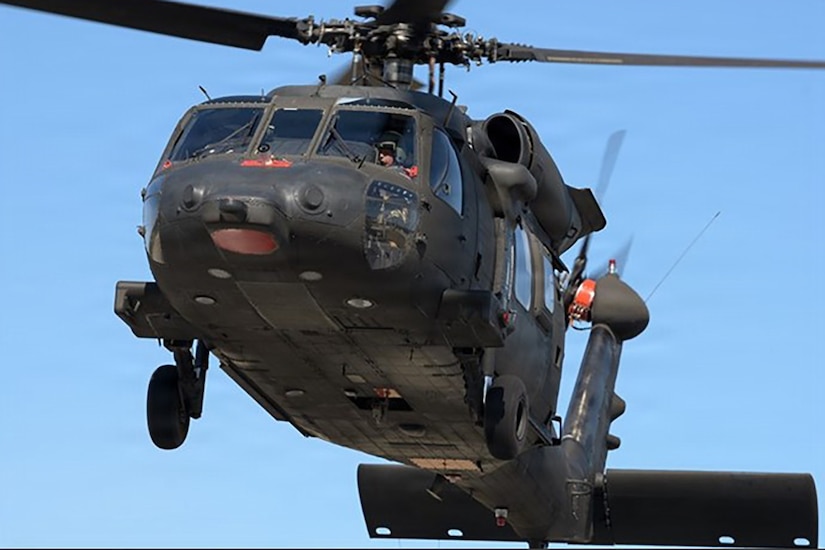
A helicopter lifts off the ground. A person wearing a helmet with a sun visor looks out the cockpit windshield.

This single helicopter leads a much broader vision. It is the primary testbed for the Army's Strategic Autonomy Flight Enabler program. The goal of SAFE is to develop a universal and scalable autonomy kit. This kit could be installed across the Army's entire fleet of Black Hawk helicopters and integrated into future aircraft designs. 

Partners in Texas are collaborating on the ALIAS autonomy technology. The state is sponsoring a multiyear autonomy testbed effort through Texas A&M University's George H.W. Bush Combat Development Complex. This effort uses modified UH-60L Black Hawks. The aim is to determine the value of autonomous aircraft for wildland firefighting and related state missions. 

By proving this technology, the Army aims to unlock a new era of aviation that will not only save lives but also ensure that critical missions can be completed under any circumstance. The delivery of the first optionally piloted Black Hawk is more than a hardware handover. It is a tangible step toward a future in which technology and soldiers work together in powerful new ways to ensure mission success. 

JIATF-401, in Support of Interagency Task Force, Emphasizes Zero-Tolerance Policy, Cracks Down on Drones in Restricted Airspace

In support of The White House Task Force to Restore American Airspace Sovereignty, the DOJ, DHS, FAA, and DOW warn that any individual or group found operating an unauthorized drone within designated restricted airspace will face severe consequences.

"As drone use continues to grow, we are stepping up enforcement, and drone pilots are expected to follow FAA regulations just like any other pilot," said FAA Chief Counsel Liam McKenna. "Those who choose to ignore the rules will face serious consequences, including substantial fines, revocation of their airman certificate, and even criminal penalties."

To enforce this zero-tolerance policy, our military and law enforcement agencies are equipped with state-of-the-art technology to detect unauthorized drone activity, often before it becomes a visible threat. This technology allows authorities to not only detect an unauthorized drone but also to quickly and precisely locate the operator. "If you fly an illegal drone, you will be caught," Director of JIATF-401, U.S. Army Brig. Gen. Matt Ross added. "We have highly trained personnel and sophisticated tools to safely and effectively mitigate any drone threat. This is a true whole-of-government effort, and our number one priority is the safety of the American public."

Violators will be prosecuted to the fullest extent of the law.

Penalties for flying a drone in a restricted zone can include significant fines upwards of $100,000, federal criminal charges, imprisonment, and the confiscation of the drone. The SAFER SKIES Act authorizes state, local, tribal, and territorial law enforcement to detect, disable, or seize any drone that poses a credible security threat to public safety.

Members of The Task Force to Restore American Airspace Sovereignty are also calling on the public to be partners in safety. "We are counting on the public to be our eyes and ears," Executive Director of DHS's Program Executive Office for Drones and Counter-UAS Steven Willoughby, stated. "If you see something, say something. Please report any suspicious activity, including drone use, to the nearest law enforcement officer or by calling 911."

These extensive security measures are in place to ensure that public events and critical facilities can operate safely and without disruption. JIATF-401 and the DOW are urging everyone to cooperate with security personnel and respect all airspace restrictions to avoid facing penalties.

Intelligence Agencies' Origins Date Back to American Revolutionary War

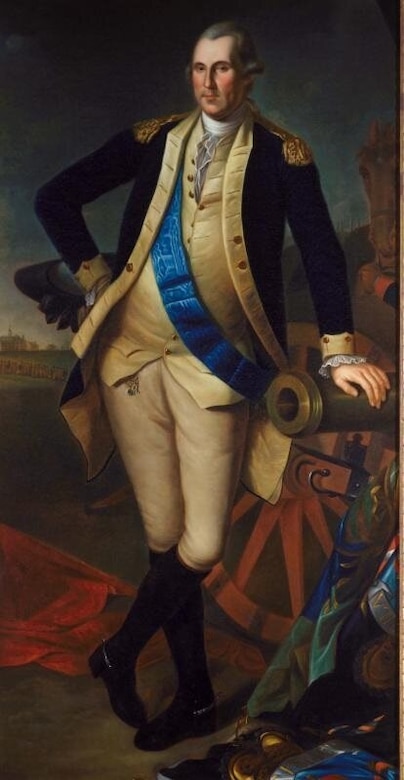
A painting of a soldier in Colonial Army attire leaning on a cannon is shown.
This year marks America's 250th birthday, a nation born in war.

Factors that led to the U.S. victory over the British Empire during the Revolutionary War included an effective intelligence network.

Gen. George Washington, commander of the Continental Army, established a light infantry unit in 1776 known as Knowlton's Rangers. The unit specialized in espionage and reconnaissance. The unit is considered the nation's first intelligence service.

The Culper Ring was a network of spies, organized by Continental Army Maj. Benjamin Tallmadge and Washington, during the British occupation of New York City, Long Island and Connecticut from 1778 to 1783.

The spies used secret codes, aliases and invisible ink to report British troop movements. No one from the unit was ever captured.

Their intelligence successes included learning of plans for a surprise attack on the newly arrived French forces at Newport, Rhode Island, discovery of a British plan to counterfeit American currency, discovery of a British plan to attack cities in Connecticut and finding the identity of the Continental Army traitor  Maj. Gen. Benedict Arnold.

A kneeling man in historical attire removes one of his boots, from which documents fall out. Three men stand nearby in similar attire in a countryside. One man is holding the reins of a horse.

The ring also worked to capture a British spy, Army Maj. John Andre, who colluded with Arnold.

John Jay, a Founding Father and future chief justice, played a major role in counterintelligence.

In 1776, he was instrumental in successfully investigating a plot to recruit people to sabotage defense and infrastructure targets in the New York City area.

Jay and the agents he appointed subsequently conducted hundreds of counterintelligence investigations resulting in many arrests of conspiring loyalists. 

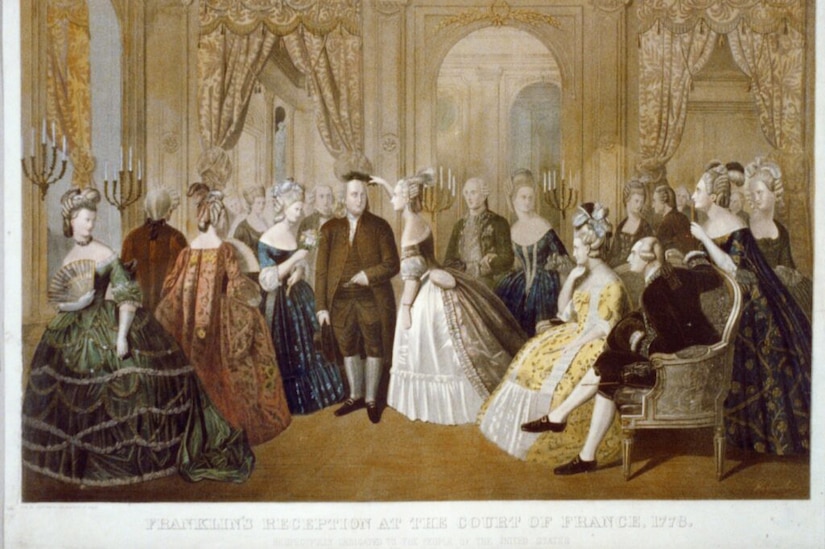
People dressed in formal attire attend to an elderly man in similar attire inside a ballroom.

Benjamin Franklin, another Founding Father, was an expert in covert activities, including a highly effective propaganda campaign. 

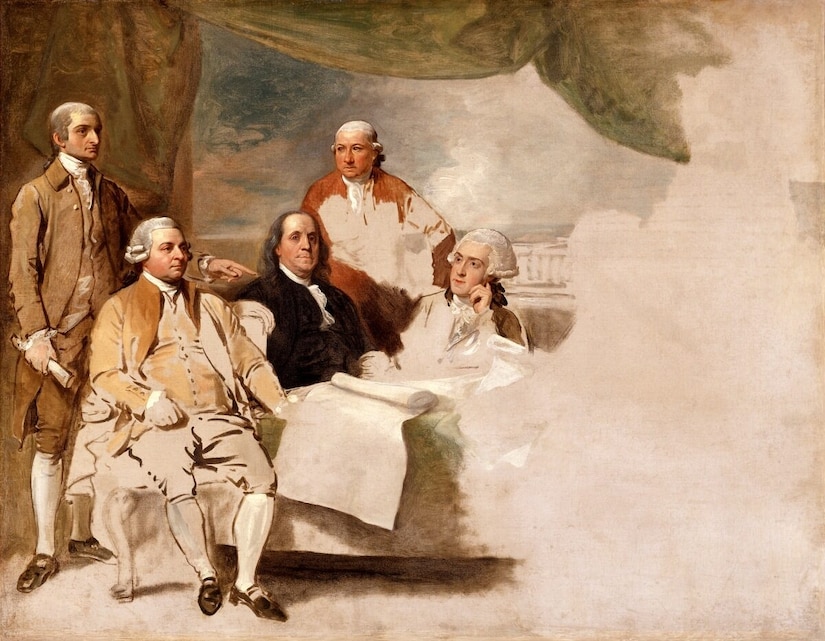
In a painting, men in colonial attire are standing and seated at a table with a document in front of them. The right side of the painting is blank.

Foremost among his successes was convincing France to ally with America, an achievement that was a major factor in the war's outcome. He accomplished this with his wit, charm, humor and intellect, wooing French leaders while in Paris during the war. He's considered America's first diplomat.