Wednesday, March 18, 2026

101st Airborne Division Tests Next-Generation Drones During Live-Fire Exercise

The 101st Airborne Division tested its ability to integrate unmanned aircraft systems to support ground forces during a live-fire exercise, March 12 at Fort Campbell, Kentucky.
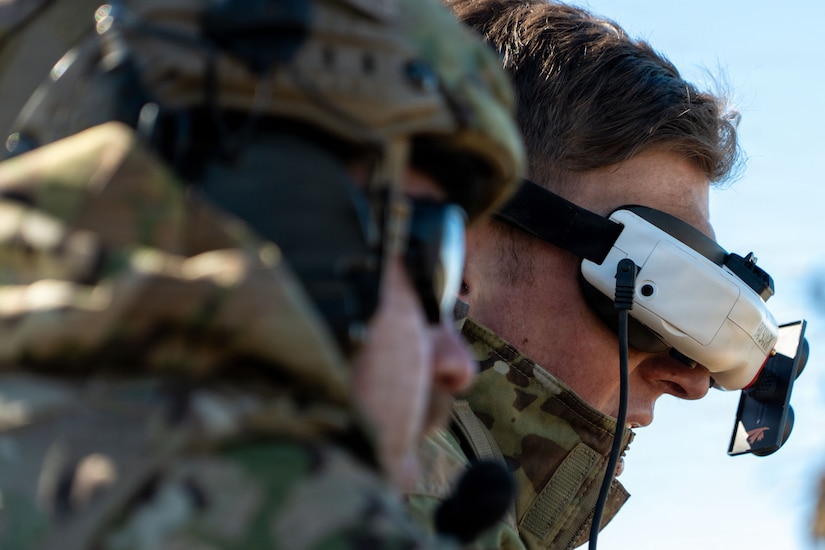
A close-up image of a man wearing a camouflage military uniform with a drone headset on. There is another man in similar attire in the foreground.

"We are no strangers to innovation here on Fort Campbell," said Army Brig. Gen. Travis McIntosh, deputy commanding general of operations for the division. "Drones are reshaping the geometry of the battlefield in real time and we must adjust. Distance and sanctuary no longer provide the protection they once did, and mass and speed of decision-making will increasingly be enabled by autonomy and [artificial intelligence]. This event tested and proved these assumptions for us."

Advancing Secretary of War Pete Hegseth's directive for drone dominance, the division used UAS operators assigned to its 1st Mobile Brigade Combat Team, 2nd Mobile Brigade Combat Team and 101st Combat Aviation Brigade to fly multiple UAS alongside the 5th Special Forces Group.

The sortie, which consisted of an MQ-1C Gray Eagle, C100 small UAS and Attritable Battlefield Enabler 1.01 drone, provided aerial clearance for the Special Forces soldiers during the exercise.

"Drones are a great tool for over-the-hill reconnaissance," said Army Spc. Basil Holland, an infantryman and small UAS operator assigned to the 1st Battalion, 502nd Infantry Regiment. "They have a lot of ability to identify short- and medium-range targets and get eyes on whatever you need. It's proven to be super useful."
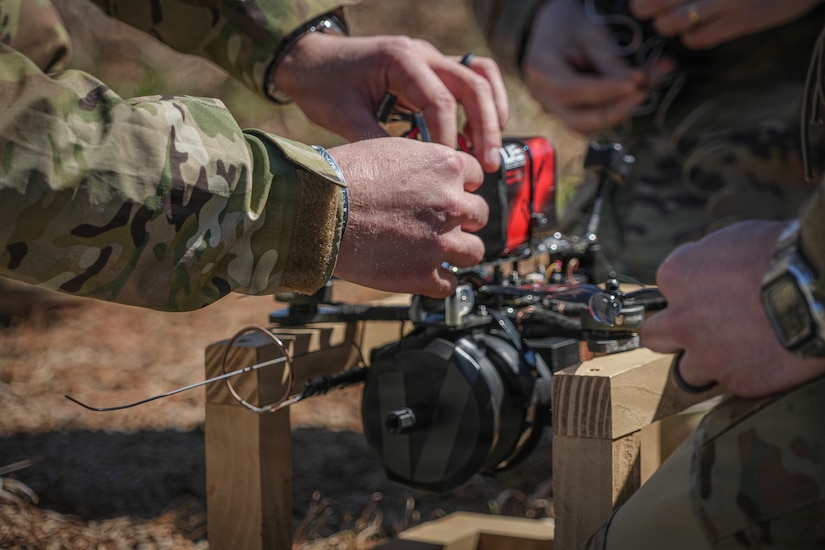
A close-up image of a person's hands as they work on a drone that is sitting on two pieces of wood outside. There are two other people kneeling around the drone.

U.S. Army Reserve Command representatives attended to learn more about how the 101st incorporates emerging technologies.

"We wanted to get a clear understanding of how the big Army is integrating UAS," said Sammy Stevens, a counter-UAS lead planner for USARC. "We want to try and replicate their efforts with the [Army] Reserve. During counterinsurgency operations, everyone was used to looking down to identify improvised explosive devices; now we have to look up in the air."

Partnering with USARC highlights the division's commitment to improving lethality for the entire Army.

"The 101st has been very gracious in supporting us," said Army Master Sgt. Bryan Pettaway, USARC senior enlisted advisor for operations and logistics. "By showing us what has worked, and what hasn't, they have helped us avoid those same mistakes."
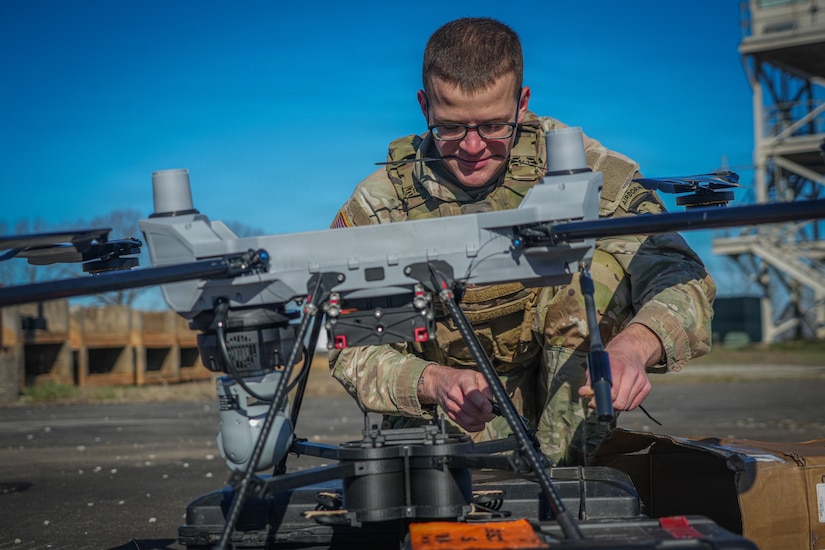
A man wearing a camouflage military uniform kneels as he works on a drone outside. There is equipment around the man, and a large tower is in the background.

The exercise validated the division's ability to operate UAS in a kinetic, multidomain setting. This successful pairing of systems and soldiers ensures the 101st Airborne Division remains at the forefront of Army transformation efforts.

"Today's demonstration was a direct answer to the secretary of war's directive," said Army Chief Warrant Officer 2 Page Frazier, the exercise coordinator and member of the 101st Robotics and Autonomous Integration Directorate. "We did some unorthodox things and always made first contact with a machine. ... And I don't think any other exercise has done that. We leveraged modern technology to set conditions for a safe employment of a ground force."

"I am superbly proud of the teamwork, from both the operational and institutional sides of the Army, as well as the conventional [forces] and Special Forces on Fort Campbell," McIntosh said. "This exercise demonstrates one of the many ways we will dominate in tomorrow's fight."
Leaders Address War in Ukraine, Russia Threat

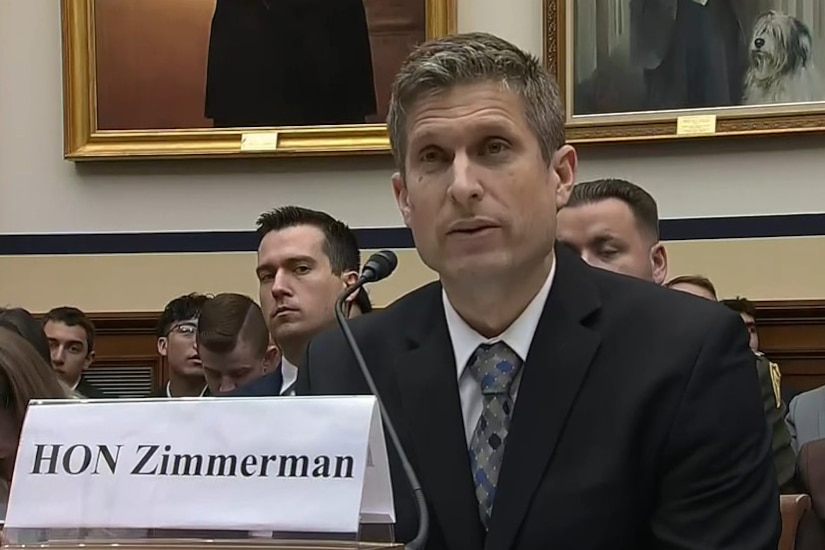
President Donald J. Trump's administration is negotiating with Russia and Ukraine to secure a durable peace based on credible security guarantees, beginning with a strong Ukraine and Europe, said Daniel L. Zimmerman, assistant secretary of war for international security affairs, during a House Armed Services Committee hearing today.

A man in a suit, seated at a table, speaks into a microphone.

It is important that allies act urgently to provide Ukraine with the necessary resources for deterrence and defense. Over 20 European nations have pledged more than $4 billion to the Prioritized Ukraine Requirements List Initiative so far, he said.

"Russia still retains deep reservoirs of military and industrial power and the national resolve to sustain protracted war. Moreover, Russia has the world's largest nuclear arsenal and invests in capabilities, which could be used coercively just short of nuclear confrontation," Zimmerman said.

"The U.S. stands with NATO, but if burden sharing becomes misaligned or thinly spread, this is not healthy for an alliance, and we want NATO to be as strong as it can be for the long term," he said.

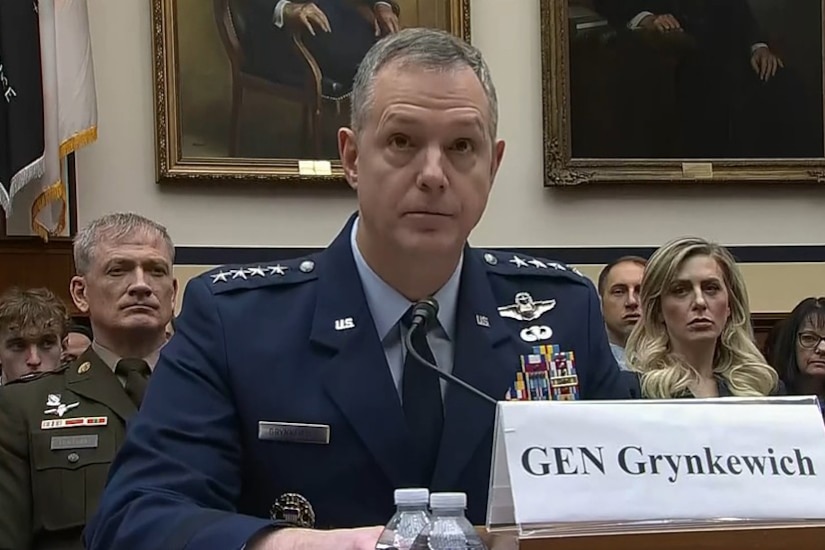
A man in a dress uniform, seated at a table, speaks into a microphone.

Expanding on these concerns, Air Force Gen. Alexus G. Grynkewich, commander, U.S. European Command and NATO supreme allied commander Europe, testified that the United States faces a complex and evolving global security environment.

"Growing cooperation between Russia, North Korea, Iran and the People's Republic of China has increased military risk across multiple theaters and domains," Grynkewich said.

In Europe, North Korean troops and materiel, Iranian drone technology and Chinese economic support enable Moscow to sustain its war in Ukraine, the general added.

"Despite significant losses in Ukraine, Russia retains the capability and the capacity to threaten U.S. interests with its large and increasingly diverse nuclear stockpile, asymmetric capabilities and competent ground, air and maritime forces," Grynkewich said.

National Guard Airlift Wing Completes 38th Year of Antarctic Support

The New York Air National Guard's 109th Airlift Wing concluded its 38th year supporting American scientific research in Antarctica during the 2025–2026 Operation Deep Freeze season, March 11.

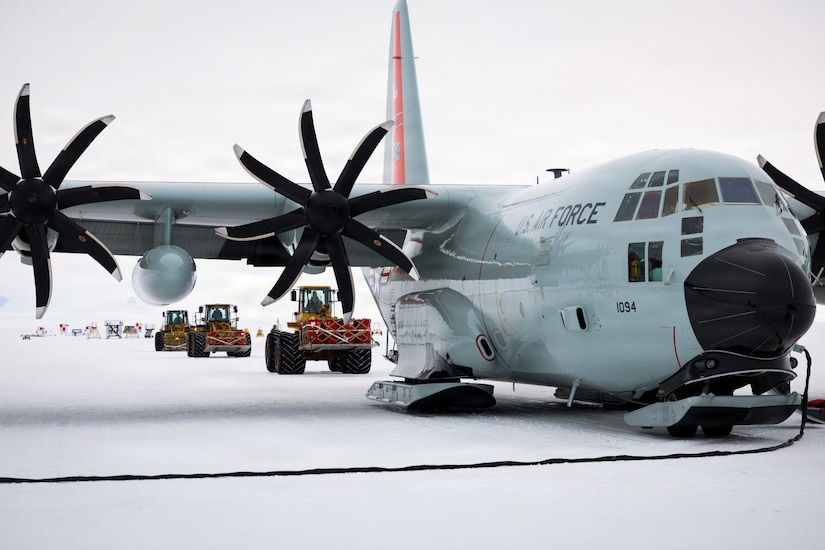
Three people driving large pieces of construction equipment with cargo attached drive toward a military aircraft sitting on a snowy tarmac. There is a long power cord attached to the aircraft.

The airlift wing deployed roughly 200 airmen throughout the season in support of Operation Deep Freeze, the War Department's annual mission to sustain the U.S. Antarctic Program. 

The wing operates the ski-equipped LC-130H Hercules, the largest aircraft in the world capable of landing on snow and ice using skis. This unique capability allows the 109th to deliver heavy airlift to remote locations across Antarctica.

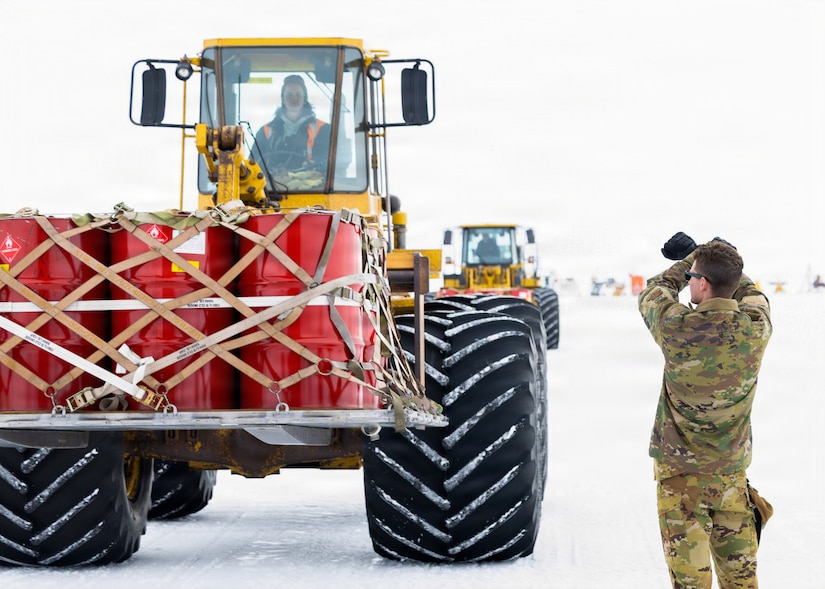
A man in a camouflage military uniform signals for a person driving a large piece of construction equipment with cargo attached to stop on a snowy tarmac. There is another piece of equipment with cargo in the background.

Aircrews and support personnel operated primarily from McMurdo Station, the largest of the U.S. year-round stations and the largest station on the continent. It is the central logistical hub for the U.S. Antarctic Program, supporting research on the continent and at the National Science Foundation's Amundsen-Scott South Pole Station. The station was established Dec. 18, 1955, and opened in 1956 as part of Operation Deep Freeze. 

During the season, the wing flew 63 missions to Amundsen-Scott South Pole Station and 17 missions to the West Antarctic Ice Sheet Divide in support of continued scientific operations and camp drawdown activities. Aircrews also conducted nine aeromedical evacuation missions to Christchurch, New Zealand. No airdrop missions were conducted this season.

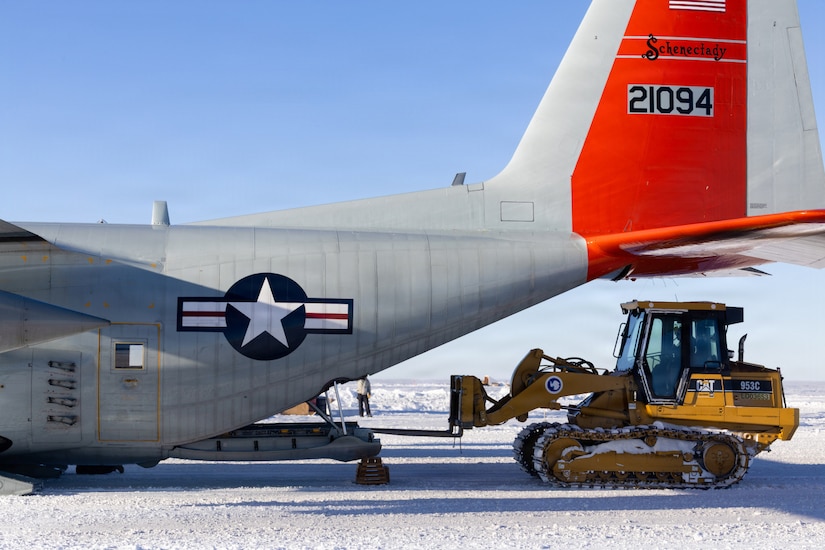
A person uses a large piece of construction equipment to load cargo onto a military aircraft sitting on a snowy tarmac.

LC-130H aircraft flew over 900 hours on the continent, with an additional 130 hours supporting deployment and redeployment operations. 

Throughout the season, the 109th transported 1,086 passengers, delivered 1 million pounds of fuel and moved 2.6 million pounds of cargo in support of the operation. Missions focused primarily on sustainment operations at the South Pole and the ice sheet divide camp drawdown.

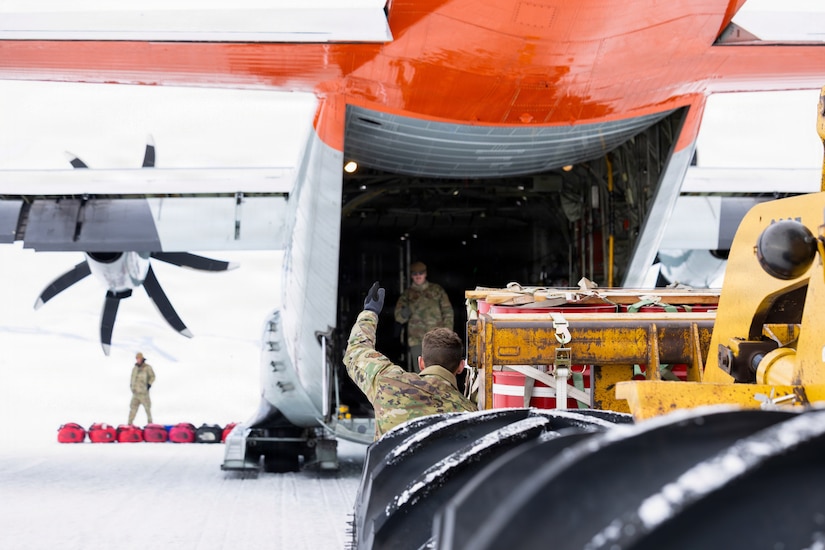
A man in a camouflage military uniform guides a loader with cargo into the back of a military aircraft sitting on a snowy tarmac. There is another man in similar attire standing in the aircraft.

"The success of this season reflects the dedication and professionalism of our airmen,” said Air Force Col. Steven Slosek, commander of the 109th Airlift Wing. "Operating in one of the most challenging environments requires teamwork, precision and adaptability. Their efforts ensured the successful completion of this year's Operation Deep Freeze mission." 

The operation remains one of the War Department's most demanding recurring missions. The airlift wing continues to provide the only heavy airlift capability in the world able to conduct tactical landings on snow and ice, enabling year-round scientific research operations throughout Antarctica.