Wednesday, May 13, 2026

Washington National Guard Aviation Crews Train for Wildfire Season

Aviation crews assigned to the 1st Battalion, 168th Aviation Regiment, Washington Army National Guard, partnered with Central Pierce Fire and Rescue to conduct water bucket training near Puyallup, Washington, May 7, preparing for the state's wildfire season.
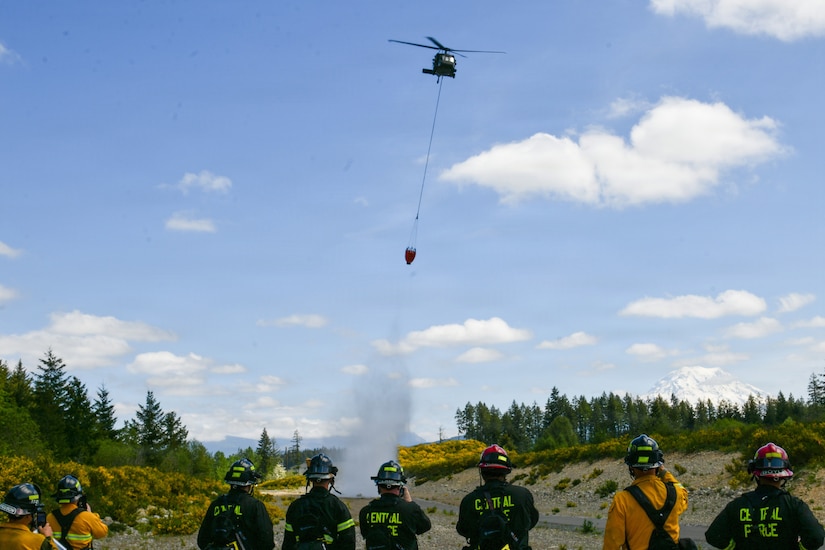
A military helicopter drops water on the ground in an open area surrounded by trees as eight people in firefighter uniforms observe in the foreground.

Throughout the exercise, firefighters and aviation crews rehearsed aerial wildfire response operations, practicing water bucket drops, air-to-ground communication procedures and coordination between firefighters and aircrews.

Using UH-60 Black Hawk helicopters, aircrews conducted multiple water drops while firefighters on the ground coordinated target locations and evaluated each drop's effectiveness. The training focused on communication, timing and precision in environments that can quickly become hazardous during wildfire response operations.

"Air assets have become a critical asset in fighting these fires," a Central Pierce Fire and Rescue spokesperson said. "These are very fast-moving fires, especially when the weather's playing into it with the wind, and it's extremely difficult for us on the ground and extremely hazardous sometimes for us to get even close enough to attempt to extinguish these fires."
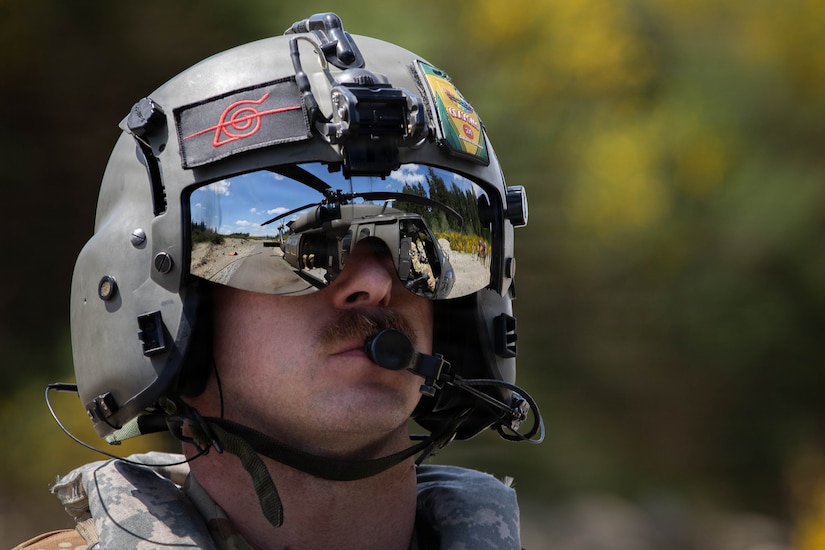
A close-up view of a man wearing an aviation helmet with a reflection in the visor of a military helicopter parked on the ground nearby.

Fire officials said helicopters and fixed-wing aircraft often provide firefighters additional access and suppression capabilities in areas that may be difficult or unsafe for crews operating on the ground.

Army Chief Warrant Officer 3 Jarin Trakel, 1st Battalion company standardization instructor pilot, emphasized the recurring partnership helps firefighters and aviation crews build familiarity and communication before responding to real-world emergencies.

"We kind of try to bridge that gap by putting a face to the radio before anything actually happens," Trakel said. "That way they know what to expect when they call the Washington [National] Guard."
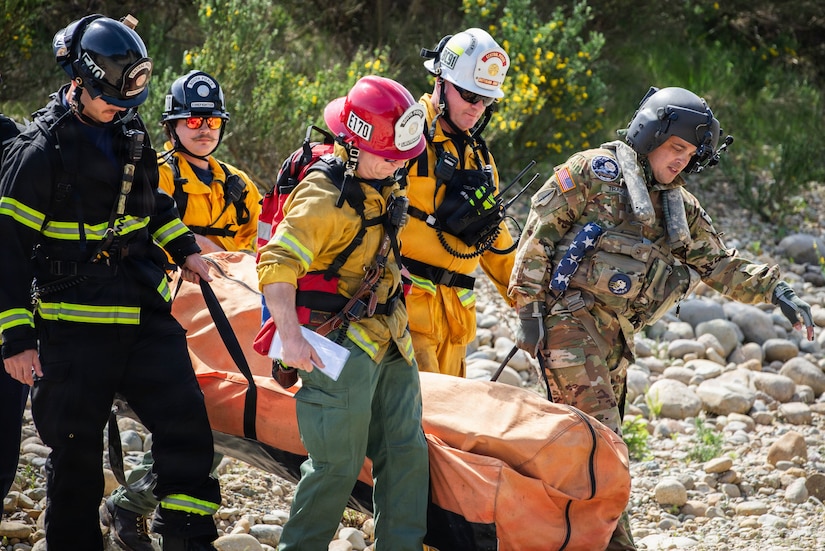
A man wearing a camouflage military uniform and aviation helmet and four other men in firefighter uniforms carry equipment outside.

The joint training also allows both organizations to better understand each other's capabilities, communication procedures and operational limitations before responding to wildfire incidents together, he said.

For Washington Army National Guard aviation crews, water bucket operations require annual certification and recurring proficiency training to ensure pilots and crew members remain prepared to respond when activated in support of wildfire suppression missions across the state.

Trakel described these operations as one of the more demanding aviation mission sets conducted during domestic training.
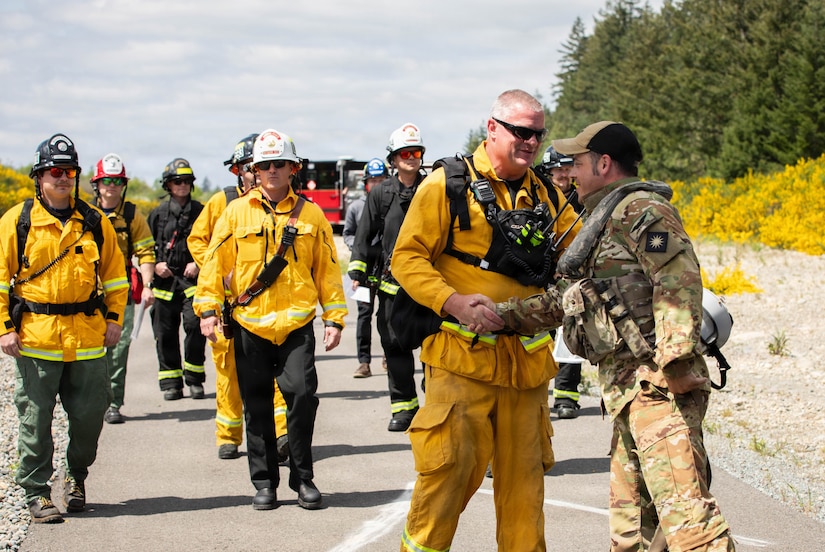
A man wearing a camouflage military uniform shakes hands with another man in a firefighter uniform at a training location outside; there are several other men wearing firefighter uniforms and helmets standing in the background.

"This is kind of the varsity league of training," he said. "The aircraft, we put it pretty close to its limitations when we're picking water up, moving the aircraft around in tight spaces, at low airspeed with a high-power setting."

He added that the mission requires experienced crews, constant communication and coordination between pilots, crew chiefs and firefighters on the ground. During real wildfire responses, military aviation crews often integrate with multiple civilian rotary-wing aircraft operating from the same water sources and flight paths.

"It takes a lot of coordination," said Army Chief Warrant Officer 3 Martin Hays, battalion aviation mission survivability officer. "You're dealing with firefighters on the ground and additional weight with the water bucket."
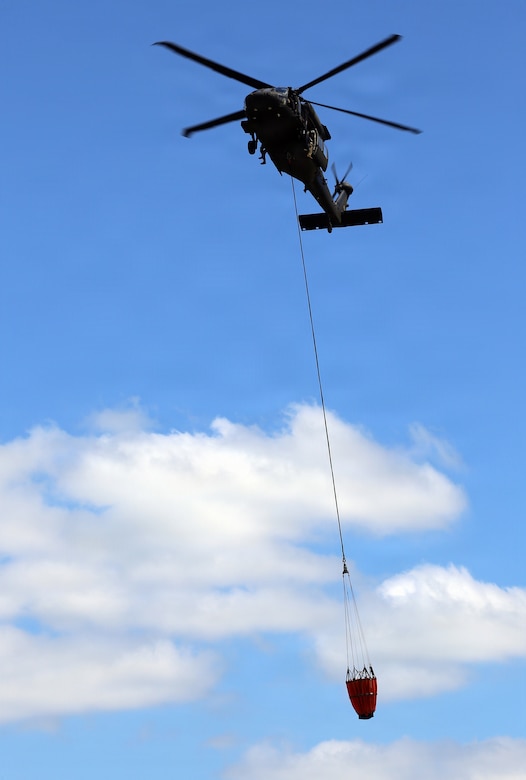
A military helicopter carries a large bucket of water that is hanging from a cable attached to the bottom of the aircraft.

Hays said wildfire response operations remain one of the more demanding domestic missions conducted by guard aviation crews, due to terrain, smoke, wind conditions and the coordination required between ground personnel and aircraft.

During the exercise, firefighters and aircrews practiced identifying targets, coordinating water-drop locations and maintaining positive communication throughout the operation.

"The first thing that we do is try to identify our ground contact to make sure we have positive communication with the crews," said the Central Pierce Fire and Rescue battalion commander. "Obviously, the priority is actually stopping any forward progress toward residential structures or life hazards."

Fire officials said the partnership has continued to grow through recurring joint training opportunities between firefighters and guard aviation crews.

"It's extremely rare to find helicopters that are willing to train with us," a firefighter said. "We decided this was a great opportunity for us to get some training out of this, too."

Since 2012, the Washington National Guard has supported wildfire suppression efforts throughout the state alongside the Washington Department of Natural Resources. In 2024 alone, aviation crews flew more than 75 firefighting hours and dropped nearly 300,000 gallons of water in support of multiple wildfire responses. According to the Washington Department of Natural Resources, 1.2 million gallons of water were delivered by aviation assets, with an average response time of 16 minutes, in 2025.
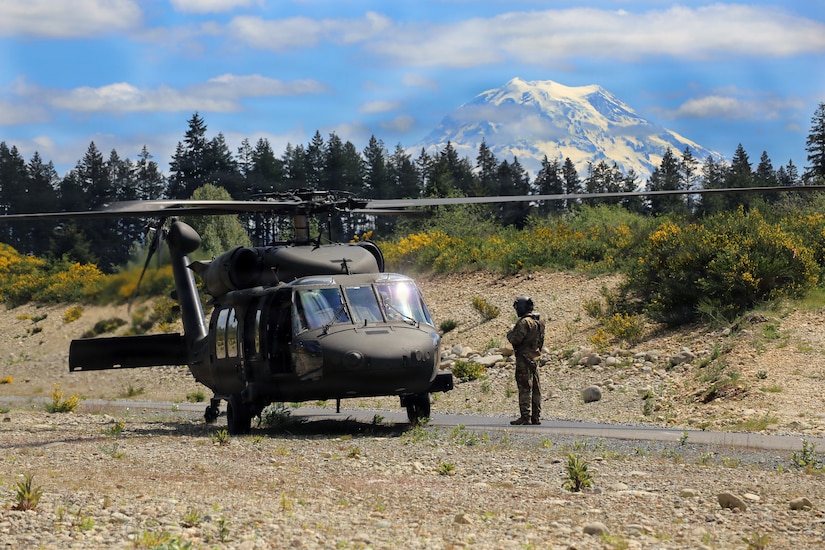
A person wearing a camouflage military uniform stands next to a military helicopter preparing to take off from a training location outside; there are trees and mountains in the background.

In recent years, Washington Army National Guard aviation crews have been activated to support wildfire response operations across the state.

"The more we get to go out and do this, the better," Trakel said. "It just makes us safer, more capable to give back to the state when called upon."

As wildfire season approaches, guard aviators and firefighters continue strengthening partnerships and operational readiness to protect communities statewide.
U.S., Multinational Allies Launch Exercise Salaknib's Second Phase in the Philippines

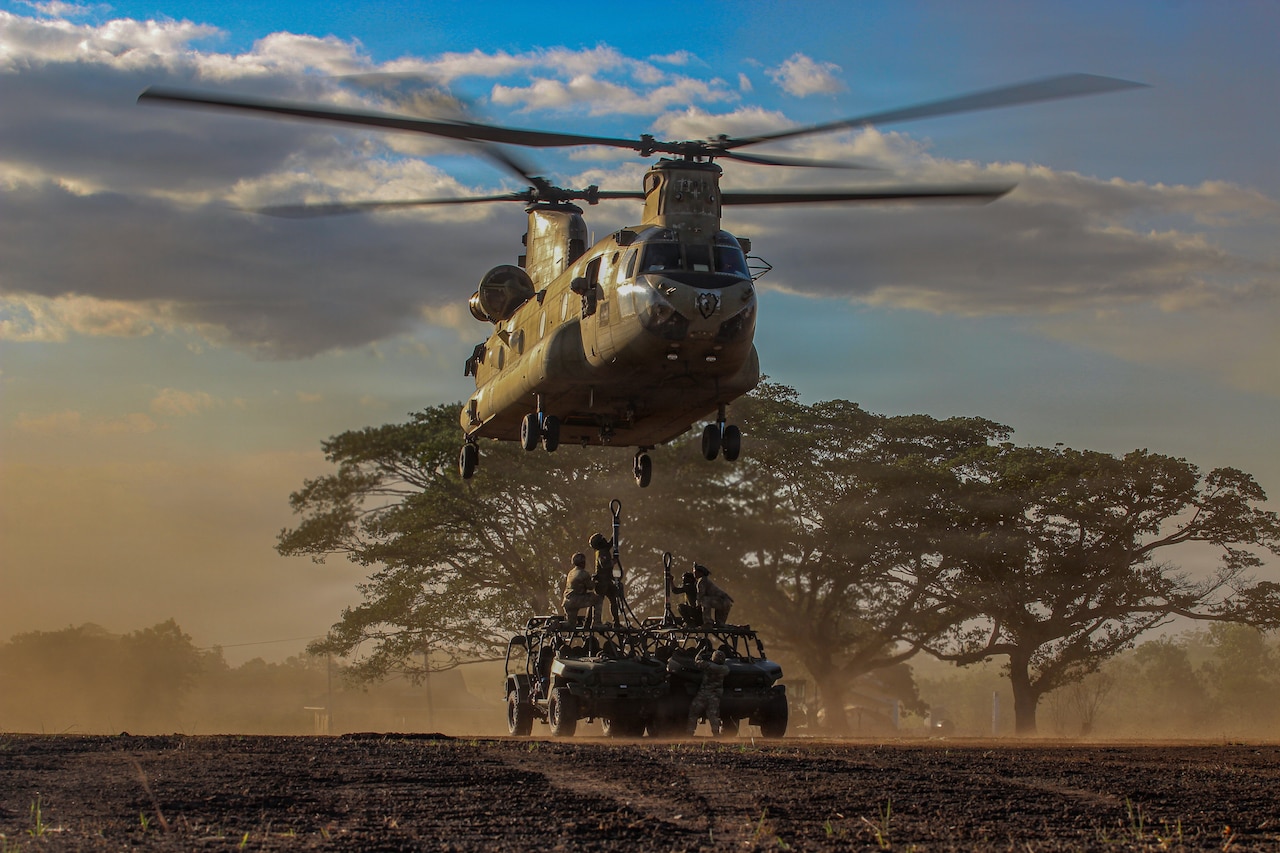
Four service members wearing camouflage military uniforms work to attach hooks tethered to two military vehicles to the bottom of a military helicopter that hovers above them.

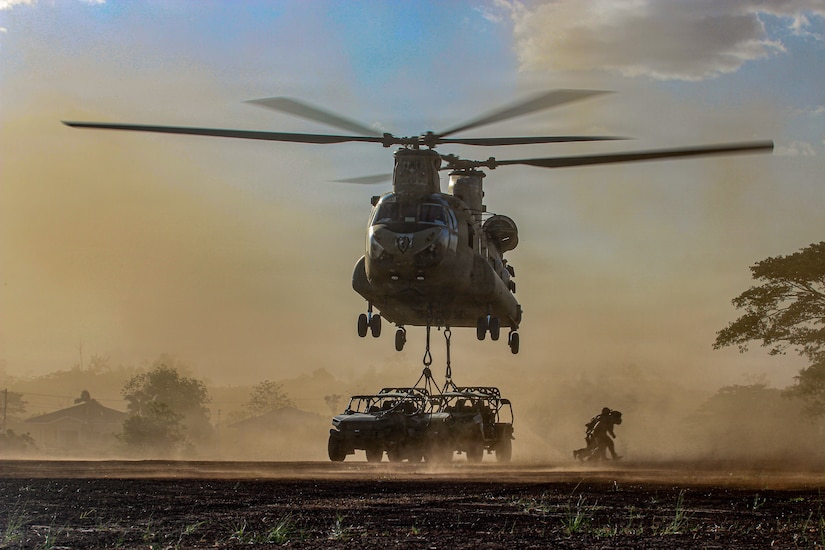
The Army's 25th Infantry Division, in close partnership with the Armed Forces of the Philippines and multinational allies, officially launched the Joint Pacific Multinational Readiness Center-Exportable Exercise, May 8. 

Operating as Part II of the bilateral Exercise Salaknib, JPMRC-X continues through May 20. This rotation brings an immersive combat training center experience directly into the Indo-Pacific theater, allowing forces to train in the complex, archipelagic environments where they operate. 

A group of service members wearing camouflage military uniforms run away from a military helicopter that is attached to two military vehicles as red dust surrounds them.

"Our alliance with the Philippines is steeped in history for over 75 years as the oldest treaty ally," said New Zealand Army Col. Aidan Shattock, deputy commanding general for interoperability of the 25th Infantry Division. "This is playing out with deep trust and understanding as we rehearse together during Operation Pathways."

During JPMRC-X, the 25th Infantry Division will execute complex, multidomain operations. The exercise is designed to strengthen the division's tactical proficiency and partner interoperability through rigorous, realistic training across diverse, challenging terrain. 

The training rotation features the 25th Infantry Division's role as the spearhead of Army modernization. Participating units will leverage human-centered technology, including the integration of unmanned aircraft systems to enhance situational awareness and the fielding of the Army's next-generation squad weapons, the M7 rifle and M250 automatic rifle, to advance squad-level modernization and mission effectiveness. 

"Exercises like JPMRC-X demonstrate our enduring commitment as the land partner of choice, strengthen our allies and deter aggression together," Shattock said. 

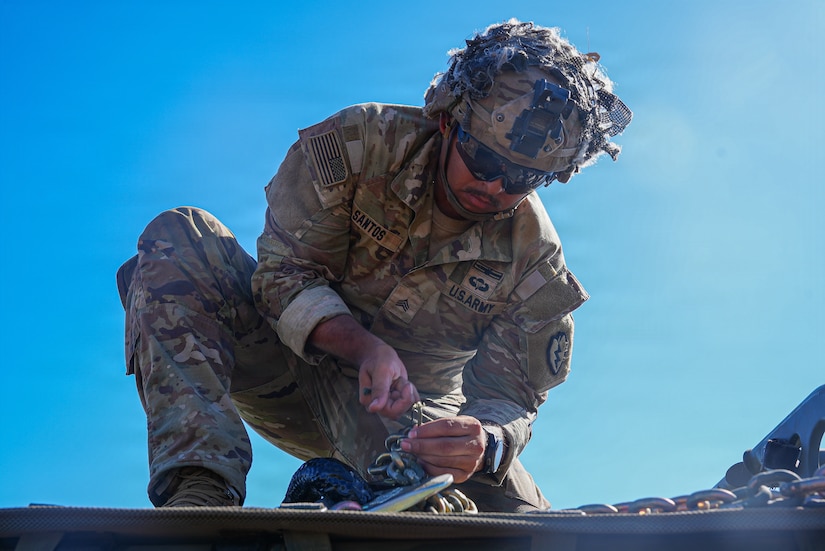
A service member wearing a camouflage military uniform connects a metal hook to a military vehicle.
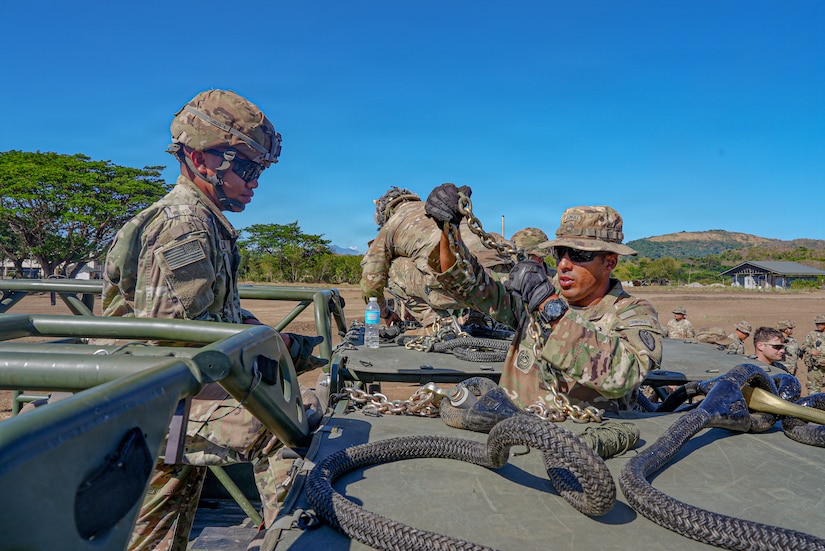
A service member wearing a camouflage military uniform holds a large chain as another service member in similar attire stands on a military vehicle and looks on.
In addition to bilateral operations with the Philippine Army's 7th Infantry Division, JPMRC-X includes the integration of multinational partners from Australia, New Zealand and Japan. This international coalition demonstrates a united, enduring commitment to maintaining a free and open Indo-Pacific region. 

All operations during JPMRC-X are conducted in close coordination with the Philippine government and local officials to ensure the safety of the civilian population and promote the strong, enduring U.S.-Philippine partnership. 

Exercise Salaknib highlights the enduring U.S.-Philippine alliance, enhancing interoperability and readiness through combined arms operations, multidomain integration and humanitarian assistance efforts to support regional stability. 

Department of War Enhances Lethal Strike Capacity Through Partnership With New Entrants

The Department of War has reached new framework agreements with a slate of disruptive new entrants and commercial innovators to aggressively expand the United States military's strike capabilities. Agreements with Anduril, CoAspire, Leidos, and Zone 5 will launch the Low-Cost Containerized Missles (LCCM) program, while a parallel agreement with Castelion advances an initiative to scale low-cost hypersonic solutions. These agreements will rapidly field effective and affordable kinetic mass for the Joint Force at scale, acting directly on the mandate from President Trump and Secretary Hegseth to strengthen America's military with an unequivocally lethal Arsenal of Freedom.

The new frameworks for LCCM will drive a fast-paced experimentation and assessment campaign that will culminate in a Military Utility Assessment by the sponsoring Service Components. Designed to move at the speed of commercial industry, the agreements establish the terms for future firm-fixed-price production contracts. This effort positions the Department to procure over 10,000 low-cost cruise missiles across these portfolios in just three years, starting in 2027. The Department is creating a pathway for rapid and repeatable production of high-volume, lethal strike capabilities. The agreements include firm fixed material-unit costs for production lots in 2027 through 2029.

Concurrently, once Castelion achieves testing and validation, the Department will award a two-year multi-year procurement contract for a minimum of 500 Blackbeard missiles annually, with options to extend for up to five years. To further encourage Castelion's self-funded facility expansion, the Department is actively seeking the necessary authorizations and appropriations to purchase over 12,000 Blackbeard missiles over five years.

Across these framework agreements, several of these new vendors will reach production scale without direct Department investment, reflecting a new model of commercial partnership that rewards speed, innovation, and private sector capital investment.

The experimentation and assessment campaign for LCCM will be led by the Office of the Under Secretary of War for Research and Engineering, with the Army Program Acquisition Executive Fires serving as the transition partner and acquisition lead for procurement. To kickstart this initiative, the Department will procure test missiles from all four LCCM companies starting in June 2026, laying the groundwork for the assessment phase of the program. These agreements were developed in close coordination with the United States Air Force Program Acquisition Executive Weapons, the Test Resource Management Center and multiple components across the War Department, including the Office of the Under Secretary of War for Acquisition and Sustainment.

"We will deliver affordable mass for our warfighters at unprecedented speed," said Under Secretary of War for Research and Engineering Emil Michael. "In concert with establishing a clear demand signal, these Framework Agreements commit American industry to on-time, on-cost delivery and investment in R&D and facilities. This commercial style of partnership is fully aligned with Secretary Hegseth's Acquisition Transformation Strategy."

This approach reflects a deliberate effort to expand the munitions industrial base, working with industry partners capable of delivering lethal capability at the speed required by the Joint Force. It reinforces the Department's staunch commitment to scalable production pathways that can surge when needed.

"Today's announcement is the latest sign that our Acquisition Transformation Strategy is delivering on its promise to rebuild the Arsenal of Freedom," said Michael Duffey, Under Secretary of War for Acquisition and Sustainment. "We are moving beyond the traditional prime contractors to expand our industrial base, accelerating testing timelines, and sending a clear, long-term demand signal to innovative new entrants."

Acting Pentagon Press Secretary Joel Valdez released the following statement:

The U.S. Department of War today is announcing three important personnel decisions that strengthen its leadership team with experienced and dedicated professionals. These elevations reflect the Department's commitment to placing highly qualified individuals in critical roles to advance national security priorities and support the Secretary of War's mission.

Patrick Weaver has been appointed Deputy Chief of Staff for the Department of War.
Matt Dobson has been appointed Senior Advisor to the Secretary of War.
Tami Radabaugh has been appointed Senior Advisor to the Secretary of War.

Each individual brings a proven track record of excellence, strategic insight, and unwavering dedication to public service. Their appointments will enhance operational effectiveness, provide expert counsel on key policy matters, and help drive the Department's efforts to maintain a ready and capable force.

Monday, May 11, 2026

Army Paratroopers Integrate Drones, Night Operations in Historic Company Live Fire

More than 700 paratroopers assigned to the 2nd Infantry Brigade Combat Team, 11th Airborne Division, executed a historic company live-fire exercise at the Infantry Squad Battle Course at Joint Base Elmendorf-Richardson, Alaska, April 27-May 8. 

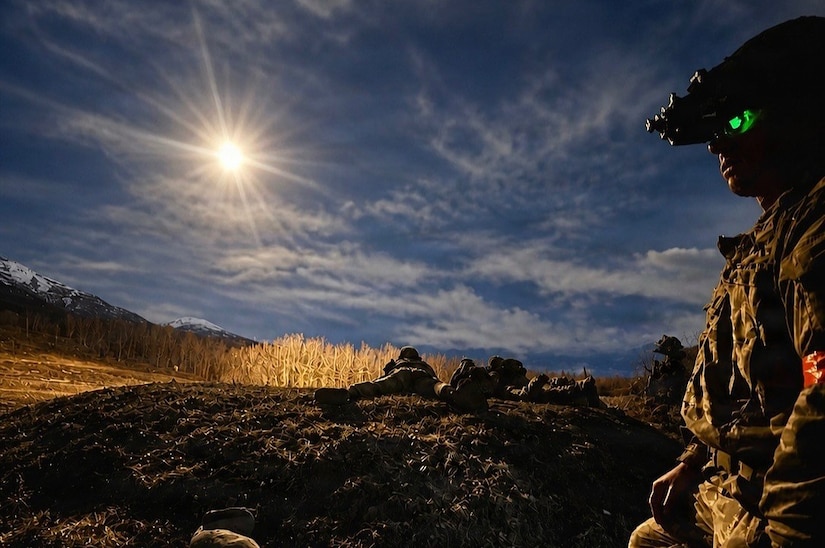
A man in a camouflage military uniform and night vision goggles observes two other people in similar attire lying on a hill looking at an open field; there are mountains in the background.

The event marked the brigade's first exercise incorporating friendly kinetic and strike small unmanned aerial systems with paratroopers employing first-person-view drones to strike simulated enemy positions and defend against live adversaries in the form of drones. 
 
"This was the first time our companies had organic FPV drone pilots executing live-fire strikes on critical targets," said Army Capt. Ian McKibbin, lead range safety officer and member of the brigade operations staff. "The drones, built with components from [the] 11th Airborne [Division] Innovations [Team] and the [2nd Infantry Brigade Combat Team, 11th Airborne Division], Multifunctional Reconnaissance Company, were entirely controlled by the units on the ground. No live munitions were used, but the effect and accuracy were tremendous."

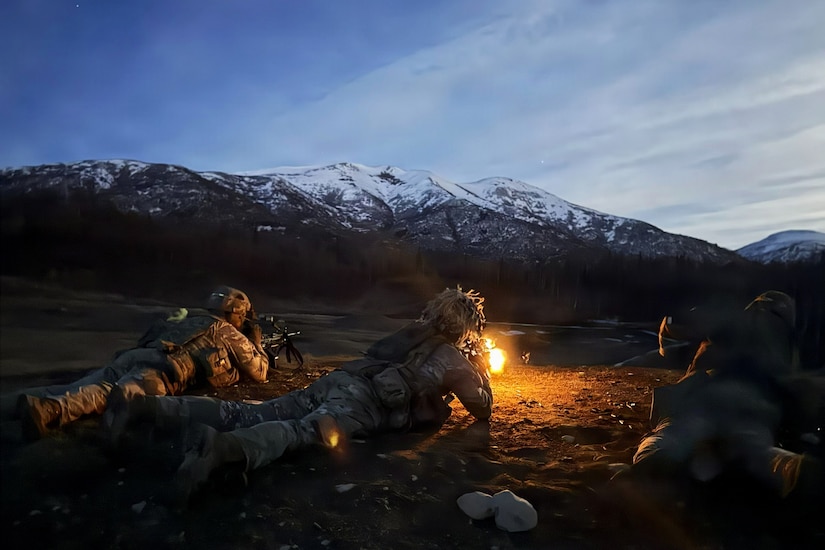
Two people in camouflage military uniforms lie on the ground, firing rifles into an open field, while another man in similar attire lies next to them, observing; there are trees and mountains in the background.

The exercise challenged paratroopers to clear a six-room shoot house, breach wired obstacles, clear trench systems and engage reinforced bunkers, all while reacting to contact from enemy drones. The small UAS attacked with simulated munitions, forcing commanders to rapidly employ counter-small UAS and adapt their tactics in real time. 
 
"Company live fires are designed to be complex and demanding," McKibbin said. "This event was especially difficult due to the presence of hostile drones, which observed friendly movement and actively attacked with simulated munitions. It's the first time we've had a live, thinking enemy in the form of these drones for this type of training exercise."

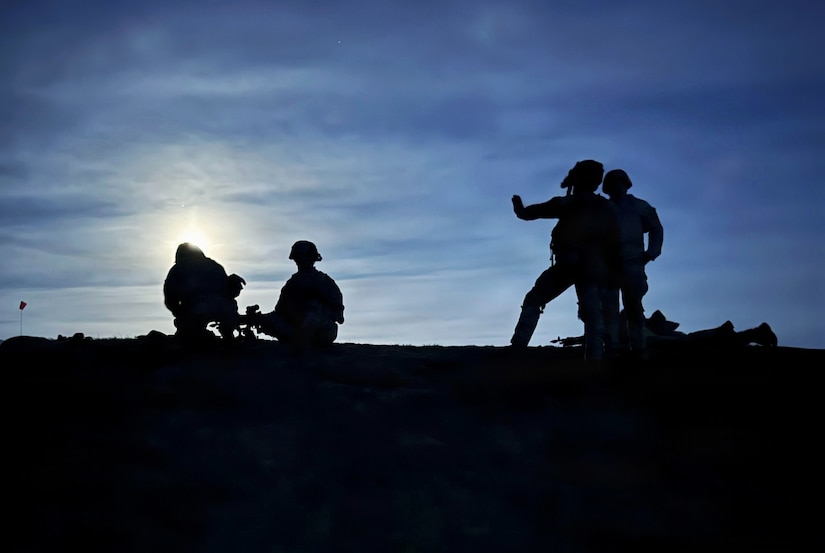
A silhouette of five people wearing helmets standing, sitting and lying down on a hill; two of the people are holding rifles.

Day and night lanes were executed with both blank and live ammunition. Parachute flares illuminated targets during night engagements, enabling soldiers to protect maneuvering squads and provide signaling or degrade enemy night vision capabilities. 
 
The entire company maneuvered on the lane, with commanders assigning platoons and squads to objectives. The event validated company commanders' ability to integrate direct and indirect fires and demonstrate proficiency in complex, live-fire operations. 
 
The event included participation from three battalions and extensive support from brigade headquarters. The small UAS also captured video of critical points for maneuvering elements, enabling near-real-time after-action reviews for companies. 
 
"This exercise represents a significant step forward in integrating new technology and realistic threats into our training," McKibbin said. "Our paratroopers demonstrated adaptability, teamwork and the ability to fight and win in a complex environment."

Fort Bragg Hosts NASCAR Driver Austin Dillon for Mission 600 Visit

Fort Bragg, North Carolina, hosted NASCAR driver Austin Dillon, May 7, as part of Mission 600, an annual program where racing teams visit military bases and learn about service members' daily lives in preparation for the Coca‑Cola 600.

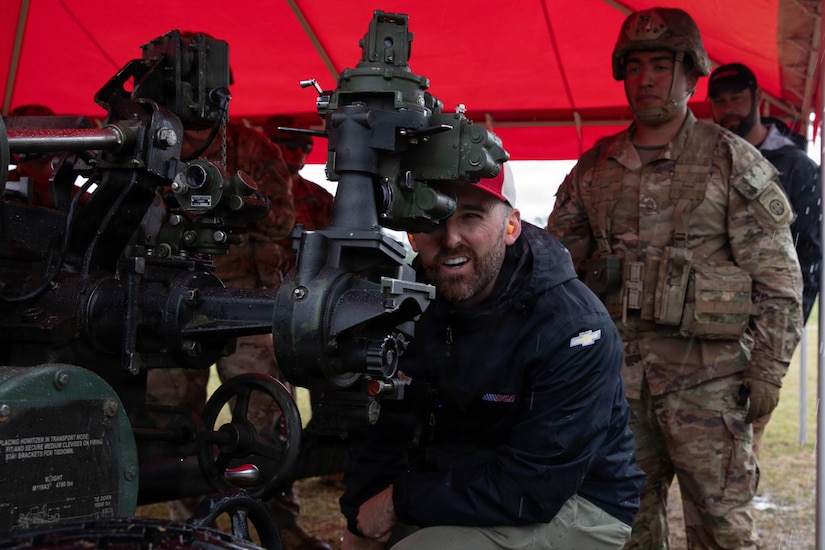
A man wearing a red baseball cap and blue jacket looks through the sight of a Howitzer. Two men in camouflage military uniforms stand behind him.

 
Dillon, who drives the No. 3 Chevrolet for Richard Childress Racing, is a two‑time NASCAR champion with wins in the Daytona 500 and Coca‑Cola 600. This was not his first time at the Army installation. Dillon previously visited the post in 2019 during an earlier Mission 600 tour, where he also trained with soldiers and learned about airborne operations. 
 
This year, Charlotte Motor Speedway sent drivers to military installations across the country for the ninth time to meet with troops and recognize their service. Fort Bragg became one of the key stops for the 2026 campaign.

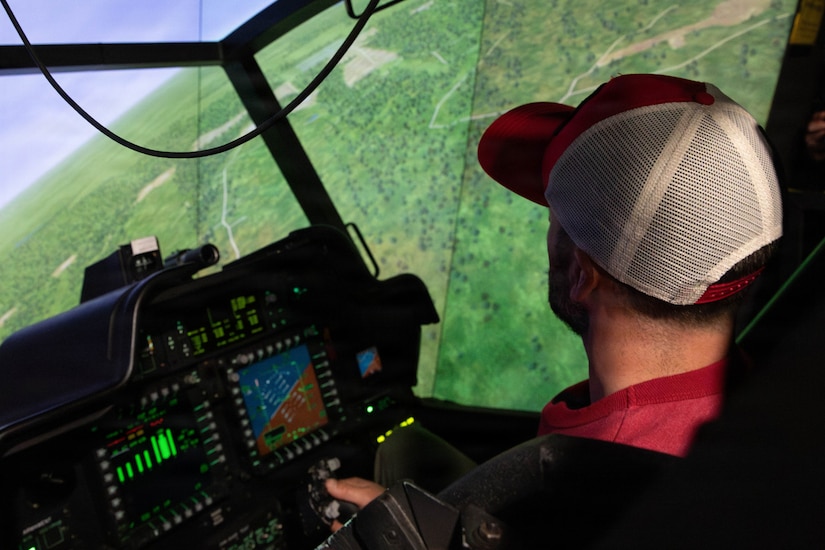
A man operates an aircraft simulator.

 
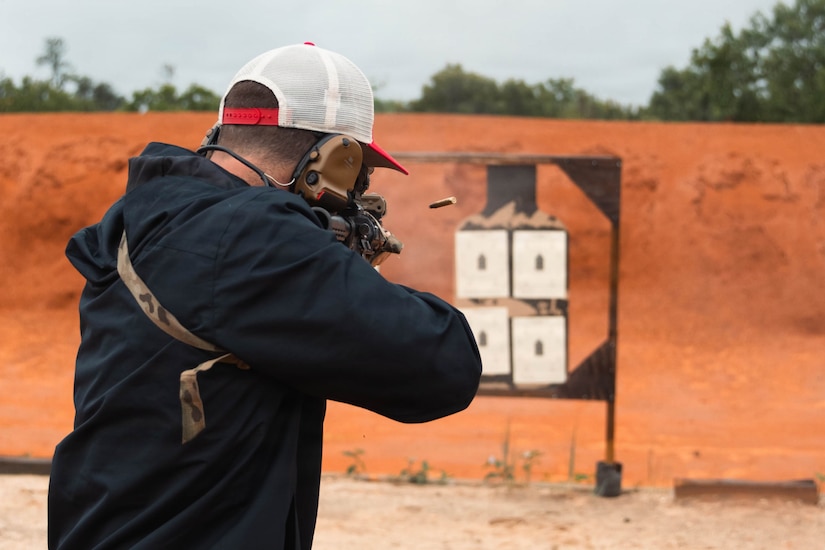
During the visit, Dillon and his racing team fired a howitzer, received weapons training, tested a flight simulator and jumped from the installation's 34‑foot jump tower. These hands‑on activities were designed to help the team understand the skills, training and challenges soldiers face every day. 
 
Dillon said the experience helped him better understand why Memorial Day weekend is so important to NASCAR and to the military community.

A man shoots a weapon at a target.


"So appreciative for all of our military, the men and women out there who truly keep America what it is," Dillon said. 
 
Mission 600 leads into the Coca‑Cola 600, NASCAR's Memorial Day weekend race that honors service members across the War Department. Charlotte Motor Speedway will host the 2026 race May 24.

FORGING THE DIGITAL BATTLESPACE: Five Eyes Allies Accelerate 'Project Arcadia' at the Combined Digital Leadership Summit

The Department of War (DoW), last Friday, announced the successful conclusion of the biannual Combined Digital Leadership Summit (CDLS 26.1), marking a pivotal acceleration in joint digital war fighting capabilities and the operationalization of Project Arcadia among the Five Eyes (FVEY) alliance: the United States, Canada, the United Kingdom, Australia, and New Zealand.

A large group poses for a photo on the steps of the Pentagon during the day.

The summit's mandate aligns directly with the strategic imperatives set by Secretary of War Pete Hegseth, who has continually emphasized that technological and operational unity with our partners is the bedrock of global stability. "The United States is committed to achieving peace through strength," Secretary Hegseth previously declared, framing the Department's focus on maintaining a decisive technological overmatch to deter global aggression. Executing on this vision of strength and deterrence, the Honorable Kirsten Davies, the DoW's Chief Information Officer, closed the multi-day summit by challenging the coalition to achieve "peace through technical strength" by commending the "fierce dedication" and "unequivocal consensus" of the international delegation.

"The spirit of the Combined Digital Leadership Summit (CDLS 26.1) has affirmed a fundamental truth that will define our future success: we can only achieve our goals when we walk together, not independently," said the Hon. Davies during her closing address. "The strategic imperative that has galvanized this remarkable unity is Project Arcadia. It is not merely an IT project, but the operational imperative for our time—the digital backbone that will empower our warfighters with the information dominance they need to win."

By uniting the Defence Chief Information Officer Forum (DCIOF), the Defence Chief Data Officer Forum (DCDOF), and the Combined Communications Electronics Board (CCEB), the FVEY nations have solidified a binding commitment to utilize the Arcadia platform as the critical infrastructure for operationalizing Artificial Intelligence and mastering Command and Control data flow. The goal is to turn vast amounts of information into a unified Common Operating Picture (COP) at a pace legacy, hardware-bound networks could never achieve.

The summit concluded with a ceremony rich in symbolism as the United States officially transitioned hosting duties to Australia. The Hon. Davies passed the ceremonial taonga—Māui's hook—to Australia's Defence CIO, Chris Crozier, signifying the handover for the next CDLS cycle.

As the host country and in commemoration of the upcoming 250th anniversary of the American Declaration of Independence, Davies also presented the Australian delegation with a sculpted Eagle. "The American flag in its talons is a reminder that wherever this mission flies next, the United States will be right there with you," she noted.

Joint development on Project Arcadia and rapid-prototyping initiatives will continue at a sprint pace as Australia carries this mission forward to the next summit, scheduled to convene in Sydney, Australia, in November 2026.

Medal of Honor Monday: Army 1st Lt. Douglas Bernard Fournet

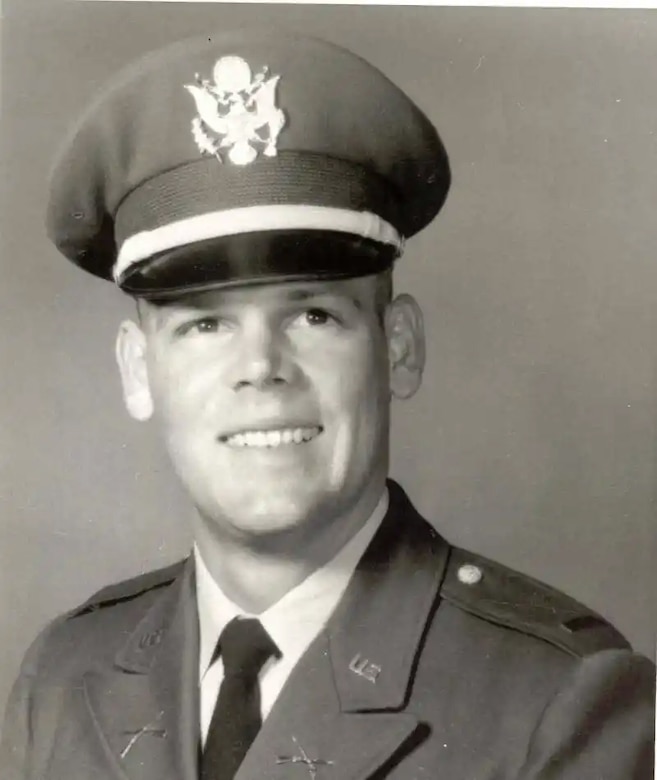
Army 1st Lt. Douglas Bernard Fournet was a trooper assigned to Company B, 1st Battalion, 7th Cavalry Regiment, 1st Cavalry Division, when he served in South Vietnam in 1968.

A man wearing a military dress uniform smiles for a picture.

He was born on May 7, 1943, in Lake Charles, Louisiana. His father, former Army Staff Sgt. Henry Bernard Fournet, was a shrimp boat operator, and his mother, Maria Lena Fournet, was a homemaker. 

In 1952, his father drowned when his shrimp boat capsized in heavy seas, so Fournet and his siblings cared for their mother. 

He was the quarterback of the Lake Charles High School football team. He also graduated from McNeese State University in Lake Charles. His siblings include brothers Keith, Mark, Rocke, Brett, and Kevin, who was an Army veteran, and sister Susan. 

After college, Fournet married the former Marilyn Miller.  

Following college, Fournet attended Officer Candidate School at Fort Benning, Georgia, in 1968, after which he deployed to South Vietnam. 

His wife was pregnant when Fournet deployed. Their son Bill would be born after his father's death. 

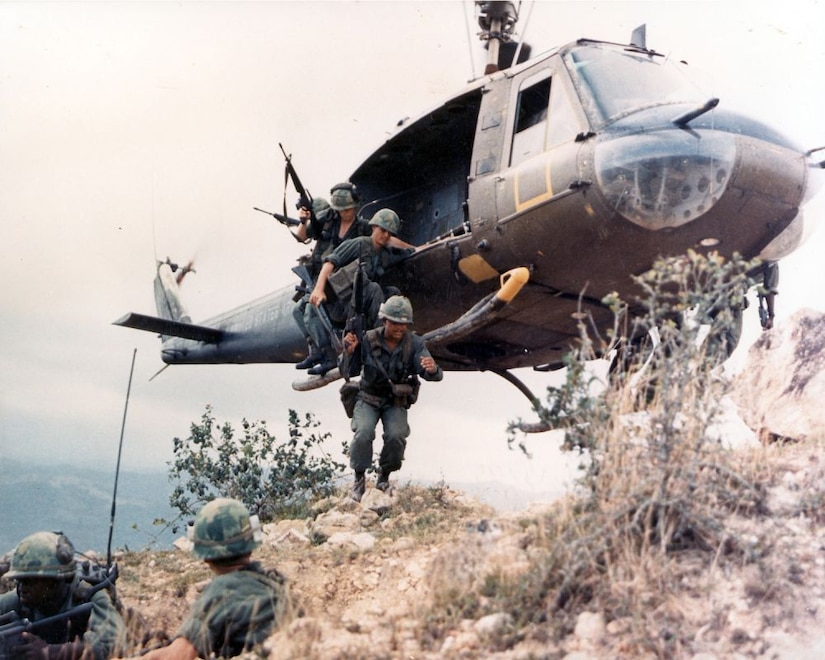
Fournet, a platoon leader, deployed with his troopers to the A Shau Valley during Operation Delaware, April 19, 1968. The valley was a vital corridor for supplying enemy forces known as the People's Army of Vietnam along the Ho Chi Minh Trail. Their mission was to cut off the supply route. 

While advancing uphill against fortified enemy positions in the valley, the platoon encountered intense sniper fire from concealed enemy positions, making movement very difficult. The right flank man suddenly discovered an enemy claymore mine covering the route of advance and shouted a warning to his comrades.

Soldiers jump from a helicopter atop a hill.

Realizing that the enemy would also be alerted, Fournet ordered his men to take cover and ran uphill toward the mine, drawing a sheath knife as he approached it with the intent of cutting the control wire.

He used his body as a shield in front of the mine as he attempted to slash the wires. As he reached for the wire, the mine was detonated by the enemy, killing him instantly. Five men nearest the mine were slightly wounded, but his heroic and unselfish act spared his men from serious injury or death.  

Braving enemy fire, his platoon sergeant, Army Staff Sgt. Bill Krahl retrieved Fournet's body. For his actions, Krahl was awarded the Bronze Star Medal. 

In a White House ceremony, President Richard Nixon presented the Medal of Honor on behalf of Fournet to Army Mag. Gen. Charles Spragins, commander, U.S. Army Training Center at Fort Polk, Louisiana, on April 7, 1970. Family members also attended.

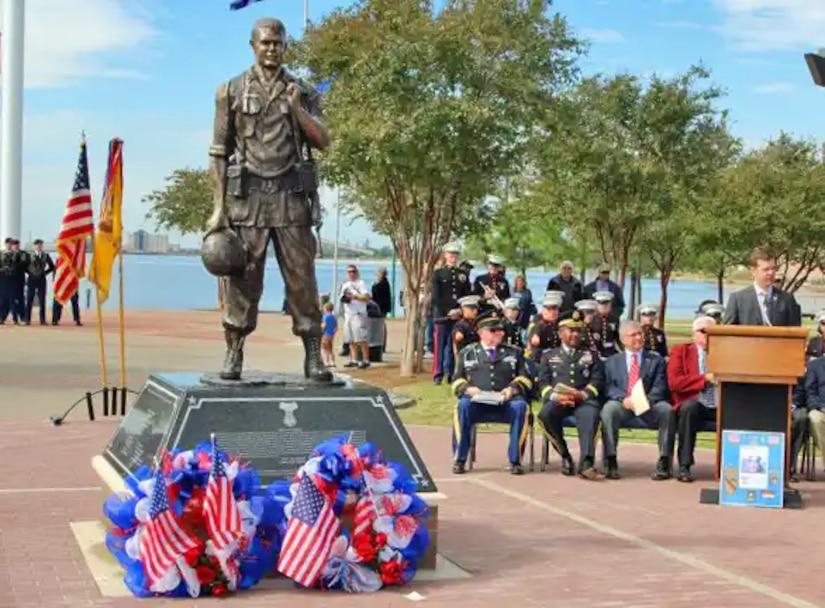
There's a monument to him at American Legion Post 244 in Kinder, Louisiana. 

Nixon wrote in a letter to Post 244: "In a sense, the monument will be a memorial to the many other brave young men who made sacrifices for our country. We can all be justifiably proud that our nation has always had men of Lt. Fournet's caliber who have come forth to serve her in her hour of need."

A statue of a soldier stands atop a pedestal as a man in a suit speaks to a gathering of military and civilian people.

Fournet was inducted into the Louisiana Military Hall of Fame and Museum, and a section of Interstate 210 near Lake Charles is named the Douglas Fournet Expressway.

The First Lieutenant Douglas B. Fournet Memorial is located at Veterans Memorial Park on the grounds of the Lake Charles Civic Center.  

Fournet is buried in the Kinder Cemetery in Kinder. 

Sunday, May 10, 2026

Utah National Guard Integrates Air, Ground Capabilities During Exercise Wolverine

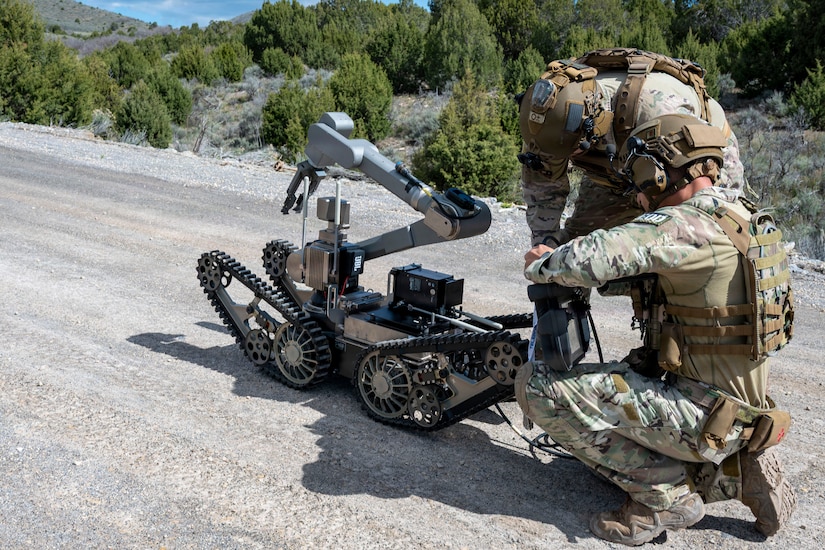
The sounds of saw blades against concrete, the striking of hammers against nails and the movement of debris amid collapsed rubble echoed across the western training area at Camp Williams, Utah, during an Exercise Wolverine simulated search and extraction scenario, April 30.

Two men wearing camouflage military uniforms and tactical gear work on a bomb robot outside on a gravel road; there are trees and mountains in the background.

The exercise focused on strengthening joint interaction between Utah Army and Air National Guard units in disaster response and air-to-ground operations to support homeland defense. 

At the site known as the "rubble pile," soldiers assigned to the 1457th Engineer Battalion search and extraction team worked to remove simulated casualties from collapsed concrete structures during a train derailment scenario. Teams operated at a high tempo to safely remove rubble, assess casualties and transfer simulated victims to a secure medical location.

While search and extraction members remained central to the scenario, additional units supported simulated emergency response operations throughout the exercise. The 65th Field Artillery Brigade and the 204th Maneuver Enhancement Brigade played key roles in the exercise, alongside the 151st Medical Group, the 97th Aviation Troop Command, and the 8th Homeland Response Force.

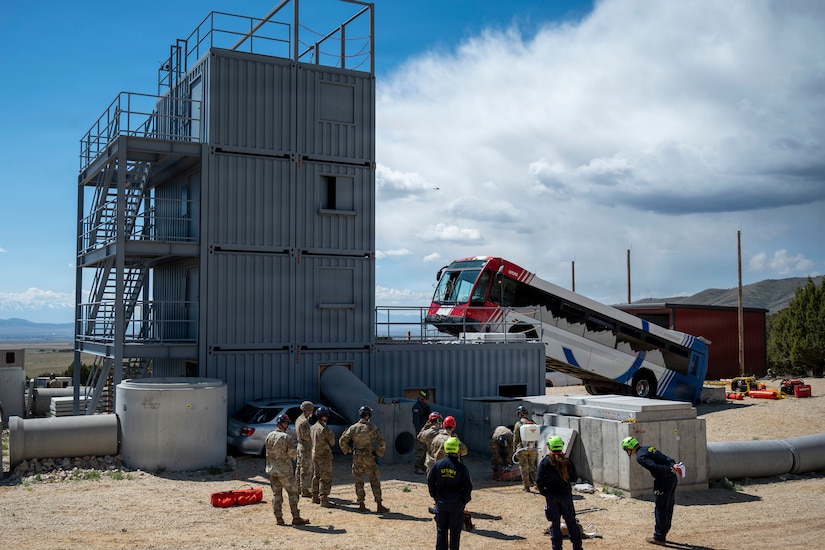
Eight people wearing camouflage military uniforms and helmets, and four people in coveralls and helmets, stand outside near a tall building as they prepare for training; there is a bus in the background with its front wheels on the side of the building.

"We're bringing counter-unmanned aerial systems capabilities, communications link between the ground and Air [National] Guard, and a fire package to the joint operations center," said Army Lt. Col. Emilio Suazo, 65th Field Artillery Brigade executive officer, adding that the training demonstrates their ability to respond to domestic emergencies while balancing both state and federal missions. 

A key component of the exercise is the AN/TPQ-53 multimission radar, operated by soldiers assigned to the artillery brigade. The system detects, tracks and classifies indirect fire threats, including mortars, rockets, cannons and artillery, at ranges of up to approximately 20 kilometers.

In addition to its counterfire mission, the radar provides an emerging counter-unmanned aircraft system capability, enabling operators to identify and monitor UAS activity while employing survivability techniques to reduce its electromagnetic signature.

Supporting that capability, the Link 16 tactical communication system enhances real-time coordination across the force. The system strengthens situational awareness and supports Utah's disaster response operations, while the exercise provides an opportunity to further integrate it into homeland defense missions.

"It's important because we often don't get enough joint training with the Air Force and our civilian partners," said Army Master Sgt. Nathan Torres, 8th Homeland Response Force chemical, biological, radiological and nuclear task force noncommissioned officer in charge. "This is another way we can solidify that relationship and work with our partners, because when a disaster happens, we will rely on each other to accomplish these tasks."

Exercise Wolverine provided the joint military assets and personnel in Utah with the opportunity to prepare for potential threats to homeland defense.

Forging Tactical Readiness During Iron Ascent

In a deliberate push to build a more agile and combat-ready force, the 92nd Air Refueling Wing launched Iron Ascent, a rigorous three-day tactical training course, held at Fairchild Air Force Base, Washington, April 29-May 1.

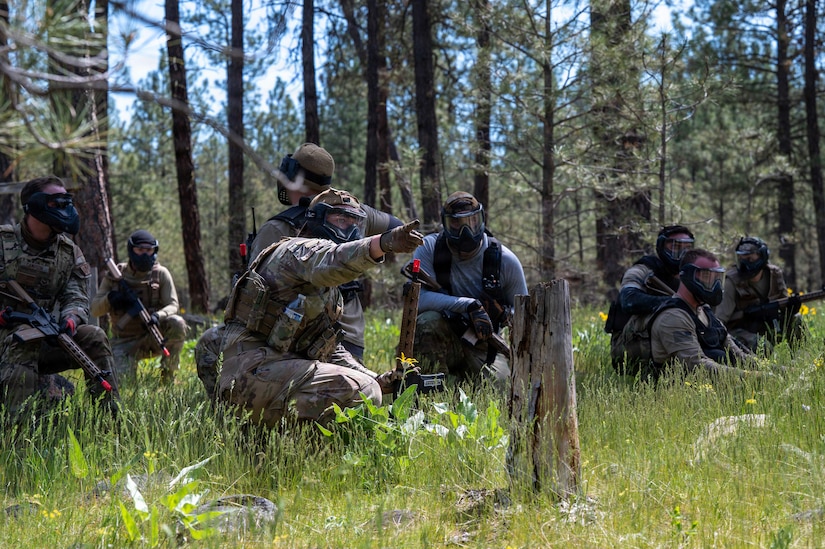
Eight people in camouflage military uniforms and face shields crouch in tall grass while holding weapons in a wooded area; one person points as the others observe.

The inaugural program pulled airmen out of their typical daily duties and into hands-on combat environments, enabling training participants from various career fields to operate as capable expeditionary warfighters. The initiative was spearheaded by Air Force Chief Master Sgt. Lindsay Moon, 92nd ARW command chief, who saw a need to provide airmen with training beyond computer-based modules and classroom instruction. 

"Iron Ascent is a course that we locally created, realizing there was a need to get past the things we learn by [computer] or in a classroom, and trying to get folks out into the field and really recognizing what [the] warrior ethos is," Moon said. "It allowed us to drop people out into the field to do combat-related operations, even if it's not the same thing we expect them to do day to day." 

The result was a rigorous, multifaceted training experience. The first day was dedicated to academics, where participants received briefings on essential deployment skills. 

"The classroom instruction covered deployment tactics, explosive ordnance disposal capabilities and tactical combat casualty care," said Air Force Tech. Sgt. Katlynn Bell, the noncommissioned officer in charge of training for the 92nd Security Forces Squadron, who also served as part of the exercise cadre. "It was mainly learning the fundamentals, so it's easier for the practical portions later on." 

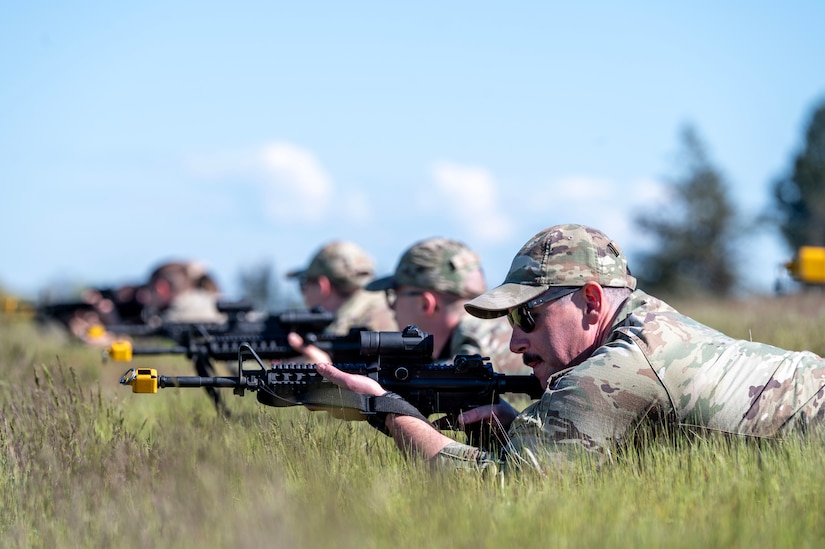
Four people in camouflage military uniforms lie in a row in tall grass under a blue sky with clouds and aim weapons.

During day two, the airmen split into two groups to apply their new knowledge, swapping halfway through the day so everyone completed both events. One group practiced close-quarters battle tactics and troop movements at the security forces' "shoot house," and the other group rappelled down a 30-foot wall with survival, evasion, resistance and escape specialists. 

"We tried to progressively build on the concepts," Moon said. "We were able to hand them actual M4 [assault rifles] so they could practice clearing rooms, being in formation and communicating together."

The final day culminated in a field training exercise at Nighthawk Range, where participants faced a series of challenging scenarios across 50 acres of terrain. They defended locations, acquired intelligence and navigated through ambushes against opposing forces, putting all their training to the test under high-stress conditions. 

"You saw a lot of different stressors that were applied to them, and it was amazing to watch them face those [stressors]," Moon said. 

The exercise reflected the Air Force's broader push toward creating a more agile and versatile force. 

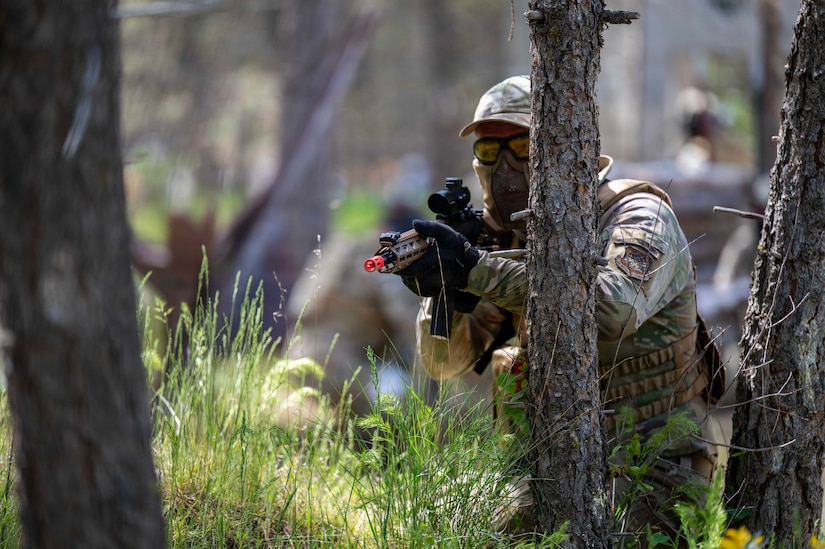
A person in a camouflage military uniform, goggles and a face covering stands in a wooded area and aims a weapon.

"It's important for people to understand that we may ask you to do things outside of what you learned in tech school," Moon said. "But that is okay; you can do hard things. We had airmen from finance and weather training right alongside security forces and survival instructors; watching them all work together was amazing." 

Air Force Staff Sgt. Dakota Peterson, NCOIC of physical security for the squadron, who also served as part of the exercise cadre, noted the training established a critical baseline for airmen who may find themselves in unexpected roles during a deployment. 

"It's critical because when they deploy, they might be asked to step outside their normal duties, and this training provides that foundation," Peterson said. "It's a stepping stone that allows them to say, 'Hey, I have some experience. I trained for this a year ago, and now I can apply it here.'" 

For the cadre, one of the most rewarding aspects was watching the volunteer participants embrace the challenges head-on. 

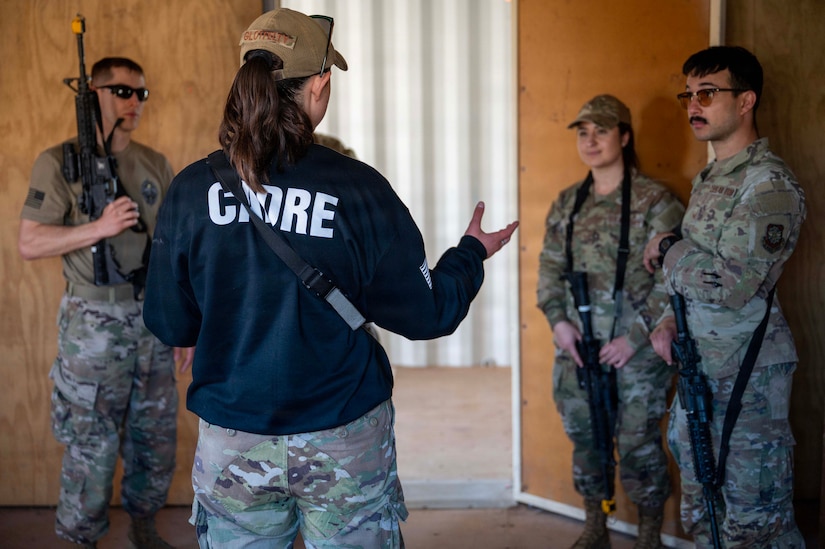
A woman in a camouflage military uniform and black jacket that says "CADRE" on the back speaks to three people in camouflage military uniforms who are holding weapons inside a training structure.

"It was really awesome to see people stepping out of their comfort zones, and not being afraid of it, and really just embracing it," Bell said. "It's all volunteers here; no one here was told to be here." 

The enthusiasm was palpable. According to Moon, many participants immediately asked how they could be involved in the next iteration, a testament to the program's success and the growing appetite for hands-on, tactical training.

Saturday, May 09, 2026

Department of War Awards Academy District 20 a $42.7 Million Grant for Douglass Valley K8 School at the United States Air Force Academy, Colorado

The Department of War, Office of Local Defense Community Cooperation, today awarded Academy District 20 a $42.7 million grant as the federal share of a larger $54.1 million project to construct a new Douglass Valley K8 School at the United States Air Force Academy, Colorado. 

This project will address facility capacity and condition deficiencies that placed Douglass Valley K8 School as #71 on the 2019 Deputy Secretary of Defense "Public Schools on Military Installations Priority List" (Priority List).  Upon completion, 787 students in prekindergarten through eighth grade will be supported through this project.

Funding for this grant is provided under the Department's Public Schools on Military Installations Program.  In making these funds available, the Office of Local Defense Community Cooperation must give priority consideration to military installations that have schools with the most serious facility capacity and condition deficiencies, as determined by the Priority List.  

A multi-disciplined Federal Evaluation Team, with representatives from the Assistant Secretaries of the Air Force, Army, Navy, and the Office of Local Defense Community Cooperation, reviewed the school project to ensure the award appropriately addresses the noted facility capacity and condition deficiencies. 

In correcting the identified facility condition and capacity issues at the Douglass Valley K8 School, this grant keeps faith with service members, improves the quality of education for defense-connected students, aids in the recruitment and retention of vital skills at the United States Air Force Academy, and enhances partnerships between the community and the installation.

Bumblebee V1 System Sharpens 10th Mountain Division's Counter-Drone Edge

Soldiers assigned to the 10th Mountain Division began training with the Bumblebee V1 counter-drone system, introducing a capability to improve the warfighter's ability to detect and defeat the threat of unmanned aerial systems on the modern battlefield. 

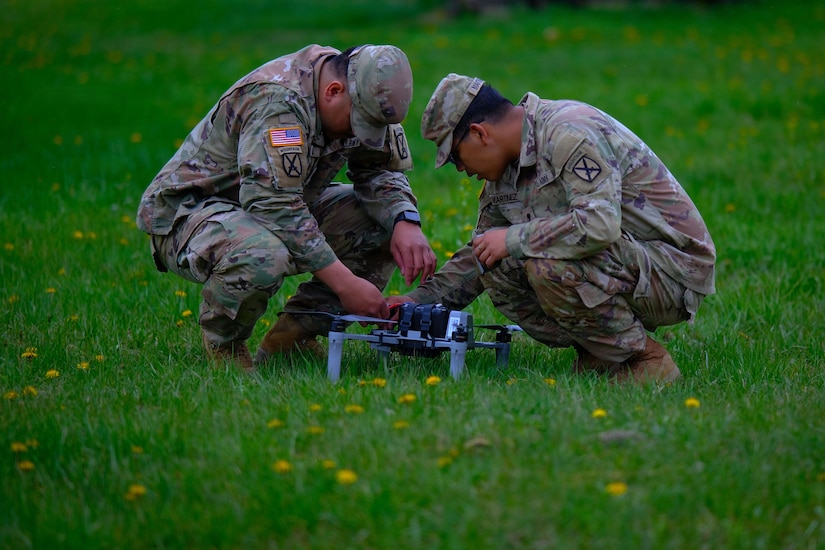
Two men wearing camouflage military uniforms crouch down in a field to work on a military drone.

The training at Fort Drum, New York, brought together soldiers from different units to train on and operate the new system, which is expected to become the Army's standard for future warfighting. Joint Interagency Task Force 401, the premier War Department counter-drone organization, partnered with the 10th Mountain Division to operationally assess low-cost, attritable air-to-air interceptors.  

JIATF-401 invests in training to ensure warfighters can effectively employ emerging technologies, integrating kinetic defeat options to establish a layered defense against UAS threats at home and on the battlefield. 

"Countering drones is both a battlefield and a homeland defense imperative," said Army Brig. Gen. Matt Ross, director of JIATF-401. "Training opportunities like this one at 10th Mountain Division enable us to increase counter-drone capabilities across the entire joint force to keep pace with this threat." 

The Bumblebee is a first-person-view, multirotor drone designed specifically for counter-unmanned aerial system missions. By incorporating automated target recognition, the system can identify and track hostile drones with limited operator input. This allows soldiers to focus on maneuvering, communication and battlefield awareness while the system executes intercept functions. 

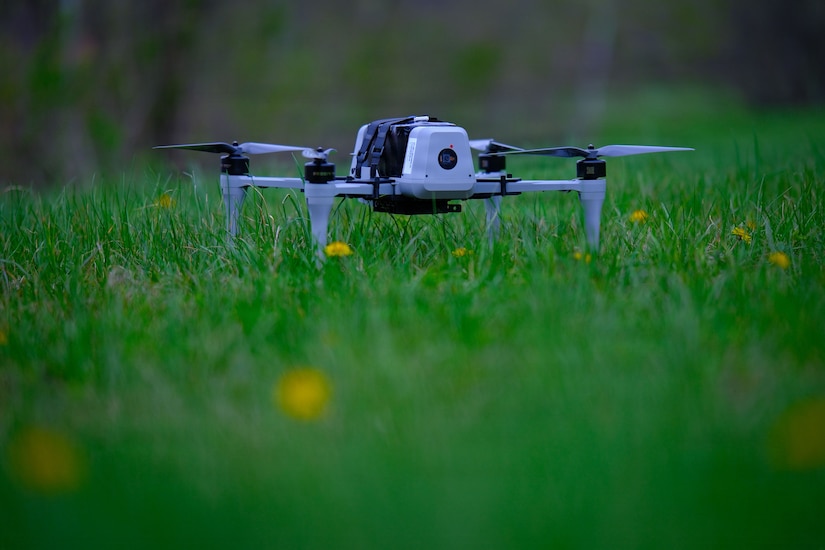
A military drone sits on a grassy field.

"It came to us in a counter-unmanned aerial systems capacity, but we're finding that it's more of a multirole fighter. It can do everything from short-range reconnaissance to detecting threats on the battlefield, on the ground, in the air," said Army Lt. Col. Max Ferguson, the director of operations for 10th Mountain Division. "It has the ability to do launched effects, it's classified as a munition, and we can use it as a one-way attack, or we can use it to drop ordinance." 

The introduction of the Bumblebee V1 reflects lessons learned from recent conflicts, where unmanned systems have become a persistent threat. By incorporating these capabilities into training, the 10th Mountain Division is working to ensure soldiers are prepared to operate in increasingly contested and technologically complex environments. 

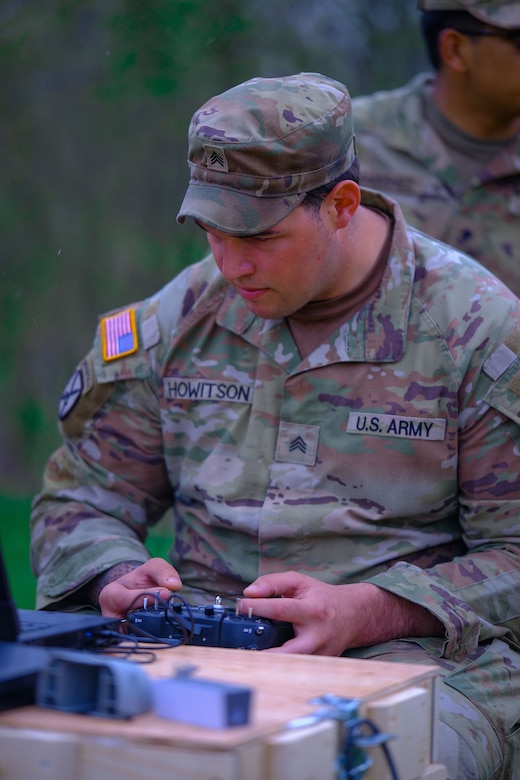
A man wearing camouflage military uniform looks at a laptop as he holds a remote control. Another man in similar attire is in the background.

"It gets a lot of guys out of the line of fire, so you're not running into bunkers and fortified positions anymore, which makes me feel better, makes everyone feel better," said Army Spc. Cevyn Jay Paydy, an infantryman assigned to the 4th Battalion, 31st Infantry Regiment, 2nd Brigade Combat Team, 10th Mountain Division. "It is way safer and more viable to hit with drones and other capabilities before going into anything, so I think it totally enhances our ability to do just about any mission." 

This is the blueprint for how soldiers at the lowest level can access real-time aerial reconnaissance that was once reserved for higher headquarters. Squad and platoon leaders can quickly launch drones to scout terrain, identify enemy positions and adjust movements without waiting for external support. This immediacy compresses decision-making timelines and speeds the pace of engagements. 

"It's a really capable component of a wider system; we have to learn how to integrate it with detection and integrate those sensors with our maneuver," Ferguson said. "This is the beginning of a shift in how we think about a three-dimensional fight where drones are common on the battlefield." 

As the Army continues to modernize, training events like this highlight the growing role of unmanned and counter-unmanned systems in small-unit operations. For the 10th Mountain Division, the integration of the Bumblebee V1 marks a step toward maintaining an advantage against evolving threats. 

"If we are able to eliminate the enemies before friendly forces get there, that's a win for us. We're able to eliminate them without putting friendly lives in danger," said Army Spc. Quentin Martinez, a master trainer assigned to the Multi-Functional Reconnaissance Company, 1st Brigade Combat Team, 10th Mountain Division.

American Revolutionary War Flags Flown to Inspire Patriotism

May 8, 2026 | By David Vergun, Pentagon News

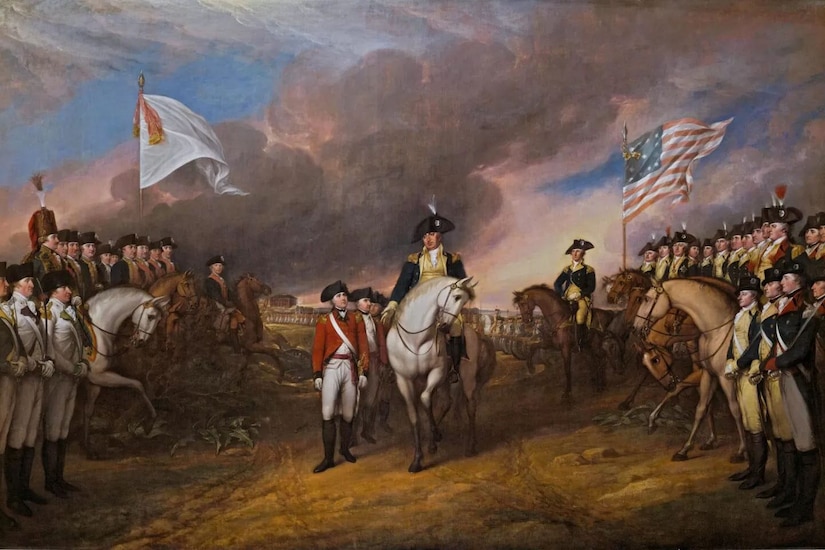
A painting depicts several men in Revolutionary War uniforms outside under a blue sky with gray clouds. One man stands next to another man sitting on a horse, as soldiers stand in two formations on either side of them.

The American flag is a symbol of freedom and patriotism, but before the Continental Congress adopted the first official flag in 1777, many other flags were flown.  

As America celebrates 250 years of freedom, here's a look at a few of the various United States flags flown during combat by soldiers, sailors, Marines and militia during the American Revolutionary War.  

Flags were a significant part of the war, as they served to instill esprit de corps in the men and also aided in rallying the troops, as the flag carrier led from the front. They expressed liberty and national identity, as well as a means to assert sovereignty against British rule.  

The use of colors — the term for the banners and flags — dates back to the Middle Ages in Europe, when knights displayed their distinctive symbols and colors on their shields to identify one another on the battlefield. The ancient Romans and Greeks also carried banners with symbols of their leaders into battle.  

Today, the American flag, also known as the Stars and Stripes and Old Glory, serves to unite the nation and inspire patriotism. Although military units have their own colors, all fly the American flag higher, giving it the most prominent position.  

The Hopkinson flag 

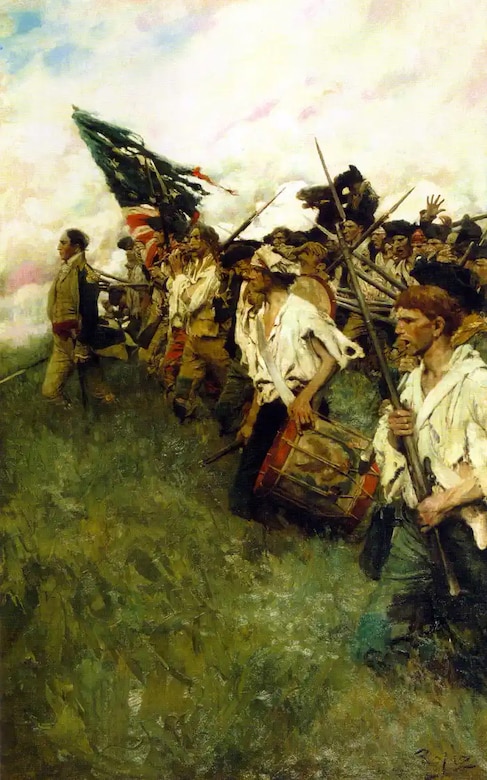
Colonial soldiers carrying long guns, a flag and drums march across a field.

Most historians agree that Francis Hopkinson was the designer of the first official American flag. On June 14, 1777, the Second Continental Congress adopted the Hopkinson flag, calling it the Stars and Stripes.  

Since there were only 13 states then, the design featured 13 stripes and 13 six-pointed stars arranged in rows on the field of blue. He also designed a very similar flag for the Navy, which looks similar to today's flag because the red stripes are located at the top and bottom. 

The Hopkinson flag was first carried into combat during the Battle of Brandywine, Sept. 11, 1777, just outside Philadelphia. 

Hopkinson also helped design the Great Seal of the United States and was a signer of the Declaration of Independence; many consider him a Founding Father. 

The Serapis flag 

A graphic depicting an early version of an American flag with blue, red and white and rows of 13 stars on a blue field.

Featuring 13 blue, red and white stripes and 13 stars, the Serapis flag design is similar to the Hopkinson flag except for the arrangement of stars and the blue stripes. 

The flag has an unusual origin story: it was named for the Royal Navy frigate HMS Serapis. 

The Serapis engaged the American warship USS Bonhomme Richard under the command of Continental Navy Capt. John Paul Jones in the North Sea near England on Sept. 23, 1779. 

The battle resulted in the capture of the Serapis. Jones' ship was badly damaged and sank, so he sailed the Serapis to the neutral Dutch port of Texel without a flag — technically making him a pirate. 

Benjamin Franklin, then an ambassador to France, was asked to provide a flag that Jones could use. Once created, the flag diffused the diplomatic tension, and Jones was released by the Dutch. 

The Serapis flag was one of the first flags of the United States, although it was never used in an official capacity. However, it is strongly associated with Jones and his heroics as one of the great captains of the Continental Navy and his contributions to the war effort. 

The flag is used to this day on the USS John Paul Jones, a missile destroyer commissioned in 1991 to honor the famous captain. It is sometimes called the Franklin flag in honor of the Founding Father who helped create it. 

The Grand Union flag 

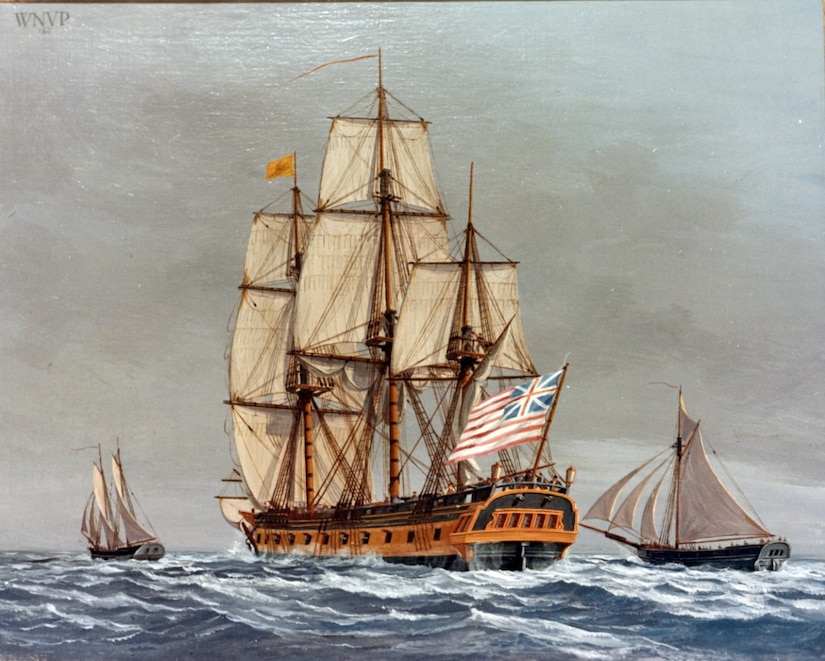
A painting depicting a large ship in the ocean flying an early version of an American flag as two smaller ships float on either side of it.

Also known as the Congress flag, the Cambridge flag and the Continental Union flag, the Grand Union flag is the first national flag of the United States; it was flown from 1775 to 1776. 

The Grand Union flag consisted of 13 red and white stripes with the British Union Jack located in the area now occupied by stars. The flag was first flown by Continental Navy Lt. John Paul Jones on Dec. 3, 1775, on the USS Alfred. 

The Betsy Ross flag 

A woman and two young girls hold an early version of the American flag as four men in historical uniform hold swords and look on.

Betsy Ross was a professional upholsterer in Philadelphia from the early 1770s until she retired in 1827. While there is no historical evidence, many people believe she designed the American flag. During and after the war, Ross made a variety of military flags over the course of 50 years.   

The Betsy Ross flag is similar to the other flags in that it has 13 stripes and 13 stars on a field of blue, but rather than rows, her design includes five-pointed stars arranged in a circle.

Tuesday, May 05, 2026

'Project Freedom' Aims to Get Thousands of Commercial Ships Safely Through Strait of Hormuz

Iran has blocked safe passage through the Strait of Hormuz for commercial cargo and tanker vessels, trapping thousands inside the Persian Gulf and halting the free flow of commerce in the region.

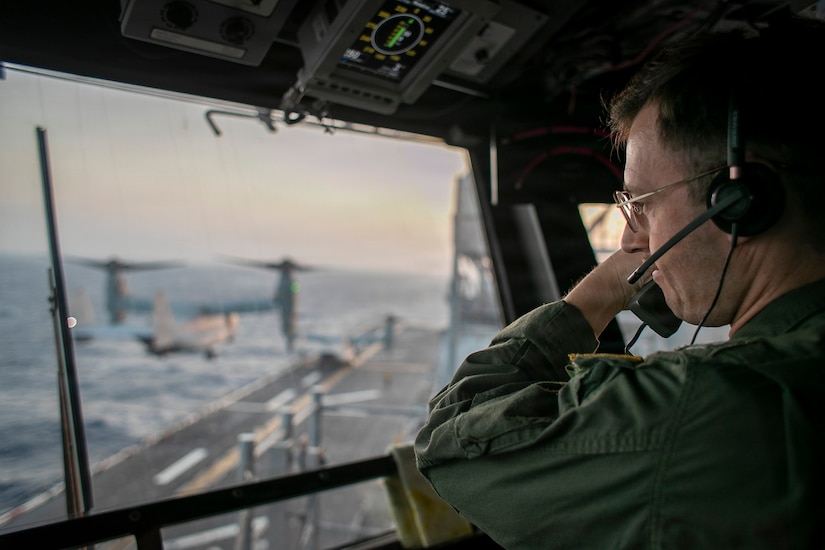
A sailor looks out of the window of a control tower on a ship at sea, with an aircraft hovering in the background during daytime.

Project Freedom is meant to reopen the strait to commercial vessels, said Secretary of War Pete Hegseth during a briefing today at the Pentagon. It is also independent of Operation Epic Fury, which for now, is in a ceasefire. 

"President [Donald J.] Trump has directed U.S. Central Command to restart the free flow of commerce through the Strait of Hormuz under the umbrella of Project Freedom," Hegseth said. "Project Freedom is defensive in nature, focused in scope, temporary in duration [and] with one mission: protecting innocent commercial shipping from Iranian aggression." 

The secretary said as part of Project Freedom, American forces won't need to enter Iranian waters or airspace, but also, that Iran can no longer be allowed to stymie international commerce. 

"Iran ... cannot be allowed to block innocent countries and their goods from an international waterway," Hegseth said. "Iran is the clear aggressor, harassing civilian vessels, threatening mariners from every nation indiscriminately and weaponizing a critical choke point for its own financial benefit." 

Already, Hegseth said, two U.S. commercial ships, along with American destroyers, have traversed the strait, proving that Iranian control of the strait is an illusion.

An aircraft flies over open water.

"We know the Iranians are embarrassed by this fact," he said. "They said they control the strait — they do not. So, American ships led the way, commercial and military, shouldering the initial risk from the front — as Americans always do. Right now, hundreds more ships from nations around the world are lining up to transit." 

The secretary said Centcom and partner nations are working with ships, shipping companies and insurers to let them know it's safe to move out. 

"All of these ships from all around the world want to get out of the Iranian trap that they have been stuck inside," he said. 

Air Force Gen. Dan Caine, chairman of the Joint Chiefs of Staff, said right now, there are more than 1,500 vessels with about 22,500 mariners trapped inside the Persian Gulf.

"Over the past seven weeks, Iran has repeatedly threatened and attacked commercial shipping in the strait in order to effectively cut off commercial traffic and damage the global economy," Caine said. "By obstructing one of the world's most critical maritime checkpoints, a vital transit route for approximately one-fifth of the global oil consumption, Iran is weaponizing the global supply chain."

A helicopter lifts off in this close up image. The pilot is seated in the cockpit.

Now, Caine said, Centcom is executing Project Freedom to open the strait up to commercial traffic. 

"Project Freedom is designed to protect commercial shipping and help restore the flow of commerce through the strait and sustain freedom of navigation," he said. "Centcom has established an enhanced security area on the southern side of the strait that is now protected by U.S. land, naval and air assets to help defeat further Iranian aggression against commercial shipping." 

Caine said Centcom is using guided missile destroyers and other warships to detect and defeat Iranian threats, including fast boats and one-way attack drones. He said right now, the threat from those fast boats includes rifles and small machine-gun fire. 

In the air over the Persian Gulf, Caine said, are more than 100 fighters, attack aircraft and other manned and unmanned aircraft, all synchronized by the 82nd Airborne Division. 

"[They] are in the air 24 hours a day, providing defensive overwatch for the enhanced security area and its approaches," he said. 

Making the Persian Gulf safe for commercial vessels, Caine said, are more than 15,000 American service members who are providing very visible overwatch that commercial ships should recognize when they see it. 

"Commercial vessels that transit through the area will see, hear and frankly, feel U.S. combat power around them, on the sea, in the skies and on the radio," he said. "And as of this morning, as was mentioned prior, two U.S.-flag merchant vessels have transited, and we anticipate more to transit over the coming days."

Medal of Honor Monday: Navy Petty Officer 3rd Class Robert Bush

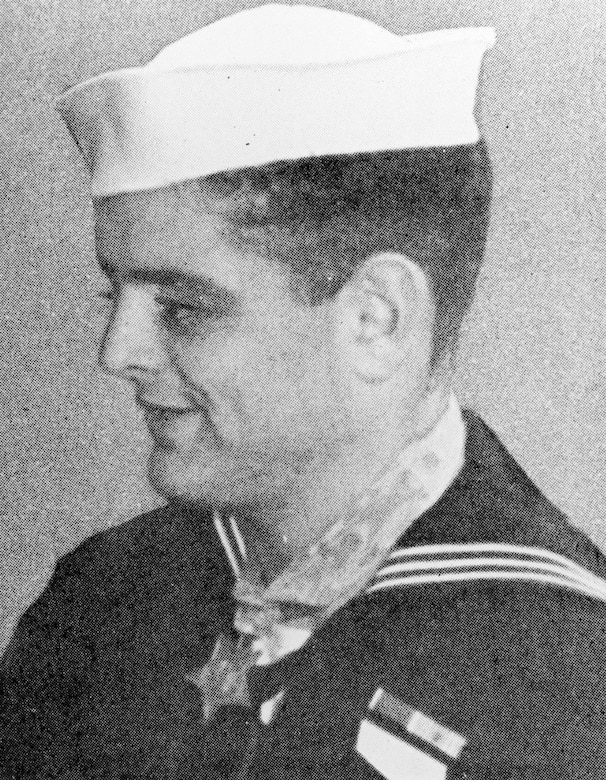
Navy Petty Officer 3rd Class Robert Eugene Bush, a hospital corpsman, was assigned to the 3rd Platoon, Company G, 2nd Battalion, 5th Marine Regiment, 1st Marine Division, during the World War II Battle of Okinawa, a conflict in which the bravery he showed led him to receive the Medal of Honor.

A man in a military dress uniform wearing a ribbon and medal smiles.

Bush was born Oct. 4, 1926, in Tacoma, Washington, to Carl and Estelle Bush. His father worked in a sawmill, and his mother was a nurse. After his parents divorced when he was 4, he was raised by his mother in Raymond, Washington. He worked in a sawmill as a teenager to help support his family and dropped out of high school in 1943 to enlist in the Navy Reserve.

After completing recruit training at Farragut Naval Training Station in Farragut, Idaho, Bush graduated from the Naval Hospital Corps School in Farragut. He was then assigned to the Seattle Naval Hospital before completing advanced training at the Field Medical Service School at Camp Pendleton, California.  

On Feb. 10, 1945, Bush was assigned to the 5th Marine Regiment, which landed on Okinawa April 1, 1945.

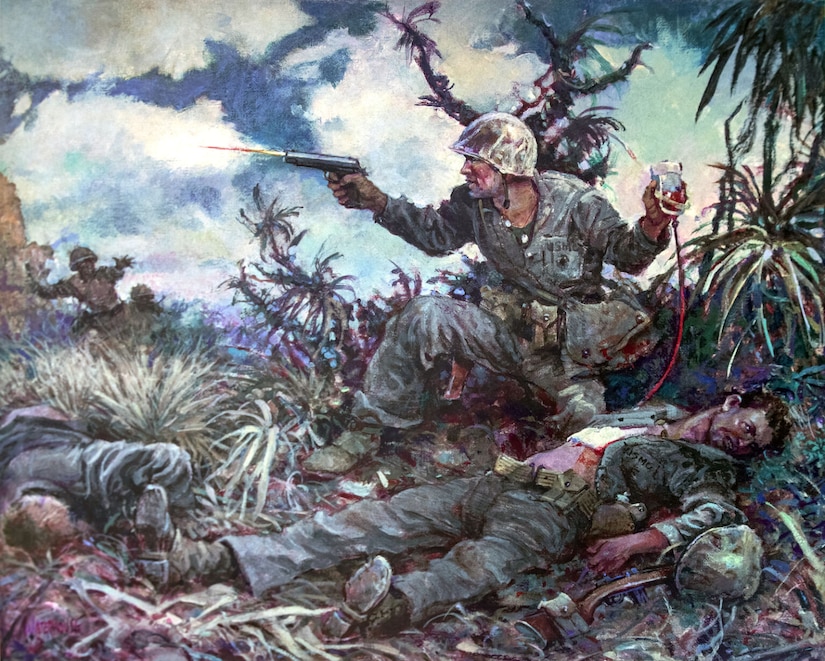
A month later, on May 2, he braved artillery, mortar and machine-gun fire from strongly entrenched hostile positions. Disregarding his own safety, Bush moved from one casualty to another without hesitation to treat the wounded.

During a Japanese counterattack, he administered blood plasma to a wounded Marine officer. According to his medal citation, while in an exposed position, Bush held the plasma bottle in one hand and fired his pistol at the enemy with the other.

A painting depicts a man in a camouflage military uniform administering first aid to another man on the ground in similar attire as he fires a pistol with his other hand at enemy forces.

After using all of his ammunition, he found a nearby discarded magazine and fired at the Japanese forces charging at his position, killing six enemy soldiers. Bush suffered serious injuries during the attack and even lost an eye. He continued to defend the officer until the enemy force finally retreated.

Bush refused medical treatment until his patient was finally evacuated and collapsed on his way to the aid station for treatment. 

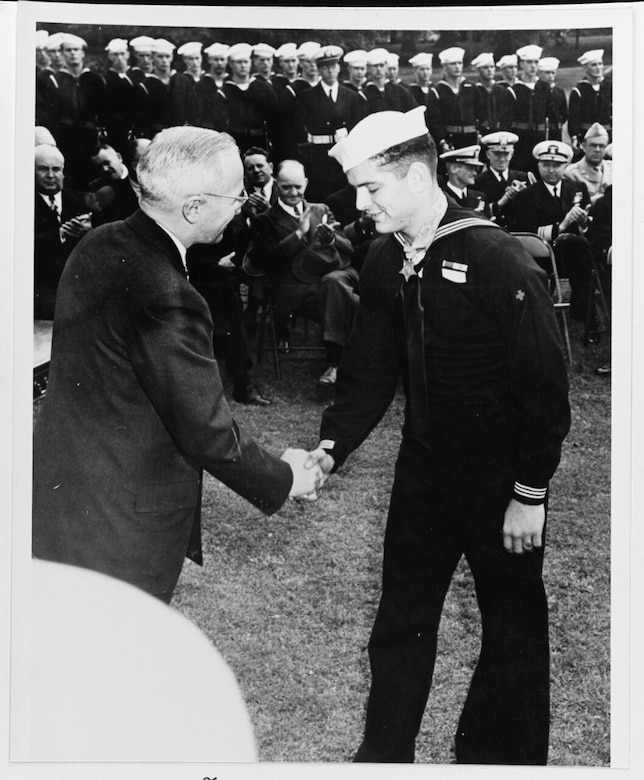
For his bravery, President Harry S. Truman presented Bush with the Medal of Honor during a ceremony at the White House, Oct. 5, 1945.

Two men, one in a suit and one in a military dress uniform wearing a medal, shake hands as people behind them, seated in chairs, clap.

He was honorably discharged July 26, 1945. He then went back and finished high school, before marrying Wanda Spooner of South Bend, Washington, Sept. 30, 1945. The couple had three sons, a daughter and many grandchildren.

After the war, Bush studied business administration at the University of Washington. He then founded the Bayview Lumber Company in South Bend, Washington, in 1951, and Bayview Redi-Mix in Elma, Washington, building both into multimillion-dollar businesses. 

Bush died Oct. 8, 2005, in Olympia, Washington, and is buried at Fern Hill Cemetery in Menlo, Washington. His wife died in 1999 and is buried beside him. 

Former NBC News anchor Tom Brokaw wrote a chapter about Bush in his 1998 book about World War II titled "The Greatest Generation."

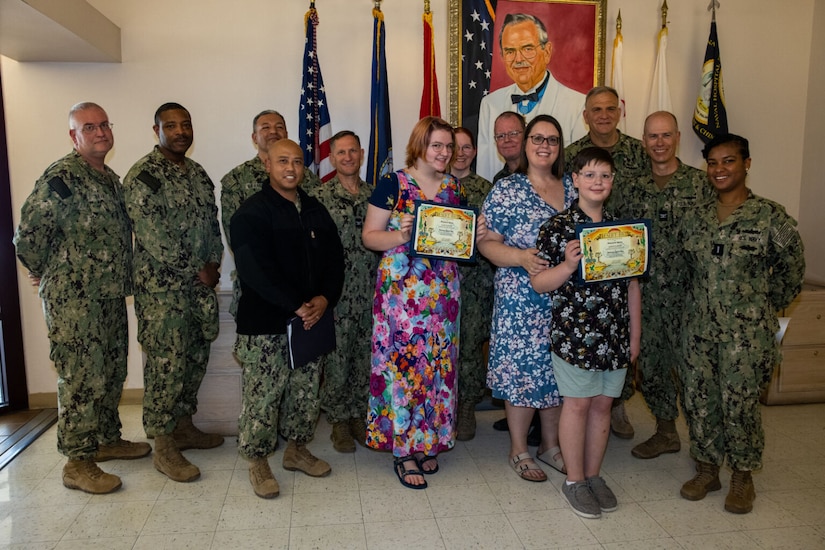
The Robert E. Bush Naval Hospital at Twentynine Palms, California, and the Branch Medical Clinic Bush, at Camp Courtney, Okinawa, Japan, bear his name.

Two women and a boy in casual attire pose for a photo at a hospital with people in camouflage military uniforms as they stand in front of flags and a painting of a man wearing a blue medal; the boy and one of the women are holding certificates.

In 1998, a monument depicting his actions on Okinawa was erected in a park named for him in his hometown of South Bend, Washington. A street in that town was also named for him. 

A "Golden Palm Star" on the Palm Springs Walk of Stars in Palm Springs, California, was dedicated to Bush on Veterans Day in 1999. 

DOW Announces Winners of the 2025 DOW Fire and Emergency Services Awards

Today, the Department of War (DOW) announced the recipients of the 2025 DOW Fire and Emergency Services (F&ES) Awards for the outstanding accomplishments of its fire departments, fire officers, firefighters, and fire service instructors. DOW F&ES Working Group representatives from the Military Services and Defense Logistics Agency selected nine winners from a total of 41 nominations. 

"These remarkable individuals form the bedrock of our operational readiness, ensuring the safety and security of our service members, their families, and the critical infrastructure supporting our national defense," stated Robert E. Thompson, Performing the Duties of the Assistant Secretary of War for Energy, Installations, and Environment. "Their expertise in fire prevention, public education, and emergency response enables them to continuously provide essential services that preserve mission capability and protect lives."

Each year, three of DOW's most outstanding fire departments receive recognition for achieving the highest degree of excellence in mission support and fire protection management. In addition, DOW's finest fire prevention program is awarded based on its depth and breadth, effectiveness, educational value, and thoroughness in direct support of the organization's mission. 

One military firefighter and one civilian firefighter are each awarded for their superior job performance, innovation, and outstanding contributions to a DOW F&ES organization. One military fire officer and one civilian fire officer are also recognized for their superior job performance, outstanding contributions, and leadership within a DOW F&ES organization. Finally, one fire service instructor is awarded for their superior job performance, resourcefulness, and outstanding contributions to a DOW F&ES organization.

Highlights of each winner's 2025 accomplishments, demonstrating the professionalism, courage, and selfless service that define the F&ES community, are as follows:

Small Fire Department of the Year: Naval Support Activity Annapolis, Maryland— Responded to 1,800 mutual aid calls, including 97 vehicle collisions, over 900 Emergency Medical Services (EMS) requests, and 800 structural incidents. The department facilitated 7,156 training hours, training 25 personnel and ensuring 100-percent fire training compliance. The department also hosted a multi-jurisdictional mass casualty drill with over 10 agencies to simulate transporting 50 patients to local hospitals via medivac helicopters, mass casualty buses, and ambulances. 

Medium Fire Department of the Year: Fort Stewart-Hunter Army Airfield, Georgia— Battled a fire on an M113 armored personnel carrier, extricating the crew and containing the fire to the engine, protecting the $8 million combat asset. The department conducted two rescue task force exercises, certifying one instructor and training 200 emergency responders. As part of Fire Prevention Week, the department also produced eight educational videos and seven written articles within 5 days, reaching an audience of 26,470. 

Large Fire Department of the Year: Metro San Diego, California— Successfully mitigated a 4-day, 16,000-acre wildland fire on San Clemente Island, saving crucial facilities and ensuring no loss to endangered wildlife. The department educated over 11,000 military personnel and local community members through fire prevention classes. The department also mitigated 3,000 emergency incidents including five structure fires, 15 shipboard emergencies, 50 hazardous materials, 15 technical rescues, and over 2,000 EMS calls. 

Fire Prevention Program of the Year: 628th Civil Engineer Squadron, Joint Base Charleston, South Carolina— Completed 896 annual inspections and identified 290 fire safety deficits and hazards, eliminating 166 potential community risks to safeguard 132,000 individuals. The squadron conducted 82 diverse training events, hosting educational seminars, outreach programs, briefings, and fire drills to educate 12,000 residents on fire prevention strategies. The program also strengthened community relations by chairing a 'Letters from Santa' campaign, responding to 81 letters from six drop boxes to bring holiday cheer to families. 

Military Firefighter of the Year: Senior Airman Jacob J. Meyer, Royal Air Force Mildenhall, United Kingdom— Responded to an 800-pound fuel spill, directing seven team members to rapidly execute remedial actions to protect the KC-135 Stratotanker. This efficient response enabled the tanker to deliver 20,000 pounds of fuel to six North Atlantic Treaty Organization fighter jets that same night. Senior Airman Meyer filled the Station Captain role for 90 days, managing 34 firefighters, conducting 130 training hours, and leading responses to mitigate 47 fire incidents. He also led 24 training hours with the Special Operations Wing, training 14 personnel across three agencies to enhance special operations wing taskings and technical rescue capabilities. 

Civilian Firefighter of the Year: Katsuhiro Watanabe, Commander Fleet Activities Yokosuka, Japan— Spearheaded the creation of an internal Hazardous Materials (HAZMAT) Awareness course, providing a solid foundation for Japanese speakers, and certified six firefighters. Mr. Watanabe responded to a HAZMAT incident on the USS George Washington, isolating toxic gas release and ultimately protecting over $4.5 billion in national assets while ensuring mission readiness. He also mitigated 519 fire incidents and led 24 ship drills.

Military Fire Officer of the Year: Senior Master Sergeant Aaron P. Strayhorn, Misawa Air Base, Japan— Led 848 Airmen through a 7.6 magnitude earthquake and directed the unit control center through 59 infrastructure crises to recover the installation in 11 hours. Senior Master Sergeant Strayhorn forged the Japan Air Self-Defense Force partnership by leading three large-scale Command and Control exercises. This partnership led to the first bilateral exchange program in 7 years, resulting in a successful joint B-1 fire response that saved Air Force's first Bomber Task Force. He also simplified fire department altering codes, reducing the number of codes from 53 to seven and increasing dispatch notification time by 38 percent. 

Civilian Fire Officer of the Year: Richard Matteson, Eielson Air Force Base, Alaska— Commanded the response to a F-35 crash in extreme arctic conditions by integrating the deployment of nine wing and mutual aid response teams to save the pilot. Mr. Matteson treated a life-threatening chainsaw injury, applying a tourniquet to stop arterial leg bleeding, and prepared and transported the patient to a trauma center in time to save their life and limb. He also partnered with the Bureau of Land Management to protect a military campground from an approaching 170,000-acre wildfire by clearing 12 acres of fuels, thus protecting 29 log cabins worth $312,000. 

Fire Service Instructor of the Year: Tiana Y. Bykowski, Hill Air Force Base, Utah— Led the "Red Card" wildland fire certification program, qualifying 63 firefighters and mitigating 23 emergencies across a 7-day wildfire mitigation effort. The program resulted in the protection of 2 million acres and $1.2 billion in assets. Ms. Bykowski trained 133 firefighters and managed 12,000 training hours, earning the team 96 certifications, and managed 12,000 training hours for 148 firefighters. She also strengthened DOW's Nuclear Surety Program by partnering with Department of Air Force Nuclear Weapons Center, providing design and construction support expertise for the Center's $108 million campus with 2,000 staff. 

Congratulations to the distinguished 2025 DOW F&ES Awards winners for their remarkable accomplishments and devotion to safeguarding national security and supporting our warfighters. DOW extends its deepest gratitude for their vital contributions to the strength and resilience of the Department. For more information, visit the DOW F&ES Awards website at: https://www.acq.osd.mil/eie/emr/fes/index.html